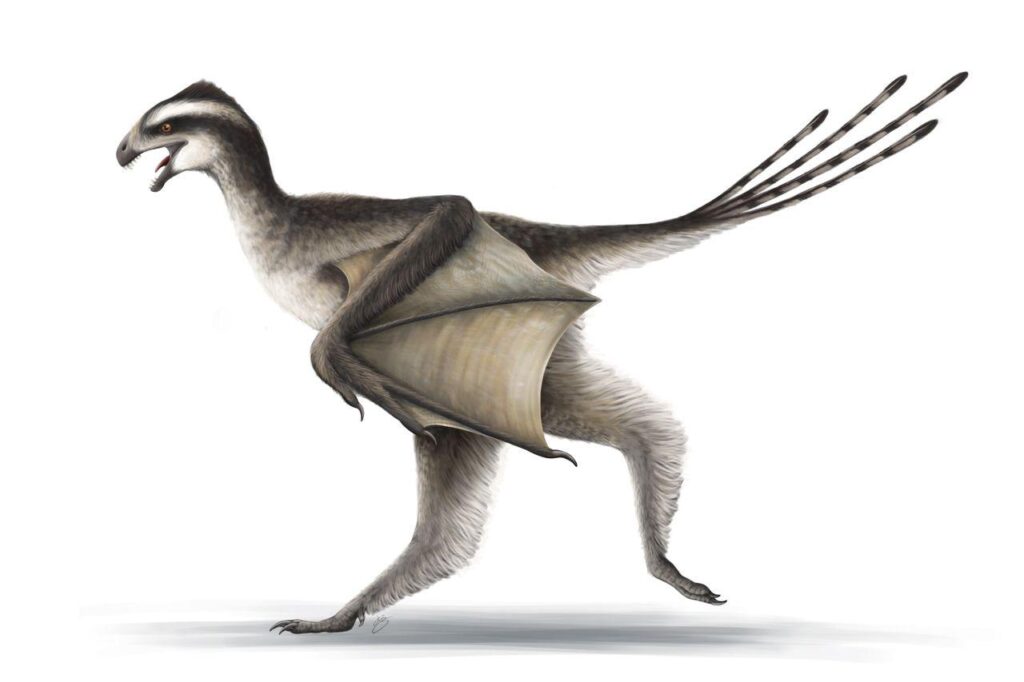
If you ever wished dinosaurs were even weirder than the movies show, meet the one that basically tried to be a bat. Yi qi and its close relative Ambopteryx are tiny, feathered dinosaurs with stretched, membrane-like wings that look more at home on a fruit bat or a pterosaur than on something related to Velociraptor. When the first fossils were described, a lot of paleontologists did a double take, because the anatomy seemed to bend the rules of what they thought dinosaurs could be.
Years later, this strange animal is still causing arguments in conference halls and late-night lab chats. Was it a clumsy glider, a short-distance flyer, or just an evolutionary dead end that never quite worked? The truth is, no one can say with total confidence yet. That uncertainty is exactly what makes this dinosaur so fascinating: it sits right at the edge of what we understand about how flight evolved, almost taunting us to figure it out.
A Tiny Dinosaur With a Rod Sticking Out of Its Wrist
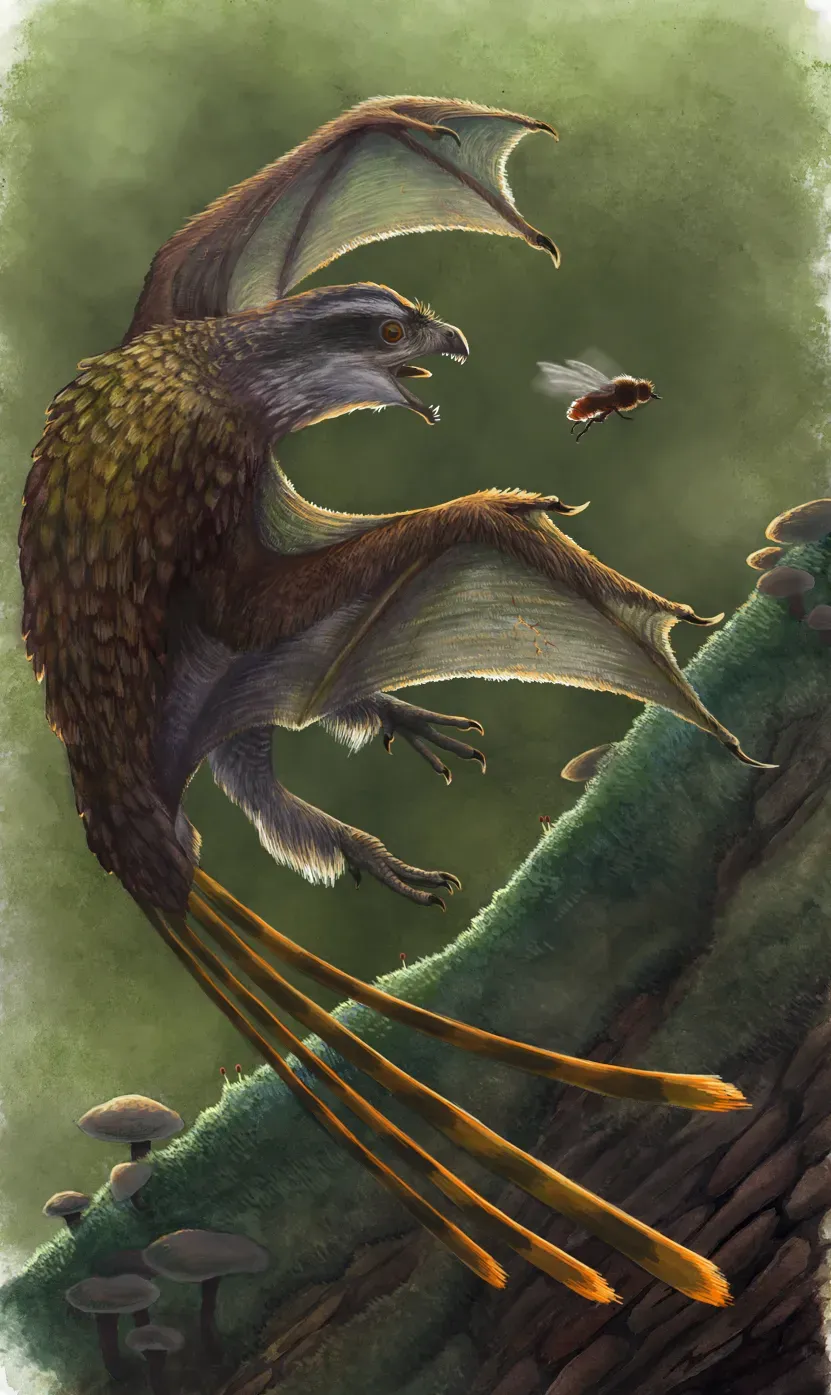
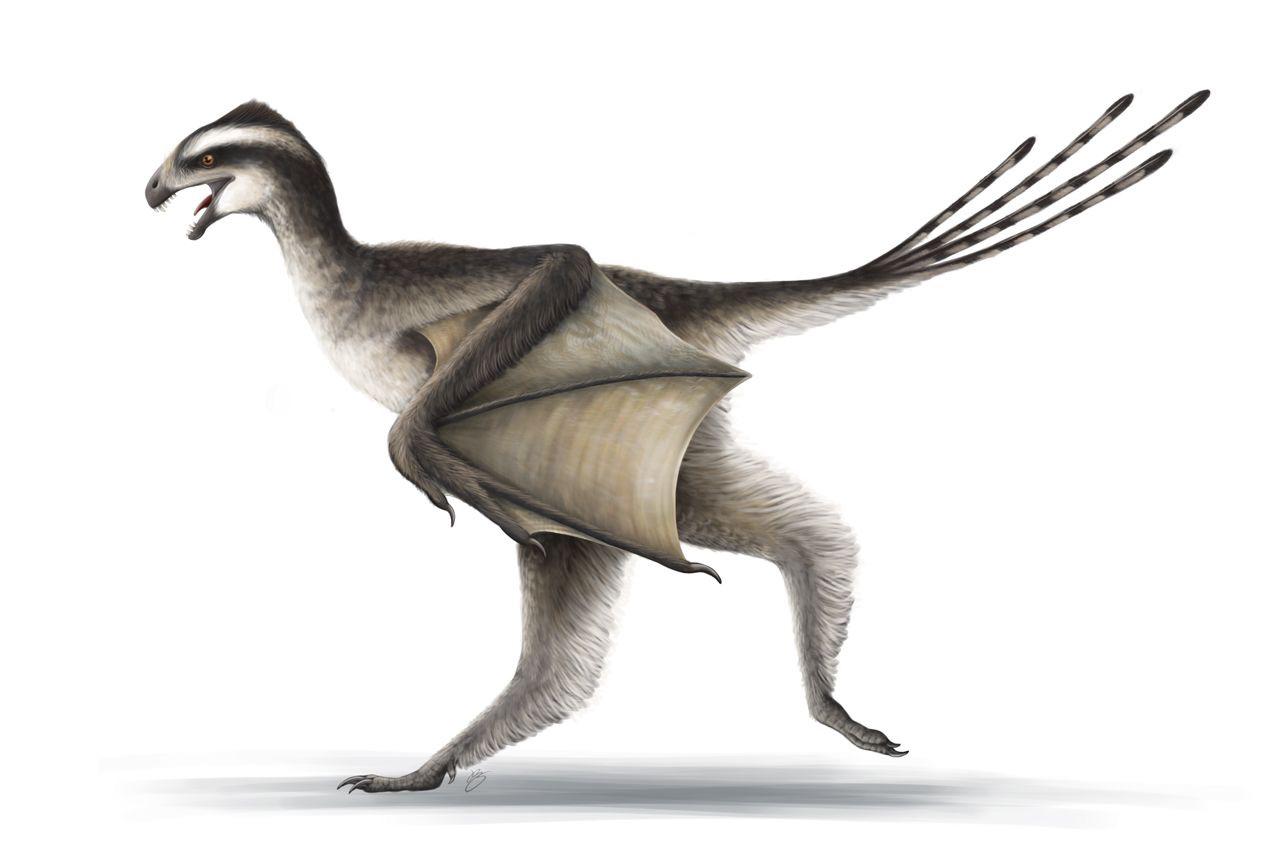
The story starts in northeastern China, in the famous fossil beds of the Yanliao Biota, where lakes once quietly buried animals in fine sediment that now preserves hair-thin details. There, paleontologists uncovered a small, crow-sized dinosaur with long feathers on its body and tail, but something totally unexpected in its front limbs. From the wrist of Yi qi, they found a long, stiff, rod-like bone, an extra element not seen in other known dinosaurs. Alongside it were traces of soft tissue that suggested a stretched membrane once ran from that rod toward the body and possibly the fingers.
This was a jaw-dropping combination: a classic theropod dinosaur skeleton, but with an extra strut and apparent skin-like webbing, reminiscent of a bat’s wing or a flying squirrel’s patagium. For decades, textbooks treated feathered wings as the dinosaur route to flight, while membranous wings belonged to pterosaurs and bats. Suddenly, here was a dinosaur that seemed to be borrowing from the membrane design playbook. Even seasoned researchers were cautious, checking again and again to make sure the rod was real, not just a random piece of another fossil that got mixed in.
Feathers, Membranes, or Something In Between?
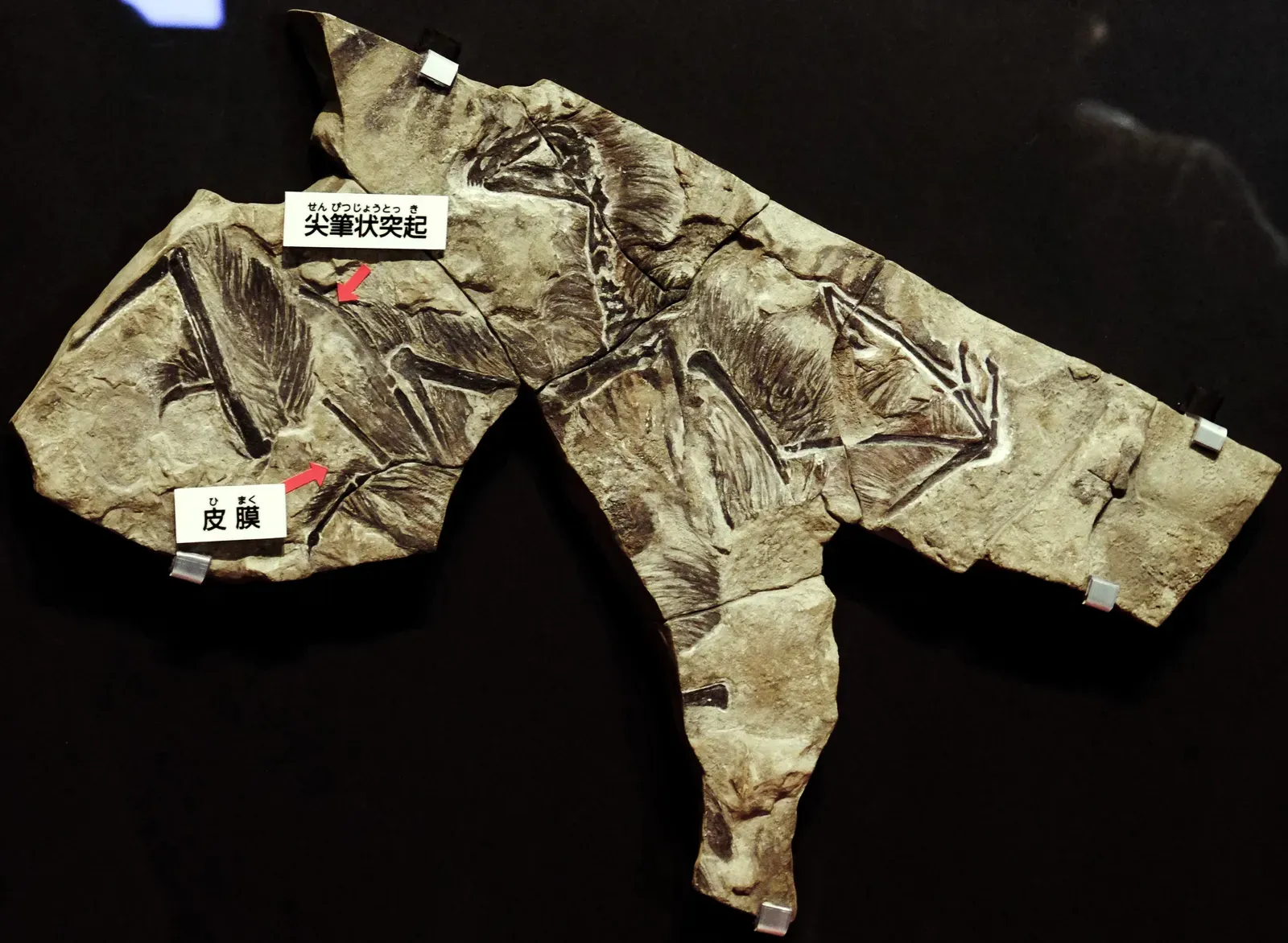
At first glance, it would be tempting to shove Yi qi into a neat category: either a feathered dinosaur that just happened to grow a bit of stretchy skin, or a membrane-winged flier with some decorative feathers. But the fossil evidence refuses to cooperate with easy labels. Its body and tail feathers look fairly typical for small paravian dinosaurs, suggesting insulation, display, or lightweight streamlining. Yet preserved soft tissue along the arm and hand region hints at a more bat-like, possibly thickened membrane, not just loose skin.
This mashup raises a big question: what exactly did its wings look like in life? Some reconstructions show a full, triangular membrane stretching from the elongated wrist rod to the side of the body and even the hindlimb, creating something like a tiny, fuzzy pterosaur. Others rein things in, giving Yi qi a more modest membrane between the arm and that rod, with feathers adding surface area and airflow control. The frustrating part is that the fossil is detailed but still incomplete; we have enough to know it was weird, but not enough to draw a universally agreed diagram without some guesswork.
Could It Actually Fly, or Just Glide Awkwardly?
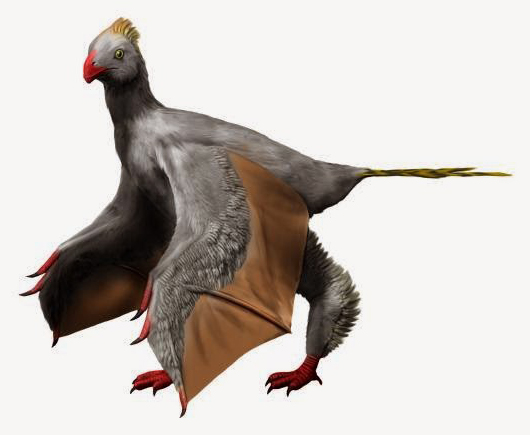
Once you accept that Yi qi had some kind of bat-like wing, the next uncomfortable question is whether it could really get airborne in a meaningful way. Flight is brutally unforgiving: if your wings are the wrong shape, too small, or poorly supported, gravity wins every time. Researchers have tried to estimate its body mass and wing area, then plug those numbers into models used to understand how birds and bats fly or glide. The results usually land it in a gray zone: probably okay for gliding between trees or making controlled descents, but not convincingly built for powerful flapping flight like a modern crow or pigeon.
One challenge is that its arm and shoulder anatomy does not scream out “high-performance flier.” The muscles and joint angles seem underwhelming for repeated, strong flapping strokes. That has led several teams to suggest that Yi qi and its close kin were likely experimenting with gliding, maybe launching from elevated perches and using their odd wings to extend their reach through the forest canopy. Still, there is enough uncertainty in the reconstructions that some researchers hesitate to rule out limited active flight. It is almost like looking at a homemade flying machine: it might barely work under just the right conditions, or it might stall and drop like a stone.
A Failed Experiment on the Road to Bird Flight?
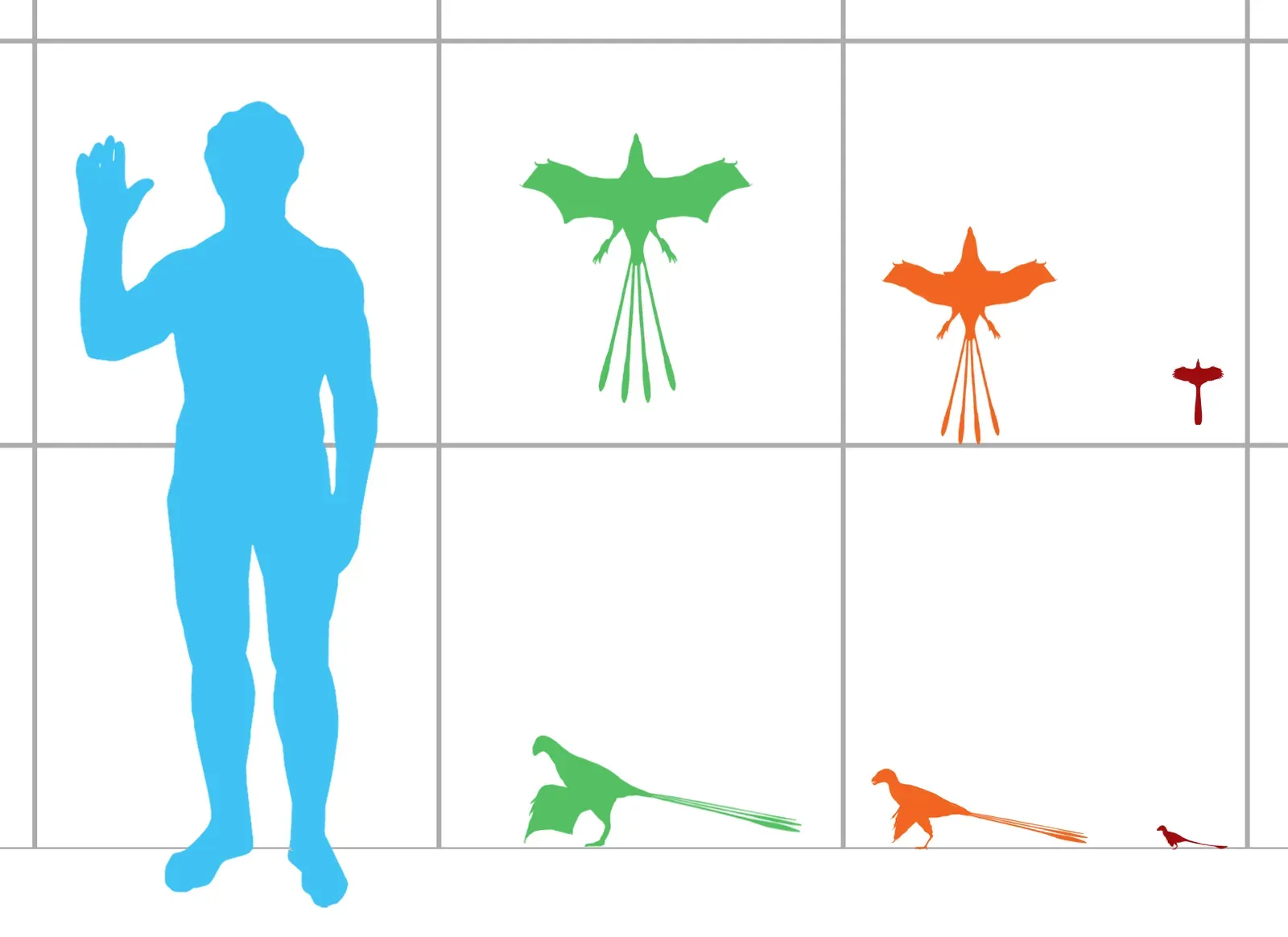
Yi qi sits inside a quirky group of small, tree-dwelling theropods called scansoriopterygids, which were already known for elongated fingers and peculiar limb proportions. These were animals that seemed built for life in the branches, climbing or hopping among trunks and twigs. When you imagine that lifestyle, the idea of experimenting with skin membranes and partial wings makes more sense: if you already live up high, any structure that helps you not fall straight down is worth trying from an evolutionary standpoint. Yi qi could represent one of several side branches in the broader story of flight, a “try this and see if it works” moment in deep time.
But unlike the lineage that led to modern birds, this particular experiment did not leave a long-lasting legacy. So far, scansoriopterygids appear to be a short-lived group with only a handful of species known, all confined to a specific region and time slice. That pattern suggests an evolutionary cul-de-sac rather than a grand success story. In my view, that is part of what makes them so compelling: they remind us that evolution is not a straight ladder to perfection, but more like a messy brainstorming session full of abandoned drafts and weird prototypes that never made it to mass production.
Why This Dinosaur Still Bothers Scientists (And Why That’s Good)
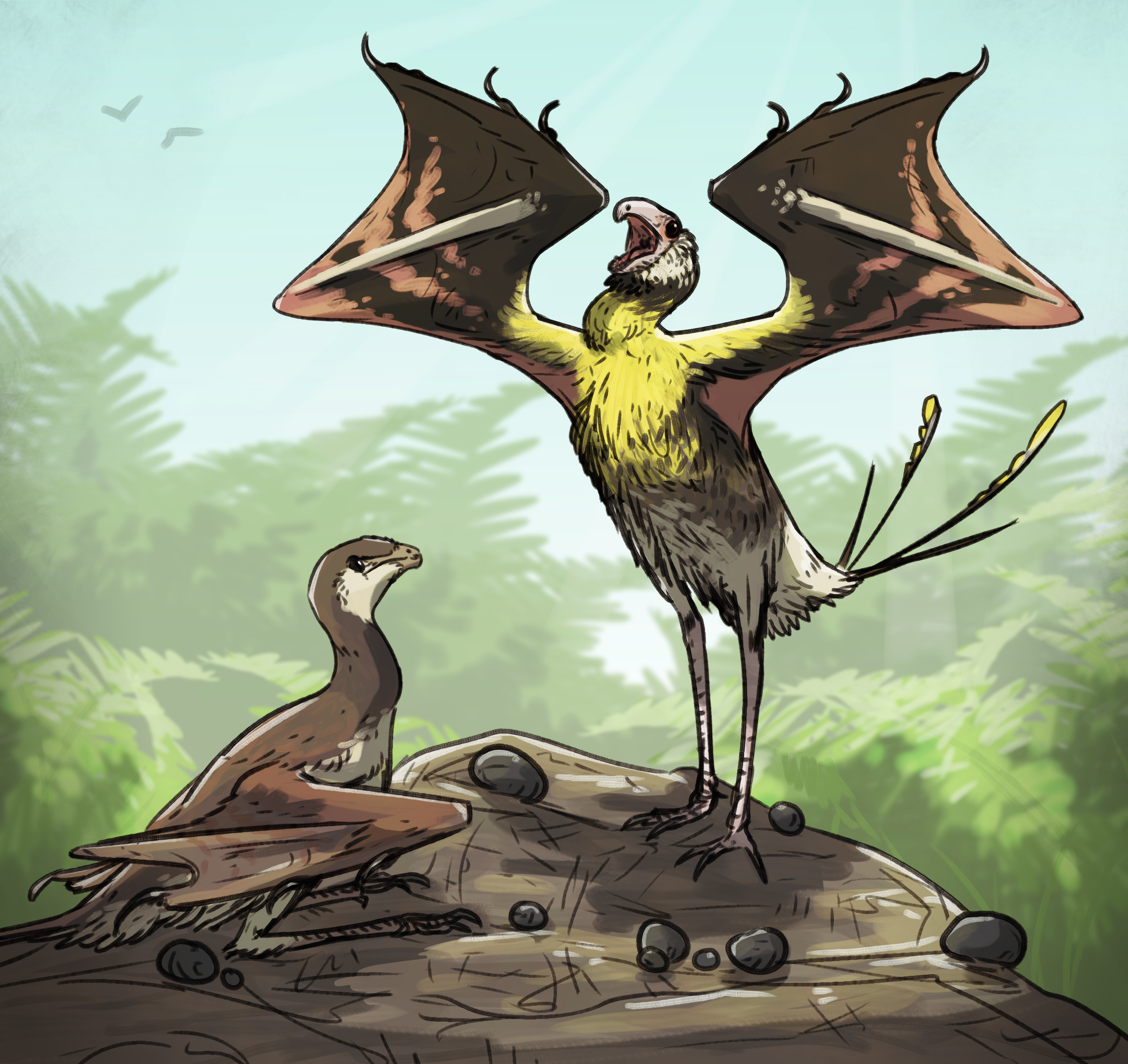
Even now, Yi qi and its bat-like wings continue to stir debates in papers, talks, and online arguments among paleontology fans. People argue over how far the membrane stretched, how flexible that strange wrist rod was, and whether our modern categories of “glider” and “flier” even apply neatly to such an ancient, alien-looking animal. Every new analysis seems to tweak the picture a little, sometimes supporting the idea of decent gliding performance, other times making it look more like a barely functional oddity. Instead of settling the question, each study adds another layer of nuance and another batch of skeptical questions.
I actually think this lingering discomfort is a sign of healthy science rather than failure. Yi qi forces researchers to confront the limits of what bones alone can tell us and to admit just how many different ways nature can approach the idea of flight. It pokes holes in our tidy mental diagrams where feathers always mean one thing and membranes another. When I first saw a reconstruction of it, I remember thinking it looked almost too strange to be real, and then catching myself: the fossil is literally right there, and it is our imagination that needs to stretch, not the evidence. In a way, this little dinosaur is doing today what it may have done in the Jurassic forest: pushing beyond the familiar edge, even if it does not quite soar.
Conclusion: The Beautiful Mess of Evolutionary Trial and Error
If you forced me to take a stance, I would say Yi qi was probably a marginal flier at best, a specialist that pushed its anatomy into a corner without finding a truly brilliant solution. Its wings look more like a bold evolutionary gamble than a polished masterpiece, and that is precisely why I love it. There is something oddly relatable about a dinosaur that tried an ambitious redesign, only to fall short of the sleek, efficient flight that birds eventually achieved. It turns the fossil record from a highlight reel of winners into a fuller story that also includes all the near-misses.
In the end, is a reminder that nature experiments freely and does not care about our need for clean categories or simple narratives. Yi qi might never fit neatly in a textbook illustration about how flight evolved, and maybe it should not. Its strangeness forces us to stay humble, to keep testing our assumptions, and to accept that some questions will linger longer than we find comfortable. That lingering mystery is not a flaw; it is the spark that keeps people digging in the rock and arguing in the lab. When you think about it that way, would you really want every fossil to be easy to explain?