If your entire mental image of prehistoric life comes from blockbuster movies, then your brain is basically running on cinematic fan fiction. The real fossil record tells one story; Hollywood insists on telling another, louder, shinier one. And the gap between those two worlds is often as wide as the jaws of a very misunderstood Tyrannosaurus rex.
What fascinates me is that paleontologists keep patiently correcting these myths, updating what we know with new fossils, better scans, and serious fieldwork, and yet the same wrong versions of these animals keep showing up on screen like a glitch in the Matrix. I still remember walking out of one big dinosaur movie feeling both thrilled and mildly annoyed, thinking, “That was awesome… but also, that’s not how that animal worked at all.” Let’s walk through nine of the most abused prehistoric celebrities and what the science actually says about them.
1. Tyrannosaurus rex: The Eternal Roaring, Sprinting Monster
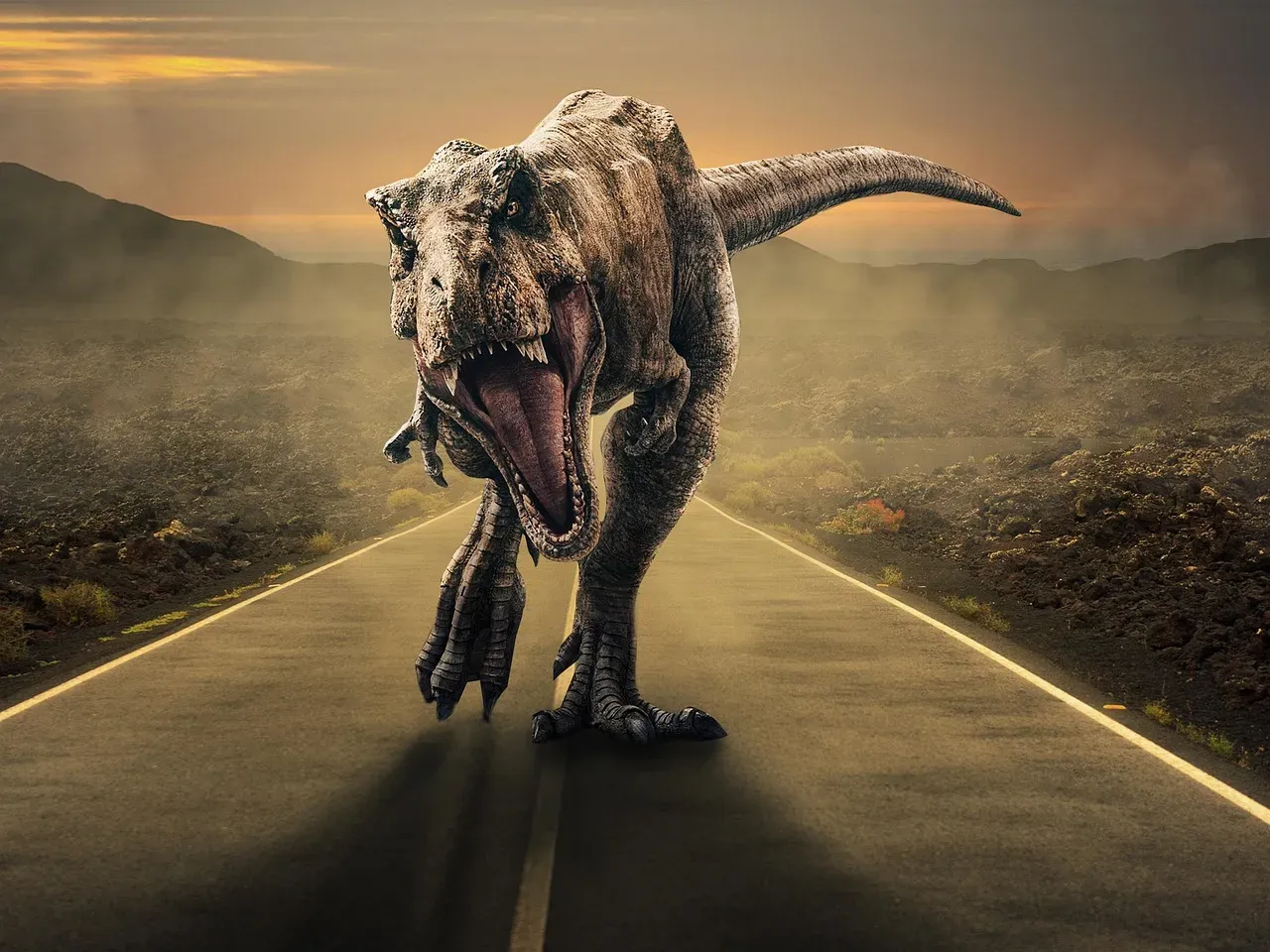
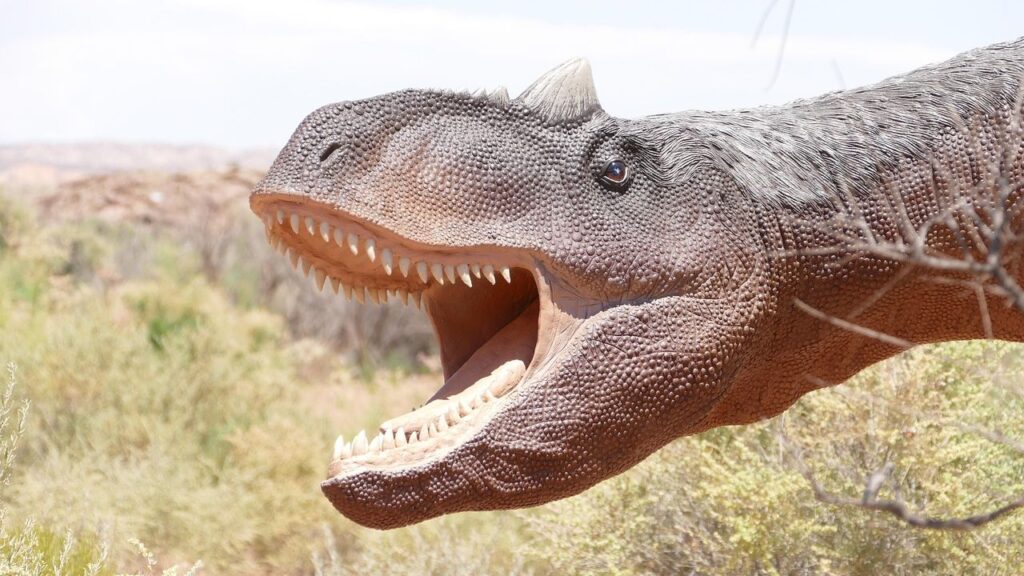
Tyrannosaurus rex is the Leonardo DiCaprio of prehistoric creatures: wildly famous, slightly overexposed, and constantly miscast. Hollywood always paints T. rex as a hyper-fast, unstoppable sprinter that roars like a lion crossed with a jet engine, able to spot a human at a hundred meters and chase them down like a sports car. The problem is, almost none of that lines up with what the bones, biomechanics, and modern animal comparisons tell us.
First, the speed. Many films show T. rex keeping up with speeding vehicles, but serious biomechanical models suggest a more modest pace, likely more of a power walker or jogger than a marathon sprinter, thanks to its massive size and the stress that high speeds would put on its legs. Then there is that famous roar; based on its closest living relatives (birds and croc-line animals), researchers think it may have produced more low, booming sounds or closed-mouth vocalizations rather than an open-throated lion roar. To make it worse, movies often ignore growing evidence that adult T. rex probably had at least some feather-like coverings in earlier life stages, and soft tissues around the mouth mean it may not have had rows of totally exposed, dripping teeth like a movie monster.
2. Velociraptor: The Tiny, Feathered Raptor That Got a Hollywood Makeover
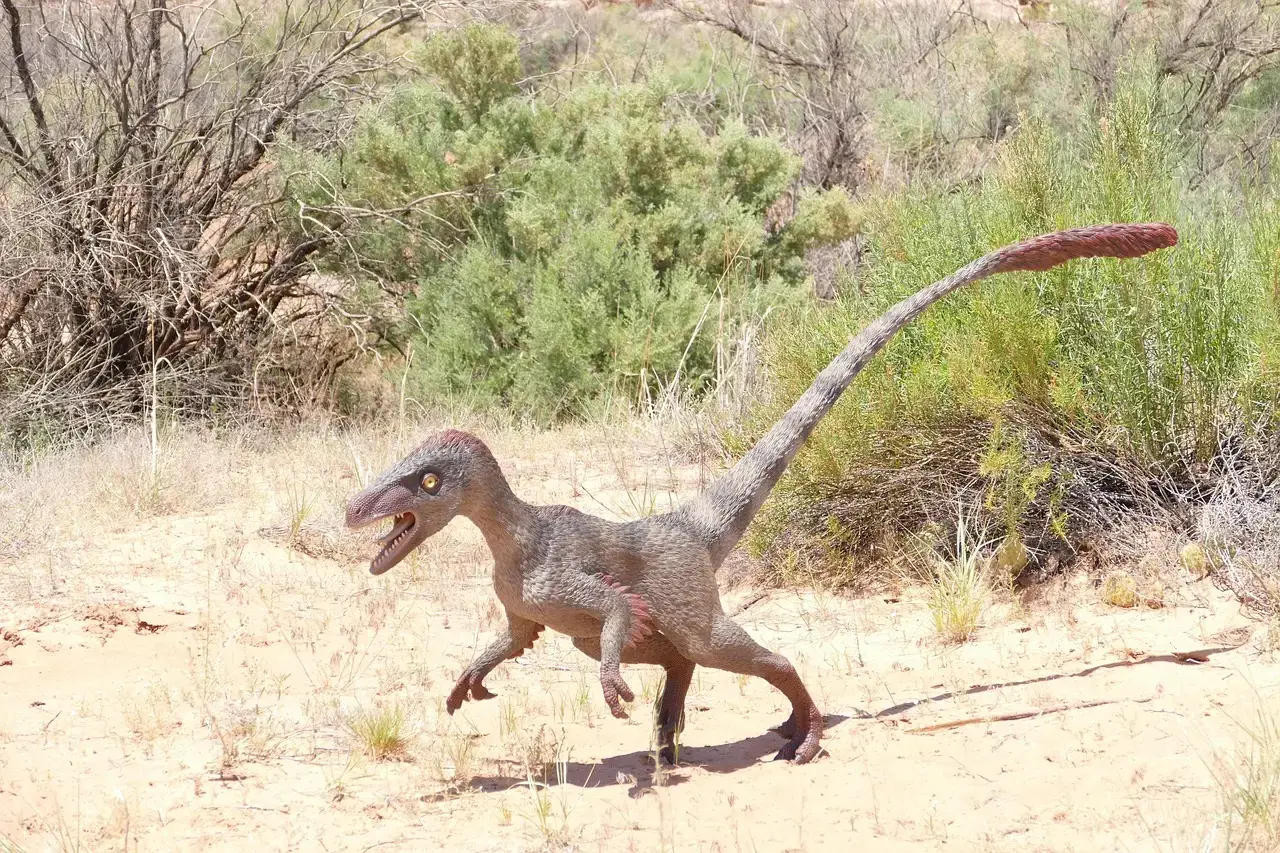
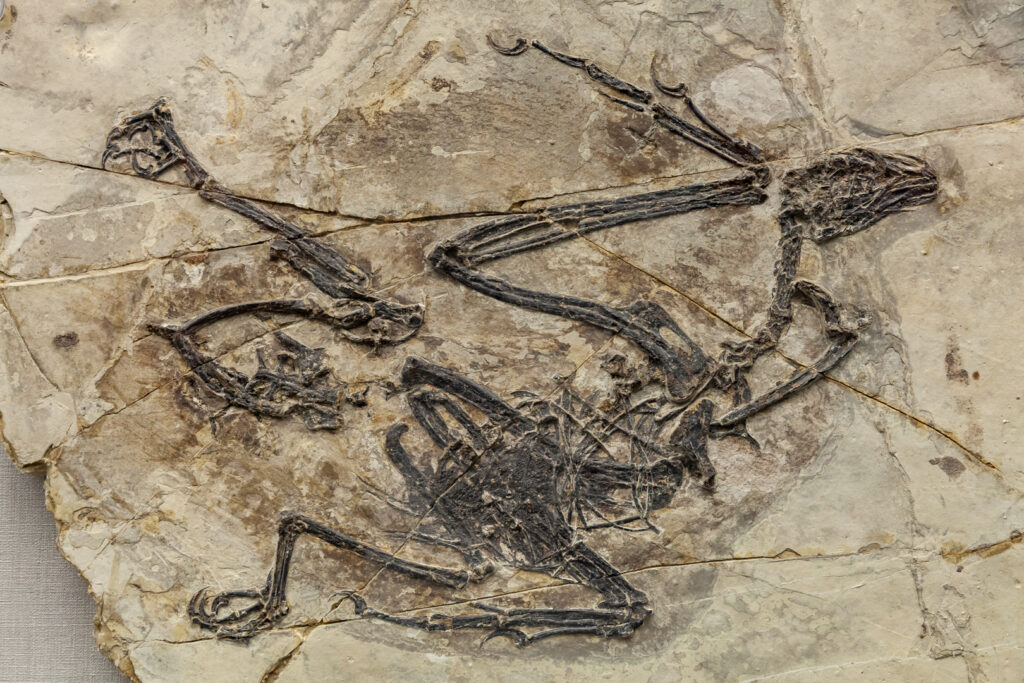
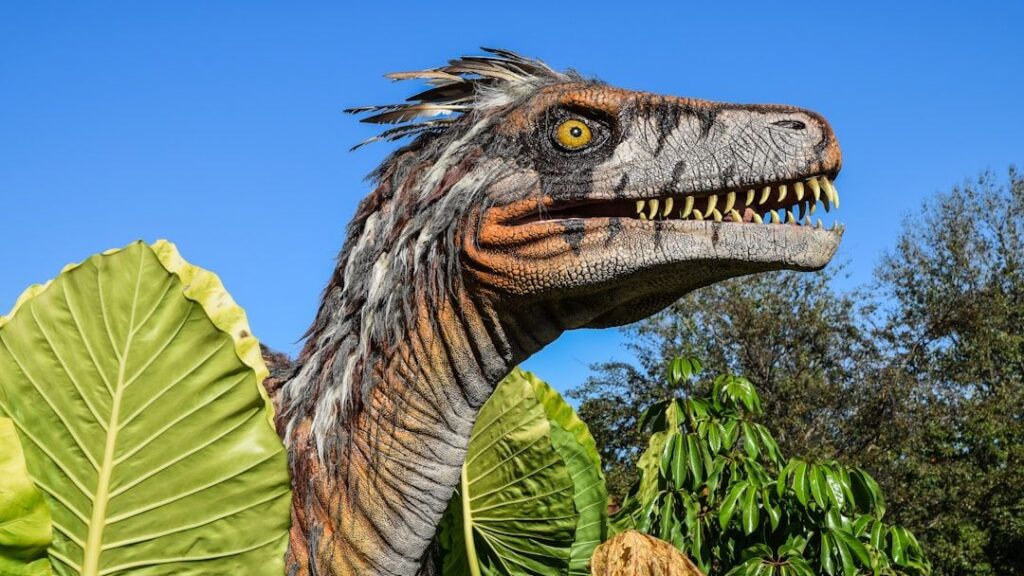
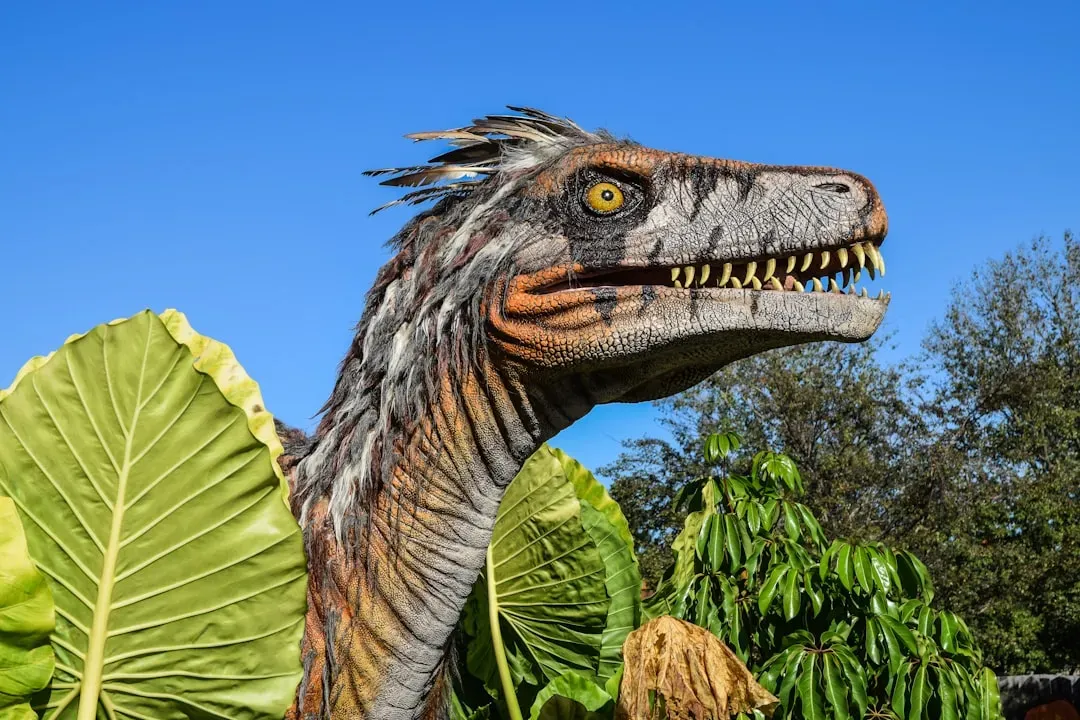
Of all the prehistoric animals that movies have twisted beyond recognition, Velociraptor might hold the crown. The movie version is human-sized, scaly, and terrifyingly sleek, a kind of reptilian parkour athlete with the brains of a supervillain. In reality, Velociraptor was roughly the size of a large turkey, and we have strong evidence that it was feathered. Actual fossils show quill knobs on the arm bones, which indicates feathers anchored there, yet Hollywood keeps insisting on smooth, lizard-like skin because it “looks scarier.”
On top of that, the intelligence and behavior of Velociraptor are often pushed into pure science fiction. They were probably smart for dinosaurs, but “smart for a dinosaur” doesn’t mean solving door handles, manipulating technology, and orchestrating complex pack tactics like a wolf crossed with a hacker. Their famous sickle claw was almost certainly used more for pinning and controlling prey rather than slicing victims open in mid-air like a knife. Every time a movie paints them as scaly super-geniuses, it pushes the real, already fascinating animal a little further out of cultural memory.
3. Spinosaurus: Not Just a Giant Crocodile with a Sail
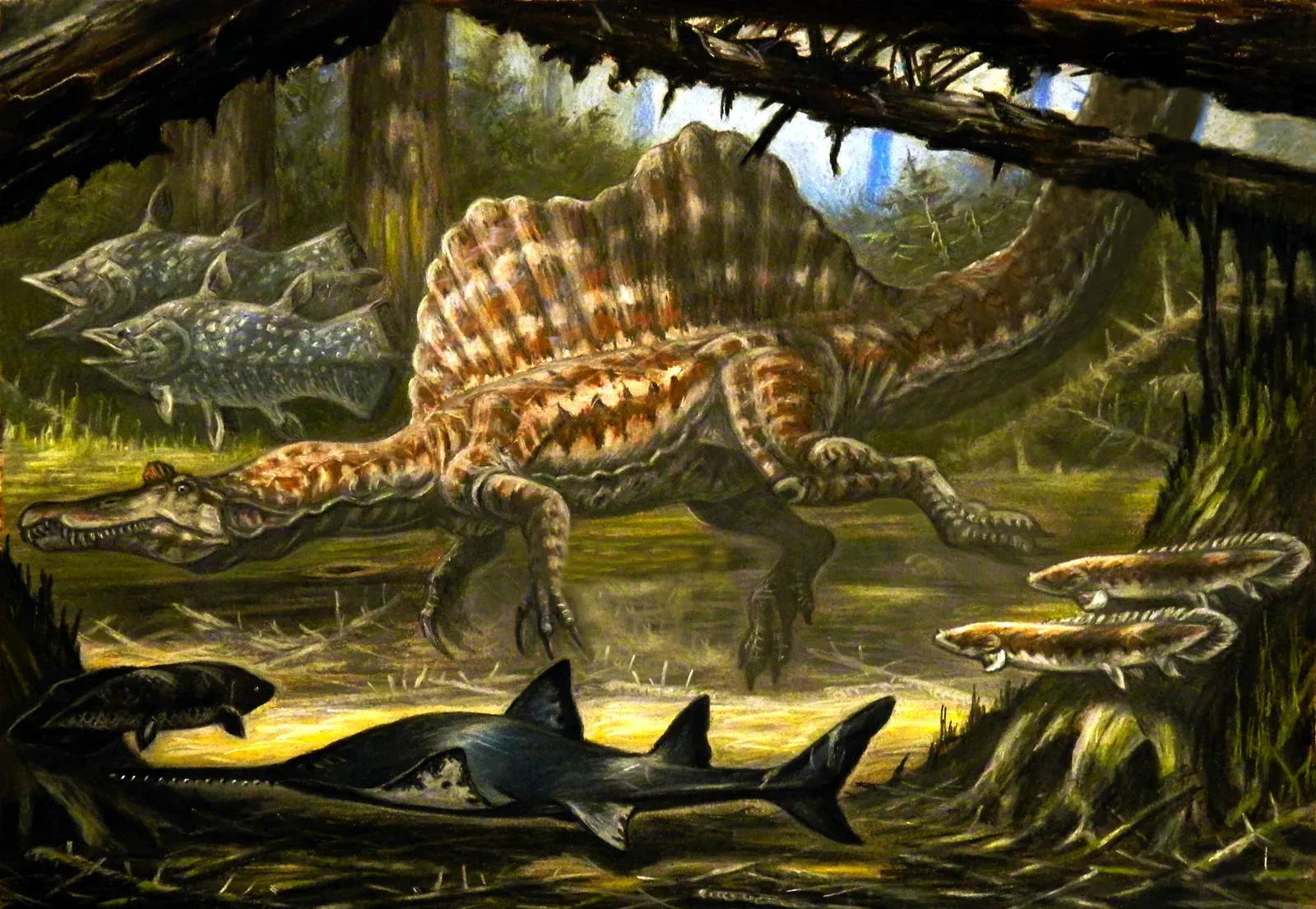
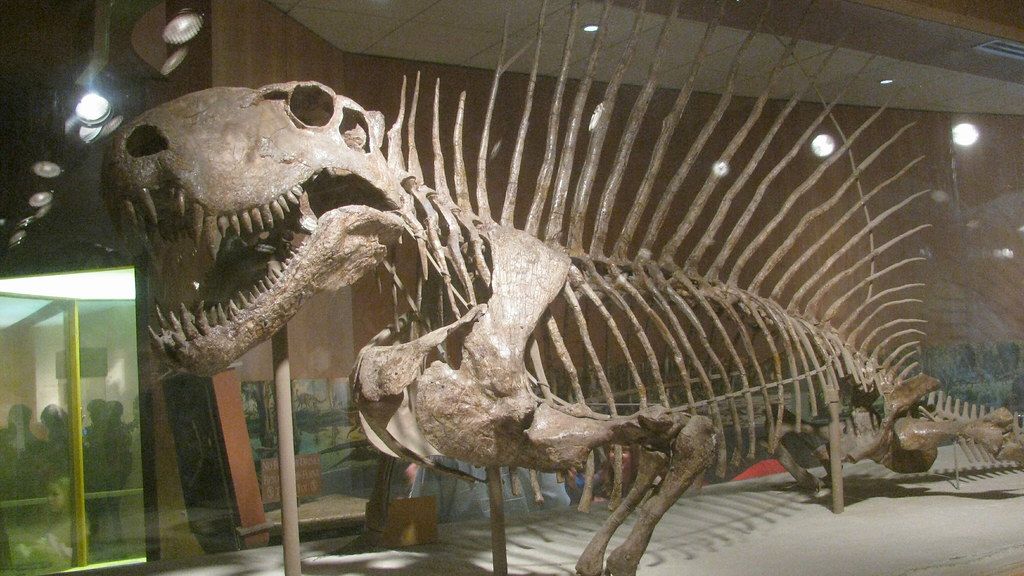
Spinosaurus has had one of the most dramatic scientific rethinks of any big theropod, and Hollywood has largely ignored all of it. For years, films showed it as a kind of extra-large T. rex with a sail, stomping around on land and battling other giant predators like a pro-wrestler. More recent research suggests it was far more semi-aquatic than initially thought, with adaptations in its limbs, tail, and skull that hint at a lifestyle closer to that of a massive, fish-hunting river specialist than a purely land-based apex predator.
Visual effects teams still tend to animate Spinosaurus as a land sprinter with long, powerful hind legs, even though newer reconstructions show shorter legs, a center of mass shifted forward, and a tail shaped for swimming. The classic “Spino versus T. rex” showdown many people remember from movies is also very misleading, since these two animals lived in different places and times, separated by millions of years. Instead of embracing the genuinely stranger and cooler semi-aquatic version, Hollywood keeps dragging the old land-based Spino back on screen because it fits neatly into familiar monster battles.
4. Triceratops: The Perpetual Knight in Shining Horns
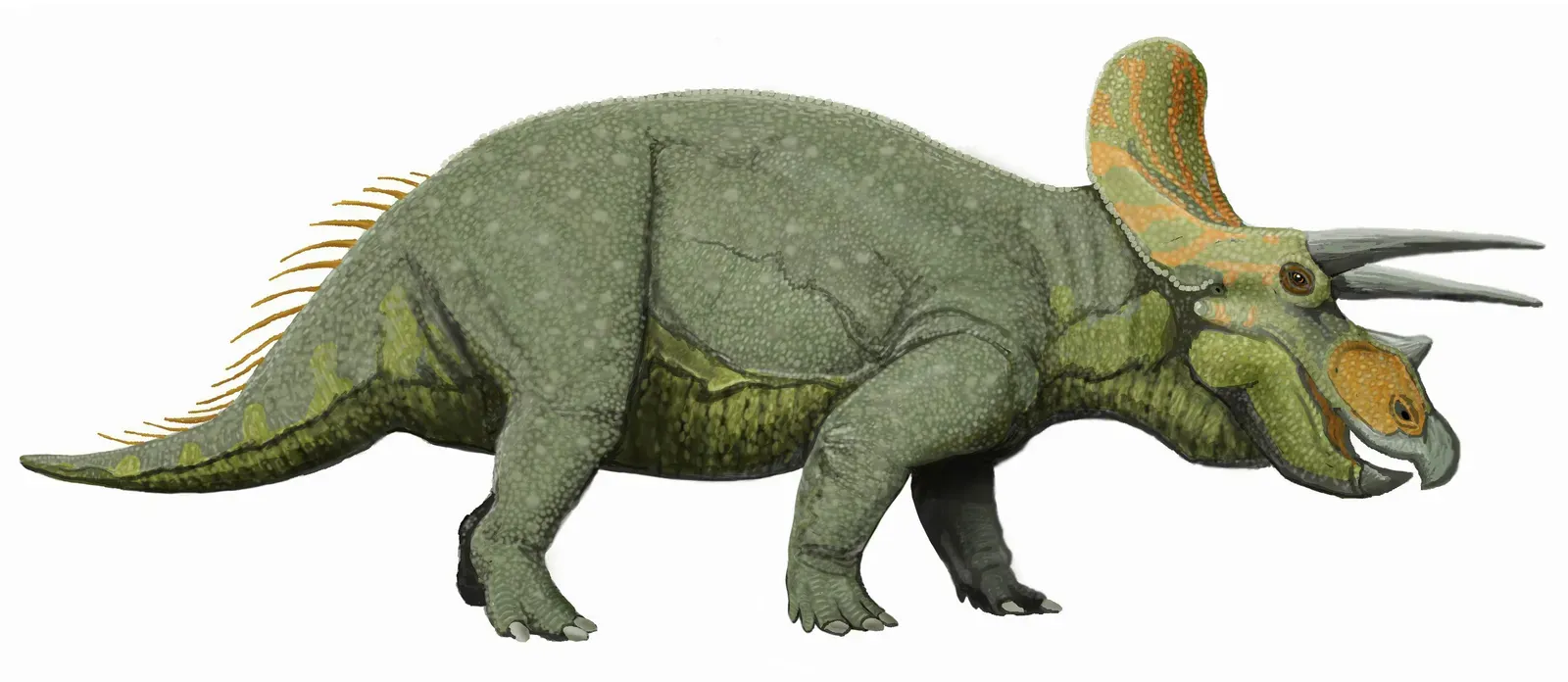
Triceratops is always cast as the tank of the Late Cretaceous, eternally locked in a head-to-head grudge match with T. rex. In movies, it is usually either charging full speed, jousting with theropods, or acting as a kind of prehistoric bulldozer that can plow through anything. While Triceratops was absolutely a heavy, powerful animal with serious weapons on its skull, that doesn’t mean it spent every day living in a nonstop action sequence.
Fossil evidence suggests a more complex story. Those massive frills and horns were very likely used for display, species recognition, and social signaling, not just combat. There are healed injuries on skulls that show horn-to-horn clashes did happen, but they were probably more about intraspecies contests, like modern deer or antelope. Movies tend to reduce Triceratops to a battering ram, skipping over the idea that it might have had intricate social lives, changing horn shapes as it grew, and a role in the ecosystem that was not just “horned tank that charges on cue.”
5. Pteranodon (and Other Pterosaurs): Not Dinosaurs, Not Flapping Dragons
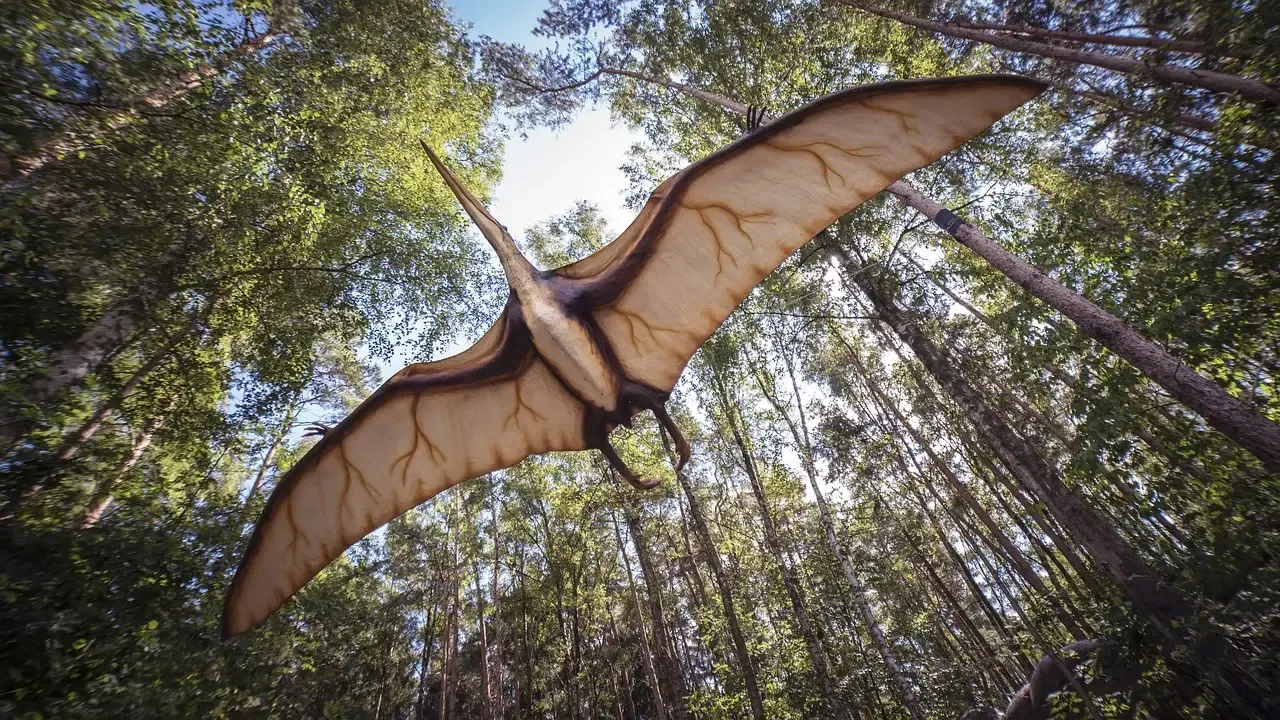
Any time a movie shows flying reptiles, you can almost bet it will shove all of them under the vague label of “pterodactyls” and treat them like dragon-birds that happen to live during dinosaur times. Pteranodon is often turned into a scaly, leathery-winged, shrieking menace that snatches humans like fish, dive-bombing without any sense of realistic flight physics. In reality, pterosaurs were a completely separate group from dinosaurs, with delicate bone structures, complex wing membranes, and in many species, fuzzy coverings that were more like hair or filament than bare reptile skin.
Films also consistently exaggerate how strong and aggressive these animals would have been toward large land animals or humans. The idea of giant pterosaurs lifting full-grown people and flying off with them is basically fantasy when you look at their likely muscle power and body plans. Instead of showing them as highly specialized, often fish-eating or scavenging flyers using air currents and precise glides, Hollywood keeps giving us flapping, bat-like monsters that act more like fantasy creatures than real animals from Earth’s past.
6. Mosasaurus: The Overgrown Sea Monster That Ate the Rulebook
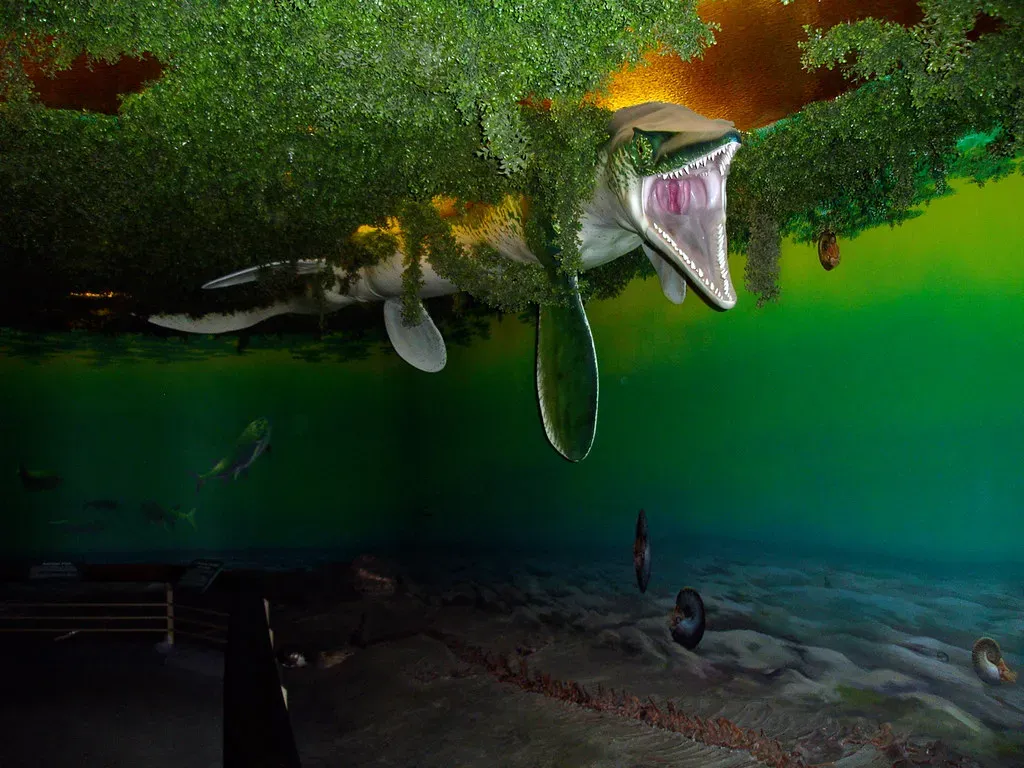
In modern movies, Mosasaurus has basically become the kaiju of the Cretaceous oceans. It is routinely super-sized to impossible lengths, leaping out of the water to grab everything from sharks to, absurdly, huge land animals hanging above the water’s surface. The actual mosasaurs were indeed impressive marine reptiles, some reaching tens of feet in length, but the screen versions often balloon them into a scale that breaks even basic marine biology plausibility.
Beyond the size, behavior gets wildly exaggerated too. Hollywood likes to portray Mosasaurus as a surface-leaping show-off, but real marine predators of that size would have to carefully manage energy, buoyancy, and ambush tactics. The fossil record suggests these animals were powerful swimmers with strong tails and flexible bodies, likely relying on surprise attacks from below and behind, not theatrical high jumps every five minutes. Turning them into oversized theme-park mascots might look cool, but it wipes out the subtlety of how large marine ecosystems actually work.
7. Stegosaurus: The Slow, Stupid “Backplate Tank”
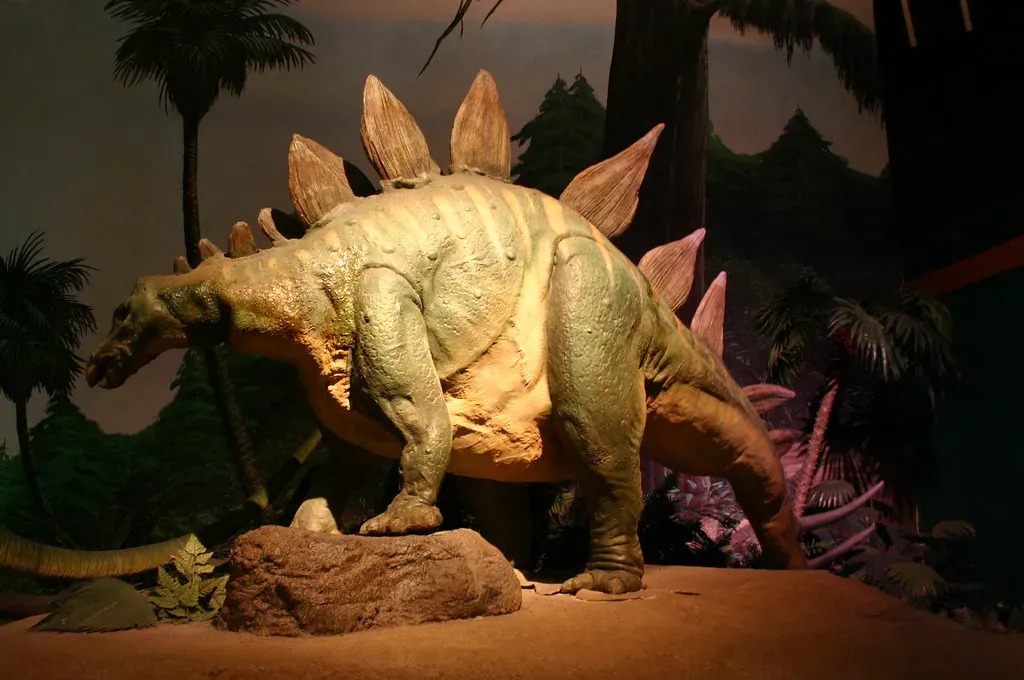
Stegosaurus is one of those dinosaurs everyone recognizes from childhood toys, and that familiarity lets lazy stereotypes stick around. Films usually show it as extremely slow, dim-witted, and basically just a walking salad bar with spikes. Its iconic back plates are often presented as pure armor, like a shield wall, which makes sense visually but does not really match what scientists think those plates were actually doing.
Those big plates were full of blood vessels and likely played a major role in display, species recognition, or thermoregulation rather than acting as simple armor. Movies hardly ever explore that, preferring to just have Stegosaurus stomp through a scene, swing its tail once, and then disappear. Also, older ideas about it having a tiny brain and thus being “stupid” are outdated and oversimplified; brain size alone is not a simple measure of intelligence. The real animal was a specialized herbivore with a body plan that evolved for a particular lifestyle, not a clumsy extra wandering into the background of action scenes.
8. Sabertooth Cats (Smilodon): Not Just Lions with Oversized Teeth
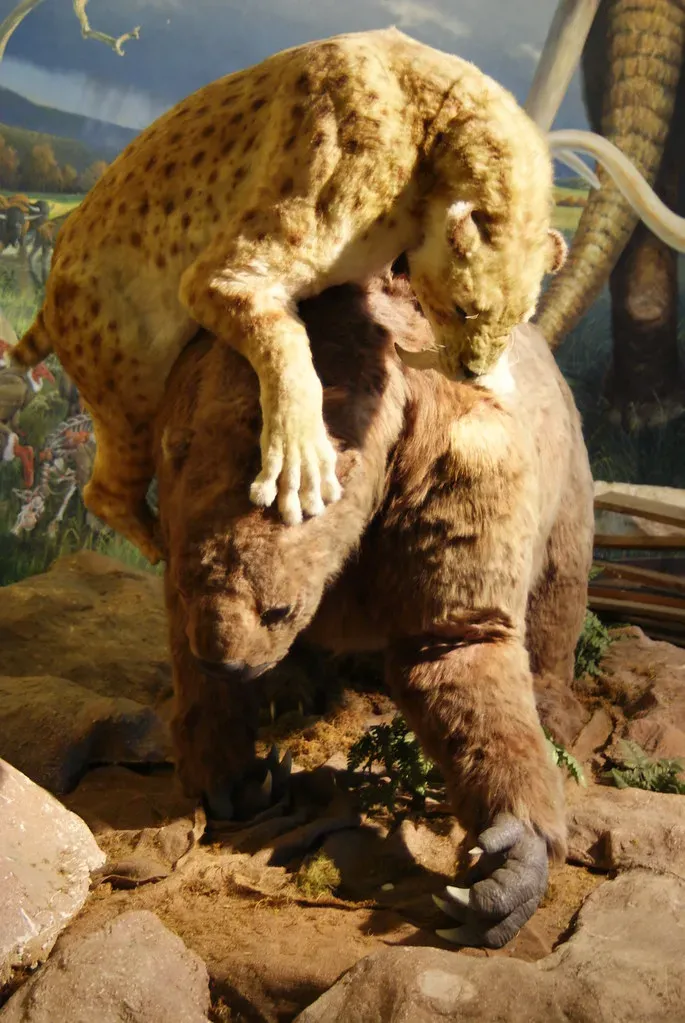
When sabertooth cats show up in movies, they are almost always just modern big cats with an over-the-top dental upgrade. Think “lion plus swords,” slap on a snarl, and call it prehistoric. In truth, animals like Smilodon had very different body proportions and likely very different hunting strategies compared to modern lions or tigers. They had robust, powerful forelimbs and a build that suggests ambush attacks and grappling, not extended high-speed chases on open ground.
Those long upper canines were not general-purpose knives; they were fragile in some ways and probably used in very specific killing bites once prey was immobilized. Movies that show sabertooths crushing bones, biting through anything, or snapping those teeth repeatedly in combat are ignoring basic mechanics. There is also usually no hint of the rich Ice Age ecosystems they lived in, with large herbivores, changing climates, and competition with other predators. Reducing sabertooths to “angry lions with bigger teeth” wastes a chance to show how different and experimental Ice Age evolution really was.
9. Woolly Mammoth: The Walking, Shaggy Elephant Stereotype
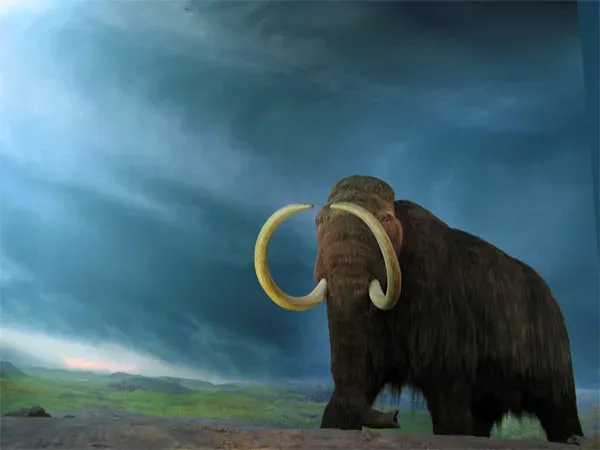
Woolly mammoths might seem like the least “wrong” on this list, because many films do at least give them hair and tusks, which is a start. But Hollywood still often treats them like slightly scruffier African elephants dropped into snowy backdrops. The truth is more interesting: mammoths had a whole suite of cold-adapted features, from specialized fat layers to shorter ears, and they lived in complex steppe environments that looked more like dry grasslands than endless blizzards.
Movies also tend to cluster all mammoths into a single look and timeframe, ignoring that there were different mammoth species and that they overlapped with early humans in nuanced ways. Their social behavior, migration patterns, and eventual extinction are often boiled down to simplistic “prehistoric herd animal” tropes. When films show people casually hunting them down with ease, it glosses over the dangerous reality of facing several tons of intelligent, social, well-adapted megafauna. Treating mammoths as just shaggy set dressing misses both the science and the emotional impact of a species that vanished not so long ago in Earth’s history.
Conclusion: Why Hollywood’s Prehistoric Myths Refuse to Go Extinct
The funny thing is, the real science behind these animals is already far more fascinating than the outdated versions filmmakers keep recycling. We now know about feathered predators, semi-aquatic giants, flying reptiles with fuzzy bodies, and Ice Age ecosystems teeming with odd experiments in mammal design. Yet Hollywood often clings to designs and behaviors born in the middle of the twentieth century because they are familiar, marketable, and easy to plug into the next action set piece. It is like choosing to play an old, scratched VHS tape when there is a gorgeous remaster sitting right there.
Personally, I think audiences are ready for weirder, more accurate prehistoric worlds, even if that means shrinking some predators, adding feathers in unexpected places, or admitting that not every creature was a shrieking, roaring monster. There is something powerful about seeing these animals as they likely were: not villains, not props, but living beings shaped by deep time and harsh environments. If anything, the truth makes their survival, and their extinction, hit harder. The real question is, which will evolve first: our movie monsters, or our expectations of what a prehistoric blockbuster should look like?