Imagine looking up at the sky and seeing not birds, not clouds, but colossal dragonfly-like insects, each almost as long as your entire forearm, beating their wings over ancient swamps. Now imagine there are so many of them that the daylight dims, the way a thick storm front rolls in and turns afternoon into something that feels like dusk. It sounds like something from a big-budget sci‑fi movie, but this is one of those rare cases where reality really was that wild.
In deep time, long before dinosaurs, giant predatory insects ruled the air. They were bigger than any dragonfly alive today, and they hunted with spiked legs and razor-like jaws. Scientists have pieced together their story from fossils flattened in stone, from chemical clues about the atmosphere, and from comparisons with living insects. The result is a picture that is both awe‑inspiring and a little unsettling: a world where the first “kings of the sky” were terrifying flying bugs.
The Carboniferous skies: when insects got huge
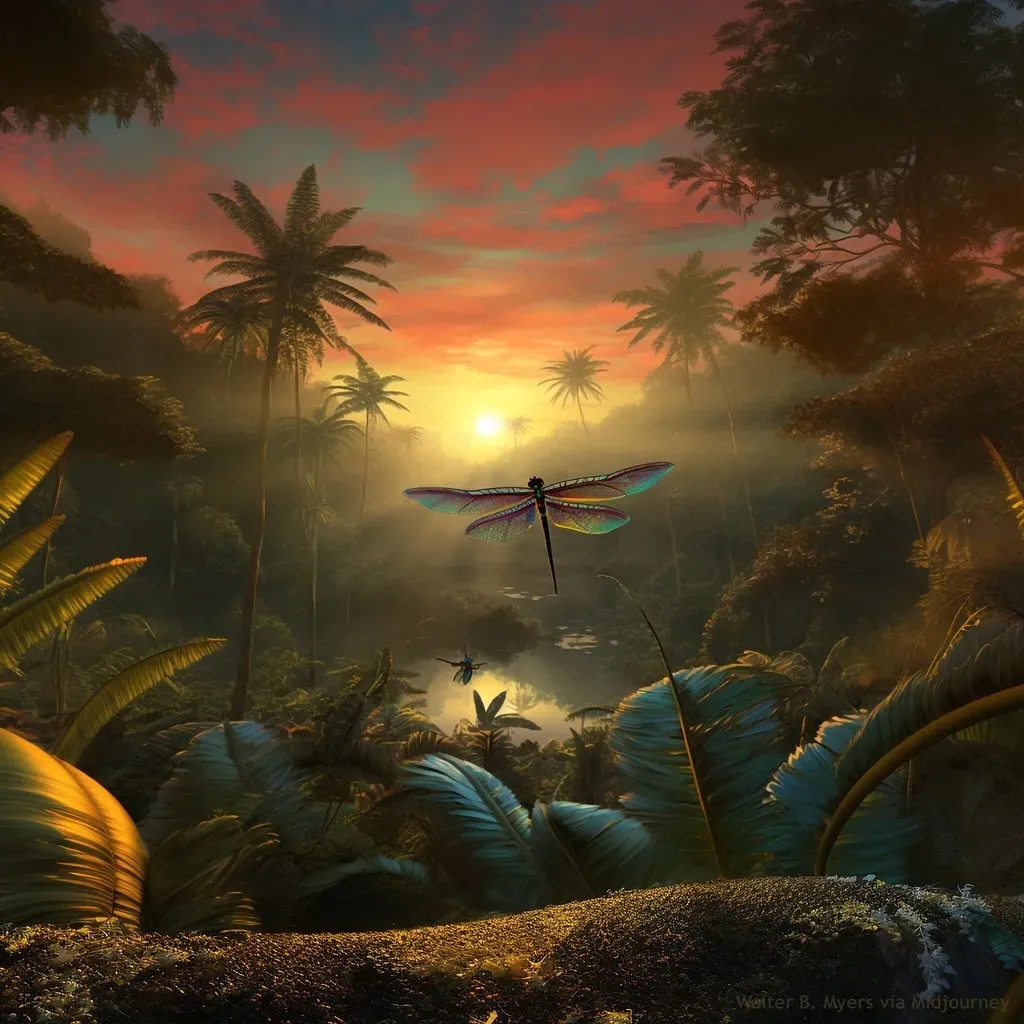
Here’s the shocking part: the age of giant insects came and went more than three hundred million years ago, during a slice of Earth’s history called the late Carboniferous and early Permian periods. Back then, what is now North America and Europe was draped in endless swamp forests of towering club mosses, tree ferns, and strange early conifers. This was not some gentle fairy‑forest; it was hot, humid, and thick with life, a bit like putting the entire planet inside a giant greenhouse terrarium.
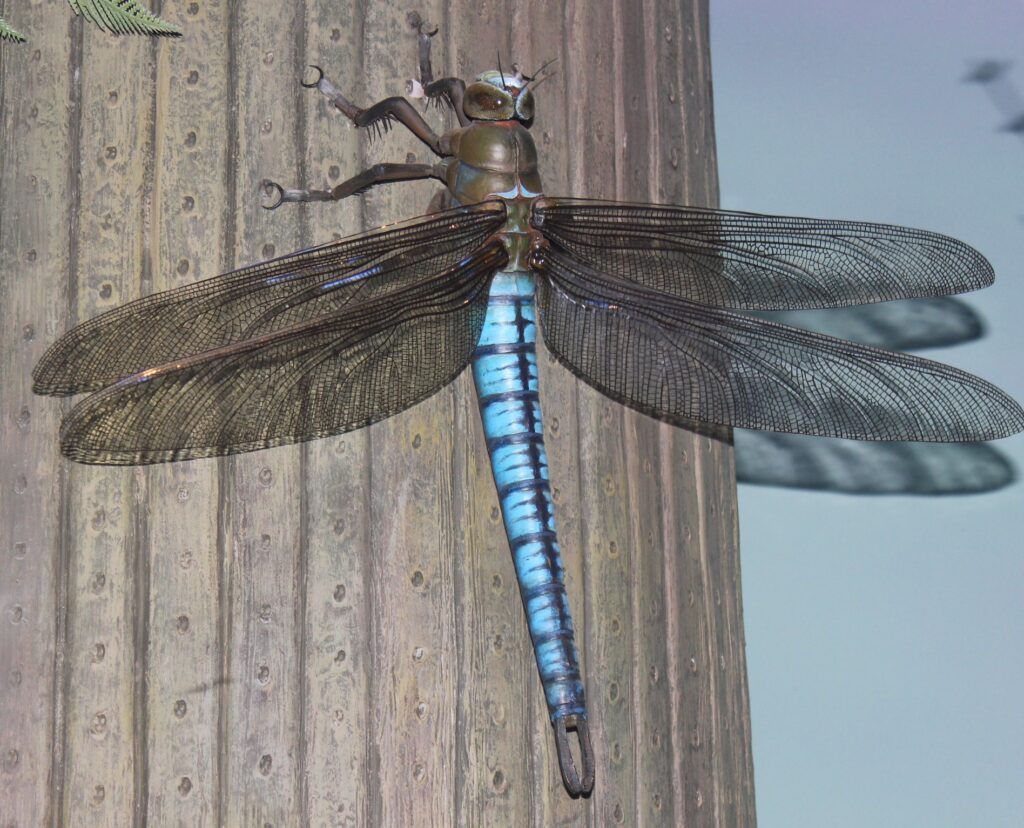
In that steamy world, insects exploded in size in a way we simply do not see today. Among them were the so‑called “griffinflies,” especially a genus known as Meganeura and its relatives, with wingspans stretching to around two and a half feet or more. That’s longer than many adults’ forearms and close to the width of a small child’s torso. These animals were not just oversized novelties; they were key predators in their ecosystems, filling a role that birds and bats would only claim many millions of years later.
Meet Meganeura: the “dragonfly” that ruled the air
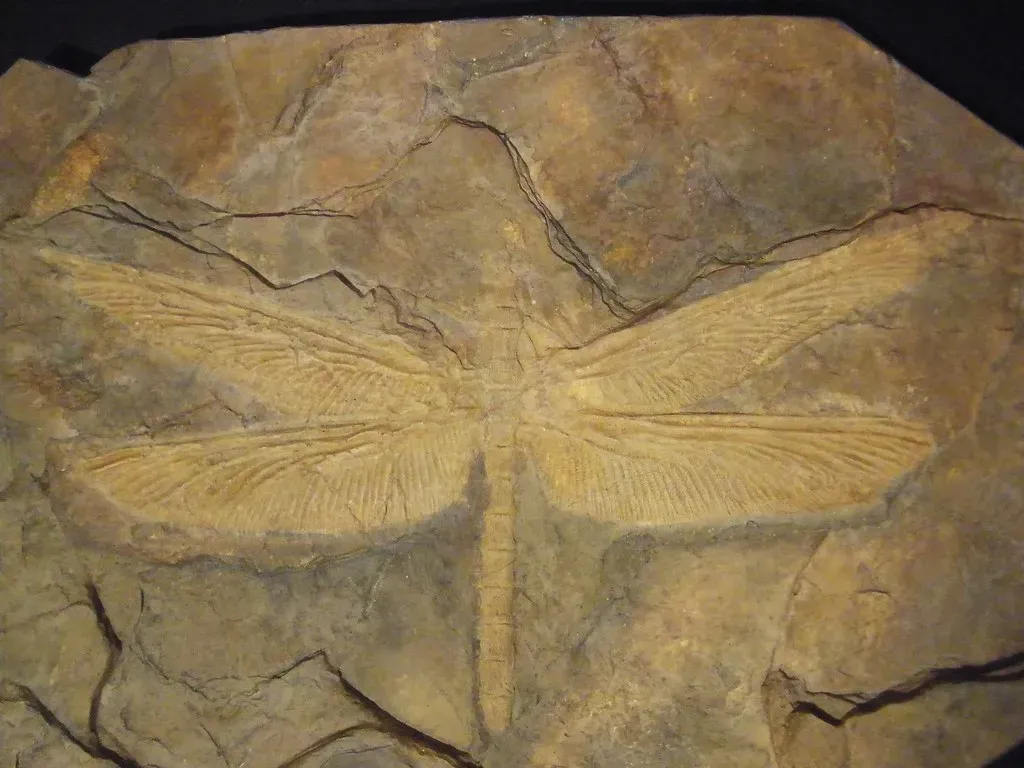
Meganeura is often described as a giant dragonfly, but that’s more of a visual shorthand than a perfect scientific label. It belonged to a related but extinct group, and if you saw one in flight you’d probably recognize the same basic ingredients: two pairs of long, narrow wings beating rapidly, huge compound eyes taking up most of the head, and slender, elongated abdomen trailing behind like a dart. The resemblance is close enough that your first instinct would simply be to call it a dragonfly on steroids.
What makes Meganeura so striking isn’t just its size; it’s what that size implies about its lifestyle. With a wingspan that could rival a modern seagull’s and a streamlined body built for speed, it was likely an aerial hunter that snapped up other insects on the wing. Picture the terrifying grace of a modern dragonfly that can catch a mosquito mid‑flight, but scale everything up so that its prey might include early winged insects the size of your hand. If you dislike bugs now, imagine one that could look you straight in the eyes while it flew past.
How could an insect get that big? The oxygen story
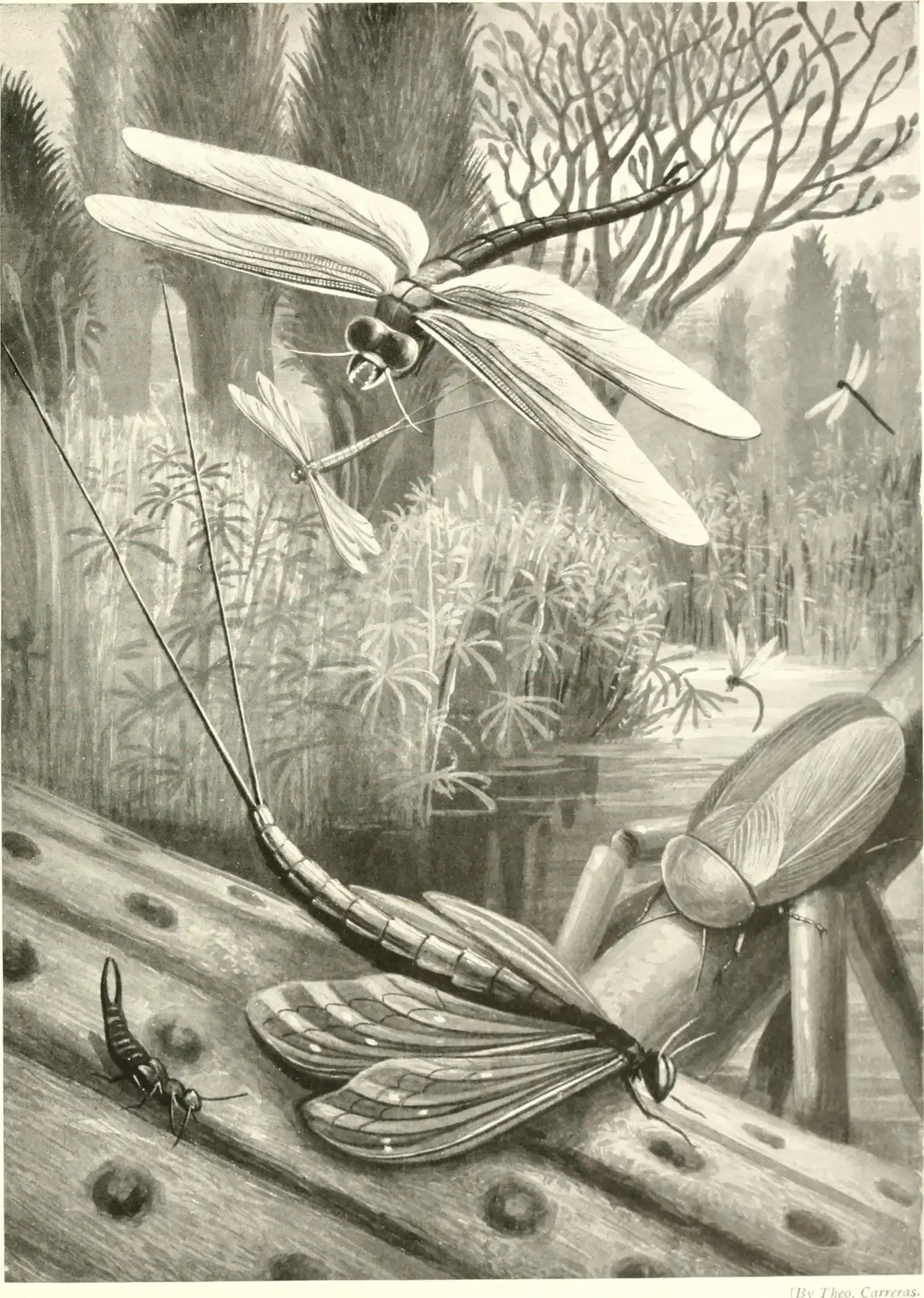
The big question everyone asks is simple: how on Earth can an insect grow that huge when insects today are so comparatively small? The leading explanation centers on the air itself. In the late Carboniferous, the concentration of oxygen in the atmosphere is thought to have been significantly higher than it is in the present day. Insects breathe through a network of microscopic tubes called tracheae that rely on oxygen diffusing directly into their bodies, and that system becomes less efficient as body size increases.
With more oxygen in the air, those diffusion limits loosened, allowing insect bodies to scale up without suffocating. It’s a bit like turning up the oxygen level in a room; suddenly, lungs that normally struggle can handle more exertion. Not every detail of this story is perfectly settled, and scientists still debate how much of the gigantism is due to oxygen versus other factors like predation and competition. But the high‑oxygen hypothesis remains the most convincing backbone for explaining how a flying insect could reach wingspan dimensions that sound more like a bird than a bug.
Could they really darken the sky in swarms?
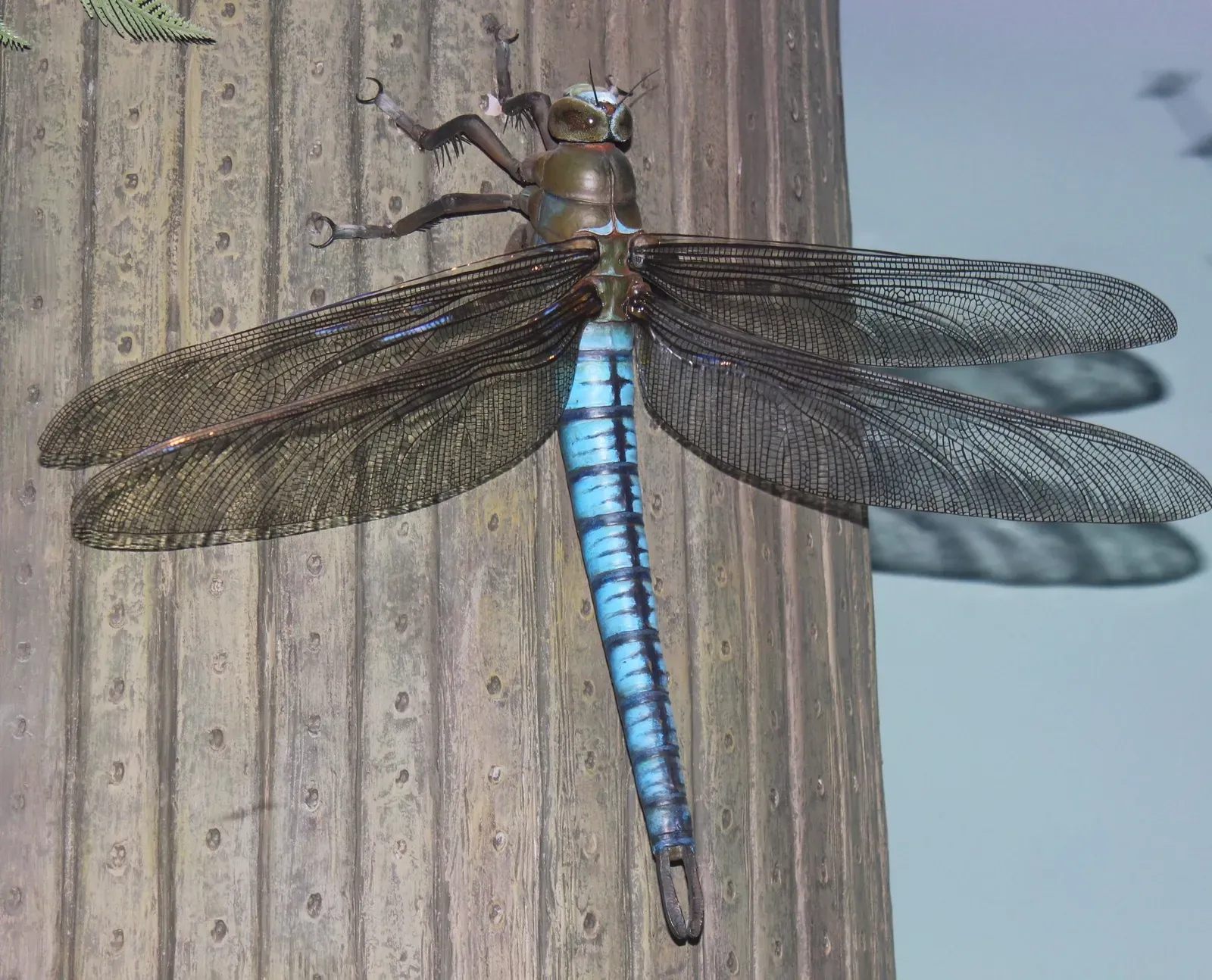
The image of these giant insects forming swarms dense enough to dim the sun is dramatic, and it draws on what we know from modern insect behavior. Today, locusts and some other flying insects can gather in enormous numbers that turn the sky pale and make the air feel alive with beating wings. When you combine that kind of swarm behavior with ancient ecosystems teeming with insect life, it isn’t a stretch to imagine thick congregations of large flyers creating local patches of eerie, shifting shadow.
That said, we need to be honest: we do not have a direct fossil snapshot that shows a swarm of Meganeura blotted across the sky like a living cloud. Fossils preserve individuals, not crowds in motion. But given the abundance of insect fossils from those swampy environments and the success of these large predators, many researchers consider it plausible that, at least at times and in certain areas, the air could grow surprisingly busy. If you picture a summer evening where dozens of dragonflies skim a lake at once, then inflate everything in size and number, you’re not far from what those ancient twilights might have felt like.
What did they eat, and what hunted them?
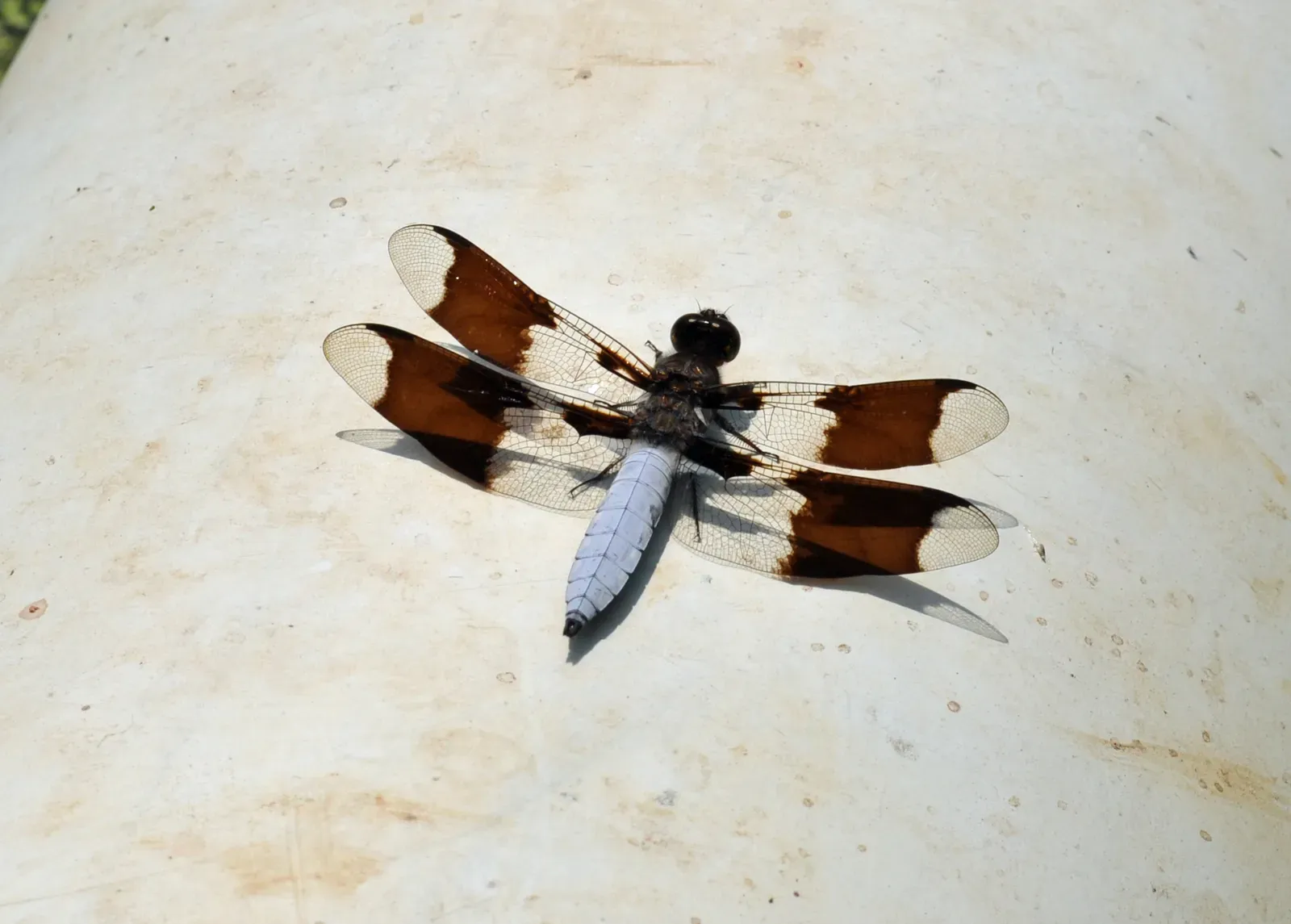
When you look at the anatomy of these giant griffinflies, their role as predators seems almost over‑engineered. They had spiny legs ideal for snatching prey, strong mandibles for tearing it apart, and huge eyes that would have given them an excellent field of view in all directions. They likely targeted other insects, such as early mayfly‑like and beetle‑like forms, and possibly even small amphibians that ventured near the water’s surface. In a world without birds, an agile aerial hunter with that kind of toolkit would have been terrifyingly efficient.
But being top dog – or top bug – never lasts forever. Over time, new vertebrate predators moved into the skies and onto the land, including early reptiles and later small flying vertebrates. Changes in climate and vegetation reshaped habitats; the vast swamp forests shrank and shifted. As oxygen levels dropped closer to modern values, being enormous and dependent on diffusion‑based breathing turned from an advantage into a liability. Meganeura and its kin eventually disappeared, leaving the predatory skies to smaller, more adaptable insects and, eventually, to the ancestors of the birds we see today.
Why giant sky‑bugs matter to our world today
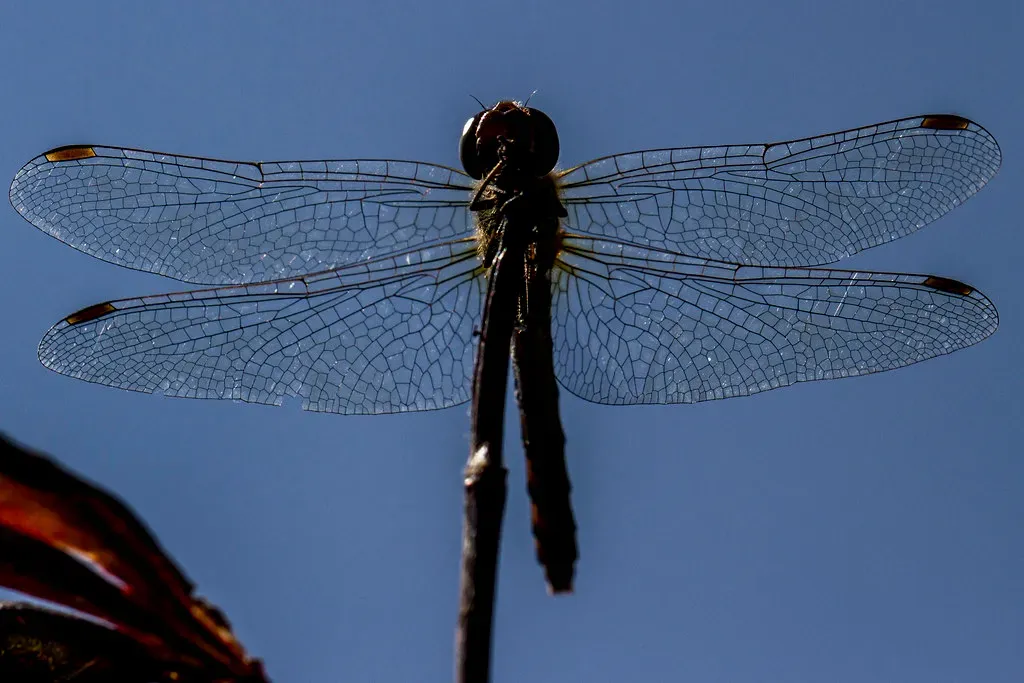
At first glance, these prehistoric monsters might feel like a fun bit of trivia, something you file in the same mental drawer as saber‑toothed cats and giant ground sloths. But their story hits much closer to home than you might expect. Giant insects are a reminder that life on Earth is partly shaped by background conditions we rarely think about – things as basic as how much oxygen is in the air and what kinds of plants are pumping it out. When those conditions shift, the rules of the game can change, and entire categories of body plans can either flourish or vanish.
I find it strangely comforting and unsettling at the same time: comforting, because it shows how wildly creative evolution can be, and unsettling, because it underlines how fragile any “normal” really is. The giants of the Carboniferous skies tell us that the world has been unimaginably different before, and it will be unimaginably different again. In my view, that makes our current moment feel less permanent and more precious. If Earth could once be ruled by forearm‑length flying insects that stalked the air in numbers thick enough to stir shadows, what surprising creatures might rule the skies millions of years after us – would you have ever guessed that bugs once got there first?