
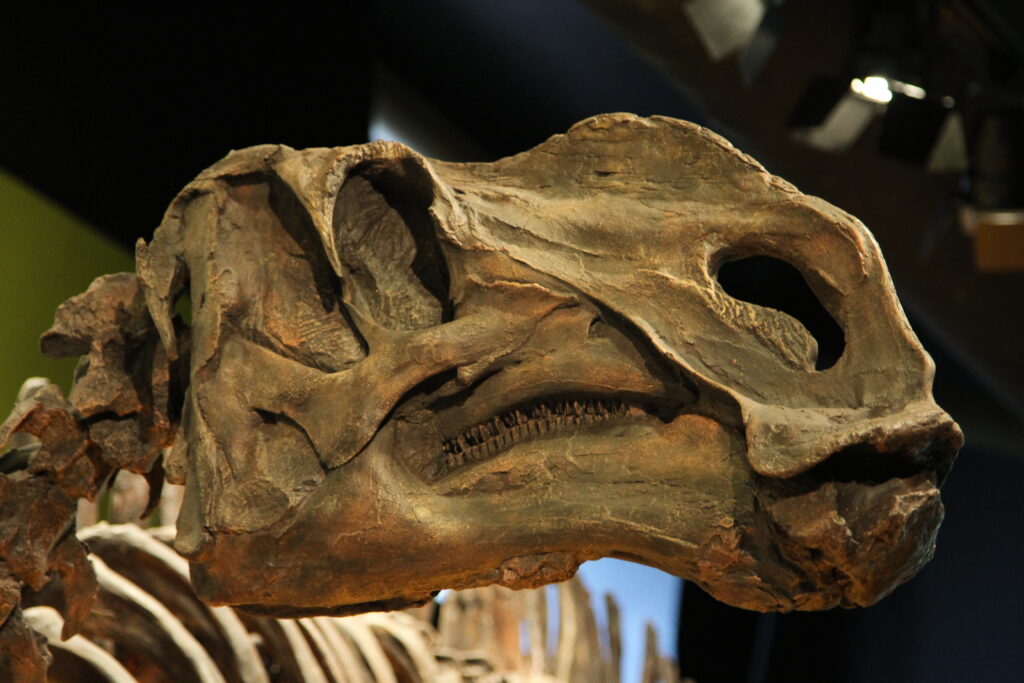
For a long time, if you asked paleontologists which dinosaur skull caused the most drama, you’d hear the same name again and again: a duck‑billed herbivore with a skull that looked more like modern art than something that ever chewed plants. The skeleton was weird, but the skull was on another level entirely. It was so strange that for decades, experts could not even agree on which way was “forward,” what parts were jaws, and what parts were decorative bone. Careers were built, reputations were challenged, and museum labels changed more than once. What makes this story so compelling is that it is not just about bones; it is about how science really works when the evidence is confusing and the stakes are high. The skull in question belongs to a dinosaur often known as the “bone‑headed duckbill” of the Cretaceous, and its discovery threw a wrench into the neat picture of what a dinosaur head was supposed to look like. As CT scans, computers, and new fossils entered the scene, old ideas collapsed and new ones rose, sometimes from the same scientists who had defended the previous theories. If you’ve ever wondered how smart people can look at the exact same skull and passionately disagree for half a century, this is the dinosaur for you.
A Skull So Weird Nobody Could Agree Which Way It Faced
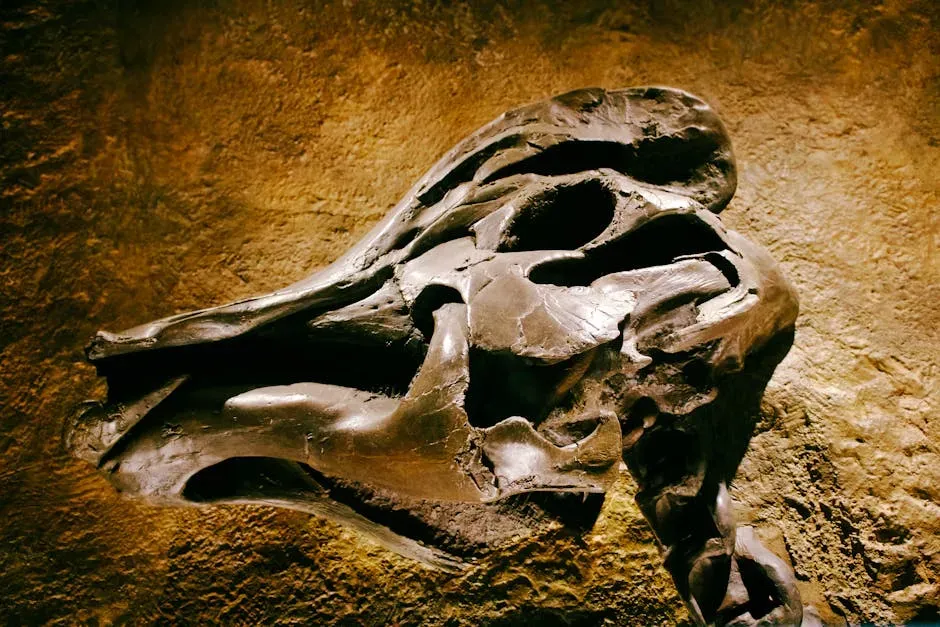
Imagine lifting the fossilized skull of a dinosaur out of its crate and realizing you cannot tell which end is the snout and which is the back of the head. That was the situation with this hadrosaurid, often lumped into the “duck‑billed dinosaurs” but immediately standing out as the oddball of the family. The bones were crushed in places, twisted in others, and some of the usual landmarks that make dinosaur skulls feel familiar were either exaggerated or seemingly missing. Museum workers and scientists tried to map the pieces like a 3D jigsaw puzzle with no picture on the box. The result was that early reconstructions were all over the place. Some mounted versions gave the dinosaur a long, low face; others unintentionally flipped parts so that the animal ended up with an almost bulldog‑like head. Artists’ reconstructions in books and exhibits proudly presented these versions to the public, even though, behind the scenes, paleontologists were whispering that something felt off. It’s like trying to assemble a smartphone from parts without instructions and then asking three engineers to guess what the final design should look like – they will all swear they’re right, and none of them will agree.
The Long Battle Over Duck‑Bills, Beaks, and Chewing Machines
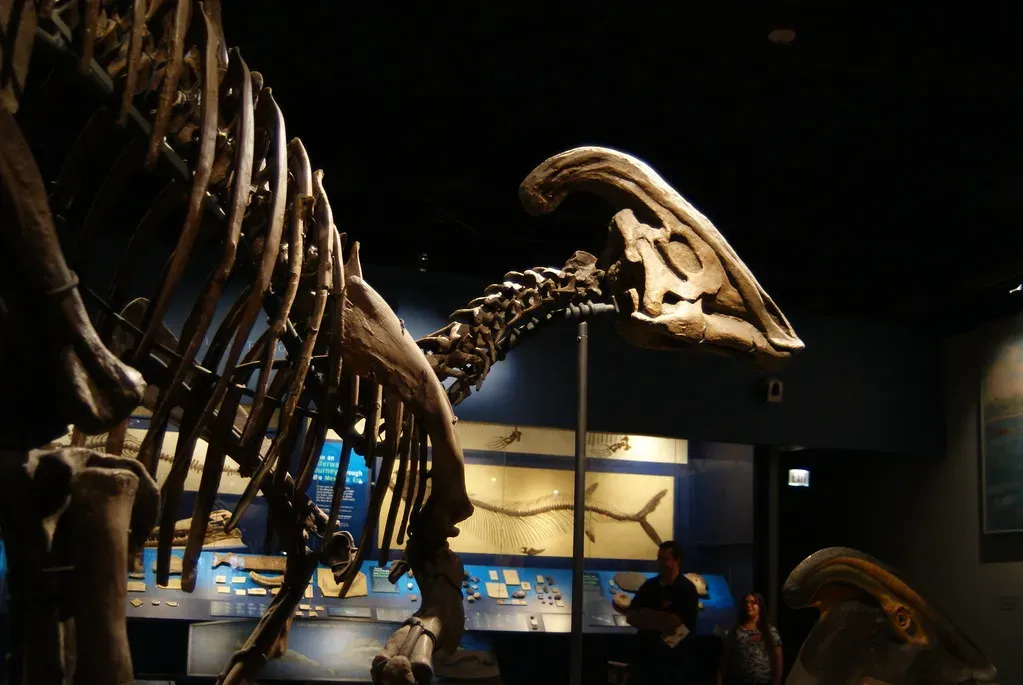
Underneath all the confusion about how the skull fit together was a bigger argument: what were these animals actually doing with their heads? Classic hadrosaurs are famous for their powerful chewing systems, with battery‑like rows of teeth and beak‑like snouts that worked like plant‑shredding conveyor belts. This strange skull clearly belonged to that broader group, but its proportions – and even the angles of the jaw joints – seemed to bend the rules. If you placed the bones one way, the animal looked like a super‑chewer; another way, and it barely seemed able to bite at all. Some scientists argued that earlier reconstructions had projected “normal” hadrosaur expectations onto an abnormal skull. They suggested that the animal may have fed differently, maybe cropping softer plants or foraging lower to the ground than its relatives. Others pushed back hard, insisting that the same basic chewing engine had to be there and that any reconstruction that weakened it was probably wrong. Each new paper tried to correct the last, redrawing muscles, tweaking jaw positions, and proposing new alignments like rival mechanics arguing over the correct way to rebuild a vintage car engine from warped blueprints.
Mislabels, Misfits, and the Taxonomy Tug‑of‑War
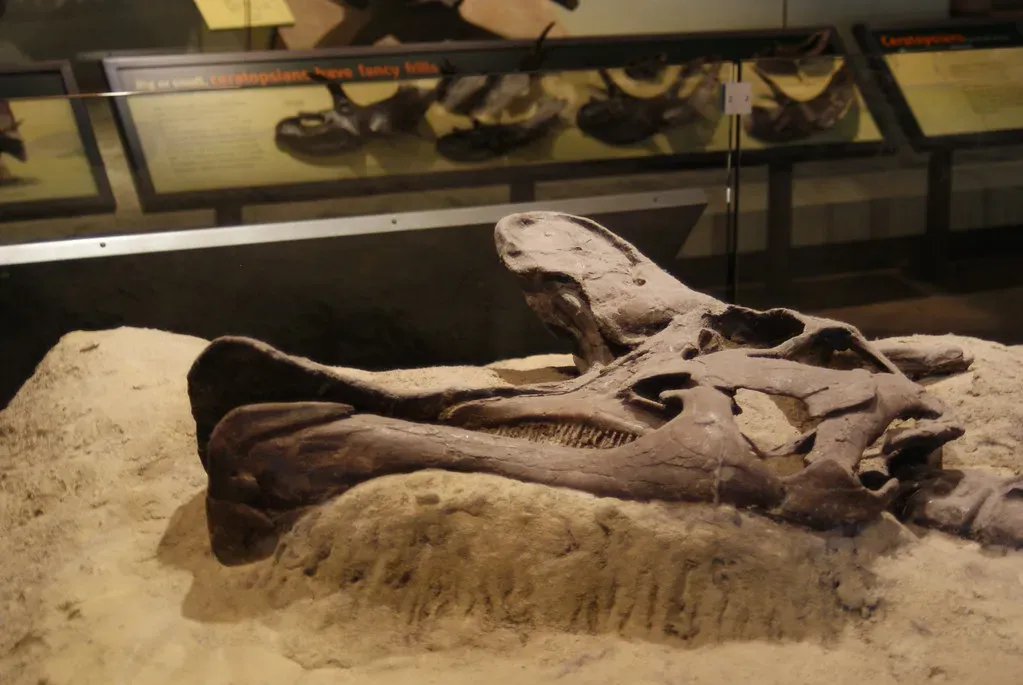
If you’ve ever tried to tidy a messy closet only to realize you do not know what half the items are for, you’ll understand what happened next. As more fragmentary skulls and partial skeletons came to light, researchers tried to sort them into named species. Some fossils were assigned to this same bizarre duck‑bill, others were split off into new genera, and some were quietly shuffled between collections as experts changed their minds. The oddity of the skull made it surprisingly easy to over‑interpret small differences: a slightly different curve here, a thicker ridge there, and suddenly you were looking at a “new” dinosaur, at least according to some. Over time, a sort of identity crisis took hold. Was this one very strange, very variable species scattered across rocks of a certain age, or were scientists artificially lumping together several similar but distinct animals because their skulls all looked equally confusing? Different research teams published competing taxonomies, creating a tangle of names that could make a layperson’s head spin. I remember scrolling through a diagram of these hadrosaur relationships and feeling like I was looking at a family tree that had been edited by four different relatives, none of whom talked to each other.
How CT Scans and 3D Models Flipped the Debate
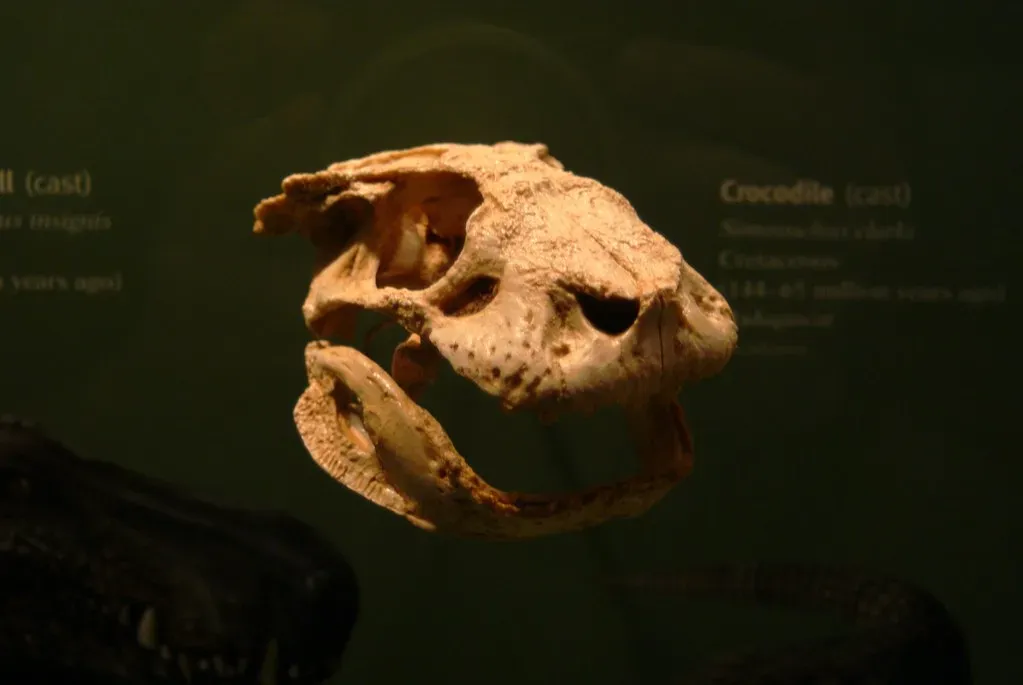
For decades, debates over this skull were fought with plaster casts, hand‑drawn diagrams, and educated guesswork. Then, slowly, modern imaging marched in. High‑resolution CT scans allowed paleontologists to peer inside the fossil without harming it, revealing hidden sutures, internal cavities, and subtle overlaps between bones. Suddenly, some of the most hotly disputed areas – like how the snout fitted onto the rest of the face, or where exactly the jaw joints sat – could be checked in three dimensions rather than just argued about on tracing paper. 3D digital models changed the tone of the arguments. Instead of sketching hypothetical alignments, researchers could actually “articulate” the jaws in virtual space and see whether they locked, slid, or crashed into impossible positions. They could test bite paths, explore how muscles might anchor to ridges, and rotate views that were impossible to see in a glass case. Old reconstructions that once looked respectable began to fall apart when run through this digital reality check, while some previously dismissed ideas suddenly made mechanical sense. It did not magically end the disagreements, but it forced everyone to test their pet theories against the same unforgiving geometry.
Strange Crests, Soft Tissues, and the Function Question
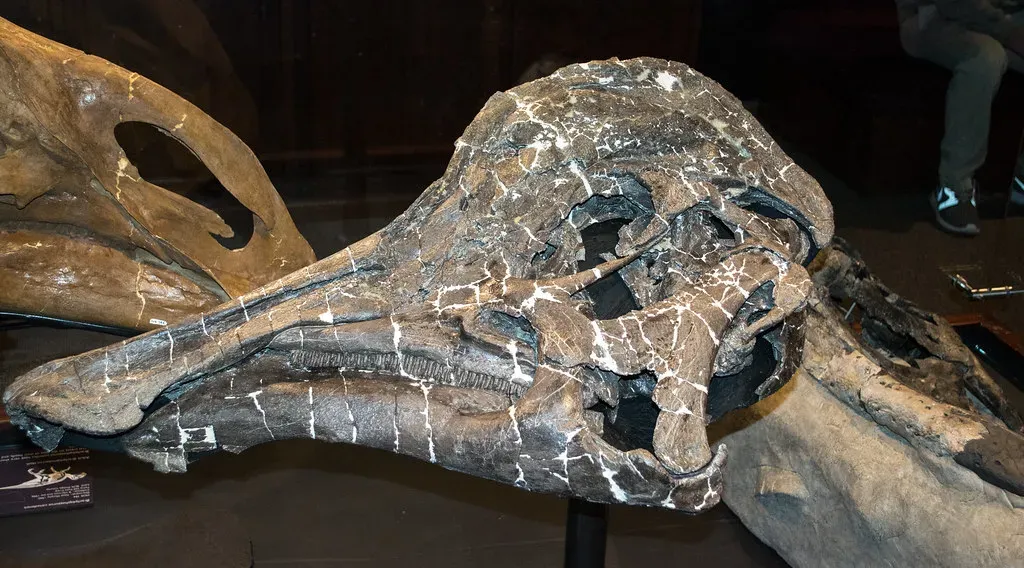
Beyond just fitting bones together, the skull raised an even weirder question: what, if anything, sat on top of it in life? Many hadrosaurs are famous for crests – bony extensions that, in some species, housed nasal passages or supported fleshy displays. On this dinosaur, some ridges and expansions hinted at something unusual going on above the snout and around the eyes, but the exact shape and size of any crest or soft tissue structure remained maddeningly unclear. Depending on how you aligned the bones, you could easily imagine anything from a modest ridge to a dramatic dome crowned with skin or keratin. This ambiguity opened the door to a mix of cautious speculation and wild artistic flights. Some scientists leaned toward conservative interpretations, suggesting small, perhaps sexually dimorphic crests used in visual display or sound resonance. Others entertained the idea that this skull supported something really outrageous in life – a bit like seeing the bare skull of a cassowary and trying to picture that huge colorful casque without any living example to guide you. Personally, I find it humbling: it reminds me that what we see as “the skull” is really just a scaffold for a face we will never fully recover.
What This Single Skull Taught Us About How Science Changes
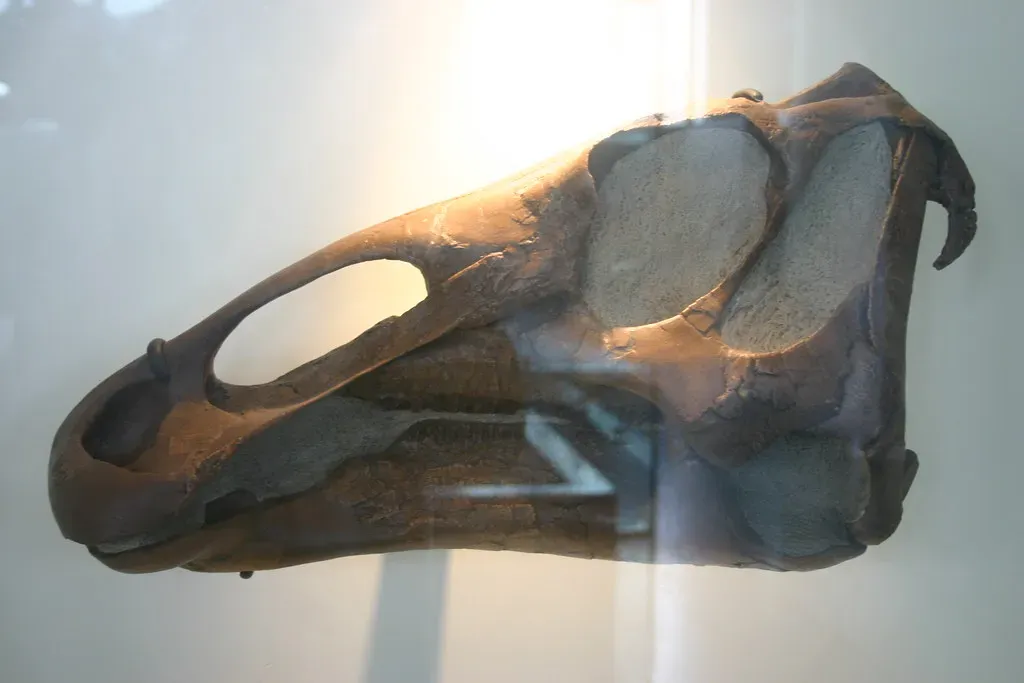
If this story were just about one weird dinosaur head, it would still be fun, but the deeper lesson is about how scientific understanding evolves when the evidence is incomplete. Early workers did the best they could with a crushed, unfamiliar fossil and the tools of their time, and in hindsight, some of their reconstructions look almost comically off. Yet those same flawed interpretations laid the groundwork for later corrections. Each new study that challenged the previous model did so by taking those earlier ideas seriously enough to test them. Over the decades, the arguments over this skull have shown just how human the scientific process really is. Egos got involved, rival camps formed, and some researchers clung to their preferred version even as new data chipped away at it. But slowly, across careers and generations, the weight of evidence shifted the consensus. To me, that arc – from confusion to provisional clarity – is more inspiring than any single “eureka” moment. It shows that being wrong loudly can still move us forward, as long as we keep returns to the fossil itself at the center of the conversation.
Why This Infamous Skull Still Feels So Unsettling Today
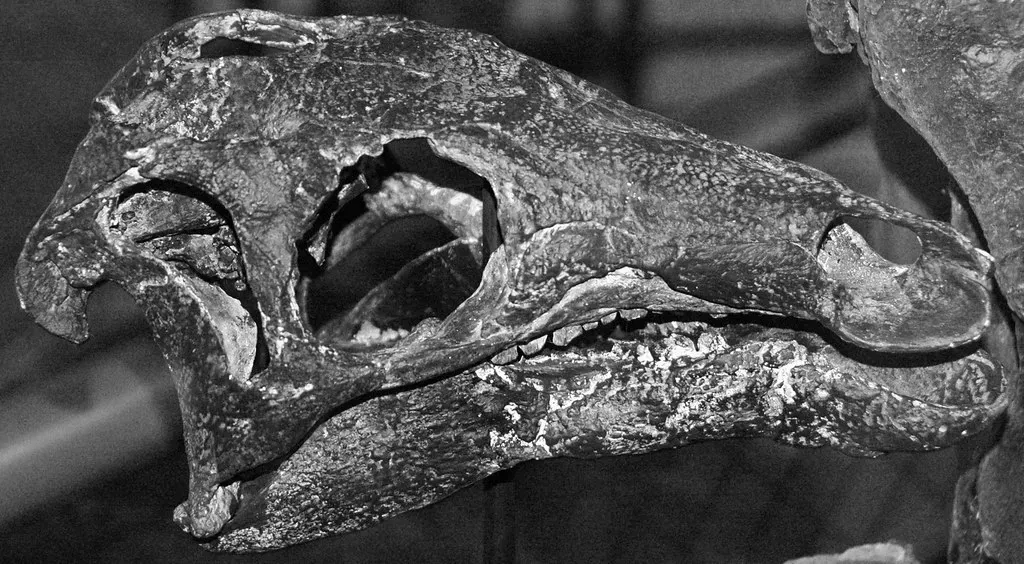
Even with modern tools, better fossils, and decades of intense scrutiny, this dinosaur’s skull still makes people pause. It does not line up neatly with the mental template most of us have for a “proper” dinosaur head, and that discomfort is part of its power. The skull forces you to accept that real prehistoric animals could look very different from their movie counterparts, with anatomy shaped by ecological roles and evolutionary paths we are only partly glimpsing. Standing in front of the actual fossil in a museum, you can almost feel your brain trying to twist the bones into a more familiar shape and failing. That lingering unease is also why scientists keep returning to it. Every new method – biomechanical modeling, digital reconstructions, refined dating of the rock layers – offers a chance to squeeze one more hint out of the same stubborn object. I like that there is no final, polished answer yet; instead, there is a best‑so‑far reconstruction backed by testable reasoning and a long paper trail of discarded ideas. In a world that often craves instant certainty, this skull is a fossilized reminder that some of the most interesting truths are the ones we are still chasing.
Opinionated Takeaway: Why the Ugliest Problems in Paleontology Matter Most
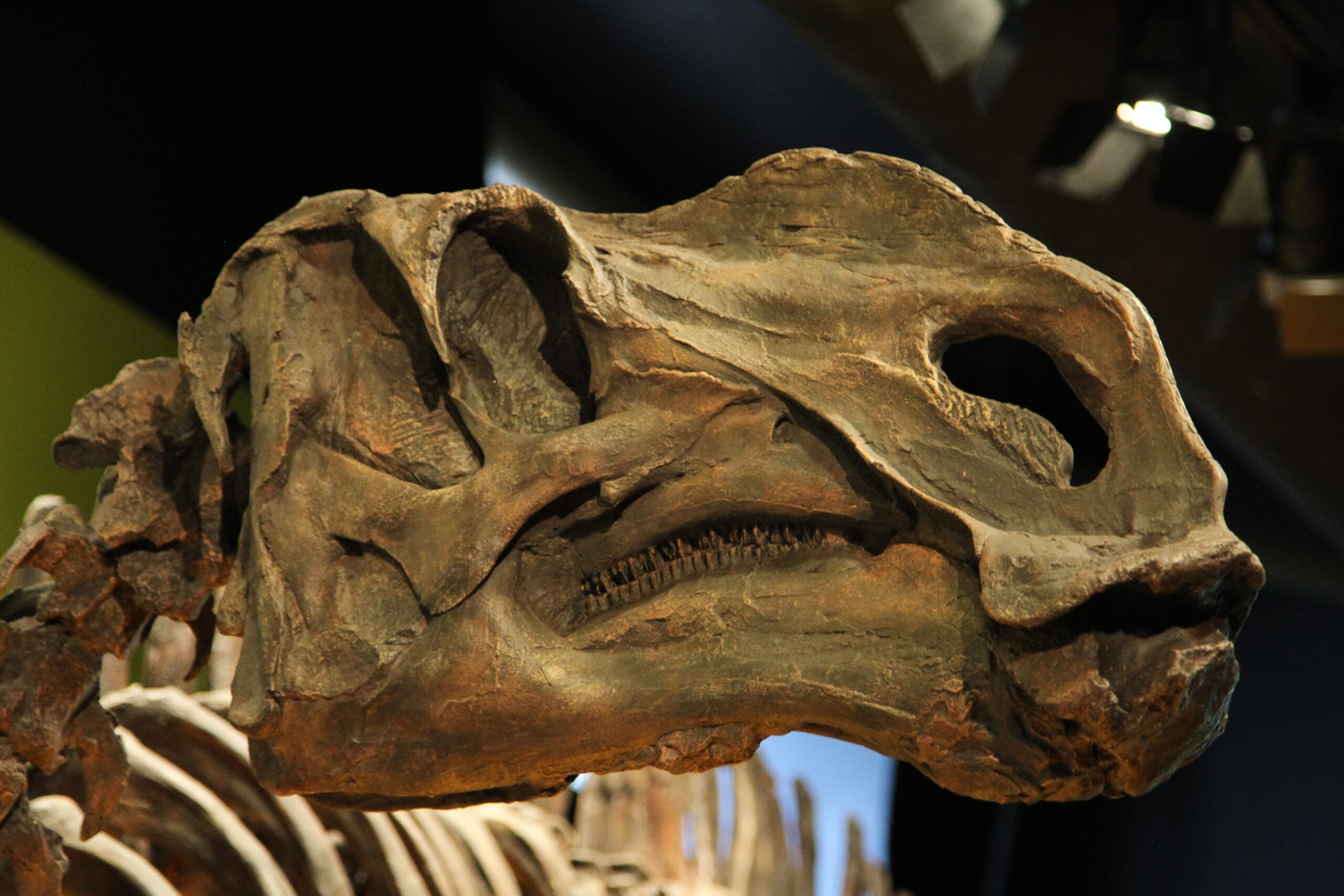
If I am honest, I think this might be my favorite kind of dinosaur story precisely because it is messy, unresolved, and a little bit embarrassing for the field. The strangest skull did not just confuse people; it exposed how fragile our neat classifications and reconstructions can be when they run up against reality. I am convinced that the discipline grows up a little every time a fossil like this forces everyone to admit they might have had the head on backwards – sometimes literally. Rather than seeing decades of disagreement as a failure, I see them as proof that paleontology is willing to wrestle with ugly, awkward data instead of quietly ignoring it. In my view, that is the real legacy of this dinosaur: it taught scientists, and the rest of us watching from the sidelines, that the path to understanding is more like a long argument at a cluttered workbench than a smooth march toward truth. We did not get a cinematic big reveal with a single perfect skull; we got revision after revision, each slightly less wrong than the last. That is not as flashy as a blockbuster, but it is far more honest – and, ultimately, more exciting. When you look at that bizarre fossil face today, knowing how many smart people have struggled with it, you cannot help but ask yourself: if this is what one skull can upend, how many other things do we still have on backwards?