
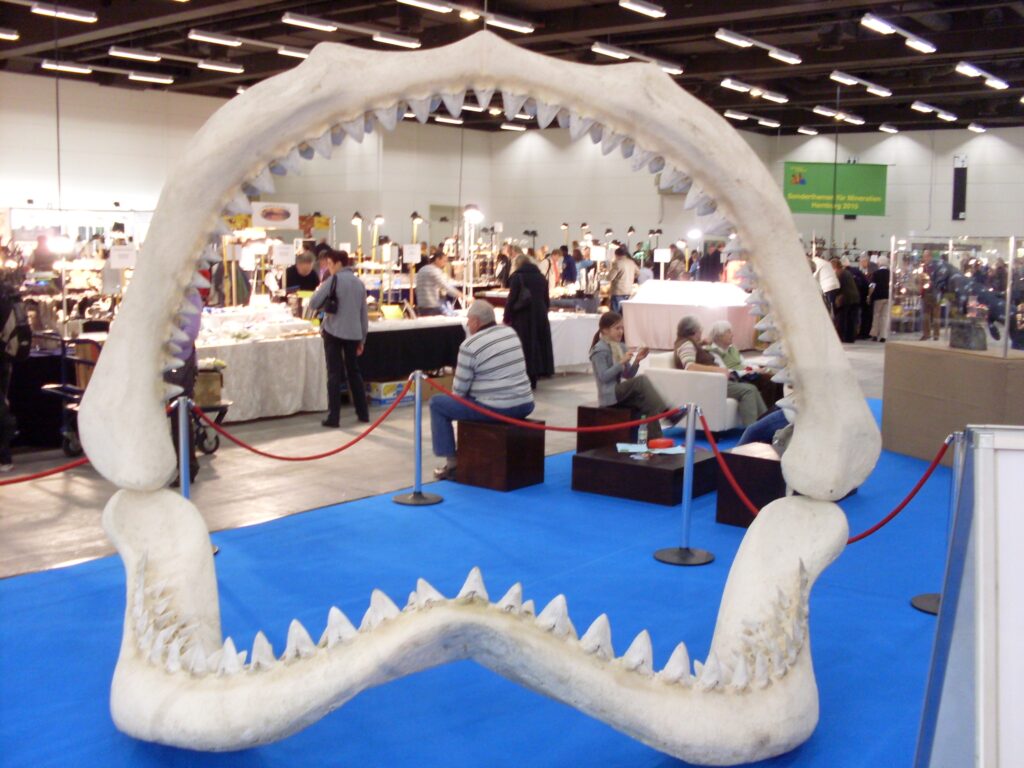
Imagine the most terrifying predator you can think of, then realise nature has already done it better. Long after the age of the dinosaurs ended, the oceans were ruled by a shark so massive that a full-grown Tyrannosaurus rex could have fit inside its jaws. That is not science fiction or internet exaggeration; it is a sober reminder of just how extreme life on Earth can get.
What makes this shark even more unsettling is not just its size, but its timing. It did not vanish with the dinosaurs sixty-six million years ago. It swam in seas that looked, in many ways, like the oceans we know today, alongside whales and early dolphins. The fact that such a monster lived so recently in Earth’s history forces us to rethink what we consider “prehistoric” and how thin the line really is between our world and the deep past.
The real giant behind the legend: what we actually know about Otodus megalodon
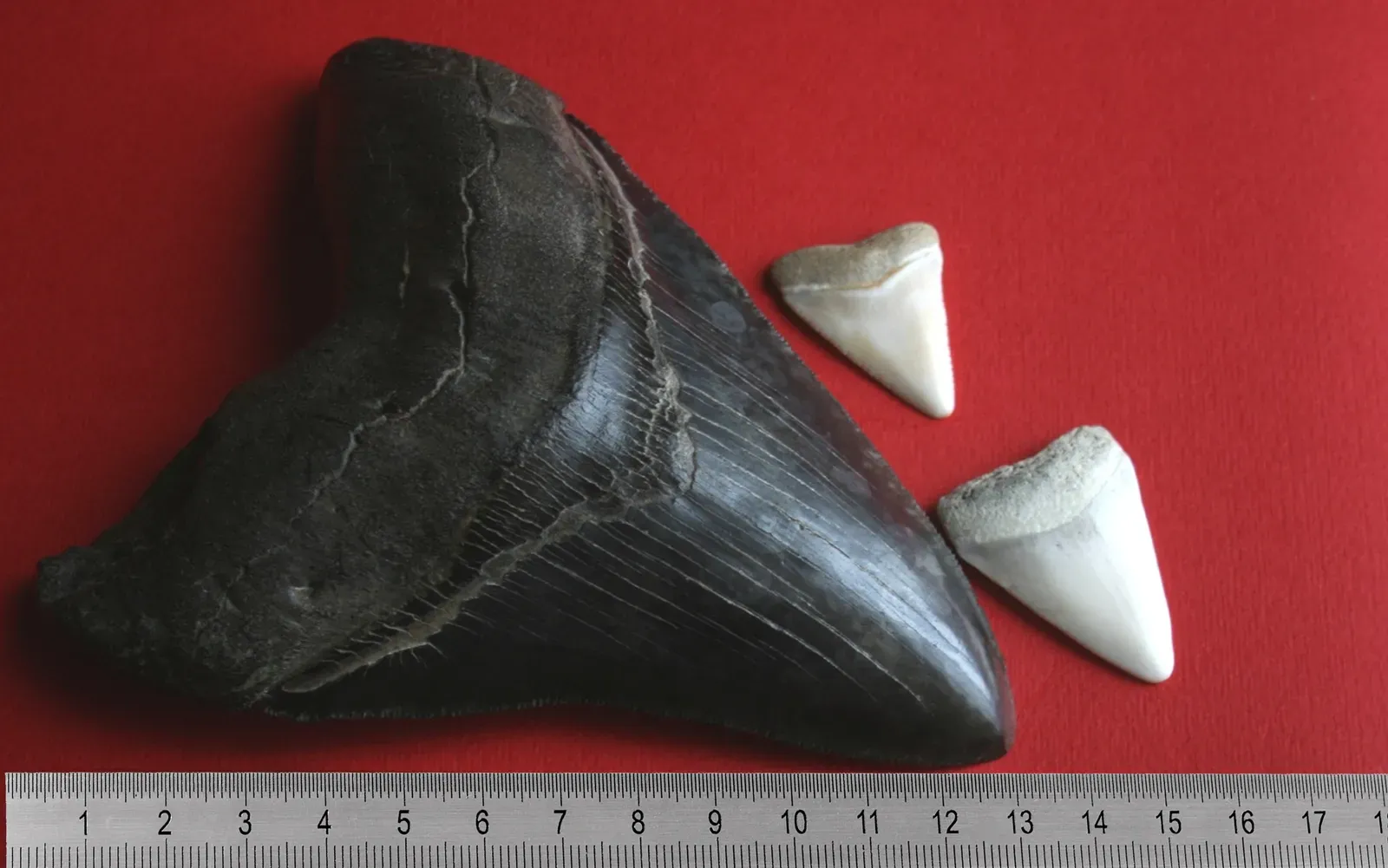
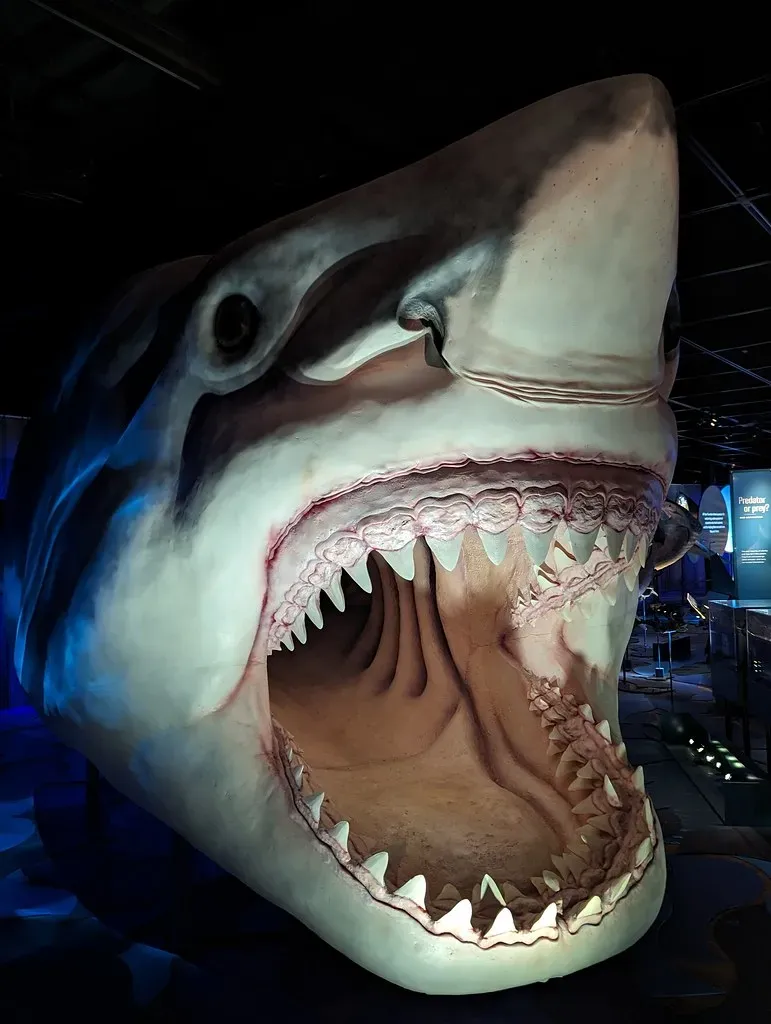
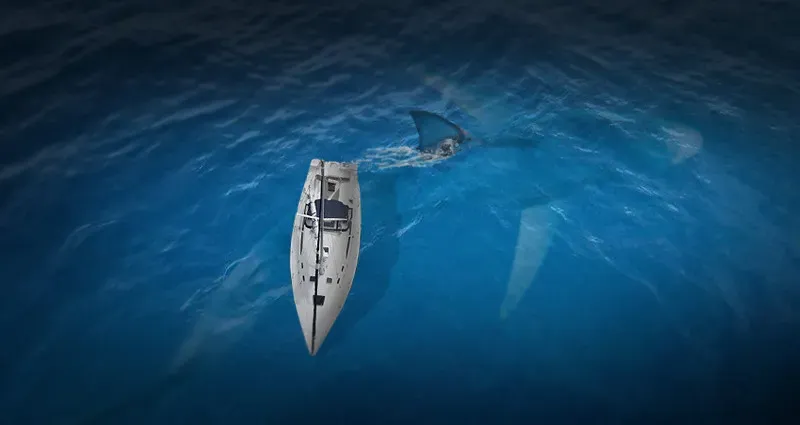
When people talk about a shark big enough to swallow a T. rex, they are really talking about Otodus megalodon, usually just called megalodon. This was not a supersized modern great white, but a separate species with its own lineage, body proportions and ecological role. Based on tooth size and comparisons with living sharks, most scientific estimates place the largest individuals around fifteen to eighteen metres long, with some studies cautiously allowing for slightly larger outliers.
To put that in perspective, we are talking about an animal roughly the length of a bowling lane, with a mouth easily wide enough to engulf large marine mammals whole. Its teeth alone could be as big as a human hand, thick and triangular like razor-edged ceramic roof tiles. Everything about its anatomy, as far as we can reconstruct it, screams specialised apex predator built to crush bone, tear flesh and dominate whatever ecosystem it occupied.
Could a T. rex really fit inside its mouth? The claim, unpacked
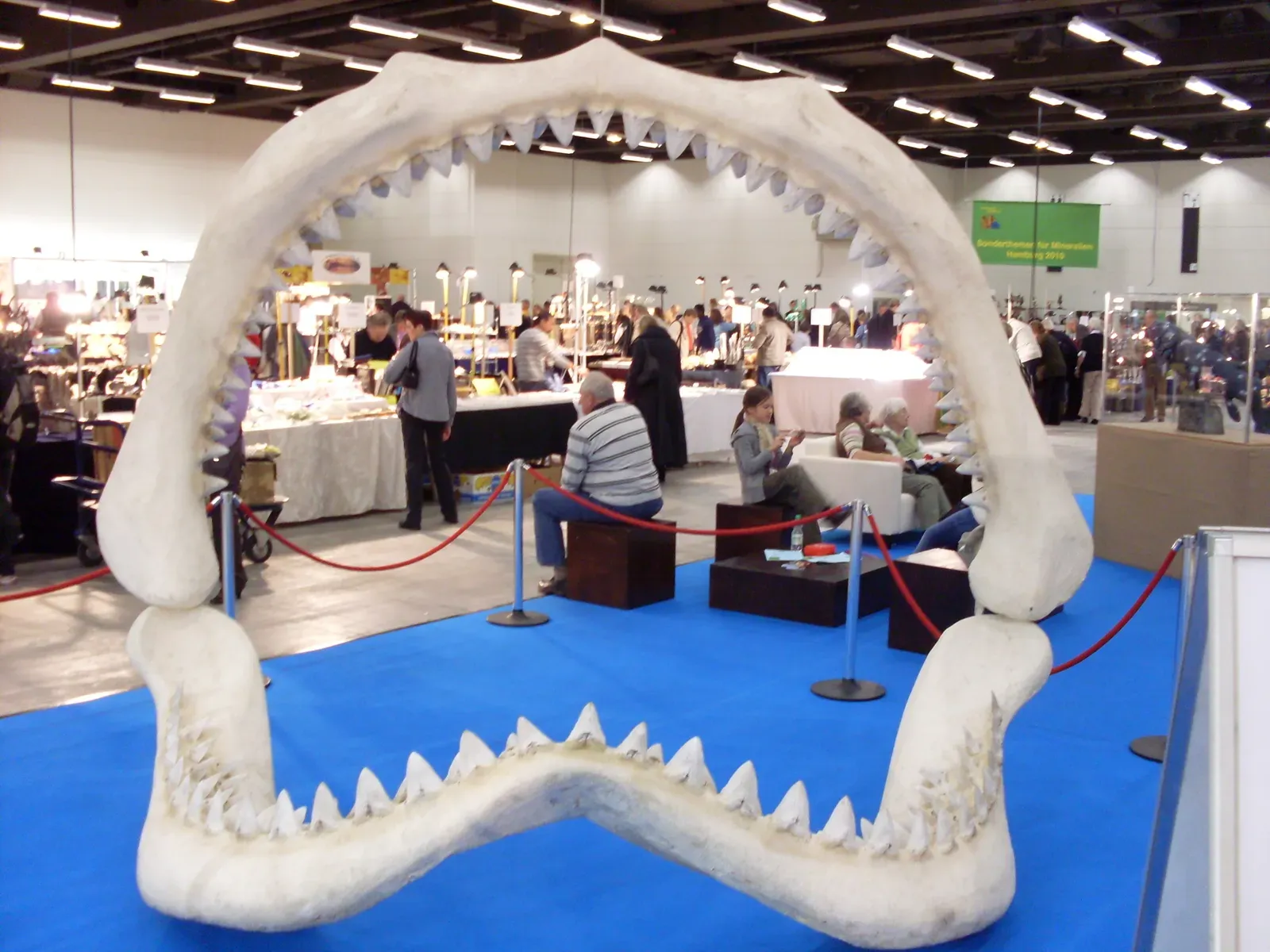
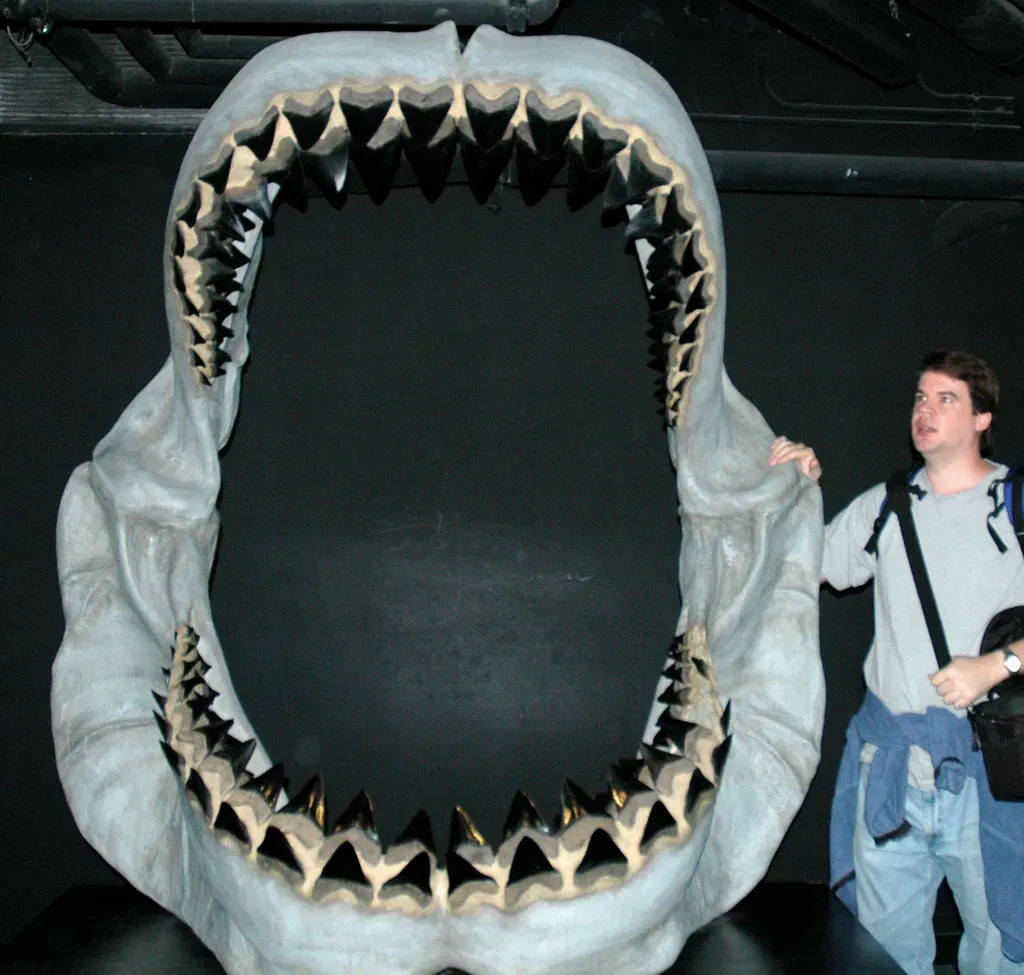
The idea that a full-grown Tyrannosaurus rex could fit inside megalodon’s mouth sounds like an over-the-top movie poster, but it is rooted in simple scaling. An adult T. rex is generally estimated at about twelve to thirteen metres in length, with a massive but relatively narrow body compared to the immense bulk and width of a megalodon’s jaws and skull. Reconstructions of megalodon’s head suggest a jaw opening possibly three metres or more across, with a bite radius that makes most land predators look almost delicate.
Could the shark have casually chomped down on a standing T. rex like a snack? Probably not in the literal, cartoony sense. But in terms of overall volume, surface area and jaw span, a megalodon’s mouth cavity could plausibly contain a T. rex-sized body if you imagine it oriented the right way and stripped of the drama. The point is less about precise fit and more about visceral scale: this shark operated on a size level where comparing it to the most famous giant dinosaur is not ridiculous, but actually meaningful.
More recent than dinosaurs: megalodon swam in almost-modern seas
Here is the part that really shocks people: megalodon did not live in the Jurassic or Cretaceous with giant sauropods and Tyrannosaurus. It appeared roughly twenty million years ago and is thought to have gone extinct around three and a half million years ago, in the late Pliocene. That is unimaginably far back on a human scale, but on a geological timeline it is surprisingly recent, much closer to us than to any non-avian dinosaur.
By the time megalodon vanished, our distant primate relatives were already experimenting with upright walking in Africa. The continents were in roughly their present positions, and many modern groups of whales, dolphins, seals and seabirds were already thriving. In other words, megalodon hunted in oceans that would have felt strangely familiar: blue water, modern coastlines, and food webs recognisably like those we are still busy disrupting today.
A bone-crushing super-predator: diet, bite force and hunting style
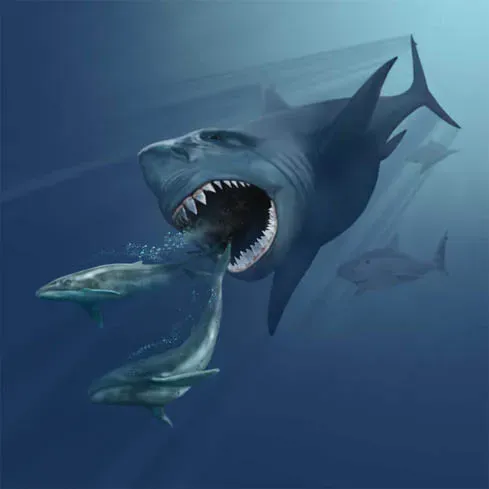
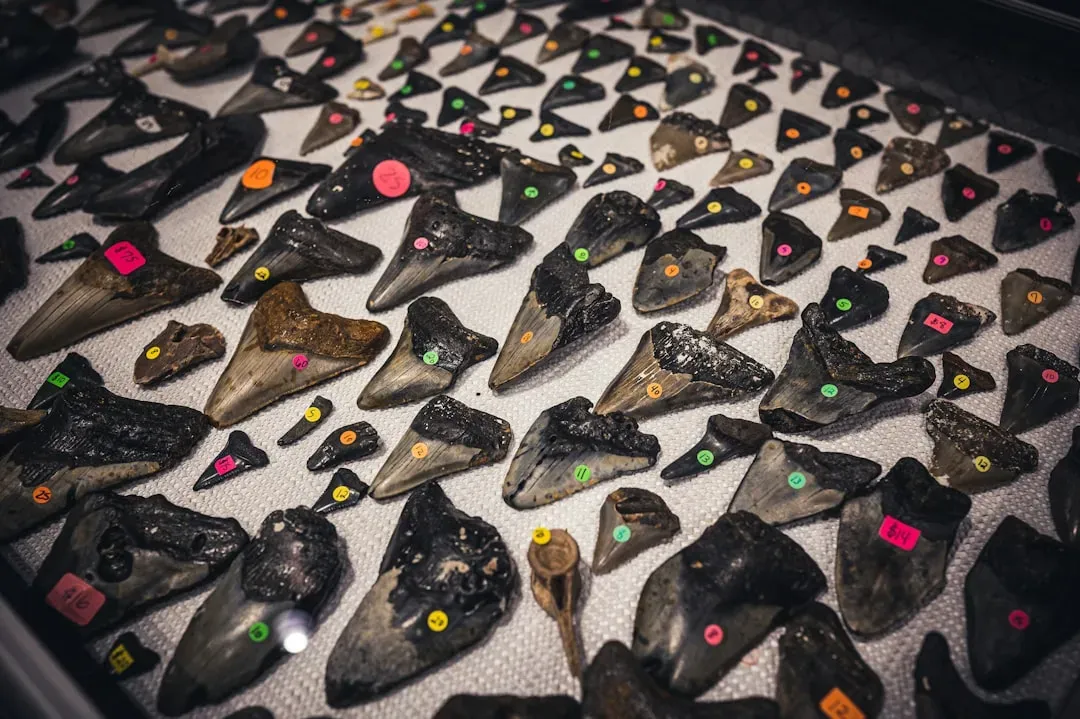
We do not have complete megalodon skeletons, because shark skeletons are mostly cartilage, which rarely fossilises well. What we do have are teeth, lots of them, and they tell a brutal story. These teeth are thick, heavily built and often found with fossilised whale bones that show deep gouges, bite marks and clear signs of catastrophic trauma. This evidence has led scientists to view megalodon as a specialist hunter of large marine mammals rather than just a scaled-up fish eater.
Computer models based on jaw anatomy and muscle reconstructions suggest a bite force far beyond that of any known land predator, powerful enough to crush whale ribs and breach skulls. One popular hypothesis is that megalodon targeted the chest cavities and flippers of whales, disabling them quickly by breaking vital bones and organs, a strategy that would conserve energy and reduce the risk of injury. In simple terms, it likely hit hard, hit fast and ended fights in a single devastating strike.
Why it disappeared: climate change, shifting oceans and rising competition
For a creature that dominated the seas for millions of years, megalodon’s disappearance feels abrupt and mysterious, and that gap invites wild theories. The more sober explanation points toward a messy combination of climate change, habitat loss and competition. As the Pliocene progressed, global temperatures dropped, ice sheets expanded and sea levels fell, reshaping coastal environments that likely served as nursery grounds for young sharks.
At the same time, modern-style toothed whales and baleen whales were diversifying and adapting to cooler waters, some shifting into regions where megalodon may have struggled to follow. New or more efficient competitors, including early large predatory whales, may have further squeezed its ecological niche. I find it oddly humbling that an animal powerful enough to bite through a whale still could not overpower slow, relentless changes in temperature, ocean currents and food availability.
Modern fascination and the myth of the living megalodon
Even though the evidence firmly says megalodon is gone, our culture stubbornly keeps it alive. It surfaces in shark horror movies, conspiracy-style documentaries and endless social media posts hinting that somewhere, in the darkest trench, it still prowls. Part of this persistence comes from the emotional thrill of thinking that something that big, that alien and that old might still be out there, just beyond the reach of our technology and certainty.
From a scientific standpoint, though, the idea of a living population of multi-tonne sharks escaping detection in today’s heavily monitored oceans is just not credible. Large predators leave traces: strandings, bite marks, consistent sonar or visual records, genetic evidence in environmental samples. The fact that we see none of this for megalodon speaks volumes. Yet I understand the stubborn hope; it is the same impulse that makes us look twice at a shadow in deep water and feel, however briefly, that the age of monsters might not be fully over.
What a vanished giant says about us: an opinionated reflection
To me, the story of megalodon is less about a single prehistoric shark and more about our uneasy relationship with deep time and power. We like to imagine humans at the peak of some cosmic pyramid, but animals like megalodon casually shatter that fantasy. Here was a predator that could have dwarfed our largest vehicles, yet it came and went without us even existing to name it; all we have are teeth and bite marks, the faint scars of its passing.
There is also a quiet warning buried in that extinction. If a creature that perfectly ruled its environment for millions of years could be undone by climate shifts and changing food webs, then our own technological swagger looks fragile by comparison. I think we are drawn to megalodon because it represents both the raw, indifferent power of nature and the brutal reality that nothing, not even the mightiest hunter, is guaranteed a permanent place here. When you picture that T. rex-sized mouth yawning open in the dark water, do you feel more amazed by how big the past was, or more unsettled by how quickly such giants can vanish?