
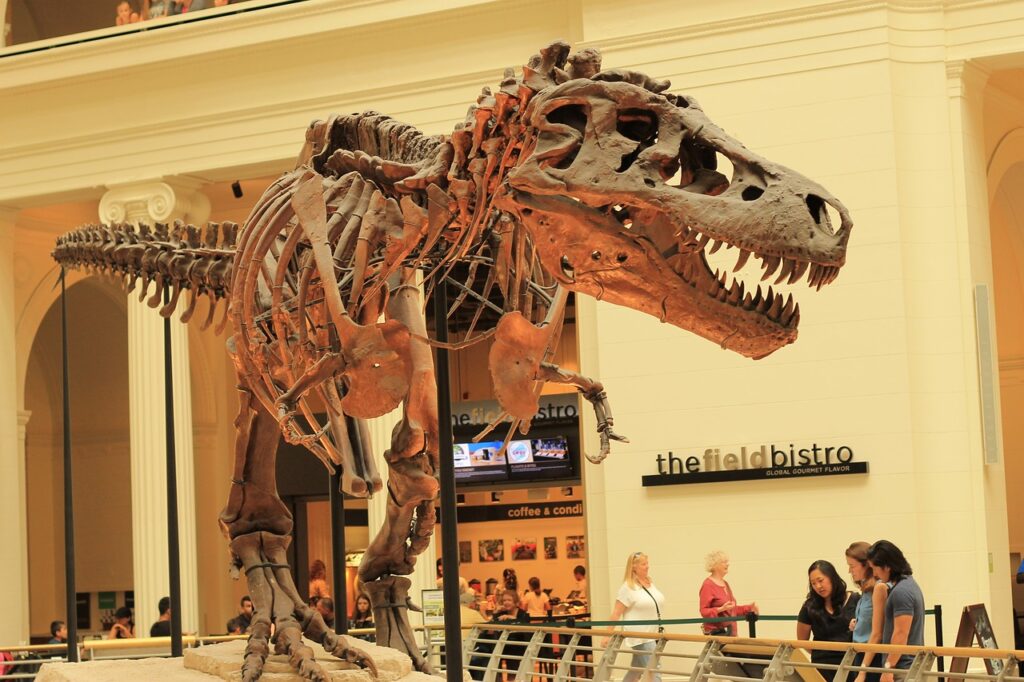
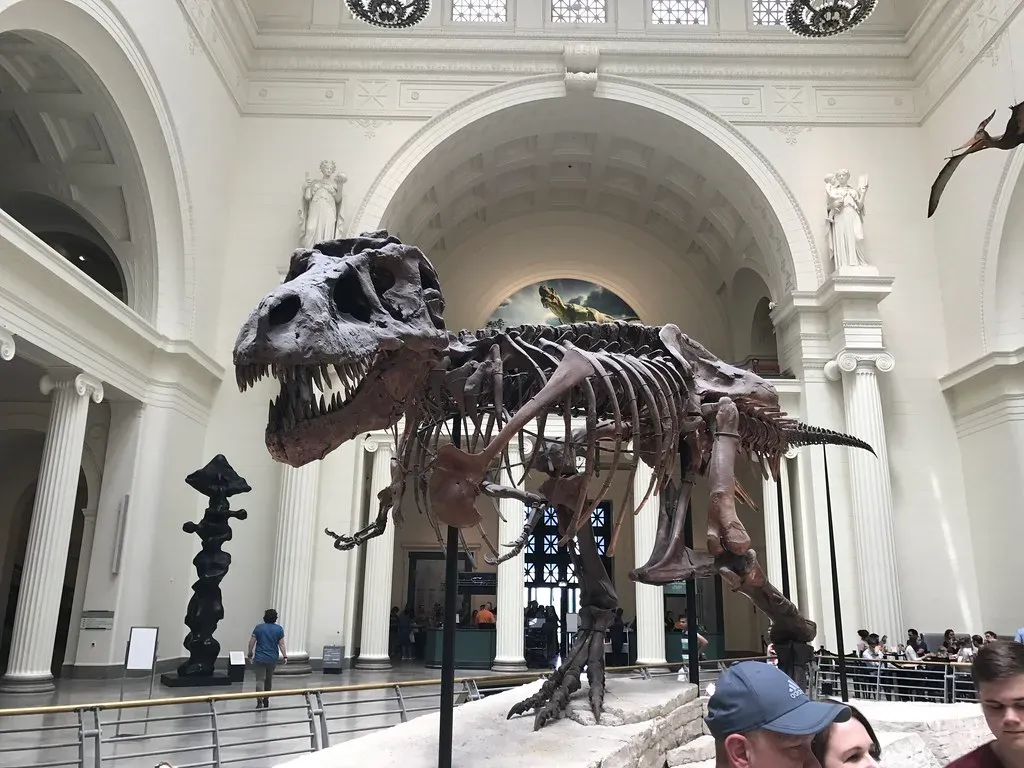
The first time you stand under the world’s most complete Tyrannosaurus rex, it does something strange to your brain. Part of you is a kid again, staring up in open-mouthed awe; another part of you is quietly trying to process that this animal was not a movie monster but a real, breathing predator that walked the Earth for millions of years. That feeling is exactly what the fossil known as SUE – the record‑holding T. rex skeleton at Chicago’s Field Museum – has done for scientists and the public alike: it has turned raw wonder into hard data, and hard data back into wonder. What makes this skeleton so extraordinary is not just the drama of its discovery or the auction that followed, but the sheer amount of information packed into its bones. At roughly nine tenths complete by bone volume, with around two hundred and fifty bones preserved, SUE has become the reference point for almost everything we think we know about T. rex biology: how big it got, how fast it grew, how it hunted, how it aged, and even what its skin felt like. In a very real sense, if you picture a T. rex in your mind, you are probably picturing SUE – and the story of how that image came to be is much wilder and more revealing than most people realize.
A Chance Discovery That Nearly Didn’t Happen
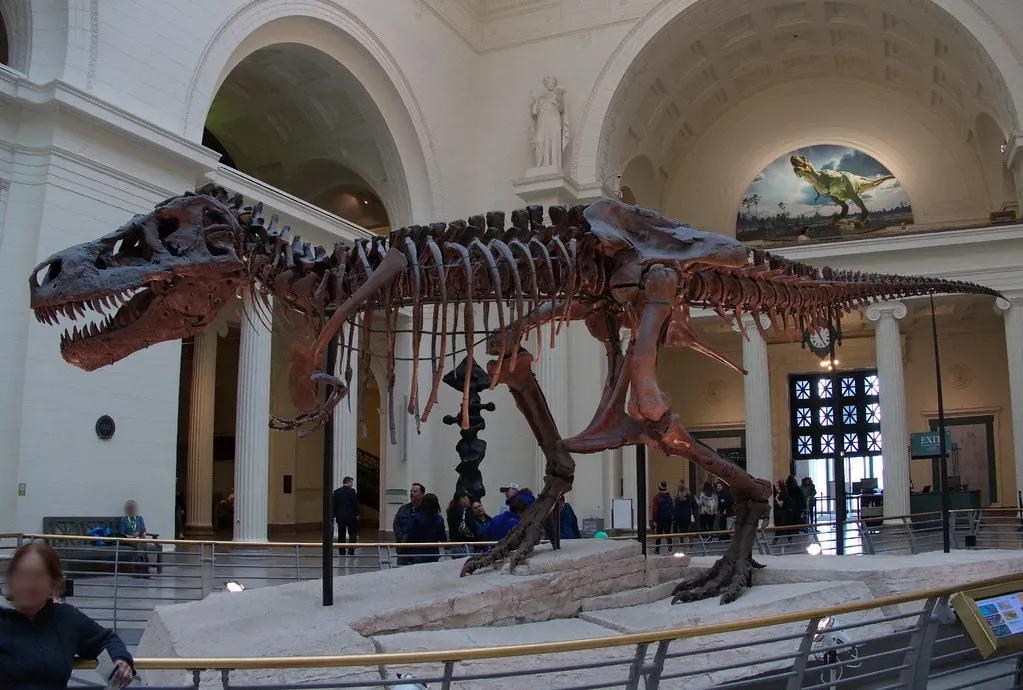
It is almost absurd to think that the world’s most complete T. rex skeleton was found because of a flat tire and a bit of curiosity. In the summer of 1990, a small team digging in South Dakota had already wrapped up most of their work when one member, fossil hunter Sue Hendrickson, decided to take a short walk along a cliff face near their camp. She spotted a few vertebrae weathering out of the rock, and that quiet moment on a hillside turned into one of the most important paleontological finds of the century. Those bones belonged to the animal now cataloged as FMNH PR 2081, better known simply as SUE. ([forbes.com](https://www.forbes.com/sites/kionasmith/2017/08/12/celebrate-sue-the-t-rexs-unearthing-day/?utm_source=openai)) From there, the story shifted from serene badlands to legal and financial chaos. Questions over land ownership and fossil rights led to a lengthy court battle and, eventually, an intense public auction in 1997. SUE sold for more than eight million dollars, a record‑shattering sum that shocked both scientists and collectors. ([en.wikipedia.org](https://en.wikipedia.org/wiki/Sue_%28dinosaur%29?utm_source=openai)) The Field Museum, backed by corporate and institutional donors, secured the skeleton and, in doing so, arguably rescued it from vanishing into a private collection. That price tag still fuels debate: did it help raise the profile of science, or did it turbo‑charge the commercialization of fossils? Personally, I think it did both – but the upside is clear: SUE ended up in a public museum, where anyone can walk in and stare this animal in the face.
How “Most Complete” Changed the Game
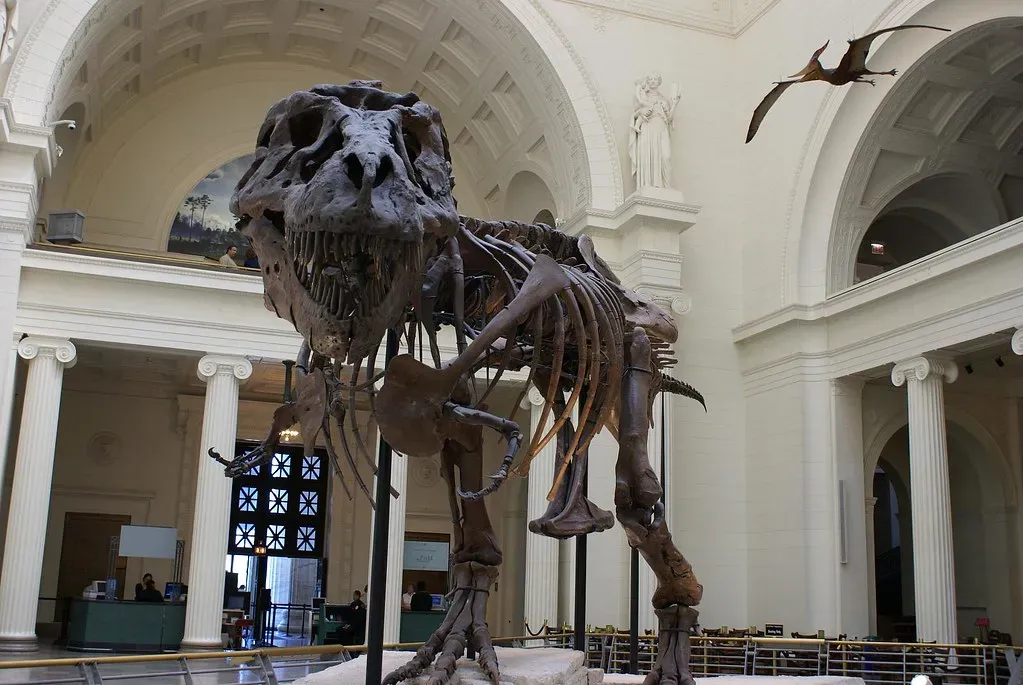
Lots of dinosaurs are famous; very few are this complete. SUE preserves about nine tenths of the known T. rex skeleton by bone volume, including delicate pieces that almost never survive, such as the tiny ear bones and the thin belly ribs. ([history.com](https://www.history.com/articles/sue-tyrannosaurus-rex-facts?utm_source=openai)) This does not just make for a pretty mount – it gives scientists a baseline for what a full adult T. rex actually looked like, down to proportions, posture, and even the subtle curves of the ribcage. Before SUE, reconstructions relied heavily on patchwork guesses from multiple, more fragmentary specimens. After SUE, those guesses could be checked, corrected, or abandoned. That completeness is why SUE is often called a Rosetta Stone for T. rex. With so much of one individual preserved, researchers can measure limb bones, skull elements, and vertebrae in three dimensions, then compare them to other, less complete fossils. ([pmc.ncbi.nlm.nih.gov](https://pmc.ncbi.nlm.nih.gov/articles/PMC3192160/?utm_source=openai)) It is a bit like having one nearly intact classic car: once you know exactly how all the parts fit together, it becomes much easier to identify the scattered pieces of other cars of the same model. Thanks to SUE, paleontologists can say with much more confidence whether a stray bone belongs to a juvenile T. rex, a different species, or just a different part of the same kind of skeleton.
Bone Histories: Growth, Age, and the Life of a Giant
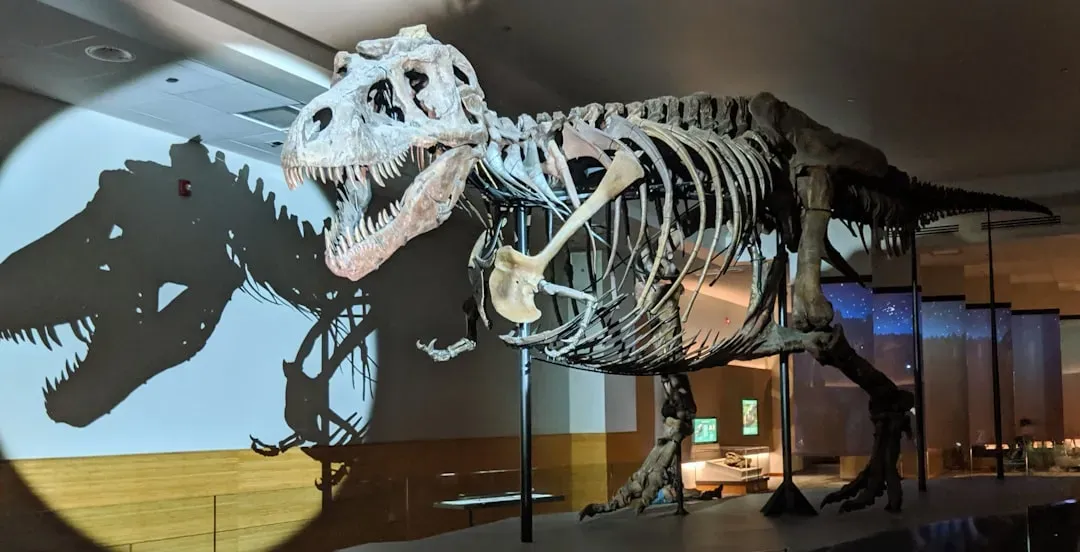
One of the most remarkable things SUE revealed is that T. rex was not just enormous; it was a biological overachiever. By slicing tiny samples from limb bones and studying the growth rings under a microscope, scientists estimated that SUE was in its late twenties at death, placing it among the oldest known individuals of its species. ([reddit.com](https://www.reddit.com/r/Naturewasmetal/comments/h0zywd/sue_is_the_largest_trex_to_be_found_so_far_at_90/?utm_source=openai)) Those rings act much like tree rings, recording growth spurts and slowdowns over the animal’s life. The pattern that emerges is wild: T. rex spent its early years growing relatively modestly, then hit a teenage growth spurt where it packed on weight at a rate that rivals or exceeds any land predator we know. This microscopic work has also helped settle a long‑running debate about whether smaller, more lightly built skulls represented a separate “pygmy” tyrannosaur or just teenage T. rex. Detailed bone histology and comparisons to SUE strongly support the idea that many of those specimens are actually juveniles of the same species, caught in the middle of that intense growth phase. ([pmc.ncbi.nlm.nih.gov](https://pmc.ncbi.nlm.nih.gov/articles/PMC6938697/?utm_source=openai)) That has a huge knock‑on effect: it suggests T. rex changed its lifestyle dramatically as it grew, filling different roles in its ecosystem at different ages. To me, that paints a more dynamic picture than the old idea of a single, lumbering apex predator – it hints at a population where lanky youngsters and massive adults were almost playing different games on the same field.
A Skull Built Like a Wrecking Ball
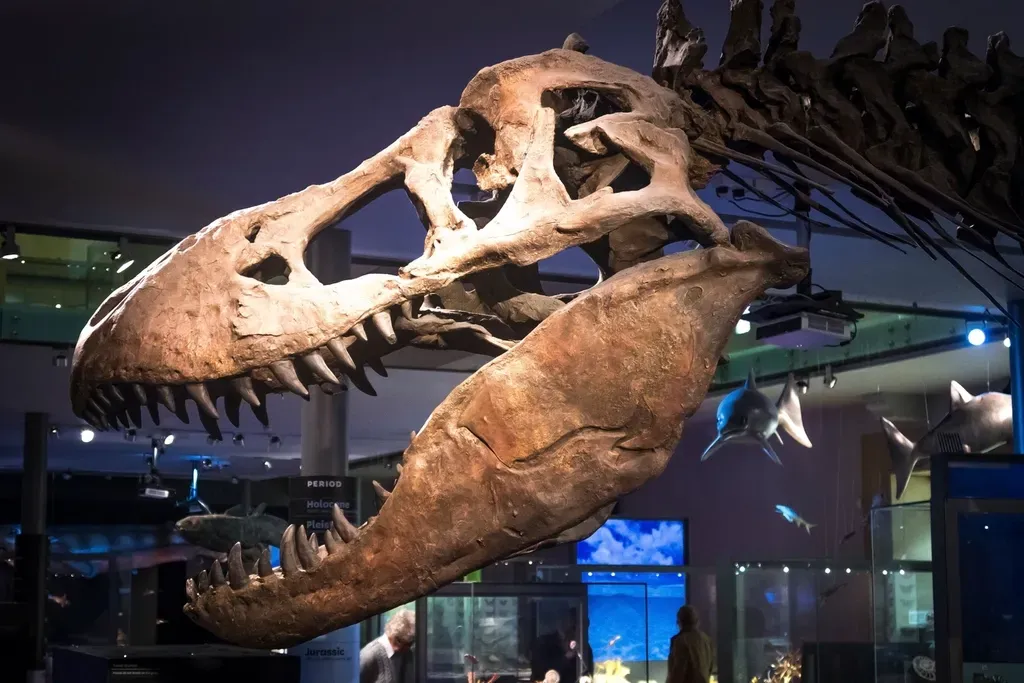
If there is one part of SUE that instantly grabs everyone’s attention, it is the skull. More than a meter long, riddled with openings, and bristling with banana‑sized teeth, it looks both overbuilt and weirdly delicate at the same time. That combination has turned SUE’s head into a playground for biomechanists using digital models to estimate how hard a T. rex bite really was. Simulations based on well‑preserved adult skulls – including SUE – suggest maximum bite forces on the order of tens of thousands of newtons, far beyond what any living land animal can muster. ([pmc.ncbi.nlm.nih.gov](https://pmc.ncbi.nlm.nih.gov/articles/PMC3391458/?utm_source=openai)) Those studies go beyond headline‑friendly numbers. They show how the thickened skull bones, reinforced snout, and particular arrangement of teeth allowed T. rex to crush bone and process carcasses in a way that even modern crocodiles struggle to match. Traces of tooth marks on fossilized bones, including deep punctures and chewed‑up fragments, line up with that picture of extreme bone‑crunching behavior. ([pmc.ncbi.nlm.nih.gov](https://pmc.ncbi.nlm.nih.gov/articles/PMC5435714/?utm_source=openai)) To me, this is where SUE’s skull stops being a museum curiosity and becomes a piece of engineering: it is like holding a wrecking ball designed by evolution, tuned over millions of years to turn living, breathing prey into shattered bone and shredded meat.
Skin, Feathers, and What T. Rex Really Looked Like
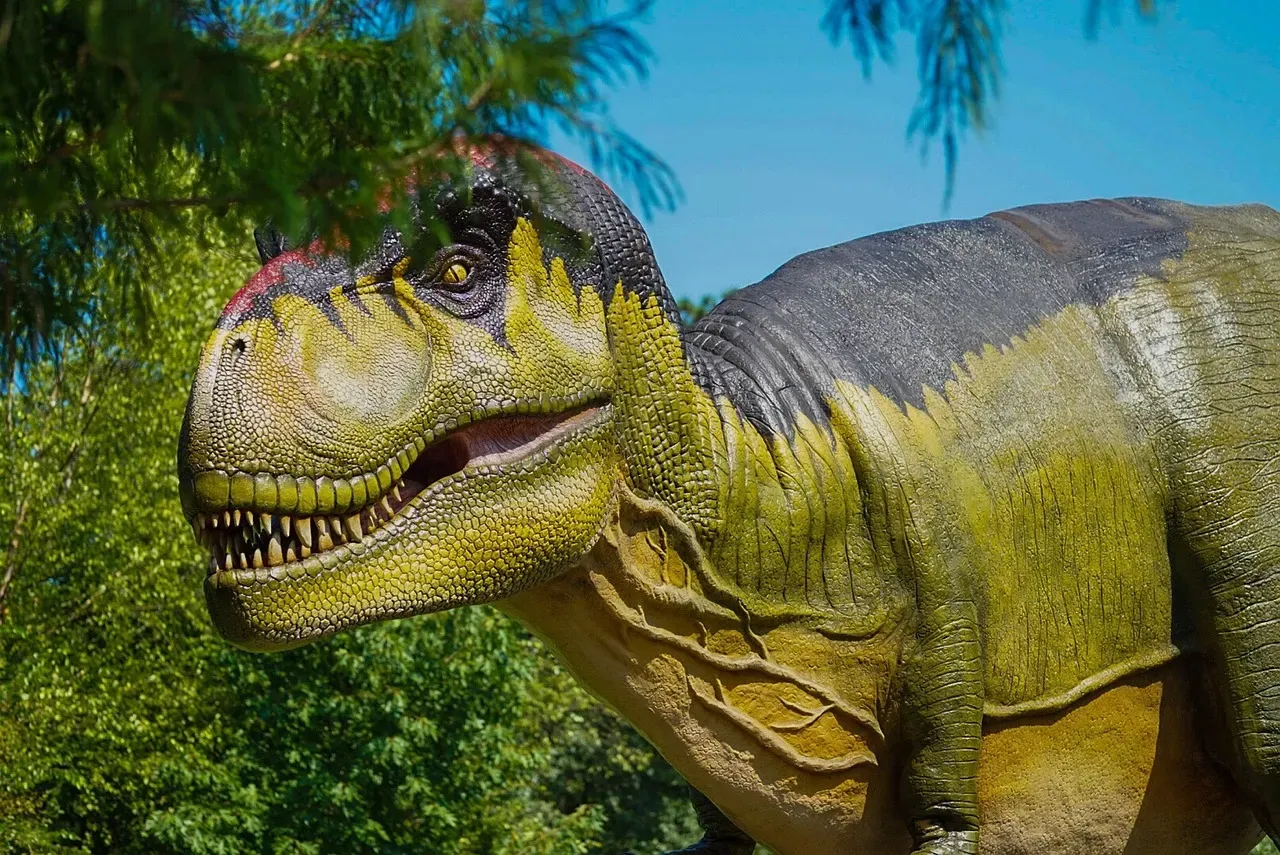
One of the most persistent questions people ask when they stand under SUE is deceptively simple: what did this thing look like in life? No preserved skin came with SUE itself, but its completeness has made it the go‑to body plan for testing ideas about T. rex appearance. In the last decade or so, skin impressions from closely related tyrannosaurs have pointed strongly toward a body mostly covered in pebbly scales, not a thick coat of feathers. ([nationalgeographic.com](https://www.nationalgeographic.com/animals/article/tyrannosaurus-rex-skin-fossils-feathers-scales-science?utm_source=openai)) That does not totally rule out sparse feathers on certain parts of the body, but it has cooled down the earlier trend of portraying T. rex as a giant, shaggy bird. Here is where I think popular media has lagged behind the science. The fully feathered T. rex was visually striking and fit the “birds are dinosaurs” narrative a bit too perfectly, so it stuck in the public imagination even as evidence shifted. The current best guess, grounded in actual skin fossils and scaled relatives, is still a mostly scaly animal, perhaps with limited feathering in specific areas, especially in younger individuals. ([nationalgeographic.com](https://www.nationalgeographic.com/animals/article/tyrannosaurus-rex-skin-fossils-feathers-scales-science?utm_source=openai)) SUE, with its carefully reconstructed musculature and skin textures based on those data, represents that evolving consensus on the museum floor – a reminder that science can change its mind without throwing out the dinosaur with the bathwater.
Injuries, Illness, and the Toughness of a Top Predator
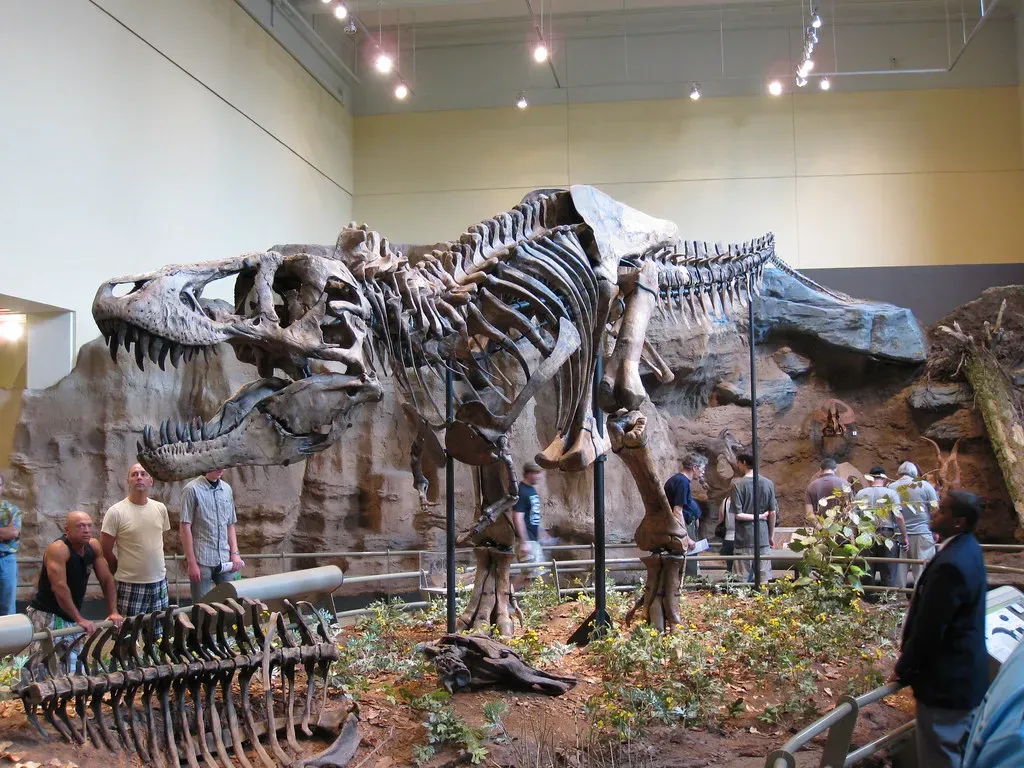
Look closely at SUE and you realize this animal did not have an easy life. The skeleton is riddled with signs of injury and disease: damaged ribs, fused tail bones, and a jaw peppered with holes that many researchers interpret as the result of a nasty bone infection or parasite‑driven disease. ([history.com](https://www.history.com/articles/sue-tyrannosaurus-rex-facts?utm_source=openai)) None of this killed SUE outright, at least not immediately; the bones show signs of healing, which means this T. rex lived with chronic pain and still managed to hunt, move, and survive long enough to reach old age. In a way, the skeleton reads like a medical chart from deep time. Those pathologies have sparked arguments about how T. rex actually made a living. The injuries and healed fractures suggest a predator that frequently got into physical trouble, whether from hunting large, dangerous prey or fighting with others of its own kind. To me, this undermines the old stereotype of T. rex as a slow, mostly scavenging opportunist. An animal that can endure broken ribs, infections, and possibly even attacks from other tyrannosaurs, yet continue to grow into a massive, late‑life adult, is not drifting lazily from carcass to carcass – it is tough, active, and engaged in a brutally competitive world.
From Scientific Icon to Cultural Phenomenon
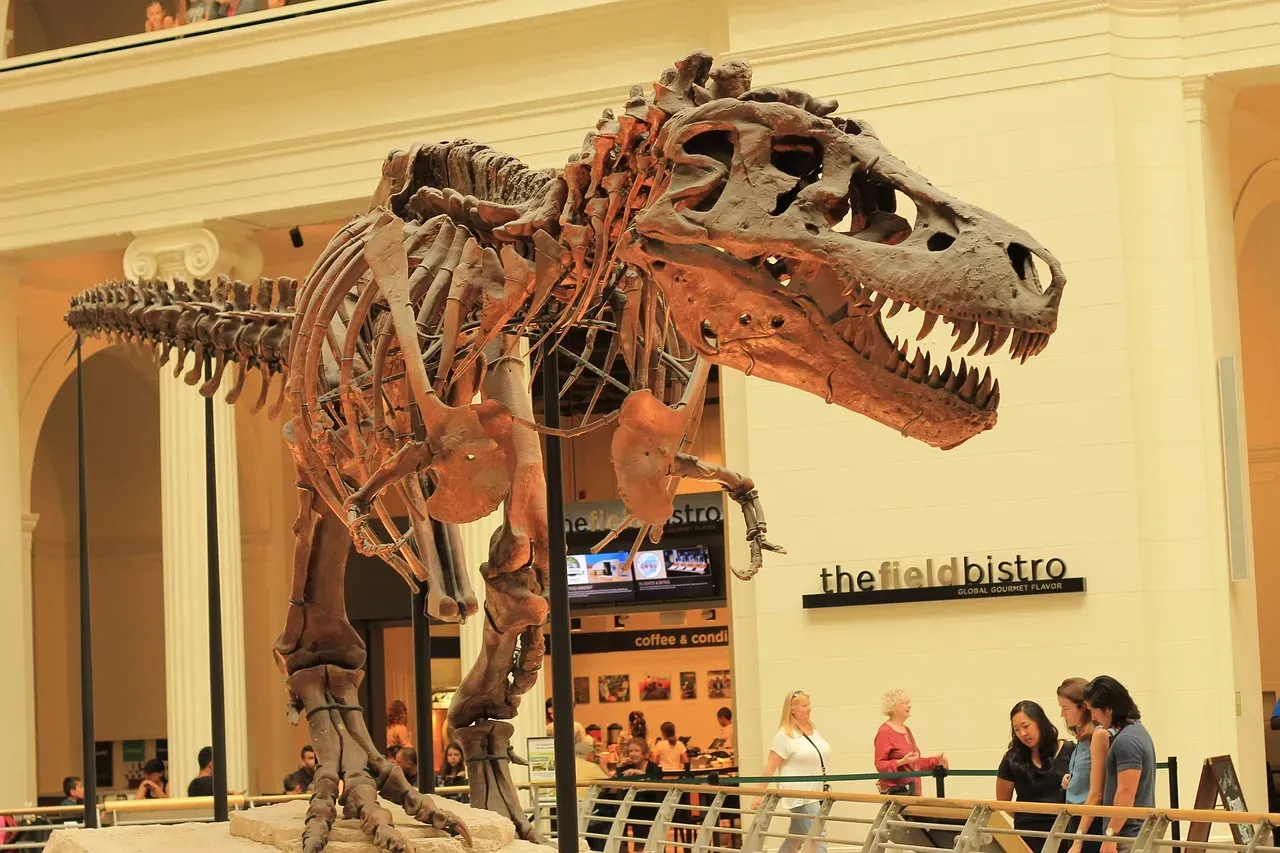
Finally, there is the strange second life SUE has had as a cultural character in its own right. Since its public debut in Chicago in 2000, SUE has drawn millions of visitors, moved exhibition halls, and built a devoted social media following that treats this fossil like a sardonic celebrity. ([history.com](https://www.history.com/articles/sue-tyrannosaurus-rex-facts?utm_source=openai)) That might sound frivolous, but I think it has real scientific value: every selfie under that skeleton is a tiny moment where someone confronts the reality that dinosaurs are not just special effects, but part of Earth’s actual history. In a time when attention is scattered and science is often politicized, a forty‑foot predator can still cut through the noise. SUE has also set the benchmark against which other spectacular T. rex finds are measured. New giants like “Scotty” and “Trix,” or high‑profile skeletons auctioned to private buyers, are routinely compared to SUE’s completeness, preservation, and public accessibility. ([en.wikipedia.org](https://en.wikipedia.org/wiki/Sue_%28dinosaur%29?utm_source=openai)) That comparison is not always flattering to the newcomers, especially when they vanish into private collections. I think that tension – between fossil as data and fossil as trophy – is one of the biggest ethical challenges in paleontology today. In that sense, SUE is more than a skeleton; it is a quiet argument that the most important pieces of our deep past belong where everyone, not just the highest bidder, can learn from them.
What SUE Really Revealed – And Why It Matters
Strip away the drama, the auction, and the branding, and SUE’s deepest revelation is this: one extraordinarily complete skeleton can rewrite an entire species’ story. Thanks to SUE, T. rex is no longer just a rough outline built from scattered bones and cinematic imagination. We now have hard evidence for how big it got, how it grew, how brutally it could bite, how its skin probably looked, and how battered and resilient a long‑lived individual could be. ([history.com](https://www.history.com/articles/sue-tyrannosaurus-rex-facts?utm_source=openai)) For a single fossil to anchor so many lines of evidence is rare, and it underscores how fragile our understanding of the deep past really is – change the fate of one carcass in the Late Cretaceous, and modern science would be missing huge chunks of the T. rex puzzle. My own opinion is that SUE should permanently change how we think about fossils and who they are for. When the most complete T. rex on Earth can become a global research standard and a beloved public figure at the same time, it proves that accessibility and high‑level science are not opposites, they are allies. The danger is that we treat SUE as a one‑off miracle instead of a model: the default should be that specimens of this importance end up in public institutions, with their data freely studied and their stories openly told. In the end, a skeleton like SUE does not just reveal what T. rex was; it reveals what we value. The real question is, the next time the Earth offers us something this extraordinary, will we be wise enough to do as much with it?