
Every so often, science gets ambushed by reality. A wrong turn on a dusty road, a bulldozer in the wrong place, a kid poking around in rocks where adults see nothing – and suddenly, the story of life on Earth has to be rewritten. Prehistoric discoveries made by accident are a humbling reminder that for all our planning and technology, some of the biggest breakthroughs start with pure, chaotic luck.
What makes these finds so gripping is not just what they reveal about ancient worlds, but how close we came to missing them completely. In each case below, scientists were forced to rethink comfortable assumptions: about when humans arrived, how animals lived, or even what counts as “human” in the first place. Let’s walk through eight moments when someone stumbled, almost literally, into the deep past – and everything changed.
1. The Teenagers Who Turned a French Cave into a Time Machine: Lascaux
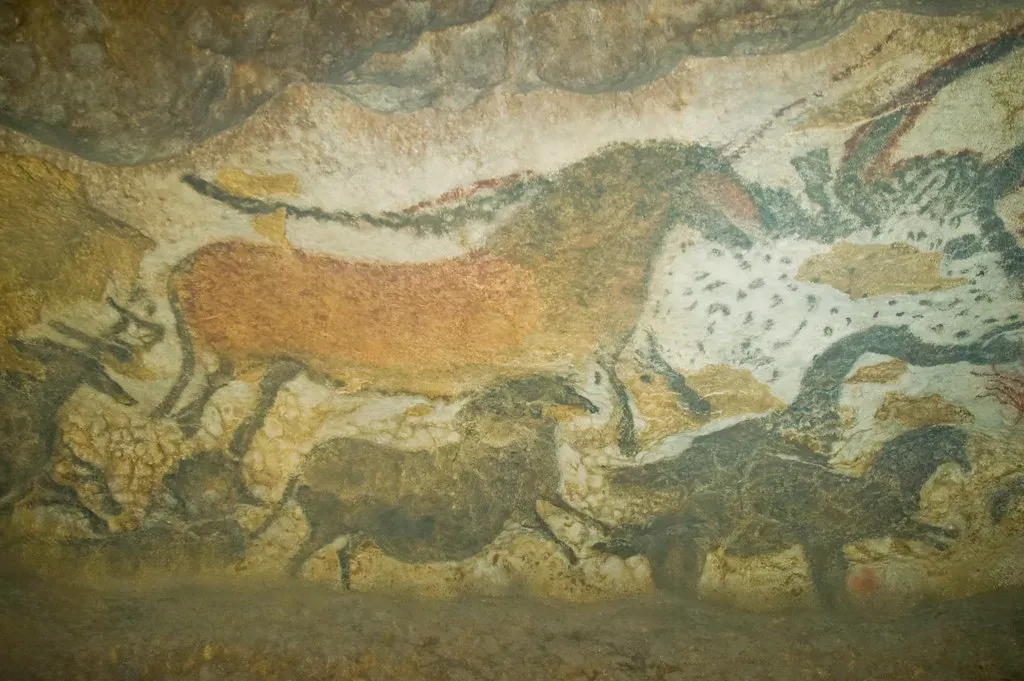
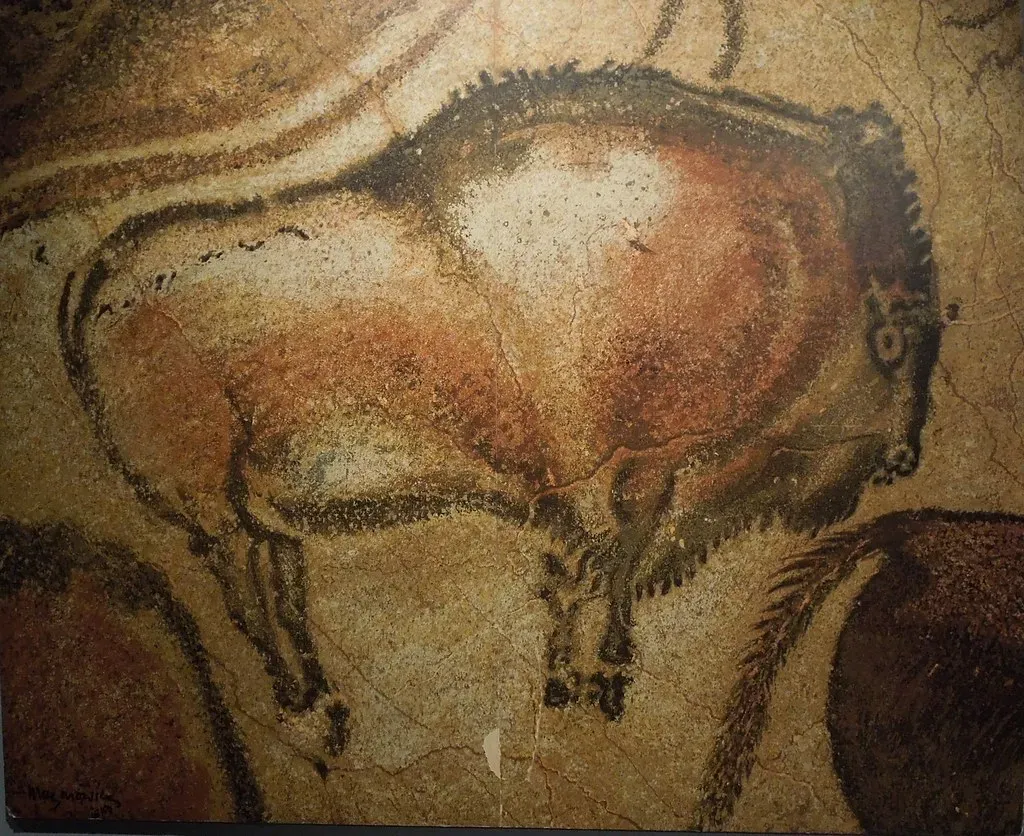
Imagine being a teenager out walking in the woods, your biggest concern whether your dog will run off, and instead you unlock a lost world from nearly twenty thousand years ago. That is essentially what happened in 1940 near the village of Montignac, in southwestern France, when a group of boys traced their dog into a hole and ended up discovering the Lascaux cave. Inside, they found walls exploding with color: bison, horses, stags, and strange symbols painted with astonishing skill.
Up to that point, many experts still pictured early humans as rough survivalists who might have scratched a few crude images but were mostly focused on staying alive. The sheer sophistication and emotional power of the Lascaux paintings shattered that image. These were not idle doodles; they were layered works using shading, perspective, and deliberate composition. Overnight, the stereotype of “cavemen” as dull and purely practical had to be upgraded to something much closer to us: people with abstract thought, ritual, and a sense of beauty.
2. A Bulldozer in Nebraska Meets a Sea Monster: The Niobrara Fossil Bonanza
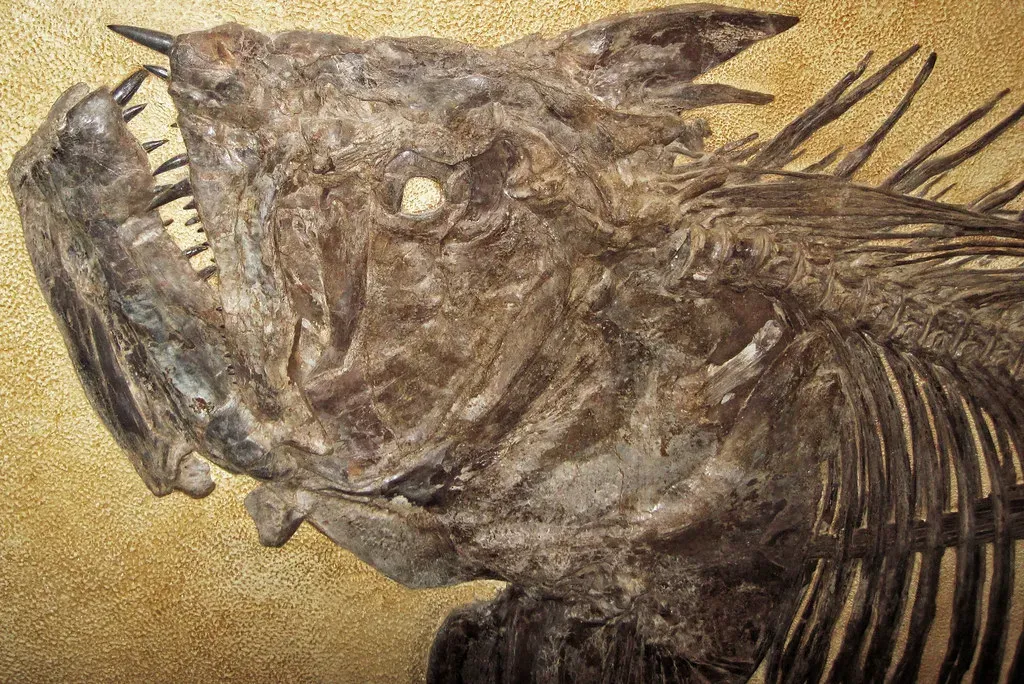
In the late twentieth century, construction crews working in Nebraska’s ancient chalk deposits were not out dinosaur-hunting; they were out there to move dirt. Yet repeated accidents by bulldozers slicing into the soft rock uncovered skeleton after skeleton of marine reptiles, giant fish, and other sea creatures, from a time when the region was covered by a shallow inland sea. Some of these finds were so unexpected that heavy equipment had to stop mid-job while paleontologists rushed in, almost like a fossil emergency response team.
These chance discoveries in the Niobrara Formation forced scientists to realize just how densely packed some ancient ecosystems had been, and how much three-dimensional information was preserved in what looked like “just rock.” Instead of a sparse cemetery of scattered bones, the area turned out to be a complex record of predators, prey, and changing sea levels layered over millions of years. It changed how researchers thought about marine food webs in the Late Cretaceous and pushed them to pay closer attention to what heavy machinery was chewing through in other regions.
3. A Railway Cut Reveals a Tiny Dinosaur with Giant Implications: Archaeopteryx
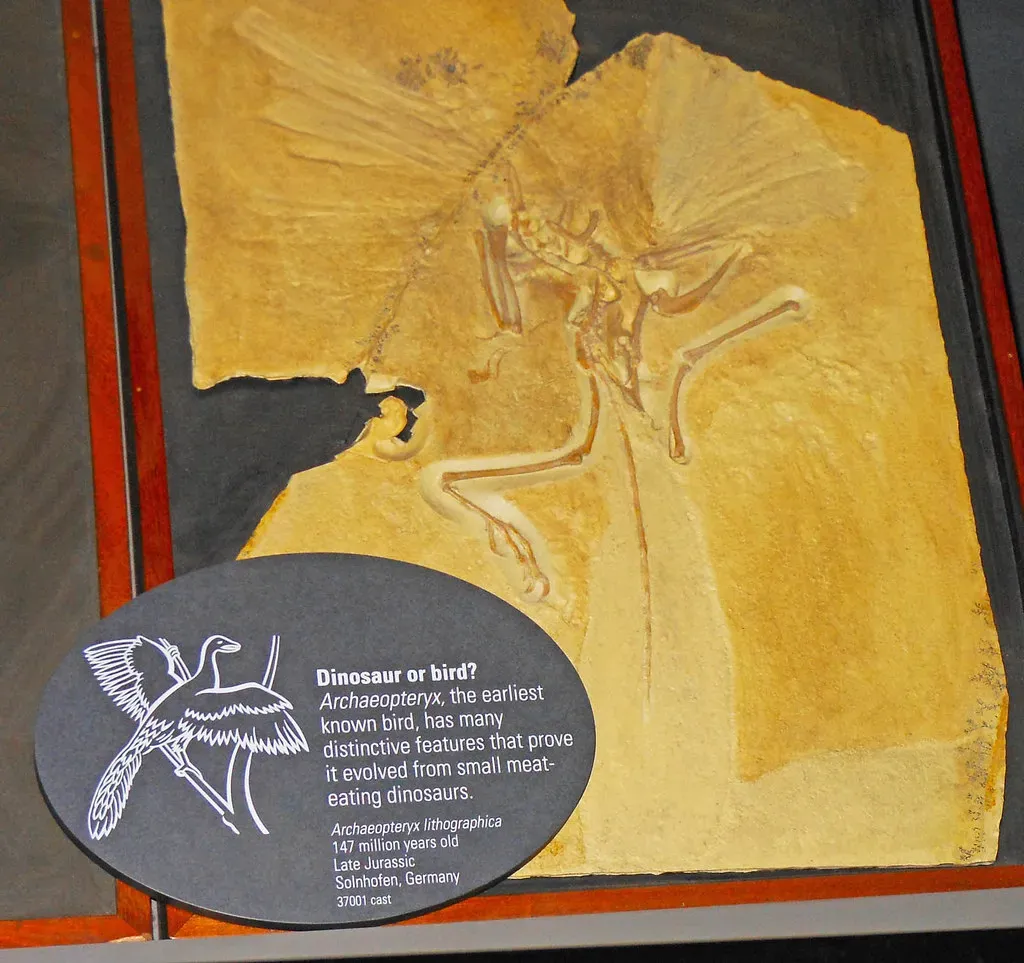
In nineteenth‑century Germany, workers quarrying fine limestone for printing plates near Solnhofen were not looking for anything but clean, flat stone. Yet by sheer luck, they started turning up delicately preserved fossils from a Jurassic lagoon, including one specimen with feathers and a long bony tail. That fossil, later named Archaeopteryx, was first recognized not by a grand expedition, but because it literally fell out of commercial stone blocks and into scientific hands almost as an afterthought.
Before this accidental find, the idea that birds evolved from reptiles was still more speculation than solid evidence. Archaeopteryx came in like a slap in the face to tidy categories: it had teeth and claws like a small dinosaur, but flight feathers and a wishbone like a bird. Suddenly, the comfortable, sharp dividing line between “bird” and “reptile” blurred. The fossil did not just fill a gap; it forced scientists to rethink what it even means to have a “missing link,” and showed that evolution often works as a series of messy overlaps, not neat ladder steps.
4. A Dog Falls into a Hole in Spain: Atapuerca and the Deep Human Past
In the 1970s, cave explorers following air currents in the Atapuerca hills of northern Spain stumbled on a shaft jammed with old bones. The opening itself had been exposed earlier by railway construction, but it took curious cavers to squeeze through and see what lay inside. What they eventually brought out was one of the richest collections of early human fossils ever found in Europe, representing multiple individuals from species that were completely unknown when the digging began.
For decades, textbooks treated Europe’s human story as starting properly with Neanderthals and then modern humans. The Atapuerca finds wrecked that tidy timeline. They showed that hominins had been present in Western Europe far earlier than many researchers believed, with a surprisingly complex mix of features that did not fit neatly into existing species boxes. It forced scientists to accept that human evolution in Europe was not just a straight line but a tangled, branching bush, with migrations and extinctions looping over one another like a messy family drama.
5. A Road Crew Stumbles on the “Ice Mummy”: Ötzi in the Alps
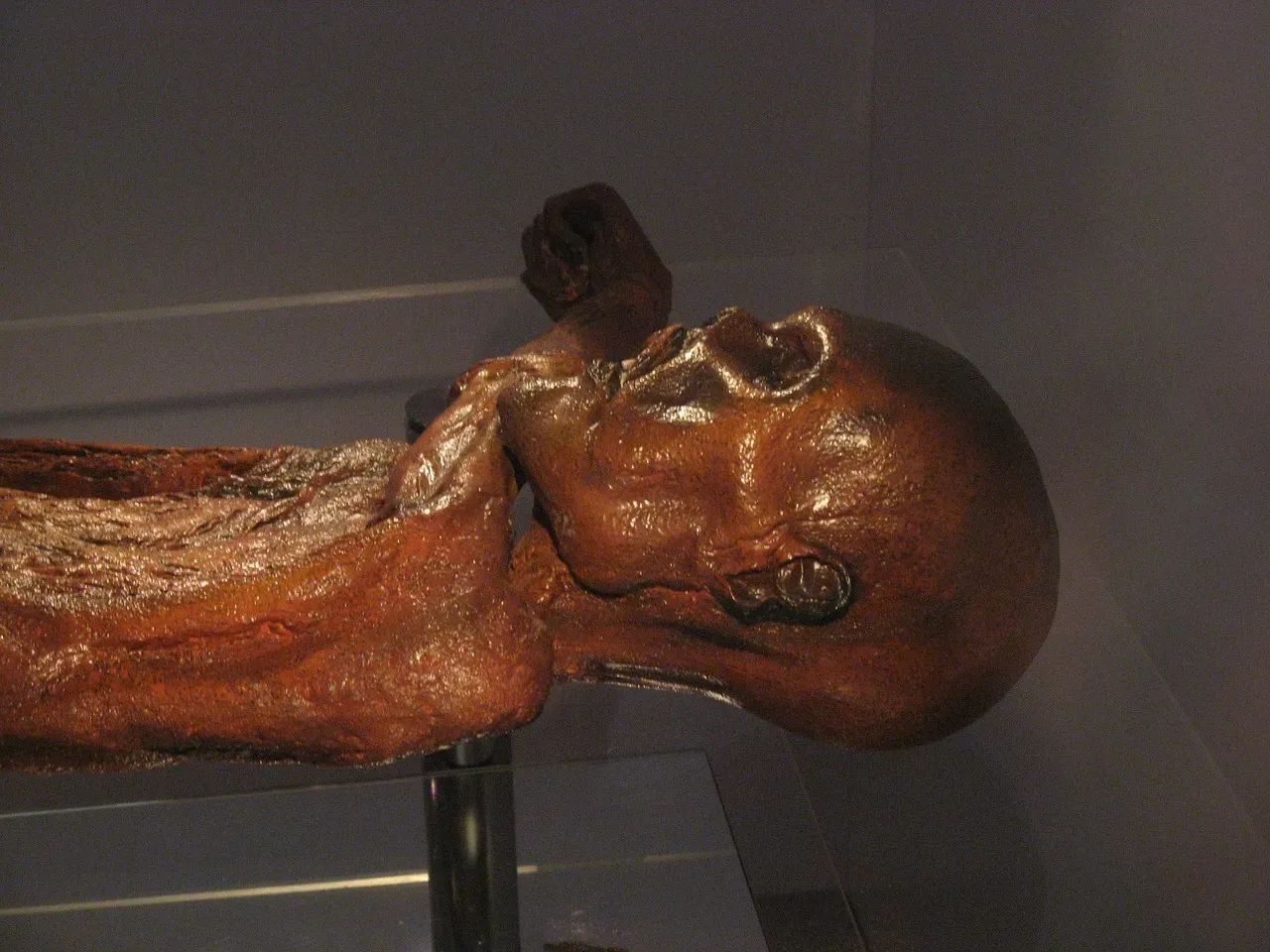
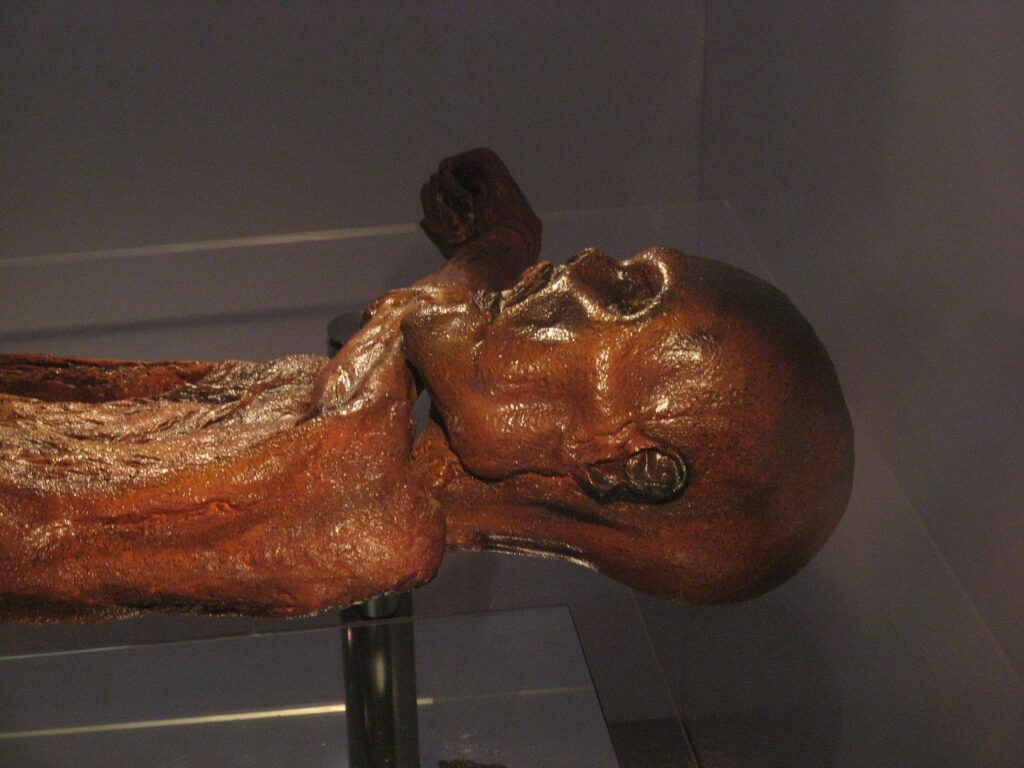
In 1991, two hikers in the Ötztal Alps, near the border of Austria and Italy, saw something that looked at first like modern trash or maybe a recent accident victim melting out of the ice. Instead, it turned out to be the naturally preserved body of a man who had died more than five thousand years ago, later nicknamed Ötzi. If they had walked a slightly different path, or if that summer had been a little cooler, he might still be locked in the glacier today.
This one accidental find rewrote how archaeologists imagined Copper Age life in Europe. Ötzi was not just a skeleton; he came with clothing, tools, tattoos, and even last meals preserved inside him. Instead of abstract ideas about “early farmers,” researchers suddenly had an individual: a person with injuries, specific food in his stomach, sophisticated gear, and signs of conflict. The discovery showed that people in that era had far more advanced technology, social complexity, and long-distance connections than many had assumed from scattered artifacts alone.
6. A Storm Exposes an Ancient Footprint Highway: Laetoli’s Tracks
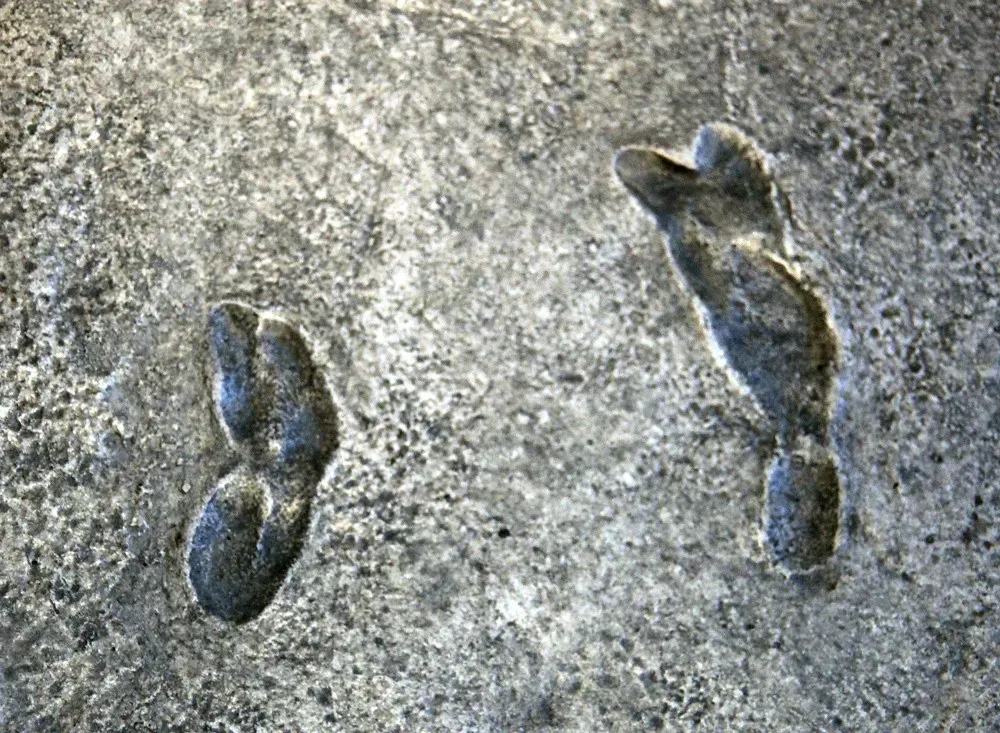
In the 1970s in Tanzania, researchers surveying volcanic ash layers after rains and erosion noticed something odd: a set of impressions that looked uncannily like footprints. They were not out there specifically hunting for tracks; the visibility of those prints depended on a perfect mix of weather, lighting, and the right person glancing in the right direction. Those footprints at Laetoli turned out to be more than three million years old, made by early hominins walking upright across fresh ash that later hardened like concrete.
At the time, many scientists still pictured brain growth as the first big leap in human evolution, with upright walking coming later. The Laetoli tracks delivered a quiet but brutal correction. Here were individuals clearly walking on two legs with a gait much like ours, long before big brains or toolkits appear in the record. That single trail forced a reshuffling of evolutionary priorities, showing that bipedalism was not a side effect of smartness, but one of the earliest and central changes that shaped what would eventually become us.
7. A Quarry Worker in China Uncovers a Feathered Dinosaur Parade
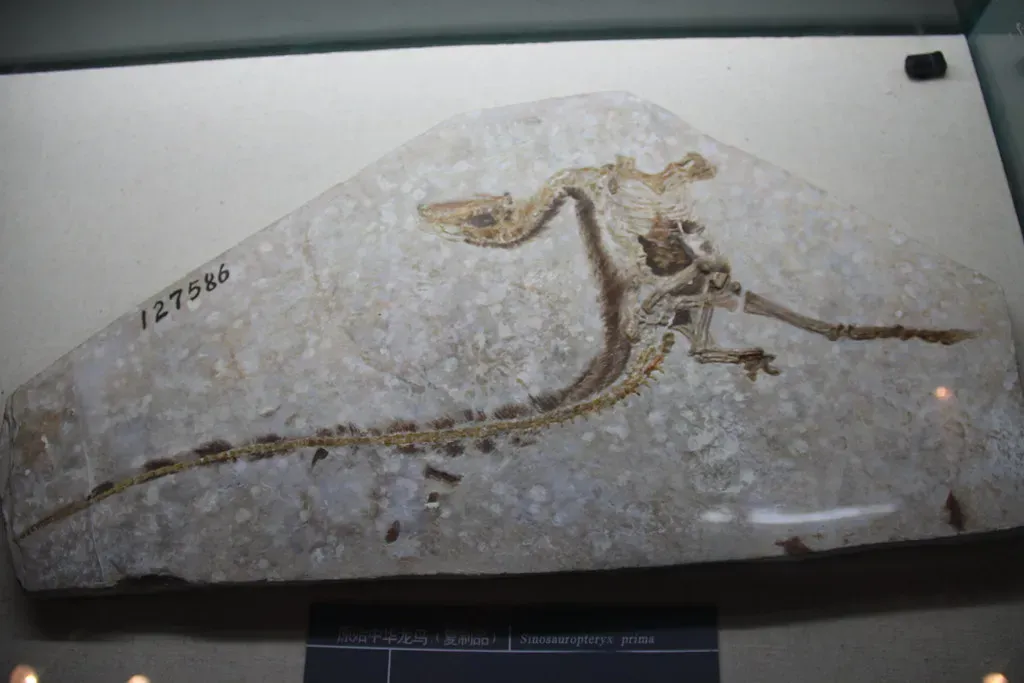
In northeastern China, near Liaoning, local farmers and quarry workers mining fine-grained rock for construction and industry began uncovering small, eerie skeletons with impressions around them that looked like wispy filaments and plumes. These were not part of an organized dinosaur hunt; in many cases, the fossils were pulled from stone destined for markets or building projects. When scientists finally examined them in detail, they realized they were looking at dinosaurs preserved with feathers in exquisite detail.
Although the idea that birds evolved from dinosaurs had already gained traction, these chance finds from Liaoning turned the theory into something almost undeniable. The fossils showed a whole range of feather types on different dinosaur species, including animals that could not fly at all. That forced a radical rethink: feathers were not invented for flight alone, but probably for insulation, display, or other functions long before wings appeared. The accidental parade of feathered dinosaurs pushed paleontology into a new, more nuanced view of both dinosaurs and the origins of birds.
8. A Construction Site in Canada Reveals a Dinosaur Frozen in Time: The Nodosaur
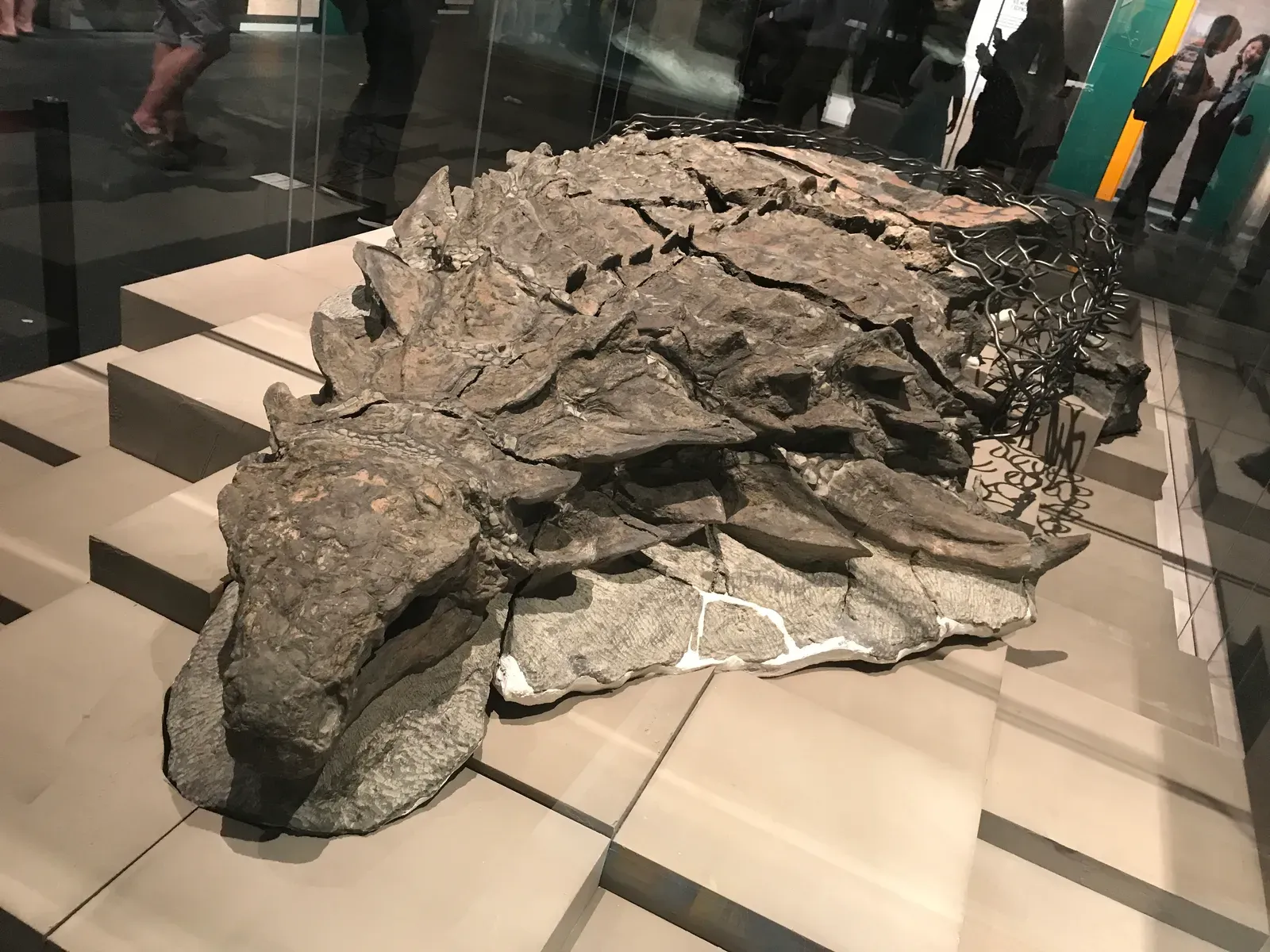
In 2011, miners in Alberta, Canada, were operating heavy equipment at an oil sands site when the bucket of an excavator hit something unusually solid. Instead of shrugging and grinding through it, the operator stopped and alerted supervisors, who brought in paleontologists. What they uncovered was one of the best-preserved armored dinosaurs ever found, a nodosaur so intact that its armored plates, skin impressions, and even some pigments were still visible, as if the animal had been sculpted rather than fossilized.
This extraordinary preservation changed how scientists imagined dinosaur appearance and defense. Rather than guessing from scattered bones and loose armor plates, they could see directly how the spikes, scales, and body contours fit together. The nodosaur showed that some dinosaurs may have had color patterns and textures more intricate than earlier reconstructions suggested, similar to how modern reptiles and mammals use camouflage and display. It pushed paleontologists to treat fossils less like anonymous skeletons and more like once-living animals with specific ecologies, behaviors, and visual identities.
Conclusion: What Accidents in the Dirt Say About Our Confidence in the Past
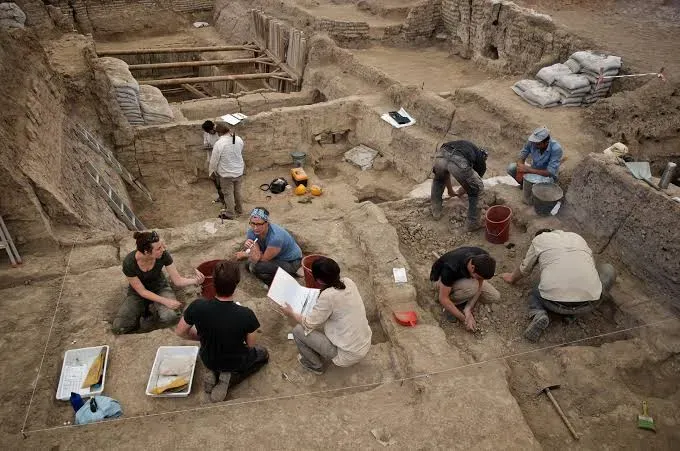
What ties all these stories together is uncomfortable and kind of thrilling: for all our models and theories, we are still at the mercy of chance. A dog chasing into a hole, a random storm, a worker who decides to report something instead of crushing it – those small choices yank entire scientific narratives sideways. To me, that makes prehistoric science feel less like a finished museum exhibit and more like a living detective story where the next major clue might show up under a backhoe tomorrow.
These accidental discoveries also keep scientists honest. Every time a Lascaux, a Laetoli, or an Ötzi shows up, it proves that our neat timelines and boxes are provisional at best. The past is far stranger, richer, and more intertwined than the tidy diagrams in textbooks. Maybe the healthiest stance is a mix of humility and boldness: build the best story we can from what we have, but stay ready to throw parts of it out the moment some muddy footprint or odd bone refuses to fit. Knowing that, what other world‑shaking secrets might still be hiding just a few inches beneath our feet?