
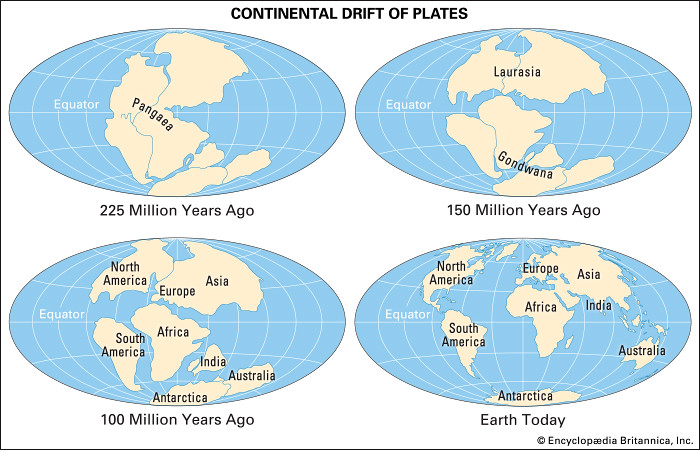
Look down at your hands for a second. While your fingernails quietly creep forward, entire continents are sliding across the planet at almost exactly the same pace. That calm, everyday movement hides something wild: given enough time, those slow shuffles will tear oceans apart, smash landmasses together, and build a brand‑new supercontinent unlike anything humans have ever seen.
This is not a sci‑fi plot or some fringe idea. Earth has already done this at least twice, building supercontinents like Pangaea and breaking them apart again. Now, geologists think the plates are on track to reunite into one giant landmass in about 250 million years. The details are still being argued over, but the big picture is clear: the ground under your feet is not still, and we are living in the middle of a very long, very slow rearranging of the planet.
The silent drift beneath your feet
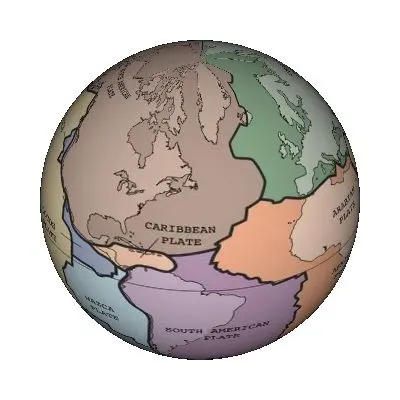
It is strangely unsettling to realize that the ground you treat as solid is quietly gliding over hot, deformable rock. Earth’s outer shell is broken into a mosaic of tectonic plates, and most of them creep along at a rate of a few centimeters per year, which is roughly about as fast as your fingernails grow. You cannot feel it, you cannot see it happening day to day, but over millions of years those tiny distances add up to thousands of kilometers.
Geologists measure this motion directly with high‑precision GPS and satellite systems, tracking how positions on different plates change over time. The Pacific Plate, for example, is racing northwest a bit faster than the average, while parts of Africa are stretching and splitting. If you could watch Earth in time‑lapse from space, the continents would look more like ice floes drifting on a slow‑motion lava sea than fixed outlines on a map.
How plates move: Earth’s deep engine room
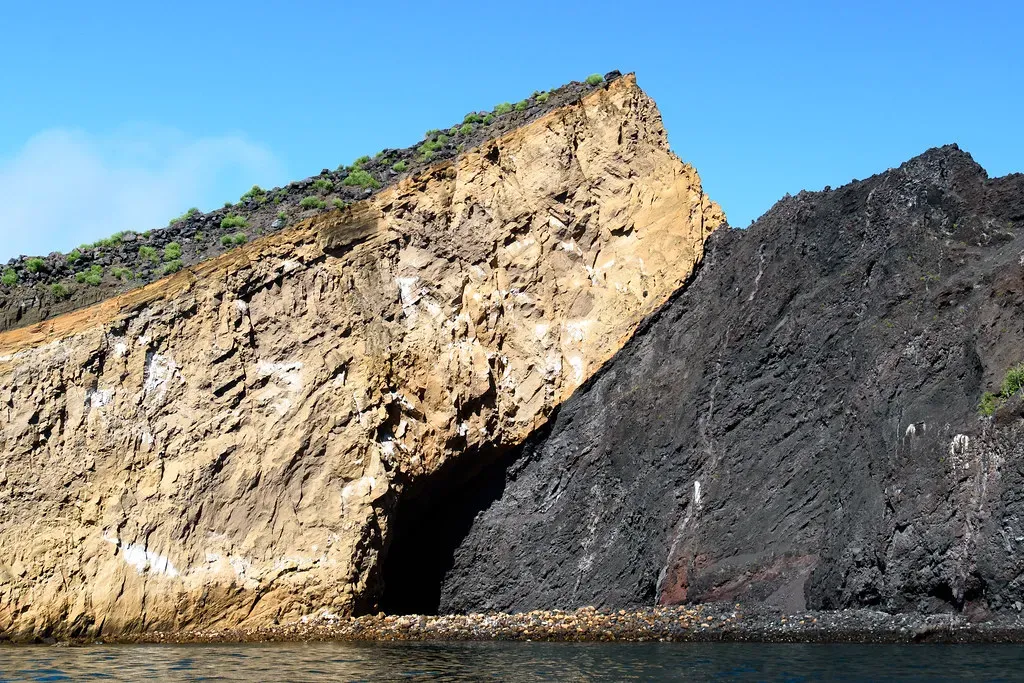
The reason continents move at all is because Earth is still losing the heat it was born with, plus heat generated by radioactive elements deep inside. That energy sets the mantle – the hot, mostly solid layer beneath the crust – into slow churning motion, a bit like the way water circulates in a pot just before it boils. Where hot mantle rises, it can push plates apart; where it cools and sinks, it can drag plates down with it, especially at subduction zones.
At mid‑ocean ridges, new ocean crust forms as magma wells up and solidifies, pushing plates away in opposite directions. On the other side of the plate, old ocean crust is forced back into the mantle and recycled. That balance between creation and destruction acts like a gigantic conveyor belt for the surface of the planet. Continents, which are thicker and more buoyant than ocean crust, ride along on this moving machinery, colliding, rifting, and sliding past each other as passengers on a restless conveyor that never fully stops.
Supercontinents past: Pangaea was not the first
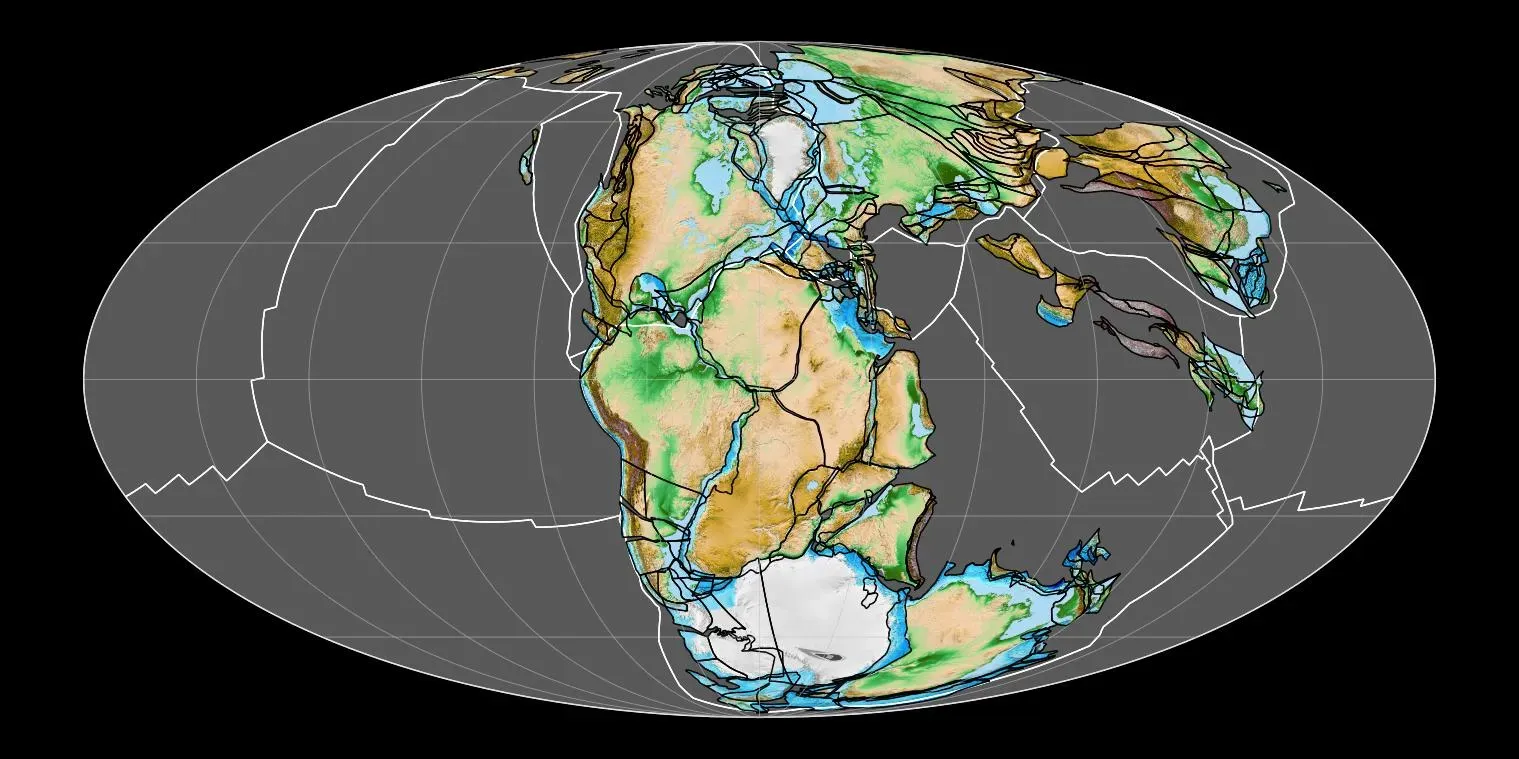
We tend to talk about Pangaea as if it was a one‑off, but it was only the latest chapter in a repeating pattern. Before Pangaea, there is strong evidence for at least one earlier supercontinent called Rodinia, and older reconstructions point to other supercontinents or supercontinent‑like clusters of land. Each of these giants assembled when scattered continents drifted together and then eventually broke apart again, starting a new cycle.
Geologists call this pattern the supercontinent cycle, and a rough rule of thumb is that Earth seems to build a global landmass every few hundred million years. Pangaea came together roughly about 300 million years ago and had mostly split apart by about 180 million years ago, giving birth to the modern Atlantic and reshaping the global map. When you see that repeating pattern – assemble, break, drift, reassemble – it becomes much easier to accept that the continents are very likely on their way to another grand reunion.
What the next supercontinent might look like
![What the next supercontinent might look like (I did myself based on [1], also I added it on my dinosaur website (the link is [2]), CC BY-SA 2.5)](https://nvmwebsites-budwg5g9avh3epea.z03.azurefd.net/dinoworld/b6d3179306e2ce1827034db401e5bf89.webp)
Here’s where things get delightfully speculative but still grounded in real physics. If the plates keep moving in roughly their present directions, some models suggest a future supercontinent often nicknamed “Pangea Proxima” that forms where the Atlantic closes and the Americas crash back into Eurasia and Africa. In that version, the Pacific either survives as a smaller ocean or shrinks dramatically, and today’s scattered coastlines become the interior heartland of a single sprawling landmass.
Other researchers argue that the deep mantle may be steering us toward a different configuration sometimes called “Amasia,” where the continents cluster around the North Pole as the Arctic and parts of the Pacific close. There is even a third family of ideas in which the next supercontinent might form roughly where the Pacific is now, closing the planet’s oldest ocean. None of these models can claim certainty, but they all agree on the core point: plate motions and mantle convection make it overwhelmingly likely that the continents will eventually come together again, even if we cannot yet draw the final map with confidence.
Life, climate, and a world with one continent
A supercontinent in 250 million years would not just redraw the map; it would rewrite climate and life itself. When land is clustered into one giant mass, the interior tends to be far drier and more extreme than coastal regions, because moist ocean air struggles to reach the center. Past supercontinents probably had vast interior deserts and strong seasonal swings, environments that would challenge many modern ecosystems and favor tough, adaptable life forms.
Ocean circulation would change dramatically too, because coastlines and seafloor ridges control how water and heat move around the planet. That would affect everything from global temperatures to nutrient cycles in the sea, with ripple effects across the entire food web. If complex life is still thriving by the time the next supercontinent forms, it will be dealing with a world that feels as alien to us as the age of the dinosaurs, shaped by slow geological decisions made over hundreds of millions of years.
Why this distant future should change how we think now
It is tempting to see “250 million years” and shrug, because that timescale is so far beyond any human plan or problem. But the supercontinent story is a sharp reminder that Earth is not a static backdrop for our lives; it is an evolving system with a long memory and a longer future. The continents we draw in textbooks are just one frame in a very long movie, and from the planet’s perspective, our current arrangement is temporary and frankly unremarkable.
Personally, I find that both humbling and strangely freeing. If continents can wander from pole to pole and slam together more than once, then the idea that our present climate, coastlines, or even species are permanent is clearly an illusion. That does not mean what we do now does not matter – if anything, it means the opposite. Our choices are brief flashes in a story that will keep going without us, and to me that is a powerful nudge to act like good guests on a world that is busy writing chapters long after we are gone.
Conclusion: A restless planet and our tiny moment on it
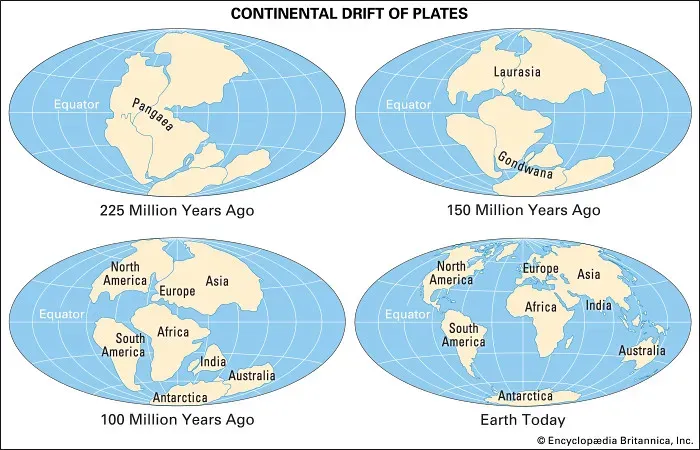
In the big geological picture, the idea that the continents will reassemble into a single landmass is not wild speculation; it is the logical next act in a play that has already run at least twice. Plates drift along at about the speed of your fingernails, driven by a deep engine of heat and gravity, and given a couple hundred million years, those small motions are enough to erase oceans, build mountains, and fuse continents into something entirely new. Whether the next supercontinent ends up looking like a new Pangaea, an Arctic‑centered cluster, or something no one has quite imagined yet, the odds are stacked in favor of another grand reunion.
My opinion is that this long‑term restlessness should shake us out of the illusion that Earth was made to look the way it does for our benefit. We live on shifting rafts of rock riding slow currents in a hot planet, and our whole history sits between two chapters of a story dominated by forces we barely control. Maybe the most honest response is to drop the fantasy of permanence, respect the scale of the system we are in, and do what we can to keep our brief chapter livable and meaningful. When you look at your fingernails today, can you imagine the continents quietly setting up the next supercontinent while we argue about this one?