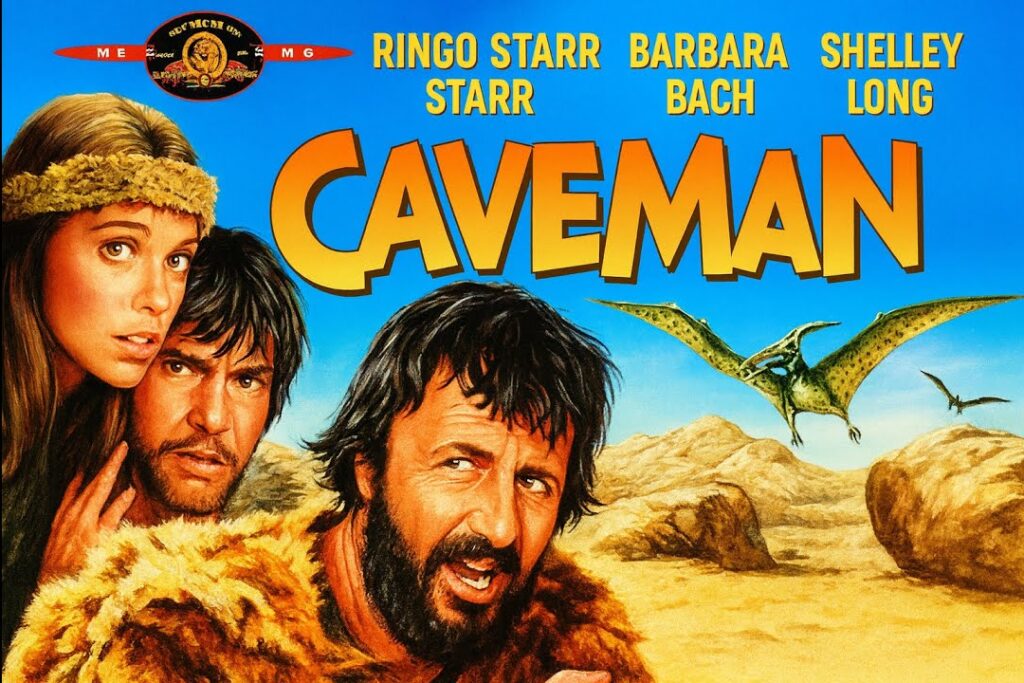
I saw Caveman for the first time on a scratched old DVD that a friend swore was “so stupid it loops back around to genius.” I rolled my eyes, hit play, and about twenty minutes later realized I was laughing at jokes made almost entirely out of grunts, sight gags, and plastic-looking dinosaurs. It felt like discovering a weird relic buried just under the surface of 80s cinema, something nobody had thought to tell me about because they assumed it was a throwaway.
But Caveman is more than an oddball artifact with Ringo Starr in a fur tunic. It’s a strangely confident little film that commits so hard to its own nonsense that it starts to feel… kind of smart. Under all the slapstick and rubbery monsters there’s a clear understanding of how comedy works, how visual language beats dialogue, and how lowbrow gags can quietly hit some pretty timeless themes. Let’s dig into why this prehistoric chaos actually holds together – and why it works better than you’d expect.
The bizarre power of almost no real dialogue
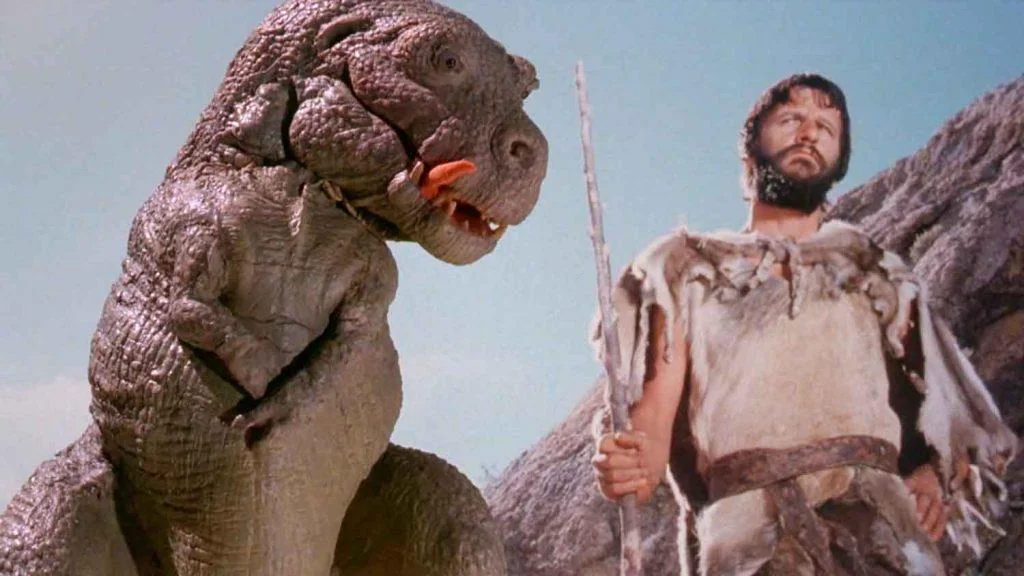
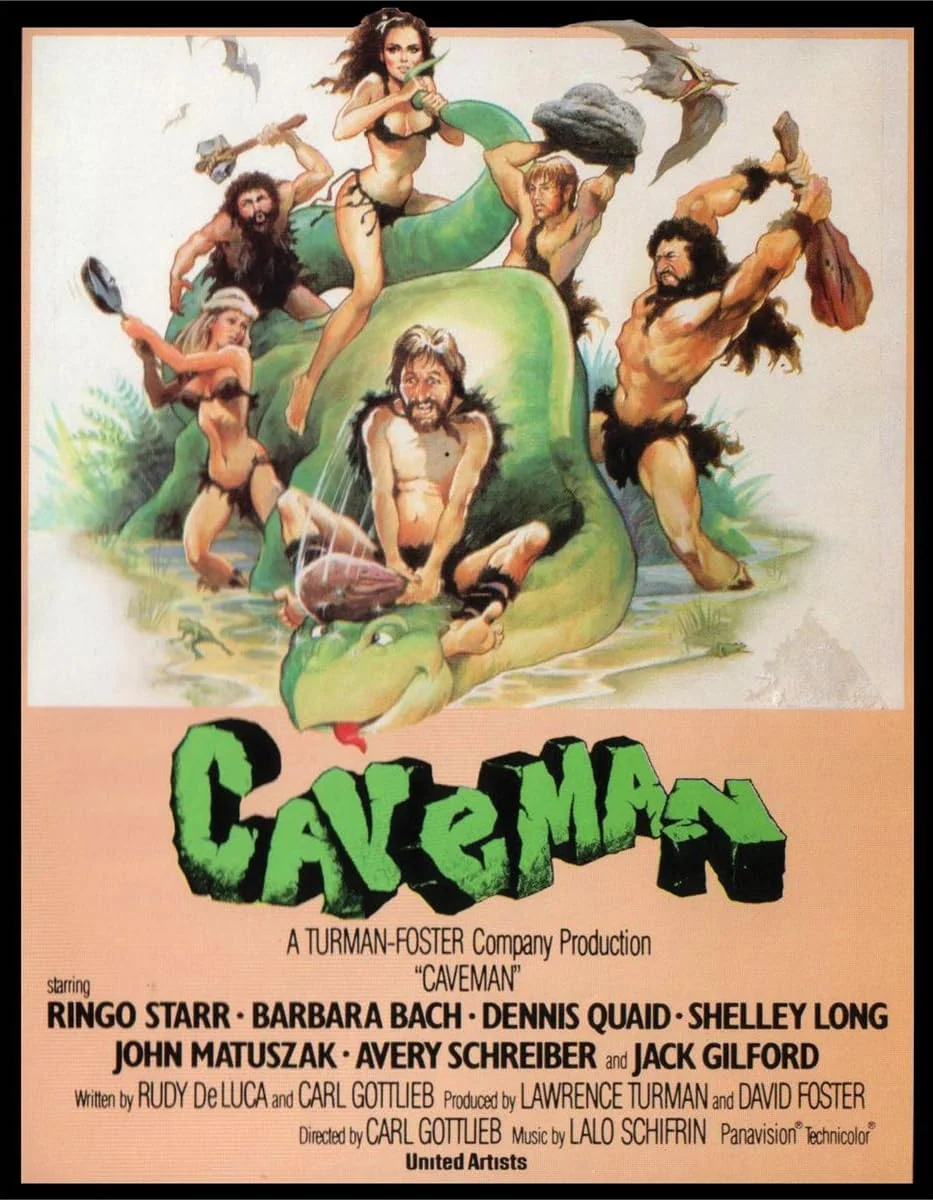
The first shock when you watch Caveman is how little actual language there is. Characters speak in a made-up caveman tongue made of repeated syllables, grunts, and a tiny cluster of “words” you start to recognize by context. On paper, that sounds like a one-note gimmick that should wear thin fast. On screen, though, it locks you into a visual, physical kind of comedy that feels closer to silent-era slapstick than to typical 80s dialogue-driven humor.
Because your brain isn’t busy parsing clever lines, it pays more attention to faces, timing, and physical reactions. A raised eyebrow suddenly carries more weight than a paragraph of quips. It’s like the movie quietly turns the volume down on language so that body language can roar. This forces the cast to overdeliver with their expressions and movements, and surprisingly, it works: you start understanding these characters instinctively, almost like watching a cartoon you somehow “get” even without subtitles.
Ringo Starr’s deadpan weirdness is exactly what the movie needs
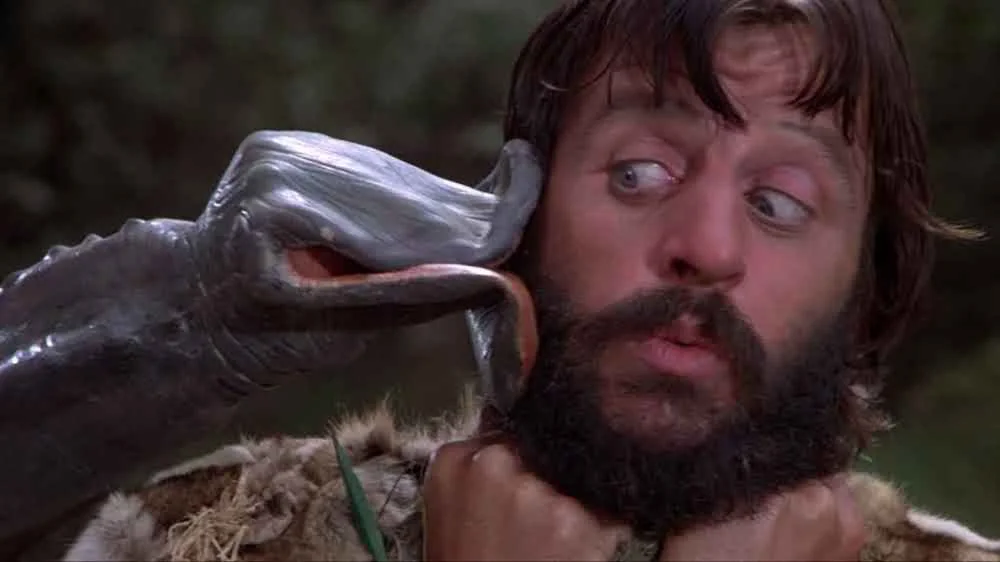
Casting Ringo Starr as a hapless caveman leader is one of those decisions that sounds like a dare. He’s not the obvious choice for broad slapstick, and yet that’s partly why it lands. Ringo plays it with a straight-faced, slightly bewildered energy, like he’s just as confused by the world around him as we are. He’s not winking at the camera, he’s just trudging through the madness, and that low-key presence becomes the anchor in a movie full of chaos.
What makes it click is that his character never feels like a polished Hollywood hero; he’s more like the guy in your friend group who suddenly, reluctantly, becomes the “leader” because no one else will. That awkwardness is strangely relatable. When he fumbles through fights, romances, and dinosaur encounters, it doesn’t feel like a star vehicle – it feels like watching the world’s least prepared protagonist accidentally evolve. For a film that plays everything as a joke, that hint of accidental everyman charm is oddly important.
Slapstick, dinosaurs, and practical effects that age better than expected
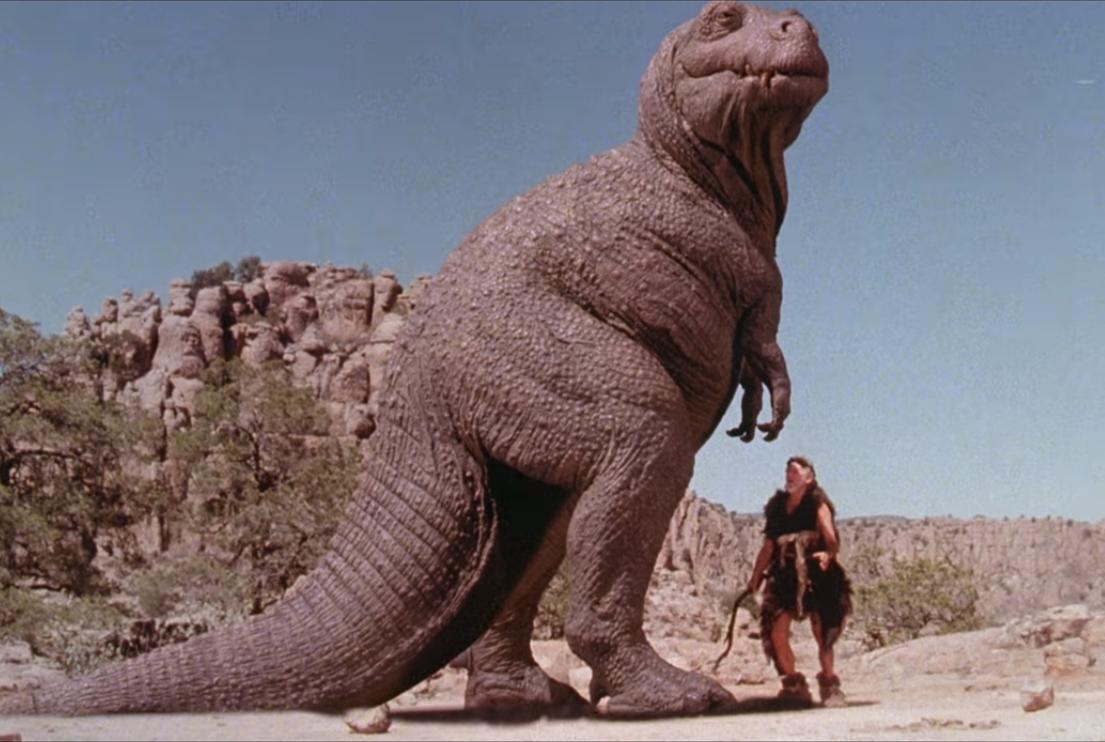
If you grew up in the CGI era, the dinosaurs and creatures in Caveman will look obviously fake – but that’s part of the charm. They’re tactile, physical, and sometimes delightfully clumsy. The stop-motion and rubber suits give the film a handmade, toy-box feeling, like someone mashed prehistoric chaos together on their living room floor. That material presence makes the slapstick more satisfying, because when someone gets whacked, splattered, or chased, it feels grounded in a real space.
The gags themselves are pure “banana peel on the floor” energy: falls, bonks, pratfalls, and exaggerated reactions. What rescues this from feeling lazy is the timing and creativity in how the chaos escalates. A simple stumble turns into a chain reaction, a minor scuffle spirals into a full-on brawl with props flying everywhere. It’s comedy by accumulation, and the practical effects give every mess, spill, and monster cameo a weirdly solid weight. You always know where everyone is in the frame, and you can feel the impact when things go wrong.
Under the nonsense, it’s a story about outsiders and accidental progress
What’s fun is how the film plays “progress” like a running gag. The discovery of basic things – tools, music, maybe even a hint of social cooperation – shows up in clumsy, silly ways. You’re not getting a serious anthropology lesson, but you do get a cartoon version of how trial and error can accidentally move a group forward. It’s like watching a bunch of idiots reinvent zero-level civilization, proving that sometimes progress is less about genius and more about being too stubborn to give up.
Leaning into camp instead of pretending to be smarter than it is
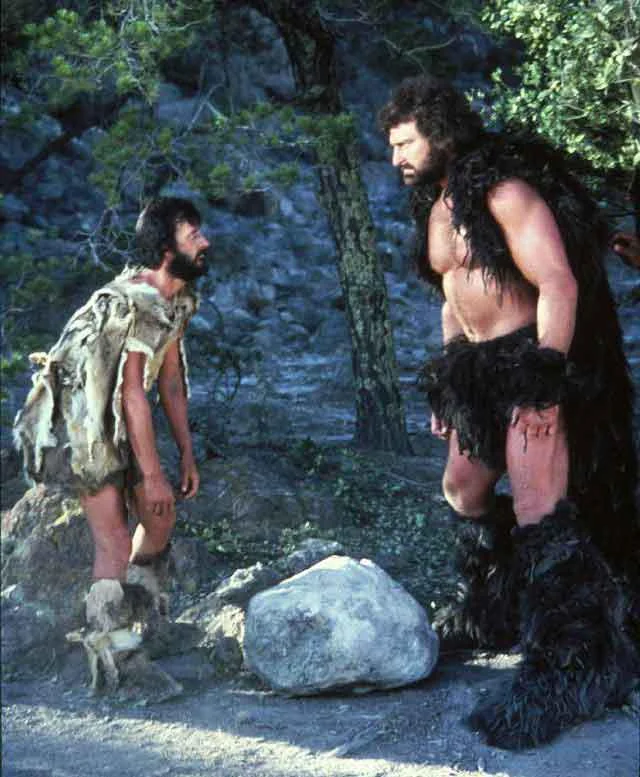
Lots of comedies try to have it both ways: they want the cheap laughs and the respectability of being “secretly smart.” Caveman doesn’t bother with that performance. It leans into its own absurdity with total sincerity: rubber monsters, goofy wigs, ridiculous sound design, and a script that never pretends to be profound. That honesty is disarming. The movie knows it’s silly and never apologizes, which gives it a strange kind of integrity.
Because there’s no fake sophistication to maintain, the film is free to jump from gross-out gag to visual pun to weirdly sweet character moment without worrying about tone. It feels more like a group of people having fun with a wild idea than a calculated product. That sense of unembarrassed camp is why it has quietly stuck around as a cult object. You’re not watching something trying to impress critics; you’re watching a movie that seems almost relieved it doesn’t have to be cool.
A time capsule of early 80s comedy instincts
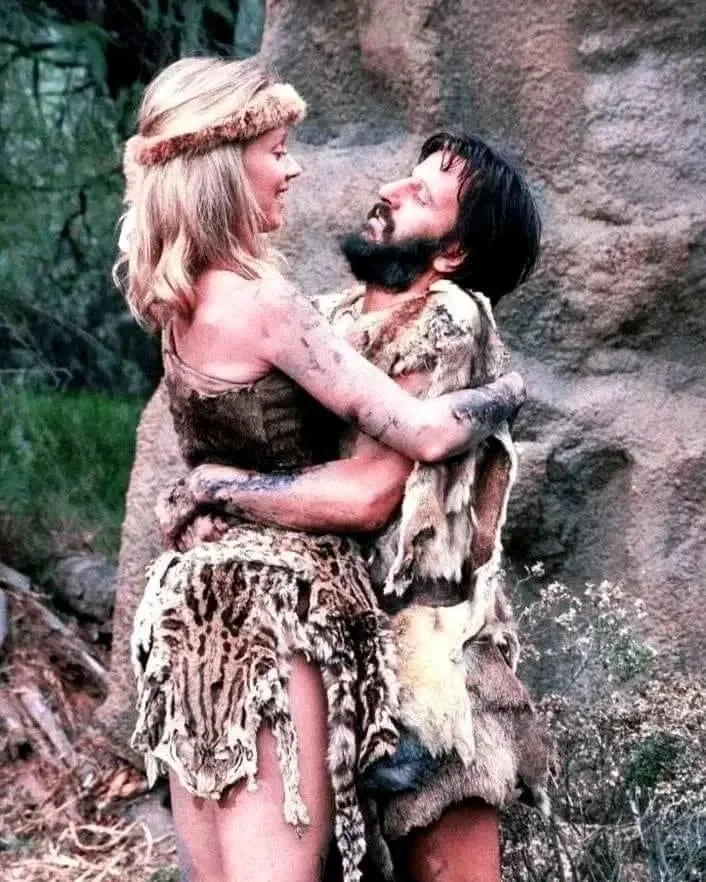
Caveman sits in a strange little pocket of early 80s filmmaking, right before high-concept blockbusters fully took over and long before postmodern irony ruled comedy. You can feel that in its pacing and priorities. It’s not racing to hit a quota of clever punchlines. It’s more interested in building goofy scenarios, letting them play out, and trusting that physical absurdity is enough. That kind of patience is rare now, where jokes are often machine-gunned at the audience.
Watching it today almost feels like checking a fossil for clues about how comedy evolved. You can see links backwards to silent films and forwards to later cult comedies that embraced visual nonsense and committed world-building. It’s rough around the edges, but that roughness is informative: it shows what happens when a studio still lets something odd slip through the cracks. The movie becomes both entertainment and artifact, a snapshot of what a riskier, less polished era of studio comedy looked like.
Why this ridiculous little movie still works – and why not everyone will admit it
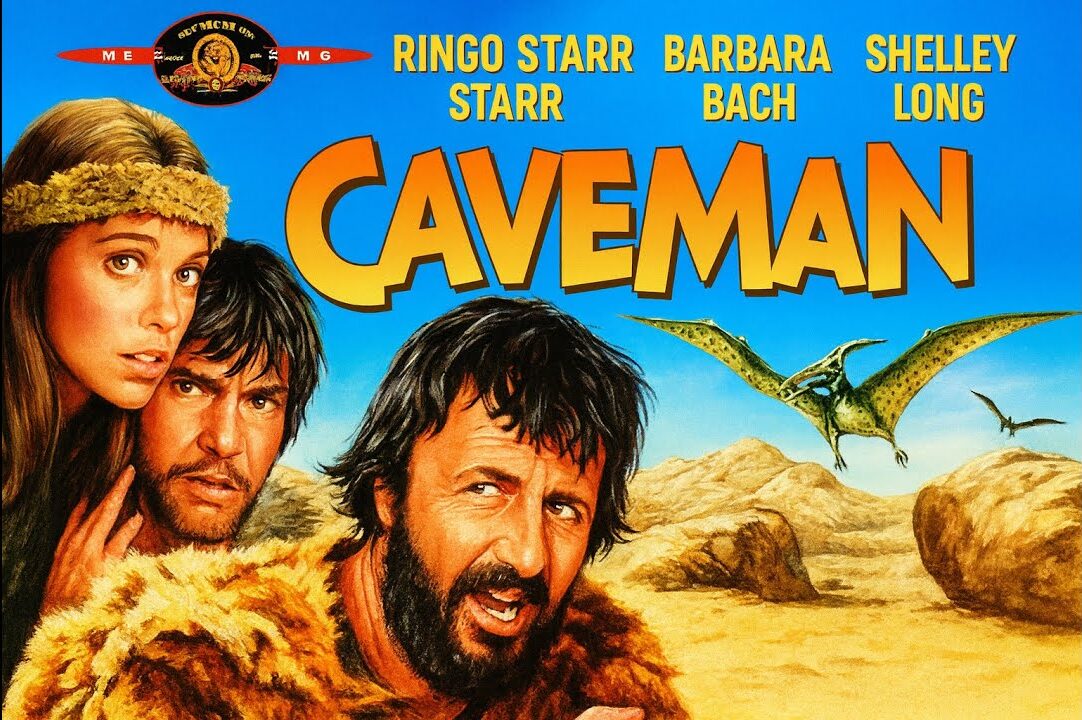
Is Caveman a masterpiece? No. But it’s a lot more intentional, and a lot more effective, than its reputation suggests. It works because it commits: to the fake language, to the slapstick, to Ringo’s offbeat presence, to the practical effects, to a tone that never pretends to be anything but ridiculous. All of that adds up to a film that feels cohesive in its own strange ecosystem. It’s not “so bad it’s good” – it’s deliberately odd, and if you meet it on its own level, it’s surprisingly satisfying.
Personally, I think part of the reason people hesitate to praise it is embarrassment. Admitting you enjoyed a movie built out of grunts and pratfalls can feel like confessing you laughed at the wrong kind of joke. But there’s something refreshing about a comedy that doesn’t chase trends, doesn’t pretend to be edgy or profound, and still finds a way to make you laugh out loud with nothing more than timing, faces, and a badly behaved dinosaur. In a world packed with over-explained, over-sanitized entertainment, maybe the real surprise is that this scruffy prehistoric oddity feels more alive than it has any right to. Be honest: did you ever expect a caveman movie with Ringo Starr to hold up at all?