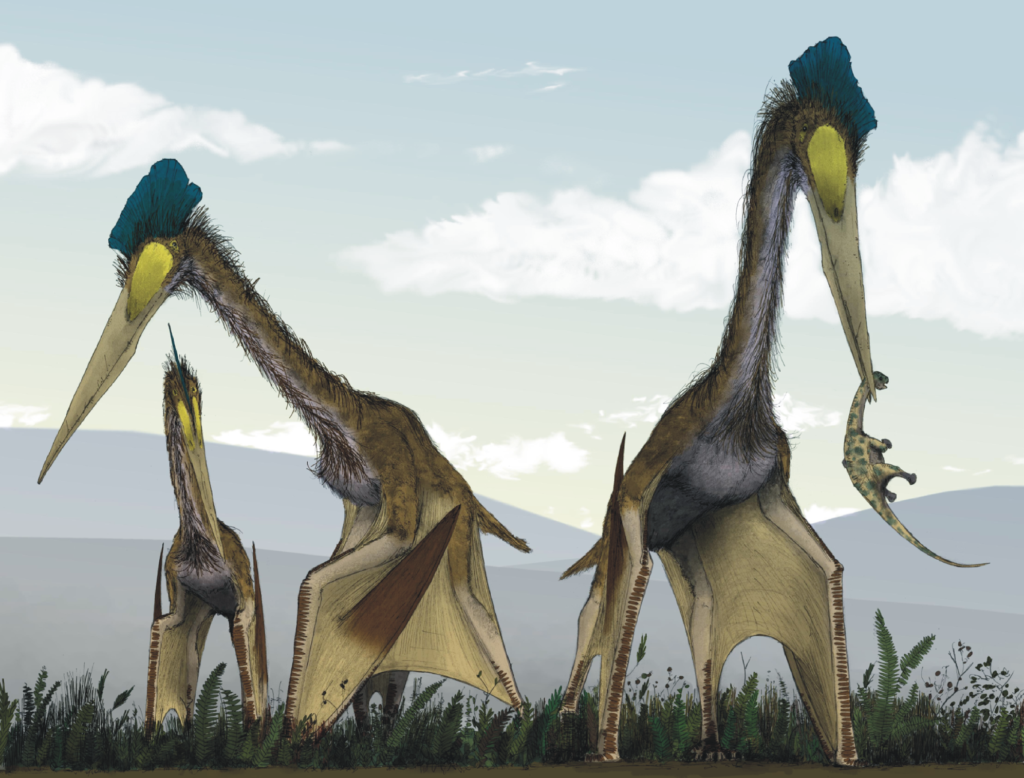
Imagine looking up and seeing something as tall as a giraffe spread its wings and take off into the sky. That is roughly what it would have felt like to watch Quetzalcoatlus, the giant pterosaur that ruled Late Cretaceous skies and continues to stir arguments in scientific circles decades after its discovery. It is one of those creatures that feels almost too dramatic to be real, like a movie monster that somehow slipped into the fossil record.
What makes Quetzalcoatlus so addictive to read about is not just its ridiculous size, but how much we still do not agree on: How exactly did it fly? Where did it live? And how on earth did something that big feed itself? I still remember the first time I saw an artist’s reconstruction of it next to a human; it felt like the rules of nature had been bent. The deeper scientists dig into its bones, the more we realize this animal doesn’t just stretch our imagination; it stretches our theories about how life works.
Meet Quetzalcoatlus: The Giraffe-Sized Ruler of the Skies
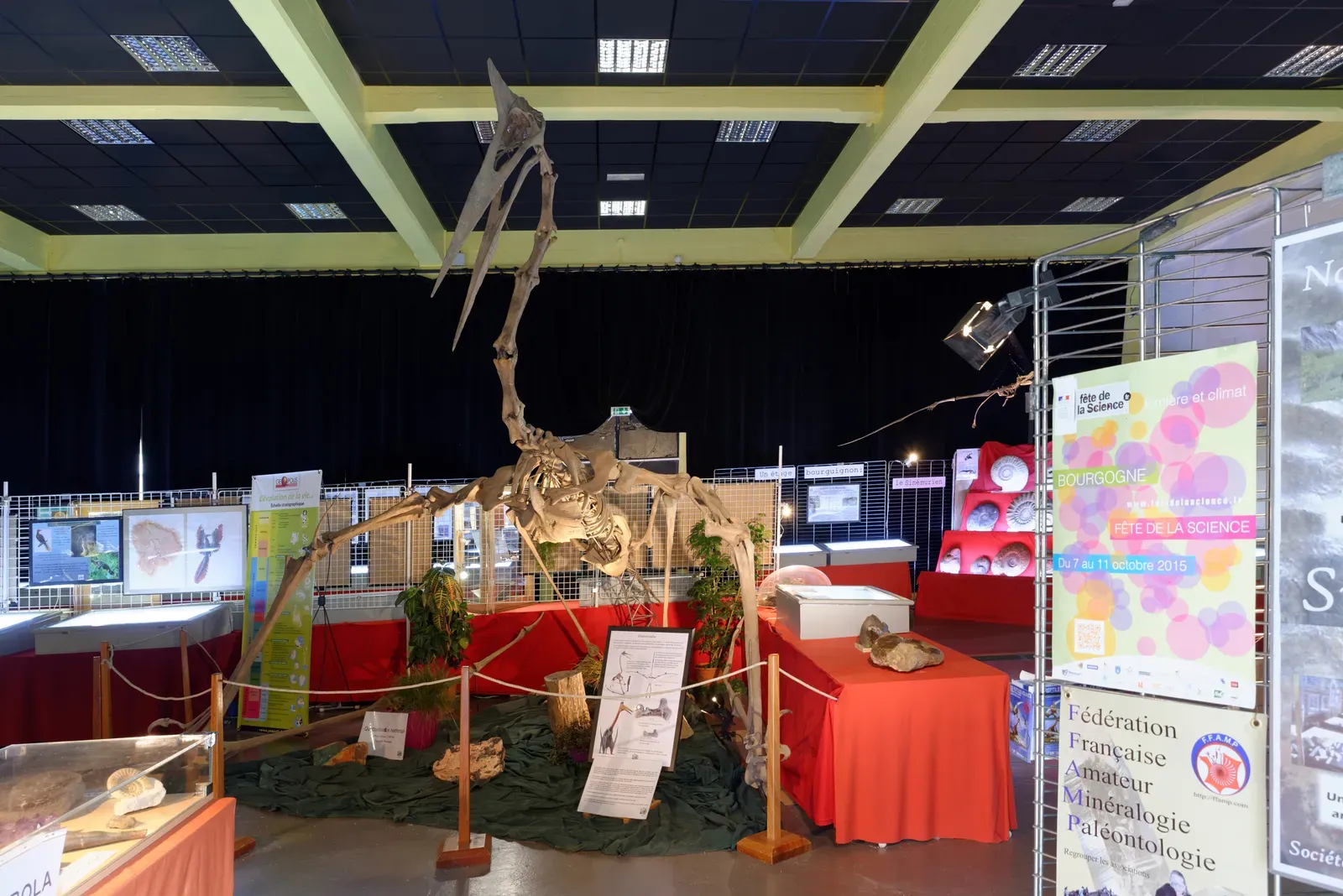
Quetzalcoatlus was a pterosaur, not a dinosaur, even though it lived alongside famous giants like Tyrannosaurus and Triceratops in the Late Cretaceous, around the final few million years before the mass extinction. It belonged to a group called azhdarchids, which were characterized by long necks, toothless beaks, and enormous wingspans. The largest species, often referred to as Quetzalcoatlus northropi, is estimated to have had a wingspan that stretched longer than a small aircraft, and when standing on the ground, it was comparable in height to a giraffe.
What really grabs people is the posture: picture a four-legged, long-necked, beaked animal about as tall as a double-story room, folding and unfolding wings like living canvas. Its head, with a long pointed beak and crest, was absurdly large relative to its body, almost like someone put a swordfish bill on top of a stilt-walking horse. It is the kind of animal that forces you to question your mental picture of prehistoric life; suddenly the age of reptiles does not just belong to lumbering land beasts, but also to sky-walkers that made modern birds look almost modest.
How Did Something So Huge Actually Fly?
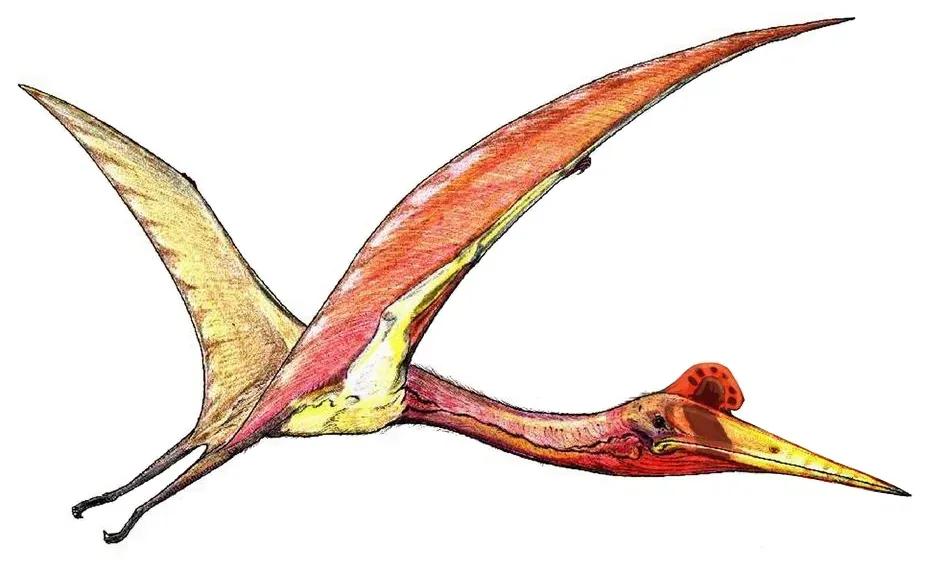
The idea that an animal about as tall as a giraffe could fly sounds like a mistake, and that is exactly why Quetzalcoatlus has been at the center of intense debates. Early reconstructions sometimes treated it like a clumsy glider, barely able to get off the ground, but later research into its anatomy painted a different picture. Its bones were thin-walled and air-filled, like those of birds, but reinforced with internal struts that gave them strength without piling on weight. The powerful chest and shoulder girdle suggest massive flight muscles, anchored to a robust breastbone and strong wing bones.
Many scientists now argue that Quetzalcoatlus was not just capable of flight, but was an efficient long-distance soarer, using rising air currents the way vultures and albatrosses do today. One widely discussed idea is that it used a kind of vaulting takeoff: pushing off with its strong forelimbs and hindlimbs in one explosive leap, then snapping out its wings to catch the air. Picture a giant, four-legged pole-vaulter launching itself into the sky. It is still an active area of research, but the general trend has shifted away from seeing it as grounded and sluggish, and toward viewing it as a surprisingly athletic, if very strange, flying animal.
Life on Land: A Sky Giant That Also Walked Like a Stilt-Walker
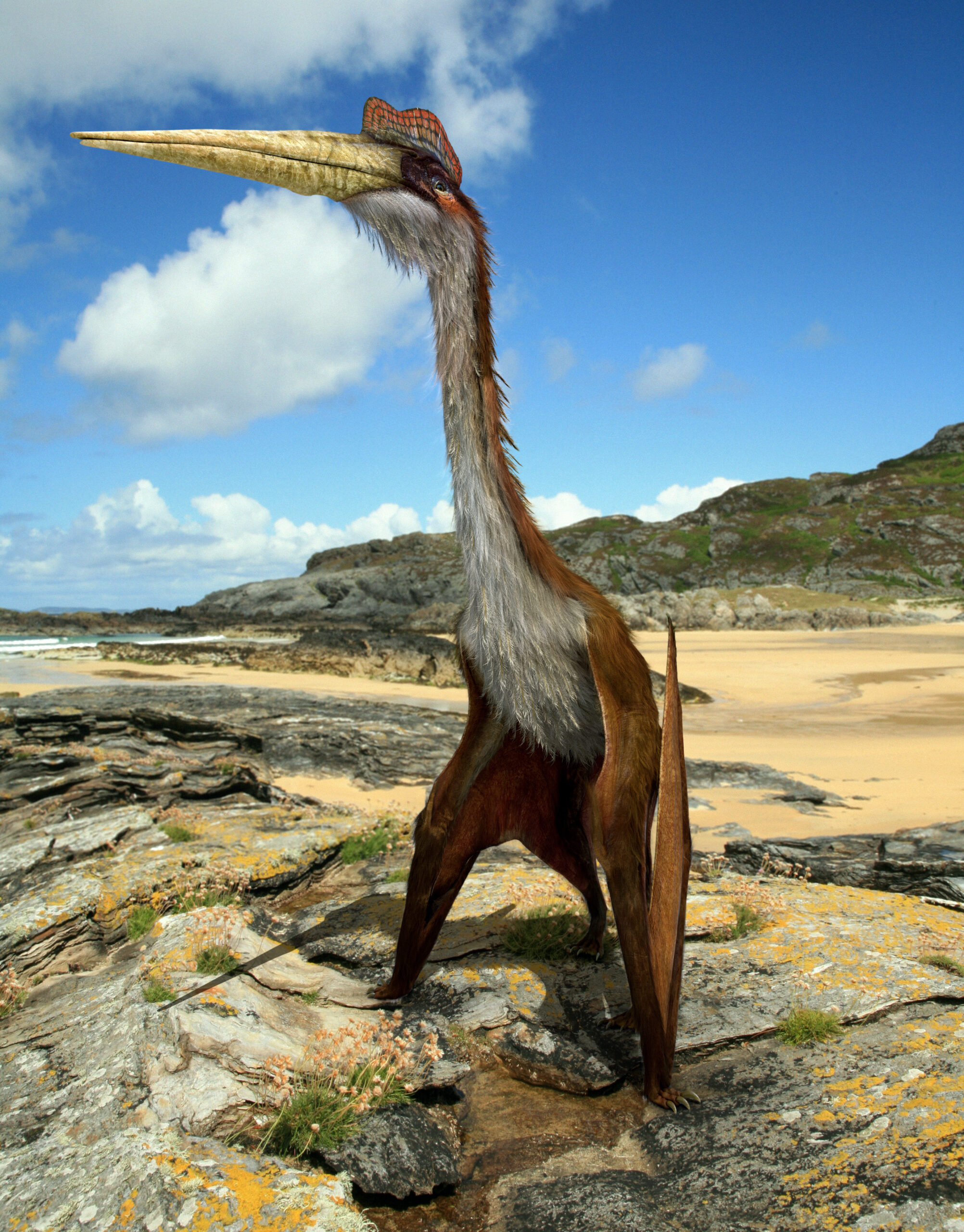
As dramatic as its flight was, Quetzalcoatlus probably spent a lot of time on the ground, and its skeleton hints at a surprisingly competent walker. The limbs are proportioned in a way that would have allowed it to stride on all fours, with the wings partially folded but still forming strong forelimbs. Fossil trackways attributed to large pterosaurs show a distinctive four-footed gait, with the hands and feet leaving clear impressions that match what we see in their bones. That suggests Quetzalcoatlus was not just a sky drifter, but a terrestrial stalker that could cover ground effectively.
This dual life – competent in the air and reasonably comfortable on land – makes it feel almost like the prehistoric equivalent of a modern heron blended with a condor and then scaled up to nightmare size. It probably roamed open floodplains, river valleys, and coastal environments, using its height to scan for opportunities. Instead of imagining it clinging helplessly to cliff faces, it is more realistic to picture it striding across ancient landscapes, occasionally bursting into flight when it needed to relocate, escape danger, or search for new feeding grounds. That mental image alone changes Quetzalcoatlus from a flying oddity into a true ecological heavyweight.
The Feeding Mystery: Predator, Scavenger, or Gentle Picker?
Here is where the real scientific argument flares up: how did this gigantic, toothless, long-necked pterosaur actually eat? Early on, one popular idea cast Quetzalcoatlus as a kind of oversized skimmer, swooping low over water and dragging its beak through the surface to catch fish, a bit like some modern birds. However, closer analysis of its jaws and neck suggests that this kind of behavior would have put enormous strain on its skull and might not have been mechanically realistic, especially at such a large size. That pushed researchers to think harder about life on land, not just in the air.
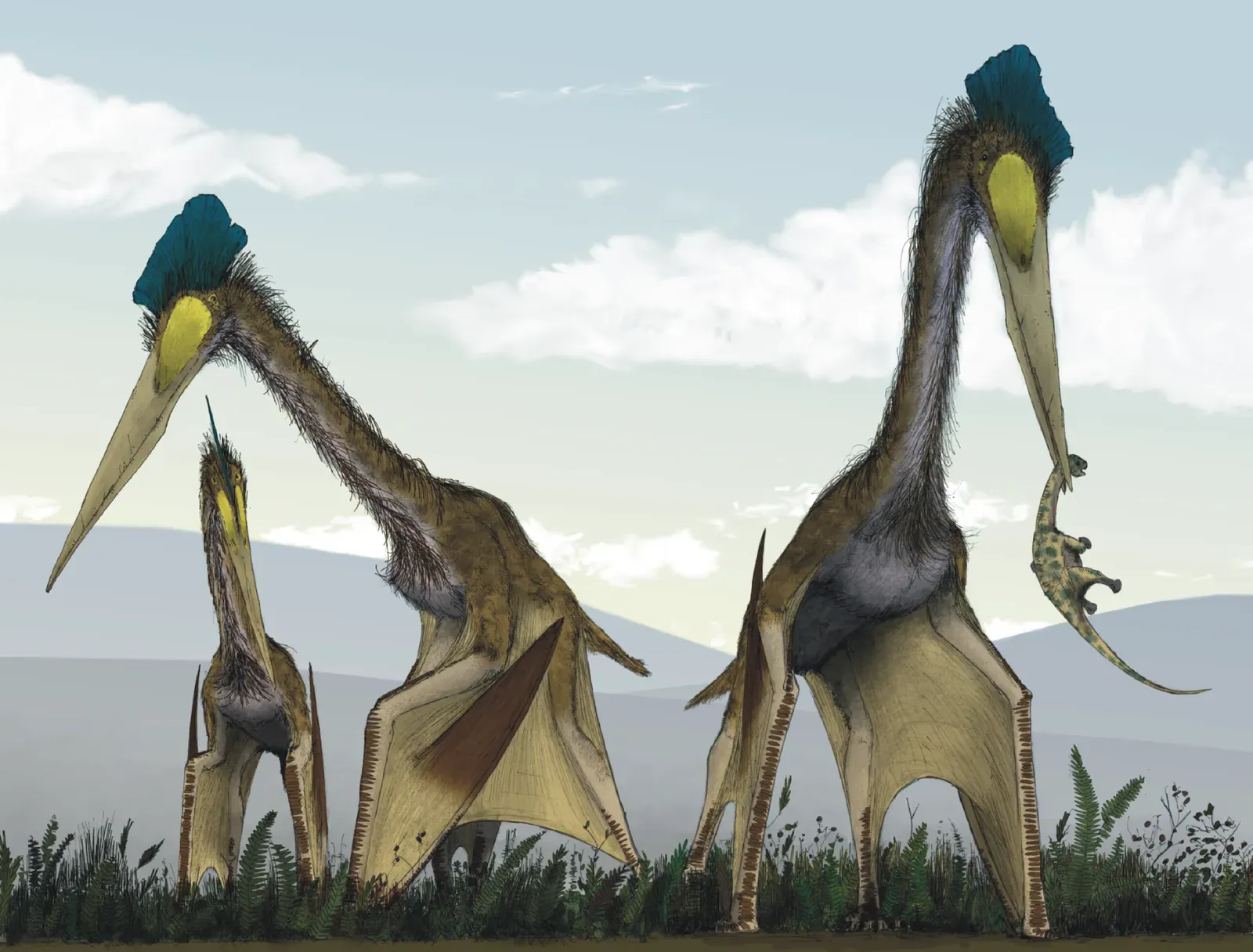
Another influential idea portrays Quetzalcoatlus as a terrestrial stalker, wandering floodplains and snatching up small dinosaurs, reptiles, or other vertebrates, much like a giant stork or marabou might do today. In that view, it used its long beak and neck to pick up prey from the ground, possibly swallowing animals whole. Others suggest it might have done more scavenging, taking advantage of carcasses left by other predators. The debate gets heated because the same anatomical traits – long neck, toothless beak, tall stance – can be used to argue for multiple lifestyles, and the fossil record does not yet give us that crisp, decisive moment of behavior locked in stone.
Why Scientists Still Argue About Its Diet
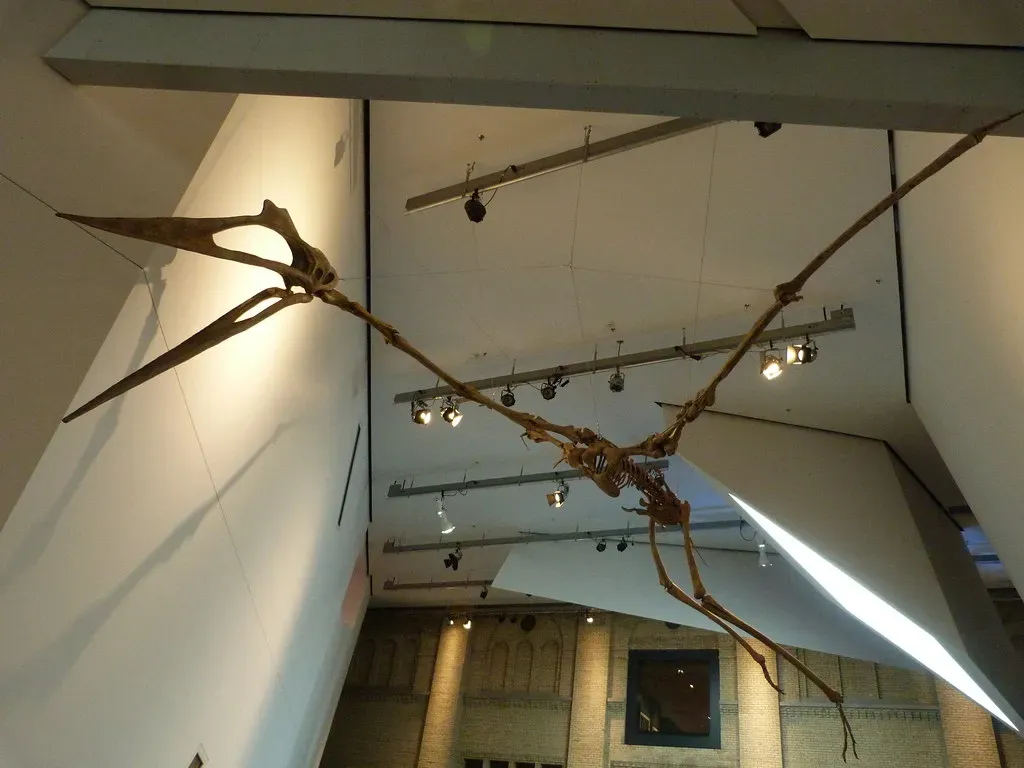
The reason Quetzalcoatlus’s feeding habits are still so controversial is simple: the fossils are spectacular but incomplete, and behavior does not fossilize easily. We have bones, not videos. Researchers rely on biomechanical models, comparisons with modern animals, and detailed measurements of joints and muscle attachment sites to reconstruct what it could or could not do. Different teams weigh those factors differently. Some see the long neck and tall stance and conclude it must have been a land-based predator; others highlight limitations in neck flexibility or bite force and argue for a more generalist or scavenging lifestyle.
In my view, the most reasonable picture is that Quetzalcoatlus was flexible and opportunistic, not locked into one feeding strategy. In nature, very large animals rarely turn down easy calories. It makes sense that a creature this big might hunt small animals when it could, scavenge from carcasses when they were available, and perhaps grab invertebrates or other small prey along the way. That mix annoys people who want a single, clean label – hunter, scavenger, fish-eater – but the real world is rarely that neat. The ongoing arguments are less a sign of failure and more a sign that scientists are pushing hard against the limits of what these bones can tell us.
What Quetzalcoatlus Teaches Us About the Limits of Life
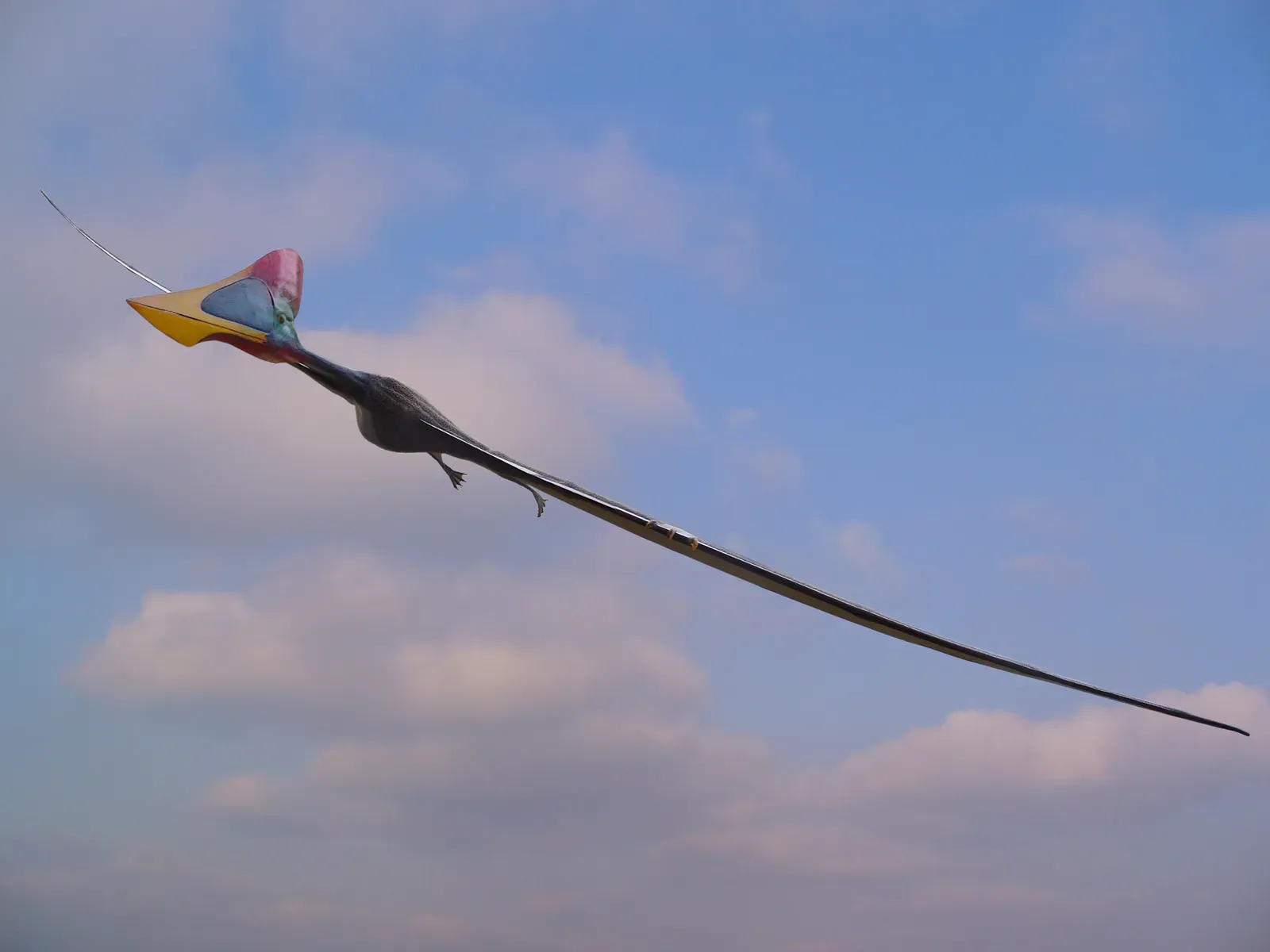
One of the coolest things about Quetzalcoatlus is how it keeps forcing biologists, engineers, and even physicists to revisit what they think is possible. For a long time, there were back-of-the-envelope calculations suggesting there was an upper size limit for flying animals, and Quetzalcoatlus sits right up against that boundary. To make something this large fly, evolution had to pull every aerodynamic trick in the book: extreme weight-saving in bones, massive but precisely placed muscles, and wings that could capture lift from relatively weak air currents. It is like watching the universe run a full-scale engineering experiment and barely get away with it.
On a more personal level, Quetzalcoatlus reminds me that nature is not constrained by what feels intuitive to us. When you first hear about an animal as tall as a giraffe that could fly, your brain wants to reject it; it sounds like marketing hype or a video game design. Yet the fossils are there, the measurements are real, and the physics checks out within reasonable margins. This animal is a living rebuttal to the idea that the present-day world shows us the full spectrum of what life can be. It gently, or maybe not so gently, taps us on the shoulder and says: you still have not seen the half of what evolution can do.
A Giant That Still Refuses to Fit Neatly Into Our Boxes
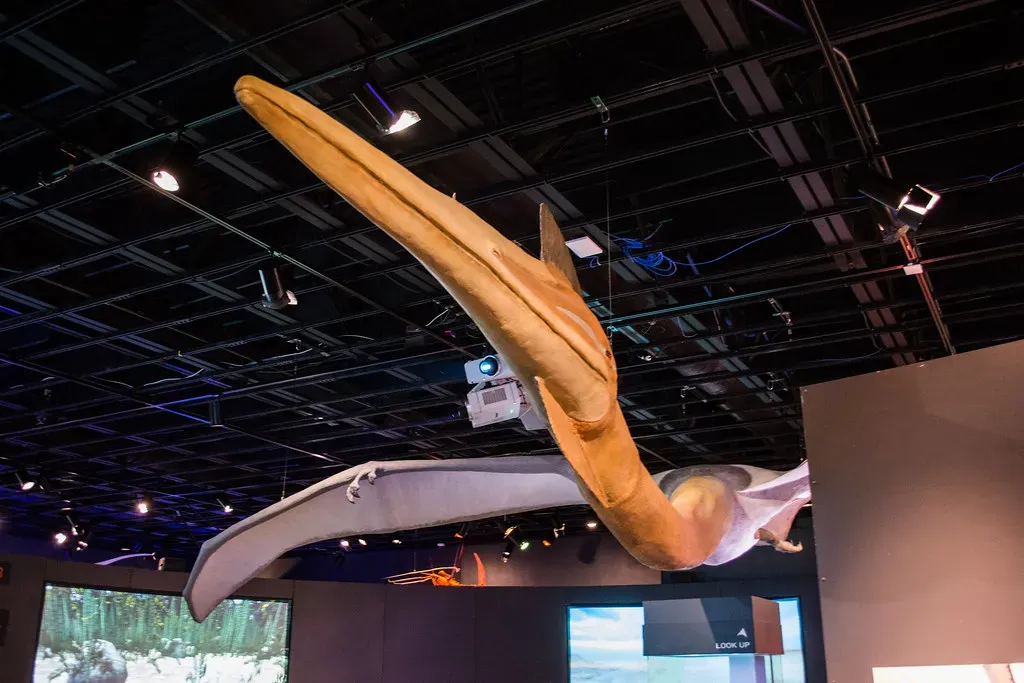
To me, the most fascinating thing about Quetzalcoatlus is not just its size, but how stubbornly it resists being pinned down to a single, tidy story. We want it to be the perfect apex aerial predator, or the quintessential scavenger, or the ultimate fish-hunter, but every time we lean too hard in one direction, the anatomy and physics push back. The arguments about its feeding style are not some petty academic squabble; they are a reflection of how little we truly know about the daily lives of even the most dramatic creatures in Earth’s history. That uncertainty feels humbling in the best possible way.
If anything, I think the most honest conclusion is that Quetzalcoatlus was a rule-breaker that operated right at the edge of what flying vertebrates can achieve, living a lifestyle that may not map cleanly onto any modern animal. That makes some people uncomfortable, but I love it. It forces us to accept that some questions will remain open, and that our reconstructions are educated, evolving stories rather than final answers carved in stone. Maybe the real value of Quetzalcoatlus is not just in proving that a giraffe-sized flyer once soared over ancient Texas, but in reminding us that even with all our tech and models, the past still holds mysteries that can knock us off balance. And honestly, would you really want it any other way?