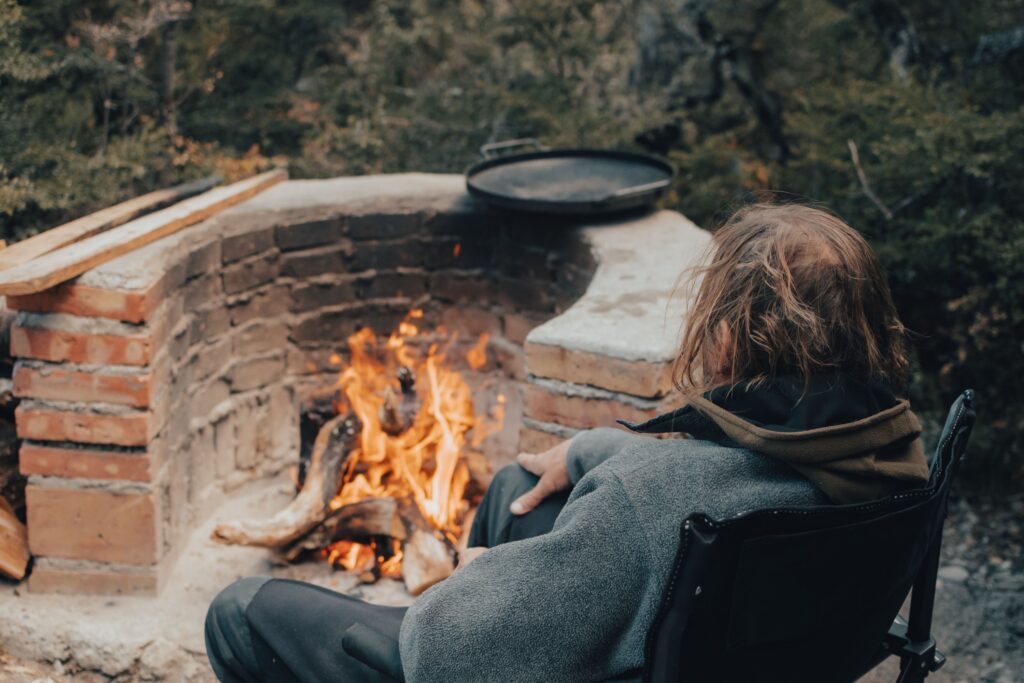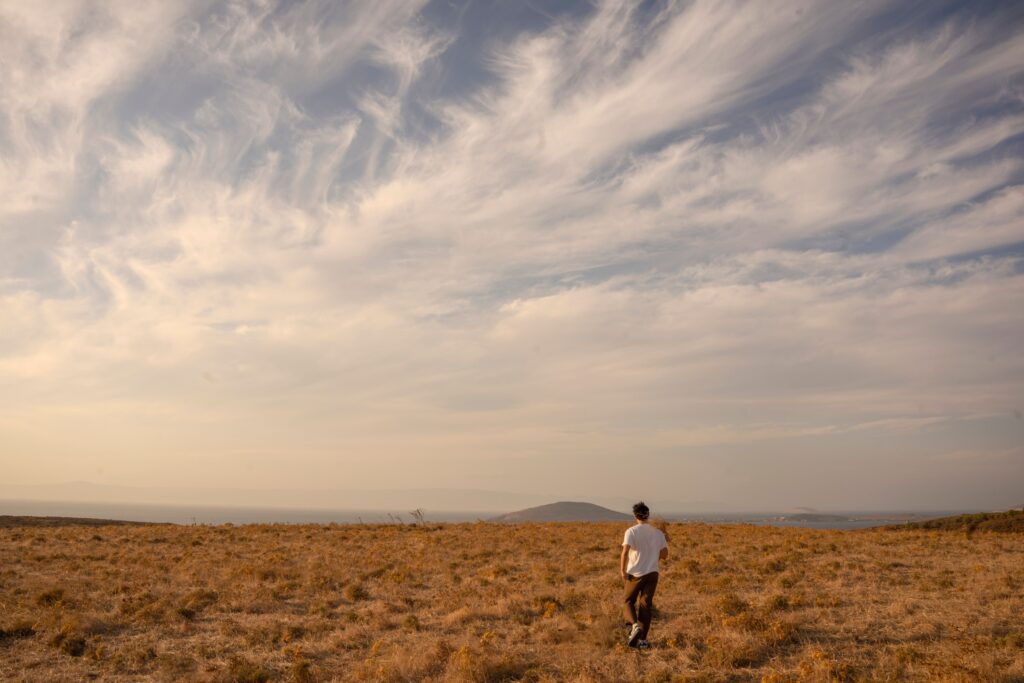
You know that prickly, slightly exposed feeling you get walking across an empty parking lot at night or hiking across a barren field with no trees in sight? Your logical brain may say there’s nothing there, but your body quietly disagrees. Your heart ticks up a notch, you walk a bit faster, and you suddenly become very aware of how visible you are. That reaction is not random, and it is almost certainly not just you being “dramatic.”
From an evolutionary point of view, feeling uneasy in wide-open, uncovered spaces may have been the difference between seeing the next sunrise and ending up as something else’s dinner. Across millions of years, natural selection did a brutally simple thing: nervous, cautious ancestors tended to survive; overly chill, oblivious ones often did not. What you feel today is likely the echo of that ancient screening process, still running in the background of your brain like old software on brand-new hardware.
The Ancient Predator Problem Your Brain Still Thinks It Has
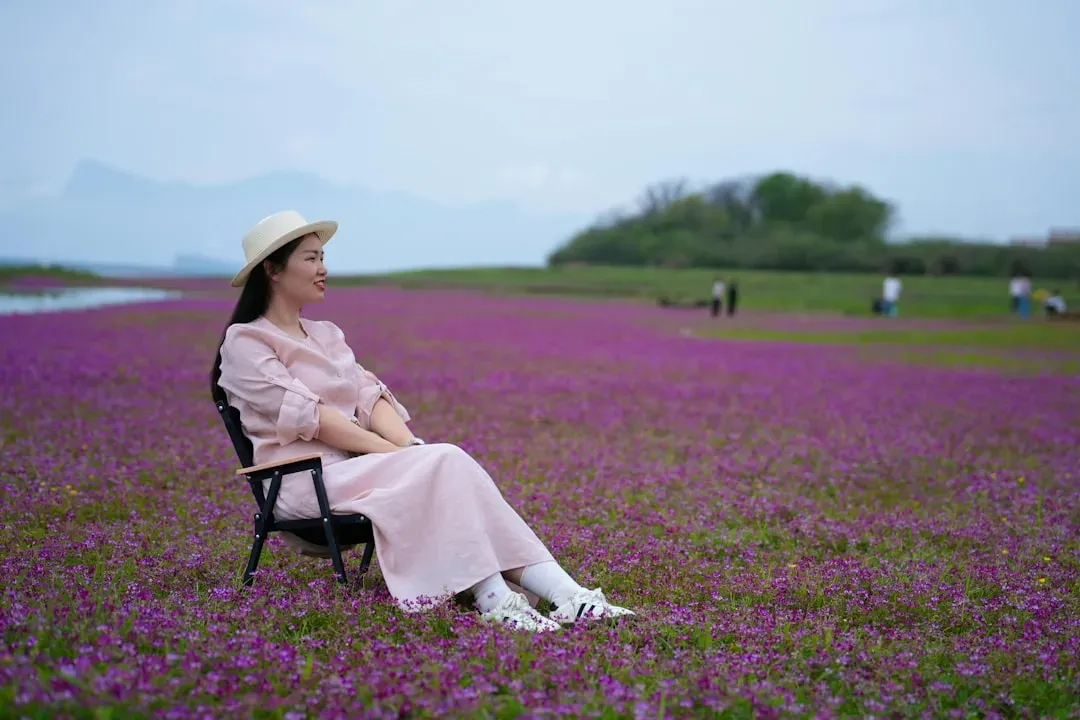
For most of human history, the world was not streetlights and suburbs; it was teeth, claws, and shadows. Large predators were a real, daily possibility, especially for small bands of humans crossing open terrain to find food, water, or new shelter. Being out in the open meant it was much easier for something to spot you long before you saw it, giving predators a serious head start.
In that kind of world, feeling totally relaxed in big, open spaces with nowhere to hide was not a cute personality trait; it was a liability. Over time, individuals who felt a bit more wary, who scanned more, who stuck closer to cover, were more likely to pass along their genes. The result is that modern humans carry an inherited sensitivity to “exposed” situations – your body still acts like something might be stalking you from the edge of that empty parking lot, even though the most dangerous thing around is probably your own search history.
Why Your Brain Loves “Prospect and Refuge”
Researchers in environmental psychology often talk about something called “prospect and refuge.” Put simply, humans tend to feel safest in places where we can see out (prospect) but also have some sort of cover or protection (refuge). Think of sitting with your back to a wall in a café, facing the door; you can scan the room, but nothing can sneak up behind you. That same preference shows up in how people arrange their furniture, choose seats in public spaces, and pick favorite spots in nature.
In wild environments, that balance between visibility and safety was crucial. Our ancestors wanted to spot prey or danger at a distance while still having bushes, rocks, or trees nearby for quick concealment. Wide open ground with no cover gave you prospect but zero refuge, which is essentially the nightmare combo for a prey animal. The discomfort you feel in a huge, empty space is your brain quietly insisting, “Great view, terrible survival odds.”
How Your Threat System Overreacts in Modern Life
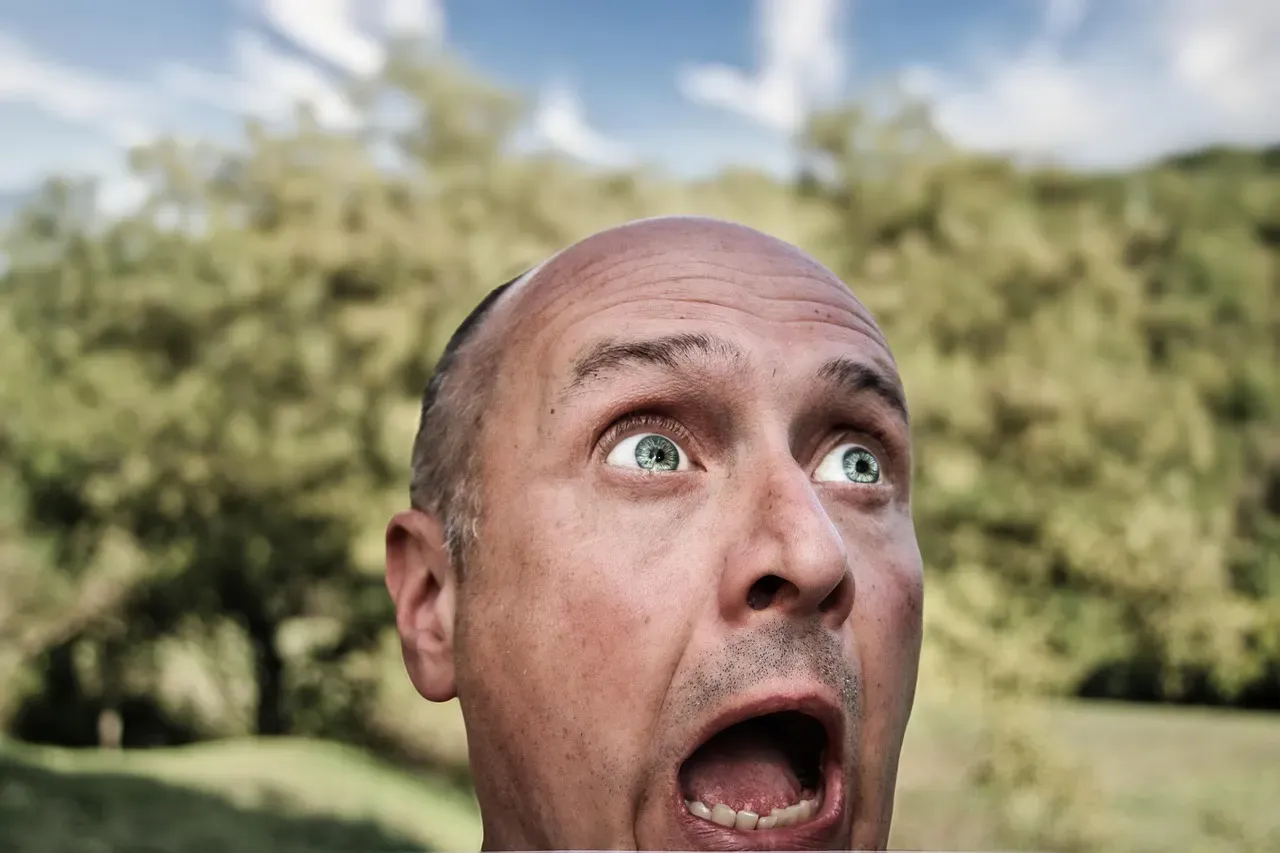
Inside your brain, a small structure called the amygdala helps detect potential threats. It does not wait for perfect information; it reacts fast and often overcautiously. In the environment we evolved in, false alarms were cheap, but missed threats were deadly. That bias toward overreacting kept a lot of ancestors alive, so we still carry it. Today, the same circuitry lights up whenever something feels off, including simply being way too visible with nowhere to duck.
This is why your body can shift into a mild alert mode even when you know, rationally, that a giant empty field is statistically safe. Your amygdala is not running risk assessments based on crime data or weather forecasts; it is running on ancient rules like: “Exposed plus no cover equals bad idea.” So your muscles tense, your senses sharpen, and you might feel oddly restless or irritable until you reach somewhere with at least a little shelter or structure.
The Uneasy Line Between Normal Instinct and Full-Blown Anxiety
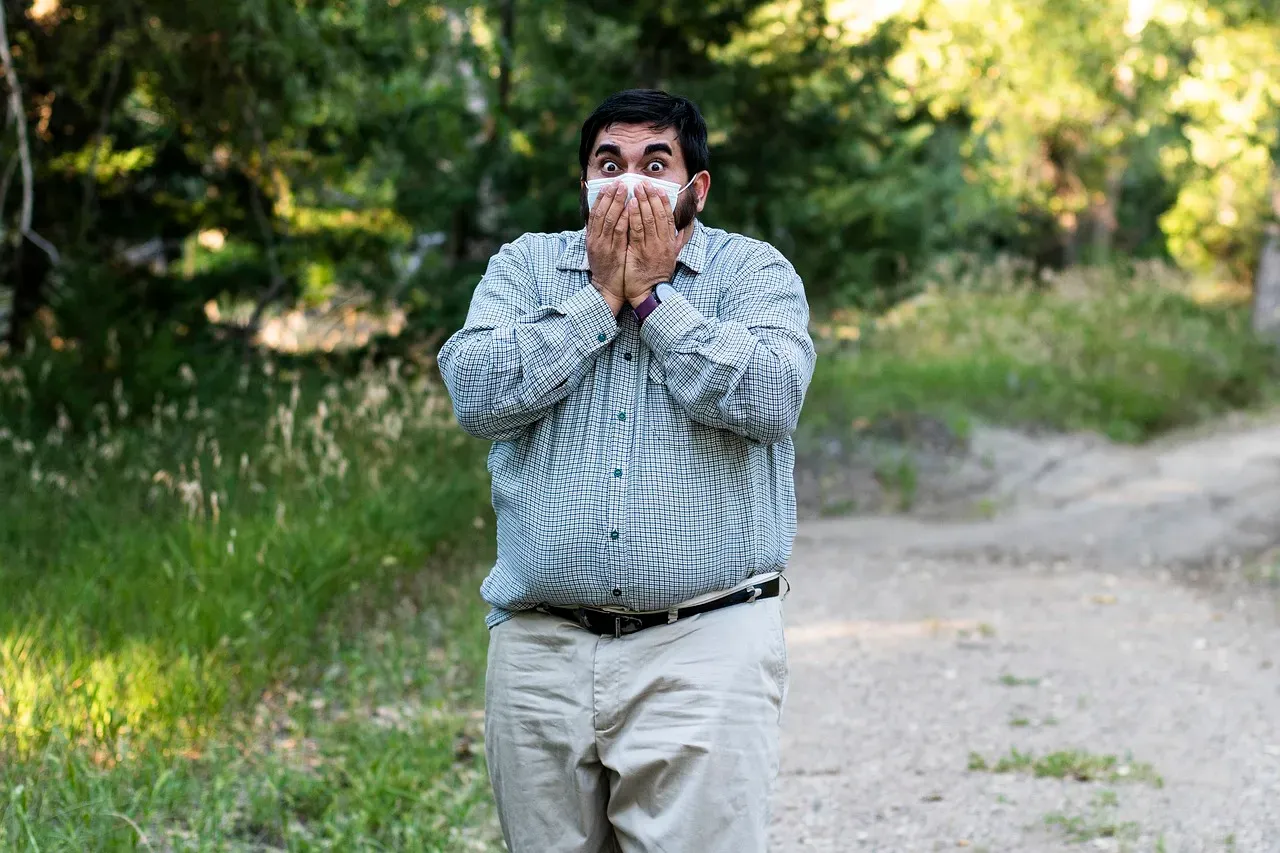
Feeling a bit on edge in exposed spaces is, on its own, a pretty normal expression of those old survival instincts. Most people can walk through a big open plaza, cross a wide parking lot, or stand alone in a large field and feel only mild discomfort that fades quickly. That level of reaction is more like a background hum of caution than a full alarm bell, and it usually does not stop anyone from going about their day.
For some people, though, that discomfort can tip into something much stronger, like intense dread, dizziness, or a strong need to escape. In modern terms, this can overlap with agoraphobia or social anxiety, where open or vast spaces feel not just mildly risky but completely overwhelming. Evolution may have laid the foundation by wiring us to be cautious, but genes, past experiences, and personality all shape how loud that warning system becomes. Instinct is the seed; modern anxiety is what happens when the plant grows wild.
Why Forests Feel Cozy and Plains Can Feel Terrifying
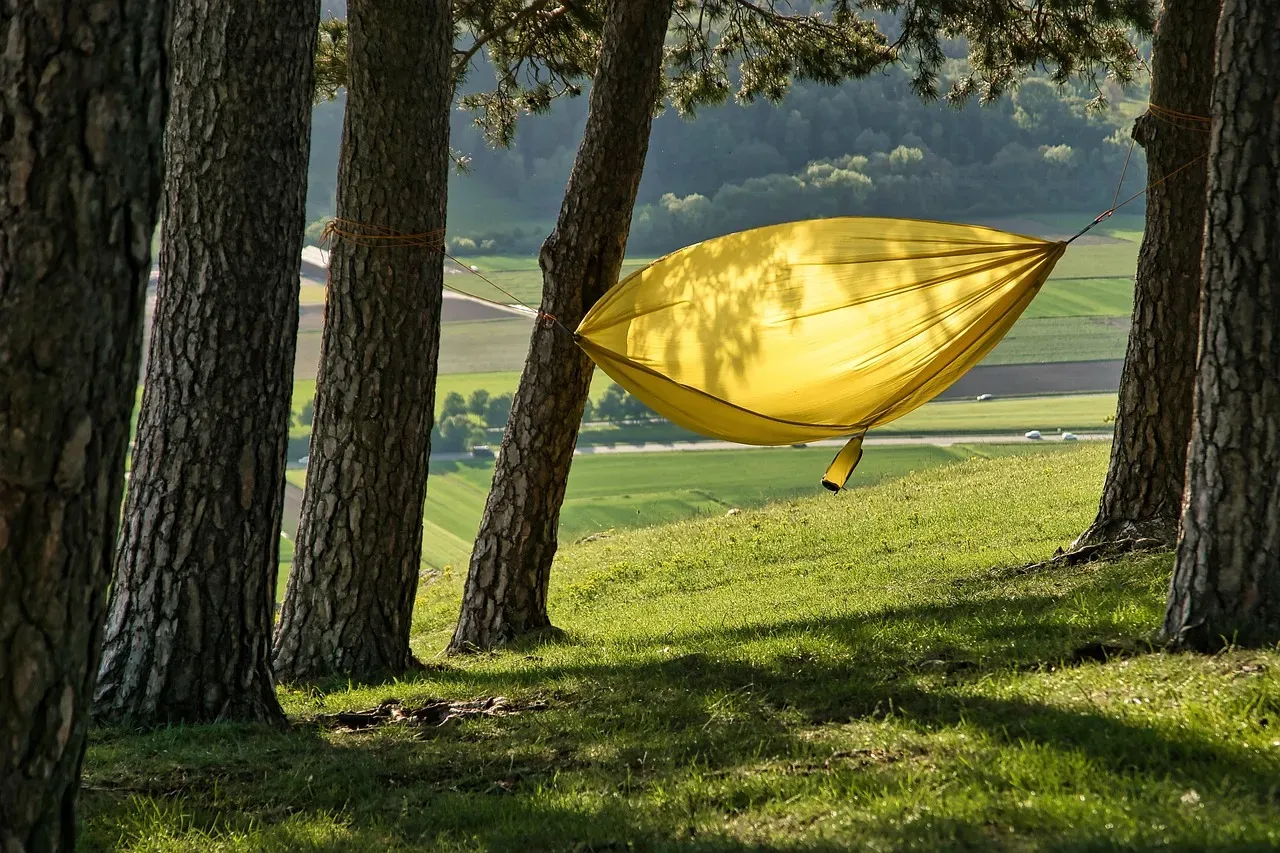
If you compare different types of landscapes, an interesting pattern shows up. Many people say they feel calm in lightly wooded areas or places with trees and boulders, but eerily exposed in flat, treeless plains or enormous concrete spaces. Forest edges, canyon walls, and rolling hills often feel more comforting because they offer partial concealment along with enough visibility to spot any issues. Your nervous system likes that kind of complexity.
Open plains, empty deserts, or huge parking lots offer almost nowhere to hide and very few breaks in the landscape. You are just… there, a moving dot on a blank canvas. From an evolutionary angle, that is like walking onto a stage where predators have a front-row seat. Even in cities, people tend to gravitate toward benches against walls, under awnings, or next to pillars – the modern equivalent of hiding near rocks and trees. Same instincts, different scenery.
Social Media, Urban Living, and Feeling “Exposed” in a New Way
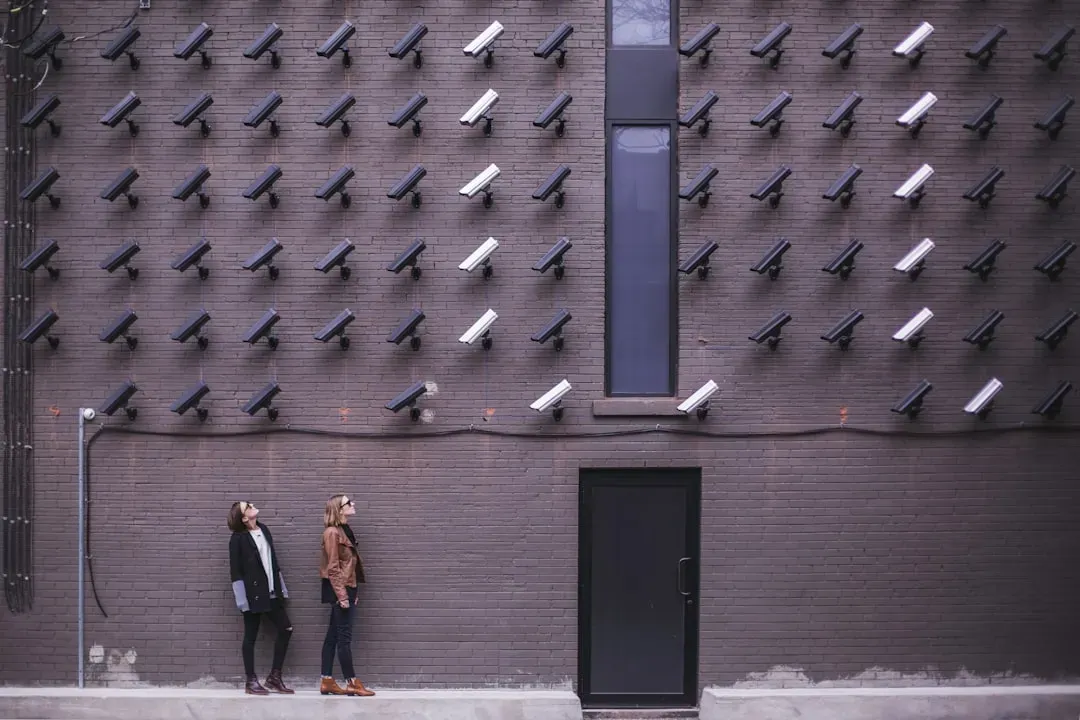
There is a strange modern twist to all of this: even when we are not physically in the open, we often feel psychologically exposed. Social media, constant online visibility, and surveillance cameras create their own version of that open plain feeling. Instead of a lion in the grass, it might be strangers judging your posts or algorithms tracking your behavior. Your nervous system does not always distinguish between literal and symbolic exposure; both can feel like being under a spotlight with nowhere to hide.
Urban architecture can amplify this too. Massive plazas, broad glass lobbies, and featureless open offices can trigger that same low-level unease as standing in a field with no trees. I remember working in a wide, open-plan office where everyone’s screens faced the room and there were no walls at all. Almost no one chose a middle desk if they could help it; people subtly jockeyed for spots at the edges, against pillars, or near corners. No one said it out loud, but our seating chart looked exactly like a herd trying to stick close to cover.
How This Shows Up in Everyday Habits You Barely Notice
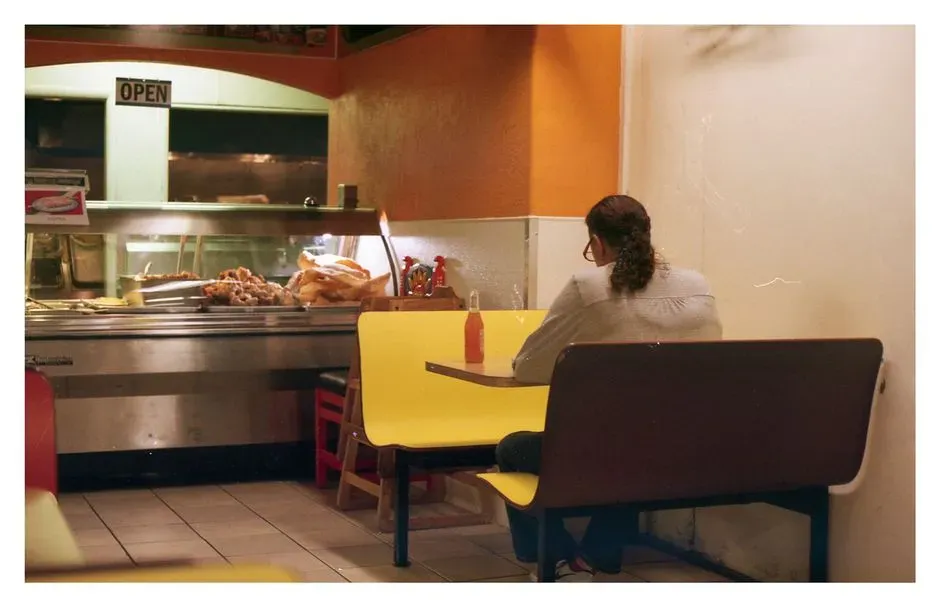
Once you start paying attention, this evolutionary hangover shows up everywhere in your daily life. You might choose a table at the back of a restaurant rather than one in the very center, or you might walk along the edge of a big open square instead of cutting right through the middle. When you sit on a train or bus, you might feel oddly better if your back is against a wall or window, with most of the space in front of you rather than behind you.
These patterns look like personal quirks, but they are remarkably common once you start comparing notes with other people. It is the same reason many of us instinctively prefer a hotel room away from the end of a long, lonely corridor, or feel more at ease walking under street trees than through a bare concrete expanse. You are not being irrational; you are running a risk-avoidance playbook so old it predates written language.
Making Peace With Your Inner Prey Animal
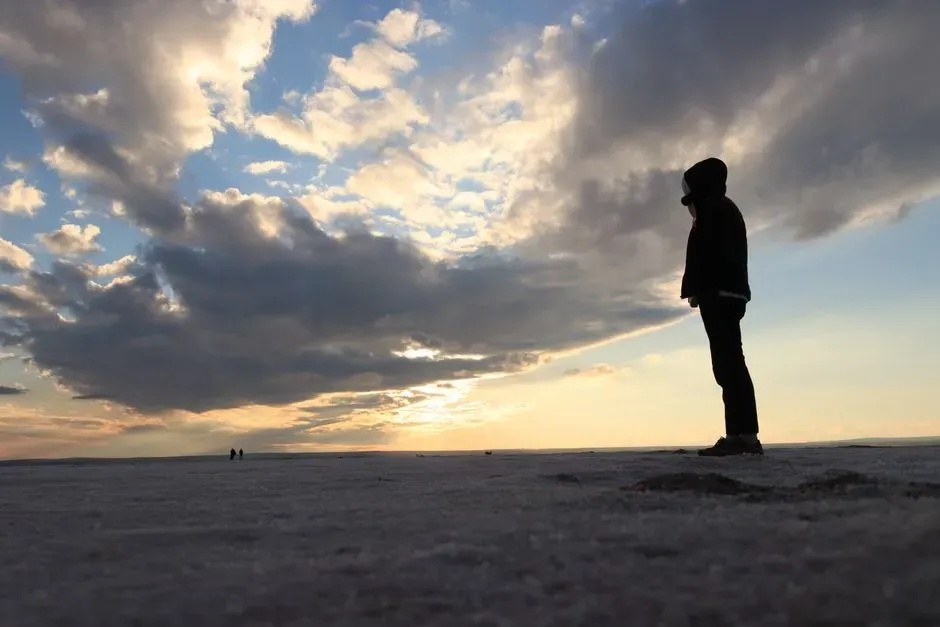
Here is the honest truth: your brain is still part prey animal, no matter how many smart gadgets you own. It remembers, in a deep, body-level way, that being easy to see and hard to hide was historically a terrible survival strategy. You cannot debug millions of years of evolution by simply telling yourself to “calm down.” That said, you can work with those instincts instead of fighting them, by giving yourself small bits of refuge wherever you go.
That might mean choosing shaded walking routes, arranging your workspace so your back is not turned to a roomful of people, or letting yourself stand near a pillar or wall in a giant open hall without feeling ashamed. Personally, I think the most honest way to look at this is simple: if your ancestors who did not feel uneasy in open, coverless spaces really were more likely to get eaten, then your current unease is not a flaw. It is a survival bias that made you possible.
Conclusion: Your Anxiety Is Not Weakness, It Is Evidence of Who Survived
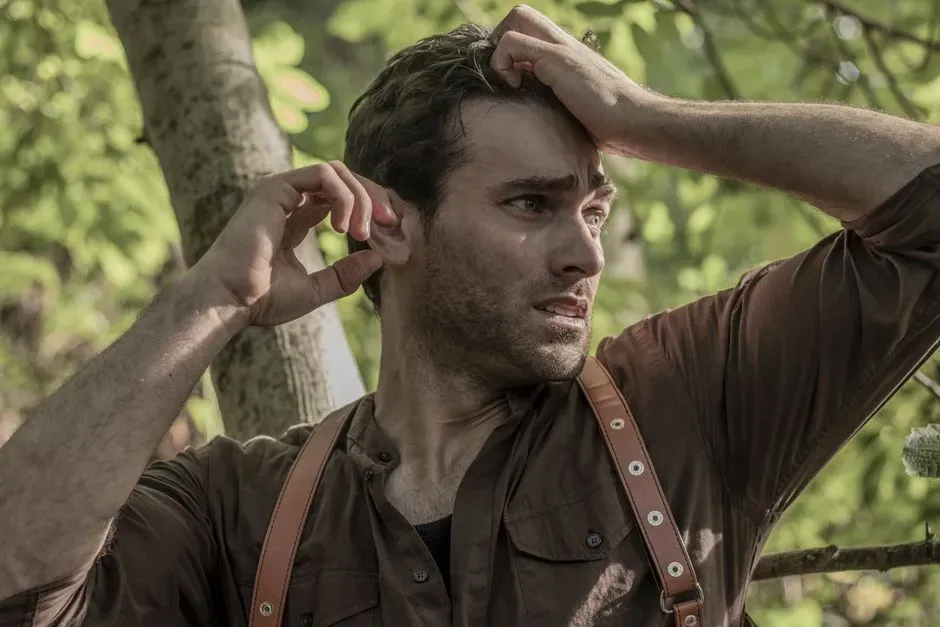
If you zoom out, the story here is strangely comforting. That little spike of unease in a wide-open place is not proof that you are fragile or neurotic; it is proof that your nervous system is still taking your survival seriously, even in a world where the biggest predator you will meet is probably a deadline. Evolution did not select for humans who felt perfectly chill while standing alone on an empty plain; it selected for those who had just enough worry to stay near cover and live another day.
My opinion is that we should stop treating these reactions as embarrassing glitches and start seeing them as old survival algorithms running on new hardware. Sure, they misfire now and then, and sometimes they grow into anxiety that deserves real support and treatment. But at their core, they are a deep reminder that your mind and body were forged in a harsher world, and they have not forgotten that. Next time you feel uneasy in a big, empty space, maybe ask yourself: is this anxiety… or is this the echo of all the ancestors who were careful enough to survive so you could stand here and feel it at all?