Walk out your front door right now. Same sidewalk, same trees, same quiet little stretch of nowhere-in-particular. Now erase all of that and picture a 2,000-pound bear standing exactly where your mailbox is, or a saber-toothed cat crouched behind what’s now your neighbor’s fence.
That’s not a thought experiment. Fossil records from nearly every U.S. state and Canadian province confirm it actually happened, somewhere between 11,000 and 20,000 years ago. The animals below aren’t generic “prehistoric creatures” pulled from a textbook – they’re specific species whose bones keep turning up in ordinary backyards, riverbanks, and construction sites. By the time you hit #1, you’ll never look at your own town the same way again.
#12 – The Armored Tank You Never Knew Roamed Your Backyard: The Glyptodont
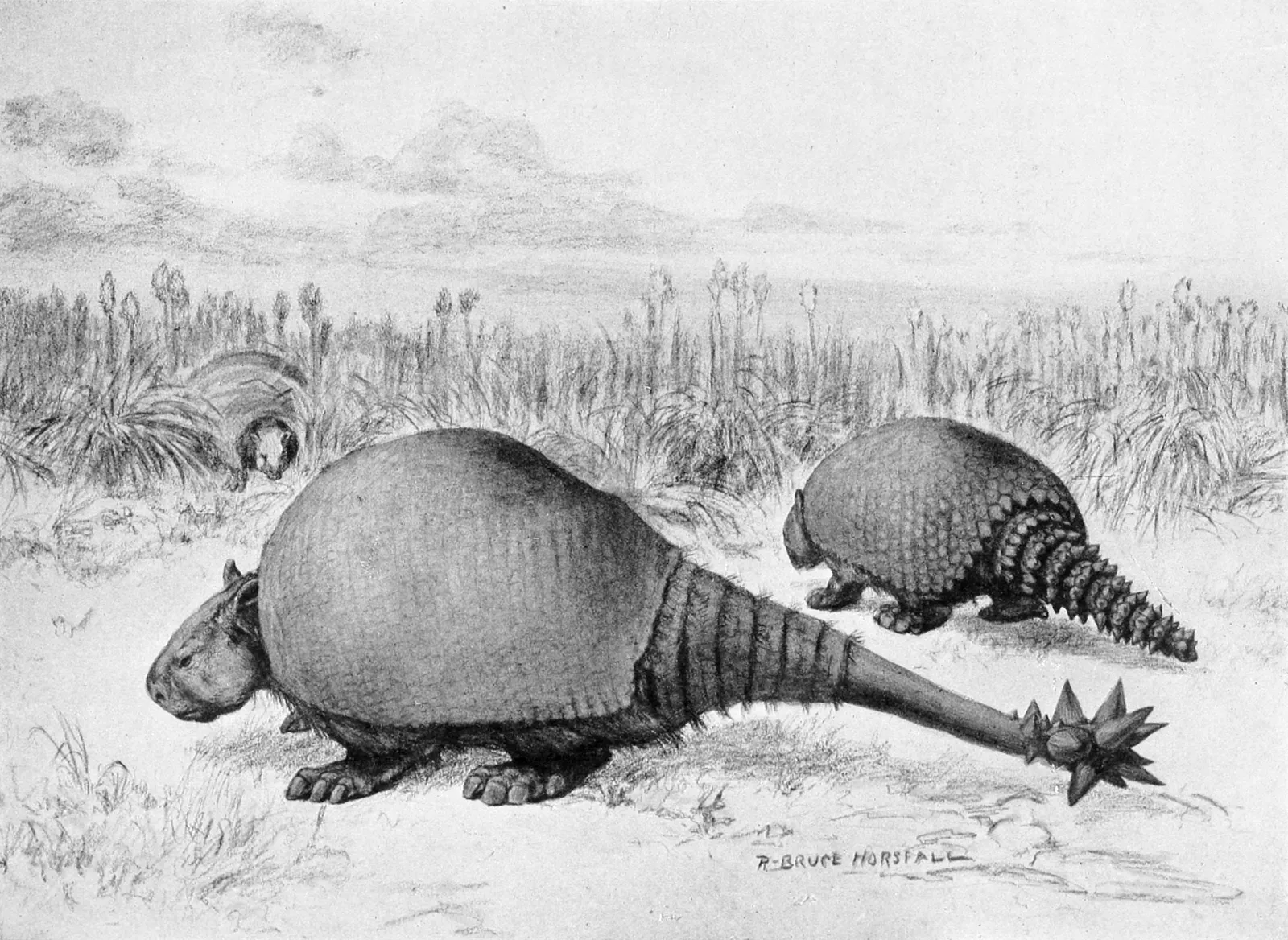
Picture an armadillo the size of a small car, and you’ve basically pictured a glyptodont. Glyptodonts belonged to the same evolutionary family tree as modern armadillos, but scaled up to a size that made them nearly impossible for predators to flip over or bite through.
Artists reconstructing Ice Age North America regularly place an armored glyptodont, Glyptodon, alongside mastodons, giant beavers, saber-toothed cats, and mammoths as part of the same landscape. Fossil databases confirm related genera like Glyptotherium turn up specifically in Pleistocene deposits across North America, meaning this domed, tank-like herbivore wasn’t some rare South American oddity – it pushed north into what is now the United States. The most surprising part? Its shell was made of hundreds of individual bony plates fused together, not one solid piece, which gave it flexibility most people assume didn’t exist in “armored” animals.
#11 – Camelops: The Actual Camel That Grazed Your Neighborhood
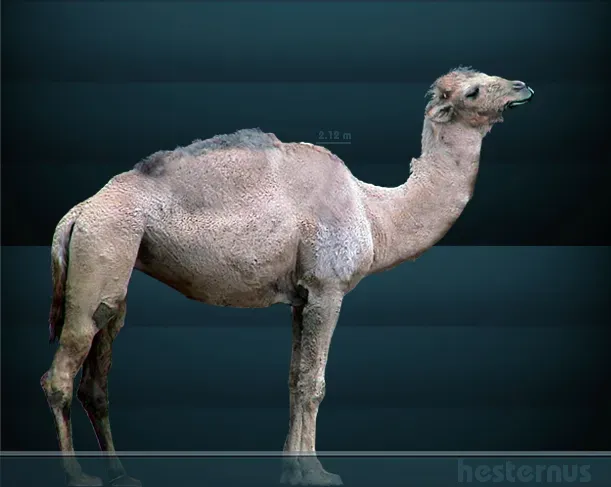
Yes, camels are originally an American animal, and one species specifically wandered through your region. Camelops hesternus, known as the western camel, was one of the most widespread large herbivores in Ice Age North America.
It stood about 7 feet tall at the shoulder and weighed up to 1,800 pounds – similar in size to modern dromedaries, but with longer legs and likely no hump at all. That last detail throws people off every time: no hump, longer legs, built more like an oversized llama crossed with a dromedary. Paleontologists studying Snowmass Village fossils in Colorado have suggested the species may have resembled a two-humped bactrian camel in some reconstructions, though the “no hump” theory remains the more widely accepted model. Most people don’t realize camels evolved in North America before ever reaching Asia or Africa – they only crossed the Bering land bridge outward, not inward, which flips the entire mental map of where “exotic” animals actually came from.
Fast Facts
- Stood roughly 7 feet tall at the shoulder
- Weighed up to 1,800 pounds, similar to a modern dromedary
- Almost certainly had no hump, unlike today’s camels
- Closest living relatives include llamas and alpacas, both camelid cousins
#10 – Ice Age Horses Already Called Your Town Home
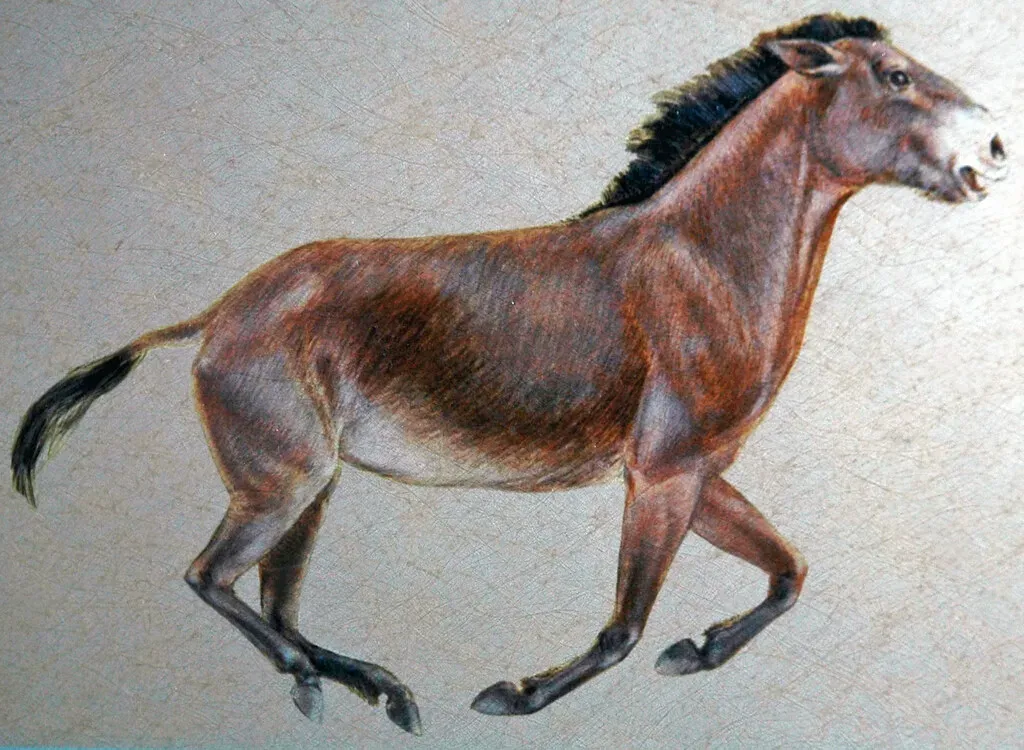
Here’s the twist almost nobody knows: horses aren’t a European import. They were already here, long before Spanish conquistadors supposedly “introduced” them to North America.
Wild Equus species grazed across the continent, from as far north as the Yukon to as far south as Texas, alongside a species of bison that’s now extinct but was the direct ancestor of our modern plains bison. Fossil catalogs list a surprising number of distinct North American horse species from this period, including the Hagerman horse and Equus lambei, both pulled straight from Pleistocene deposits. The wild horses of the Ice Age actually went extinct in North America around 10,000 years ago, only to be reintroduced by Europeans thousands of years later – meaning the “native” horse and the “reintroduced” horse are practically the same lineage returning home. It’s a detail wildlife historians still argue over at conferences.
#9 – The Giant Beaver That Was Nearly as Big as a Black Bear
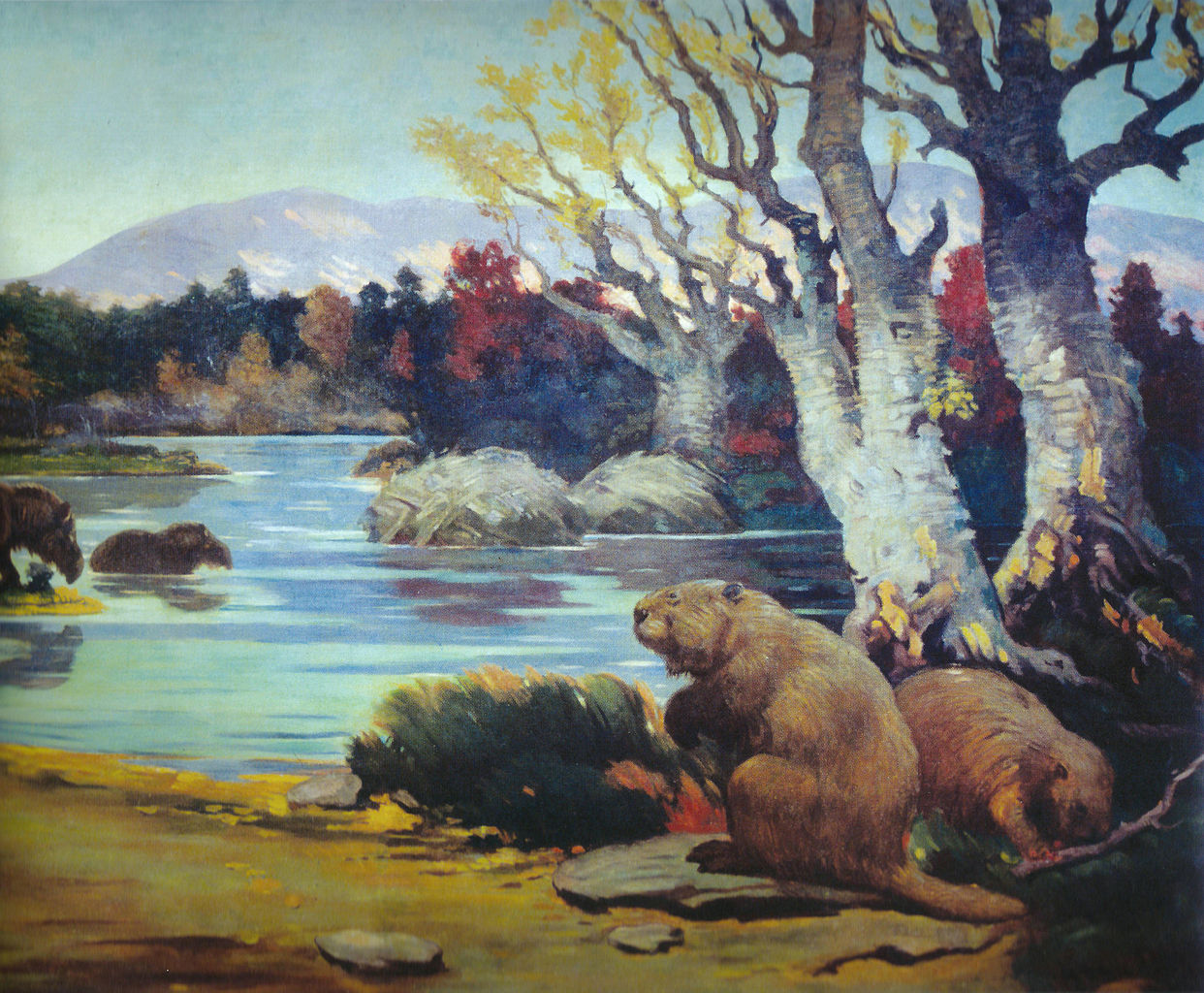
Forget the dam-building rodent you know. This one skipped the dam-building entirely. Castoroides, the giant beaver, was the largest rodent in Ice Age North America, with fossils found from the Great Lakes region all the way to the Gulf Coast.
It weighed up to 220 pounds and measured over 7 feet in length – roughly the size of a modern black bear, and about 10 times larger than today’s beavers. Its incisors could grow past 6 inches long, covered in distinctive ridged enamel unlike the smooth-faced teeth of modern beavers. Unlike modern beavers, Castoroides likely never built dams or lodges at all – researchers believe it simply grazed marshes and wetlands instead. Some newer estimates put its weight closer to 170 pounds, so even scientists still disagree on exactly how massive this thing really was.
#8 – Harlan’s Ground Sloth: A Bear-Sized Herbivore With Claws Like Machetes
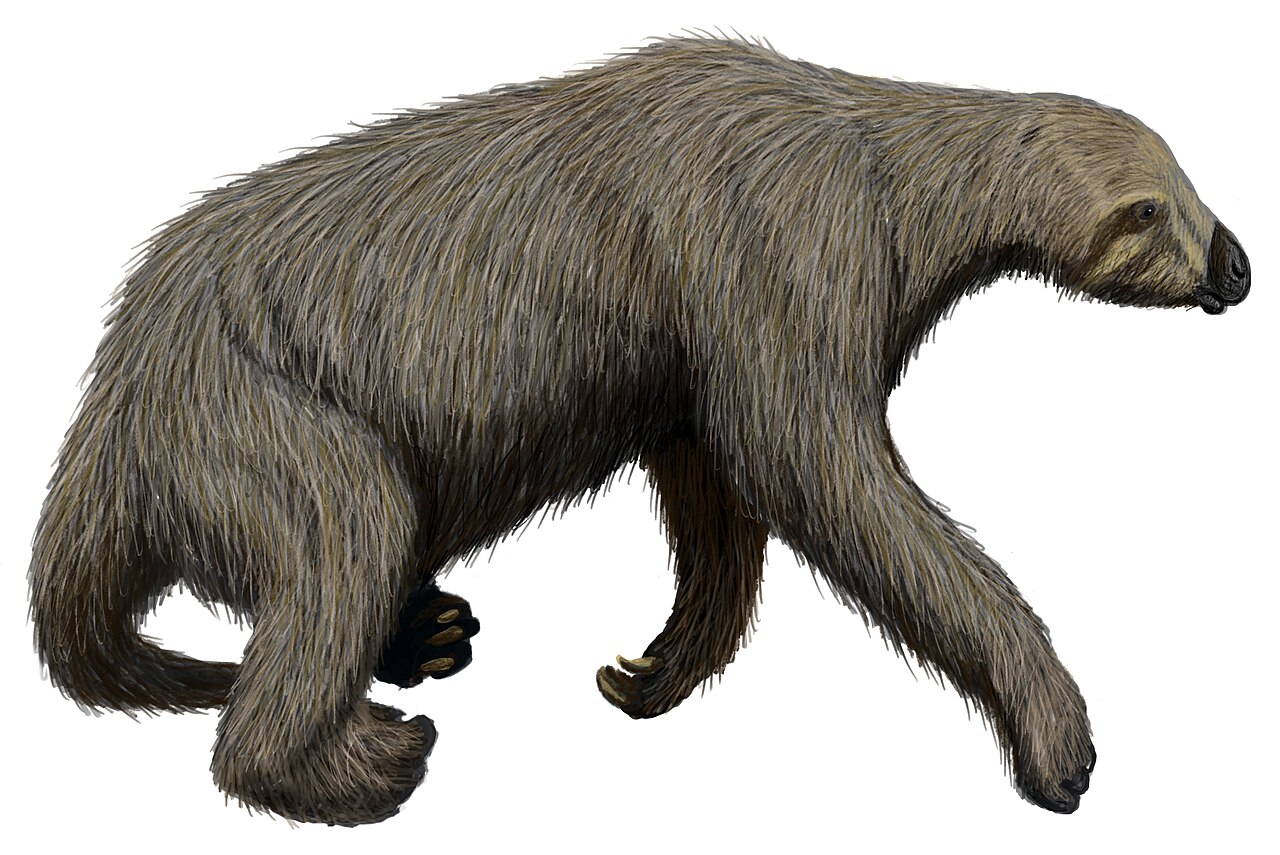
Today’s sloths move at a crawl and weigh less than a golden retriever. Their Ice Age ancestors were an entirely different animal – bear-sized herbivores that stood 12 feet tall on their hind legs.
Giant ground sloths spread across North America, with remains turning up from the Midwest down through the Gulf states and into the Southwest. They used foot-long claws primarily for pulling down branches and digging, not for hunting, despite how menacing they look in illustrations. Most people assume sloths were always slow, weak creatures, but Ice Age ground sloths were powerful enough to strip entire trees bare in minutes. Their sheer bulk likely made them one of the few herbivores large predators avoided unless truly desperate.
#7 – The Scimitar Cat: The Saber-Tooth You’ve Never Heard Of
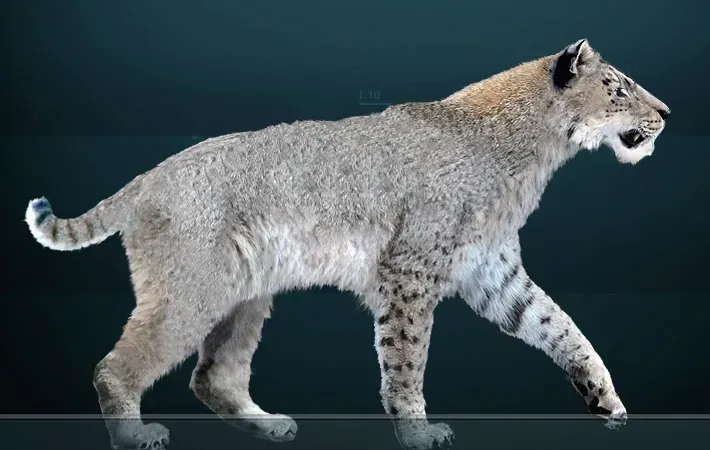
Everyone knows Smilodon. Almost nobody knows its equally terrifying cousin, the scimitar cat, genus Homotherium, which prowled North America alongside its more famous relatives.
About the size of a lion but with a hyena-like build, it weighed up to 600 pounds and carried five-inch-long canines with razor-sharp edges. Unlike Smilodon’s stockier, ambush-predator frame, scimitar cats had longer legs suited for endurance chasing – more like a modern hyena than a modern lion. This cat was built for speed over open ground, not just brute ambush strength, which means it hunted completely differently than nearly every other big cat of its era. Paleontologists have traced this species from Africa through Eurasia and into North America, making it one of the most geographically successful predators of the entire Ice Age.
#6 – The American Lion: Bigger, Meaner, and Closer Than You Think
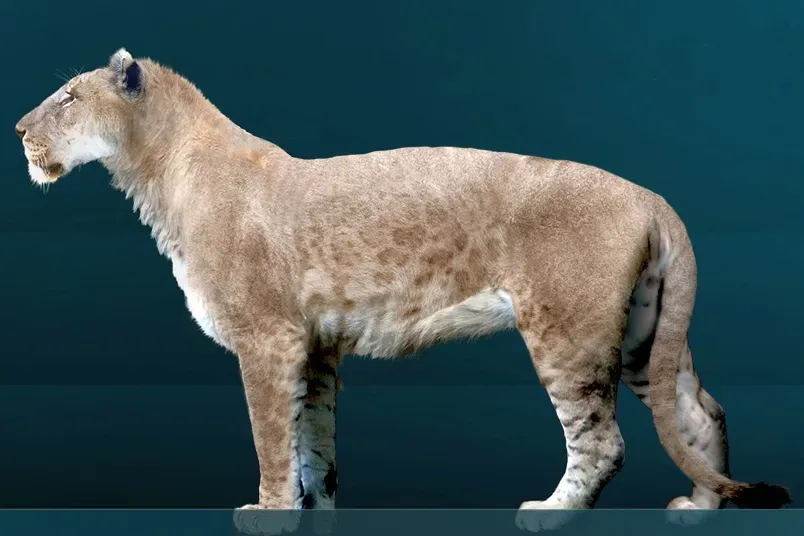
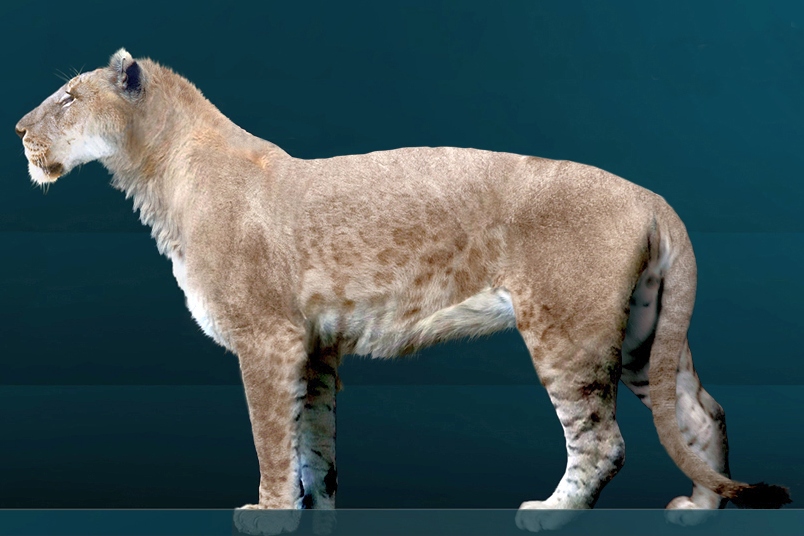
If you think African lions are intimidating, the American version would have made them look small. Panthera atrox ranged across nearly all of North America, with fossils pulled from Alaska down through Mexico, dating back roughly 340,000 years.
At the La Brea Tar Pits alone, researchers recovered dozens of individuals, giving scientists an unusually clear picture of its anatomy. Male American lions were about 25% bigger than their African cousins, with longer, stronger legs. That size difference alone makes it one of the largest cats to have ever existed on Earth, not just in North America. While most wildlife documentaries treat the modern African lion as the ultimate big cat, fossil evidence suggests the American lion was the real heavyweight champion – a detail that still sparks arguments among paleontologists over naming and classification.
Quick Compare
- American Lion: roughly 25% larger than today’s African lions, long-legged and built for open ground
- Smilodon: bear-sized bulk, canines over seven inches, no direct living descendants
- Scimitar Cat: hyena-like build weighing up to 600 pounds, made for endurance chasing over ambush
#5 – The Giant Short-Faced Bear: The Deadliest Predator on the Block
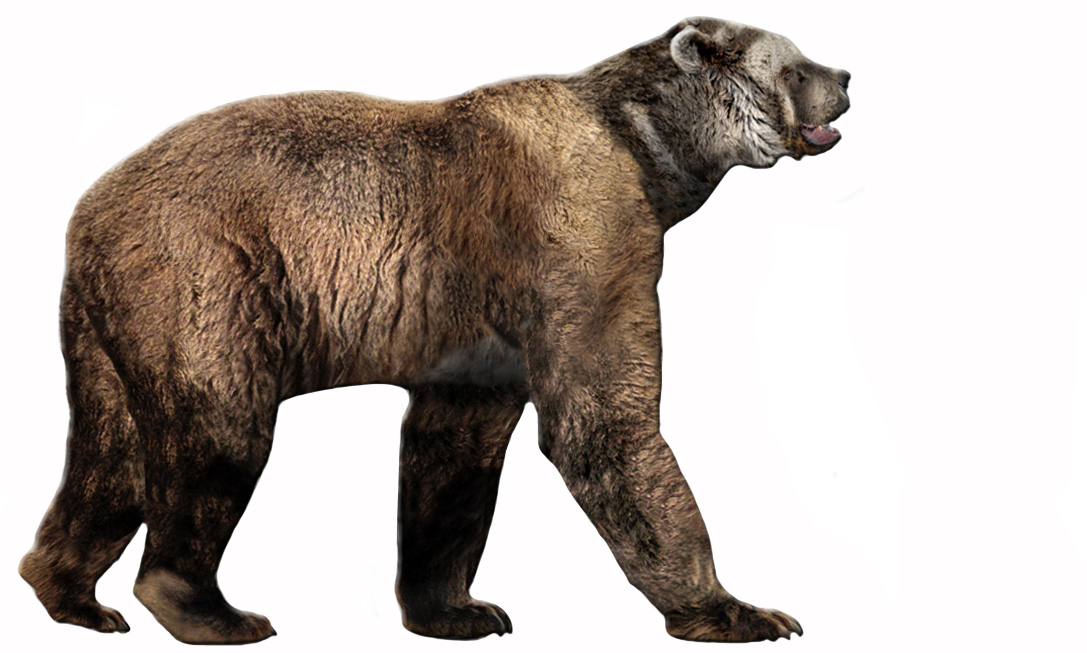
This is the animal that should make every backyard hiker grateful they live in 2026 instead of 15,000 BC. Arctodus simus ranged across nearly the entire continent, from Alaska and the Yukon down through Mexico.
Adult individuals ranged between 300 and 950 kilograms, with females clustering at 500 kg or less and males around 800 kg. The largest males stood 1.67 meters at the shoulder, and up to 3.4 meters tall on their rear legs. It could reportedly run over 40 miles per hour despite weighing well over 1,500 pounds, a combination almost no modern predator can match. Its only living relative today is the spectacled bear of South America, an omnivore roughly the size of a black bear – proof of just how dramatically this lineage has shrunk since the Ice Age ended.
#4 – Smilodon: The Saber-Tooth Cat Everyone Actually Recognizes
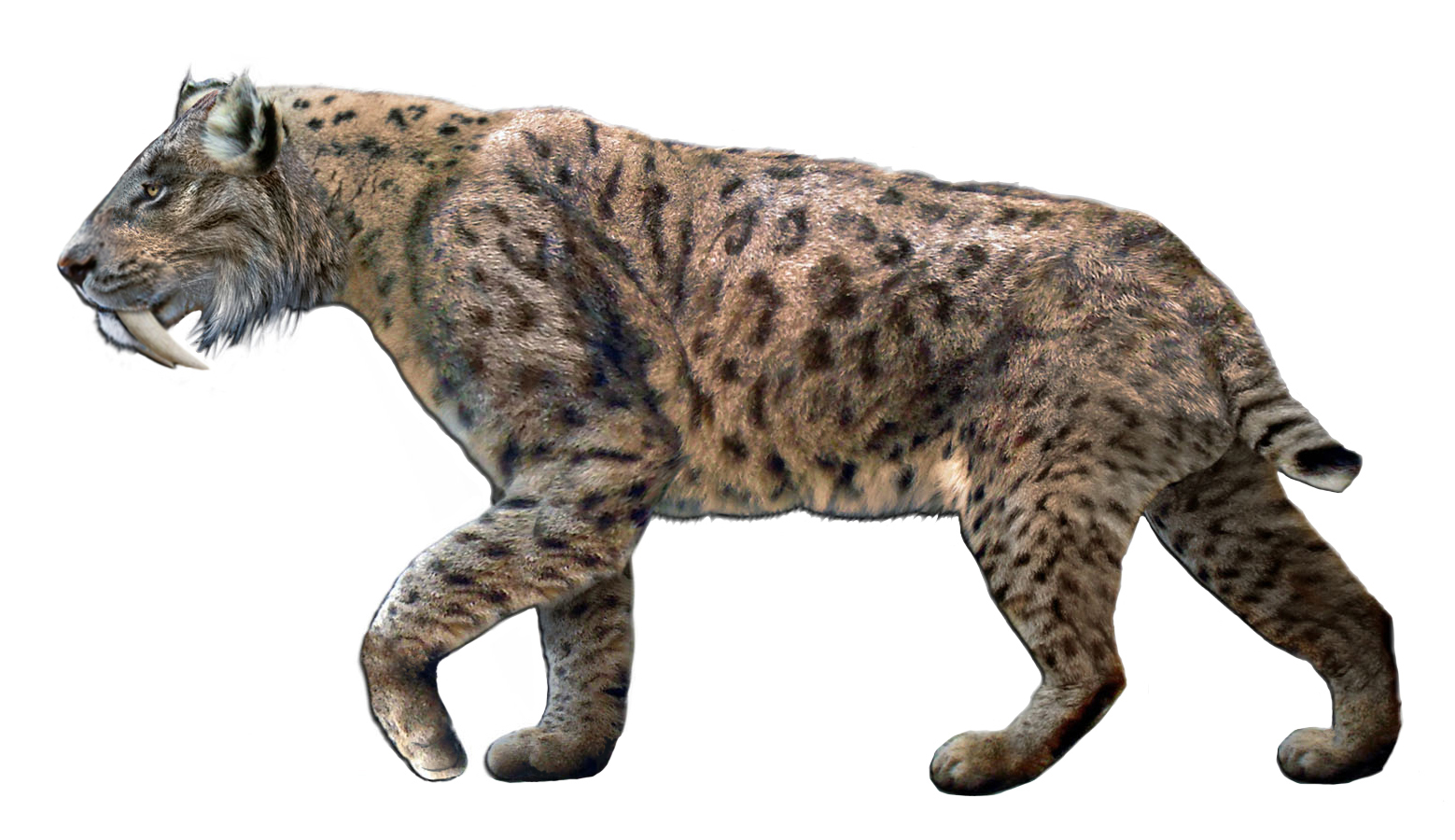
This is the animal every kid draws when asked to sketch a “prehistoric tiger,” and it’s more locally relevant than most people think. Smilodon fatalis fossils have been recovered from tar pits, caves, and river deposits across nearly every region of North America.
At Rancho La Brea, Smilodon fatalis was often found alongside Panthera atrox, suggesting a shared niche and likely competition or scavenging between the two apex predators. Despite popular nicknames, Smilodon was never actually a “tiger” – it belonged to an entirely separate branch of the cat family tree with no direct living descendants. Its canine teeth, often exceeding seven inches, were surprisingly fragile, and were likely used for precision killing bites rather than brute force.
#3 – The American Mastodon: Your Town’s Original “Elephant”
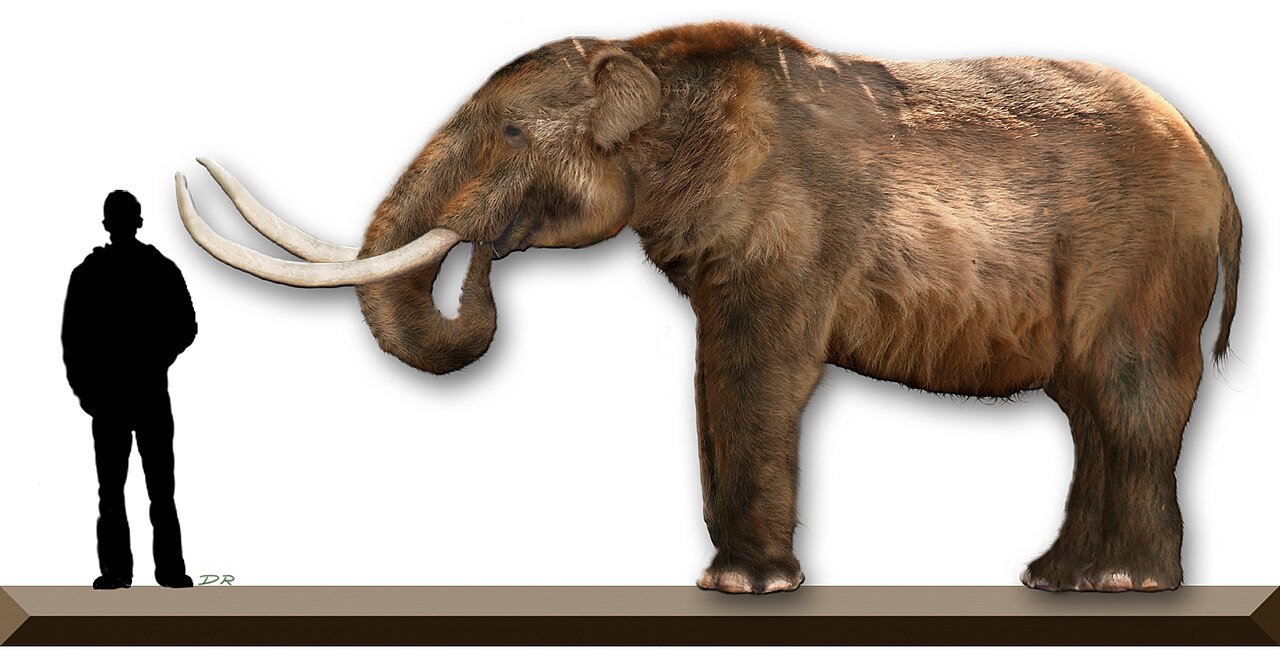
Long before anyone imagined elephants roaming North America, mastodons already had the job covered. Their ancestors crossed the Bering Strait from Asia roughly 15 million years ago, evolving into the American mastodon about 3.5 million years ago.
Unlike its mammoth cousins, this animal preferred forests and wetlands over open plains – it lived along stream courses and fed on tough, leafy riparian vegetation instead of grazing open steppe. That single habitat difference explains why mastodon remains keep surfacing in old bogs, riverbeds, and swamp deposits across the eastern half of the continent. Most people lump mammoths and mastodons together as basically the same animal, but they’re actually distant cousins that diverged millions of years earlier than most textbooks suggest. Their molars alone – rounded, cone-shaped cusps built for shredding leaves – look almost nothing like a mammoth’s flat grinding teeth.
#2 – The Woolly and Columbian Mammoths: Giants That Walked Where You Park Your Car
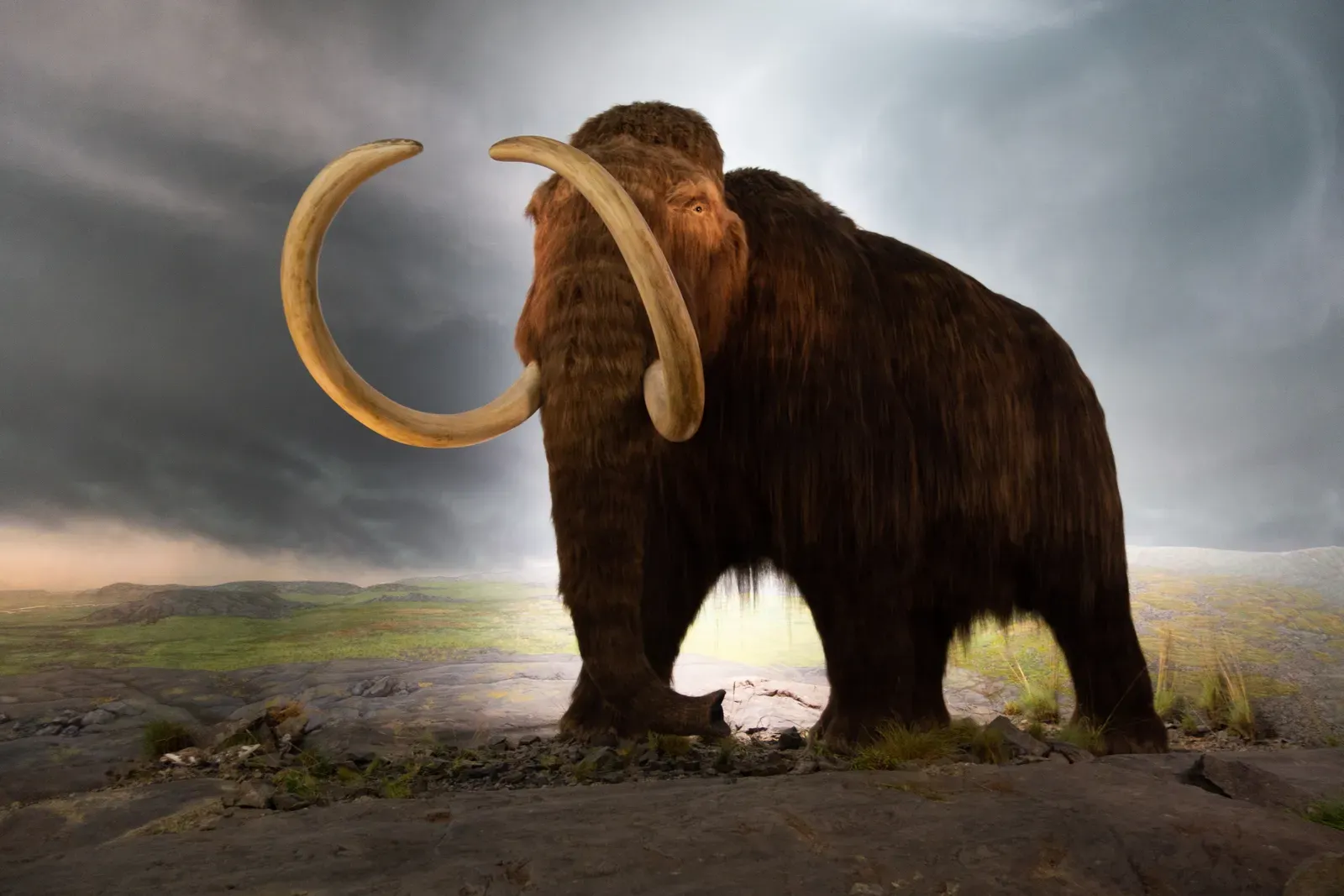
If any Ice Age animal was guaranteed to walk through your specific town, it’s this one. Standing 12 feet tall at the shoulder and weighing six to eight tons, the woolly mammoth grazed the northern steppes of Ice Age North America, using colossal, 15-foot curved tusks to dig under snow for food and defend itself.
Its southern cousin, the Columbian mammoth, took over warmer regions, and together these adaptable herbivores consumed up to 700 pounds of vegetation daily. Fossils have been discovered throughout North America, including notable finds at the La Brea Tar Pits and the Hot Springs Mammoth Site in South Dakota, with mammoths ranging from Canada all the way down to Honduras. Here’s the detail almost nobody knows: isolated mammoth populations survived thousands of years after the “mass extinction” most textbooks describe. Archaeologists have dug up remains showing lone bands of mammoths still roaming arctic islands as recently as 4,500 years ago – meaning mammoths were still alive when the Egyptians were building the pyramids.
#1 – The Dire Wolf: The Predator Making Headlines Again
![#1 - The Dire Wolf: The Predator Making Headlines Again ([1], Public domain)](https://nvmwebsites-budwg5g9avh3epea.z03.azurefd.net/dinoworld/debfdc6f101c315997788057b6f21be1.webp)
Of every animal on this list, this is the one currently dominating scientific news cycles, and for good reason. Dire wolves once ranged across nearly the entirety of what is now the continental United States, with especially dense fossil concentrations preserved in California.
Its skull could reach up to 12 inches in length, with teeth larger than today’s gray wolves. At the La Brea Tar Pits specifically, researchers have pulled up hundreds of dire wolves from what scientists now call a “predator trap,” where scavengers repeatedly got stuck chasing already-trapped prey. Most people assume dire wolves were just oversized gray wolves, but genetic research has shown they were a distinct, more distantly related lineage entirely – a detail recent de-extinction headlines have thrust back into public conversation. Unlike gray wolves, dire wolves relied on raw bite force over speed, built more for crushing bone than chasing down fleeing prey across open terrain.
Worth Knowing
- Skulls could stretch up to 12 inches long, larger than a modern gray wolf’s
- Genetics place dire wolves on a separate branch from gray wolves, not as close kin
- Hundreds of individuals have been pulled from the La Brea “predator trap” alone
- Their bone-crushing bite favored raw power over the speed gray wolves rely on
The Bottom Line
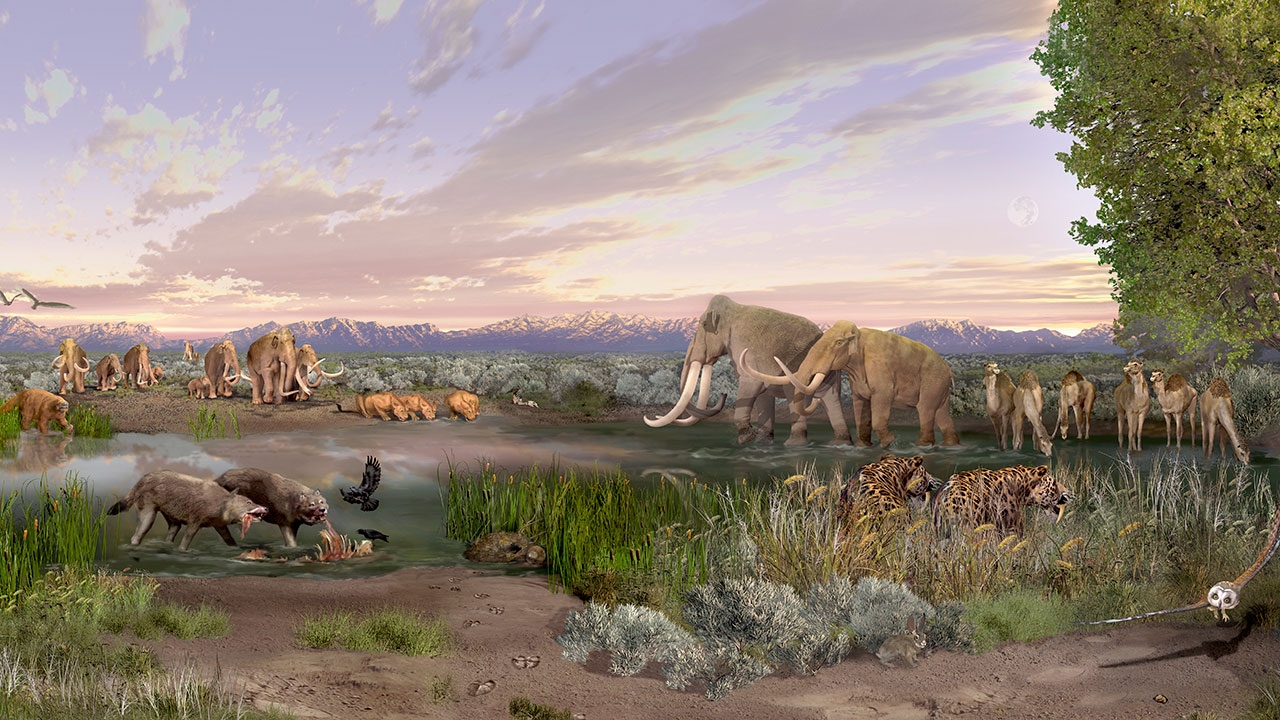
Here’s the uncomfortable truth: your town wasn’t always the quiet, predictable place it is now. It was once patrolled by 2,000-pound bears, saber-toothed ambush predators, and elephants that dwarfed anything alive today.
The end of the Pleistocene in North America saw the extinction of 38 genera of mostly large mammals, and the debate over what actually killed them – climate change, human hunting, or both – still hasn’t been settled by scientists. If you ask us, the “overkill by humans” theory gets far too much credit compared to the climate shifts that reshaped entire ecosystems in a geological blink. Either way, the ground under your feet remembers something your street signs never will.