Most people picture Spinosaurus as a bigger, scarier version of T. rex – a land-bound killing machine with a fancy fin bolted to its back. That picture is almost entirely wrong, and paleontologists have spent the last decade quietly proving it.
In just the last five years, new fossils, new bone-density scans, and a brand-new species pulled from deep in the Sahara have rewritten this dinosaur’s biology so many times that the scientists who study it still can’t agree on how it hunted, whether it could actually swim, or even how it stood up straight. Spinosaurus has become the most contested animal in dinosaur science. Here’s what researchers actually believe now – and why the version you learned as a kid is already outdated.
#1 – Its Original Skeleton Was Destroyed by Bombs, Not Time
Spinosaurus almost vanished from science entirely before modern paleontology ever got a real look at it. In 1915, Ernst von Stromer announced the discovery of a strange, sail-backed predator in Egypt’s Western Desert – elongated jaws, a partial skeleton, and a body plan unlike anything else on record.
Then World War II happened, and Allied bombing raids destroyed the bones for good. For nearly a century, everything scientists “knew” about Spinosaurus came from old sketches, photographs, and written notes – not a single actual bone. The original holotype simply doesn’t exist anymore, which is exactly why this dinosaur has been reconstructed and re-imagined more times than almost any other. It wasn’t until a partial skeleton surfaced in Morocco decades later that researchers finally had physical fossils to test their theories against.
#2 – It’s Bigger Than T. rex, Full Stop
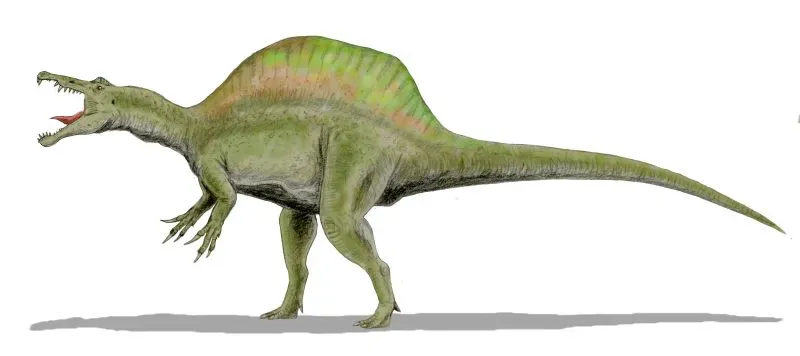
Forget the size rivalry – this part of the debate is basically settled. Spinosaurus is the largest carnivorous dinosaur ever discovered, and it isn’t close. Recent estimates put it at roughly 14 meters long and around 7.4 metric tonnes, making it the longest terrestrial predator known to science.
That’s about the length of a school bus, carried on a body that looked nothing like a typical theropod. Most people still assume T. rex takes the size crown because of pop culture, but the math simply doesn’t support that anymore. What makes it stranger is that all that length didn’t come from bulk – it came from an elongated skull, neck, and tail built for an entirely different lifestyle than T. rex’s brute-force land hunting.
Quick Compare
| Spinosaurus | T. rex | |
|---|---|---|
| Length | ~14 m (46 ft) | ~12-13 m (40 ft) |
| Weight | ~7.4 tonnes | ~8-9 tonnes |
| Build | Long, slender, river-adapted | Bulky, land-based apex predator |
#3 – Its Bones Were Built Like a Penguin’s, Not a Land Animal’s
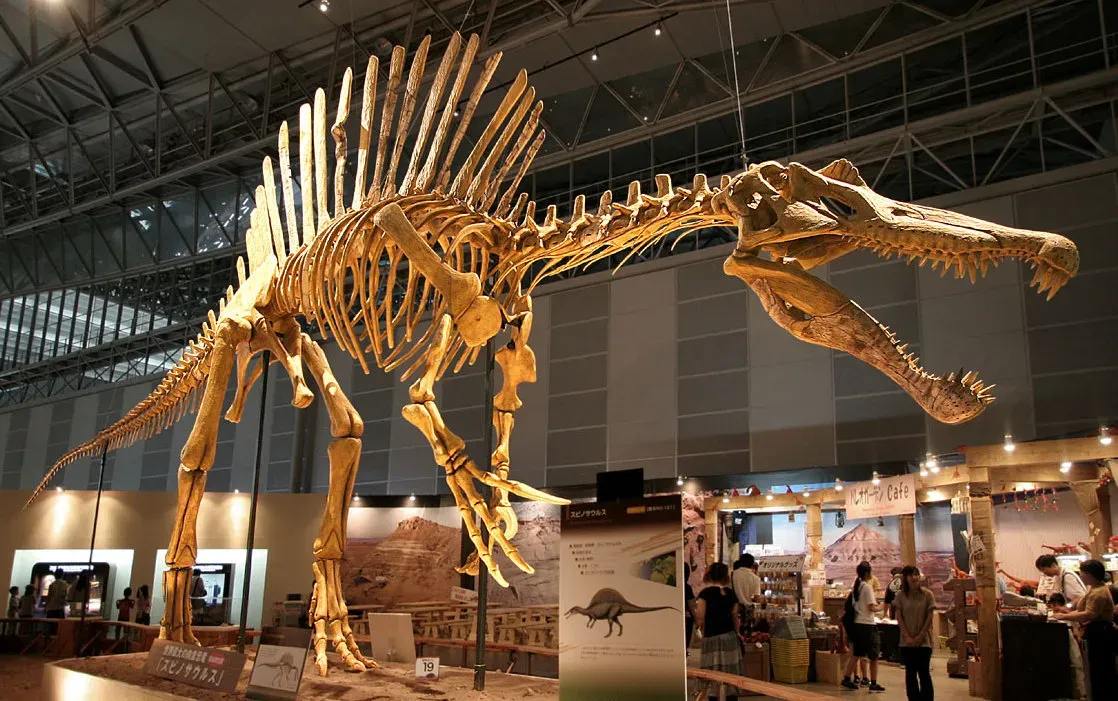
Here’s where things get genuinely bizarre. Scientists scanning Spinosaurus bones found internal density patterns that resemble diving animals, not walking ones. No other dinosaurs studied show this trait except its close relative Baryonyx – the two of them stand alone among dinosaurs in showing signs of conquering the aquatic realm.
Spinosaurus has the highest bone density among the three.
Matteo Fabbri, paleontologist
Dense, heavy bones work like ballast – the same trick penguins and hippos use to stay underwater instead of bobbing back to the surface. This was a genuine turning point in the field, because for the first time researchers had internal skeletal evidence, not just surface anatomy, suggesting Spinosaurus wasn’t just wading at the water’s edge. It pushed the conversation from “did it like water” to “could it actually dive.”
#4 – Its Tail Worked Like an Eel’s, Not a Lizard’s
The tail is where Spinosaurus stopped looking like any dinosaur ever discovered. A partial tail skeleton recovered from Morocco and described by Nizar Ibrahim and colleagues in Nature in 2020 revealed tall, closely spaced neural spines forming a flexible, paddle-like structure – one capable of generating real propulsive force through side-to-side undulation.
In plain terms, it could swish like a fish. Biomechanical modelling in that same study estimated the tail produced significantly more thrust in water than the stiff tails of other theropods, closer in function to a crocodile’s tail than to anything terrestrial. No other dinosaur tail on record was built this way, and it’s arguably the single discovery that turned Spinosaurus from a “weird wader” into a genuine contender for the first swimming dinosaur ever found.
#5 – Not Everyone Agrees It Could Actually Dive
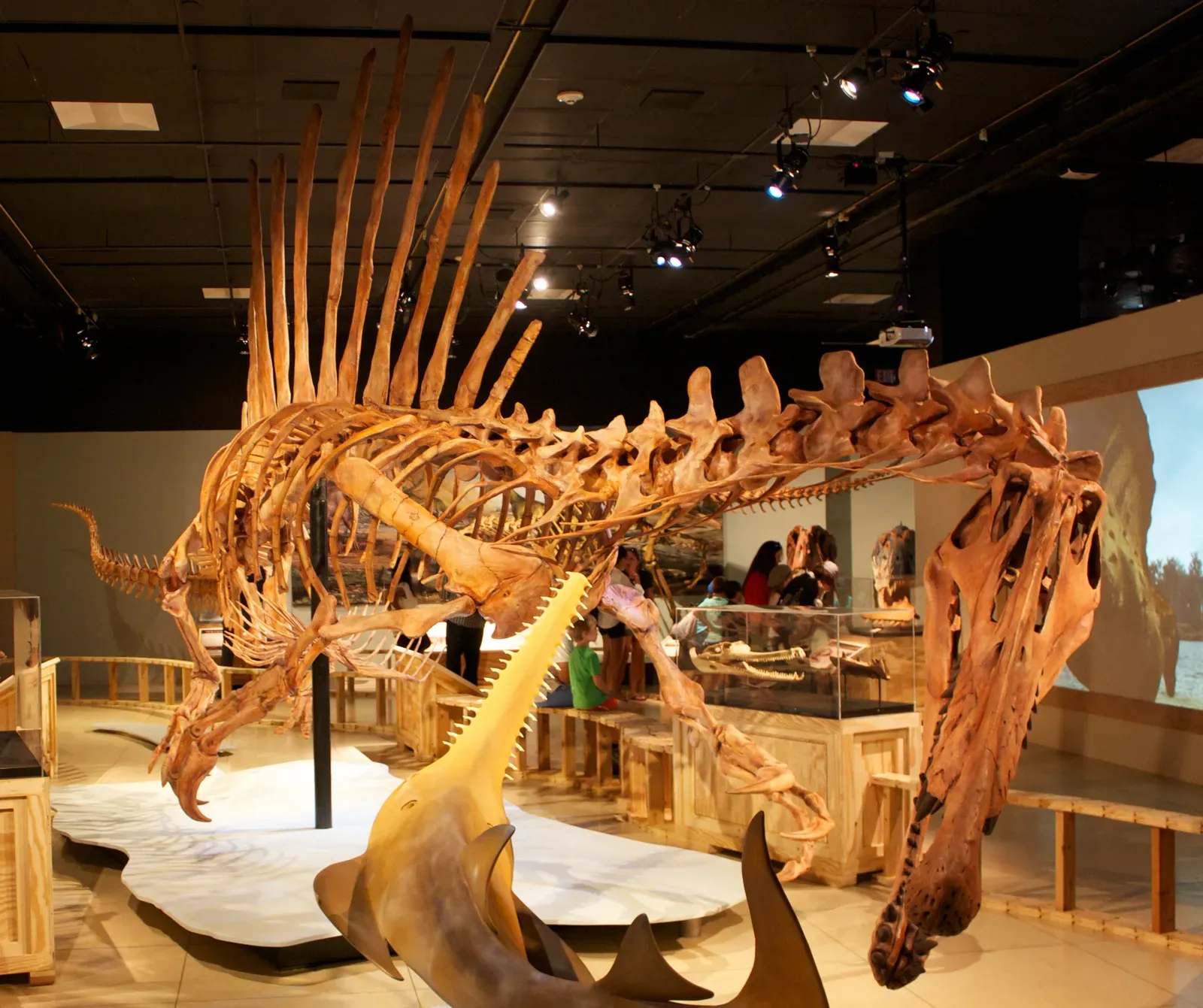
Just when the swimming-dinosaur story seemed locked in, a rival team came back swinging with new math. Researchers led by Paul Sereno directly challenged the bone-density conclusions, arguing the dense bones served a completely different purpose.
Sereno’s team proposed that Spinosaurus needed extra bone strength simply to support its own weight on relatively short hind limbs, letting it wade into waterways more than six feet deep without floating away while its toes stayed anchored in the mud. This isn’t a fringe take – it’s a full peer-reviewed rebuttal published in PLOS ONE. The same dense bones one team says prove diving, another team says prove stable wading, and that’s exactly the kind of scientific tug-of-war that makes Spinosaurus so fascinating: the fossils haven’t changed, but the interpretation keeps flipping depending on who’s crunching the numbers.
#6 – Digital Models Suggest It Would’ve Been a Terrible Swimmer
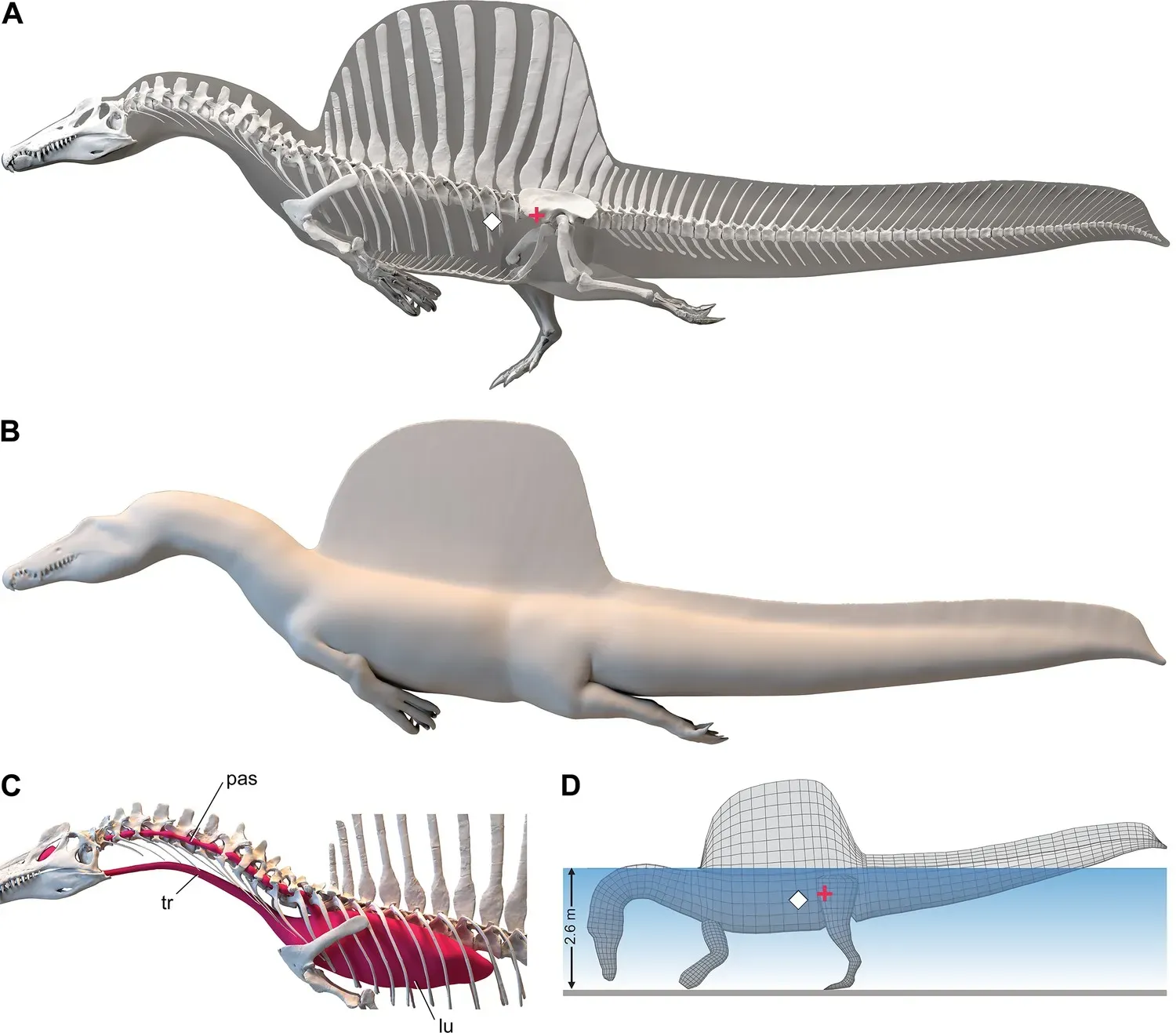
If Spinosaurus really tried to dive, some scientists think it would’ve been comically unstable doing it. A separate team built full digital skeletons and flesh models of Spinosaurus and its relative Suchomimus to physically test the diving hypothesis instead of just estimating from bone density alone.
Their results, published in eLife, concluded that both animals would have been unstable while swimming at the surface and far too buoyant to fully submerge. It’s a strange twist – the same “dense bones for diving” argument gets undercut by basic buoyancy physics. Picture strapping weights to a pool float: the ballast alone doesn’t guarantee you can dive, especially with a proportionally small pelvis and body shape working against you underwater. It’s one of the most controversial chapters in the whole Spinosaurus story, and it deserves far more attention than it usually gets.
At a Glance
- Full digital skeletons of Spinosaurus and Suchomimus were tested for swimming stability
- Both models were unstable while floating at the surface
- Buoyancy made full submersion physically unlikely
- A small pelvis and buoyant ribcage worked against diving ability
#7 – Nobody Actually Knows What the Sail Was For
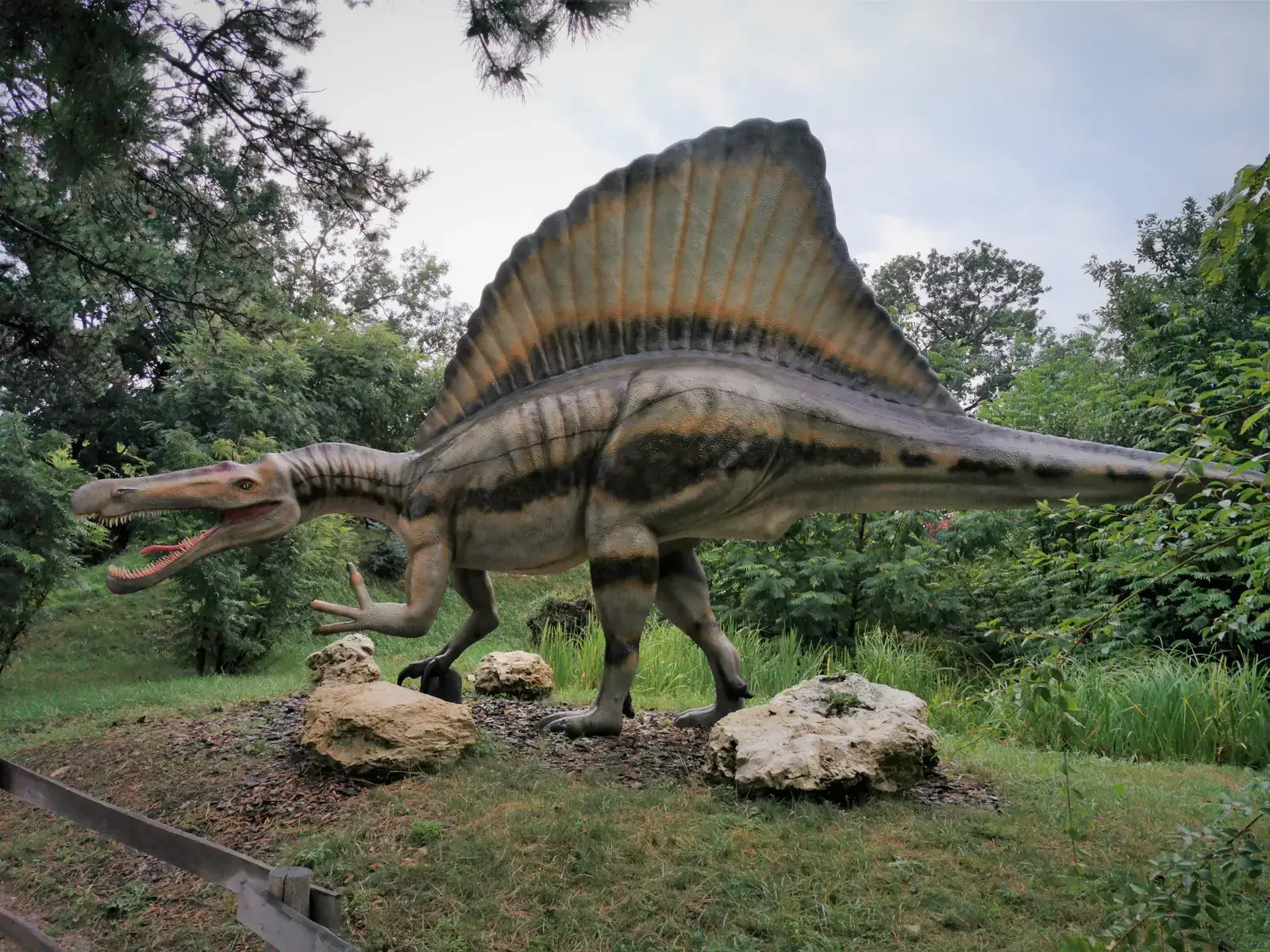
The giant sail is the single most iconic thing about Spinosaurus, and scientists still can’t agree on why it existed. The competing theories – thermoregulation, display, fat storage, hydrodynamic function – each have anatomical and ecological arguments in their favor, and none has been definitively ruled out.
The sail was likely used as a display structure.
Nizar Ibrahim, paleontologist
That theory suggests it broadcast age, size, or sex to other Spinosaurus from a distance. Most casual dinosaur fans assume the sail was for temperature control, but that idea has actually lost support in recent years – the spines were dense and had relatively few blood vessels, which works against efficient heat exchange. Meaning the flashiest part of this dinosaur might have been purely for show.
#8 – It Ate Giant Fish, Not Dinosaurs, Most of the Time
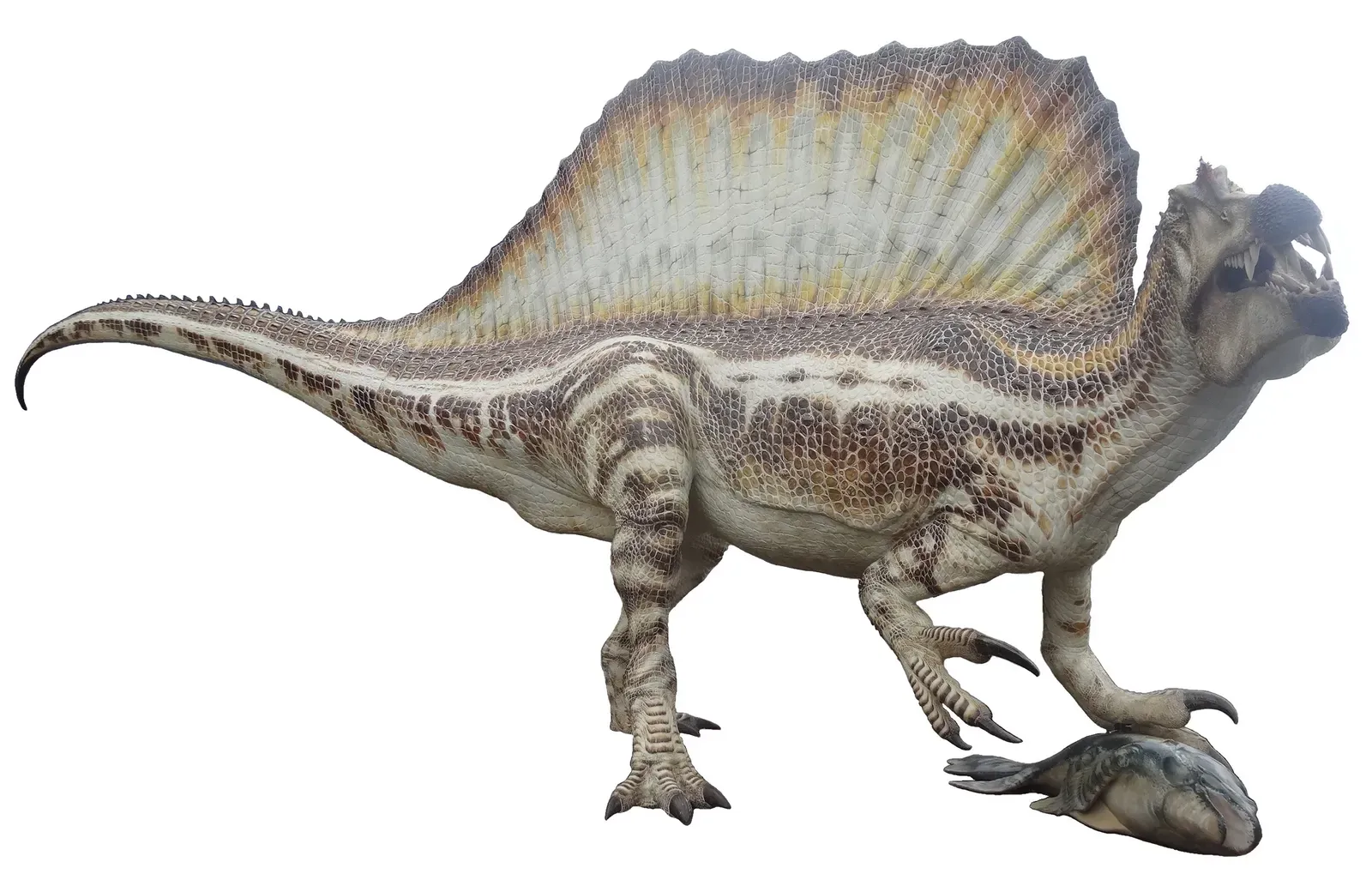
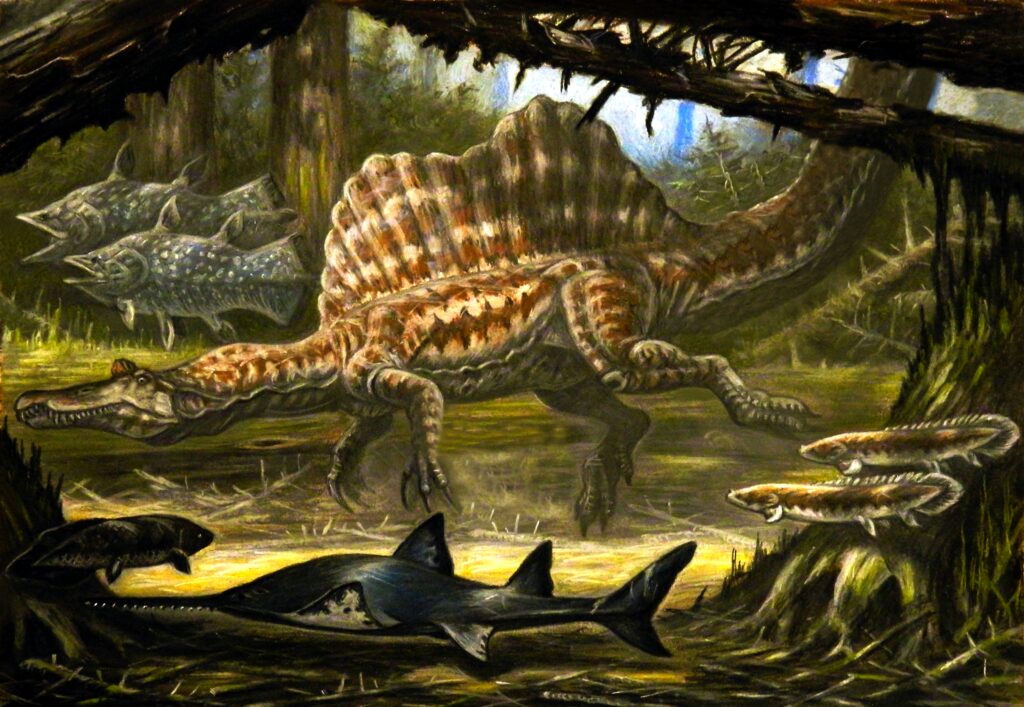
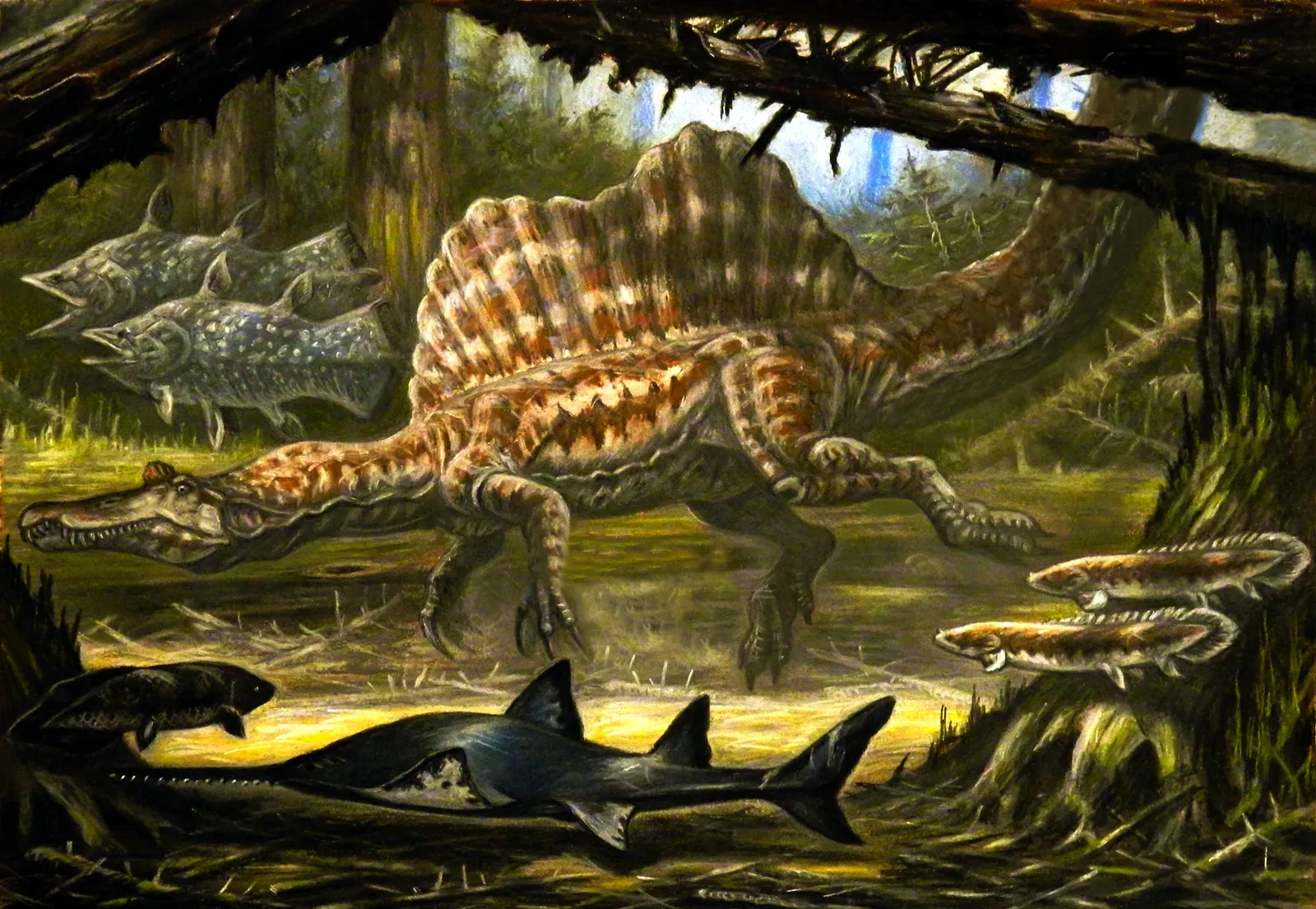
Despite its terrifying size, Spinosaurus’s actual dinner menu looked more like a fisherman’s dream than a monster movie. It’s thought to have survived primarily on giant coelacanths, sawfish, large lungfish, and sharks – the skull practically has “fish eating” written all over it.
This isn’t just guesswork based on tooth shape, either. A 2010 isotope analysis of Spinosaurus teeth showed oxygen ratios consistent with a semiaquatic lifestyle, backing up the idea that fish made up most of its diet. That means it was likely swallowing prey the size of a grown man on a regular basis – just not human-shaped prey. Scientists still think it was opportunistic enough to snatch smaller dinosaurs near the shoreline when the chance came up, but fish were clearly the daily bread.
#9 – Its Face Worked Like a Motion Sensor Underwater
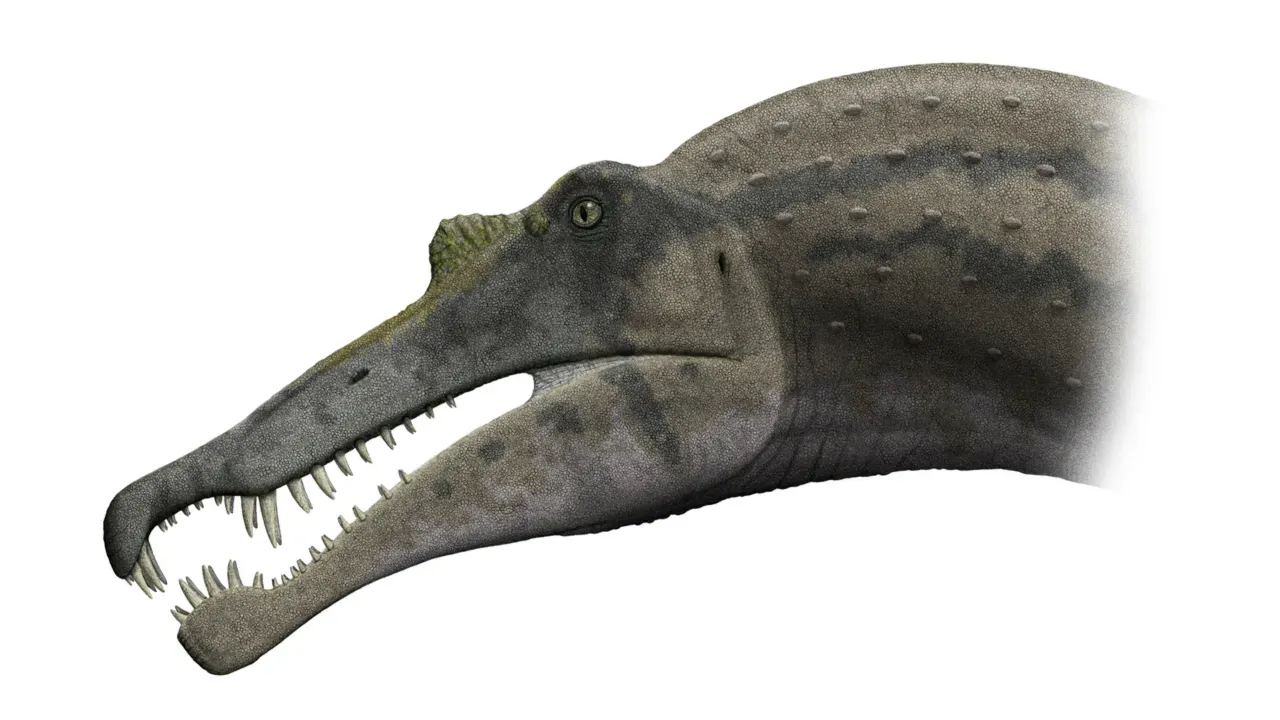
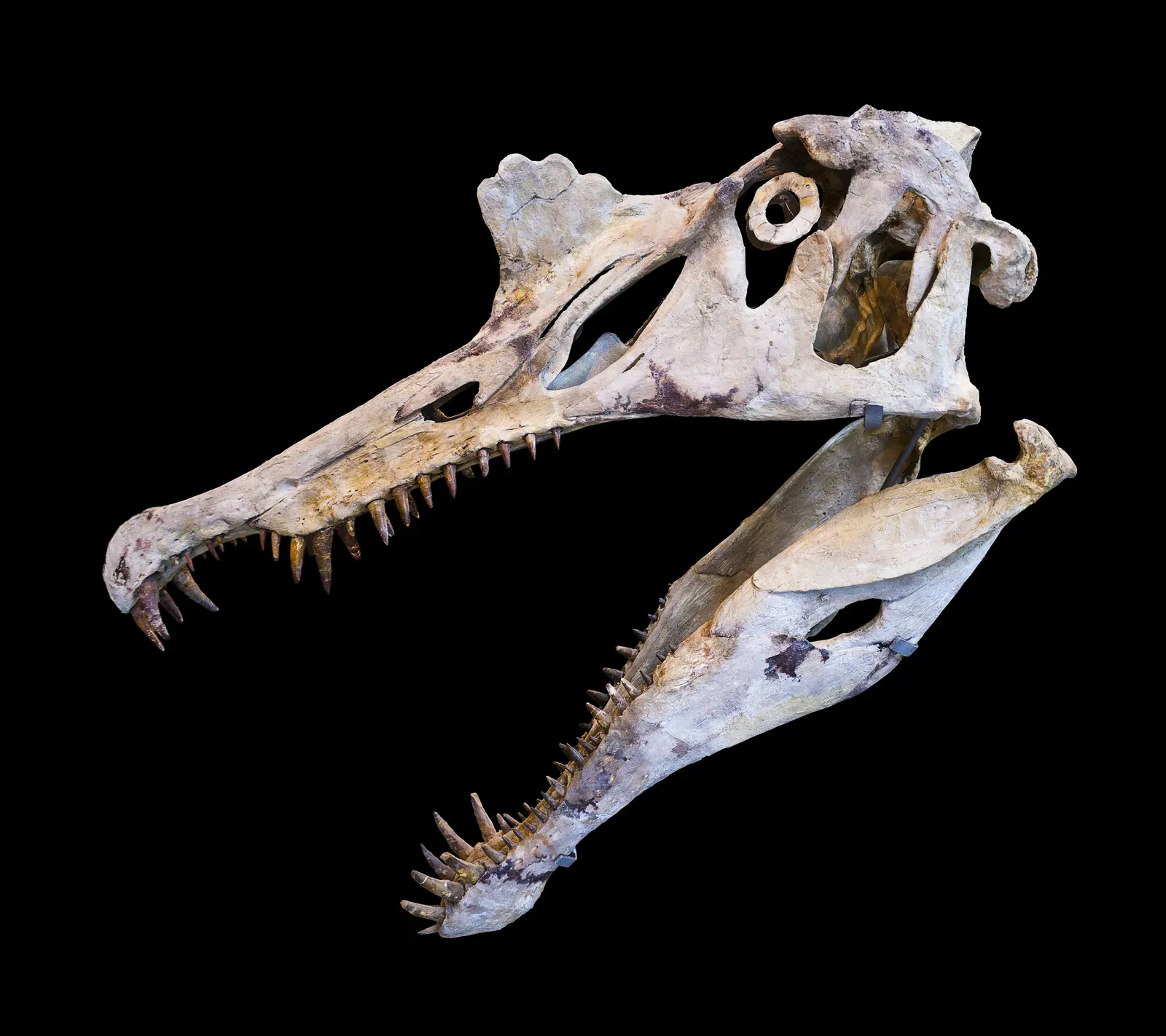
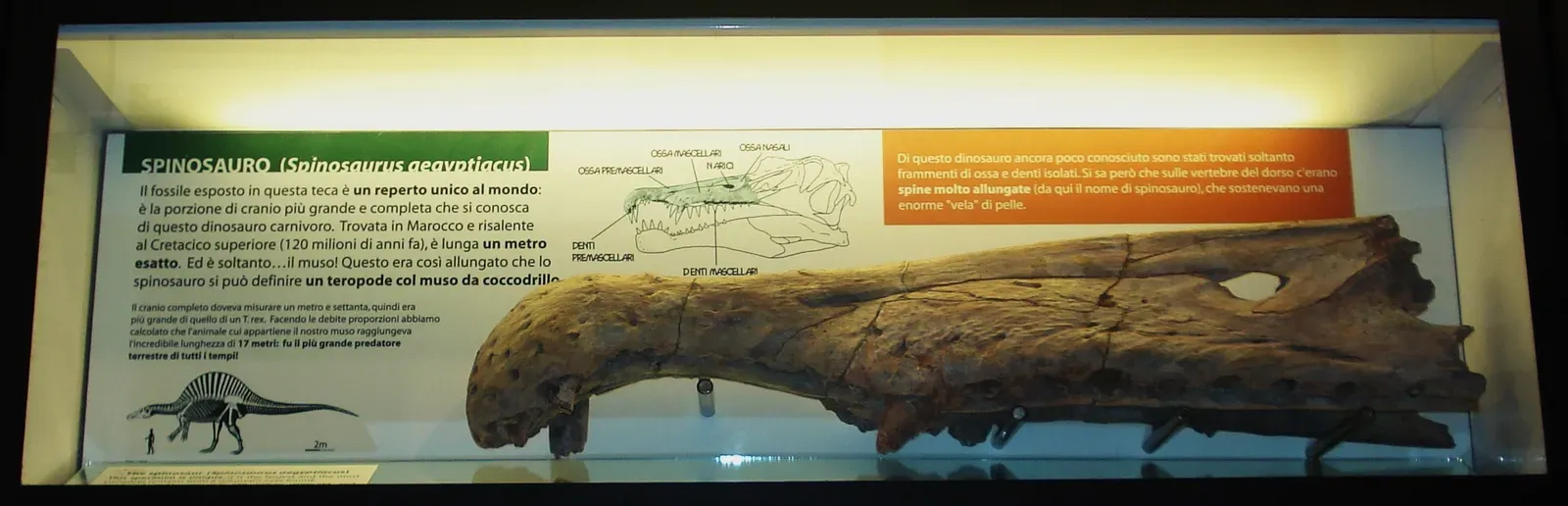
Spinosaurus’s snout wasn’t just long – it was wired for a job no other dinosaur skull was built for. The croc-like tip was covered in tiny holes and pits packed with nerves, letting the animal sense pressure changes moving through the water around it.
Pair that with nostril placement that’s genuinely unusual for a theropod, set far back on the skull, and you get a face built for underwater hunting rather than land-based ambush. This pressure-sensing trick is the same basic system modern crocodilians use to detect prey movement in murky water without ever seeing it. For a land predator, that adaptation would be completely useless – but for something hunting fish in low-visibility rivers, it’s a game-changing feature that puts Spinosaurus in a sensory league of its own among dinosaurs.
Why It Stands Out
- Snout pits packed with nerves detect underwater pressure changes
- Same basic sensory trick used by modern crocodilians today
- Nostrils set unusually far back on the skull for a theropod
- No other known dinosaur skull shows this combination of features
#10 – It May Have Walked on All Fours Sometimes
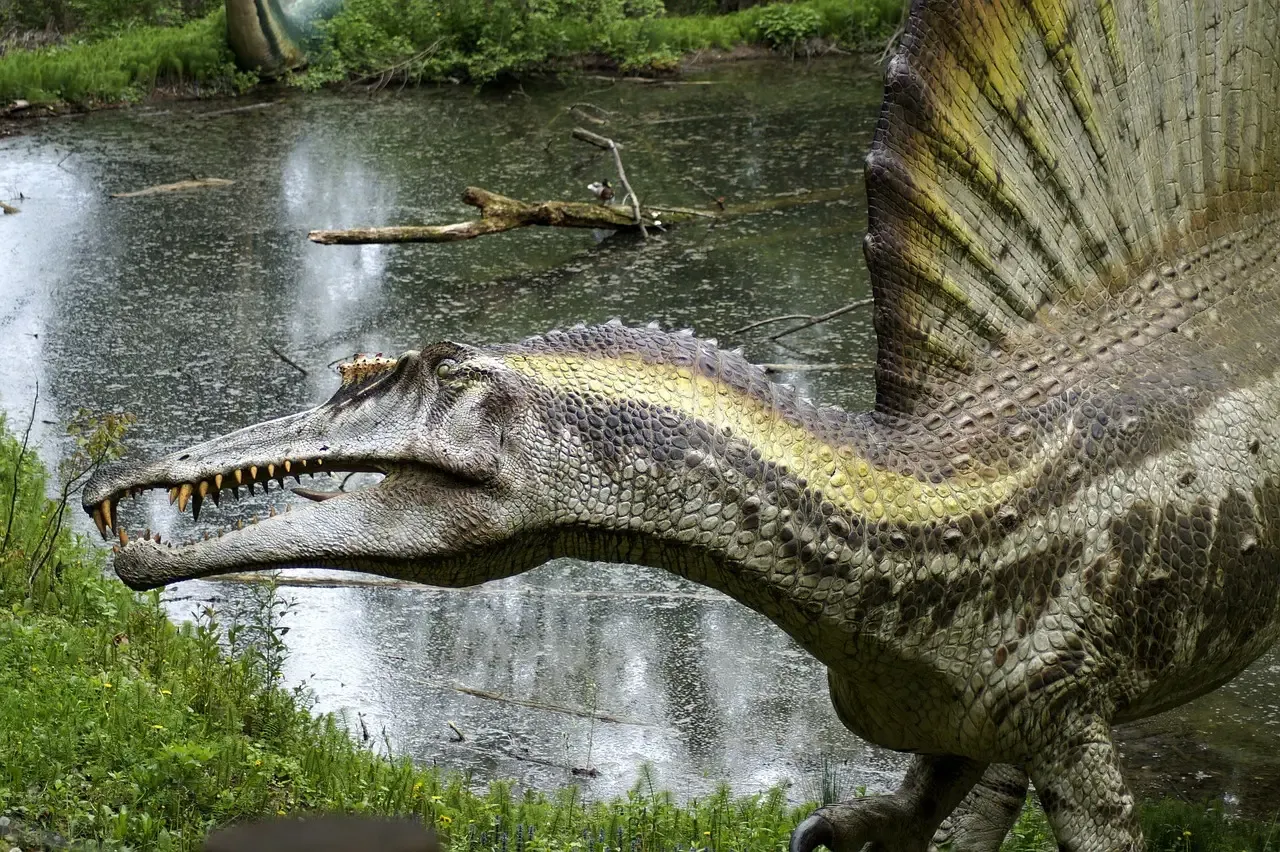
This is one of the more controversial claims to come out of the 2014 skeletal reconstruction, and plenty of paleontologists still push back on it. When detailed descriptions of a nearly complete specimen were published in Science that year, a research team pitched Spinosaurus as the first truly semiaquatic dinosaur – muscular hind legs, webbed feet for paddling, and that flexible, undulating tail.
Combined with a small pelvis, short hind legs, and a body plan clearly built for propulsion in water, some researchers argued the center of gravity may have shifted forward enough to make quadrupedal movement plausible on land. A dinosaur walking on all fours would be almost unheard of outside a few specialized herbivores. Not every scientist buys this interpretation, and it remains one of the most hotly disputed pieces of the whole reconstruction – but it’s exactly the kind of claim that keeps Spinosaurus research interesting instead of settled.
#11 – A Brand-New Spinosaurus Species Just Rewrote the Family Tree
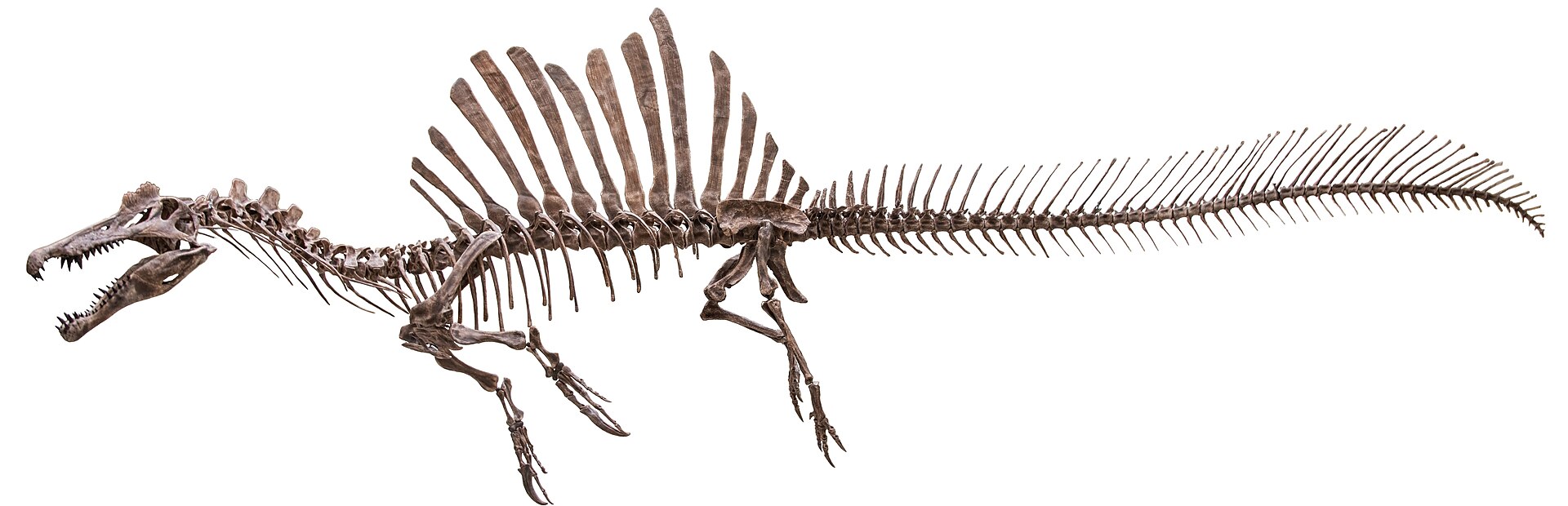
While the diving debate raged on, an entirely separate discovery quietly changed what we thought we knew about where these animals actually lived. A paper published in Science describes Spinosaurus mirabilis, a new spinosaurid species unearthed by a 20-person team led by Paul Sereno at a remote site deep in the central Sahara.
Its anatomy – including interdigitating teeth built for catching fish and a keratinous crest – sets it apart from other theropods, and the find suggests spinosaurids lived in forested river systems, not just coastal environments. That directly challenges the old assumption that these animals were strictly coastal specialists. Sereno described the animal poetically, calling it a kind of “hell heron” that waded confidently into deep water while stalking shallower fish traps – a single fossil find that pushed spinosaurid range and diversity further than almost anyone expected.
Worth Knowing
- Named Spinosaurus mirabilis, described in a Science paper led by Paul Sereno
- Unearthed by a 20-person expedition deep in the central Sahara
- Features interdigitating, fish-catching teeth and a keratinous crest
- Suggests spinosaurids ranged into forested river systems, not just coastlines
#12 – This Might Be the Weirdest Dinosaur Ever Found, Period
After more than a century of research, the most honest scientific conclusion about Spinosaurus is simply: nothing alive today is built like it. Living reptiles with spine-supported sails use them for display, not aquatic propulsion, and nearly all extant secondary swimmers have reduced limbs and fleshy tail flukes – meaning Spinosaurus doesn’t cleanly fit either mold.
I think this animal is simply weird: we have nothing alive today that could be considered remotely similar.
Matteo Fabbri, paleontologist
That’s a remarkable admission from a scientist – most animals, extinct or not, have some living analog researchers can lean on for comparison. Spinosaurus doesn’t offer one. This is precisely why the debate refuses to die: every new study answers one question and opens three more, and Spinosaurus has quietly become less of a dinosaur and more of a standing challenge to how scientists classify animal locomotion altogether.
The Bottom Line
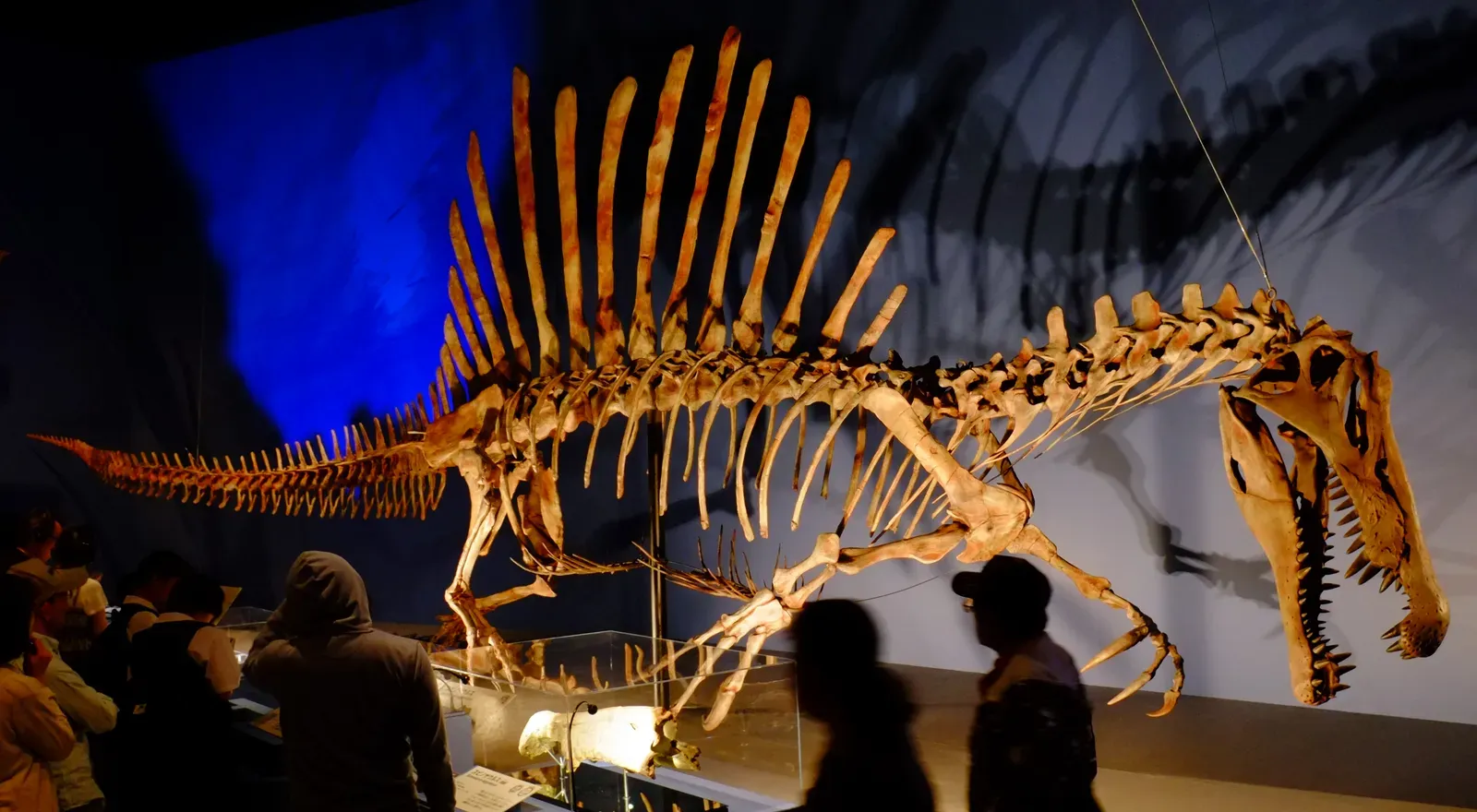
Here’s the truth nobody wants to admit: Spinosaurus is not a “solved” dinosaur, and it may never be. Every major claim – the diving, the sail, the quadrupedal walking – has a peer-reviewed study supporting it and another peer-reviewed study tearing it apart.
That’s not bad science. That’s what real science looks like when the fossil evidence is incomplete and the animal itself has no living equivalent to compare it against.
If you ask us, the “unstable swimmer” camp has the stronger physics argument right now – but the sensory snout and fish-heavy diet prove this animal was river-obsessed no matter how it actually got its meals. Which theory do you believe: diving predator, or six-foot-deep wader? Drop your take in the comments.