Most people picture a mammoth as basically “an elephant in a sweater.” That mental shortcut is almost insulting to an animal that spent hundreds of thousands of years re-engineering its entire body to survive temperatures that would kill a modern elephant in hours. The reality, pieced together from frozen carcasses, fossilized hyoid bones, and genome sequencing, is stranger, louder, and far smellier than the cartoon version most of us grew up with.
Paleontologists who study these carcasses say the actual experience of standing next to one would overwhelm almost every sense at once, not just your eyes. Some of what hits you wouldn’t even register as sound. Here’s what the fossil record actually says about the fourteen seconds that would change how you think about “just a hairy elephant” forever.
#13 – A Wall of Fur You Could Barely See the Top Of
The first thing that would register isn’t a detail, it’s scale. Before you noticed a single tusk or hair color, you’d just feel small.
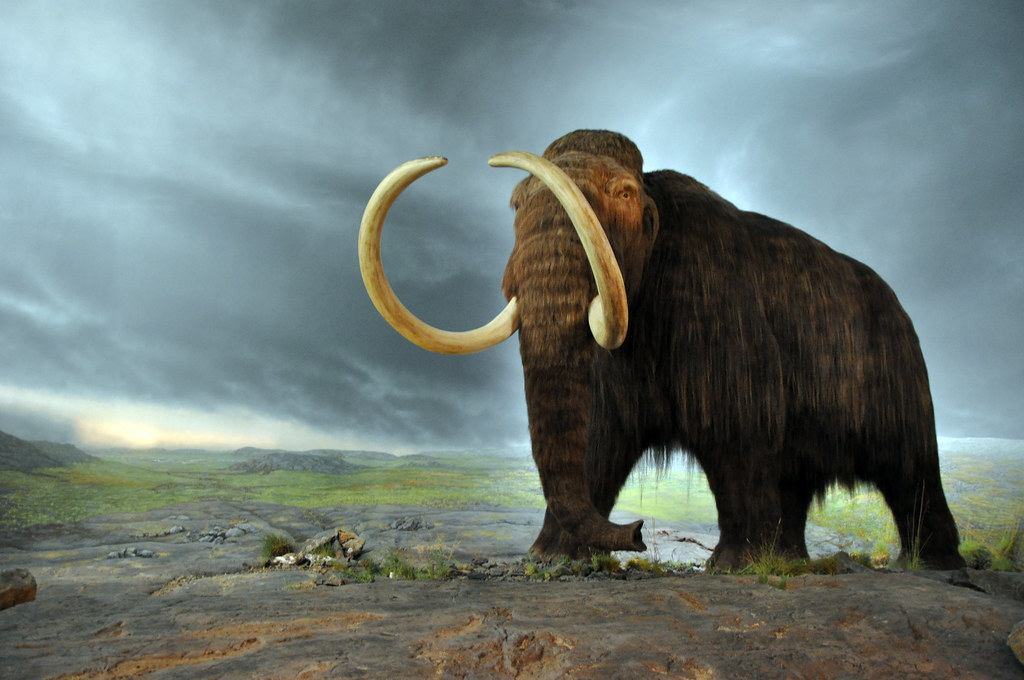
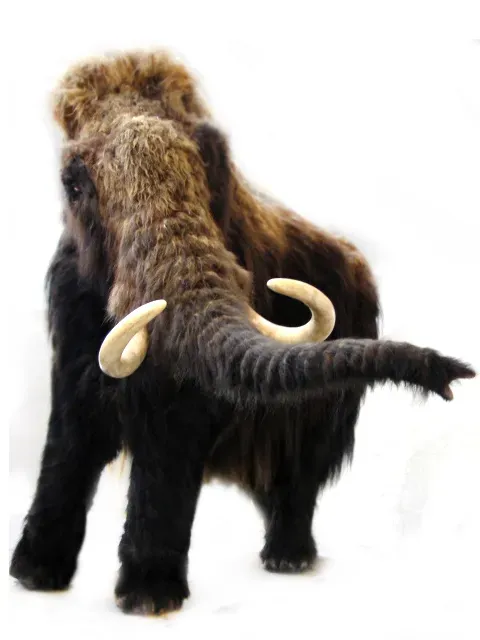
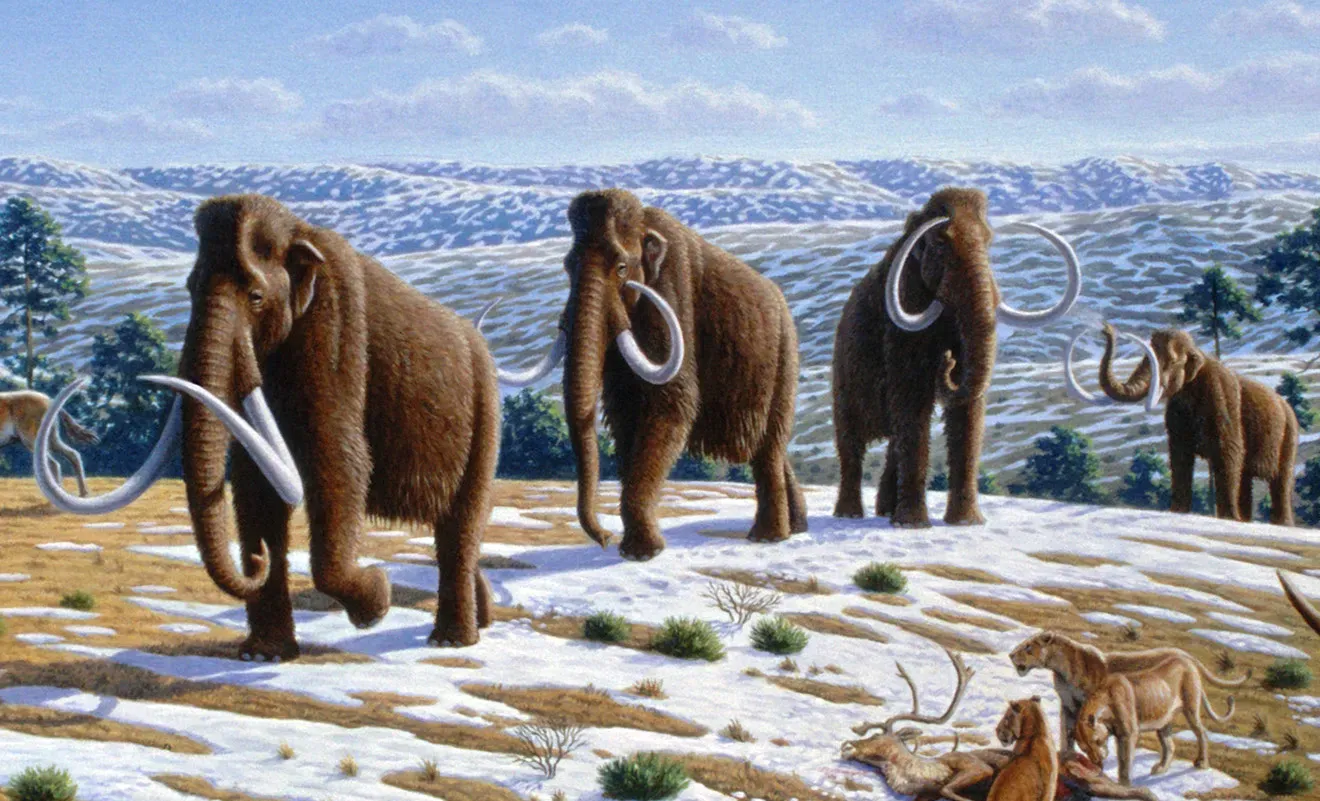
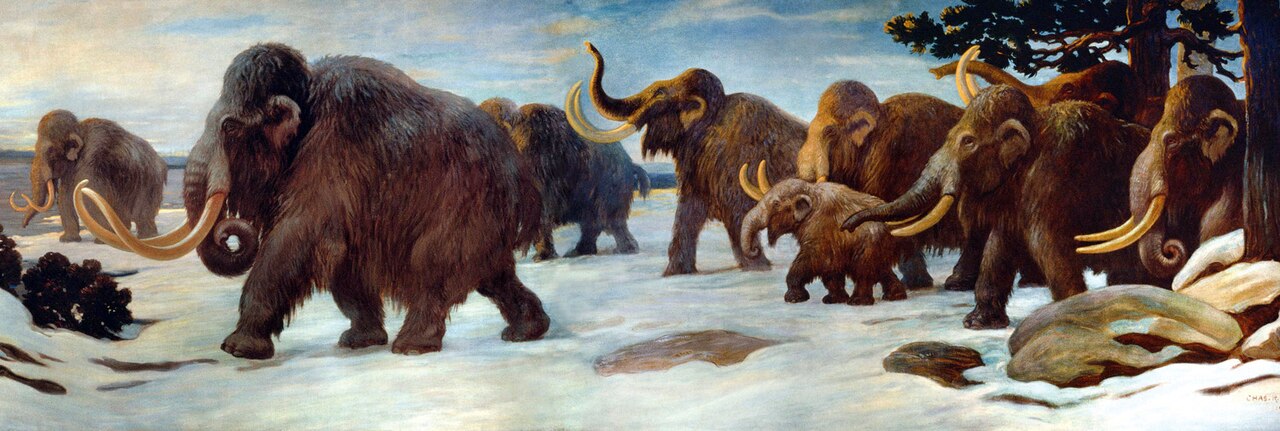
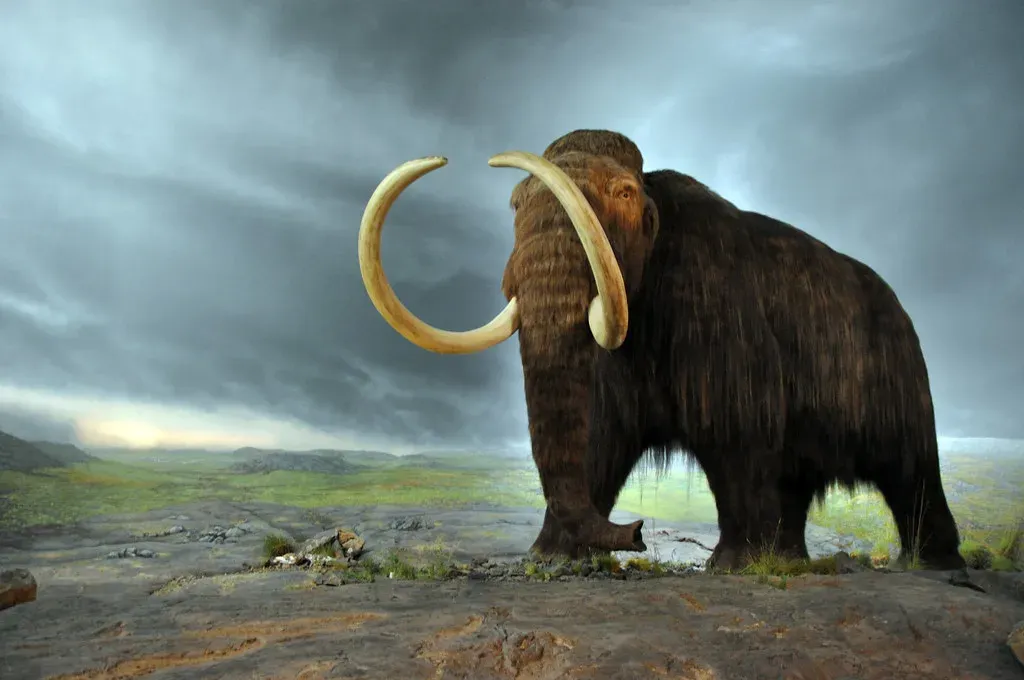
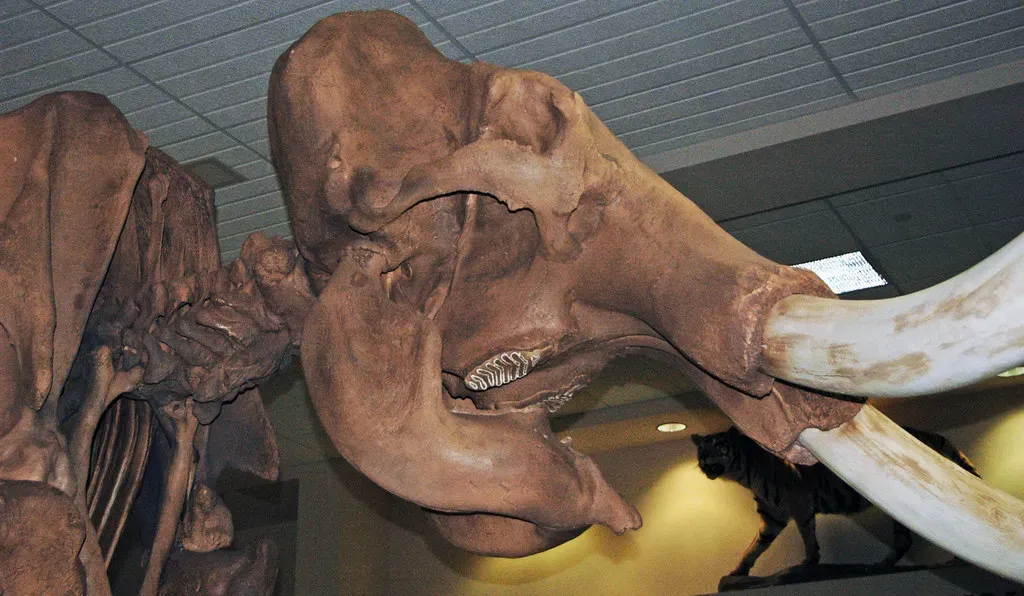
Woolly mammoths stood about 3 to 3.7 meters (10 to 12 feet) tall and weighed between 5,500 and 7,300 kg (roughly 6 to 8 tons). That’s not dramatically bigger than a large modern elephant, but the proportions read differently. A higher-domed skull sitting on a body wrapped in a shaggy, moving curtain of hair made the animal look far more massive than its actual bulk, and males were noticeably larger than females in every dimension, from height to tusk size.
Fast Facts
- Height: about 3 to 3.7 meters (10 to 12 feet) at the shoulder
- Weight: roughly 5,500 to 7,300 kg (6 to 8 tons)
- Skull shape: notably higher-domed than a modern elephant’s
- Sexual dimorphism: males outsized females in nearly every measurement, including tusk length
#12 – A Coat That Was Never Just One Color
You’d expect uniform brown. You’d be wrong.
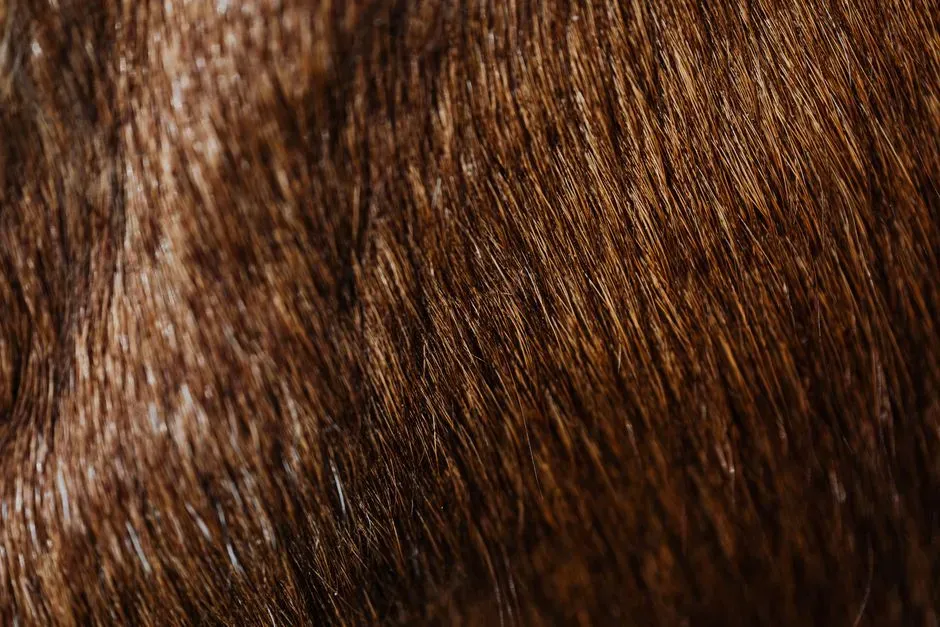
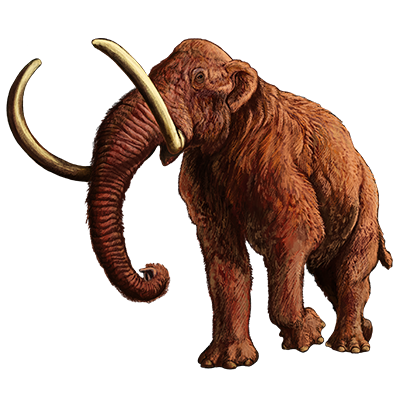
Genome research has confirmed there were brown woolly mammoths, but also reddish-orange individuals and some that carried a strawberry-blonde hue. Standing beside a real herd, you’d see this variation up close instead of the single “movie mammoth” shade. The texture would surprise you too: guard hairs ran 30 to 90 centimeters (12 to 35 inches) long depending on the body part, with the longest strands forming a heavy skirt along the flanks and underside that brushed the ground, while short, fine underhairs about 8 centimeters (3.1 inches) long and dingy yellow in color did the real insulating work underneath. Each individual hair even grew from its own oil gland, something no stylist could improve on.
#11 – The Smell Would Hit You Before the Shape Did
Long before your eyes adjusted to the size of the animal, your nose would already be overwhelmed.
That oil gland attached to every hair helped insulate the massive body, and oil at that scale has an odor. Add a purely plant-based diet of grasses, shrubs, and other vegetation, and the digestive byproducts of an eight-ton herbivore become a constant presence in the air around a herd. Modern elephants communicate partly through chemical signals carried in urine, secretions, and breath, and mammoths – their closest surviving relatives – almost certainly did the same. This wasn’t a subtle “wild animal” smell – it was an entire weather system of scent made of oily hide, fermenting grass, and animal musk.
#10 – Tusks Long Enough to Impale a Small Car
Nothing on a mammoth says “keep your distance” quite like the ivory.
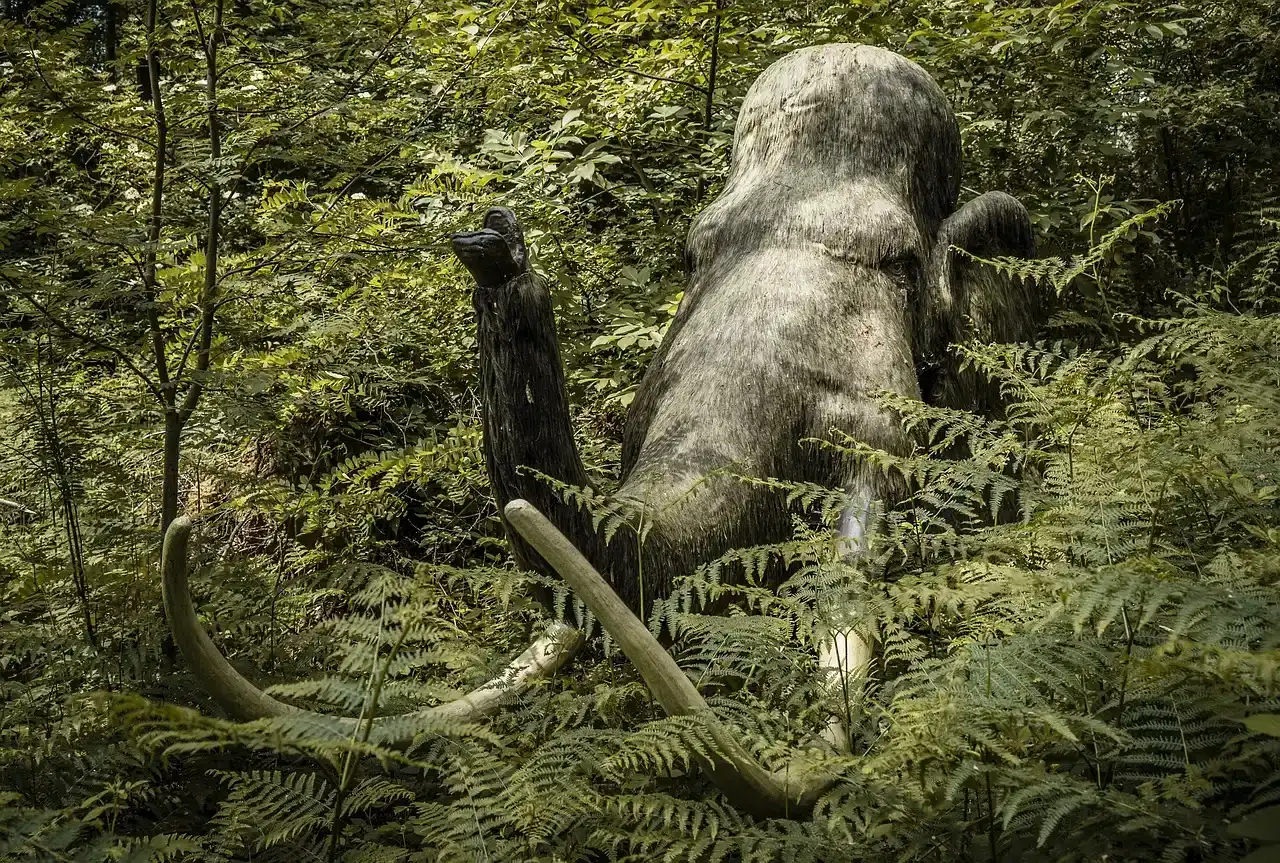
Their long, curved tusks could stretch up to 15 feet, with some researchers putting the maximum closer to 16 feet. These weren’t just weapons – males usually carried larger tusks than females, and the animals likely used them for display, fighting, clearing snow, or digging up buried vegetation. Look closely at the ivory and you’d be looking at a calendar, because tusks record growth patterns almost like tree rings. Darker rings mean the animal died during a warmer month, a detail literally frozen into the ivory – a life history you could read like a book, if you knew how to look.
#9 – Ears Way Too Small for an Animal This Big
If you’ve only seen African elephants, the ears would look almost comically wrong.
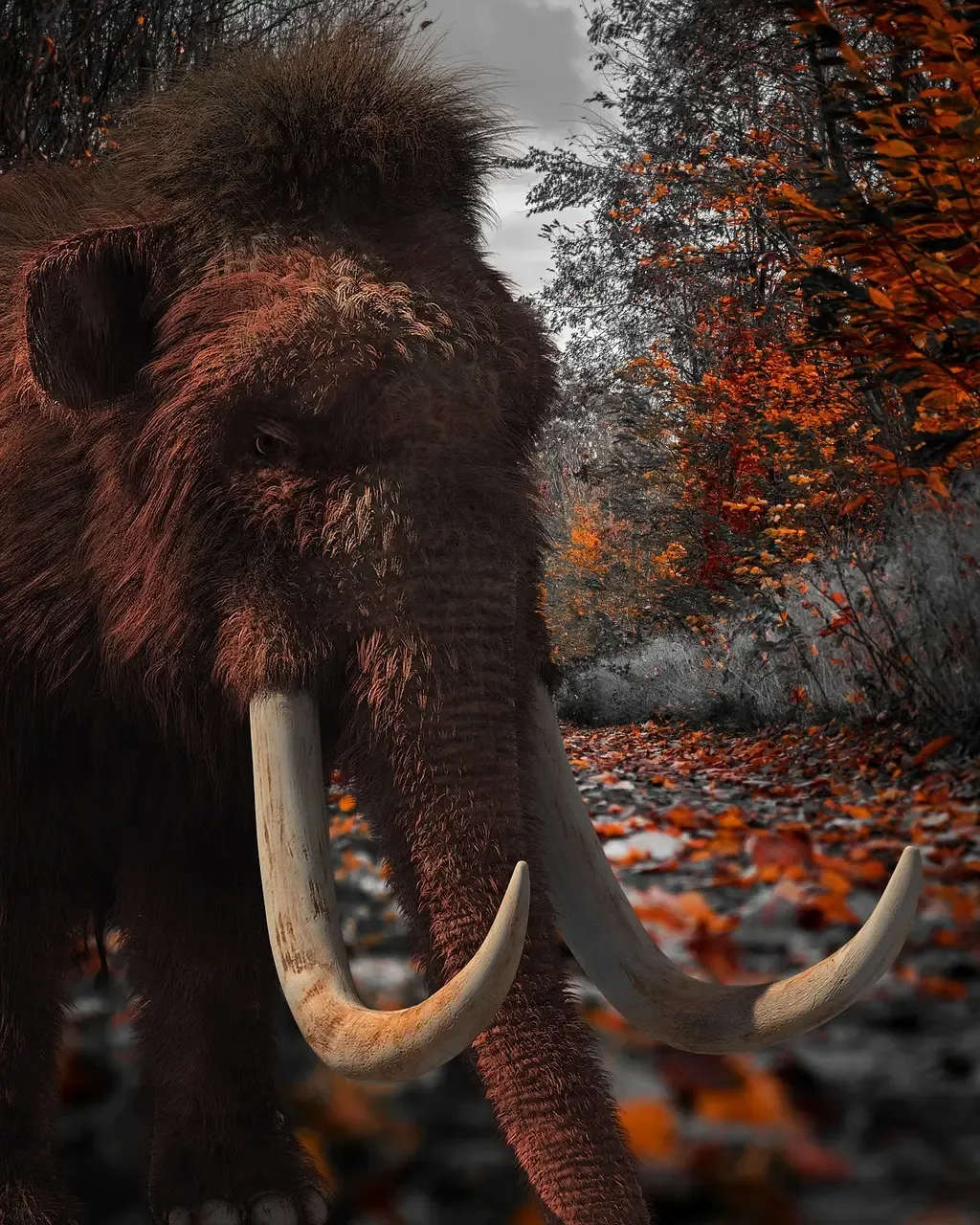
Modern elephants use huge, blood-vessel-rich ears to dump excess body heat, but a mammoth had the opposite problem: it needed to keep heat in, not release it. That’s why a woolly mammoth’s thick coat was paired with small ears, a short tail, and a hump of fat on its back for energy and water storage. Genomic studies confirm this wasn’t accidental – woolly mammoths evolved a specific suite of arctic adaptations, including morphological traits built to minimize heat loss. The ears on a twelve-foot-tall animal were, proportionally, barely bigger than a human hand span, and they’re the clearest proof that cold, not size, dictates ear shape in the animal kingdom.
Quick Compare
- African elephant ears: huge, packed with blood vessels, built to release heat
- Woolly mammoth ears: small, low-surface-area, built to trap heat
- Other cold-climate trade-offs: short tail, dense coat, insulating dorsal fat hump
- Same basic anatomy, opposite climate job
#8 – A Trunk That Never Stopped Moving
Even standing still, a mammoth’s trunk would be working constantly, testing the air, the ground, and you.
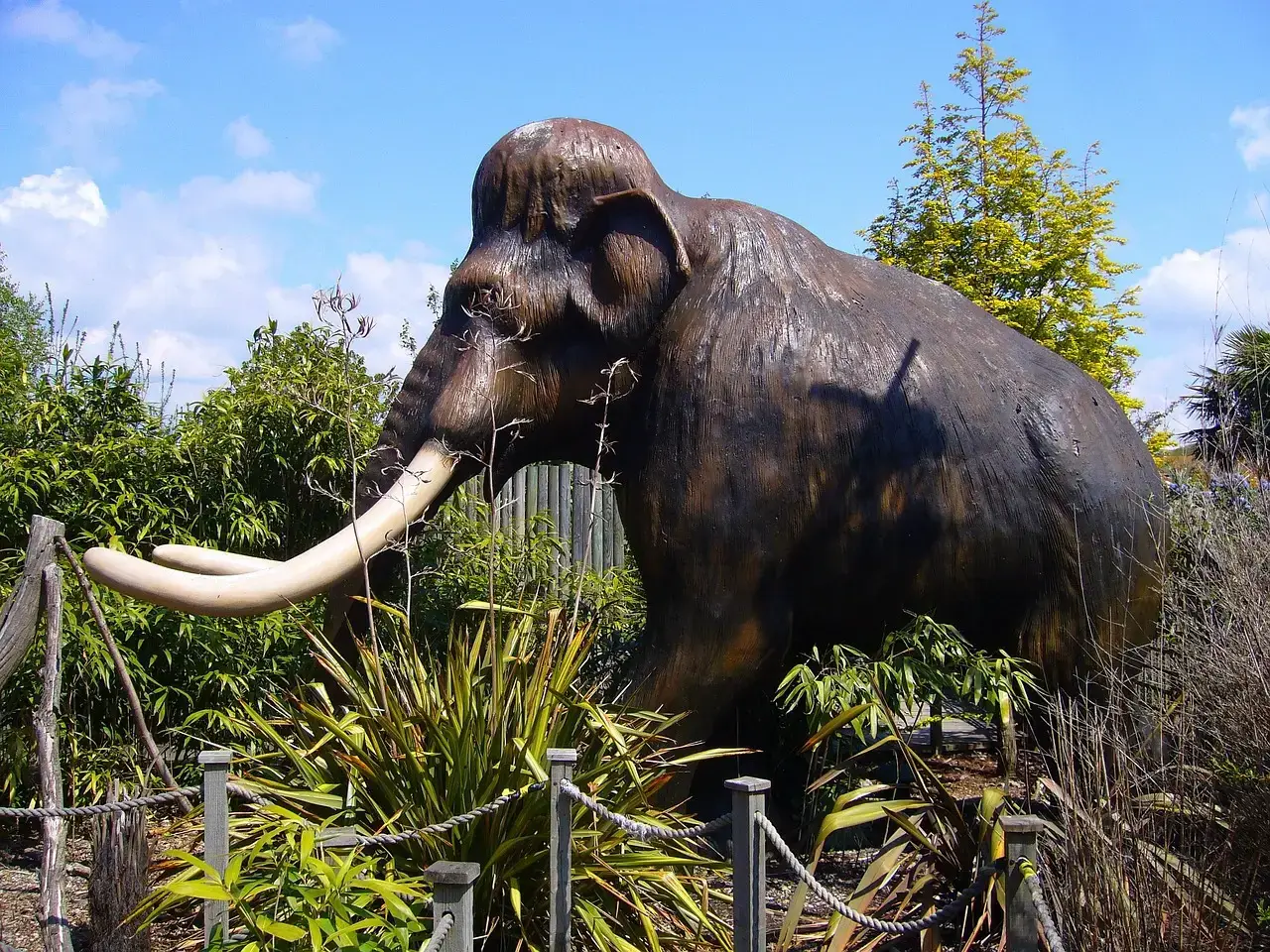
Woolly mammoths evolved from steppe mammoths between 800,000 and 600,000 years ago and are closely related to present-day Asian elephants, so their trunks likely functioned much the same way – as a combined nose, hand, and snorkel capable of astonishingly fine manipulation. Fossil evidence shows the trunk and tusks worked as a team: tusks broke through snow and ice to expose vegetation while the trunk swept in behind to gather it, guided by a sense of smell sharp enough to locate food buried under snow. That restless, curious trunk tip would almost certainly find its way toward you within seconds of you standing still.
#7 – Feet Built Like Built-In Snowshoes
Look down before you look up, and you’d notice something odd about how a mammoth’s weight was distributed.
To keep an eight-ton body from sinking into snow and permafrost, mammoths evolved oversized, cushioned soles. Researchers comparing preserved remains found their feet were about 13.5 percent larger than those of a similar-sized African elephant, spreading the animal’s mass over a wider footprint so it could cross snowpack and boggy tundra that would swallow a modern elephant whole. Those built-in snowshoes are also why mammoth footprints from 30,000 years ago still turn up remarkably intact in preserved sediment layers – and why, standing beside one, each step would look less like a stomp and more like a cushion flowing outward and re-gathering.
Worth Knowing
- Footprint size: about 13.5% larger than a similarly sized African elephant’s
- Sole structure: cushioned, spreading body weight over a wider area
- Terrain advantage: crossed snowpack and boggy tundra without sinking
- Fossil bonus: some 30,000-year-old mammoth footprints are still intact today
#6 – The Ground Would Move Before You Heard Anything
This is where things stop feeling like “big animal” and start feeling genuinely alien.
Elephants – and almost certainly mammoths – don’t just make sound, they make the ground itself carry information. Research on modern elephants shows ground vibration produced by vocalizations, footsteps, and forceful body movements travels independently of airborne sound, letting a herd effectively “talk” to other mammoths kilometers away through the soil itself when terrain, darkness, or distance blocks a clear line of sight. You’d feel this in your feet and your chest before your ears ever registered a sound – less like hearing an animal, more like standing next to a subwoofer buried in the earth.
#5 – A Rumble You’d Feel in Your Ribs, Not Your Ears
This is the detail that changes the entire experience of being near a mammoth: much of what it “said” to you, you wouldn’t consciously hear at all.
These animals likely mastered infrasound – low-frequency rumbles that could travel for miles across the tundra and be felt in the chest of any nearby predator as much as heard by the ear. Scientists reconstruct this through fossilized hyoid bones, which supported the tongue and larynx, alongside remarkably preserved soft tissue from permafrost specimens. For comparison, modern elephants produce infrasound as loud as a chainsaw that can travel for kilometers, yet to human ears it seems like near-total silence.
Elephants can produce infrasonic calls that are audible to other elephants many kilometers away, even though to a human observer standing nearby, the animal appears silent.
Joyce Poole, elephant behavioral researcher
#4 – The Strange Hump on Its Head and Back
From the side, a mammoth’s silhouette wasn’t smooth – it had a distinct bump that most reconstructions barely capture.
A mammoth’s back and skull carried dedicated fat reserves built for a specific survival job, functioning essentially as an emergency fuel tank during lean winter months. Genetic research adds an even more specific detail: mammoths carried a large brown-fat deposit behind the neck that may have worked as a heat source and fat reservoir in winter – the same type of metabolically active fat human infants use to generate body heat. That means part of a mammoth’s silhouette was, quite literally, a built-in furnace, quietly keeping its core temperature stable while everything else froze.
#3 – It Almost Certainly Wasn’t Alone
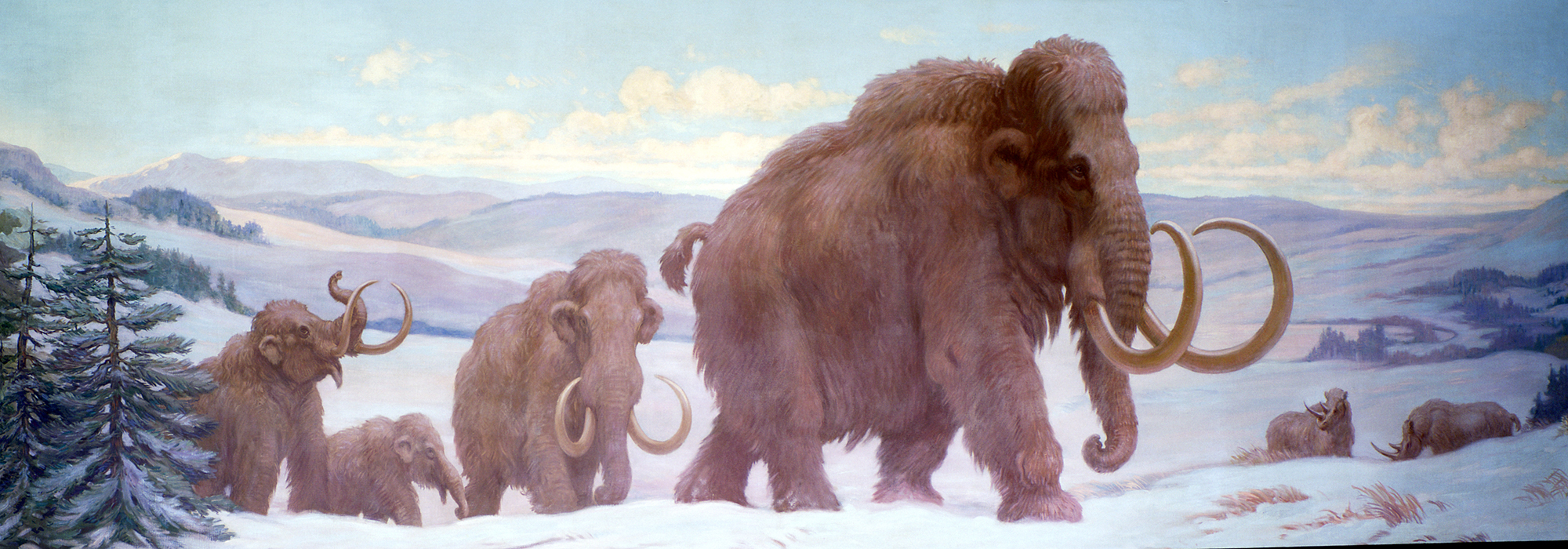
A single mammoth standing in isolation would have been the exception, not the rule.
Fossil evidence points overwhelmingly toward tight family structures, with females forming matriarchal groups while mature males lived more solitary lives except during breeding season. That means the individual in front of you was likely surrounded, just out of sight, by an entire extended family led by an experienced older female making every major decision for the group, migrating together between food sources through the seasons. A lone bull near you might actually be the safest mammoth to encounter, precisely because the protective, unpredictable matriarchal herd was somewhere else entirely – a single detail that would completely change how cautious you’d need to be.
At a Glance
- Female-led groups: mature females and calves traveled together in matriarchal herds
- Adult males: typically solitary, except during breeding season
- Leadership: the oldest, most experienced female usually guided migration decisions
- Safety note: a lone bull may actually pose less risk than a full family herd
#2 – Skin, Fat, and a Body Temperature War You Couldn’t See
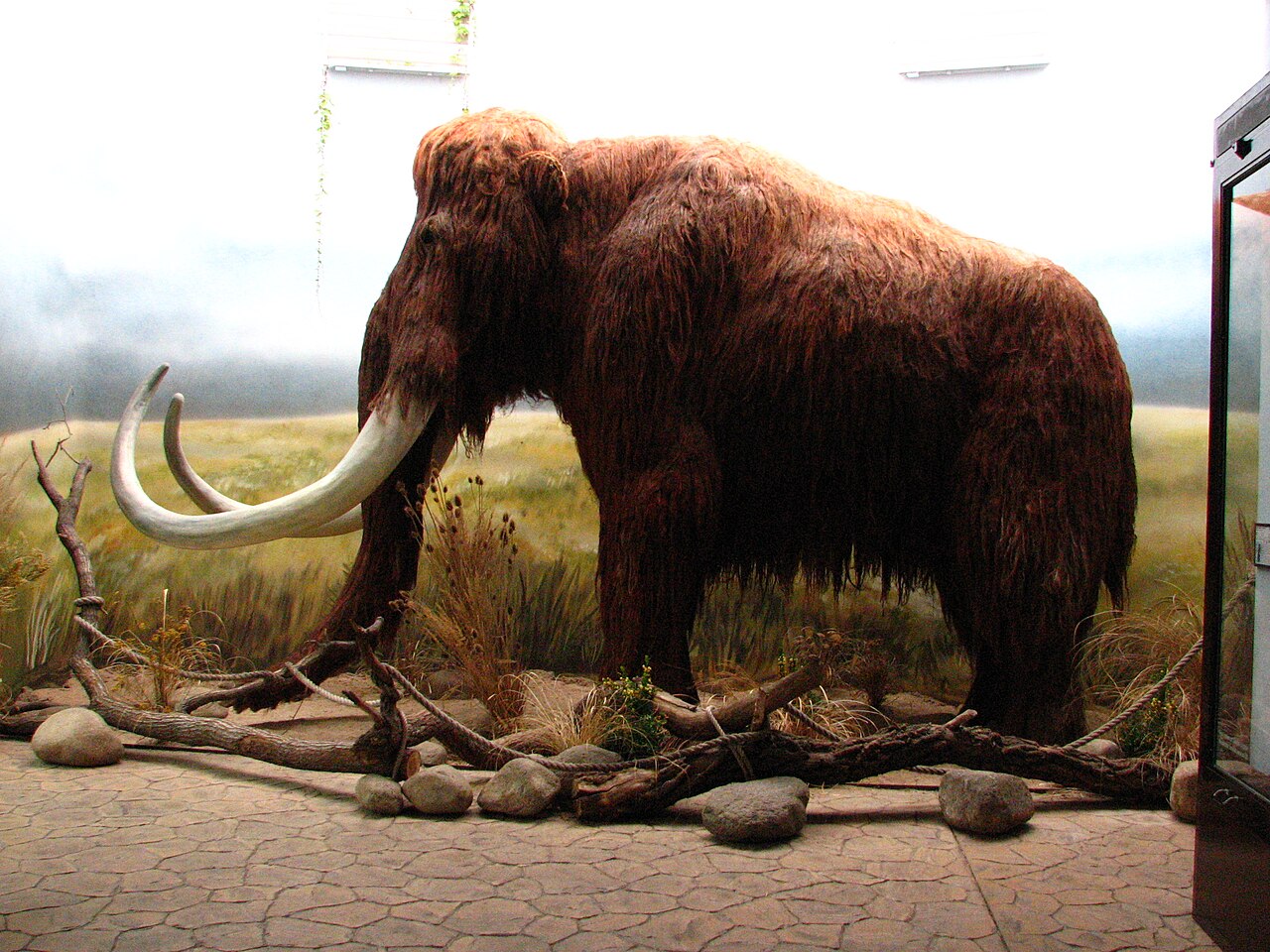
Underneath all that fur was a biological arms race against cold that modern engineers still can’t fully replicate.
Beyond the fur, mammoths carried blubber reaching 10 cm (4 inches) thick, layered directly beneath skin otherwise remarkably similar in thickness to a modern elephant’s. Genetic studies go further, showing mammoths evolved specialized blood chemistry for the cold – hemoglobin substitutions built to function in freezing conditions, alongside skin, hair, and metabolic changes enriched for circadian biology, sebaceous gland development, lipid metabolism, and temperature sensation. This wasn’t a shaggy elephant wearing a coat – it was a completely re-engineered cold-weather organism from the blood up, and standing close enough, you’d likely feel real warmth radiating off the animal like a furnace running full-time just beneath the surface.
#1 – You’d Be Looking at a Distant, Living Cousin
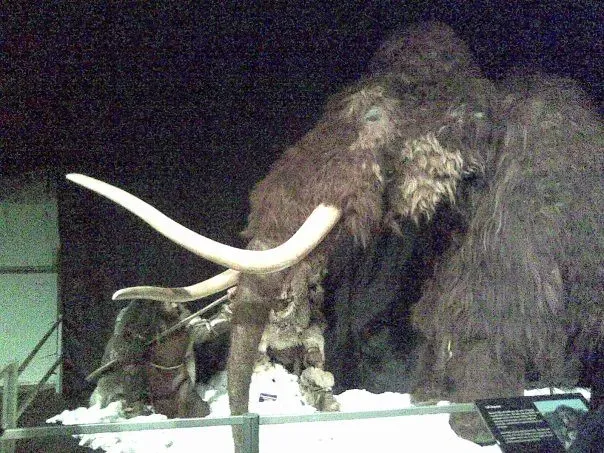
Here’s the detail that would hit hardest, emotionally, not just scientifically: this wouldn’t feel like meeting a monster. It would feel like meeting family.
Woolly mammoths evolved from steppe mammoths between 800,000 and 600,000 years ago, and their last common ancestor with Asian elephants existed about six million years ago – roughly the same span of time separating humans from chimpanzees. The eyes, the wrinkled trunk skin, the low rumble in its chest – all of it would feel unmistakably, uncomfortably familiar, like looking at a version of an elephant that never stopped adapting. Standing that close, most people wouldn’t feel fear first. They’d feel the strange grief of recognizing something that should still be here.
The Bottom Line
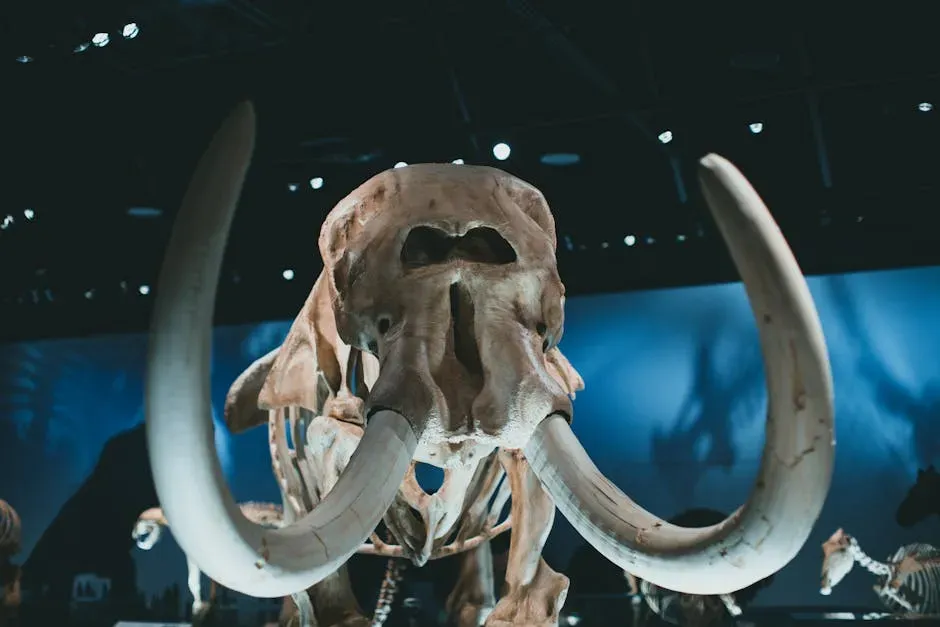
Strip away the cartoon version, and a living mammoth turns out to be far stranger than “a fuzzy elephant.” The smell alone would overwhelm most modern visitors, the communication happens partly in frequencies you can’t hear but can feel in your ribs, and the coat isn’t one shade of brown but a patchwork of red, blonde, and near-black individuals standing side by side.
Most surprising of all is that this was never some alien beast – it was a genetically close cousin of an animal still walking the earth today, separated from us by a family split no older than the one between humans and chimps. If de-extinction efforts ever succeed, the reunion probably won’t feel like a monster movie. It’ll feel like something closer to grief with a heartbeat, a family member walking back into a room it never should have left.