

If you’ve ever had a day where nine things went right and one thing went wrong, and your brain would not shut up about the one bad thing, you’re not broken – you’re human. Psychologists sometimes call this our brain’s “velcro for bad, Teflon for good” tendency, and it is not just a personality quirk. It might be a deep, ancient feature of how the human mind evolved in a world where missing a threat could be fatal.
In modern life, that ancient wiring crashes head‑first into social media feeds, nonstop news, and a culture that rewards hot takes over slow reflection. The result is a mind that is constantly on alert, constantly scanning for what might go wrong, even when we are objectively safer and better off than almost any generation before us. Let’s unpack why our brains lean negative, what evolutionary psychology actually says about it, and how we can live with this bias without letting it run our lives.
The Ancestral Logic: Why Missing a Threat Was So Costly

Imagine a hunter‑gatherer on the African savanna hearing a rustle in the grass. If it’s just the wind and they assume it’s a predator, they waste a bit of energy running away. If it’s actually a lion and they assume it’s just the wind, they might not live to pass on their genes. Over thousands of generations, this asymmetry favored minds that treated ambiguous cues as potential threats rather than harmless noise.
This is the basic evolutionary logic behind the idea that humans may be wired to prioritize bad news over good news. Safely ignoring a positive opportunity – like an extra patch of berries – was rarely fatal, but ignoring a potential danger could be. So a brain that is slightly paranoid and jumpy had a survival advantage over a brain that was relaxed and overly optimistic. Today, that lion is more likely to be a nasty email or a worrying news headline, but the underlying machinery has not changed much.
The Negativity Bias: How Bad Sticks Harder Than Good

Modern research in psychology has repeatedly found that negative events, emotions, and feedback tend to have a stronger and more lasting impact on us than equivalent positive ones. Losing a bit of money hurts more than gaining the same amount feels good. A single insult can echo in your mind long after several compliments fade into the background. Our attention is pulled more quickly and more intensely toward images or words signaling threat, danger, or loss.
From an evolutionary psychology perspective, this “negativity bias” is not some random design flaw; it is an adaptive feature tuned for survival in risky environments. A mind that slightly over‑weights bad information is more likely to prepare for danger, avoid hazards, and learn from painful mistakes. The downside is that in a relatively safer, information‑saturated world, this same bias can leave us anxious, doomscrolling, and overly focused on everything that might go wrong rather than what is quietly going right.
Threat Detection Systems: Your Brain’s Inner Alarm Network

Under the hood, the human brain has specialized circuits that are especially sensitive to threat. Areas involved in detecting and responding to danger can react extremely fast, sometimes even before you consciously register what you’re seeing or hearing. This rapid‑response style means our attention is yanked toward anything that hints at risk – an angry face in a crowd, a sudden loud noise, or a headline that screams crisis.
Evolutionary psychologists argue that this fast alarm system was sculpted by millennia of living with predators, hostile environments, and social conflict. A brain that could automatically flag potential trouble and flood the body with stress hormones had a better chance of avoiding injury or death. In today’s context, that same system can go off in response to an overflowing inbox or a critical comment online, making ordinary hassles feel strangely like life‑or‑death situations.
Why Bad News Dominates Media, Politics, and Group Conversations

If humans are wired to pay extra attention to threats, it is no surprise that media and politics lean heavily on bad news. Stories about crises, scandals, and dangers are more likely to grab our attention, be remembered, and be shared. In social settings, alarming or dramatic information often spreads faster than calm, reassuring updates, partly because it taps right into that ancient sensitivity to potential danger.
This does not mean there’s a conspiracy to depress everyone; it is more that our evolved attention patterns reward whatever content best hooks our threat‑sensitive brains. Negative headlines and fear‑based political messages act like bright red warning signs on the mental highway, pulling our gaze away from quieter, positive developments. The risk is that we end up with a distorted view of the world, where problems feel bigger and more pervasive than they actually are, simply because they hog the spotlight in our conversations and screens.
Social Survival: Why Rejection Hurts More Than Praise Heals

For our ancestors, being excluded from the group could be as dangerous as facing a predator alone. Food, protection, and mating opportunities were all tied up in social bonds. From this lens, it makes sense that we are hypersensitive to signs of rejection, criticism, and social threat. A cold look from a friend or a cutting remark at work often lodges in memory more stubbornly than dozens of pleasant interactions.
Evolutionary psychology suggests that monitoring our social standing – who likes us, who might turn against us, where we rank – was vital in small, interdependent communities. Paying quick attention to negative social cues, like anger or disapproval, allowed individuals to repair relationships or change behavior before being pushed out. In the modern world, where we interact with huge numbers of people, including total strangers online, that same social threat radar can leave us constantly worried about how we are perceived, even when our actual safety is not at stake.
Risk, Reward, and the Lopsided Mental Ledger

Another place the threat‑focus shows up is in how we weigh risks and rewards. People tend to be more motivated to avoid losses than to seek gains of the same size. From an ancestral standpoint, this makes sense: losing vital resources could directly threaten survival, while extra gains were nice but not always essential. Minds that treated loss as more serious than equivalent gain had a better shot at keeping themselves and their families alive through hard times.
In everyday modern decisions – investing, career moves, even relationships – this can lead to a kind of cautious pessimism. We may overestimate how bad a potential loss will feel and underestimate how much we could benefit from a new opportunity. While this loss‑aversion may have been adaptive in unstable environments, it can hold us back when the real risks are lower and the potential upside is high. It is like still tiptoeing as if the floor is lava when most of it is now pretty safe ground.
When an Ancient Threat Bias Meets the Modern Attention Economy

Our evolutionary wiring did not anticipate twenty‑four‑hour news cycles, algorithm‑driven feeds, and millions of pieces of content competing for every spare second of attention. Today’s attention economy is effectively built on the same ancient principle that once kept our ancestors alive: if it feels threatening, alarming, or enraging, it gets clicked. Platforms and creators learn quickly that crisis, outrage, and worst‑case scenarios reliably outperform calm, nuanced, or positive stories.
The result can be a feedback loop: our threat‑sensitive brains give more engagement to negative content, algorithms promote more of it, and we end up believing the world is spiraling faster than it actually is. Personally, I’ve noticed that on days when I let myself drift into that spiral, everything starts to feel fragile and urgent, even when my actual life is fairly stable. Recognizing that some of this reactivity is my Stone Age brain being exploited by modern systems has been oddly empowering, like realizing the horror movie soundtrack is being piped in on purpose.
Can Awareness Override Wiring? What We Can and Can’t Change
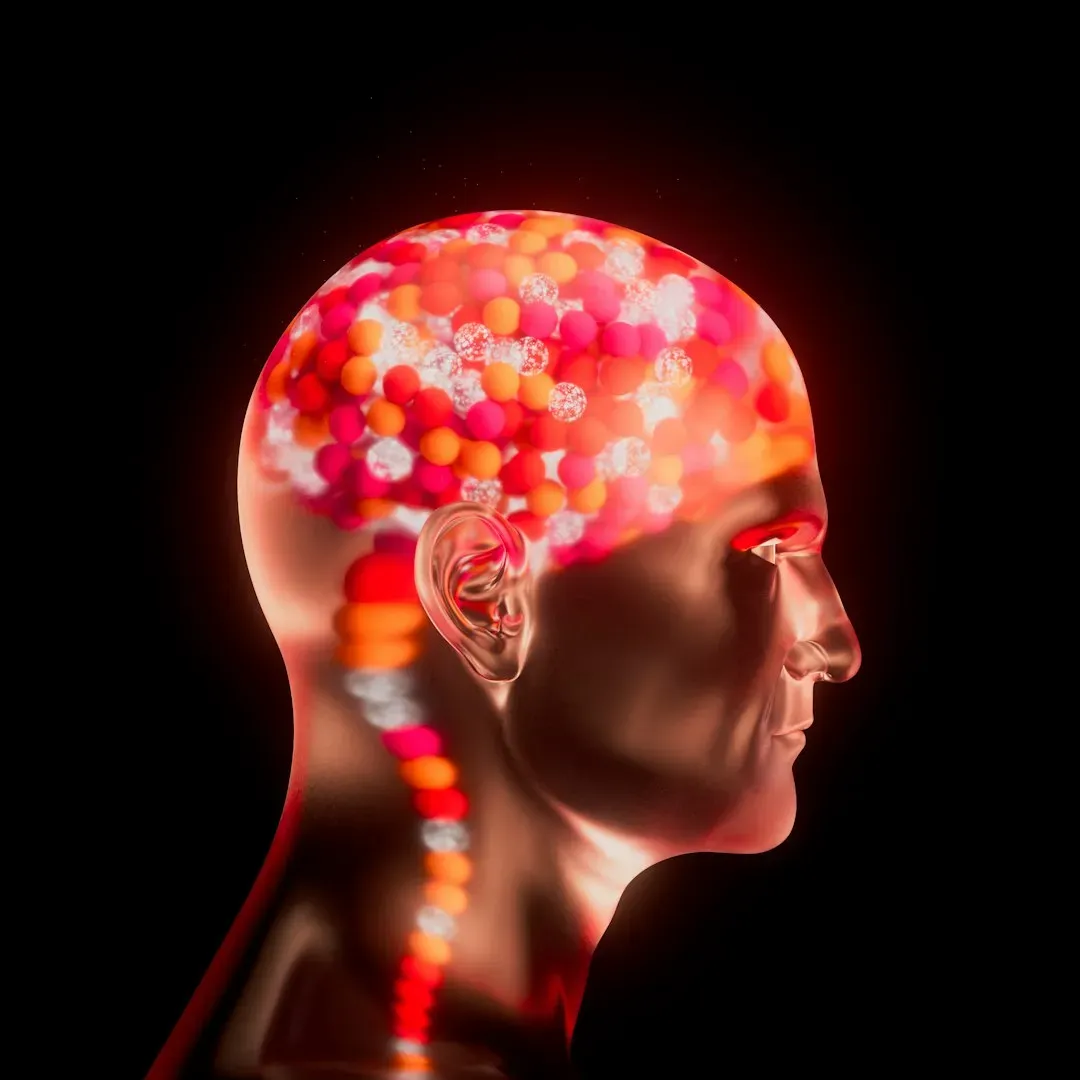
The million‑dollar question is whether we are stuck with this threat focus or can realistically shift it. Evolutionary psychology is clear that we do not simply erase millions of years of selection with a pep talk, but it also does not say we are helpless prisoners of our wiring. Human brains are plastic: we can learn habits, build environments, and create cultures that nudge attention in healthier directions, even if the raw bias toward threat never fully disappears.
Practices like gratitude journaling, savoring small positive experiences, and deliberately limiting exposure to outrage‑heavy content do not magically rewire our species, but they can change the daily balance of what our minds fixate on. It is a bit like knowing you have a car that naturally pulls to the left; you can still drive straight, but you have to keep your hands on the wheel. The goal is not to shut off our threat detectors – we still need them – but to stop letting them dominate the entire dashboard.
Living With a Threat‑Hungry Brain: A Personal and Cultural Choice

When I first learned about negativity bias and the evolutionary logic behind it, I felt oddly relieved. That stubborn focus on what might go wrong was not just my personality failing; it was a very old survival strategy doing its thing a little too enthusiastically in a new world. At the same time, accepting that explanation can be a trap if we use it as an excuse to marinate in fear and outrage as if we have no say in the matter.
My own opinion is that we owe it to ourselves – and honestly to each other – to recognize our threat‑hungry wiring and then refuse to let it be the sole driver of our culture. We can design news, platforms, workplaces, and personal habits that acknowledge danger without glorifying it, that balance warnings with real progress and possibility. Our ancestors survived by paying close attention to threats; we might thrive by learning when to gently look away. Knowing that your brain is biased toward bad news, what would you choose to pay attention to next?