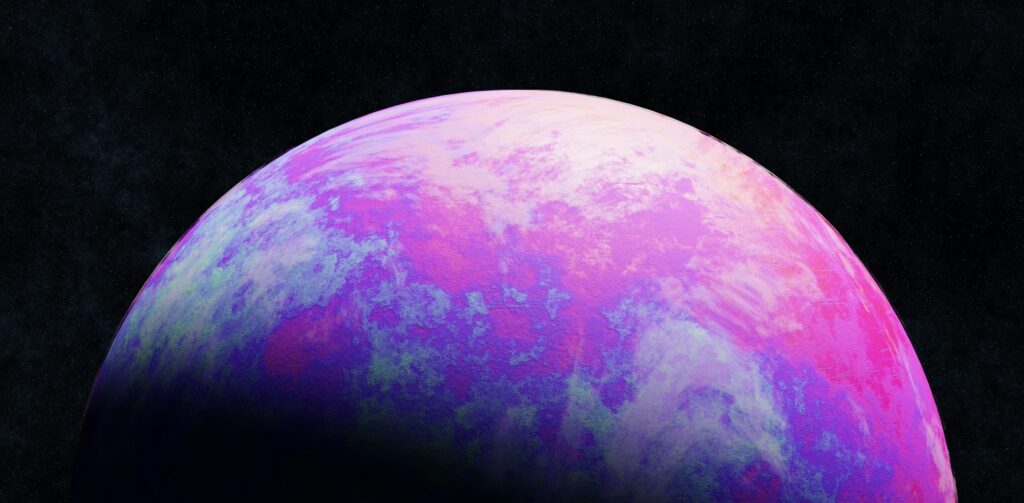
Imagine looking up at an ancient shoreline and seeing not lush green algae, but shimmering purple mats coating rocks and shallow seas. That sounds like science fiction, but some researchers think it might be part of Earth’s real story. Long before forests and grasslands, our planet may have been home to microorganisms that absorbed light with a purple pigment instead of the familiar green chlorophyll.
This idea is bold, still debated, and very much a work in progress. But it taps into something deep and strangely emotional: the realization that even the color of life we take for granted might be a historical accident, not an inevitability. If that is true, then our entire visual picture of “a living planet” could be far too narrow. Let’s dig into what this purple Earth hypothesis actually says, why some scientists take it seriously, and how it might change the way we search for life on other worlds.
A Strange Question: What If Life Was Purple Before It Was Green?
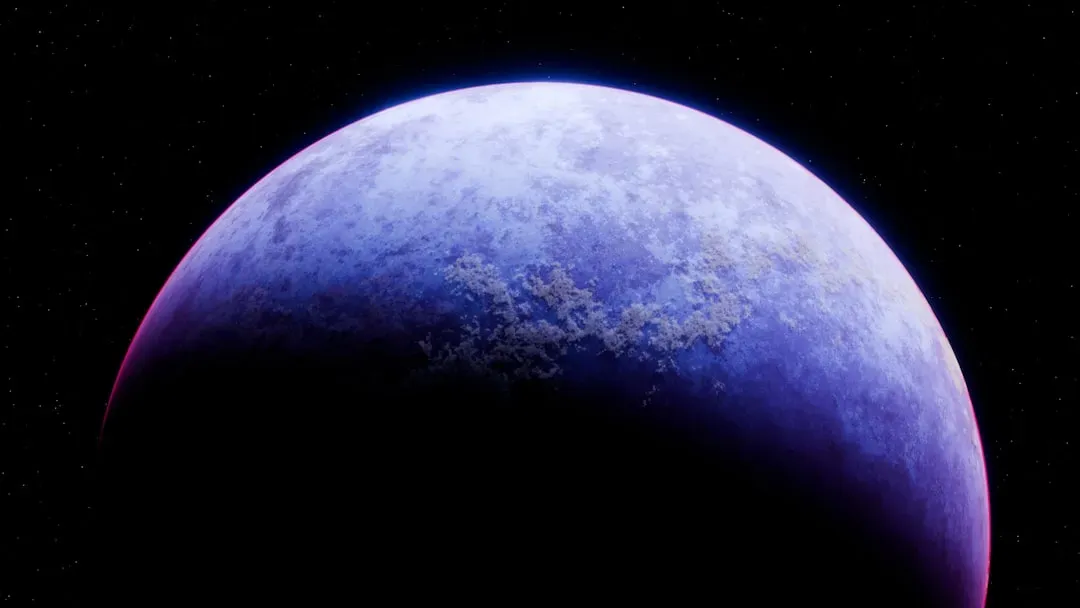
The purple Earth idea starts with a deceptively simple question: why is so much modern life based on green chlorophyll, and was it always that way? We tend to assume photosynthesis evolved once and spread outwards, painting the planet with green as it went. But evolution is messy and competitive. It is completely plausible that older light-harvesting systems existed before chlorophyll-based photosynthesis rose to dominance.
Some researchers suggest the earliest widespread phototrophs may have used a pigment called retinal, which tends to produce purple or magenta hues when packed into microbial membranes. In this scenario, early oceans and shorelines might have been colonized by purple-hued microbes exploiting sunlight in a different way than modern plants. Later, chlorophyll-based organisms could have outcompeted them, leaving only scattered traces of that purple world behind. It is a bit like imagining an early version of the internet that vanished, leaving only hints in old cables and dusty hardware.
The Science Behind Purple Pigments: Retinal and Light Harvesting
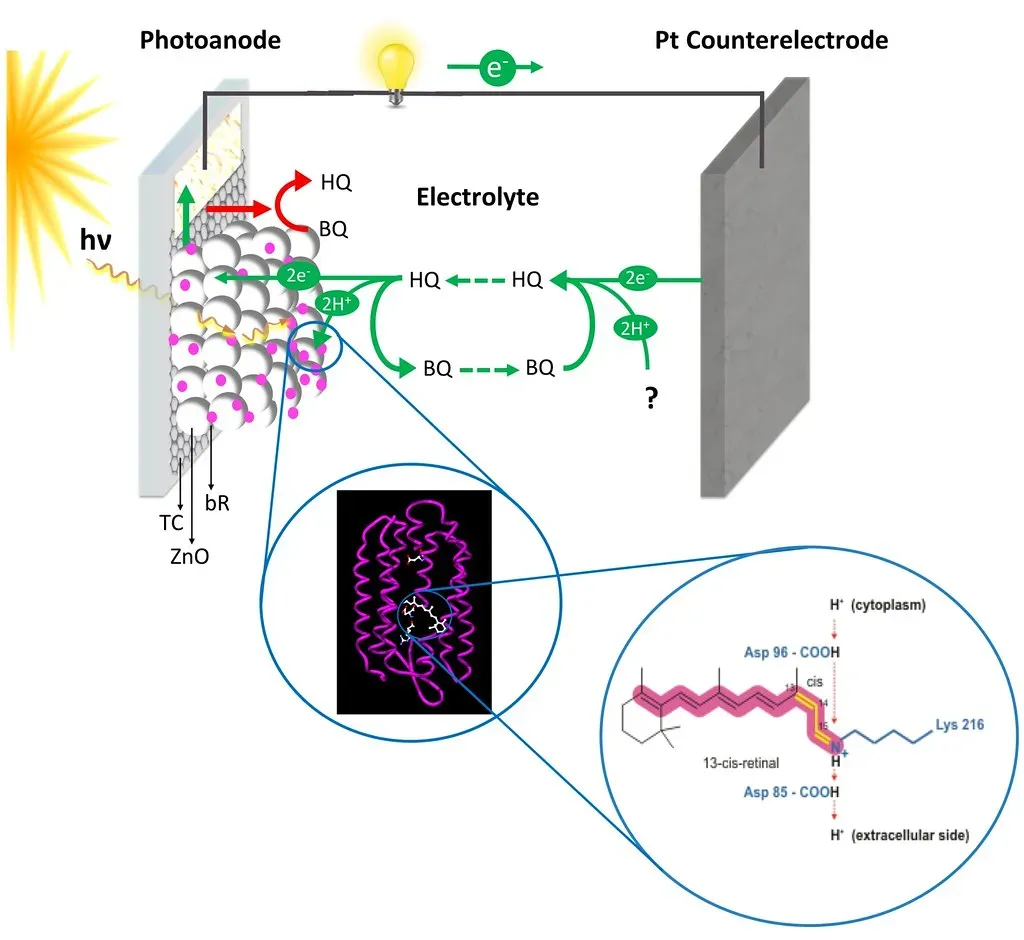
The purple Earth hypothesis leans heavily on a protein–pigment system many microbes still use today: retinal bound to light-driven proton pumps such as bacteriorhodopsin. Retinal is a form of vitamin A, and when combined with these proteins, it absorbs green-yellow light and appears purple because it reflects and transmits mostly red and blue. Crucially, this setup can generate a proton gradient across a membrane, which cells can tap to make energy, somewhat like a tiny biological battery.
Compared to chlorophyll-based photosynthesis, this system is simpler and possibly easier to evolve. It does not split water or produce oxygen; it just converts light into a usable energy gradient. That simplicity is one reason some scientists think retinal-based phototrophy might have appeared early in Earth’s history, when conditions were harsher and biochemical complexity was still ramping up. If you imagine evolution as a series of hacks before elegant solutions, retinal phototrophy feels like one of those clever early hacks.
Modern Microbes as Clues: Purple Life Still Exists Today
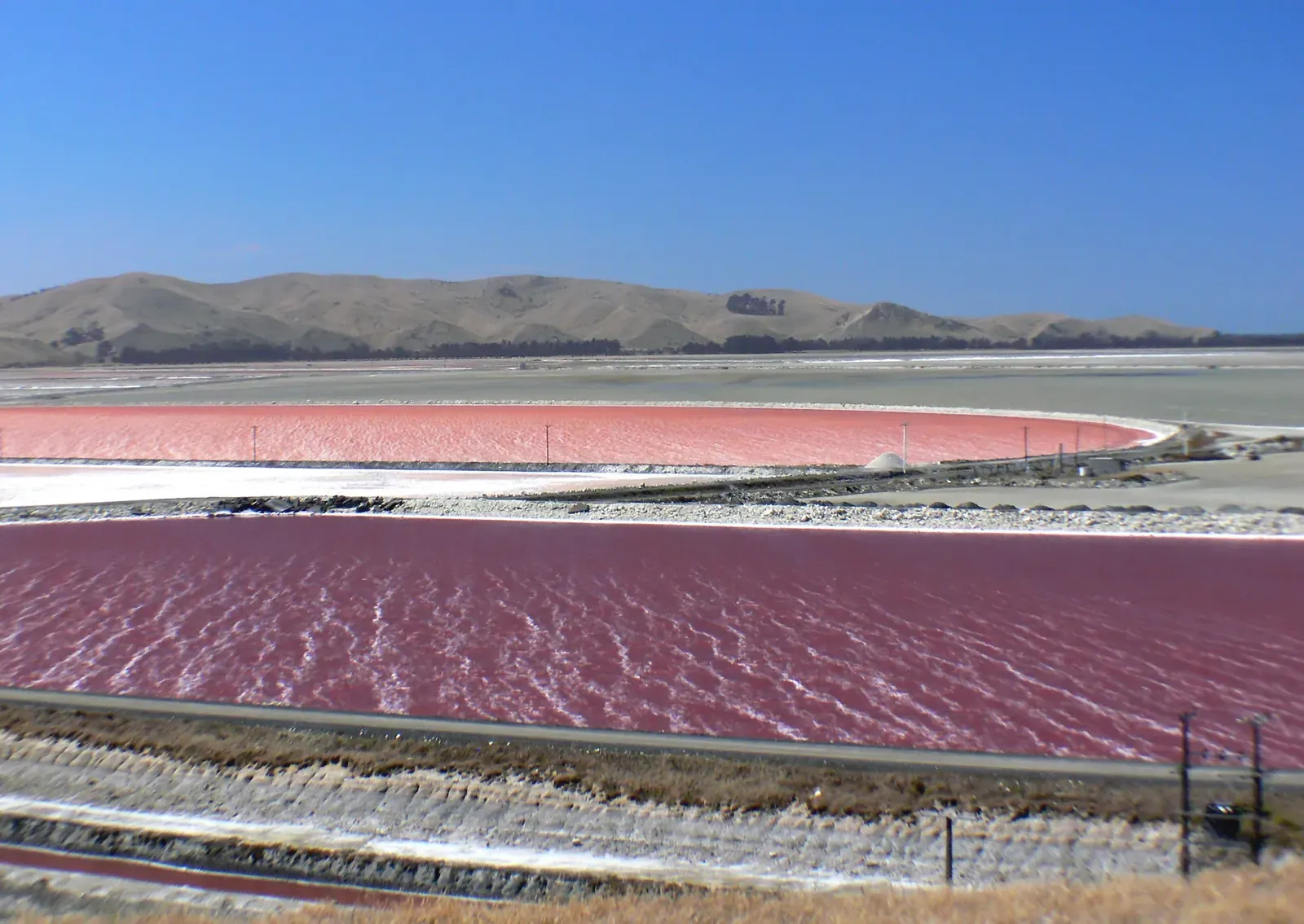
Purple life is not just a theoretical relic; it exists right now on Earth in extreme environments. Halophilic (salt-loving) microorganisms, especially certain archaea, use retinal-based pigments to harvest light in hypersaline lakes and salt ponds. When they bloom, these microbes can tint entire bodies of water pink, red, or purple, turning salt flats and evaporation ponds into surreal landscapes visible even from satellites.
These modern microbes are sometimes treated as living analogs of ancient life, not because they are identical to early organisms, but because they show that simple, light-driven energy systems using purple pigments are viable. Their success in marginal environments hints that similar organisms could have thrived when Earth’s oceans were chemically different and oxygen was scarce. I remember staring at photos of bright pink salt ponds for the first time and thinking, with a slight chill, that we might be looking at an echo of the distant past.
Why Early Earth Was Ripe for a Purple Phase
The environmental conditions on early Earth were very different from today and may have favored retinal-based phototrophs. The atmosphere had little to no oxygen for a long stretch of time, ultraviolet radiation at the surface was intense, and the chemistry of the oceans was still settling into place. In this rough environment, a relatively straightforward pigment system that did not require complex electron transport chains might have been easier to sustain.
There is another twist: chlorophyll and retinal absorb different parts of the light spectrum. Retinal tends to grab greenish light, while chlorophyll is better at red and blue. On a young planet with a hazy atmosphere and different scattering properties, retinal-based systems might have had a natural sweet spot in terms of available light. Later, as the atmosphere and oceans changed, chlorophyll-based organisms could have found new spectral niches and started outcompeting their purple predecessors, like a better-designed solar panel that slowly pushes out an older model.
From Purple to Green: How Chlorophyll May Have Taken Over
Even if purple microbes came first, that does not mean they were destined to keep ruling the surface. Chlorophyll-based photosynthesis has a powerful advantage: it can be coupled to oxygenic photosynthesis, which splits water and releases oxygen. That opened up an enormous new energy source, allowing organisms to tap into virtually endless supplies of water and scale up their metabolism dramatically. Over long timescales, those advantages could easily overwhelm earlier, simpler systems.
As oxygenic photosynthesizers spread, they did not just compete for light; they also transformed the atmosphere through what we now call the Great Oxidation Event. Rising oxygen would have reshaped ecosystems, stressed many anaerobic organisms, and opened new possibilities for more complex life. In that shifting landscape, green phototrophs tied to chlorophyll would naturally become more prominent. Purple life, in this picture, becomes the once-dominant early trend that later gets pushed into more specialized corners, a bit like how early smartphones erased older mobile gadgets that once felt cutting-edge.
Can We Actually Prove Early Earth Was Purple?
Here is where the story gets tricky: ideas about a purple Earth are still hypotheses, not established fact. Rocks from billions of years ago are incredibly altered, and direct pigment evidence almost never survives. Instead, scientists rely on indirect signatures, like fossilized microbial mats, certain chemical fingerprints, or models of how different pigments interact with sunlight and planetary atmospheres. Those tools can suggest what might be plausible, but they cannot easily shout a clear answer.
Some researchers have explored how a purple biosphere would change the spectrum of light reflected by a planet, comparing that with what we know about Earth’s deep past. Others look for organic remnants or unusual molecular structures in ancient sediments that might hint at now-lost pigment systems. So far, the evidence is intriguing but far from decisive. It is more like seeing faint footprints in very old mud: you can tell something walked through, but you are still arguing about the creature’s exact shape.
Why Astronomers Care: Purple Worlds as Alien Biosignatures
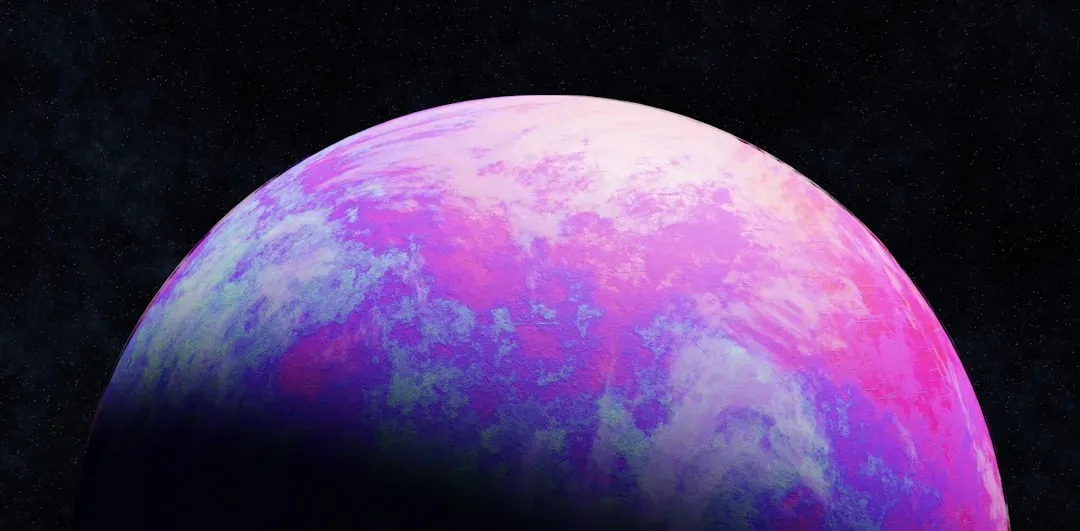
One of the most exciting parts of the purple Earth idea is how it reshapes the search for life beyond our planet. If a thriving biosphere does not have to be green, then telescopes looking at exoplanets should not only be tuned to expect chlorophyll-like signatures. A world dominated by retinal-based life could reflect and absorb light differently, giving it a distinct color fingerprint when we analyze its spectrum from afar. In other words, a purple planet with active life might look very different from the Earth-like template we have in mind.
This pushes astronomers and astrobiologists to think more broadly about what a “living” planet looks like in data. Instead of hunting for one specific spectral dip associated with chlorophyll, they are building catalogs of possible biosignatures tied to different pigments and metabolisms. Personally, I find that shift refreshing. It is a reminder that our own history is just one run of the experiment, and there is no cosmic rule that says alien forests, if they exist, have to resemble the vegetation you see on your weekend hike.
How This Changes Our Picture of Life’s Story
If the purple Earth hypothesis, even in partial form, turns out to be close to the truth, it forces us to rewrite some mental images we hold about life’s trajectory. Instead of a relatively smooth green rise from simple photosynthesis to complex plants, we get a layered history: early non-oxygenic phototrophs, potential purple-dominated phases, then the massive disruption brought on by oxygenic photosynthesis and the eventual flourishing of green plants. That story is less tidy but far more interesting, and honestly, more in line with how evolution tends to behave.
It also nudges us to be humble about what seems “normal.” To us, a blue-and-green Earth feels obvious and inevitable, but it might be just one snapshot in a long color-changing timeline. There could have been eras where standing on the surface, if you could have, would feel almost alien compared with today. That thought sticks with me: we live on a world that has reinvented itself multiple times, and we are only just beginning to understand the visual and biological dramas that played out before we arrived.
Opinionated Conclusion: A Purple Past We Should Take Seriously
In my view, the purple Earth hypothesis is valuable not because it is already proven, but because it challenges our assumptions in a healthy way. It reminds us that evolution is opportunistic, that simple solutions can precede complex ones, and that the palette of life’s colors is not fixed. Dismissing it outright because the evidence is incomplete feels premature; treating it as absolute truth would also be reckless. The right stance is a curious, critical openness, where we keep testing, modeling, and looking for better clues in ancient rocks and modern microbes.
If we let it, this idea widens our perspective on both Earth and the universe. It suggests that when we point powerful telescopes at distant planets, we should expect surprises – not just green worlds like ours, but maybe crimson, golden, or yes, purple biospheres running on chemistry we have only glimpsed on the fringes of our own planet. Whether early Earth really glowed with a purple hue or not, the hypothesis pushes science to be bolder and less Earth-centric. And honestly, isn’t that exactly what we need when we are trying to understand how strange and varied life in the cosmos might be?