
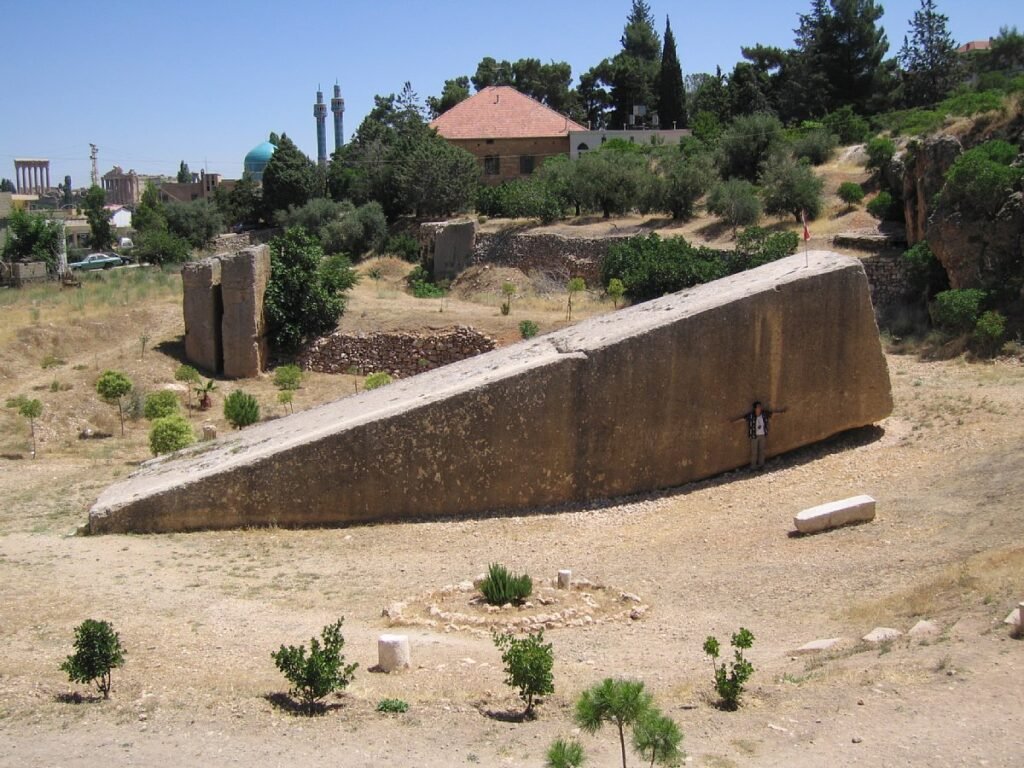
Most people assume the ancient world’s engineering peaked with clever ramps and a lot of rope. Line up the actual tonnage left behind at sites from Lebanon to Bolivia, though, and that story falls apart fast. Modern cranes still struggle to match what’s sitting in a single Baalbek quarry, and no papyrus, tablet, or stone carving has ever fully explained how any civilization moved these blocks, let alone lifted them.
Archaeologists have theories. Engineers have simulations. Nobody has a confirmed method. What follows is the actual weight data behind 14 of history’s heaviest stone blocks, and the gap between what we know and what anyone can prove only gets wider the further down this list you go.
#14 – Easter Island’s Moai Are Heavier Than a Loaded Semi-Truck
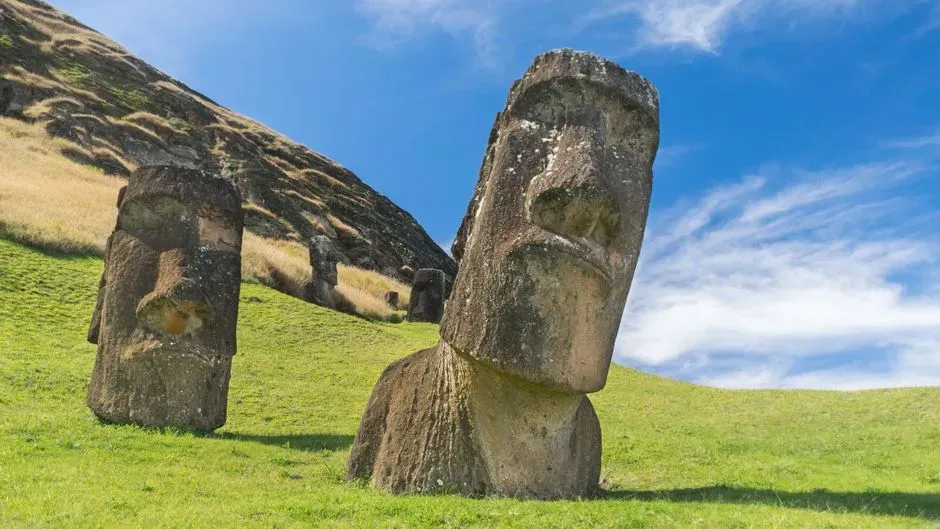
The Moai of Easter Island get treated like a curiosity, but the math on these statues is no joke.
The largest Moai on Easter Island weighed between 70 and 86 tons, and the tallest completed statue, nicknamed Paro, was hauled several miles across volcanic terrain before ever being raised upright. Most people picture these statues being carved and immediately planted – they weren’t. Some were dragged for miles over uneven, rocky ground using nothing more than rope, wooden sledges, and raw manpower, according to most reconstructions of the process.
What actually gets overlooked is the finishing step. Once a Moai reached its platform, it still had to be tilted from horizontal to vertical – a maneuver that put tons of unbalanced stone on a fulcrum point with zero margin for error. There’s still no confirmed lifting technique for the final tilt-up stage. And the mystery only gets heavier from here.
#13 – The Great Pyramid’s Roof Slabs Sit 80 Tons Above Nothing
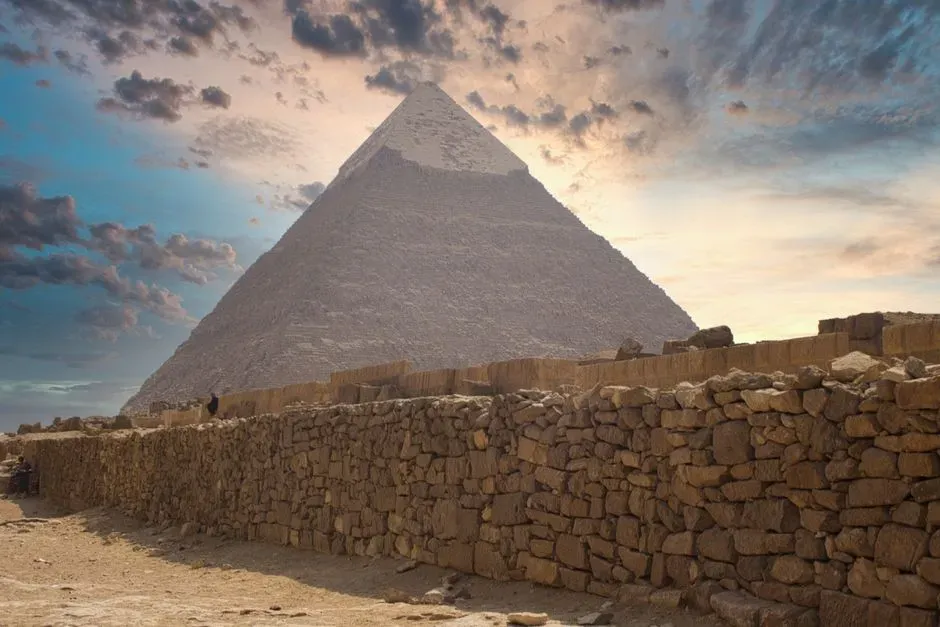
The King’s Chamber inside the Great Pyramid of Giza isn’t just a room – it’s a physics problem.
The largest granite slabs on the burial chamber weigh 80 tons, and they were quarried at Aswan and floated roughly 500 miles down the Nile before being hauled up the pyramid’s internal ramps. These aren’t decorative stones. They form the flat roof directly above the king’s burial space, distributing an almost unimaginable amount of downward pressure with zero steel reinforcement.
Here’s the detail that rarely makes it into the textbooks: these slabs were placed near the top third of the pyramid, not the base. That means workers didn’t just move 80-ton blocks – they moved them uphill, on a diagonal, hundreds of feet above ground level. No crane blueprint, no pulley diagram, and no worker testimony from the era has ever definitively explained this stage of construction. That mystery doesn’t get easier at #12 – it gets more repetitive, and somehow more impressive.
Fast Facts
- Weight per slab: roughly 80 tons
- Quarry origin: Aswan, about 500 miles away by river
- Placement: near the pyramid’s upper third, above the King’s Chamber
- Material: granite, chosen for its strength over softer local limestone
#12 – A Forgotten Pharaoh’s Pyramid Hides 90-Ton Roof Beams
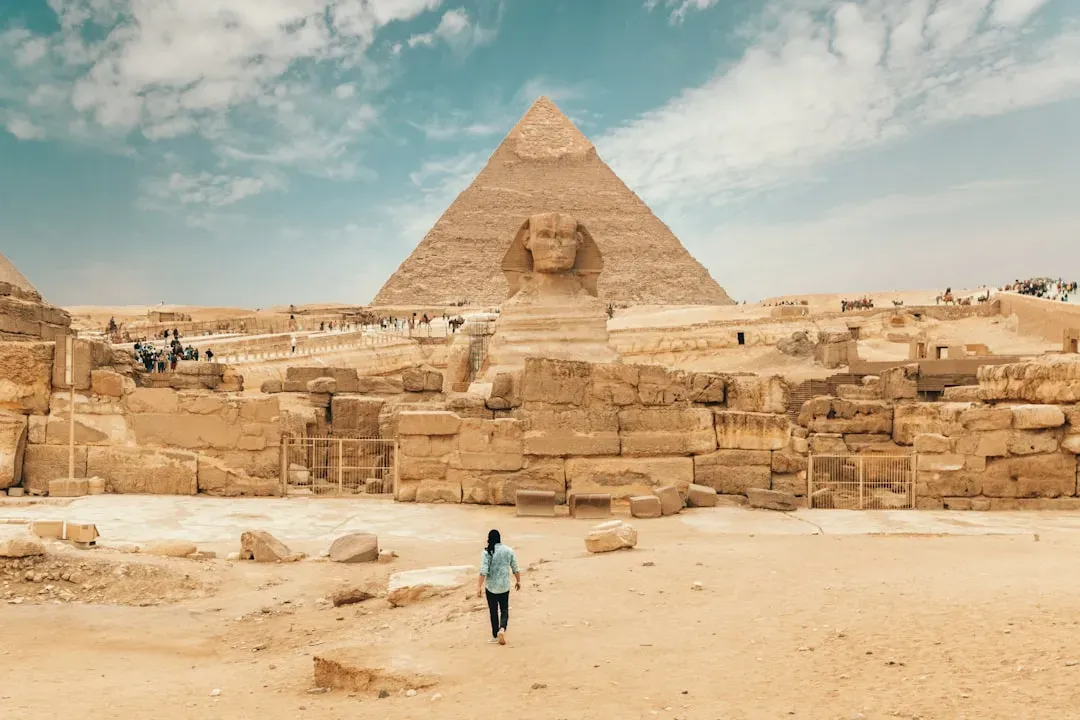
Nyuserre Ini isn’t a household name, but his pyramid complex quietly holds one of Egypt’s most underrated engineering feats.
Twelve megalithic limestone beams, each 10 meters long and weighing 90 tons, form the roof of the burial chamber and antechamber. That’s a dozen separate 90-ton pieces, not one showpiece stone – meaning the labor and coordination required wasn’t a single miracle lift, but a repeated, sustained operation across an entire chamber system.
Most tourists never hear about this pyramid because it’s overshadowed by Giza, but engineers who study ancient load-bearing design consider it just as puzzling. Repeating a 90-ton lift twelve times in a row, with each beam needing to sit flush against the last, suggests a level of organizational precision that doesn’t match the simplistic “slaves with ropes” narrative most people were taught in school. Ireland, of all places, is about to make Egypt look almost tame.
#11 – Ireland’s Browne’s Hill Dolmen Balances 100 Tons on Three Legs
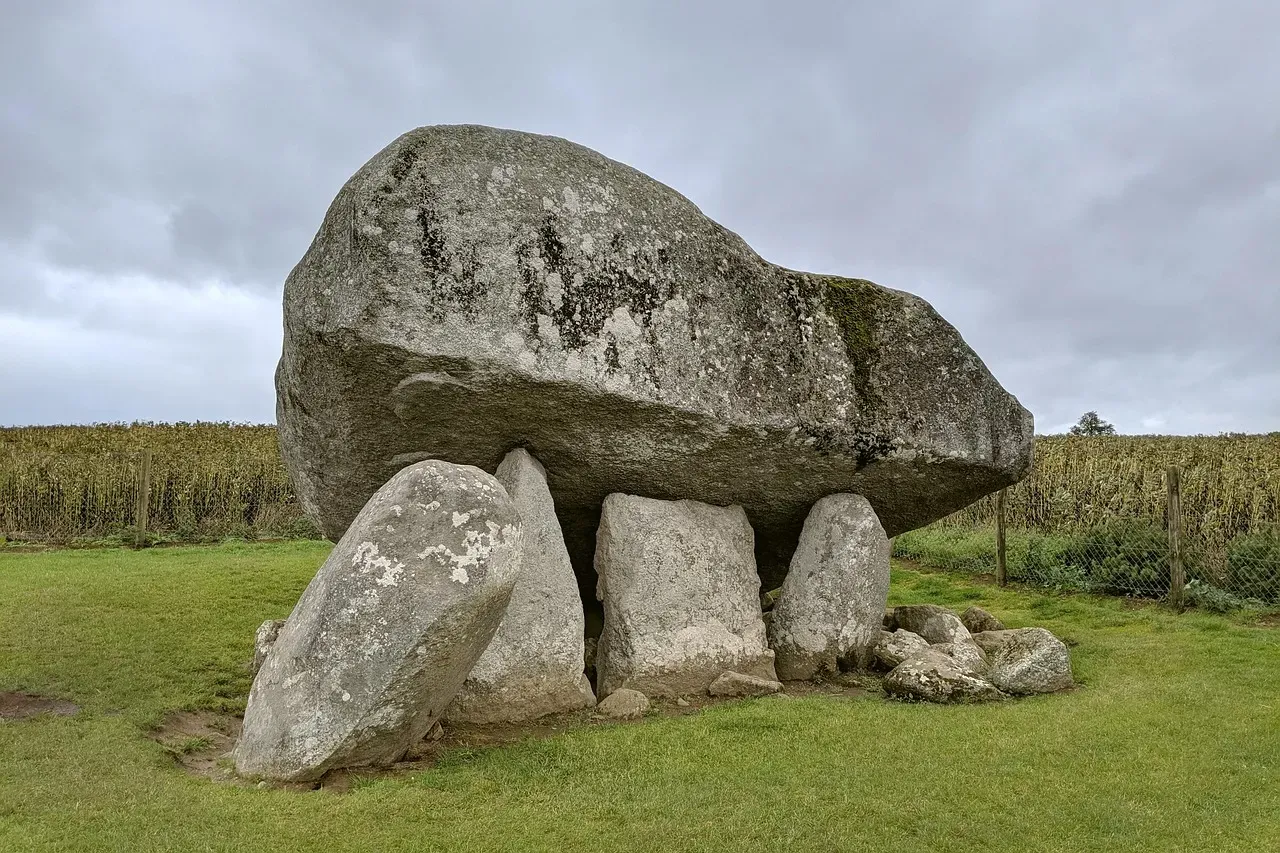
Forget Egypt for a second – Ireland has its own unresolved megalithic mystery sitting quietly in a County Carlow field.
The capstone of Browne’s Hill Dolmen weighs approximately 100 tons and dates back to around 2500 BCE, balanced on just three upright support stones. There’s no mortar, no metal fastening, and no written record from the Neolithic builders explaining how they lifted a 100-ton capstone onto three narrow points without crushing them.
This is where the story gets genuinely uncomfortable for conventional timelines. 2500 BCE predates the wheel’s widespread use in the region, predates metal tools capable of leveraging stone at this scale, and predates any organized state with the manpower records we associate with pyramid-building Egypt. Whoever moved this capstone did it with technology historians still can’t fully name. Compared to what’s waiting in Peru, this dolmen suddenly looks almost modest.
#10 – Ollantaytambo’s Wall of Six Monoliths Weighs More Than a Blue Whale, Combined
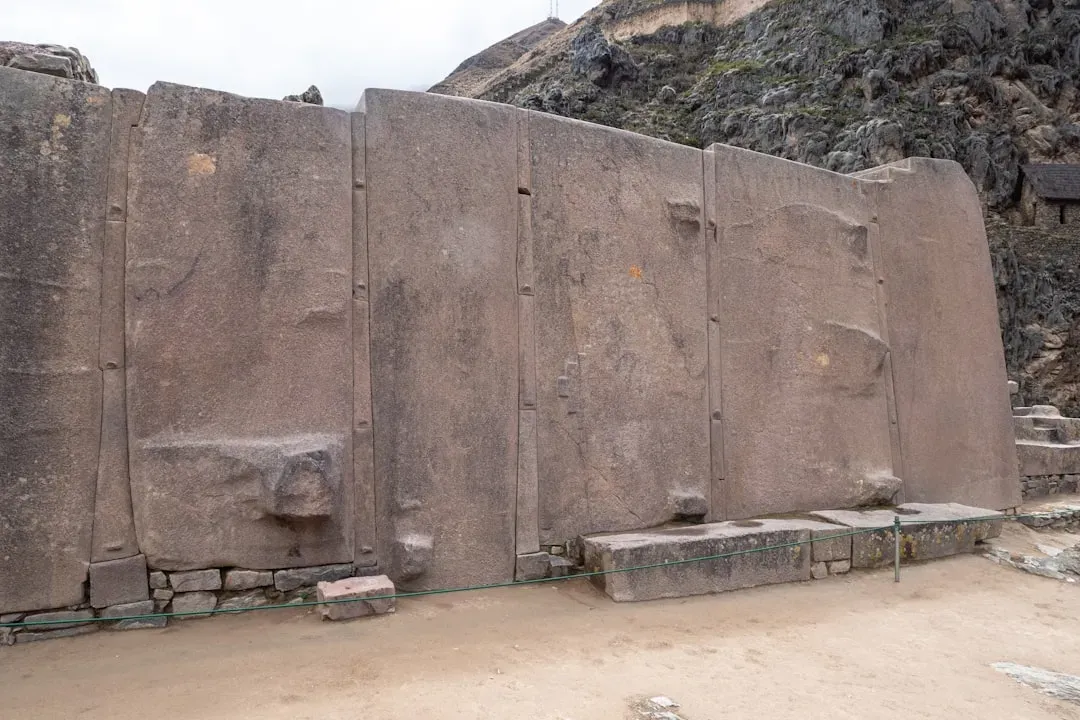
High in the Peruvian Andes, the Inca left behind a wall that shouldn’t exist without modern machinery.
At the Sun Temple in Ollantaytambo, the blocks in the “Wall of the Six Monoliths” weigh between 50 and 100 tons and are made of hard andesite stone. These aren’t loose boulders stacked for effect – they’re precisely fitted megaliths, set at nearly 9,000 feet of elevation, on a steep hillside quarry miles from the final site.
Here’s the opinion most tour guides won’t say out loud: the “ramps and ropes” explanation doesn’t hold up on this terrain. Ollantaytambo’s quarry sits across a river valley, on a mountainside with grades that make simple sledge-dragging nearly impossible with known Inca-era rope technology. Some engineers argue the transport route alone deserves more scrutiny than the carving itself. As heavy as this wall is, it’s still not the heaviest stone the Andes ever gave up.
#9 – A Pharaoh’s Sarcophagus Outweighs a Fire Truck by 100 Tons
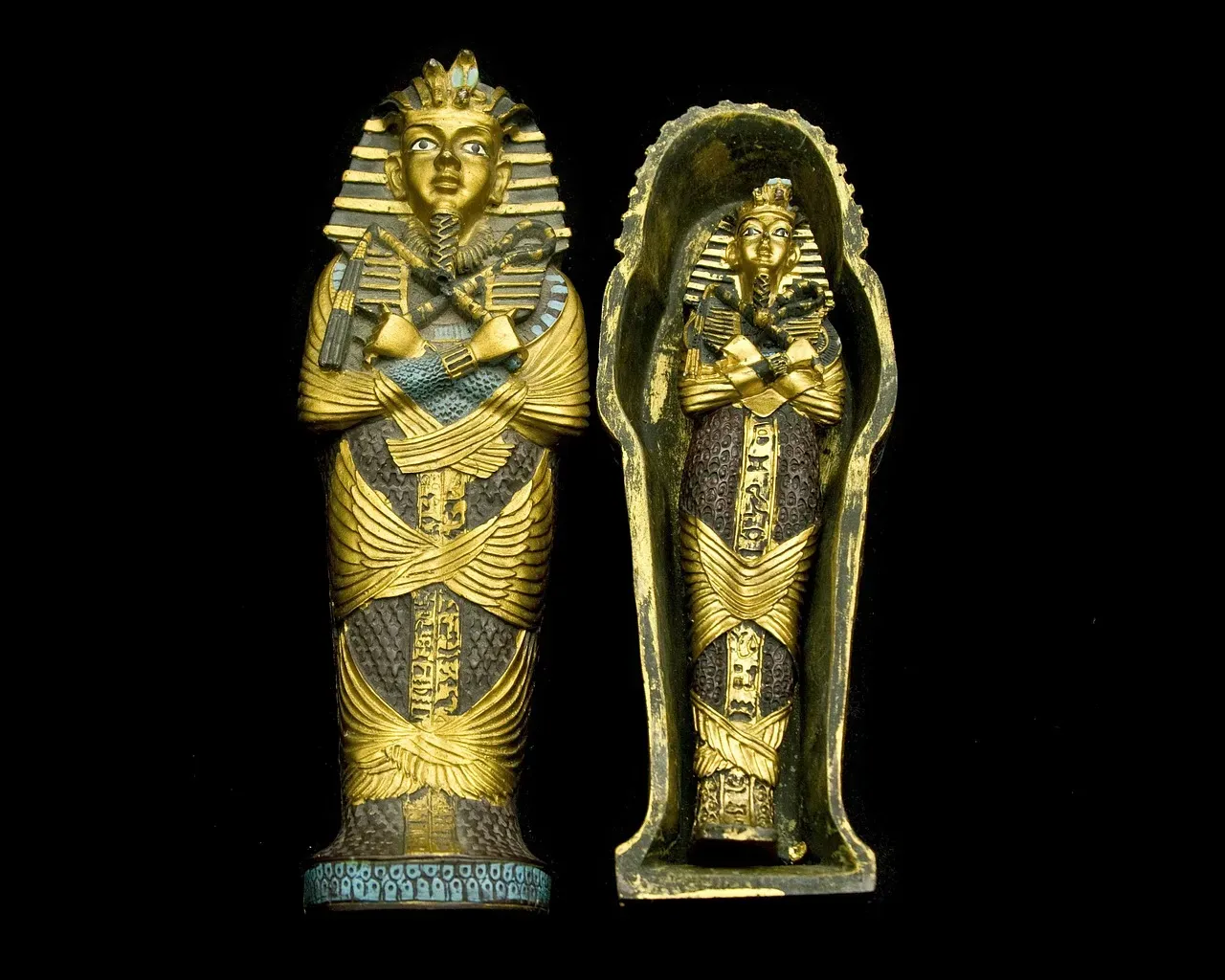
Buried inside the Pyramid of Amenemhat III at Hawara sits a burial chamber that redefines what “single piece” construction can mean.
The Sarcophagus of Amenemhet III weighs 110 tons and is carved from red quartzite, one of the hardest stones ancient Egyptian craftsmen worked with. Quartzite doesn’t cut like limestone – it’s notoriously brittle and prone to shattering under uneven pressure, which makes carving a burial chamber from a single 110-ton block an entirely different category of risk.
Most people assume sarcophagi were small, human-sized boxes – this one blows that assumption apart. The chamber had to be lowered into position without a single crack forming across a stone that dense. No surviving record explains the lowering mechanism, and quartzite’s tendency to fracture under stress makes the achievement even harder to rationalize using rope-and-ramp theories alone. Still, this sarcophagus is featherweight next to what Bolivia has hiding underground.
Quick Compare
- Sarcophagus of Amenemhet III: about 110 tons
- A fully loaded fire truck: roughly 15 to 20 tons
- That’s nearly six times heavier than the vehicle it’s often measured against
- Material risk: quartzite is prone to shattering, unlike softer limestone
#8 – Bolivia’s Puma Punku Hides a 131-Ton Slab With Machine-Like Precision
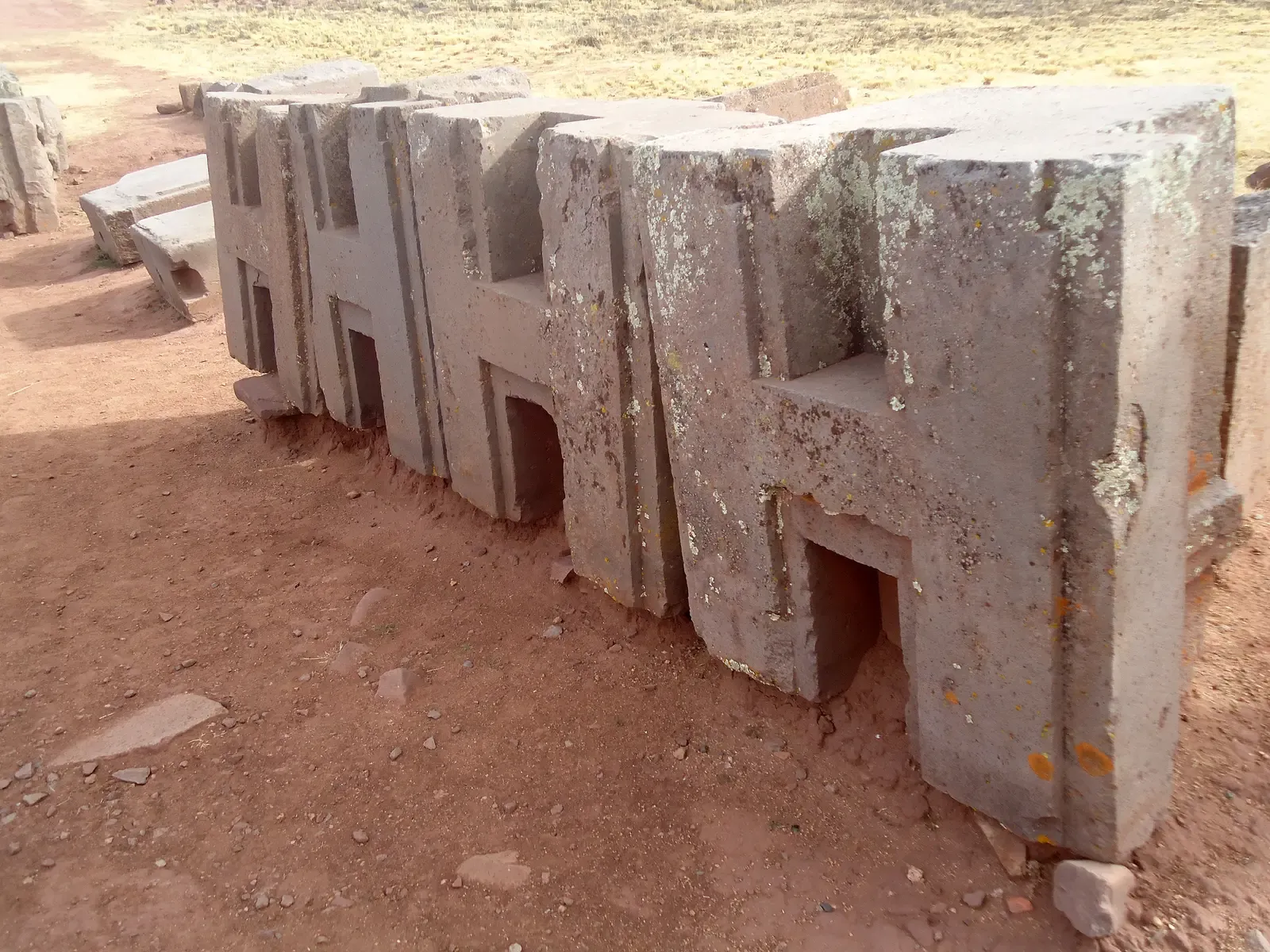
Puma Punku gets dismissed as fringe theory bait, but the actual measured data is legitimately strange.
The largest of Pumapunku’s stone blocks is 7.81 metres long, 5.17 metres wide, averages 1.07 metres thick, and is estimated to weigh about 131 tonnes. That’s a single slab, cut from sandstone quarried roughly six miles away, transported uphill before being fitted into place with joints so tight that modern masons still study them.
Here’s the controversial part: estimates for this site vary wildly, from 140 tons all the way up to inflated claims of 800 tons, depending on which researcher you ask. The wide gap itself tells you something – this isn’t a site where consensus has settled comfortably, and that uncertainty keeps drawing serious archaeologists back for more precise measurements decades after its initial discovery. Puma Punku is strange, but Peru’s fortress walls take strange to an entirely different scale.
#7 – Sacsayhuamán’s Walls Use Stones Heavier Than Two School Buses
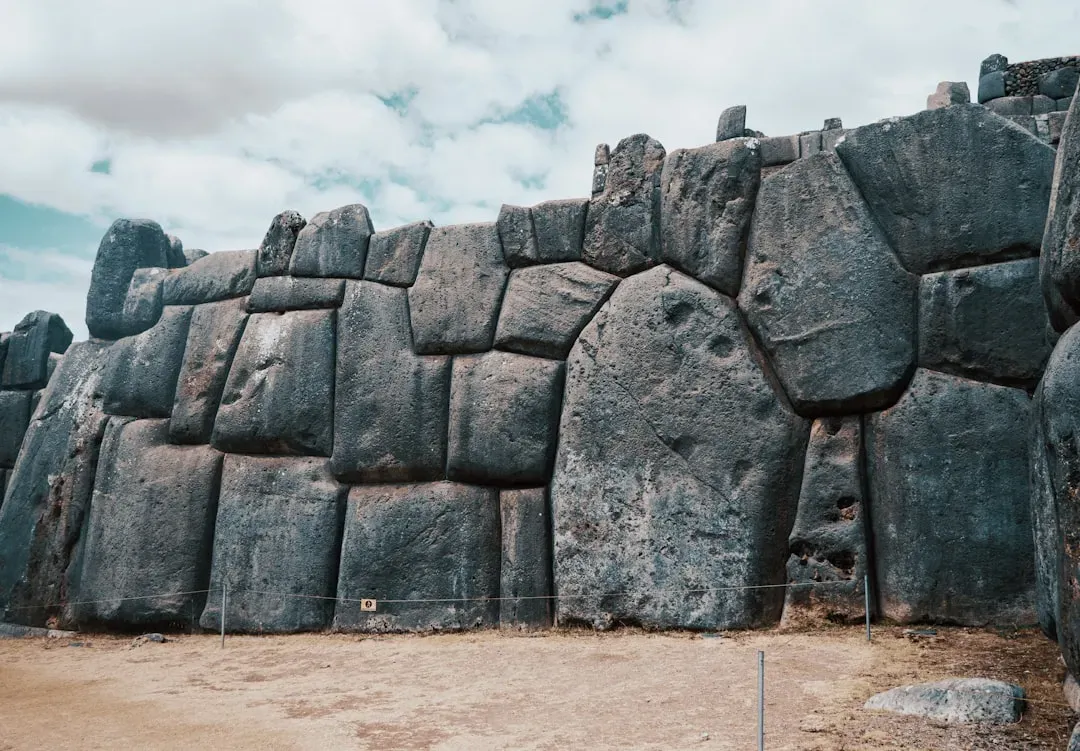
Above Cusco, Peru, the Inca fortress of Sacsayhuamán stacks stones that seem to defy the tools available at the time.
The stones used in the construction of the terraces at Saksaywaman weigh up to 200 tonnes, among the largest used in any building in prehispanic America. These aren’t roughly stacked boulders – they’re cut with polygonal precision so exact that a knife blade reportedly can’t slide between the joints.
- No mortar was used anywhere in the wall system.
- The largest stones sit at the base, tapering to smaller stones higher up.
Most textbooks credit simple log ramps and levers for this, but the precision-to-weight ratio here is still debated among specialists. Spanish chronicler Pedro Sancho reportedly described the fortress as looking “built by demons” simply because of the stones’ size – a reaction that says a lot about how alien this achievement looked, even to eyewitnesses closer to the era. As impressive as Sacsayhuamán is, Egypt is about to answer with a 700-kilometer road trip.
#6 – Egypt’s Colossi of Memnon Traveled 700 Kilometers at 700+ Tons Each
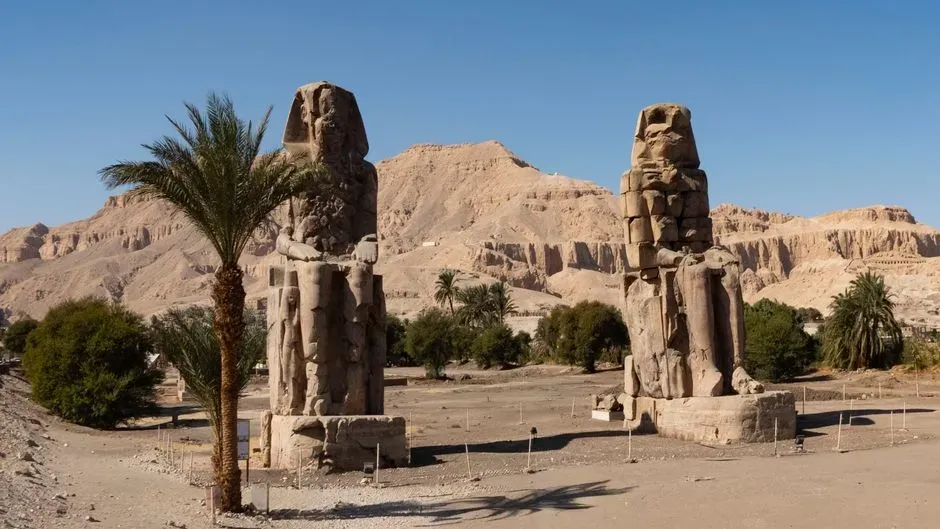
Two seated statues near Luxor represent one of the longest-distance heavy transport jobs in the ancient record.
Two colossal statues of Amenhotep III, known as the Colossi of Memnon, each weighed more than 700 tons and were moved an overland distance of 700 kilometers. That’s not a short haul from a nearby quarry – that’s a cross-country transport operation, over sand, uneven terrain, and likely partial river routes, using nothing but manpower and organizational logistics.
This is the detail that should get more attention: 700 kilometers is roughly the distance from New York City to Cleveland. Moving a 3.5-ton block that far would be impressive. Moving something the weight of two loaded cargo jets, twice, is a logistics feat modern engineers still model out of pure curiosity. No definitive route map or transport log has survived to confirm exactly how it was done. Distance is one kind of flex – Baalbek is about to show what raw mass alone can do.
#5 – Baalbek’s Trilithon Stones Weigh as Much as Five Blue Whales Each
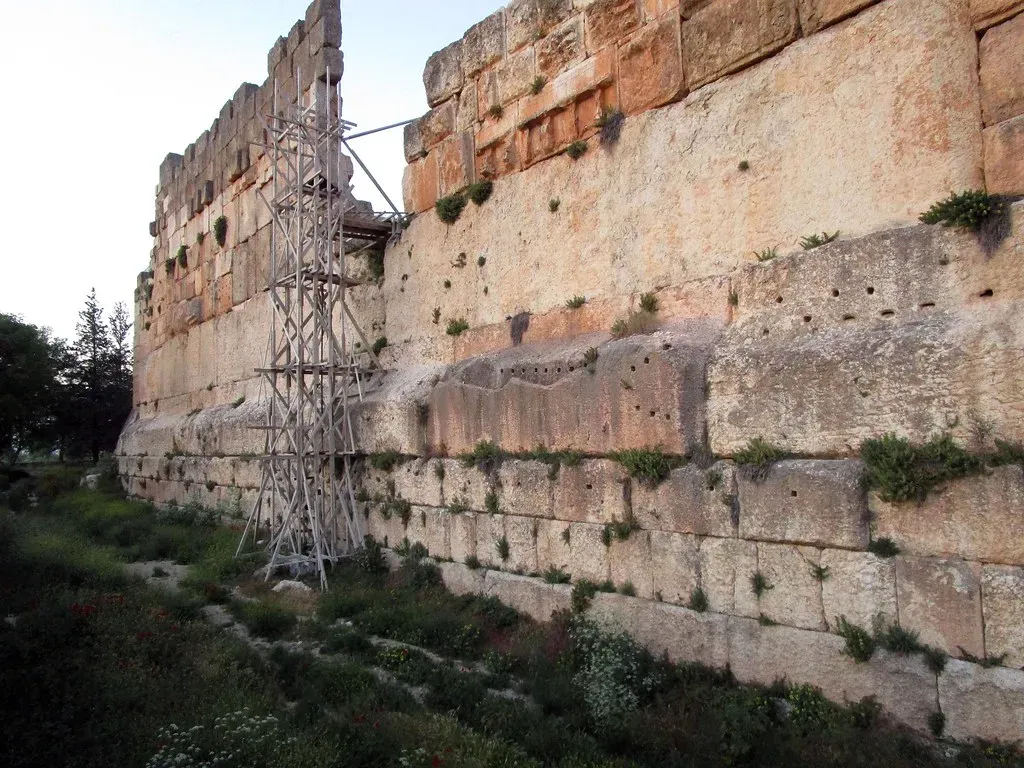
Beneath the Roman Temple of Jupiter at Baalbek sits a trio of stones so large that modern engineers still reference them as a benchmark.
Three stones known as the Trilithon are each roughly 19 meters long, 4.2 meters high, and 3.6 meters thick, weighing around 750 to 800 tonnes. These three blocks alone form part of the podium wall of the temple complex, sitting roughly seven meters above ground level – meaning they weren’t just moved, they were lifted and set at height.
Here’s an opinion that tends to spark arguments: attributing this entirely to Roman engineering undersells how genuinely unresolved the lifting method remains. Ragette’s architectural analysis supports Roman construction, but no consensus exists on the specific transport or lifting technique used, and the debate over whether Rome built atop a pre-existing foundation continues today. As massive as the Trilithon is, it’s not even the heaviest stone quarried at that same site.
Why It Stands Out
- Three stones, each weighing roughly 750 to 800 tonnes
- Set nearly seven meters above ground – lifted, not just dragged
- No settled consensus on whether Rome built atop an older foundation
- Still used by modern engineers as a real-world heavy-lift benchmark
#4 – The Ramesseum’s Broken Colossus Was a 1,000-Ton Single Block
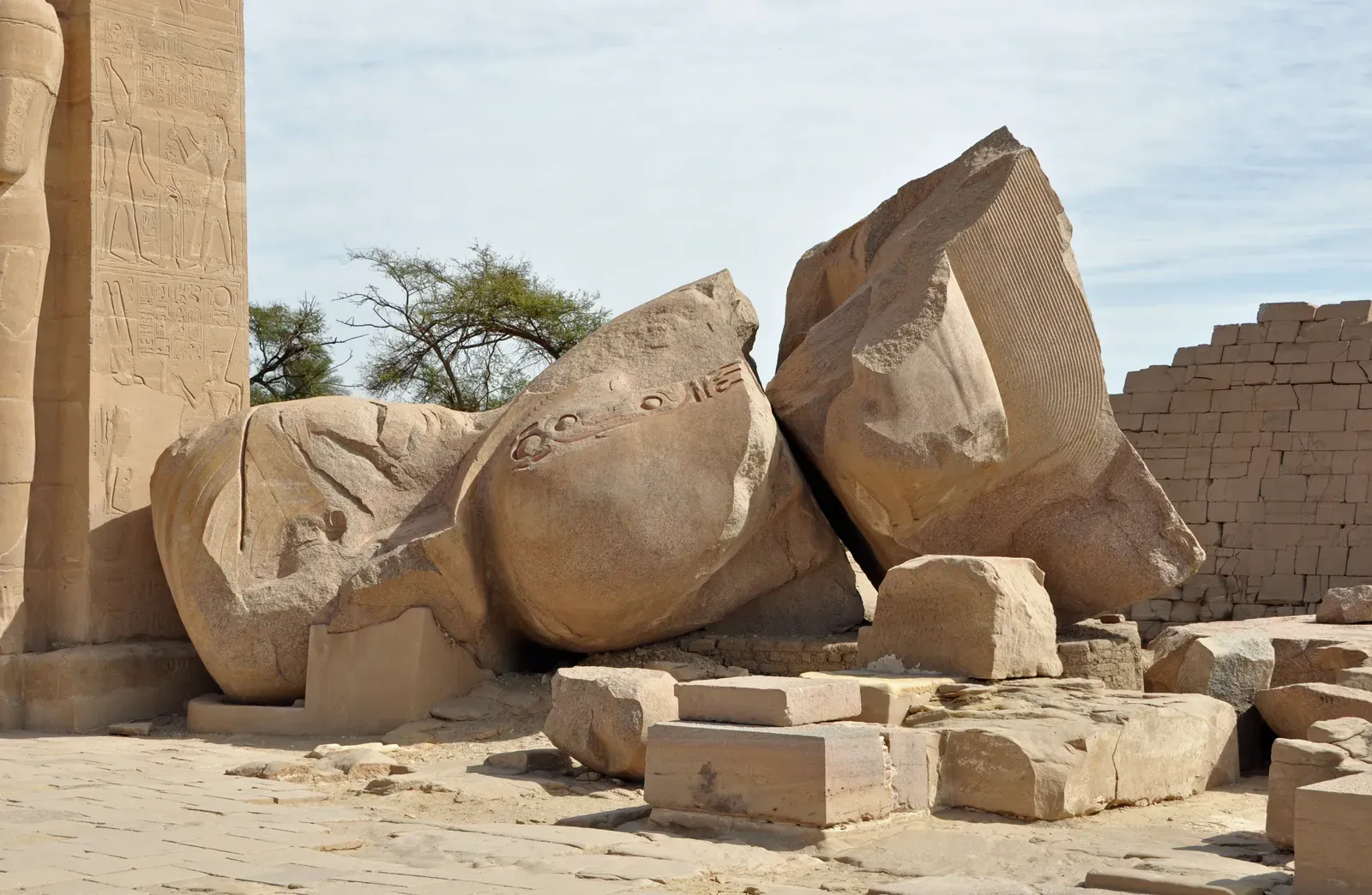
In Luxor, the shattered remains of a single statue tell one of Egypt’s most jaw-dropping stories of ambition outpacing logistics.
The toppled torso of the Ozymandias colossus, carved from red granite, originally stood about 20 meters high and weighed roughly 1,000 tons. The granite was quarried at Aswan and transported over 100 miles to Thebes – an unheard-of distance for a single monolithic piece of that mass, especially one meant to sit upright rather than lie flat.
Most visitors walk past the fallen fragments without realizing they’re looking at what was once the single heaviest statue ever raised in ancient Egypt. The statue’s collapse – likely from an earthquake – means we’ll never see it standing, but the surviving base and torso fragments alone are large enough to confirm the thousand-ton estimate independently. Even a thousand-ton statue doesn’t crack the top three on this list.
#3 – Aswan’s Unfinished Obelisk Would Have Weighed 1,200 Tons
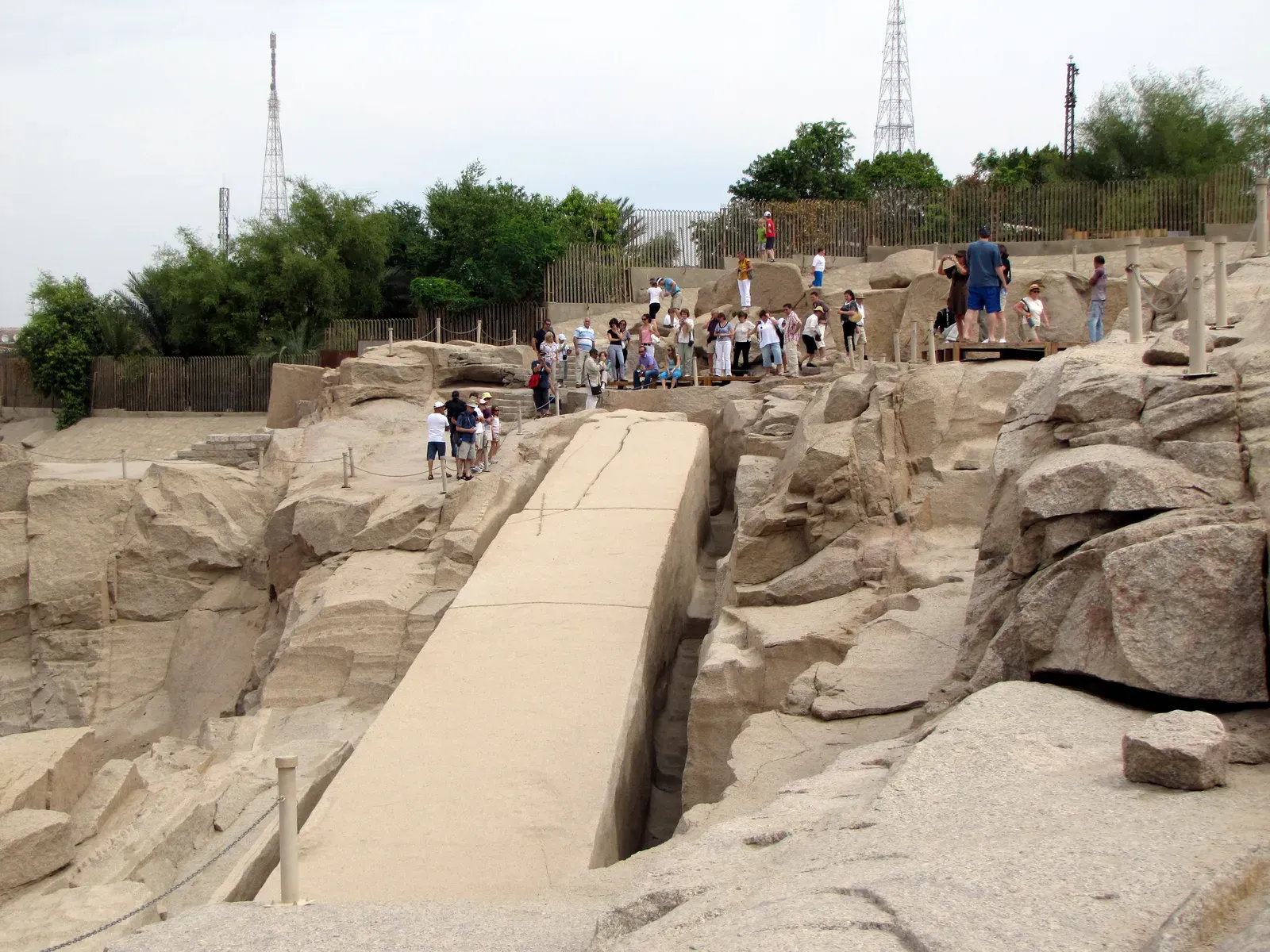
Sometimes the most revealing artifact is the one that was never finished. Aswan’s Unfinished Obelisk is exactly that.
The Unfinished Obelisk in Aswan weighs approximately 1,200 tons and measures about 42 meters long, carved from granite during the reign of Hatshepsut. A crack formed in the granite during the carving process, and the project was abandoned mid-quarry – which is actually the reason we know so much about ancient Egyptian quarrying methods today.
The unfinished state is the real gift here. Because it was never removed from the bedrock, researchers can study the exact tool marks, wedge holes, and cutting technique used to separate a 1,200-ton block from solid stone – something a completed obelisk would never reveal. It’s essentially a frozen snapshot of a process nobody fully understood was this advanced. As big as this abandoned obelisk is, it’s still not the heaviest stone Egypt – or anywhere else – ever attempted to move.
#2 – Baalbek’s “Stone of the Pregnant Woman” Tops 1,200 Tons
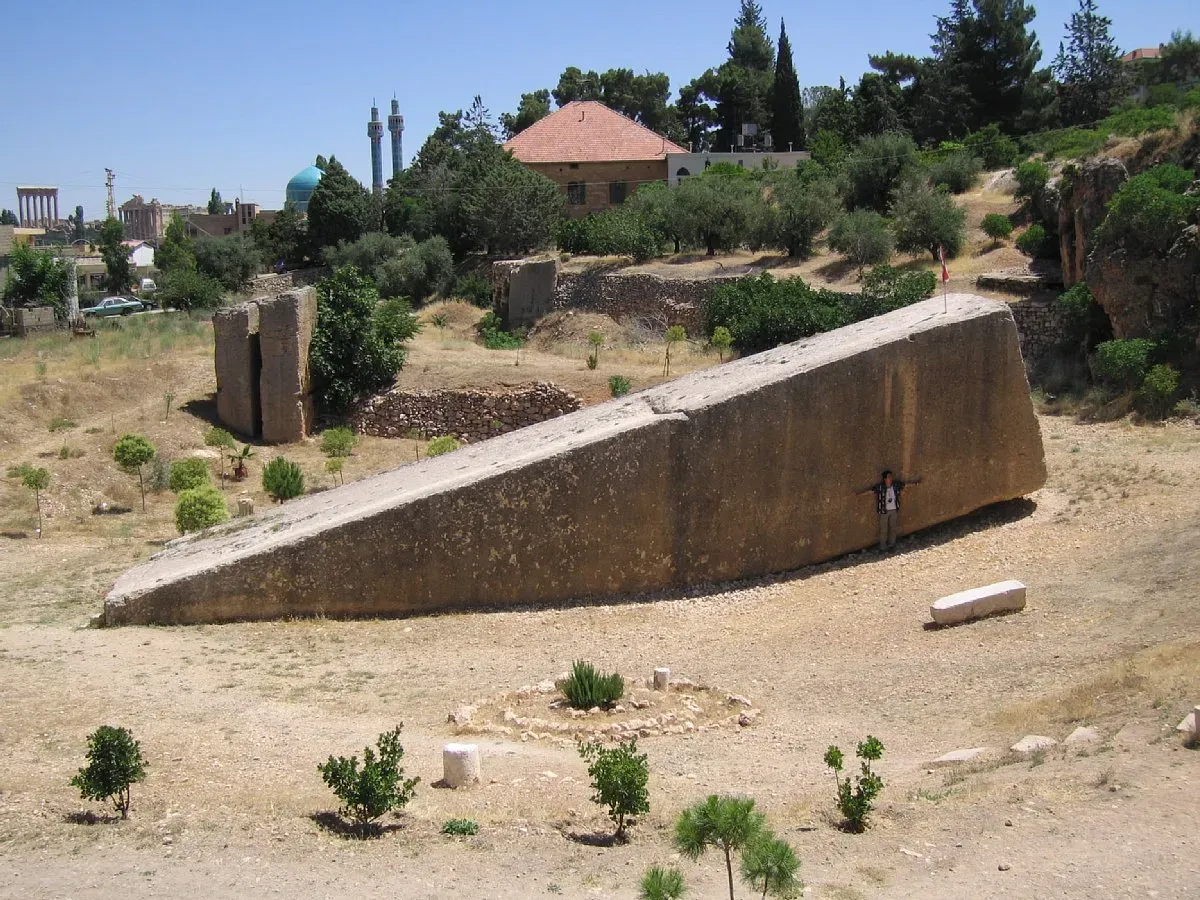
Named for a folk legend claiming only a pregnant woman could move it, this Baalbek monolith is very much still exactly where it was quarried.
Nicknamed “The Stone of the Pregnant Woman,” this megalith weighs up to 1,240 tons and sits in the same limestone quarry that produced the Trilithon stones nearby. Archaeologists found that the monolith was left in the quarry because the stone quality of a block’s edge proved to be poor, risking damage during transport.
This is arguably the most human detail in the entire list: the ancient builders quit not because they couldn’t move it, but because quality control failed them first. That single detail flips the usual narrative – this wasn’t a failure of lifting technology, it was a failure of material inspection. It suggests the movement method itself may have actually worked, had the stone not cracked. Even at 1,240 tons, this isn’t the heaviest stone in that same quarry.
#1 – Baalbek’s Buried Megalith Is the Heaviest Cut Stone in Human History
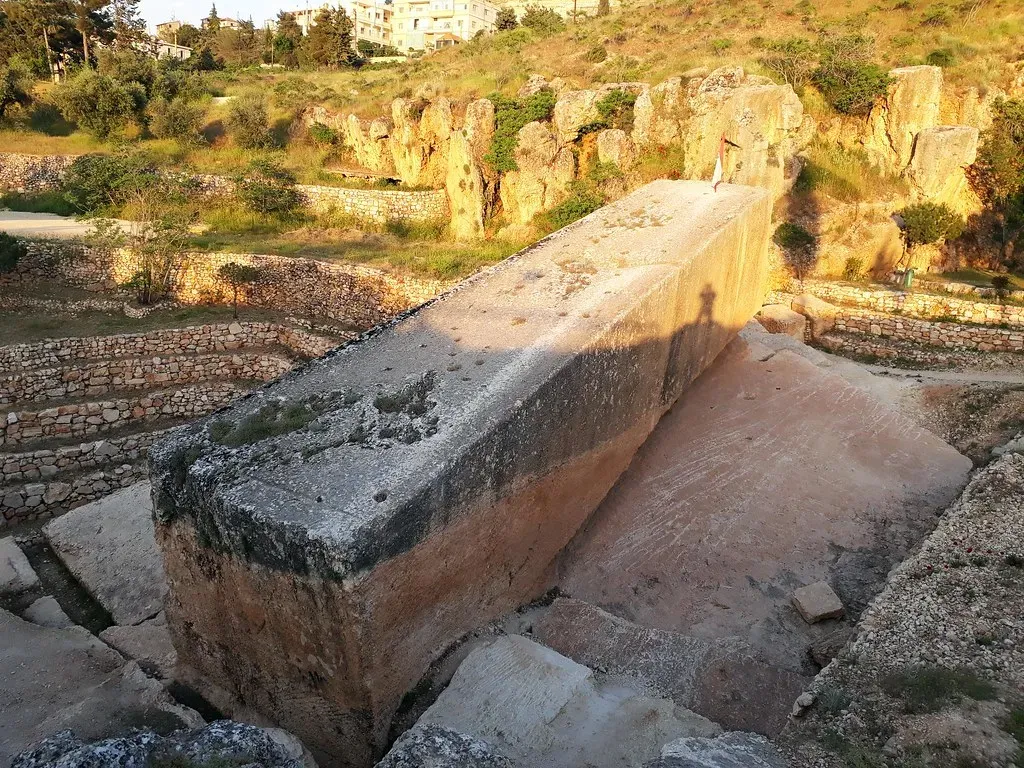
At the very bottom of the same Lebanese quarry lies the single heaviest documented cut stone ever discovered – and it never even left the ground.
Excavated by the German Archaeological Institute in July 2014, this megalithic block measures 19.6 meters long, 6 meters wide, and at least 5.5 meters tall, and is estimated to weigh approximately 1,650 tonnes. The full block is still partially buried, meaning its true height – and possibly its true weight – isn’t even confirmed yet.
Compare that to modern capability: today’s largest mobile cranes max out around 1,200 tons at short range, and specialized gantry systems top out near 2,000 tons under ideal conditions. This stone sits at the extreme edge of what modern equipment can lift – using steel cables, hydraulics, and combustion engines. Whoever quarried it had none of that. It remains buried in the same spot it was cut roughly 2,000 years ago, an unfinished monument to an engineering ceiling nobody has fully explained.
At a Glance
- Weight: approximately 1,650 tonnes
- Dimensions: 19.6 meters long, 6 meters wide, at least 5.5 meters tall
- Discovered: July 2014, by the German Archaeological Institute
- Modern comparison: heavier than most mobile cranes can lift even today
The Bottom Line
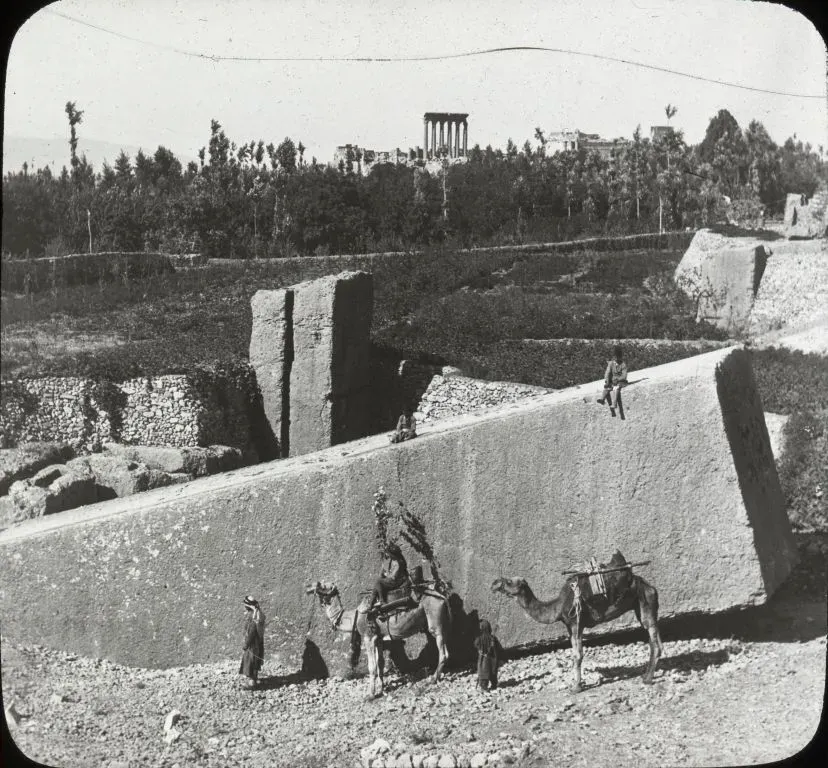
Fourteen blocks. Zero confirmed lifting methods. From Baalbek’s 1,650-ton buried giant to Easter Island’s 86-ton Moai, every single entry on this list outweighs what historians can actually prove ancient builders had the equipment to lift.
Ramps, levers, and manpower explain the smaller end of this range – they don’t convincingly explain the top half. The honest answer is that archaeology has measurements, not mechanisms. We know the weight. We don’t know the method.
That gap is either the most exciting open question left in archaeology, or the one the field has gotten too comfortable ignoring. Either way, somebody moved a 1,650-ton stone with tools nobody has ever identified – and calling that “ramps and rope” isn’t an answer. It’s a shrug dressed up as an explanation.