
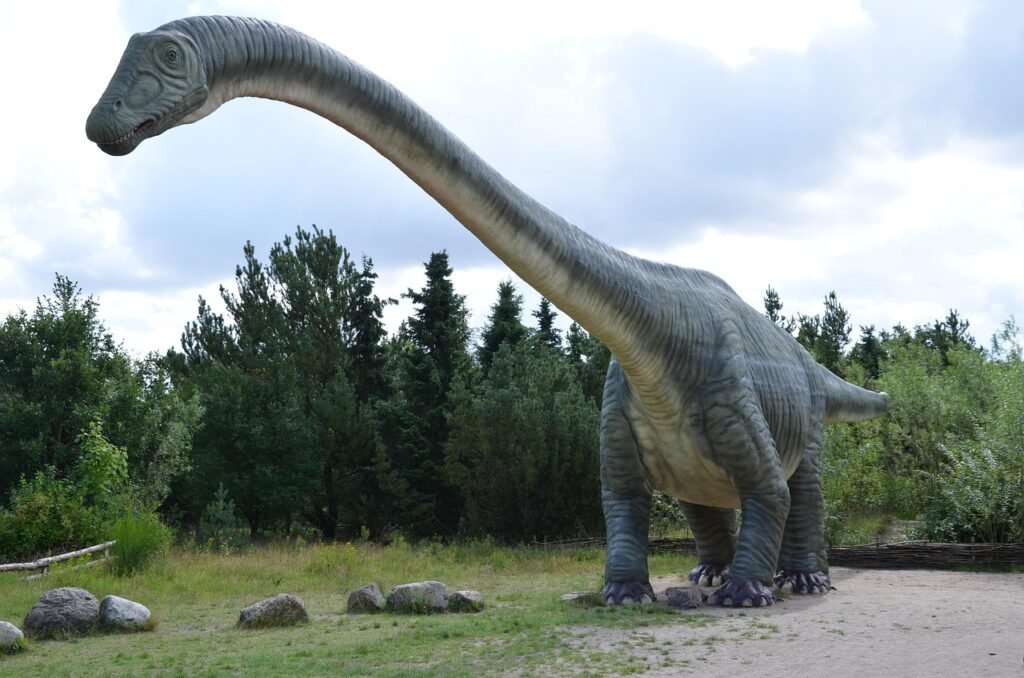
Most people assume the dinosaur skeletons hanging in museums are settled science, locked in stone the moment they were dug up. They’re not – and some of the most iconic prehistoric images you grew up believing were actually embarrassing mix-ups.
Skulls were glued onto the wrong bodies. Predators turned out to be gentle grazers. Entire postures were built upside down and taught as fact for generations. Paleontology has quietly walked back dozens of its biggest claims, and here are the twelve reversals that prove even the experts sometimes get it spectacularly wrong.
#12 – Anomalocaris: The “Monster” That Was Actually Three Different Animals
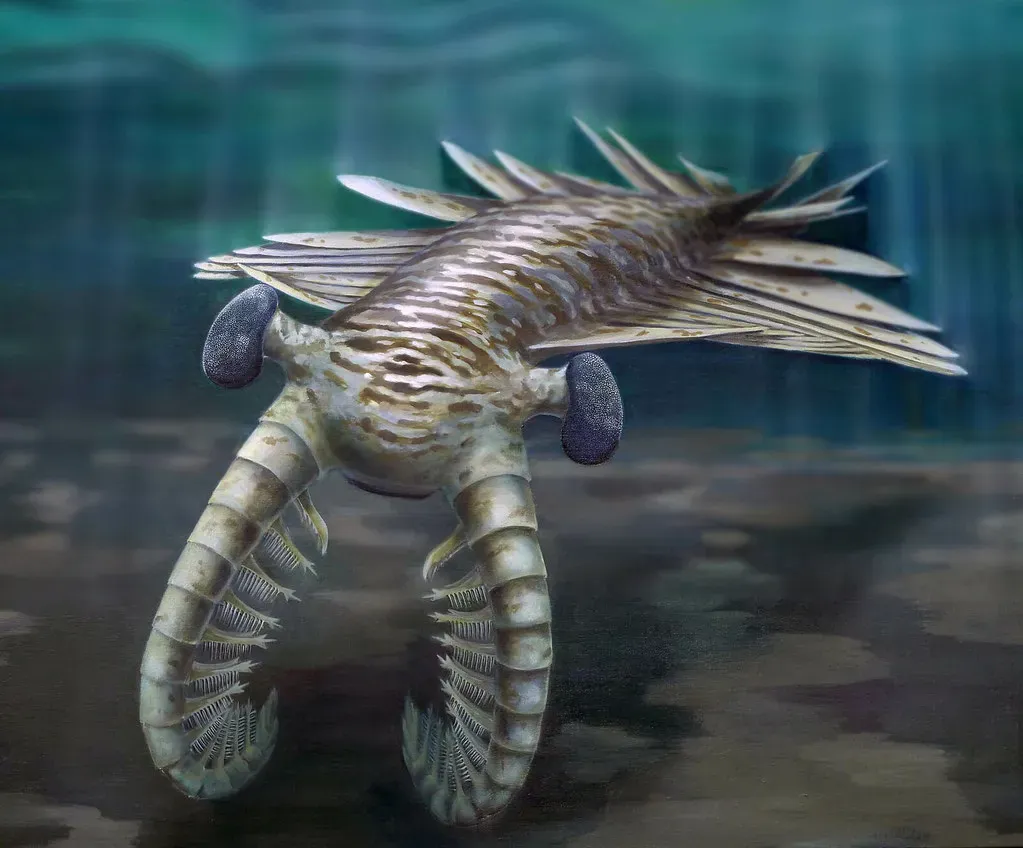
Long before anyone realized what it truly was, Anomalocaris was quietly filed away as three completely separate “species” in the scientific literature – because researchers had no idea the pieces all belonged to one animal.
The claw-like front appendages were first described as the body of a shrimp. A separate fossil of the round, segmented body was classified as a jellyfish. Even the mouthparts were mistaken for a sea cucumber.
It took nearly a century of quiet corrections before scientists realized all three “creatures” were fragments of a single half-meter predator, one of the largest animals alive during the Cambrian explosion. Once assembled correctly, Anomalocaris became one of the earliest known apex predators on Earth, with compound eyes and a circular, tooth-lined mouth. It’s a humbling reminder that even brilliant scientists can accidentally invent two extra species out of one broken skeleton.
Fast Facts
- Named in 1892, when only its claws had been found
- Grew up to roughly 3 feet (about 1 meter) long – a giant for the Cambrian period
- Lived more than 500 million years ago during the Cambrian explosion
- Each eye held more than 16,000 lenses, giving it some of the sharpest vision of its era
And that mix-up is almost tidy compared to what happened to #11.
#11 – Hallucigenia: The Worm That Was Reconstructed Completely Upside Down
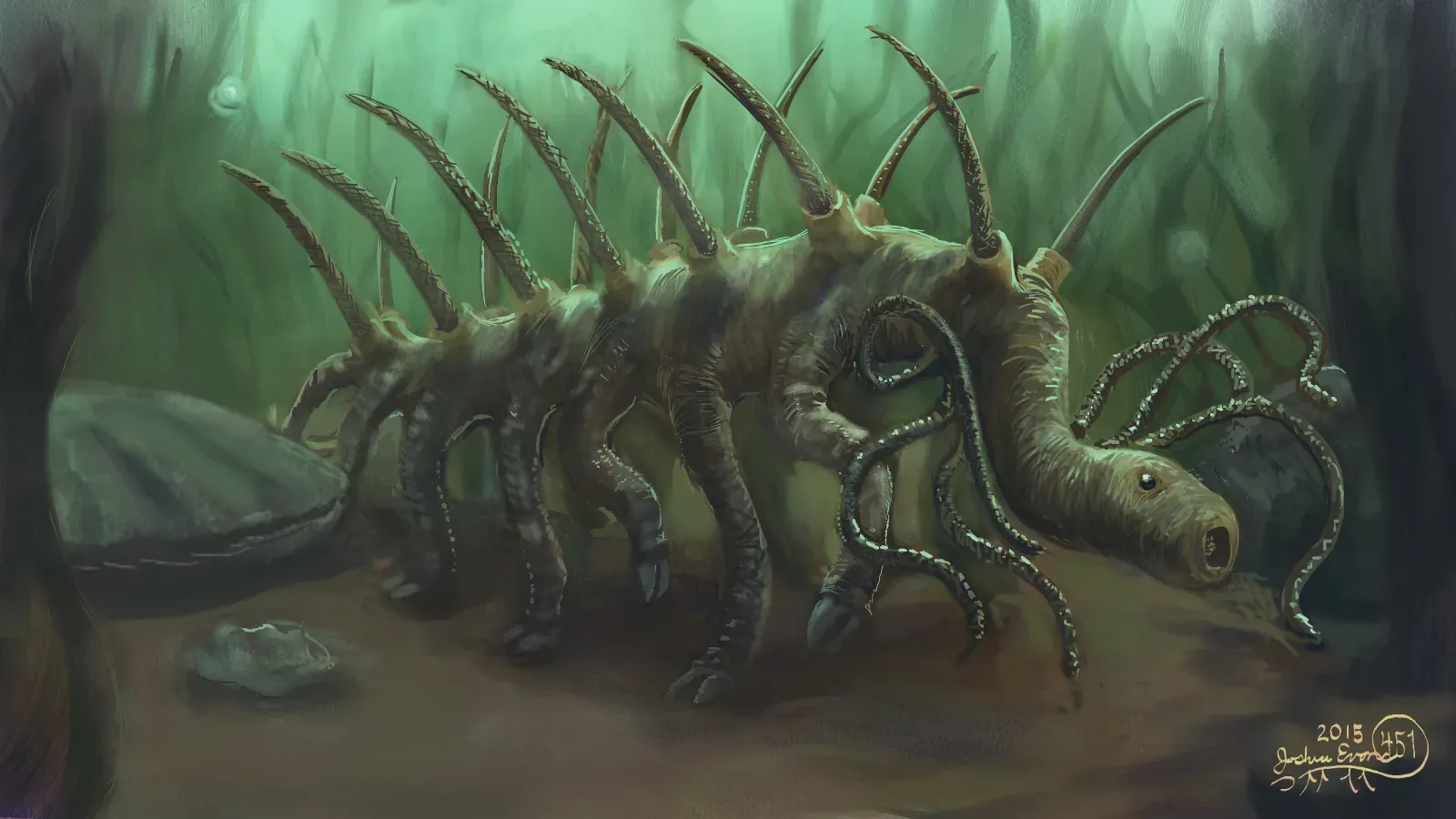
For years, textbooks confidently displayed a bizarre spiny worm walking on rigid stilt-like legs, with soft tentacles waving from its back. Scientists had it backward – literally.
Hallucigenia’s fossils were so strange that early researchers assumed the sharp spines running along its body were legs, while the soft, floppy appendages on the opposite side were feeding tentacles. Later, more detailed fossil analysis flipped the whole picture: the spines were defensive armor running down its back, and the “tentacles” were actually paired walking legs. Scientists had even misidentified which end was the head.
This wasn’t a minor tweak. It meant the animal had been drawn, sculpted, and taught to students completely inverted for years. Once corrected, Hallucigenia became a textbook example of just how strange early animal body plans really were.
Compare that to #10, where an entire flying reptile got its whole reputation backward too.
#10 – Pterosaurs: The “Clumsy Gliders” That Were Actually Flight Masters

For decades, pterosaurs were drawn as awkward, bat-like creatures that could barely get off the ground, dragging their wings behind them like broken umbrellas.
Early reconstructions even suggested some species were poor fliers that mostly swam or waddled on all fours in an ungainly crawl. Turns out, the “clumsy” label was completely backward.
Modern biomechanical studies of pterosaur wing membranes, hip joints, and launch mechanics suggest many species used a powerful four-limbed leap to launch into flight, something no living bird can replicate. Their wing structure, once thought flimsy, is now understood as a highly engineered, multi-layered membrane reinforced with fibers for control during flight. Far from clumsy stragglers, pterosaurs are increasingly viewed as some of the most sophisticated fliers in Earth’s history.
Even that glow-up is small next to the identity crisis Stegosaurus went through.
#9 – Stegosaurus: The Armor Plates Nobody Could Agree On
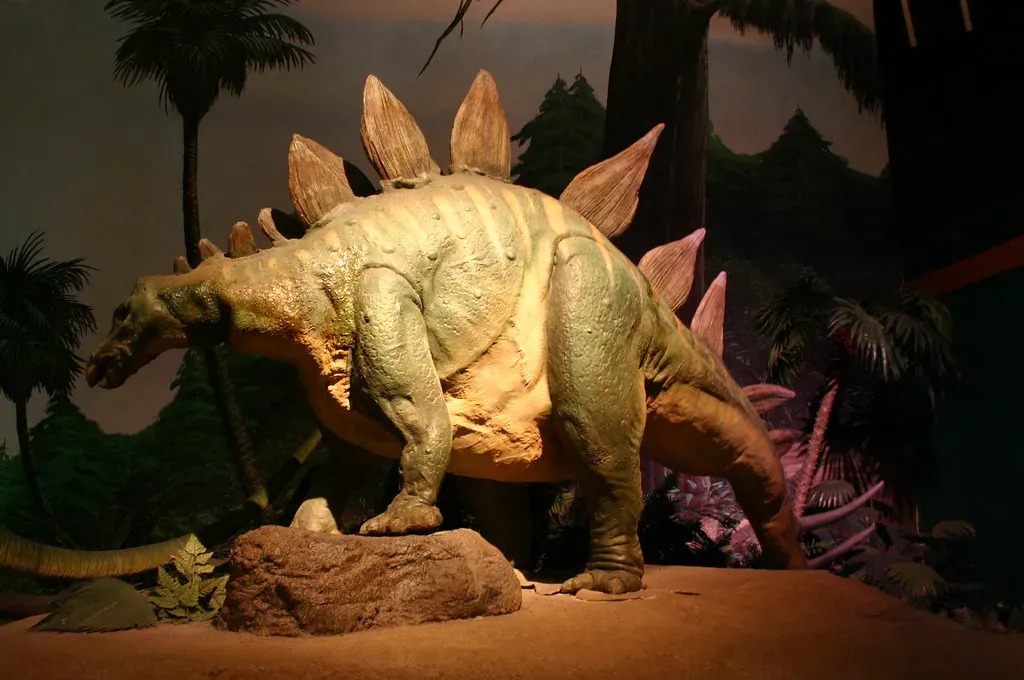
Even paleontologists who’ve spent entire careers on Stegosaurus have flip-flopped repeatedly on one basic question: how were its back plates actually arranged?
Early reconstructions showed the plates lying flat against the body like a suit of armor, protecting Stegosaurus from predator bites. Later, scientists rearranged them into two neat, symmetrical rows standing upright along the spine. Neither version stuck.
The current leading interpretation is that the plates alternated in a single staggered row down the back, which changes more than just the animal’s silhouette – it shifts the leading theory toward display and species recognition rather than pure defense. Generations of dinosaur toys, murals, and documentaries have quietly been wrong about one of the most recognizable dinosaur shapes ever discovered.
Quick Compare
- Theory 1: Plates lying flat against the body for armor-like protection
- Theory 2: Plates standing upright in two symmetrical rows along the spine
- Theory 3 (current): Plates alternating in a single staggered row, likely used for display and species recognition
That’s a cosmetic correction, though. What happened to sauropod necks changed the entire pose of the animal.
#8 – Sauropods: The Giraffe Necks That Never Actually Existed
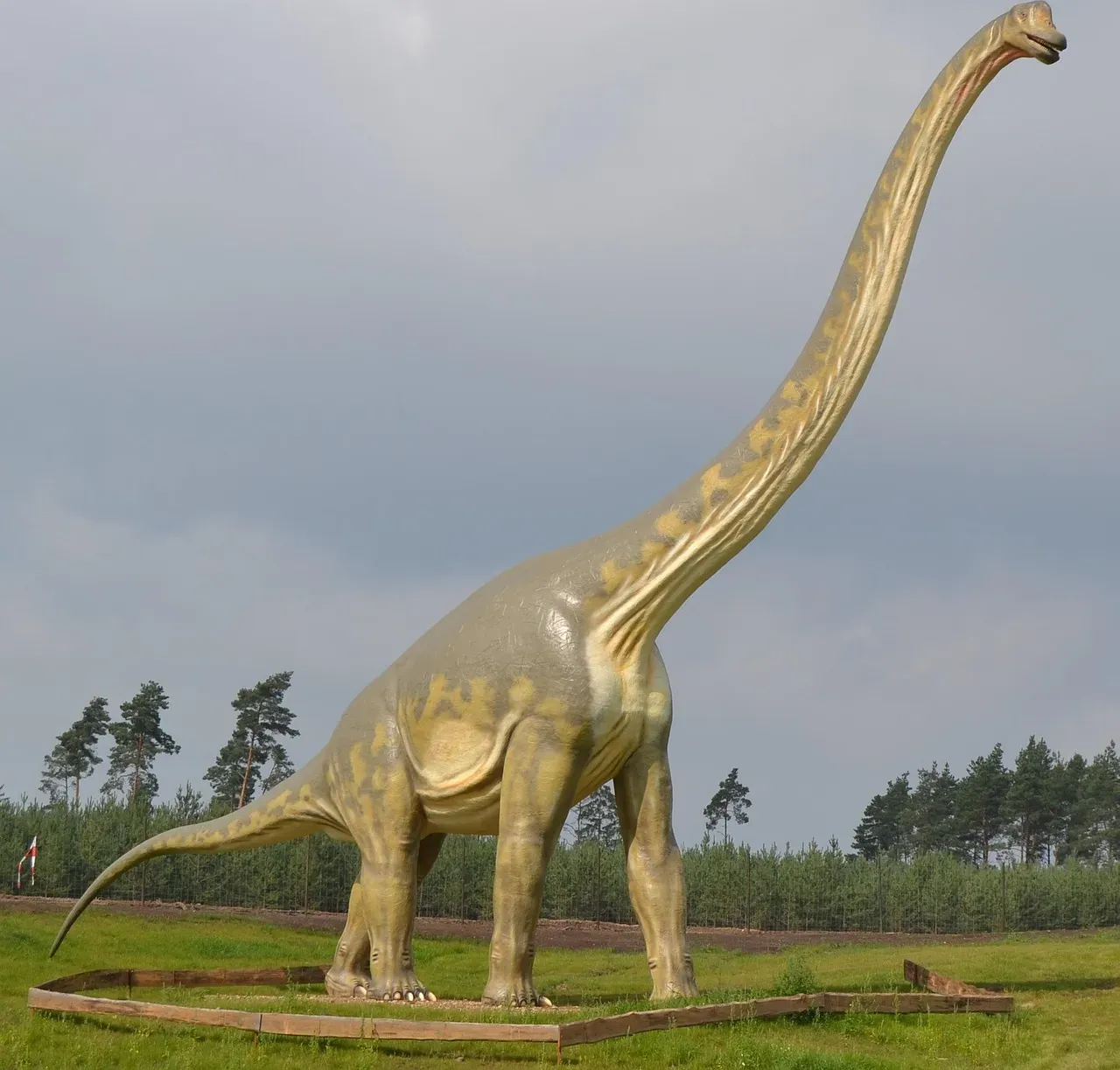
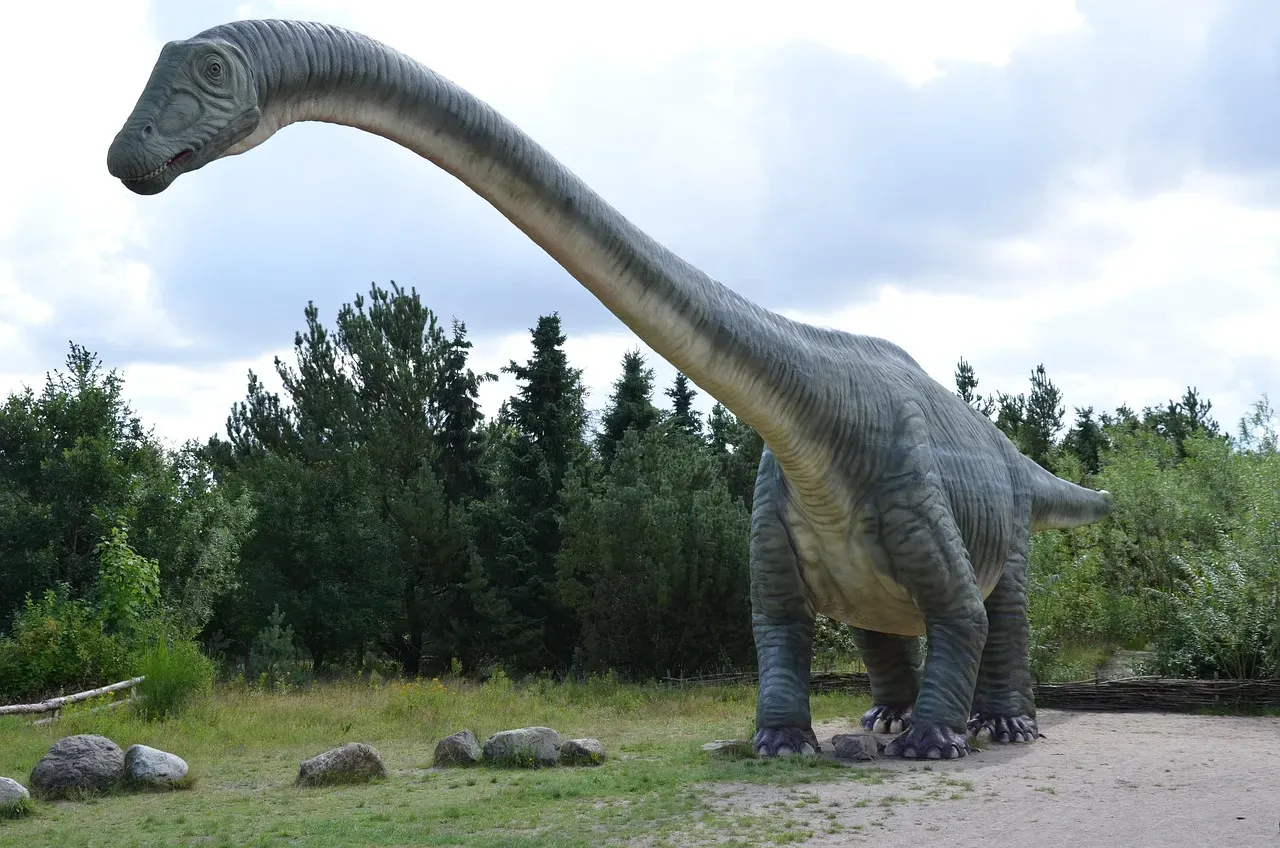
For decades, sauropods like Brachiosaurus were drawn craning their necks vertically into the treetops like living cranes, an image so iconic it became the default sauropod pose in film and art.
Biomechanical research eventually revealed most sauropods physically couldn’t hold their necks that high. Studies on blood pressure requirements, neck vertebrae flexibility, and muscle attachment points suggest an upright, giraffe-style neck would have required an implausibly powerful heart just to pump blood to the brain.
Instead, many sauropods likely held their necks in a more horizontal, sweeping posture, using their length to graze wide areas without expending energy walking. This single correction quietly reshaped how paleoartists draw nearly every long-necked dinosaur, moving the giant heads down from the clouds and out toward the horizon instead. It remains one of the more contested shifts in the field – some researchers still argue for a moderate upward angle.
The neck wasn’t the only body part science had to rebuild from scratch. T. rex’s entire stance was wrong too.
#7 – T. Rex: The Kangaroo Posture Everyone Now Regrets
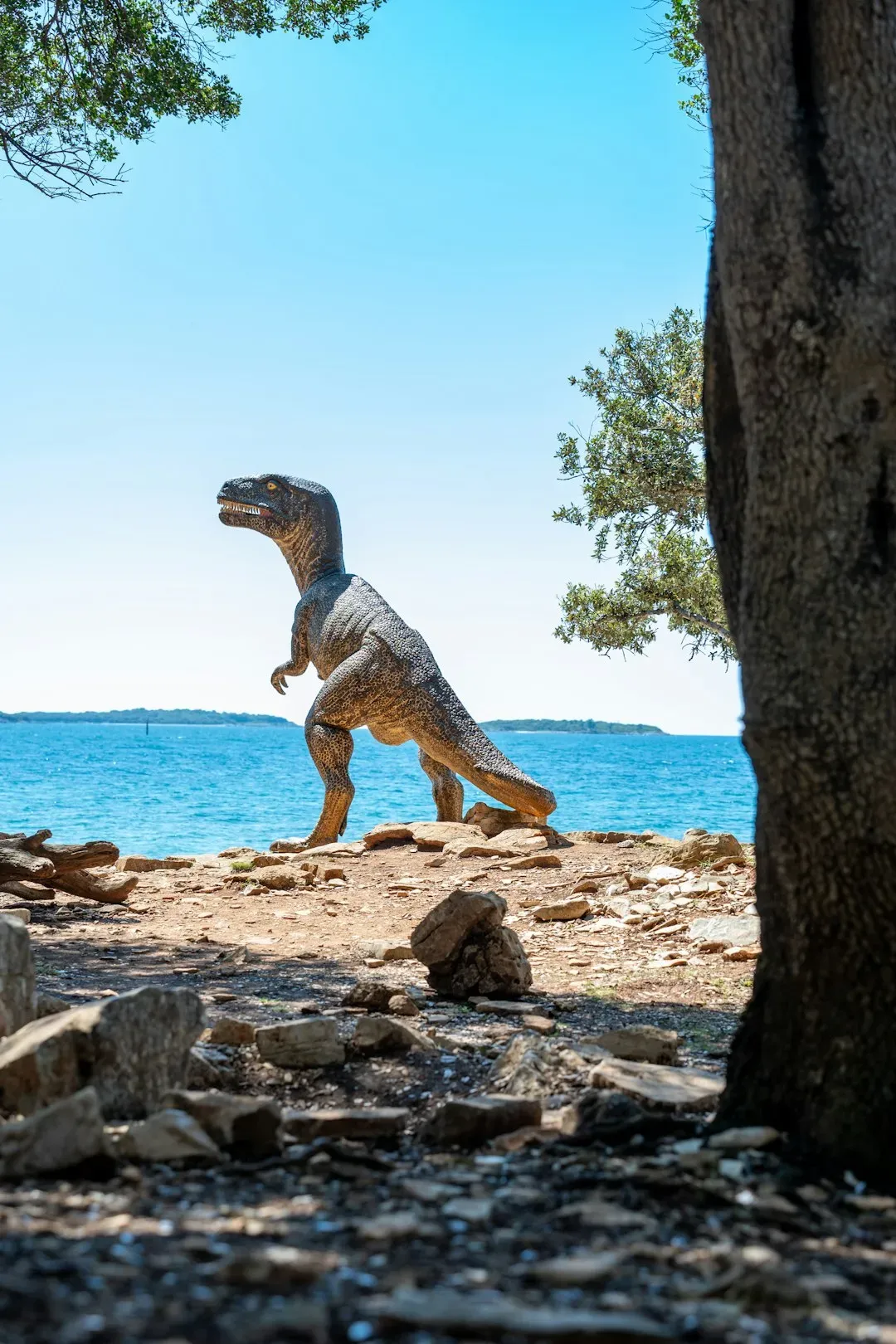
If you picture Tyrannosaurus rex standing upright like a scaly Godzilla, dragging its tail on the ground for balance, you’re picturing a mistake that stuck around in pop culture for nearly a century.
Early 20th-century reconstructions posed T. rex in a tripod stance, torso vertical, tail flat on the ground like a third leg. This posture is now considered anatomically impossible for an animal that size.
Modern skeletal analysis shows the spine, hips, and tail were built for a horizontal posture, with the tail held aloft as a counterbalance to the head and torso rather than dragging behind like a prop. The correction didn’t just change illustrations – it changed how scientists calculate T. rex’s speed, hunting style, and energy efficiency. Despite the science moving on decades ago, the old upright “monster” pose still shows up in outdated toys and low-budget movies.
Fixing the posture was one thing. Discovering what was underneath the skin was a whole different shock.
#6 – Feathered Dinosaurs: The Scaly Reptiles That Were Secretly Fluffy
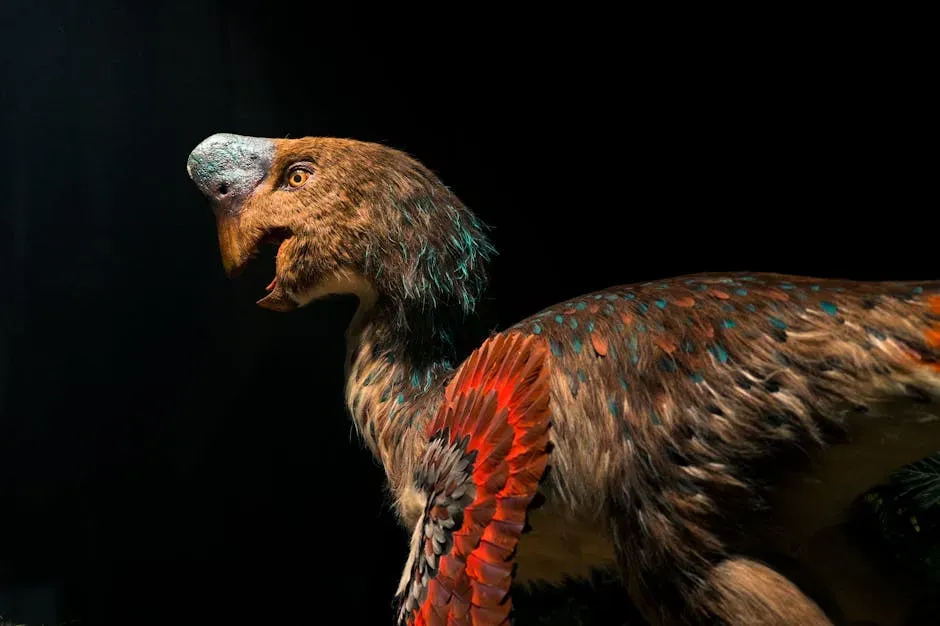
For most of the 20th century, dinosaurs were drawn as scaly, cold-blooded reptiles, no different in texture from a modern lizard or crocodile.
That assumption held strong until a wave of fossil discoveries, many from northeastern China, revealed dinosaurs preserved with feather impressions, filaments, and proto-feathers covering their bodies. Entire dinosaur groups once imagined as smooth and scaly are now believed to have been partially or fully feathered, including close relatives of Tyrannosaurus.
This wasn’t a fringe theory picked up by a handful of outliers – it triggered a genuine paradigm shift across paleontology, forcing museums to redesign models that had stood for generations. Some scientists still debate exactly which species had feathers and how much coverage they had, but the “all dinosaurs are scaly” assumption is now considered outdated. It’s arguably the single biggest visual overhaul in dinosaur science.
Worth Knowing
- Sinosauropteryx, unveiled in 1996, was the first non-avian dinosaur found with feather impressions
- The fossil turned up in China’s Liaoning Province, a region now famous for feathered dinosaur discoveries
- Its covering consisted of simple, filament-like proto-feathers rather than flight feathers
- The find offered some of the strongest evidence yet that birds descended from theropod dinosaurs
Feathers were embarrassing enough. But Iguanodon’s original mistake is the one that still makes people laugh out loud.
#5 – Iguanodon: The Nose Horn That Was Actually a Thumb
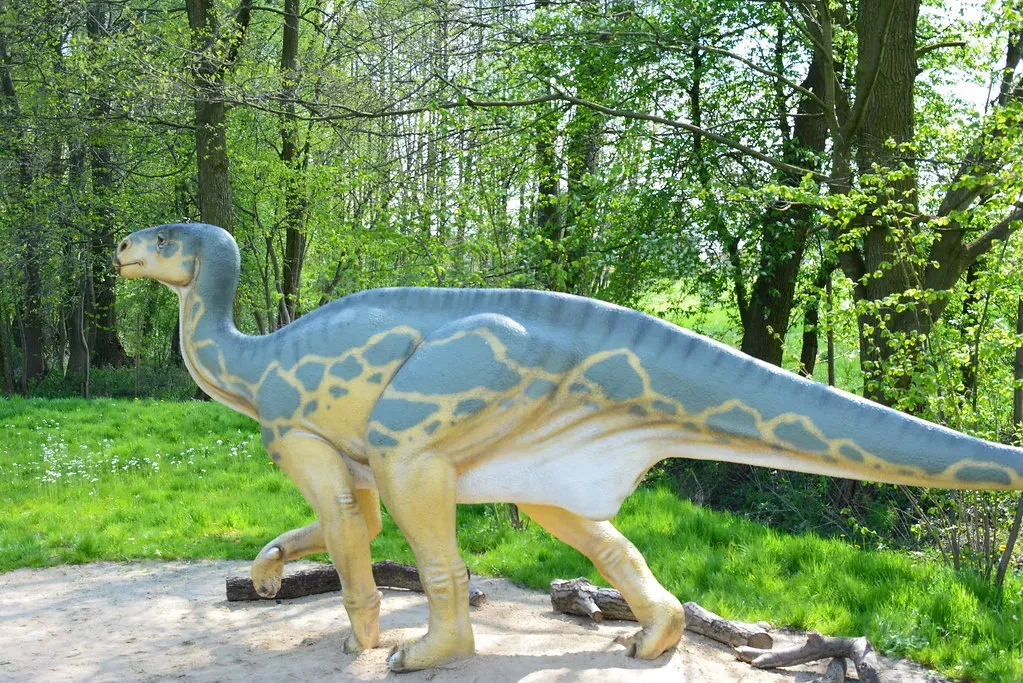
Iguanodon was one of the very first dinosaurs ever named, and its earliest reconstruction proudly featured a sharp horn jutting from its nose, inspired directly by modern iguanas.
When Gideon Mantell first described the animal in 1825, it seemed reasonable that a conical, bony spike corresponded to the same structure seen on the snouts of rhinoceros iguanas. That assumption held for decades and was even sculpted into life-sized Victorian statues still standing in London today.
The truth was discovered only when far more complete skeletons turned up in a Belgian coal mine in 1878. Those specimens revealed that the “horn” actually belonged on a mitten-like hand, opposite a prehensile finger. The nose horn was quietly relocated to the hand, and Iguanodon’s whole posture was reimagined from a lumbering quadruped into a more active, occasionally bipedal herbivore.
A misplaced thumb is embarrassing. A misplaced skull, glued onto the wrong end of a whole skeleton, is a full-blown scientific scandal.
#4 – Elasmosaurus: The Skull Glued to the Wrong End of the Body
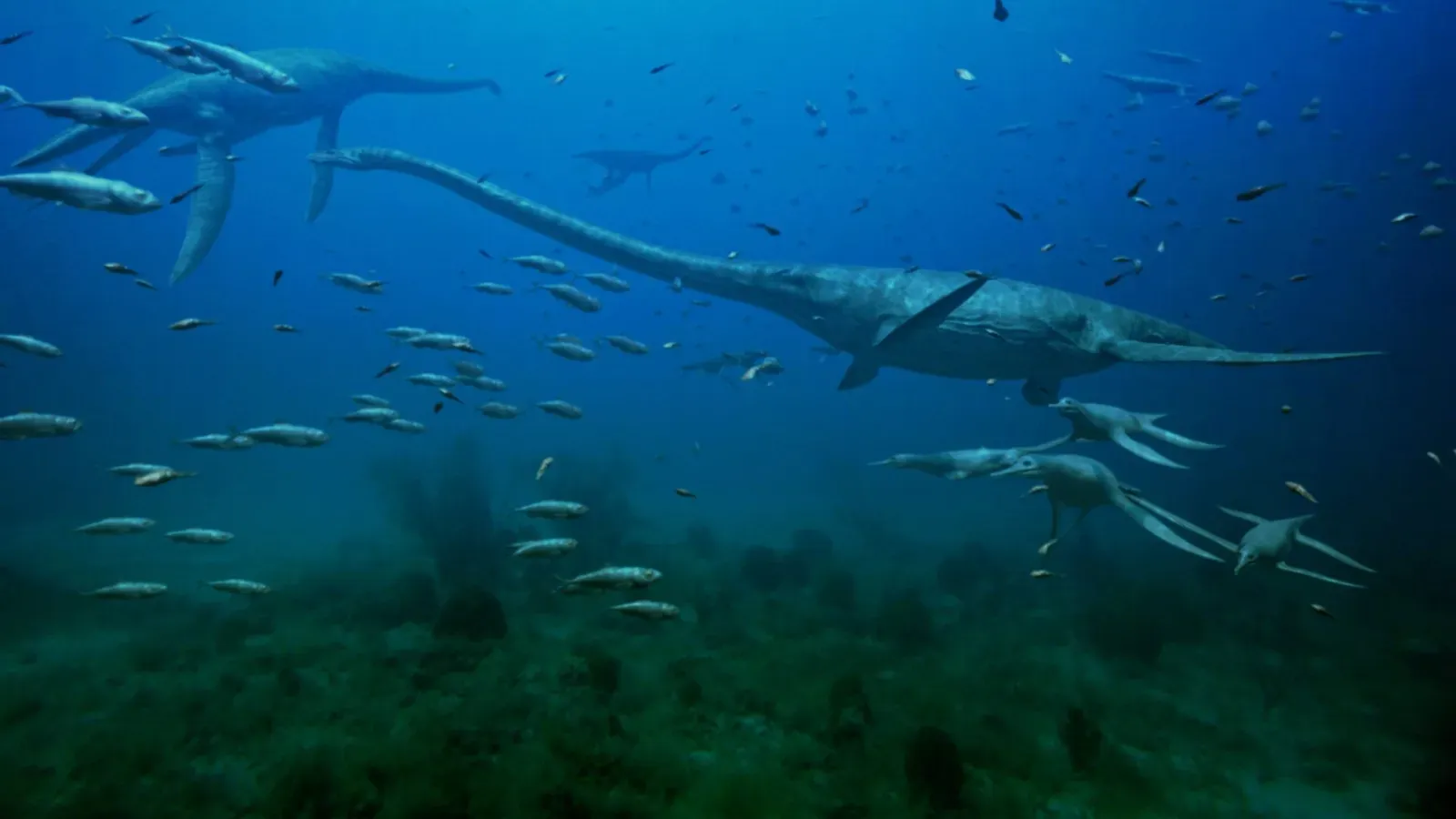
Few paleontology blunders are as famous, or as public, as what happened when a 19th-century scientist raced to describe a bizarre new marine reptile without fully understanding its anatomy.
Edward Drinker Cope originally reconstructed the skeleton of Elasmosaurus with the skull at the end of the tail, assuming the tail vertebrae belonged to the neck since the jaws had been found at that end. He missed that the opposite end terminated in the axis and atlas bones found only in the neck.
The mistake meant the “neck” in his first published drawing was actually a tail, and vice versa. Contrary to popular legend, it wasn’t his rival Othniel Charles Marsh who caught the error – it was Joseph Leidy, who pointed out the problem during a meeting at the Academy of Natural Sciences of Philadelphia on March 8, 1870. The public humiliation helped fuel one of the most bitter feuds in science history, the Bone Wars.
Cope’s mistake was embarrassing for one man. What happened with Deinocheirus fooled the entire field for half a century.
#3 – Deinocheirus: The Terrifying Predator That Was Actually a Weird Herbivore
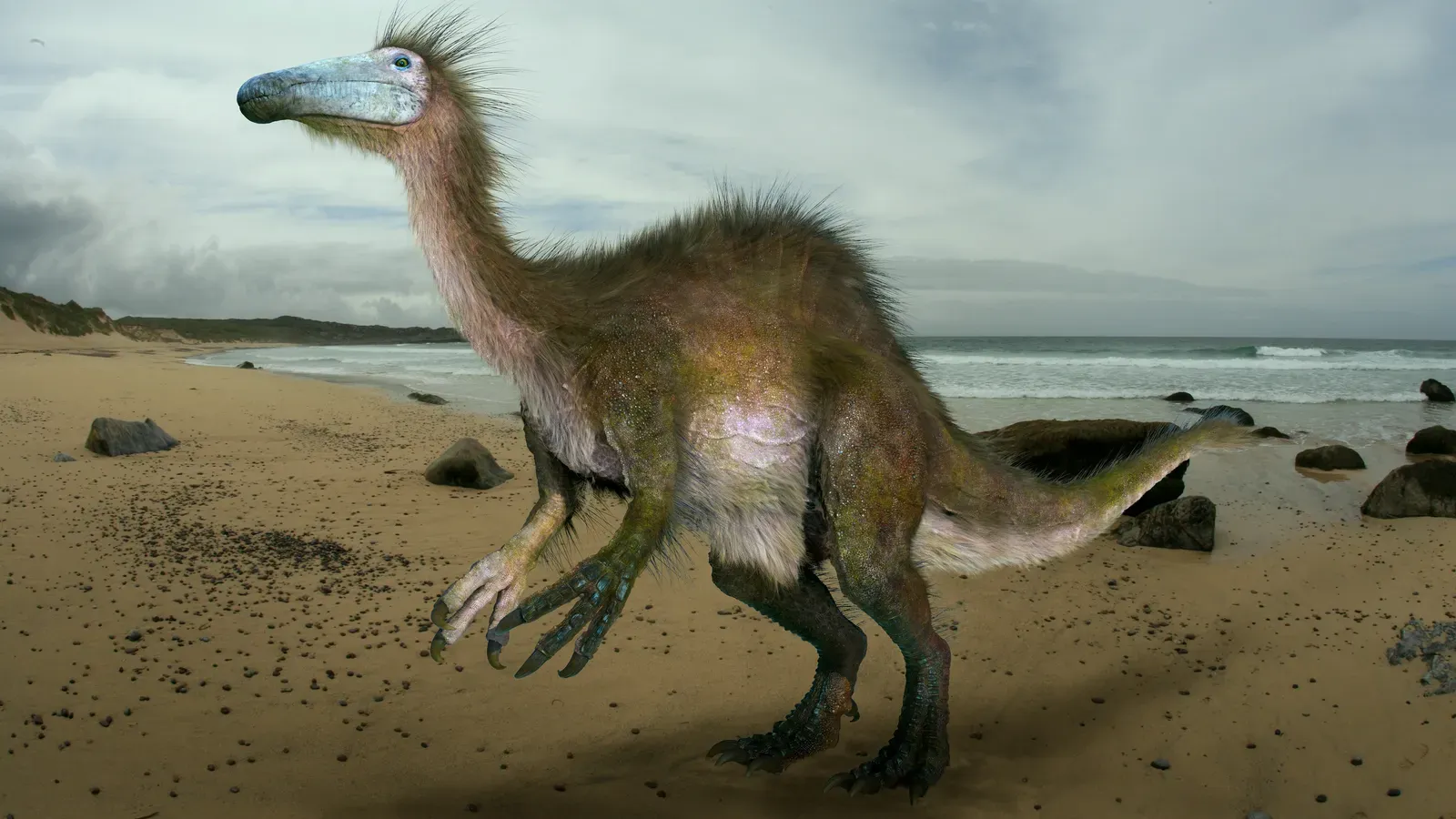
For nearly 50 years, all scientists had to work with were two enormous, clawed arms, each longer than a grown man is tall, discovered in Mongolia in the 1960s.
Based on those arms alone, Deinocheirus was widely assumed to be some kind of nightmarish giant predator, possibly even bigger and more dangerous than known carnivorous dinosaurs of its era. It wasn’t until far more complete skeletons were finally uncovered decades later that the true picture emerged, and it turned out to be almost comically different.
Deinocheirus was actually a bizarre, hump-backed, duck-billed herbivore with a sail on its back, built more like an oversized ostrich than a monster. Its massive claws were likely used for foraging vegetation and digging rather than tearing flesh. The reveal stunned paleontologists who had speculated about this “predator” for half a century based on almost nothing.
A misidentified monster is one thing. An entire dinosaur officially declared fake for a century is another.
#2 – Brontosaurus: The Dinosaur That Officially Didn’t Exist for a Century
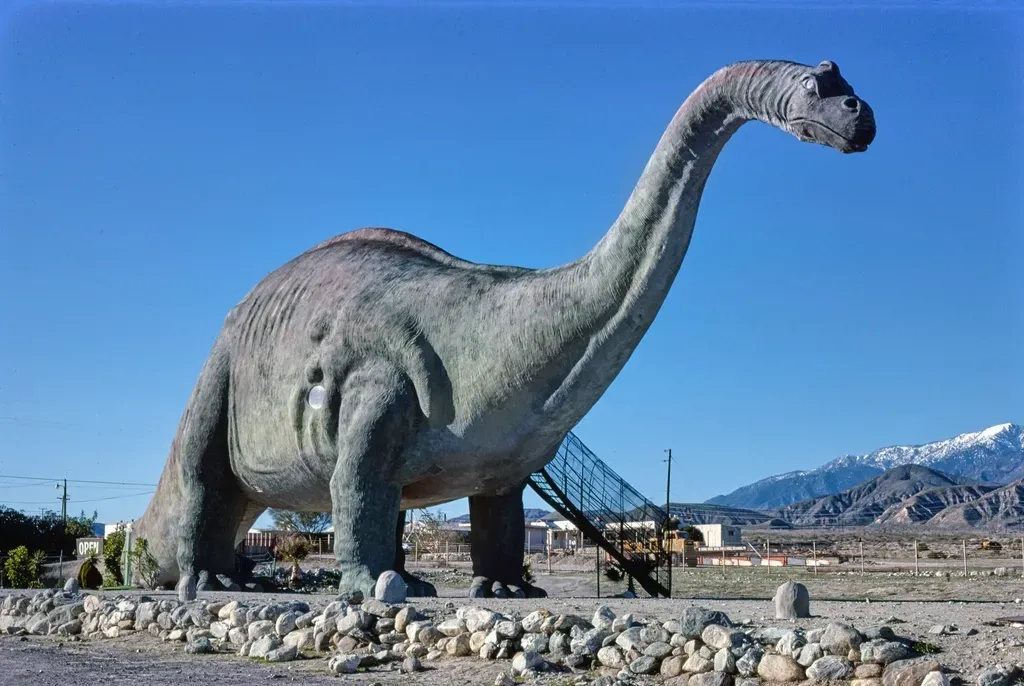
Brontosaurus might be the single most confusing case of scientific back-and-forth in dinosaur history, and it started with a skeleton that was missing its head entirely.
Othniel Charles Marsh published a full restoration of the dinosaur in his famous reference book, but no skull had actually been found – so he used a head thought to belong to Camarasaurus, found at a different site, to complete the picture. In 1903, scientists officially declared Brontosaurus invalid, arguing it was simply a juvenile Apatosaurus that had been misclassified as its own genus.
For nearly 100 years, textbooks taught that the beloved “Brontosaurus” never technically existed. Then researchers finally rediscovered the correct skull, and an exhaustive new study by paleontologists from Portugal and the UK provided conclusive evidence that Brontosaurus is distinct from Apatosaurus after all. After a century of scientific limbo, Brontosaurus is technically real again.
Even that century-long identity crisis doesn’t compare to the creature that’s been rewritten three separate times – and counting.
#1 – Spinosaurus: The Predator That Went From Land Monster to Semi-Aquatic Swimmer
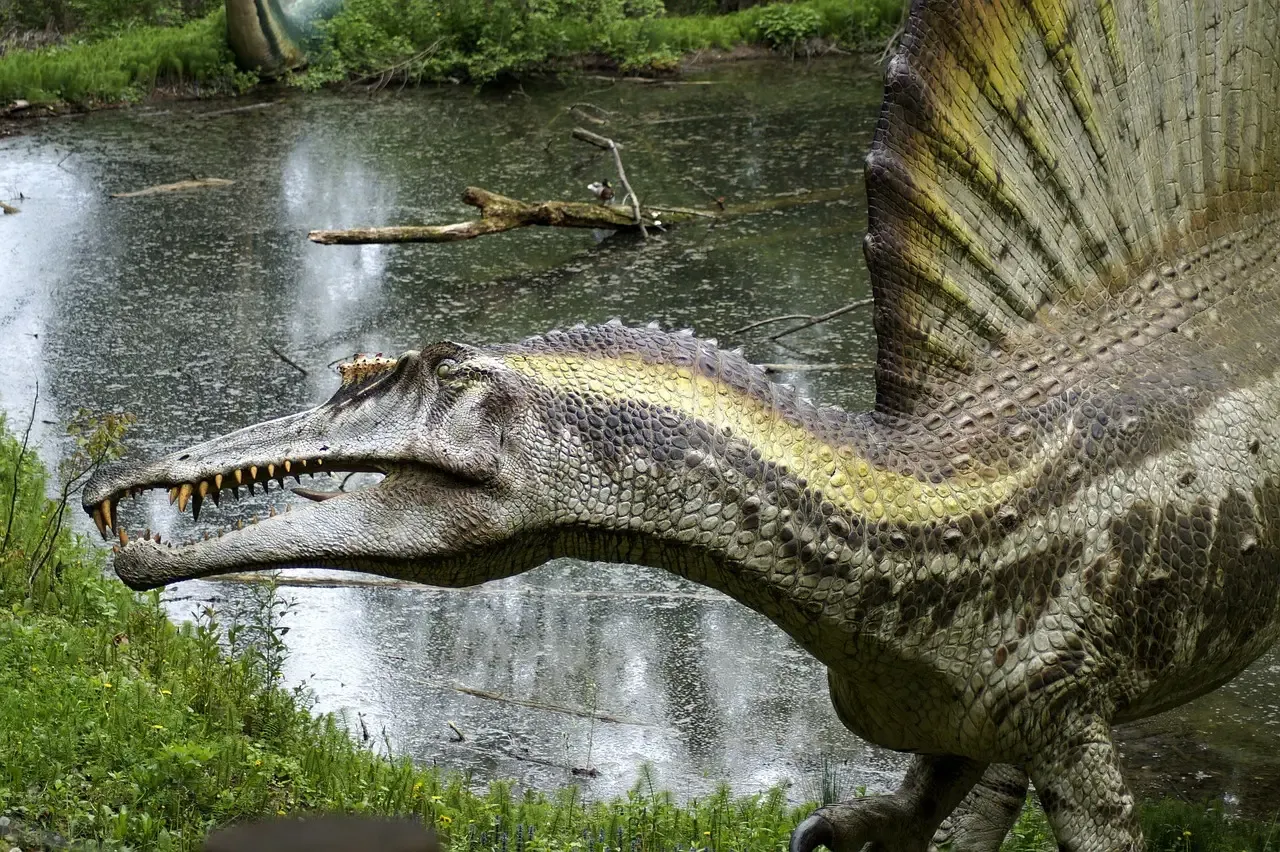
No dinosaur has had its identity rewritten more dramatically, or more publicly, than Spinosaurus, and the changes are still happening in real time.
In 1915, German paleontologist Ernst von Stromer announced the discovery of the elongate jaws and partial skeleton of Spinosaurus aegyptiacus in Egypt’s Western Desert, reconstructing it as a sail-backed, fish-eating biped. Shortly after, all of those original bones were destroyed in World War II, leaving that early bipedal image as essentially all scientists had to work with for decades.
Everything changed when new Moroccan fossils surfaced. The reconstructed appearance shifted from a bipedal stance modeled on its relative Baryonyx in the early 21st century, to a quadrupedal “crocodilian-mimic” reconstruction during the 2010s, and then to a tail-propelled diver following the 2020 discovery of a vertically expanded tail. One of the most feared land predators ever imagined may have actually hunted like a giant, tail-propelled river monster. Even that isn’t the final word – the most recent research suggests Spinosaurus is best understood as a semiaquatic, bipedal ambush predator that hunted along the margins of coastal and inland waterways, meaning the science is still actively rewriting itself.
At a Glance
- 1915: First described as a sail-backed, fish-eating biped by Ernst von Stromer
- Early 2000s: Reimagined as a biped modeled on its relative Baryonyx
- 2010s: Reconstructed as a quadrupedal “crocodilian-mimic”
- 2020: Revised again as a tail-propelled swimmer after a vertically expanded tail was discovered
The Bottom Line
If there’s one lesson buried in these 12 corrections, it’s that paleontology isn’t a finished textbook – it’s an ongoing argument, and the “facts” you memorized as a kid have a real chance of being outdated.
Spinosaurus alone has been reimagined at least three separate times, and Brontosaurus spent a century as scientifically “fake” before being resurrected. Honestly, the museums that refuse to update their old mounts are doing visitors a disservice – if the science has moved on, the skeleton on display should too.
Which of these reversals shocked you the most? Did we miss one? Drop it in the comments.