
When most people picture prehistoric life, they jump straight to Tyrannosaurus rex stomping across a swampy Cretaceous landscape. It feels like the ultimate symbol of “deep time.” But here’s the wild part: by the time T. rex showed up around roughly sixty‑eight million years ago, entire dynasties of bizarre and spectacular creatures had already lived out their full stories and vanished. For some of them, the gap between their extinction and the age of T. rex is longer than the gap between T. rex and us.
Thinking about that kind of timescale feels almost unfair, like trying to compare a single human lifetime to the entire history of civilization. In this article, we’ll look at eight remarkable prehistoric creatures that were gone long before T. rex ever took its first bite. They range from armored tank‑fish to nightmare insects as big as seagulls. By the end, T. rex might start to feel less like the star of the show, and more like a very late guest at an unimaginably long party.
Dunkleosteus: The Armored Apex Predator Of Ancient Seas
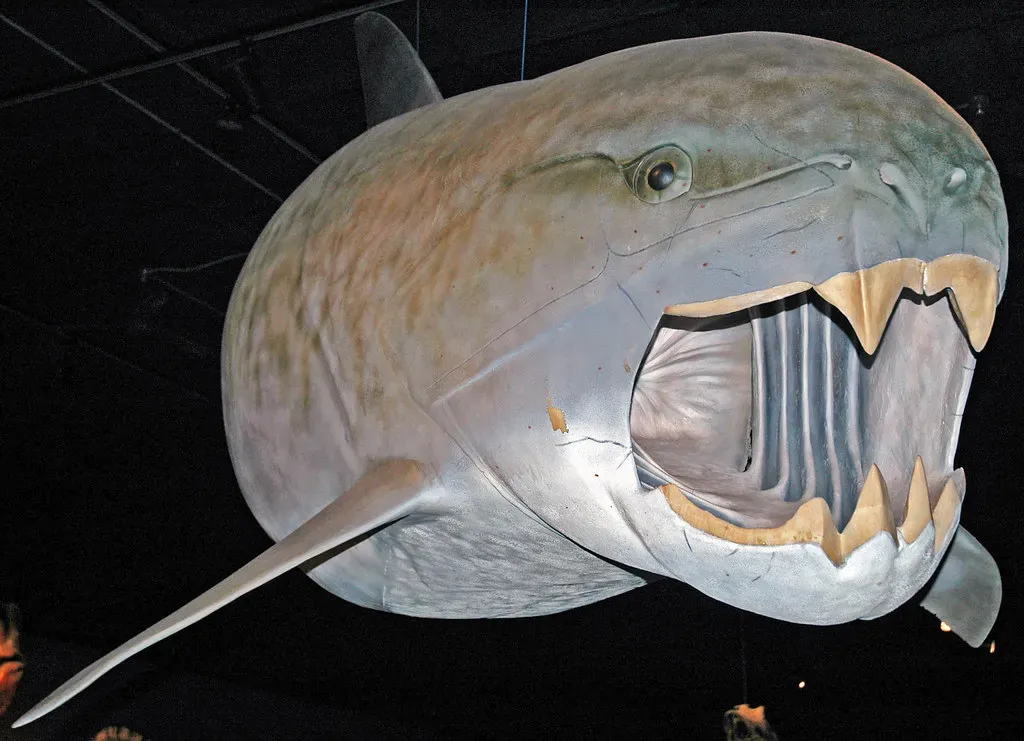
Dunkleosteus was terrorizing oceans about three hundred eighty to three hundred sixty million years ago, in the Late Devonian Period, more than three hundred million years before T. rex existed. Imagine a fish built like a battle tank, with its head and front body wrapped in interlocking bony plates instead of scales. It did not have conventional teeth, but sharp, beak‑like bone plates that formed a powerful cutting edge, able to shear through armor and flesh like industrial shears.
Scientists think some individuals may have reached around eight to ten meters in length, which puts them in the same size class as a large great white shark. Bite‑force reconstructions suggest it may have had one of the strongest bites of any fish that has ever lived. I always picture Dunkleosteus as the underwater embodiment of pure, blunt force: no graceful lines, just raw power and armor, ruling oceans that T. rex would never see and disappearing roughly three hundred million years before that famous dinosaur evolved.
Dimetrodon: The “Wrong-Period Dinosaur” That Wasn’t A Dinosaur
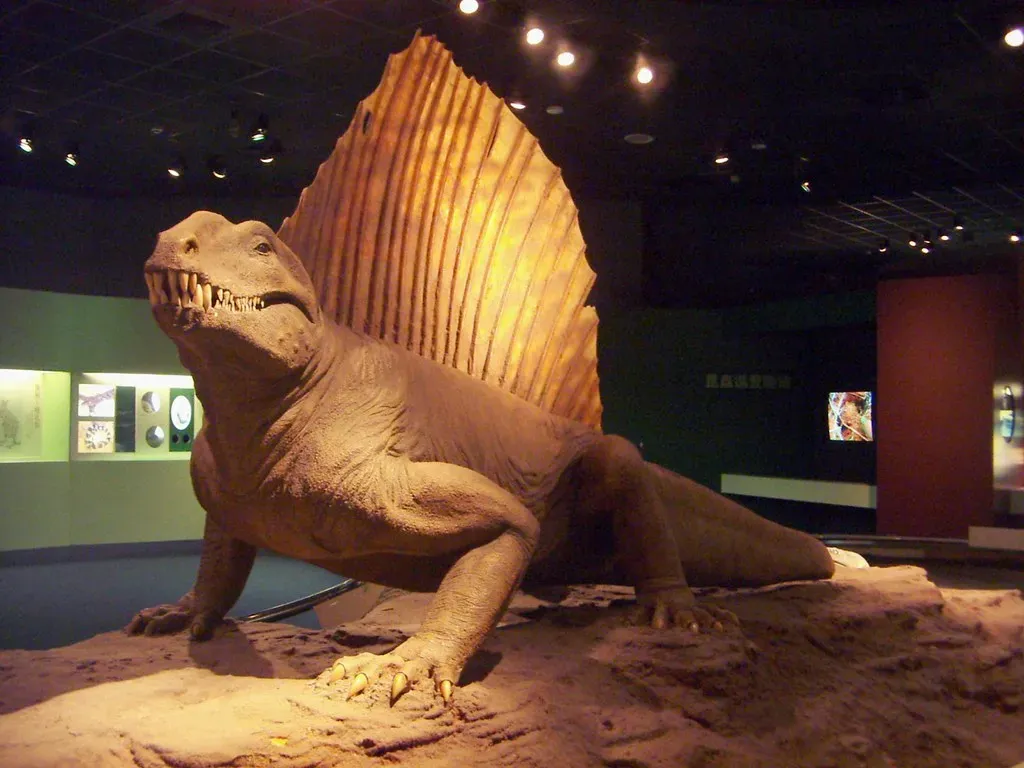
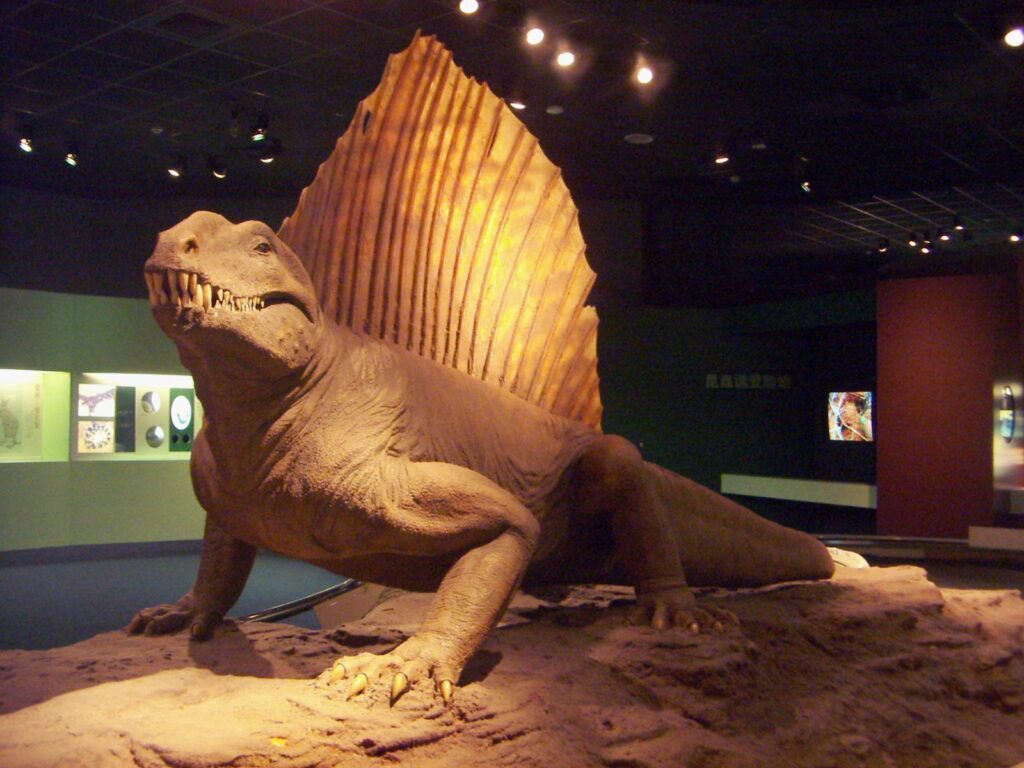
Dimetrodon is one of the most miscast animals in prehistory. You still see it in kids’ dinosaur toys, even though it died out around two hundred ninety‑five to two hundred seventy‑two million years ago, during the Early Permian, long before the first dinosaurs appeared. This sail‑backed predator walked on sprawling limbs and had a massive skull with serrated teeth, giving it a vicious, crocodile‑meets‑reptile vibe that screams “dinosaur” to a casual observer.
The plot twist is that Dimetrodon is actually more closely related to mammals than to dinosaurs. It belongs to the synapsids, the broader line that would ultimately give rise to us. That big, tall sail on its back – formed by elongated vertebral spines – might have helped with thermoregulation or display, though scientists still debate the details. By the time T. rex strode onto the Cretaceous scene, Dimetrodon had already been gone for about two hundred million years, its entire lineage long transformed into new and stranger mammal‑like forms.
Trilobites: The Long-Reigning Lords Of The Ancient Seafloor
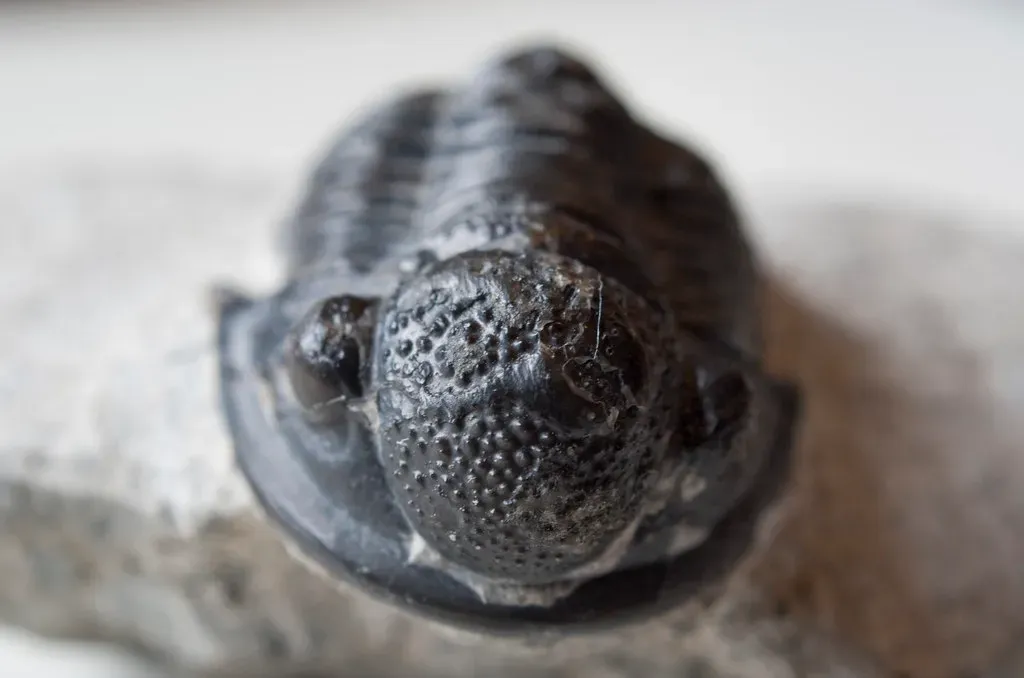
Trilobites are the original fossil celebrities, scuttling onto the scene more than five hundred million years ago and vanishing around two hundred fifty‑two million years ago at the end‑Permian mass extinction. That means the last trilobites died off roughly one hundred eighty‑plus million years before T. rex appeared. These arthropods came in an astonishing range of shapes and sizes, from tiny, pill‑bug‑like forms to spiny, alien‑looking creatures with ornate heads and eye stalks.
They thrived for hundreds of millions of years, surviving multiple crises that wiped out other groups. You can think of them as the “cockroaches” of early seas, except far more varied and, frankly, much cooler. When I first held a trilobite fossil, it felt like holding a time capsule from a world that existed so early that dinosaurs were not even a future possibility yet. By the time T. rex ruled the land, the oceans had already cycled through entire ecosystems that never included a single trilobite.
Gorgonopsids: Saber-Toothed Killers Before Mammals Took Over
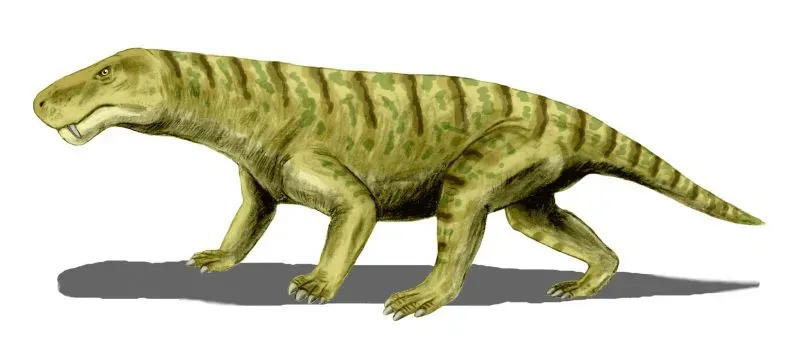
Gorgonopsids roamed the Late Permian, around two hundred sixty to two hundred fifty‑two million years ago, and they looked like something dreamed up for a dark fantasy video game. These were mammal‑like predators with long, saber‑like canine teeth, large heads, and relatively agile bodies compared to many of their reptilian contemporaries. They were top predators in their ecosystems, dominating land long before any dinosaur took that role.
They vanished in the catastrophic end‑Permian mass extinction, which nearly reset complex life on Earth. That means gorgonopsids were gone more than two hundred million years before T. rex appeared. I find them strangely poignant: they are like a trial run for big mammalian carnivores, an early prototype of the saber‑toothed cat idea. Unfortunately for them, the planet’s worst mass extinction ended their experiment long before the Mesozoic super‑predators, including T. rex, got their turn.
Megalograptus And Its Giant Sea-Scorpion Cousins
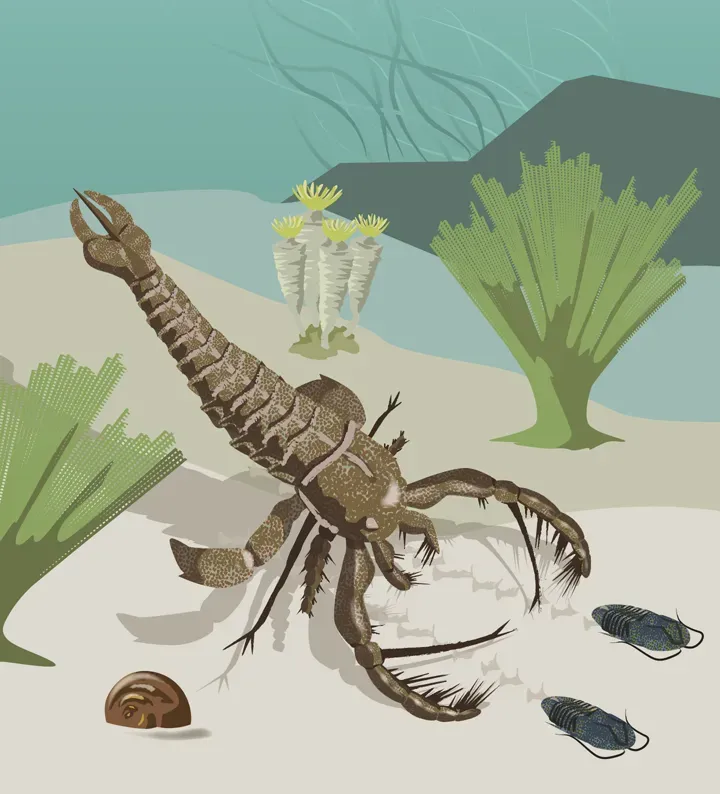
Before there were sharks chasing swimmers in horror movies, there were eurypterids – often called sea scorpions – prowling ancient coastlines and shallow seas. Megalograptus was one of these, living during the Late Ordovician, roughly four hundred forty‑plus million years ago. Some eurypterids reached lengths of two to two and a half meters, making them among the largest arthropods to ever exist, with frightening claws and a body plan that looks like a scorpion crossed with a horseshoe crab.
To picture their age gap with T. rex, imagine stacking multiple entire dinosaur eras between them. Eurypterids were already long gone by the early part of the Mesozoic, wiped out tens of millions of years before even the earliest dinosaurs evolved, let alone T. rex. The idea that giant sea scorpions had lifetimes of dominance, complete with their own prey and rivals, long before anything like a tyrannosaur walked the land really drives home how layered Earth’s history is. T. rex, impressive as it was, arrived after wave upon wave of earlier “monsters” had already come and gone.
Helicoprion: The Buzzsaw-Jawed Mystery Shark
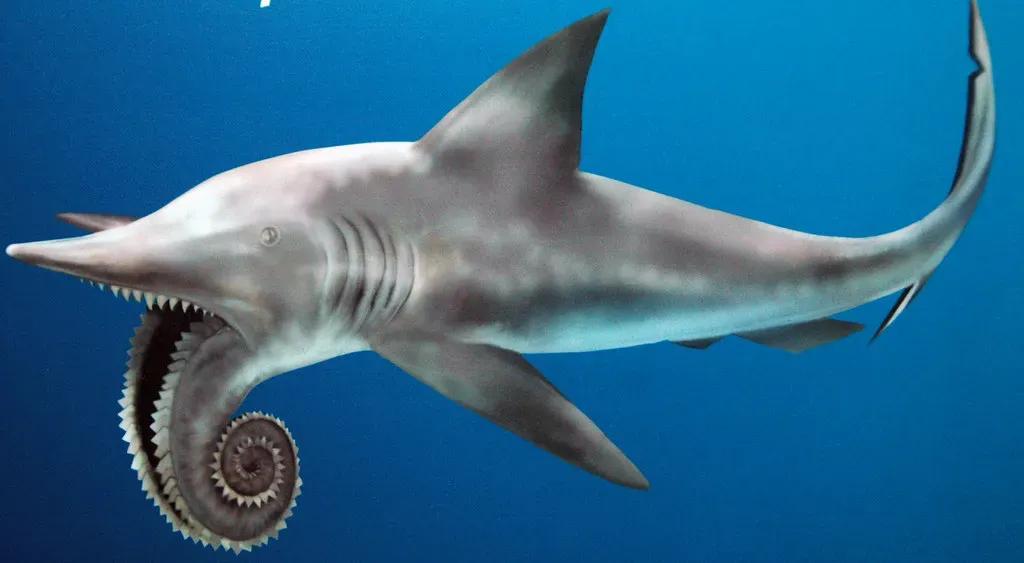
Helicoprion is one of those creatures that makes you wonder if nature occasionally runs design experiments just for fun. It lived from the Late Carboniferous into the Early Triassic, roughly around two hundred ninety to about two hundred fifty million years ago, vanishing well before dinosaurs showed up. Its claim to fame is a bizarre spiral of teeth – often called a tooth whorl – that sat in its lower jaw and looked disturbingly like a circular saw blade.
For decades, paleontologists debated where exactly that spiral went on the animal, because most of what survives in the fossil record is the whorl itself. Current evidence suggests it functioned like a rolling conveyor of teeth for slicing soft prey, perhaps squid‑like animals. Whatever the exact mechanics, Helicoprion disappeared roughly two hundred million years before T. rex ever took a bite of anything. It feels like a reminder that prehistoric seas were full of evolutionary experiments that came and went long before the creatures we think of as “iconic” even existed.
Meganeura: The Giant Dragonfly Of Oxygen-Rich Skies
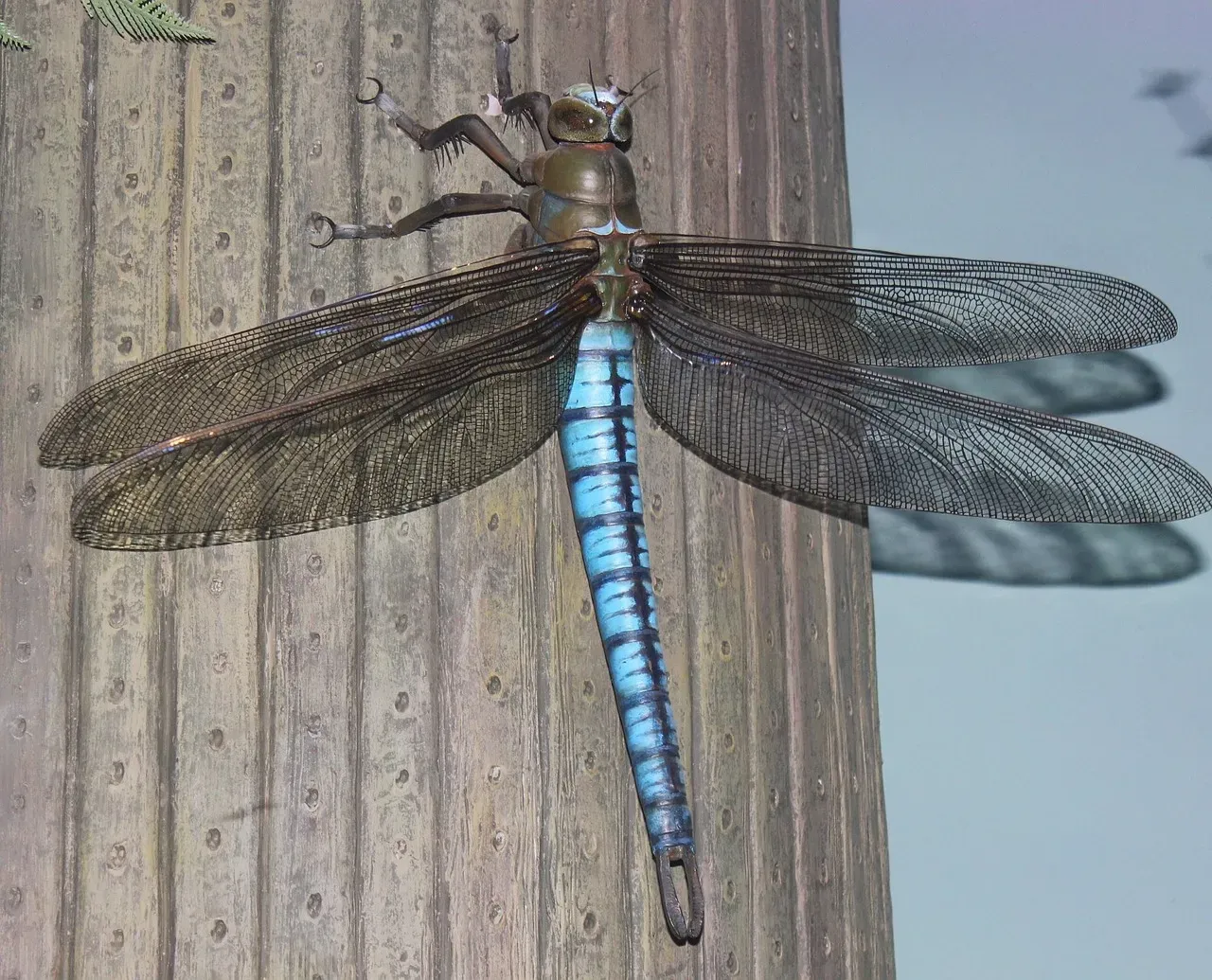
Meganeura, often compared to an enormous dragonfly, flew through Carboniferous forests around three hundred million years ago, when Earth’s atmosphere held significantly more oxygen than today. With wingspans approaching seventy centimeters or more, these insects were roughly the size of small birds, gliding over vast swamp forests filled with towering clubmoss trees and giant millipede‑like arthropods. They were likely aerial predators, picking off smaller insects the way hawks snatch songbirds.
By the time dinosaurs evolved, that unique high‑oxygen world had already faded, and with it the niche for such oversized insects. Meganeura and its giant insect peers had been gone for many tens of millions of years before the first dinosaur took a step, and far, far longer before T. rex came along. Every time I see a normal dragonfly skimming across a pond, I like to imagine its ancient cousin soaring above primeval swamps in a world T. rex never knew, a reminder that “giant, terrifying predator” is not a dinosaur-only job description.
Anomalocaris: The Early Apex Hunter Of The Cambrian Seas

Go back more than five hundred ten million years, into the Cambrian seas, and you meet Anomalocaris, one of the earliest known large predators on Earth. It looked like nothing alive today: a segmented, shrimp‑like body, a circular, pineapple‑ring‑style mouth, and a pair of spiny, grasping appendages in front to grab and wrench apart its prey. It swam using flexible lobes along its sides, gliding through oceans filled with trilobites and other early animals that were just figuring out how to have hard parts and defenses.
Anomalocaris vanished long, long before any land vertebrate walked the Earth, let alone a dinosaur. The time from Anomalocaris to T. rex is so enormous that it almost breaks intuition; you could erase the entire age of dinosaurs and still be only partway through that gap. When I think about it, T. rex starts to feel less like an ancient relic and more like a relatively recent arrival in a story that began with weird, soft‑bodied hunters like Anomalocaris staking out the first real apex predator roles in Earth’s history.
Conclusion: T. rex Was Late To A Very Old Party
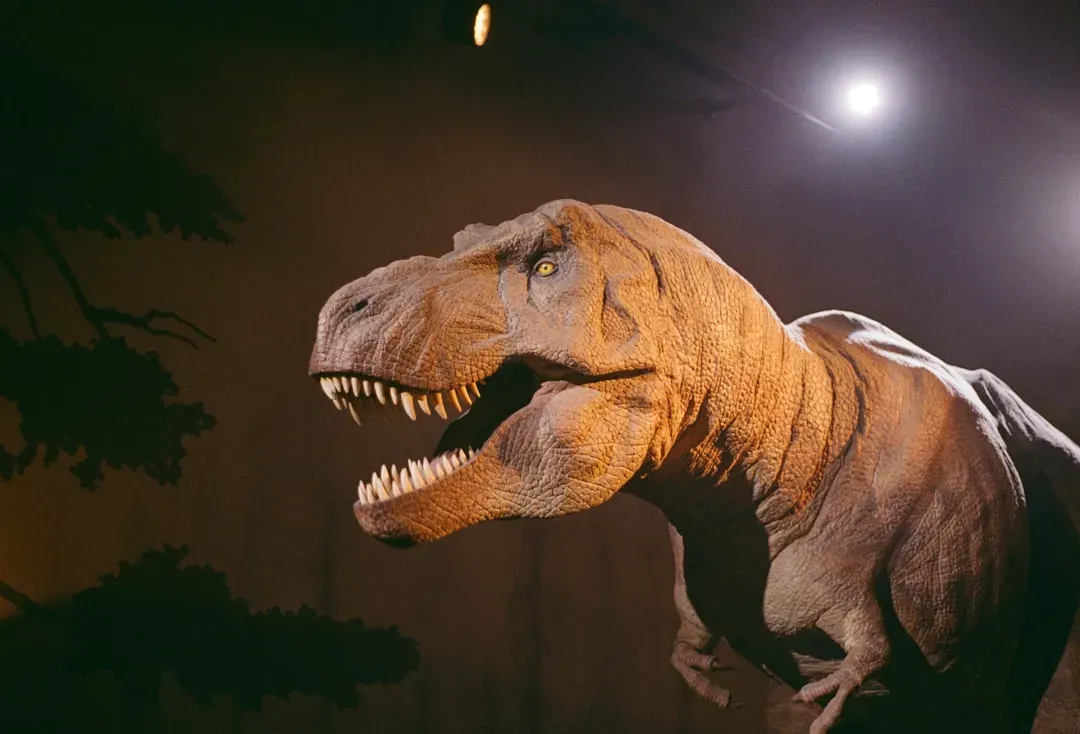
When you line up Dunkleosteus, Dimetrodon, trilobites, gorgonopsids, eurypterids, Helicoprion, Meganeura, and Anomalocaris, a pattern jumps out: T. rex is not the beginning of prehistoric wonder, it is closer to the end of a very long and messy experiment. Entire worlds rose and fell before it existed, each with its own giants, terrors, and strange evolutionary gambles. The dinosaur that dominates lunchboxes and museum gift shops is really just one of the last big acts in a deep‑time drama that started hundreds of millions of years earlier.
My honest opinion? We’re a bit too obsessed with T. rex and not nearly curious enough about the dynasties it never met. Paying attention to these earlier creatures changes how you see our planet: you stop thinking in “dinosaurs versus humans” and start thinking in waves of life, each one building on the ruins of the last. It is humbling and, in a strange way, comforting to realize we are just the latest wave. Next time you hear the name T. rex, will you picture only a giant Cretaceous predator, or will you remember the armored fish, saber‑toothed synapsids, giant insects, and Cambrian hunters that had already played their parts and vanished long before it roared?