
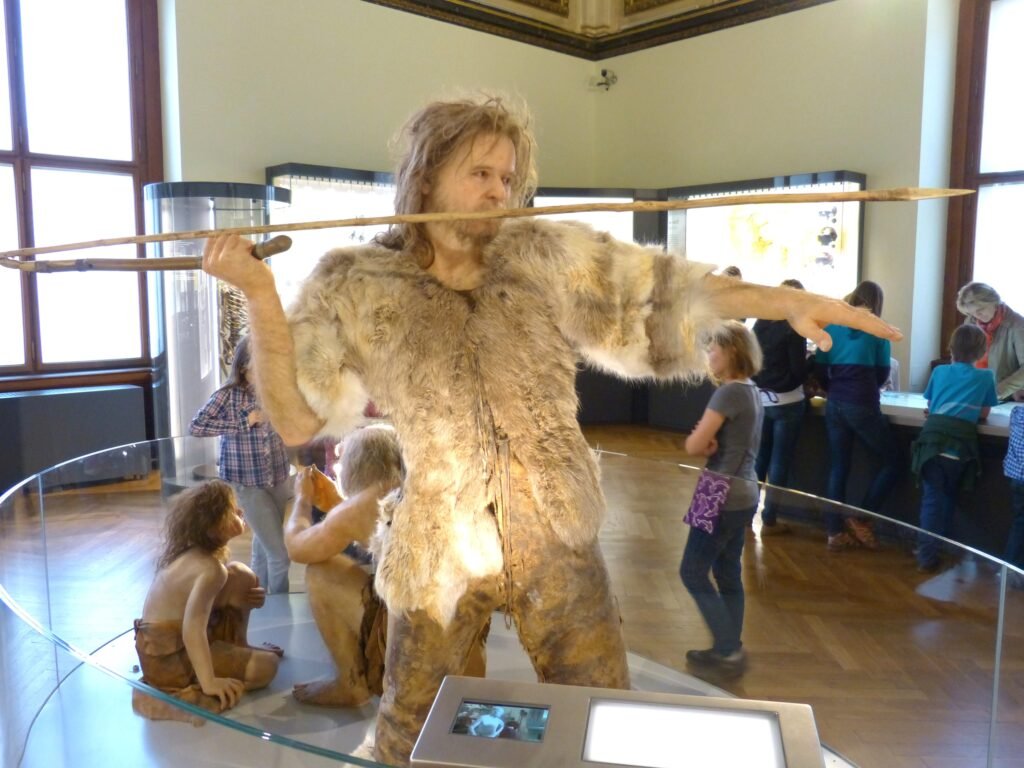
Picture the toolkit: a few chipped stones, some fire-hardened wood, maybe a bone needle if you were lucky. Now picture that same toolkit producing ocean crossings, tuned musical instruments, healed skull surgery, and trade networks spanning hundreds of miles. That gap – between what the tools should have allowed and what actually got built – is where this list lives.
Archaeologists keep running into the same uncomfortable pattern: behavior that looks decades or millennia “too advanced” for the materials on hand. It’s not magic, and it’s not a hoax. It’s a sign that we’ve badly underestimated what a modern brain can do with almost nothing. By the time you reach the first entry on this list, you may start wondering who the truly primitive ones really were.
#22 – Long-Distance Open-Water Voyaging

Early humans weren’t supposed to be “real” sailors until bronze-age ships, yet the migration record says otherwise. Archaeologists now think that humans were crossing stretches of open ocean at least 50,000 to 65,000 years ago to reach places like Australia and the islands around it. No boats survive from that age, but you don’t accidentally drift an entire breeding population across hundreds of kilometers of open water.
Fast Facts
- Evidence at sites such as Madjedbebe in Australia points to human occupation roughly 65,000 years ago
- Sahul (ancient Australia and New Guinea) was never connected to Asia by a land bridge, even at the lowest Ice Age sea levels
- No watercraft from this era have survived – every conclusion comes from indirect evidence
That implies planned voyages, seaworthy watercraft, and navigation good enough to hit land you can’t even see from shore. Think about the actual toolkit: sticks, vines, stone tools, maybe fire-hardened wood. From that, they somehow lashed together log or bamboo rafts and managed food, water, and fire on unstable platforms – repeatedly, and successfully enough to seed entire populations.
- Lashed together log or bamboo rafts capable of open-water crossings
- Managed food, water, and fire on unstable platforms for days at a time
Some researchers still lean on the “lucky drift” explanation, but more of them are quietly admitting these crossings look intentional. This wasn’t a one-off fluke. It had to work often enough, and reliably enough, to actually populate new land.
#21 – Precision Stone Toolmaking at Micron Scale

It’s easy to shrug at stone flakes sitting behind museum glass. Then you look at them under a microscope. Some Middle Stone Age blades, points, and backed microliths show edge angles and symmetry so consistent that modern experimental archaeologists struggle to replicate them without metal jigs.
With nothing but hammerstones, antler, bone, and sharp eyes, knappers controlled force and fracture in ways that shade into engineering. Sites in Africa and the Levant reveal standardized “production lines” for bladelets and composite tools – not random hammering, but a mental blueprint followed strike by strike, with imperfect pieces tossed aside to keep the set uniform.
- They understood, at least intuitively, complex fracture mechanics in stone
- They performed extremely fine, repetitive motions with no magnification at all
Some modern flintknappers need months of practice to hit that level of repeatability. If you believe cognitive sophistication tracks directly with tool material – stone equals simple, metal equals complex – these artifacts are a genuine problem for that theory. The hardware in the brain was already there; the world just hadn’t handed them steel yet.
#20 – Early Geometrically Planned Rock Art
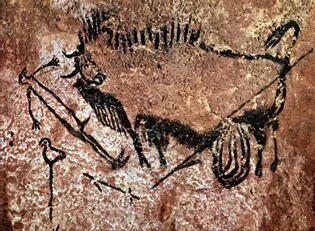
Most people imagine cave art as doodles on rock. The best examples look uncomfortably like graphic design. At sites like Lascaux and Chauvet in France, the placement of figures, the use of natural rock bulges for 3D effects, and the layering of colors all imply deliberate composition with geometric planning.
Artists used perspective tricks, overlapping, and the natural curvature of the walls to create illusions of motion – all with charcoal, mineral pigment, and animal fat. They did this with no rulers, no compasses, no grids, working by flickering firelight inside dangerous, enclosed spaces.
- No rulers, compasses, or measuring grids of any kind
- Flickering firelight and uneven, dangerous cave surfaces to work around
Some panels show repeated proportions between animals, spacing that mirrors known visual design principles, and echoing motifs across separated chambers. That’s not “wherever the rock happens to be flat.” It’s structured visual storytelling in three-dimensional space, laid out by torchlight, that rivals modern mural planning.
#19 – Controlled, Multi-Stage Use of Fire for Materials
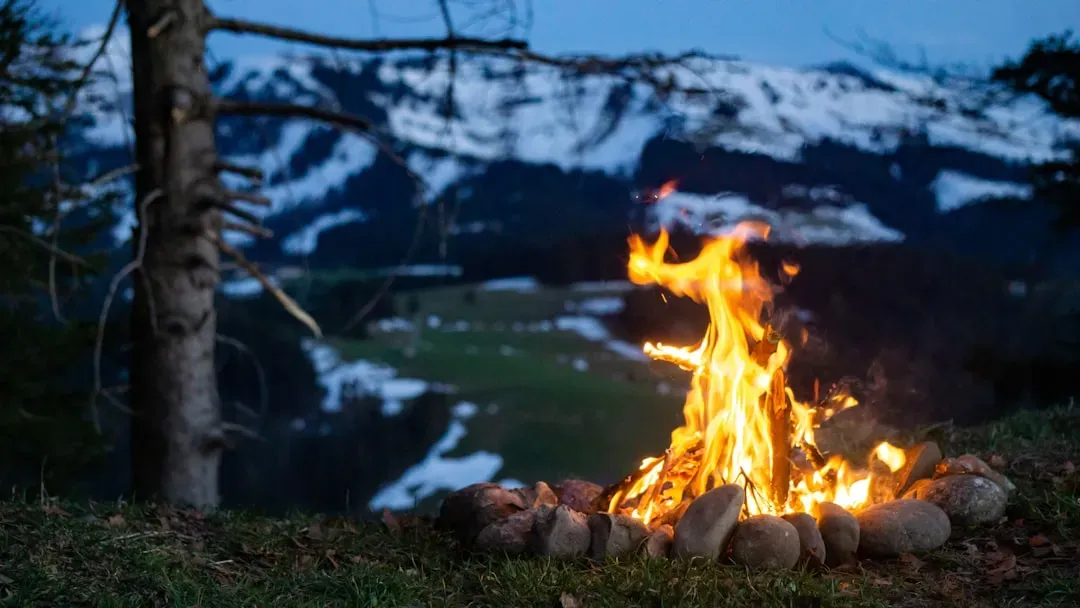
Textbooks cast early fire use as “keep warm, cook meat, scare predators.” The archaeological record quietly adds “do basic materials engineering.” Evidence from Africa, the Levant, and Europe shows early humans heat-treated stone to change its fracture properties, turning mediocre rock into high-performance toolstone.
They also fired pigments and hardened wooden spear tips using controlled temperature and timing. That means they weren’t just using fire – they were modulating heat for a specific material outcome, which requires distinguishing “too hot,” “not hot enough,” and “just right” purely by color, smell, and behavior.
- Judging heat by color, smell, and behavior with no thermometer
- Building reproducible setups using pits, embers, and covering materials
Heat-treated silcrete breaks more predictably and sharper than raw stone. Someone had to notice that rocks left near the hearth knapped better, then deliberately start baking batches of raw material before toolmaking even began. That’s a feedback loop and an experimental mindset that looks a lot like early lab work.
#18 – Large-Scale Cooperative Hunts Without Radios or Maps
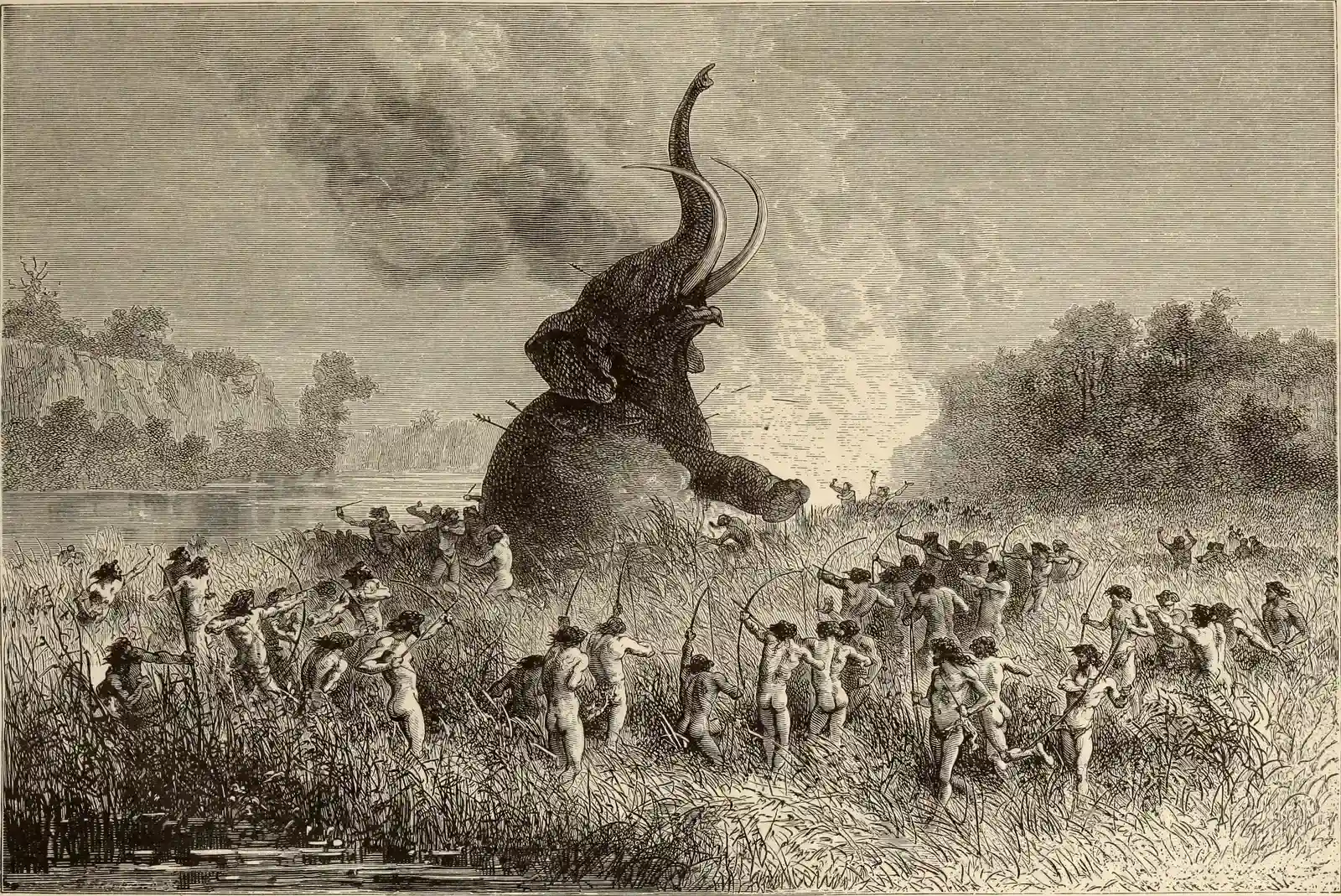
We treat “complex logistics” as a modern privilege – spreadsheets, GPS, group chats. Then you look at how early humans hunted megafauna. Kill sites show orchestrated drives of mammoth, bison, and other large animals, pushed into pits, over cliffs, or into kill zones with hunters already waiting in position.
To pull that off, groups of dozens had to coordinate timing, roles, and contingencies across distances using only voice, gesture, and maybe simple sound signals. That requires shared mental models of the landscape and animal behavior, pre-hunt planning down to the hour, and real-time adaptation when the animals inevitably do something unexpected.
- Shared mental models of the landscape and animal behavior
- Pre-hunt planning down to timing and position
- Real-time adaptation when the herd doesn’t cooperate
Some archaeologists still default to “trial and error over millennia,” but even trial and error requires minds capable of modeling complex cause and effect and passing lessons on socially. It’s essentially project management with stone tools and animal skins – the same skill we now call “high-level strategy” when it shows up on a whiteboard.
#17 – Early Long-Distance Trade and Resource Networks
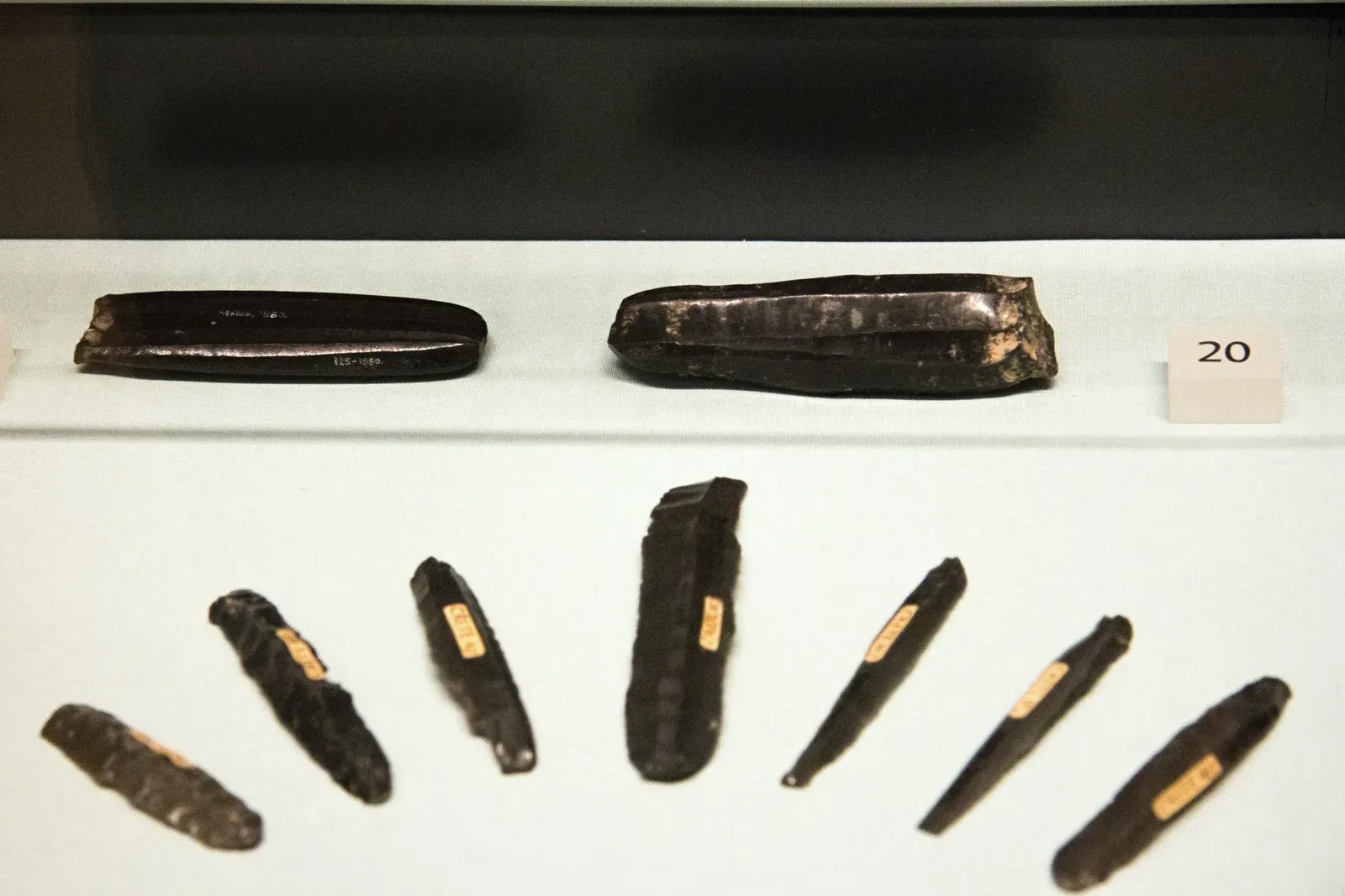
The stereotype: small, isolated bands scraping by on whatever’s nearby. The evidence: stone, shells, and pigment moving hundreds of kilometers from their source. In multiple regions, artifacts show early humans moved specific, high-quality materials over long distances, implying trade, gifting, or deliberate expeditions.
Obsidian tools turn up far from any known source. Marine shells show up deep inland. Distinctive ochres appear at sites nowhere near their origin. All of it points the same direction – value judgments about which materials were worth a long trip, and social ties stretching far beyond daily foraging range.
- Mental maps extending far beyond daily foraging ranges
- Social ties with distant groups, built on trust and obligation
- Clear value judgments – not all stone was treated as equal
With no pack animals, no wheels, and no written records, they still built wide social and economic webs. Modern people romanticize “self-sufficient” small bands, but this looks more like early supply chains and trade agreements – enforced by reputation, story, and kinship instead of contracts.
#16 – Fast Anatomical Adaptation to Extreme Environments
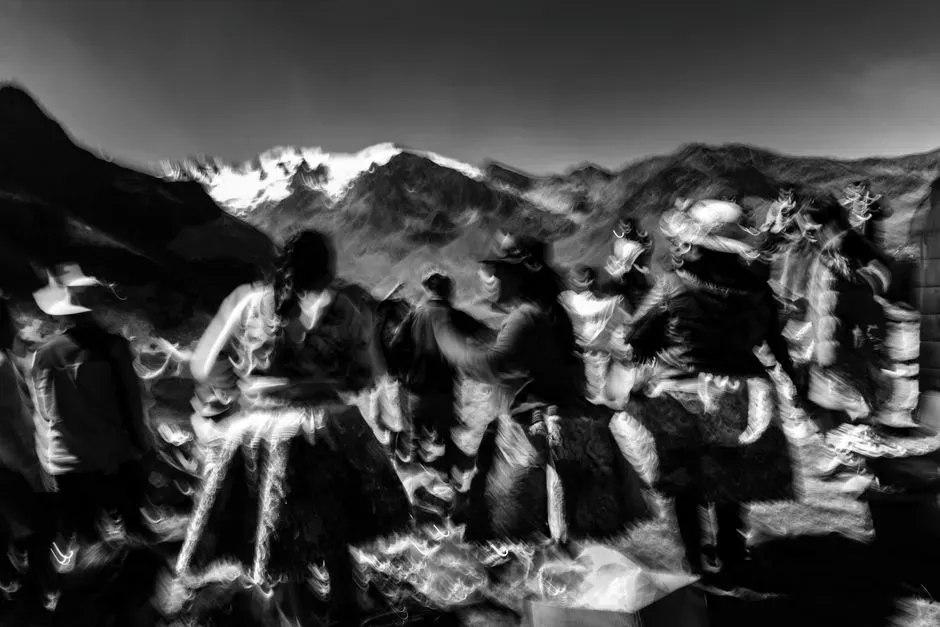
The old view says humans slowly crept out of Africa and painstakingly adapted over endless millennia. The actual timelines are tighter – almost uncomfortably so. Within a relatively short evolutionary window, human groups developed physiological adaptations to high altitude, extreme cold, and new diets that rival anything later agricultural societies managed.
Think of Tibetan highlanders’ oxygen-processing traits, or Arctic groups’ cold tolerance and fat metabolism – all emerging before modern medicine, climate-controlled housing, or even stable agriculture. Strong selection pressure met an already flexible genome, and culture (clothing, shelter, cooking) bought biology the time it needed to catch up.
- Strong selection pressure combined with an already flexible genome
- Cultural choices buying biology time to adapt
- Rapid learning cycles spreading through imitation and story
They weren’t passively molded by their environments; they hacked them. Insulated shelters from bone and hide, daily routines tuned to light and temperature cycles, strategic food selection – all while keeping population structures loose enough for beneficial traits to spread. We assume evolution is too slow to notice. In humans, biology and culture apparently move together faster than most people are comfortable admitting.
#15 – Early “Surgery” and Complex Medical Care

If you assume early humans just let injuries take their course, fossil skeletons will shock you. Some remains show healed skull openings, severe fractures, and disabilities that would have required ongoing care for years. There are cases of trepanation-like holes in skulls where the bone has visibly grown back – meaning the person survived long after a genuinely risky procedure.
Without metal tools, antiseptic, or any concept of germ theory, someone still made the decision to cut into bone. Someone else recovered from it. That takes fine motor control, real anatomical knowledge built purely from experience, and a social structure willing to support someone who couldn’t pull their own weight for a long stretch of time.
- Fine motor control and anatomical knowledge learned by experience
- Social tolerance for members who needed long-term care
- Shared knowledge of plants, poultices, and pain management
It’s fashionable to claim “life was cheap” in the Paleolithic. The healed injuries say the opposite – people invested enormous effort into each other’s survival. You don’t keep a disabled hunter alive for years unless the group values more than raw physical output. It’s not modern surgery, but it’s experimental medicine under horrifying constraints, and the cognitive leap behind it is enormous.
#14 – Sophisticated Clothing and Composite Gear From Perishable Materials
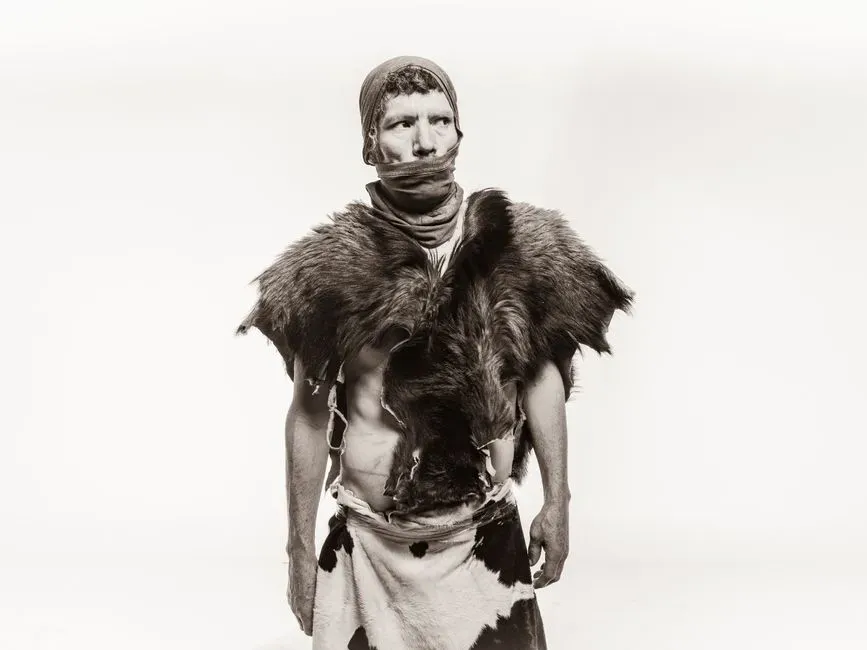
Almost everything genuinely high-tech from prehistory rotted away centuries ago. What’s left – bone needles, microscopic wear traces, rare scraps of preserved textile – is already startling. We find finely made eyed needles, twisted plant fibers, and hints of tailored garments tens of thousands of years older than most people assume.
Producing fitted clothing from hide or woven fiber with only stone and bone tools requires pattern-cutting, seam placement, and a real understanding of how different materials drape and stretch. Composite tools – stone tips hafted onto wooden shafts with hide or plant bindings – are essentially early modular gear systems: the point is replaceable, the shaft gets reused, the bindings are standardized.
- Deciding which body areas need more insulation or flexibility
- Combining fur, leather, sinew, and bark fiber for specific tasks
- Repairing and modifying gear instead of simply discarding it
That’s not “primitive.” It’s the same logic behind modern gear maintenance, applied with zero metal and zero written instructions – just a working design language passed hand to hand.
#13 – Symbolic Burial and Abstract Social Concepts
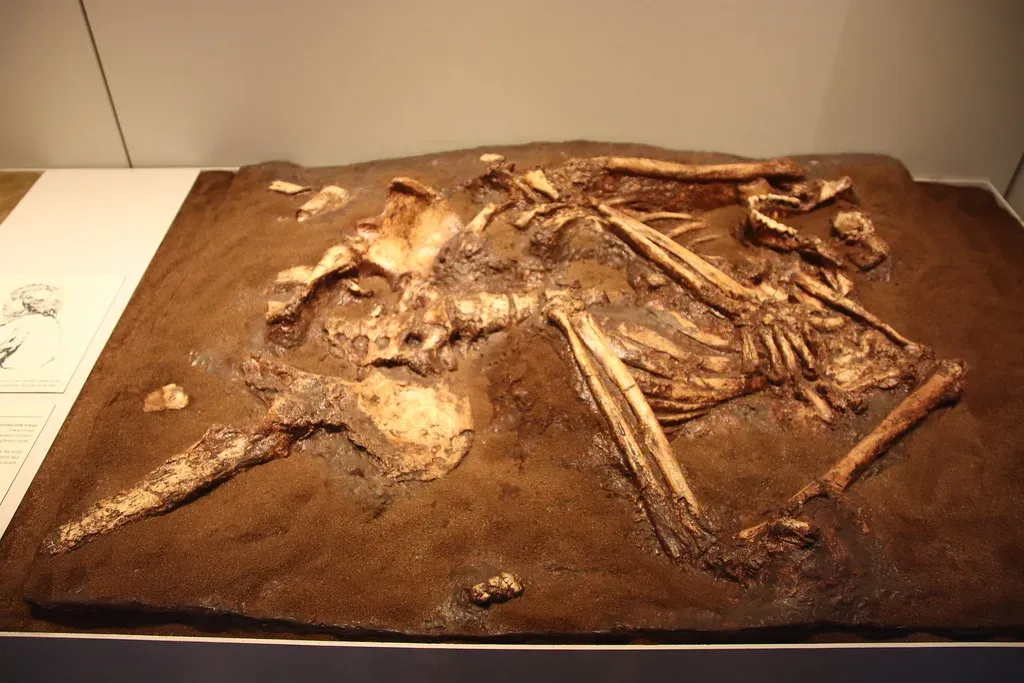
Most people still talk about early burials as “maybe just to keep the camp clean.” That explanation collapses under the details. Some graves contain carefully positioned bodies, grave goods, pigments, and deliberate manipulation of space – arrangements that seem to encode social status, identity, or beliefs about what happens after death.
Items with no clear practical use for a corpse – shells, beads, tools deliberately broken in specific ways – suggest symbolic behavior, not simple disposal. That requires abstract concepts about self and others that go well beyond immediate survival, plus a narrative framework around death, ancestors, or spirits.
- Abstract concepts about self and others beyond raw survival
- Narrative frameworks around death, ancestors, or spirits
- Emotional bonds strong enough to justify ritual over gathering food
You don’t spend precious pigment on a body unless the act matters inside your mental universe. And you don’t repeat similar patterns across generations unless those ideas are actively being taught, reinforced, and argued about within the group. Calling this “maybe just aesthetic preference” feels like a dodge. The simpler reading is that these people had rich, emotionally loaded inner worlds we’d recognize instantly.
#12 – Proto-Mathematical Notching and Timekeeping
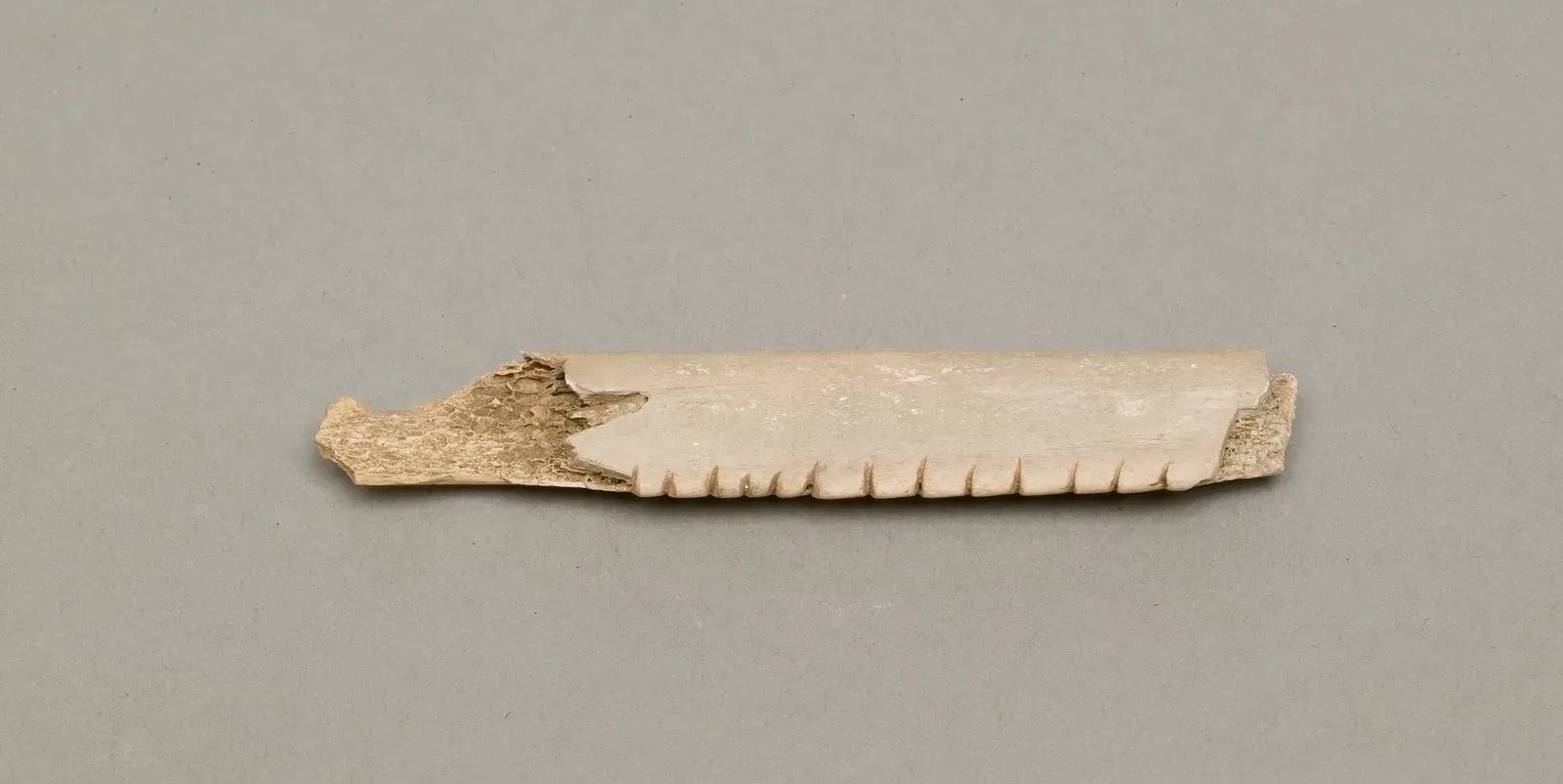
It sounds wild to say “Stone Age math,” but look at certain notched bones with fresh eyes. Some engraved pieces show non-random sequences and groupings that look like deliberate counting, calendrical tracking, or record-keeping. Grouped tallies, symmetric arrangements, and possible lunar-cycle tracking suggest people were quantifying their world long before written numerals existed.
With no paper, no number symbols, and no formal arithmetic, they still tracked recurring events – animal migrations, lunar phases, possibly menstrual cycles – and represented “more,” “less,” and “how many” in a persistent physical form that could be taught to the next generation.
- Tracking recurring events like migrations and lunar phases
- Representing quantity in a durable, teachable physical form
- Passing these systems down across generations
Worth Knowing
- The Lebombo bone, a notched baboon fibula from Border Cave in southern Africa, is approximately 8cm long, and is between 42,000 and 43,000 years old, according to 24 radiocarbon datings
- Its 29 notches have been proposed as a possible lunar-cycle tally, though the bone is broken at one end so the original count is uncertain
- The Ishango bone, found near the Semliki River in the Democratic Republic of Congo, is roughly 20,000 years old and is often discussed as an early counting or tally device
Even if we can’t fully decode every artifact, the intent to systematize and store quantitative information is obvious. That’s math in its rawest form – not abstract proof, but “we need a way to keep track of this so we don’t forget.” The idea that “real” math starts with ancient civilizations ignores a much deeper prehistory of pattern tracking.
#11 – Advanced Use of Natural Landscapes as Technology
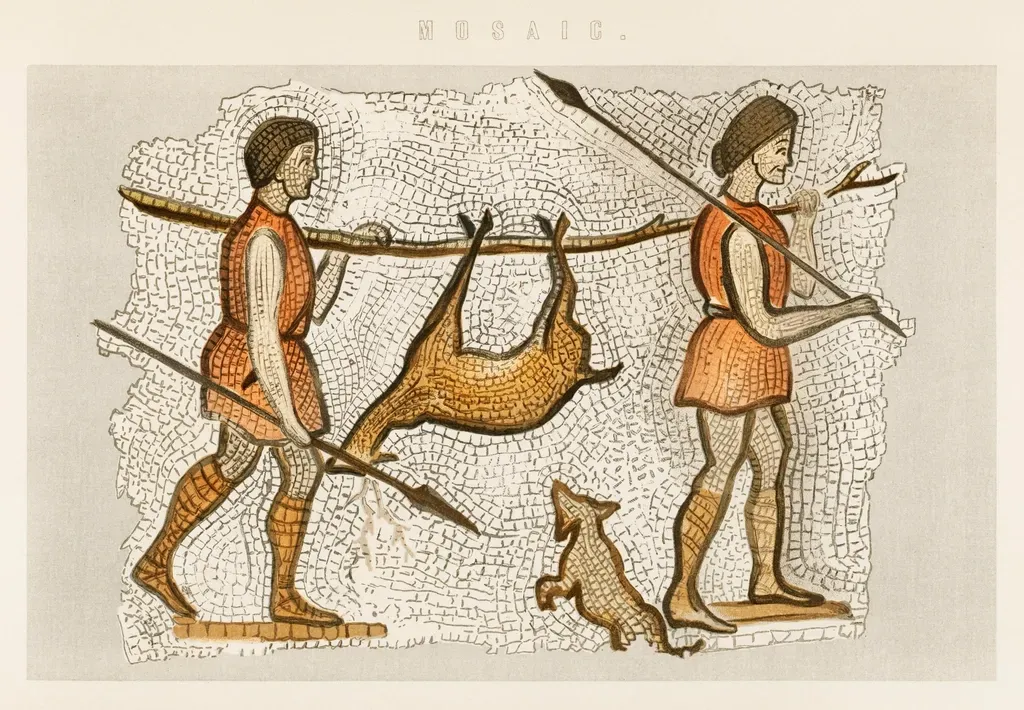
We think of tools as hand-held objects. Early humans treated entire landscapes as extendable technology. Hunting blinds, drive lines made from stacked stones or brush, strategic burning to shape plant growth, and repeated use of specific vantage points all show that people mapped the affordances of terrain and then engineered ecosystems with almost no physical infrastructure.
The “tool” isn’t just the spear – it’s the cliff that funnels animals, the burned patch that draws grazers back, the narrow crossing turned into an ambush point. That requires long-term mental models of how land and animals interact across seasons, plus knowledge passed down through generations about which valley works for a drive when the wind blows a certain way.
- Long-term mental models of land-animal interaction across seasons
- Intergenerational knowledge of terrain-specific hunting tricks
- The ability to see invisible structures – corridors, choke points, safe routes
In modern terms, this is landscape architecture and wildlife management done with observation and oral memory alone. The idea that early humans simply “took what nature offered” badly underestimates how aggressively they tuned and hacked their surroundings. Once you see land as a machine you can program with fire, stone, and timing, “primitive” stops being an honest word.
#10 – Rapid Language Complexity Without Writing
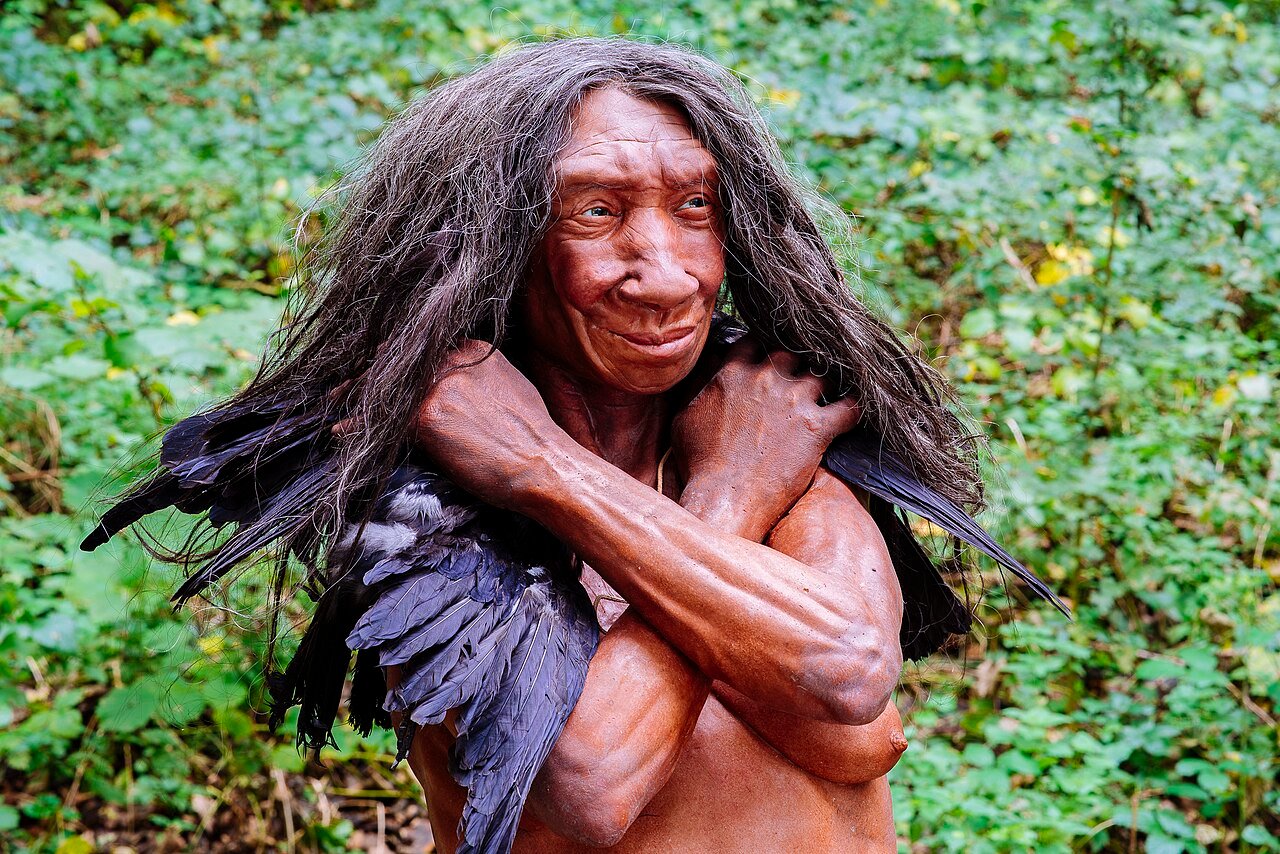
We’ll never have a recording of Paleolithic speech. But the behaviors we do see absolutely require rich language. Coordinated hunts, complex kinship structures, symbolic rituals, and multi-step toolmaking sequences all point toward languages capable of expressing abstract categories, embedded clauses, and hypothetical scenarios. You can’t teach knapping or run a large coordinated hunt with grunts and pointing.
What’s strange is how fast this likely emerged once the cognitive and anatomical pieces were in place. Language evolution models suggest full-blown, grammatically complex speech may have arrived on time scales closer to a cultural burst than a slow biological crawl.
- Negotiating alliances and obligations verbally
- Building shared mythologies and cosmologies
- Teaching complicated skills through words, not just imitation
We tend to link “advanced language” with literature, but that’s really just about storage. The speech itself was almost certainly mind-bendingly complex long before anyone scratched a symbol into clay.
#9 – Early Seafaring Navigation by Environmental Cues

Back to water, because the details get even stranger once you think about how they actually steered. To cross open sea with no compass, no map, and no sextant, early voyagers must have learned to read stars, swells, winds, bird flight paths, and even cloud behavior over distant islands. Traditional Polynesian navigators still demonstrate how rich that knowledge system can be – and there’s every reason to think a version of it existed far earlier.
Using nothing but observation and memory, they likely built mental “star paths” to hold a heading at night, recognized swell patterns that persist long after land drops from view, and associated specific bird behavior with nearby shore. That’s a cognitive load modern people rarely notice, because we’ve outsourced all of it to instruments.
Quick Compare
- Modern GPS ↔ memorized “star paths” used to hold a heading through the night
- Weather radar ↔ reading cloud behavior and bird flight to sense land beyond the horizon
- Tide charts ↔ tracking swell patterns that persist long after the coast disappears
- Mental “star paths” used to hold a heading through the night
- Swell patterns read as directional signals far from land
- Bird behavior used to signal proximity to shore
The brain becomes the GPS, the weather app, the tide chart, and the compass – all stored in oral form. Every successful voyage refined the shared mental model. Every survived failure adjusted the protocol. It’s trial-and-error, yes, but organized into a living tradition that looks a lot like early empirical science.
#8 – High-Fidelity Long-Term Cultural Memory

We underestimate what a purely oral culture can remember, mostly because our own memories are atrophied by outsourcing everything to notebooks and phones. Many early human behaviors imply detailed knowledge preserved across dozens of generations without writing – migration routes, dangerous plants, seasonal patterns, and even mythic histories tied to real geological events like eruptions or sea-level change.
Maintaining that took repetitive storytelling built around rhythm and imagery, community enforcement of a “canonical” version with room for controlled variation, and real social incentives – status for a good storyteller, consequences for a dangerously wrong one.
- Repetitive storytelling with built-in mnemonic hooks
- Community enforcement of a canonical, trusted version
- Social status tied directly to accurate recall
Some Indigenous oral traditions today still preserve information about landscapes and events thousands of years old, encoded symbolically. There’s no reason to think Paleolithic groups were any less capable – if anything, their survival depended on it more. “No writing means no history” is a modern bias. Their whole environment was effectively a text, and their stories were the reading system.
#7 – Early Chemical Knowledge Embedded in Daily Life

No, they weren’t distilling lab reagents. But they were absolutely doing chemistry. Tanning hides, fermenting food, extracting poisons, and producing durable pigment all require manipulating pH, time, temperature, and exposure in consistent, repeatable ways. Even without any theory behind it, they knew certain barks, ashes, or animal brains plus time would transform a stinking hide into soft, wearable leather.
Each step was effectively a hypothesis: if we soak this longer, does it get better or worse? Over centuries, tightly guarded practical chemistry traditions formed and passed down, refined the same way a lab refines a technique – through observation, repetition, and correction.
- Controlled rot – fermentation and curing – to preserve food
- Plant resins and tree saps used as adhesives and sealants
- Leaching, soaking, and burning to make marginal foods safe to eat
We call this “craft” because they lacked chemical equations. Functionally, it’s the same mindset behind any chemistry lab: altering matter predictably by controlling variables, using nothing more than sharp observation and memory.
#6 – Social Complexity Rivaling Small-Scale States

People still picture early groups as flat, egalitarian bands with almost no politics. The fuller picture is messier. Burial differences, settlement patterns, and artifact distribution all hint that some groups had status hierarchies, specialized roles, and intricate kinship rules governing marriage, conflict, and resource rights – legal and political structure with no written law behind it at all.
With only speech and memory, they managed dispute resolution through mediators or councils, detailed rules about who could marry whom and what obligations followed, and systems of prestige separate from raw physical strength.
- Dispute resolution through mediators, councils, or ritual
- Marriage rules and the obligations that came with them
- Prestige and influence systems unrelated to physical strength
Some modern foraging societies show just how dense these unwritten rules can get – thousands of kin terms, taboo networks, ritual obligations, all held entirely in memory. Translate that back into deep time and the “simple band” story starts looking like wishful thinking. We like to believe politics began with cities. In reality, humans were probably arguing about fairness and status long before anyone built a wall.
#5 – Managing Fire Ecologies on a Landscape Scale
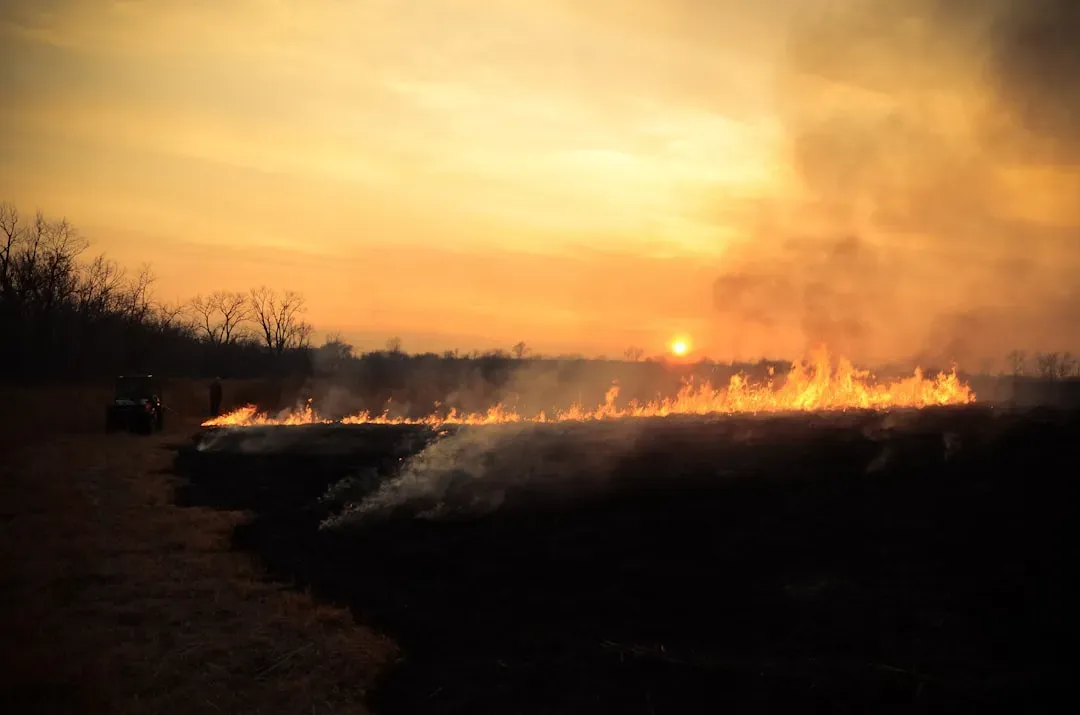
Fire scares modern people mostly because we’ve forgotten how to use it deliberately at scale. Evidence suggests early humans regularly used controlled burning to shape entire ecosystems, encouraging certain plants, resetting succession, and improving future hunting prospects. This “fire-stick farming” doesn’t happen by accident – it’s a learned technology with brutal failure costs.
With no satellites and no fire engines, they still had to know which season and weather conditions kept a fire low and manageable, how often to burn to favor desired species without wrecking the soil, and how to read wind and fuel load on the fly, in real time.
- Reading weather and season to keep a burn manageable
- Timing repeat burns to favor certain plants without ruining soil
- Adjusting to wind and fuel load in real time
Get it wrong, and you burn your own resources or your own camp. Get it right consistently, and you turn wild land into a semi-managed mosaic tailored to your needs. They never used the phrase “ecosystem services,” but they understood, in their bones, exactly how fire, plants, animals, and people interact – and they applied that knowledge with surgical precision.
#4 – Early Musical Instruments and Complex Sound Design
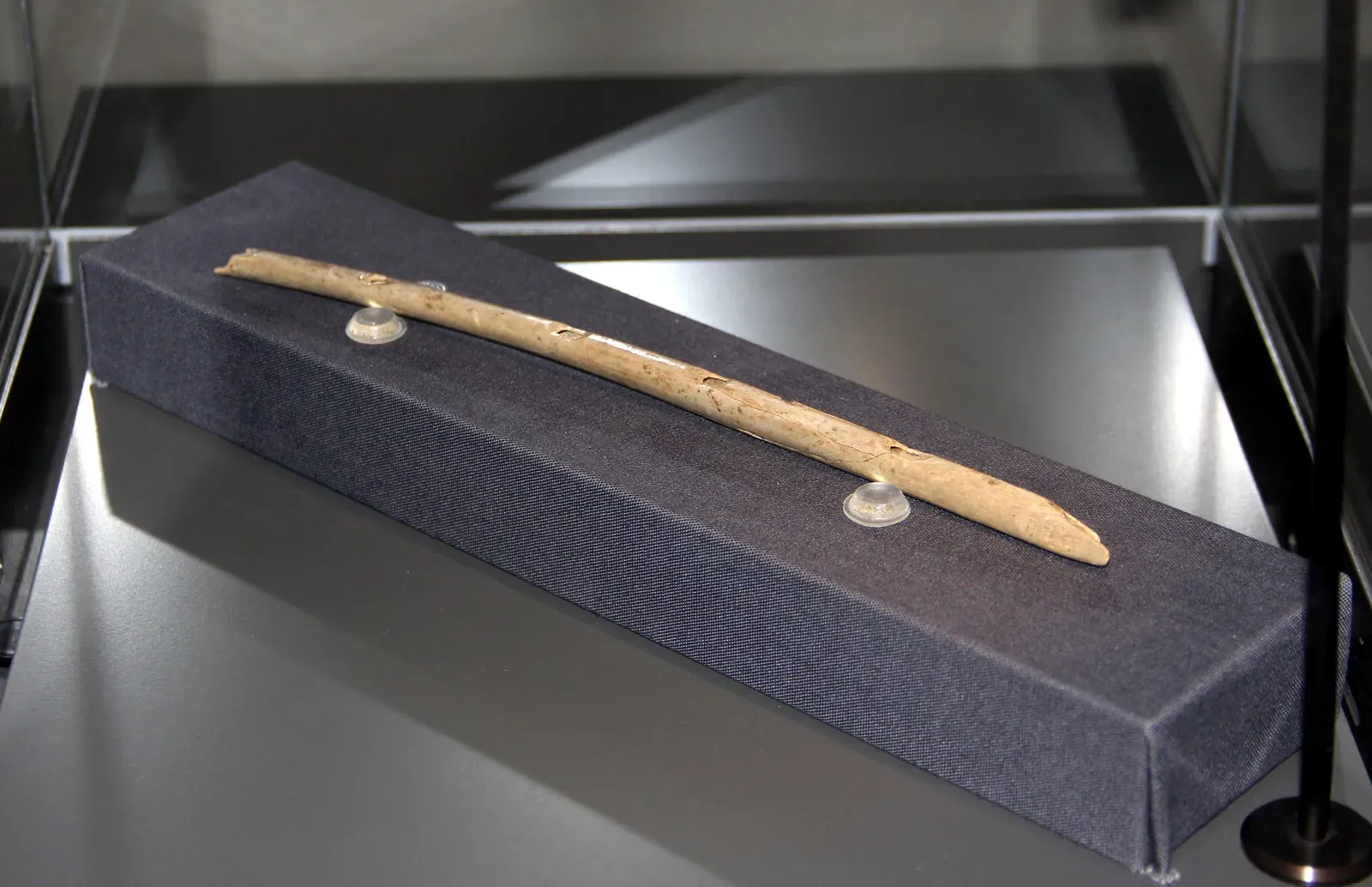
Bone flutes, percussion setups, resonant chambers deep in caves – music isn’t some late luxury add-on. It’s old. Some of the oldest known instruments are carefully crafted flutes with specific hole placements, tuned enough to produce actual scales instead of random noise.
At a Glance
- The Hohle Fels flute, carved from a griffon vulture wing bone in what is now Germany, has five finger holes and dates to roughly 35,000 years ago
- The Divje Babe flute, made from a cave bear femur in Slovenia, has been dated to somewhere between roughly 40,000 and 60,000 years old, though debate continues over whether the holes are man-made or the result of animal gnawing
- A related mammoth-ivory flute from the same German cave complex required splitting curved ivory along its grain, hollowing both halves, and rejoining them with an airtight seal
Add drumming surfaces and cave spaces possibly chosen for their acoustics, and you’re looking at deliberate sound design. Creating that with stone tools takes precise drilling or scraping without cracking fragile bone, an ear for how length and spacing shift pitch, and shared cultural standards for what counts as “in tune” versus noise.
- Precise drilling or scraping without cracking fragile bone
- An intuitive grasp of how length and hole spacing shift pitch
- Shared cultural standards for “in tune” versus chaotic sound
Music likely bound groups together, stored information, and regulated emotion. It’s not trivial that they poured scarce time and material into non-utilitarian sound tools – unless social cohesion and emotional regulation are themselves survival technology. The surprising part isn’t that they had music. It’s that some of their instruments show design choices a modern luthier would immediately recognize.
#3 – Artwork With Implied Motion and Narrative
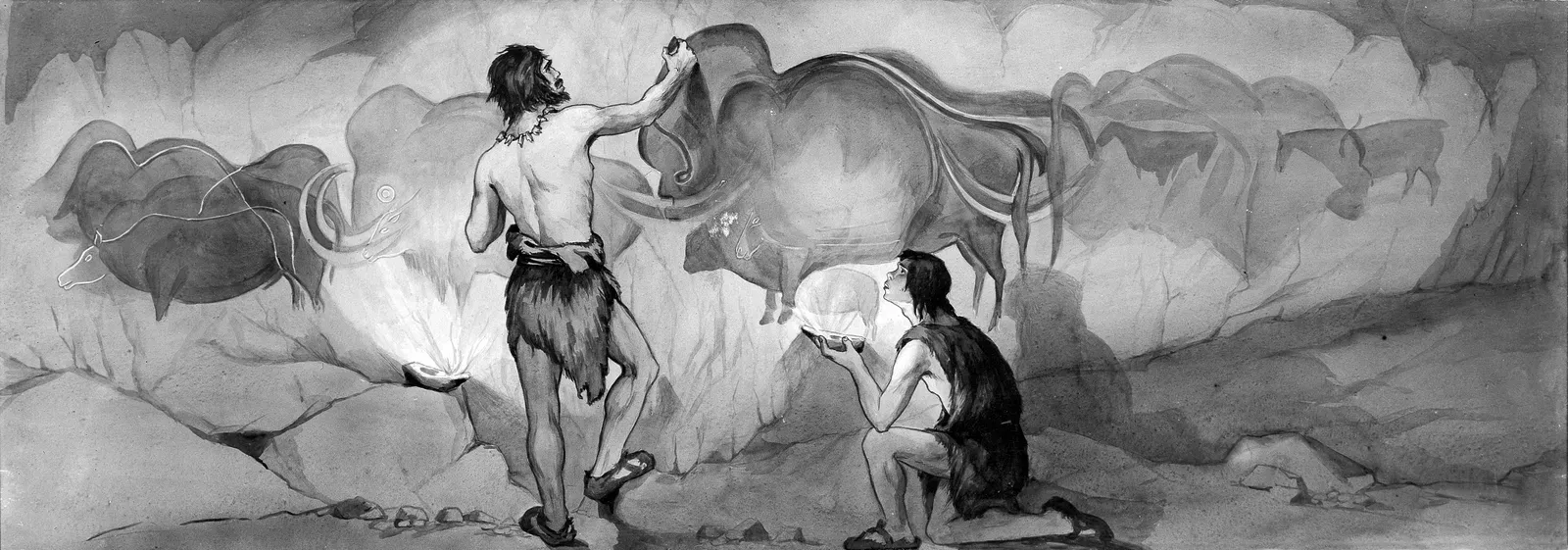
The best Paleolithic art doesn’t just show animals – it tells stories and suggests movement. Multiple overlaid legs, blurred outlines, and sequences of images running along cave walls hint at artists experimenting with visual techniques to convey motion, centuries before anyone dreamed of film. Some researchers even argue that torch flicker across these images creates an early form of animation.
Arriving at that with charcoal and ochre takes keen observation of how animals actually move through space, the ability to abstract that movement into key frames, and an audience already trained to “read” a static image as something dynamic.
- Close observation of how animals move through space
- Abstracting movement into distinct key frames
- An audience trained to read static images as motion
This isn’t casual iconography – it’s narratively loaded imagery placed along a deliberate route through the cave, so a viewer experiences it as a sequence, essentially storyboarding. We like to think of comics and animation as modern inventions. The building blocks – layered frames, implied motion, sequential storytelling – were already being explored on cave walls with zero formal tools.
#2 – Surviving Massive Climate Swings With No Forecasts

Modern societies panic when the thermostat shifts a couple of degrees. Early humans rode out entire ice ages and abrupt warming phases with nothing but brains, stories, and stone. Over tens of thousands of years, they tracked shifting animal ranges, changing plant communities, and new disease patterns, adjusting migration routes, settlement choices, and diets accordingly – with no climate models and no written data beyond memory and myth.
Surviving that meant catching subtle early signals, like an animal that simply didn’t return one year, and being willing to rewire an entire way of life instead of clinging to inherited routine. It also meant coordinating group decisions about when to move, split apart, or merge with another band.
- Reading subtle early signals of ecological change
- Rewiring lifeways instead of clinging to old routines
- Coordinating group decisions to move, split, or merge
Some mythic traditions today may encode real memories of rising seas or unusual winters from deep prehistory, wrapped in symbolic language. That’s not “just stories” – it’s a survival library. The real shock is that, given their tools, they may have outperformed many modern societies in raw adaptability. They changed faster than our infrastructure often can.
#1 – Building Complex Mental Models Without External Notation

Underneath every capability on this list sits the strangest one of all: what their minds were doing entirely off the record. Early humans ran incredibly detailed simulations in their heads – of animal behavior, weather, tool fracture, social dynamics – with zero help from writing, diagrams, or any digital aid. Every hunt plan, migration decision, tool redesign, or social intervention had to live in working memory, narrative, and physical practice, full stop.
That invisible skill set included holding multi-step procedures in mind and editing them on the fly, modeling other people’s intentions well enough to guess who might cooperate and who might not, and folding new evidence into an existing worldview without letting the whole thing collapse.
- Multi-step procedures rehearsed and edited entirely in the head
- Modeling other people’s intentions and likely behavior
- Integrating new evidence without collapsing the existing worldview
We downplay this because we treat literacy and notation as prerequisites for “real” complex thought. In reality, our ancestors’ cognitive feats may have been more demanding precisely because nothing could be offloaded to paper. The least visible technology they ever built – the ability to think in layered, dynamic, abstract ways – was probably the most advanced thing on this entire list, and it came standard long before metal, cities, or writing.
The Bottom Line
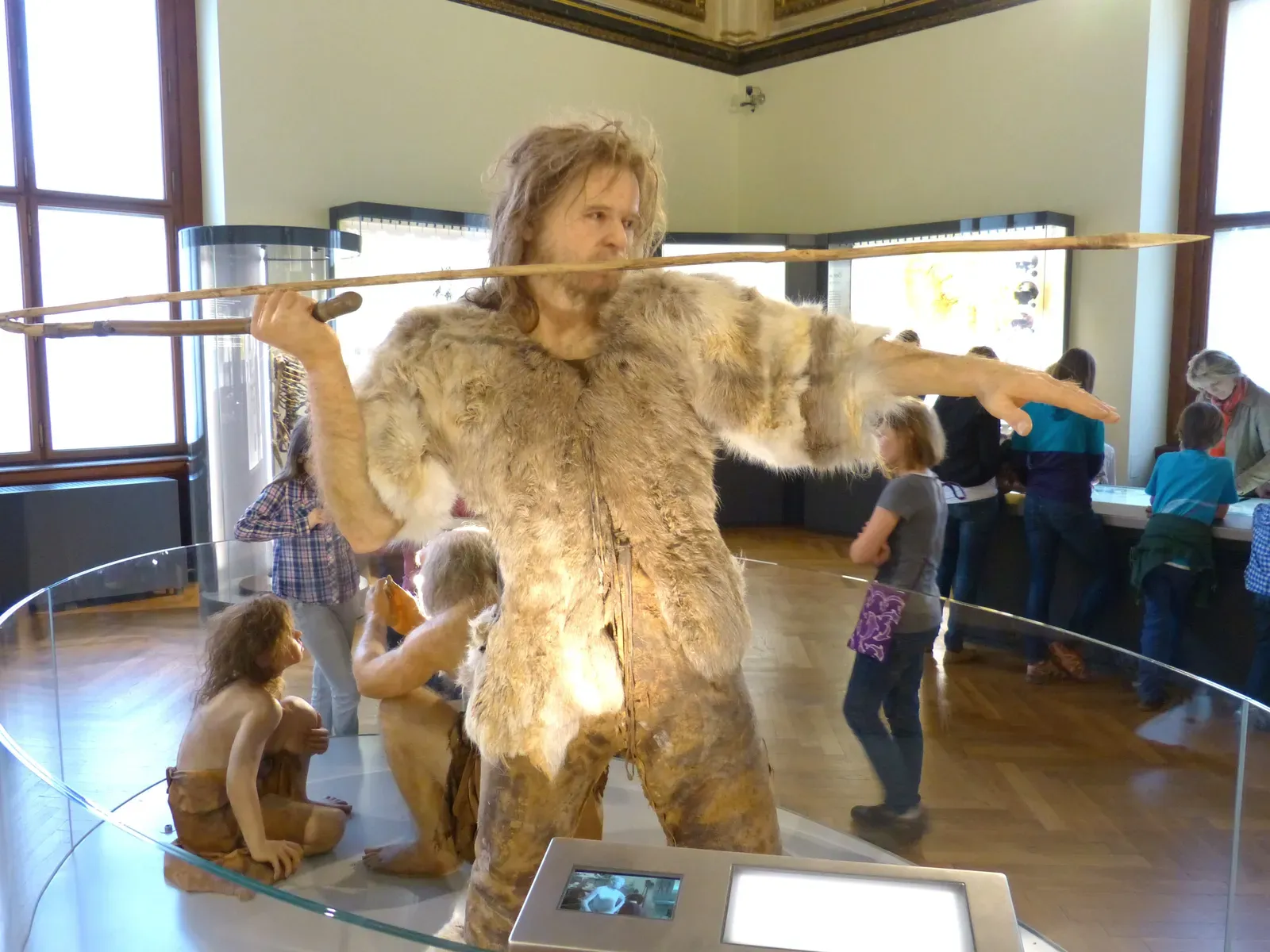
Line up the evidence honestly and the most uncomfortable conclusion is also the simplest one: by the time we’re looking at “early” Homo sapiens, the mental hardware is basically us. What changed over the last 50,000 years wasn’t raw intelligence – it was accumulated cultural scaffolding: metal, writing, engines, silicon. We keep acting shocked when people with stone tools pull off ocean crossings, high-skill surgery, calibrated chemistry, or complex politics. That shock says a lot more about our bias than it does about them.
Man is a singular creature. He has a set of gifts which make him unique among the animals: so that, unlike them, he is not a figure in the landscape – he is a shaper of the landscape.
Jacob Bronowski
The story we were sold – from “primitive caveman” to “modern human” – is wrong mostly in the direction of condescension. If anything, many of these people were tougher, more observant, and more mentally flexible than we are, precisely because they had no backups. No cloud storage, no manuals, no safety net – just memory, muscle, and each other. Disagree? Think there’s an early human capability we’re still sweeping under the rug? Make your case in the comments – I want to hear the one we missed.