

Long before the first scribe pressed a reed into wet clay, the human brain was already running a full operating system of science. Most people assume “history” begins with writing, but that’s backwards. For roughly 200,000 years, Homo sapiens and their Neanderthal cousins tracked moons, treated infections, engineered fire, bred crops, and sailed open ocean – all without a single letter of an alphabet.
Archaeologists keep digging up proof that “prehistoric” never meant primitive – it meant unrecorded. Some of these discoveries sound more like modern lab work than cave life, including one skincare routine that’s still in daily use 40,000 years later. Here’s what the evidence actually says about the 14 things our ancestors figured out long before anyone thought to write it down.
#1 – They Turned Rock Into Chemistry Long Before “Chemistry” Existed
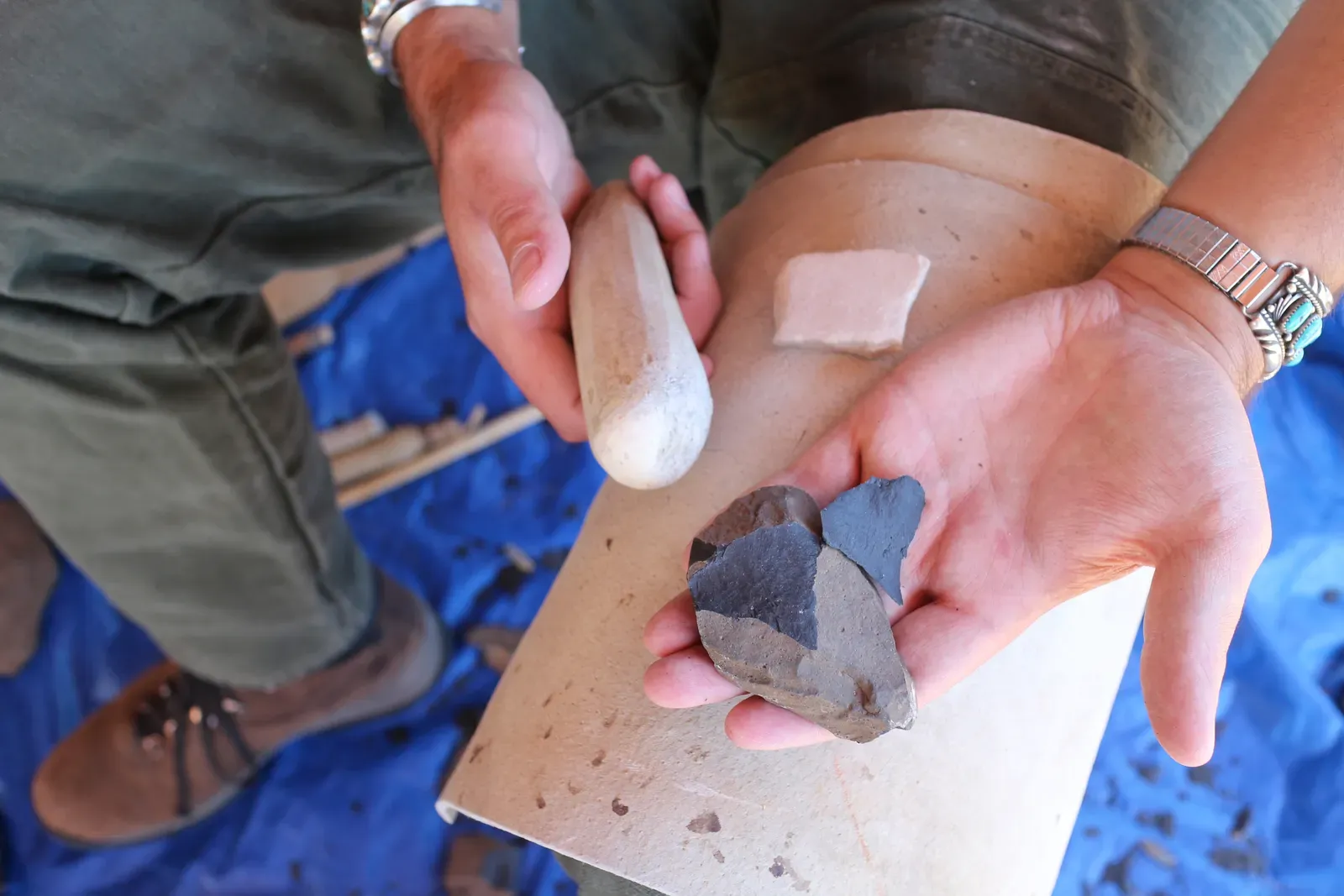
Early humans didn’t just find sharp rocks lying around – they manufactured them using controlled heat, a process modern flintknappers still struggle to replicate perfectly.
Researchers using Raman spectroscopy and AI modeling recently confirmed that early humans understood the effects of heating stone before flaking it into blades, and this is among the earliest evidence that hominins used fire to make tools more than 300,000 years ago. That means someone, hundreds of millennia ago, ran a controlled experiment: heat the stone to a precise temperature, let it cool, and watch how it fractures differently. This wasn’t trial and error – it was applied materials science.
Even more surprising, evidence shows fire was used regularly to heat-treat silcrete stone to increase its flake-ability for toolmaking approximately 164,000 years ago at Pinnacle Point in South Africa. This knowledge was passed down, refined, and taught across generations – a genuine engineering tradition with zero written manuals. Most people picture cavemen banging rocks together randomly. The real picture is closer to an apprenticeship system.
And the next one is even stranger – it’s a beauty routine older than most religions.
#2 – They Invented Sunscreen Tens of Thousands of Years Before SPF
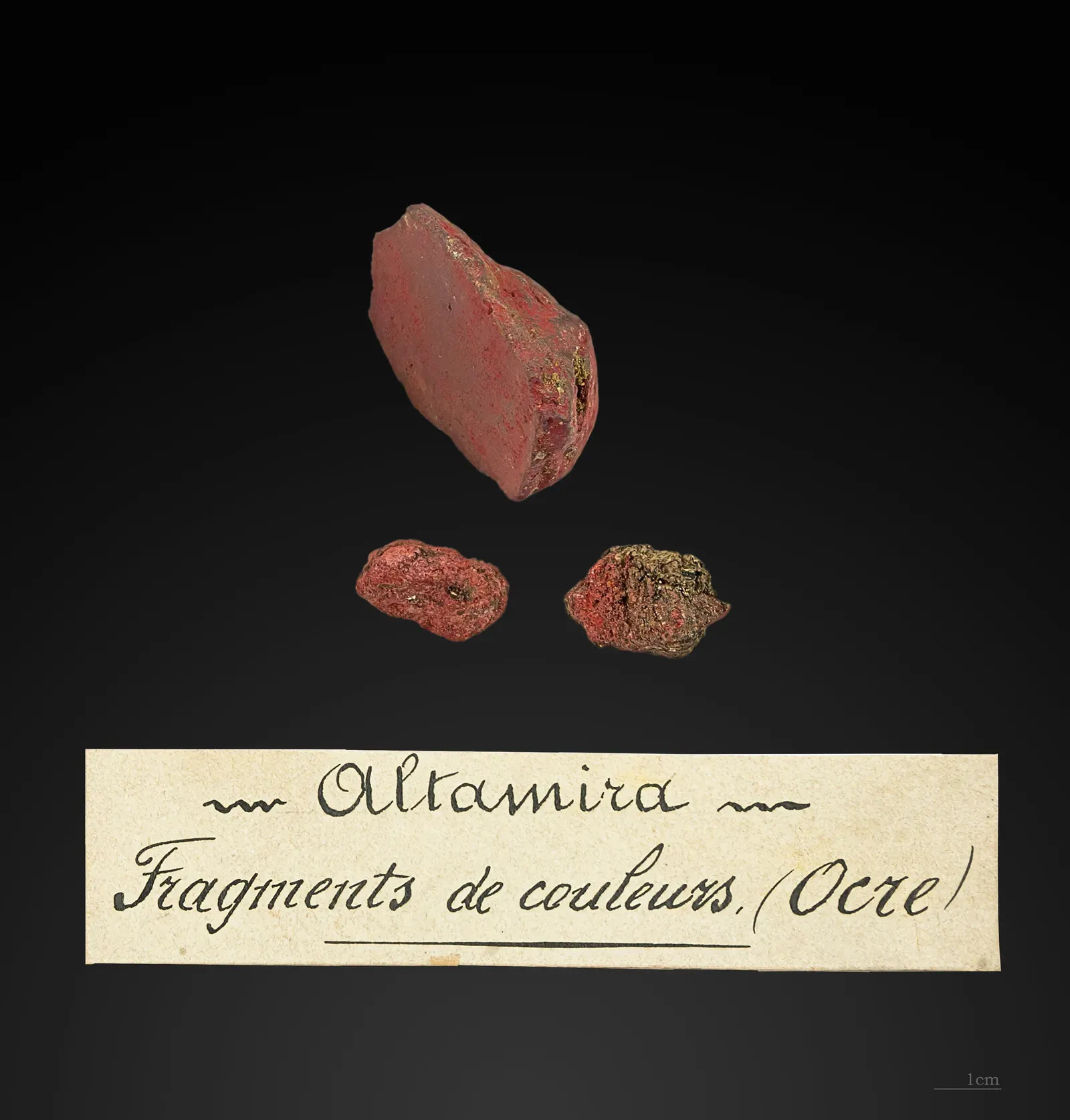
Skin cancer wasn’t a modern problem humans solved with a lab – it was a prehistoric problem they solved with dirt.
Humans have been using ochre, a reddish clay pigment, for close to 300,000 years, and researchers now believe one major use was UV protection. A 2025 study from the University of Michigan found that humans 41,000 years ago used ochre, a clay earth pigment, to deal with UV rays, much like modern sunscreen. The timing isn’t random either – this spike lines up with a period when Earth’s magnetic field weakened and radiation exposure spiked.
Fast Facts
- Ochre use stretches back close to 300,000 years
- Usage spiked around 41,000 years ago alongside a weakened magnetic field
- Still used today in places like Namibia and Australia for sun protection
- No synthetic chemicals involved – just a mineral pigment applied to skin
What makes this genuinely wild is that the practice never really stopped. Many people today still use ochre as sunscreen, particularly in places like Namibia and Australia. That’s a skincare routine with a 40,000-year track record – longer than any brand on a pharmacy shelf. While cosmetics companies market “ancient ingredients” as a trend, this is one case where the ancient version might have actually worked.
Next, the evidence gets even more personal – straight out of a Neanderthal’s mouth.
#3 – They Ran a Working Pharmacy Out of the Forest

Forget “instinct.” Early humans and Neanderthals were selecting specific plants for specific ailments, and the proof is stuck in their teeth.
At El Sidron cave in Spain, scientists scraped calcified plaque off 50,000-year-old Neanderthal teeth and found something nobody expected. The dental calculus contained chemical evidence consistent with wood-fire smoke, cooked starchy foods, and two plants known today for their medicinal qualities – yarrow and chamomile. Both plants taste bitter and have no nutritional upside, which tells researchers they weren’t eaten as food.
The most striking case involved a Neanderthal who was clearly very sick. A Neanderthal from El Sidron who suffered from a visible dental abscess also had an intestinal parasite causing acute diarrhea. Instead of just suffering, he was eating poplar bark, which contains the pain-relieving compound salicylic acid – the active ingredient in aspirin – and researchers also detected a natural antibiotic mold, Penicillium. That’s self-medication with aspirin and penicillin, tens of thousands of years before either was “discovered.”
They had to have a body of knowledge about plants to select yarrow and chamomile.
Karen Hardy, lead researcher
The next skill required something even rarer: the ability to plan several moves ahead before a single blow was struck.
#4 – They Mastered a Tool-Making Technique Modern Knappers Still Study
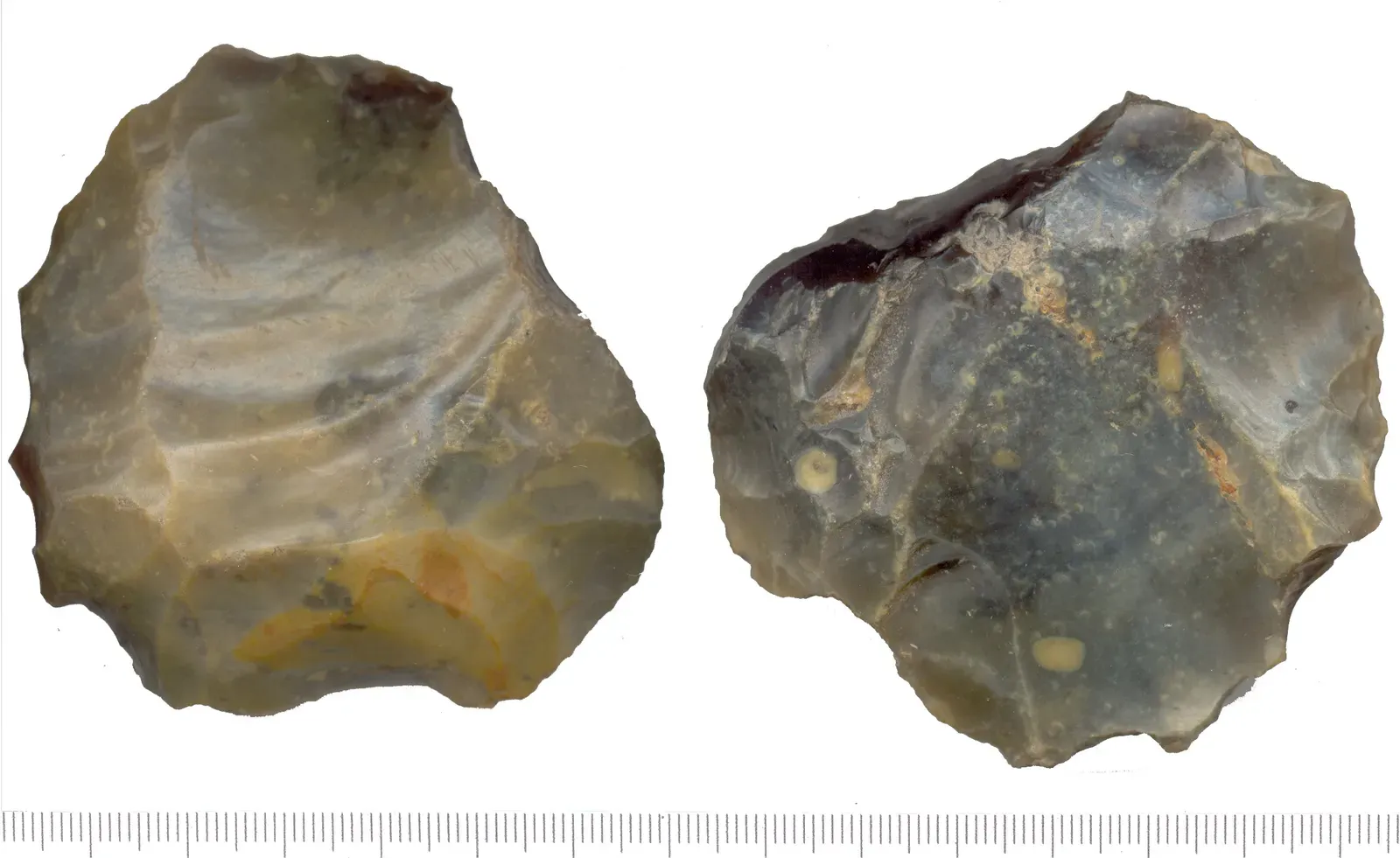
There’s a widespread myth that stone tools got “better” in a slow, boring straight line. That’s not what happened.
Early toolmakers developed increasingly sophisticated reduction techniques, culminating in what archaeologists call the Levallois method – a process where a craftsman shapes a stone core methodically so that a single, precisely predetermined flake can be struck off in one blow. This required planning several steps ahead, holding a mental blueprint of an object that didn’t exist yet. That’s abstract, forward-thinking cognition, not blind repetition.
Making one of these tools wasn’t a five-minute job. It demanded selecting the right raw material, testing it for internal flaws, and executing a sequence of strikes in the correct order and angle – skills that could only be transmitted through direct demonstration, generation after generation, with zero written diagrams. Toolmakers who got it wrong wasted rare, hard-to-transport stone. Toolmakers who got it right could produce a blade sharper than a modern surgical scalpel.
Many archaeologists now argue this technique represents one of the clearest proofs of complex, structured thought in the prehistoric record – arguably more revealing than cave art. Up next, the record shows they were doing something even more abstract: counting without numbers.
#5 – They Were Doing Math Before They Had Numbers
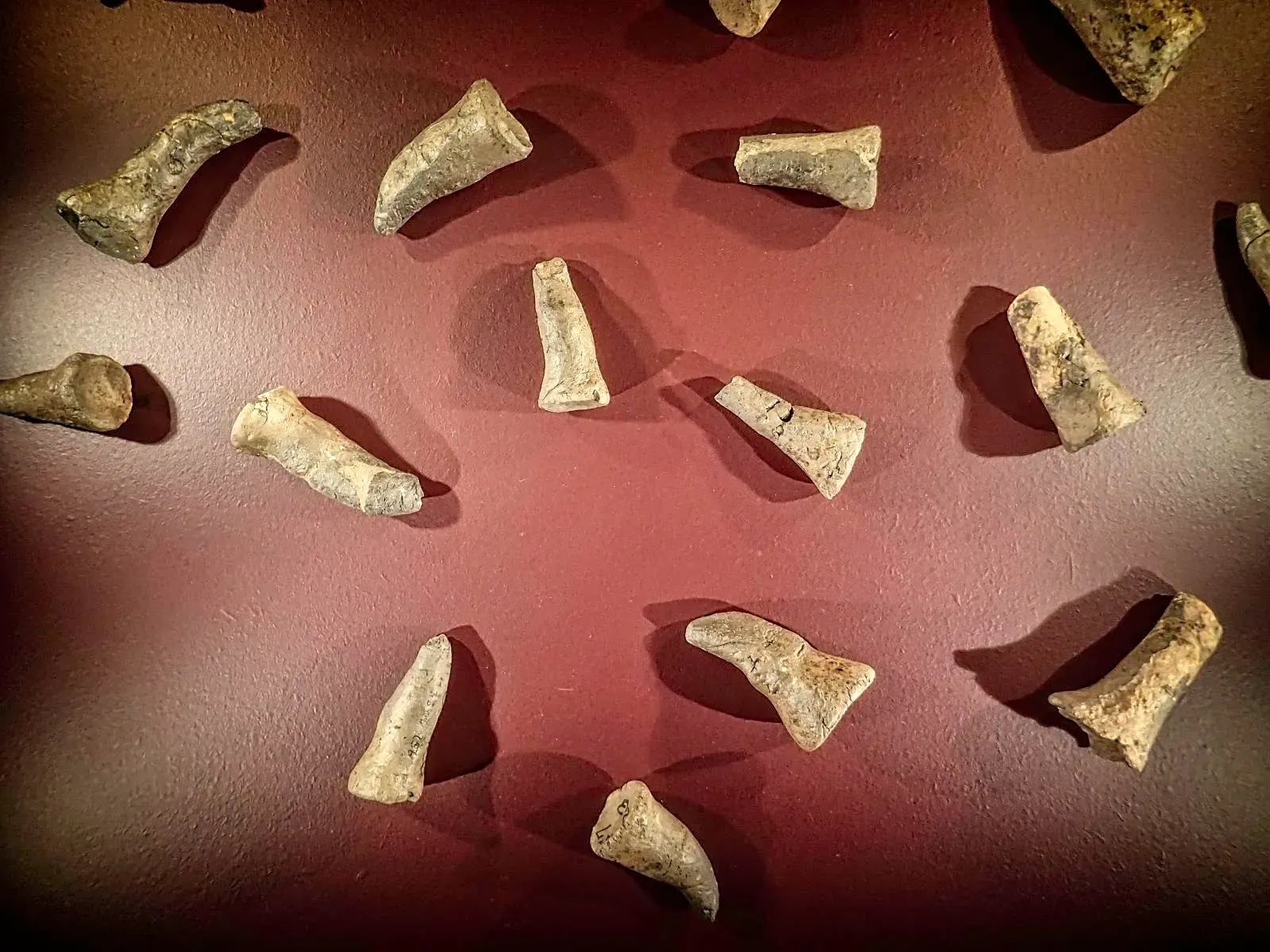
Counting is often treated as something “civilization” gave us. In reality, tally systems predate cities by tens of thousands of years.
Notched bones and pierced tokens found at sites across Africa and Europe show deliberate, repeated marks arranged in patterns too consistent to be decorative doodles. These aren’t random scratches – they’re structured sequences, the kind you’d make if you were keeping track of days, animals, or trade goods. Some of the clearest early counting devices later evolved directly into formal numeral systems.
In fact, researchers tracing the origins of writing found that the Mesopotamian cuneiform script can be traced back to an eighth-millennium BC counting system using clay tokens of multiple shapes, showing that writing itself emerged from counting and accounting. In other words, humanity’s first “written” symbols weren’t poetry or law – they were inventory. Long before anyone told a story on paper, someone was tallying goats.
Which raises an obvious question: if they could count, could they track time? The answer is carved into bone.
#6 – They Built Working Calendars Into Cave Walls and Bones
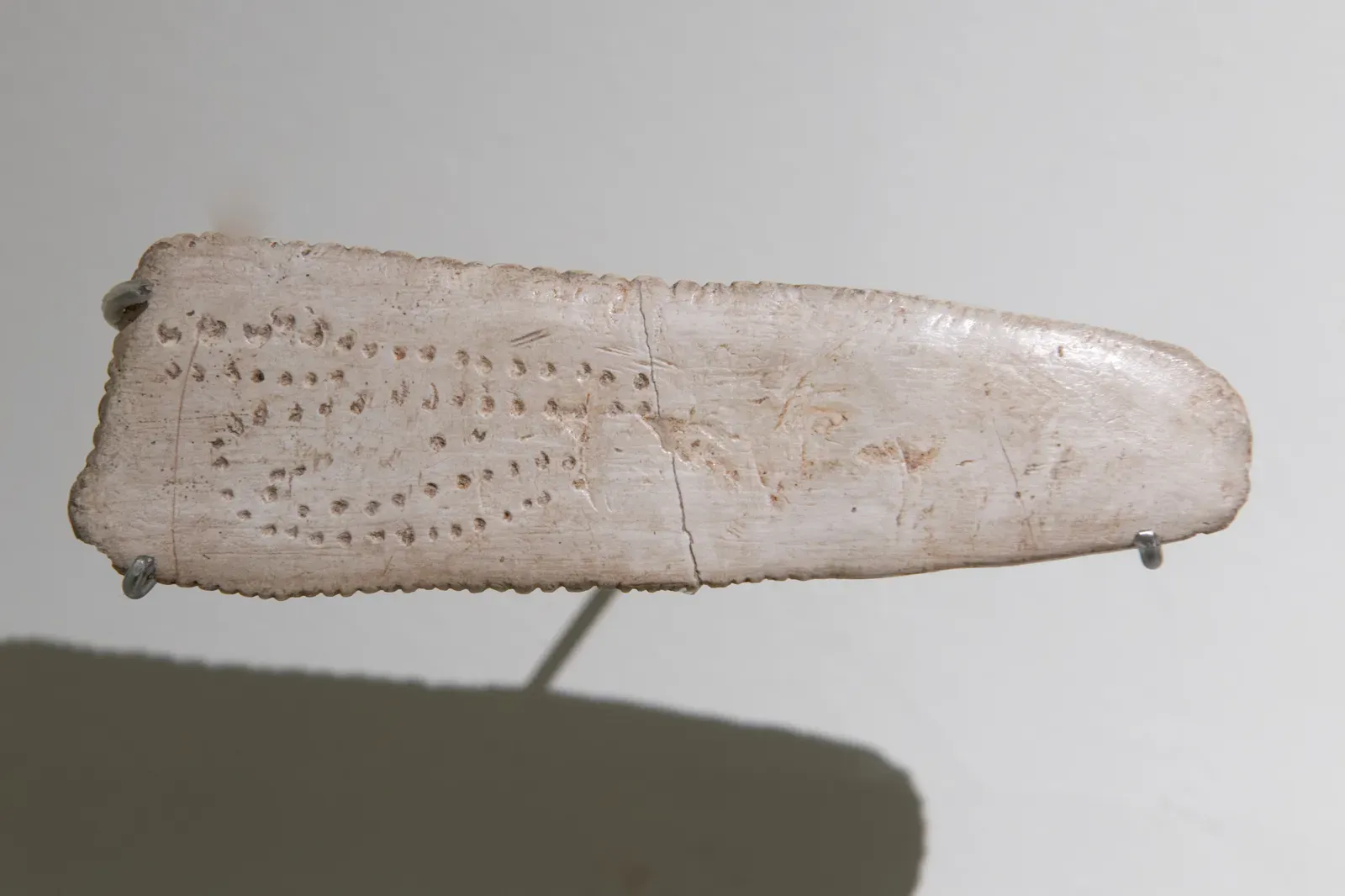
If you think a calendar requires paper, prehistoric humans would like a word.
According to archaeoastronomer Anthony Aveni, there is good evidence lunar timekeeping was around as early as 25,000 to 35,000 years before the present. On a 28,000-year-old bone shard found in France, researcher Alexander Marshack identified a pattern of pits, some with commalike curves and some round, which he viewed as a record of lunar cycles.
Even more impressive: a pebble found near Rome may push this back even further. Experts describe it as the oldest known lunar calendar, an engraved pebble dating back to the Upper Palaeolithic, found in Velletri in the Alban Hills south of Rome, calling it an early piece of evidence for the human “scientific” interest in the moon. And in Scotland, archaeologists uncovered an array of 12 pits and an arc, appearing to represent the phases of the moon from waxing to waning, dating back to around 8000 BC, which lead researcher Vincent Gaffney called “a very important step in humanity’s earliest formal construction of time.”
Quick Compare
- France, ~28,000 years ago: notched bone shard tracking lunar pits and curves
- Italy, Upper Palaeolithic: engraved pebble near Rome, possibly the oldest known lunar calendar
- Scotland, ~8,000 BC: 12 pits and an arc mapping a full moon cycle
Most people think calendars started with Rome or Egypt. They started tens of thousands of years earlier, carved into bone. That obsession with timing didn’t stop at the moon – it extended to every animal they hunted.
#7 – They Tracked Animal Behavior With Scientific Precision
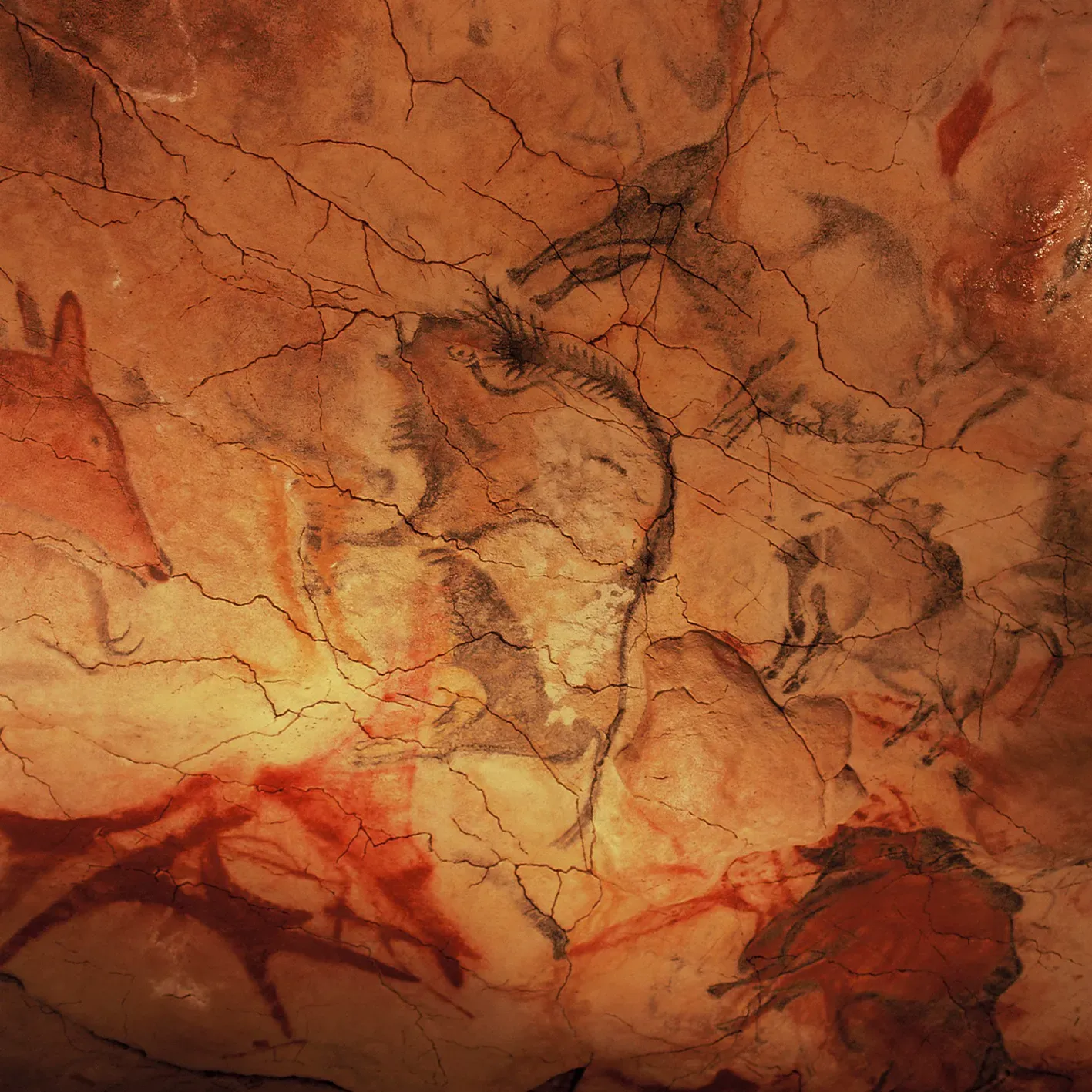
Hunting wasn’t guesswork. It was applied zoology, and the record proves it.
A major study of 862 animal representations from the Upper Paleolithic period found that hunter-gatherers used repeated symbols – dots, slashes, and Y-shapes – to encode information about the animals they depended on. As the researchers put it, “knowledge of the timing of migrations, mating and birthing would be a central concern” for people whose survival depended on knowing exactly when herds would move.
Separate research on Upper Paleolithic cave art backs this up directly. One study found that sequences of marks and geometric forms on cave walls, especially those tied to depictions of ungulates, correspond to lunar timing of animal biological cycles, showing hunters synced their calendars to breeding and migration windows rather than the other way around. This means early humans weren’t just watching animals – they were building predictive models of animal behavior and cross-referencing them against the moon.
That’s not a hunch. That’s data science with a stick and a rock. If that level of precision seems impressive on land, wait until you see what happened at sea.
#8 – They Sailed Across Open Ocean With No Instruments at All
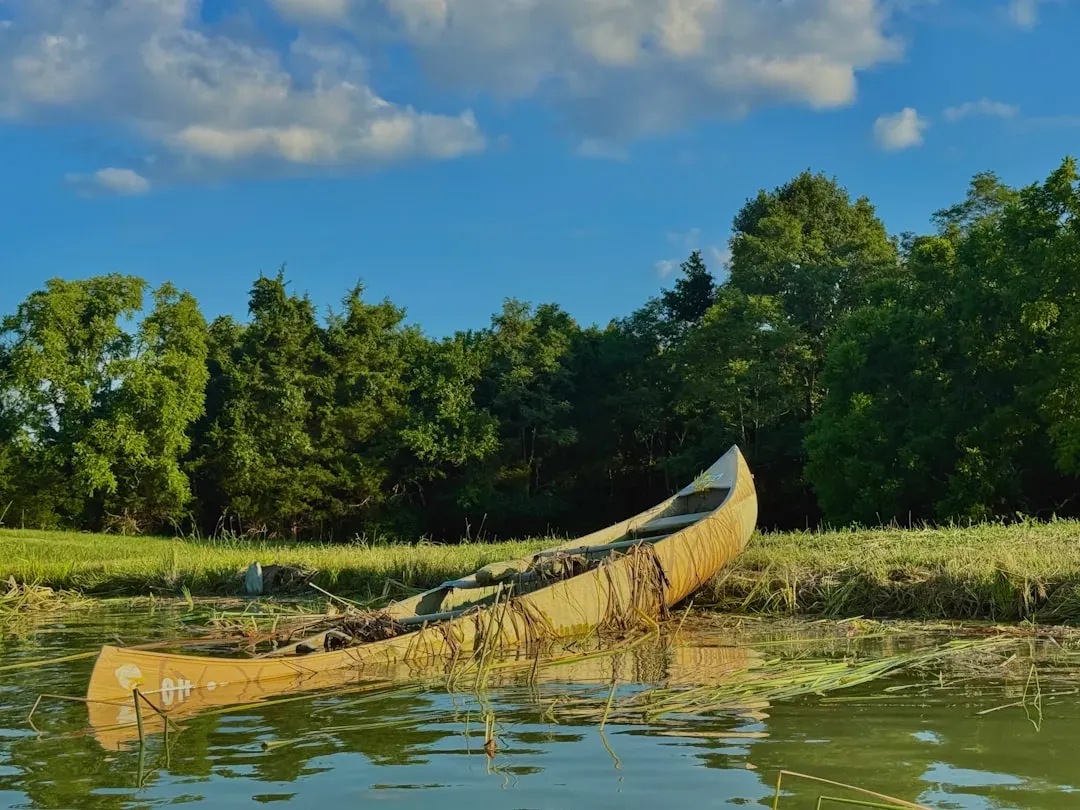
While land-bound hunters were reading the moon, other groups were reading the entire Pacific Ocean.
According to researchers, ocean navigation was a major prehistoric achievement – thousands of years ago, people from the islands of the southern Pacific sailed great distances in small boats, guided only by the stars, migrating birds, and patterns in ocean waves. No compass. No maps. No GPS. Just decades of memorized wave patterns and star positions passed down by word of mouth.
This knowledge wasn’t casual folklore – it was precise enough to reliably locate tiny islands across thousands of miles of open water, an achievement modern sailors still study with respect. For centuries, these seafaring skills were passed on entirely through stories and songs, meaning an oral tradition functioned as a full navigational manual.
Most people assume “primitive” boats meant reckless voyages. The opposite is true – this was one of the most technically demanding navigation systems in human history, and it worked without a single written coordinate. All that navigation skill meant nothing without one thing every camp needed first: water.
#9 – They Knew How to Find, Move, and Purify Water
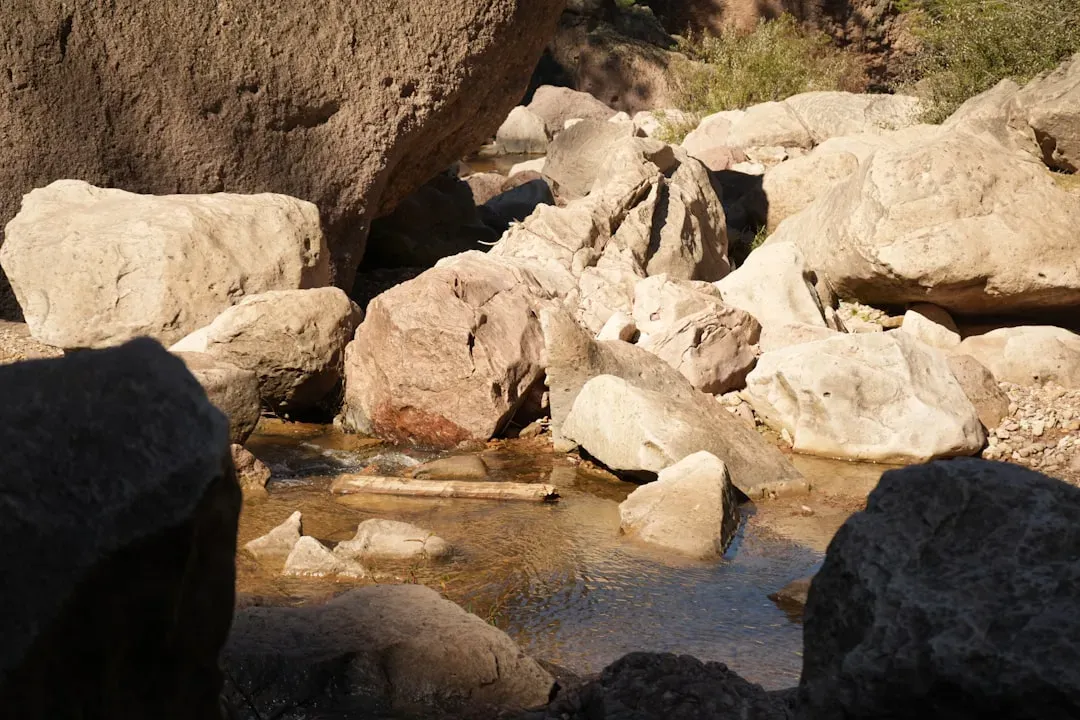
Fresh water is the one resource that ends a settlement fast if you get it wrong, and early humans clearly didn’t.
Prehistoric communities repeatedly settled near reliable water sources, but the real skill was reading a landscape for hidden water – seasonal springs, underground seepage lines marked by specific plant growth, and rock formations that trap rainwater long after a storm passes. Understanding which plants only grow near a water table meant the difference between finding a hidden spring and wandering in circles.
Worth Knowing
- Certain plant growth patterns reliably signaled hidden underground water
- Shallow wells dug beside riverbanks let sand and gravel filter water naturally
- Stagnant water was avoided long before anyone understood bacteria
- The riverbank filtering technique appeared independently across multiple continents
They also understood, in a practical sense if not a chemical one, that stagnant water made people sick and moving or filtered water generally didn’t. Digging shallow wells beside riverbanks to let sand and gravel naturally filter water is a technique found independently across multiple ancient cultures worldwide – a sign it was reinvented repeatedly because it simply worked. This is applied hydrology with zero lab equipment, built entirely on multi-generational trial, error, and observation.
Finding water was only half the survival equation – the other half was staying warm enough to live through the night.
#10 – They Engineered Shelters Built to Survive Ice Ages

Long before architects existed, prehistoric builders were solving genuinely difficult structural problems.
In parts of Ice Age Europe, communities constructed dwellings using massive mammoth bones as a structural frame, arranged deliberately to bear weight and covered with hides for insulation. This wasn’t improvisation – it required understanding load distribution, wind resistance, and insulation, all without a single blueprint. Building one of these structures meant coordinating the labor of an entire group and transporting materials that weighed hundreds of pounds each.
Elsewhere, early builders used post-and-beam construction techniques, digging foundation holes and angling support beams to shed rain and withstand wind – the same basic engineering principle behind modern timber-frame homes. Many people picture early shelters as flimsy lean-tos. The archaeological record says otherwise: these were multi-generational, load-bearing structures engineered to outlast brutal winters.
That’s not luck. That’s structural planning passed down entirely by demonstration. A warm shelter didn’t matter much if the food ran out by midwinter – so they solved that too.
#11 – They Preserved Food Well Enough to Survive Entire Winters

Without refrigeration, keeping meat edible for months sounds impossible. Early humans cracked it anyway, using several overlapping methods.
Smoking meat over a slow fire dries it out while depositing natural antimicrobial compounds from the wood smoke, dramatically slowing spoilage – a technique still used commercially today for exactly the same chemical reasons. Drying meat and plants in the sun or wind removes the moisture bacteria need to grow, and early humans clearly understood which climates and seasons worked best for this, since dried food remains show up disproportionately at sites in colder, drier regions.
Fermentation, too, appears remarkably early – the deliberate encouragement of specific, beneficial bacteria or yeast to break down food in a way that extends its shelf life rather than rotting it. This required distinguishing “good” microbial change from “bad” spoilage long before anyone knew bacteria existed. Getting it wrong meant food poisoning or starvation; getting it right meant surviving a season with no fresh hunting.
That’s applied microbiology run entirely on inherited trial and error. Keeping food fresh was one kind of control over nature. The next was even bigger – controlling life itself.
#12 – They Were Selectively Breeding Plants and Animals

Genetic engineering sounds like a modern buzzword, but the underlying idea – choosing which traits get passed on – is ancient.
Long before formal agriculture, hunter-gatherers were already influencing which plants thrived nearby by favoring certain wild grains, discarding others, and inadvertently spreading seeds from the plants they preferred to eat. Over generations, this kind of unconscious selection nudged wild plants toward larger seeds, easier harvesting, and better yields – the exact same principle behind modern crop breeding, just slower and unintentional at first.
The same logic applied to early animal domestication. Communities that kept certain animals closer, fed them, and tolerated the calmer individuals were unknowingly selecting for tameness generation after generation – a process some researchers argue essentially “self-domesticated” early dogs from wolves that hung around human camps. This is genetics in practice centuries before anyone understood a single gene.
Some experts now argue that plant and animal domestication represents a bigger leap in human history than the wheel – a controversial claim, but a hard one to dismiss. That kind of long-term thinking about biology eventually led somewhere almost nobody expects.
#13 – They Performed Surgery and Lived to Tell About It
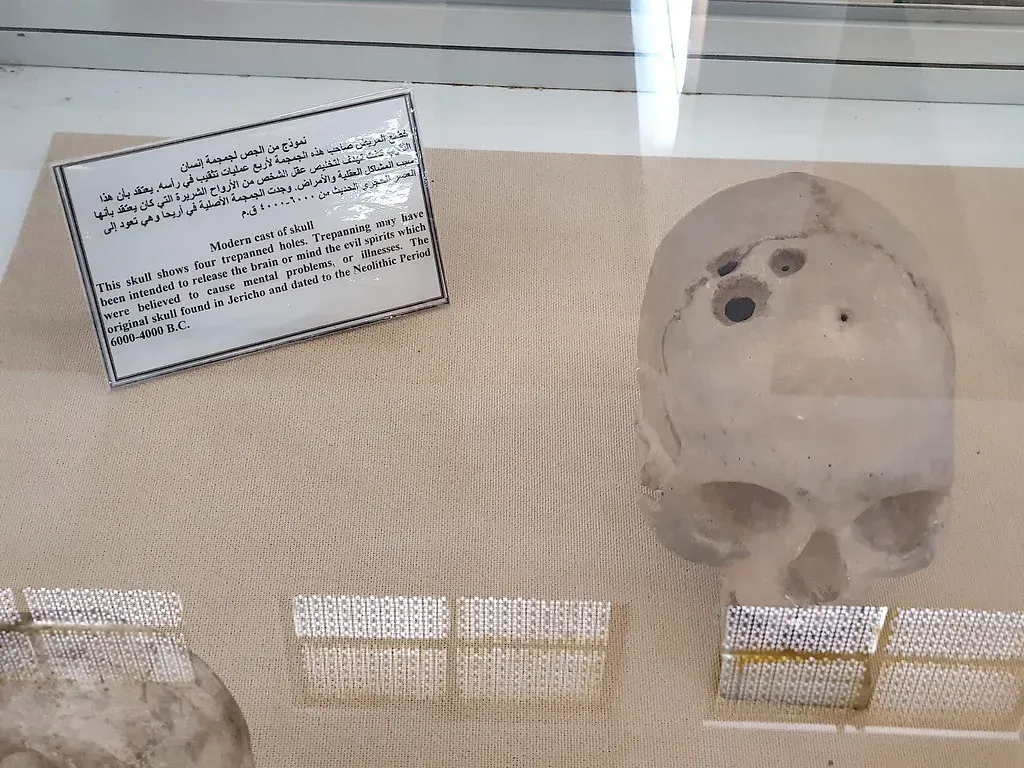
This is the one that surprises almost everyone: prehistoric humans practiced surgery, and patients survived.
Researchers point to abundant evidence from the Paleolithic and later prehistoric past of survival after periodontal disease, traumas, and invasive medical treatments including trepanations and amputations, suggesting a detailed, applied knowledge of medicinal plant secondary compounds. Trepanation – deliberately cutting or drilling a hole into the skull – sounds terrifying, but bone regrowth found around these openings proves patients didn’t just survive the procedure; some lived for years afterward.
At a Glance
- Earliest confirmed healed trepanation: Vasilyevka II, Ukraine, roughly 8,000 years ago
- Bone regrowth proves patients survived – some for years afterward
- No anesthesia, no antibiotics, and no written medical guide involved
- Plant-based compounds likely managed pain and infection risk
One confirmed case comes from Ukraine, where researchers identified the earliest known healed trepanation, detected on a 50-year-old male from the site of Vasilyevka II, dating to the Mesolithic period around 8,000 years ago. That means someone understood enough basic anatomy to operate on a skull, manage infection risk with plant-based treatments, and keep a patient alive through recovery – with no antibiotics, no anesthesia as we know it, and no medical textbook.
Most people assume ancient surgery was a death sentence. The healed bone says otherwise. And every single one of these breakthroughs survived long enough to reach us because of one overlooked system – memory itself.
#14 – They Built an Entire Information System Out of Memory Alone
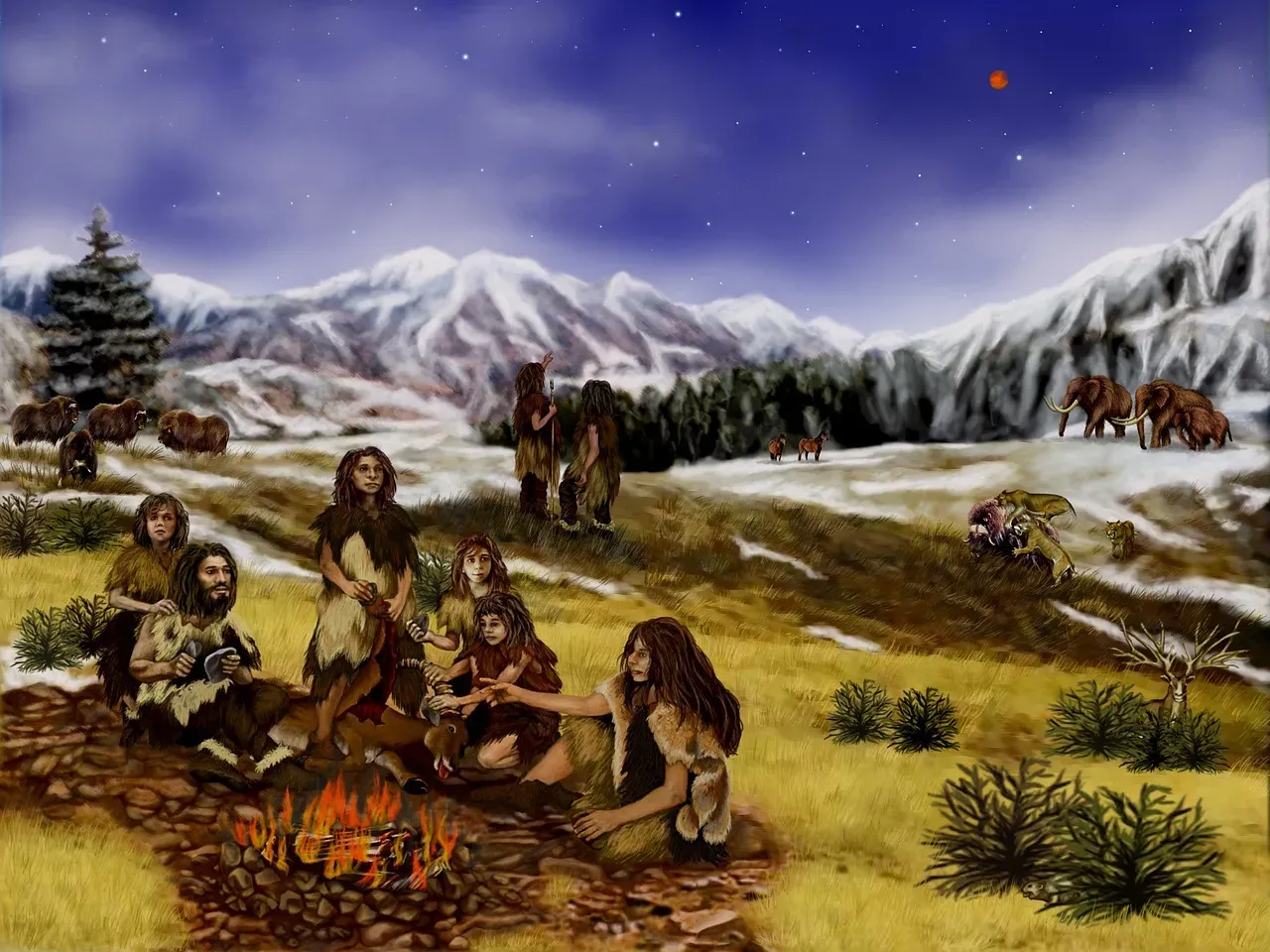
This is the discovery that ties every other item on this list together: before writing, oral tradition wasn’t just storytelling – it was data storage.
Researchers studying pre-writing symbol systems found that Paleolithic humans were already developing something close to proto-writing. A 2024 analysis of more than 3,000 carved markings determined these “sign sequences” encoded Paleolithic people’s thoughts, with statistical properties comparable to proto-cuneiform in their potential to encode information. Lead researcher Christian Bentz called these markings “an early predecessor to writing.”
But long before any symbol was carved, spoken oral tradition was already doing the heavy lifting – encoding practical survival knowledge, seasonal timing, medicinal recipes, genealogies, and navigational routes into songs, chants, and stories precise enough to be passed down accurately for dozens of generations. This is arguably the most underrated technology on this entire list: a fully functioning, high-fidelity information storage system with no physical medium at all. Writing didn’t invent knowledge-keeping. It just gave an already-ancient system a permanent backup.
The Bottom Line
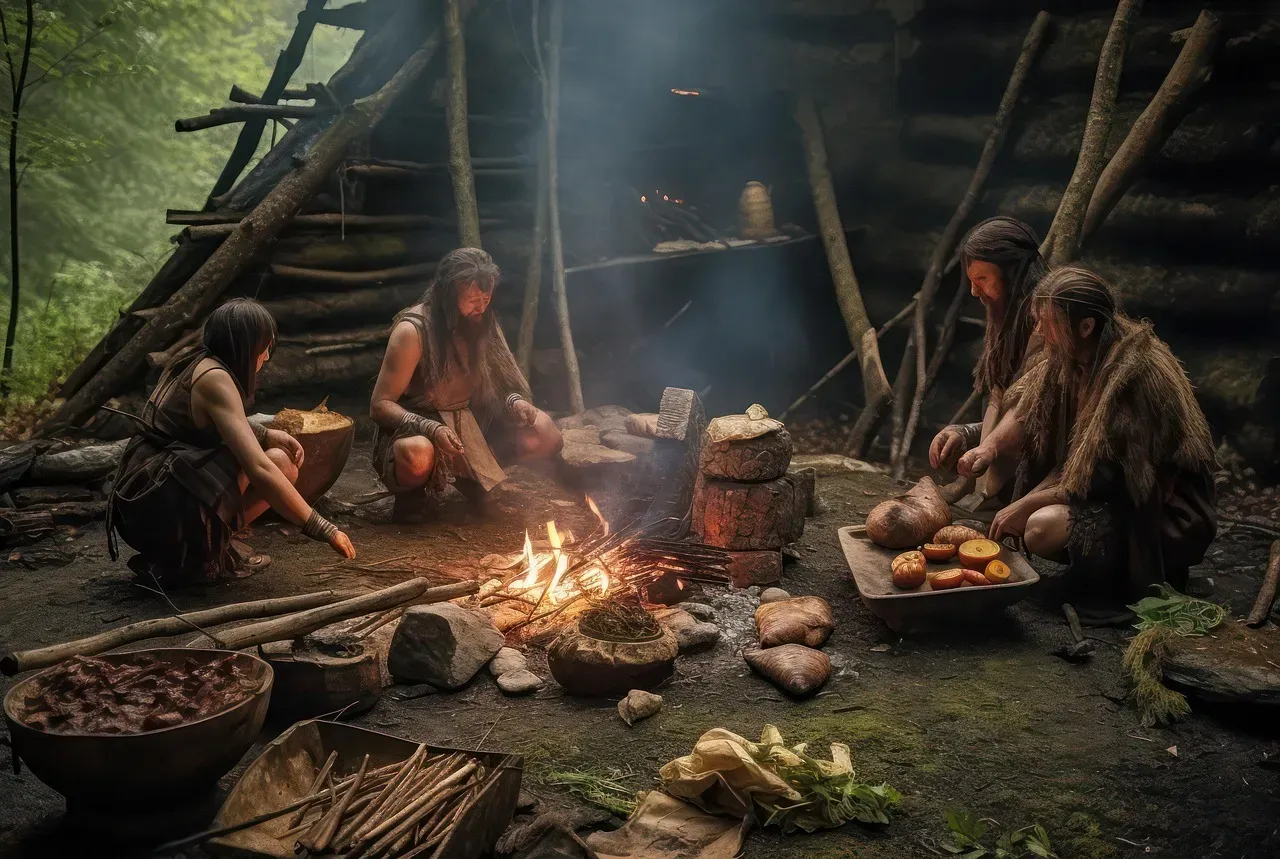
Strip away the myth of the “primitive caveman” and what’s left is a species running functioning pharmacies, calendars, surgical units, and navigation systems entirely from memory and observation. The real story isn’t that early humans lacked intelligence – it’s that they lacked paper.
From aspirin in poplar bark to sunscreen in ochre clay, prehistoric knowledge wasn’t guesswork; it was tested, refined, and taught for thousands of years before anyone thought to write it down. The uncomfortable truth is that most of what we call “ancient wisdom” from written history was really just the tail end of a much older, unwritten body of science.
Which of these 14 surprised you the most? Drop it in the comments.