
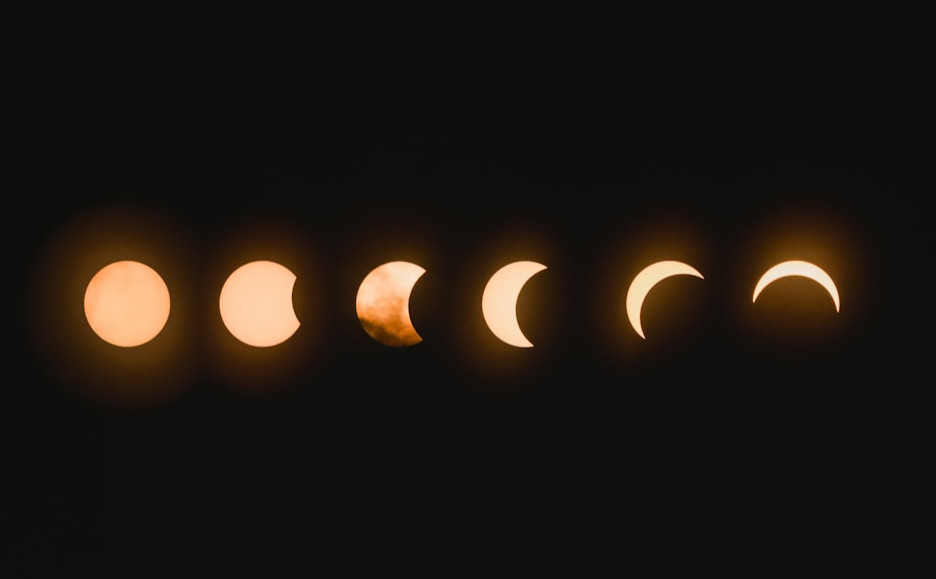
Most people assume ancient humans stared up at the night sky and just made things up – gods, omens, myths, superstition. But historians of science have found something stranger buried inside those “primitive” beliefs: a surprising number of them were dead-on accurate, centuries or even millennia before anyone had the tools to prove it.
One philosopher got thrown in prison for being right. One ancient civilization predicted eclipses down to the hour, thousands of years before Newton explained why. And one dusty set of star records is still helping modern astronomers make discoveries today. Here are the twelve sky beliefs that ancient humans got shockingly, provably correct.
#1 – The Milky Way Was Secretly Made of Countless Individual Stars
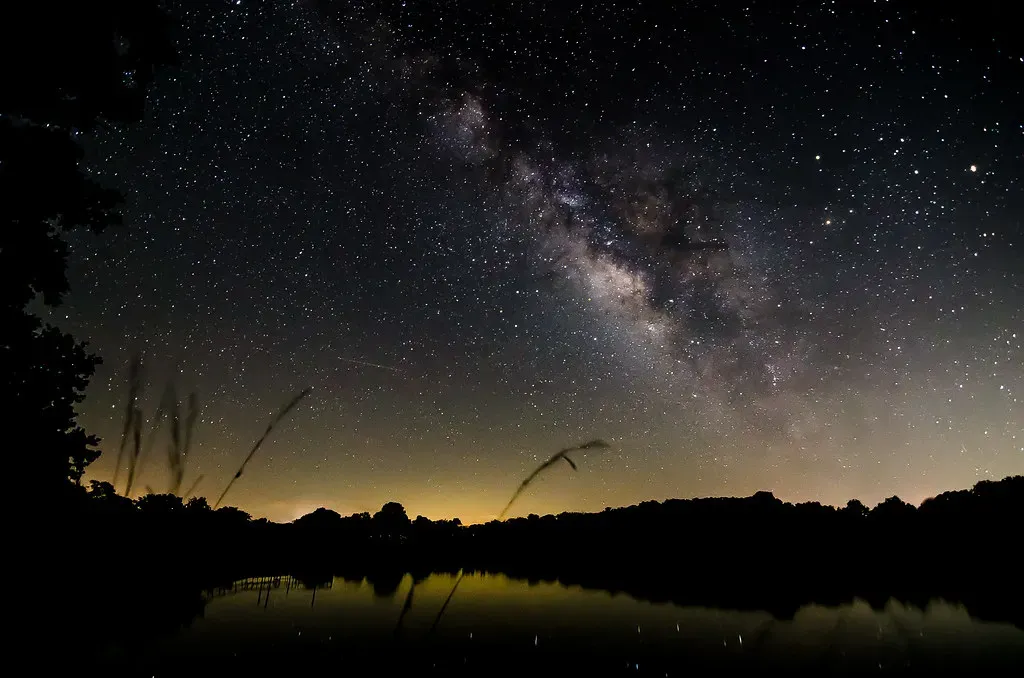
Most ancient cultures treated the pale band across the night sky as a river of milk, a path of souls, or a divine road to the gods. But one Greek philosopher rejected all of that – and got the physics right.
Democritus, the atomic theorist, argued that the Milky Way was actually made of countless individual stars packed so tightly together that their light blurred into a single glow. He wasn’t guessing. He reasoned it out from atomic theory, centuries before anyone had a lens strong enough to check him.
He was proven right in the most literal way possible: when Galileo pointed a telescope at the sky in the early 1600s, he confirmed the Milky Way really was a dense field of individual stars. Aristotle, meanwhile, dismissed the whole idea as nothing more than atmospheric vapor. The “unscientific” philosopher beat the more famous one by roughly two thousand years.
That two-thousand-year head start is nothing compared to what happened to the next guy who got the sky right.
#2 – The Sun, Moon, and Stars Were Physical Objects, Not Gods

Nearly every ancient civilization worshipped the sun and moon as living deities, to be feared, obeyed, or begged for mercy. One man in Athens said they were just rocks – and it nearly got him killed.
Anaxagoras, working in Athens around 450 BCE, argued that celestial bodies weren’t divine at all. He claimed the sun was a giant mass of white-hot metal, and the moon was a solid body not unlike Earth, complete with mountains and low ground that reflected sunlight rather than glowing on its own.
Modern lunar geology confirms exactly that. It didn’t save him from consequences at the time, though – Anaxagoras was charged with impiety and imprisoned for insisting the sun wasn’t a god, just superheated rock. He was right about the physics. His city just wasn’t ready to hear it.
Being right almost got him killed once. It didn’t stop him.
#3 – Meteorites Were Rocks That Fell From Outer Space

While most ancient people saw a shooting star as an omen or a divine message, one philosopher looked at an actual meteorite and correctly called it exactly what it was: a rock that fell out of the sky.
Anaxagoras is credited with predicting the fall of a large meteorite near Aegospotami around 467 BCE, and when it landed, he examined it and reached a strikingly modern conclusion. He believed the universe was made of the same basic material everywhere – stone and rock, whether it sat on the ground or floated somewhere above it.
That meant a rock falling from the sky wasn’t a divine sign. It was just a rock, obeying the same physical rules as everything else. It took formal modern science until the 1800s to catch up and agree that meteorites really are ordinary space debris, not celestial messages.
And once he’d already proven space rocks were real, he went even further.
#4 – Other Worlds Might Have Their Own Suns and Moons
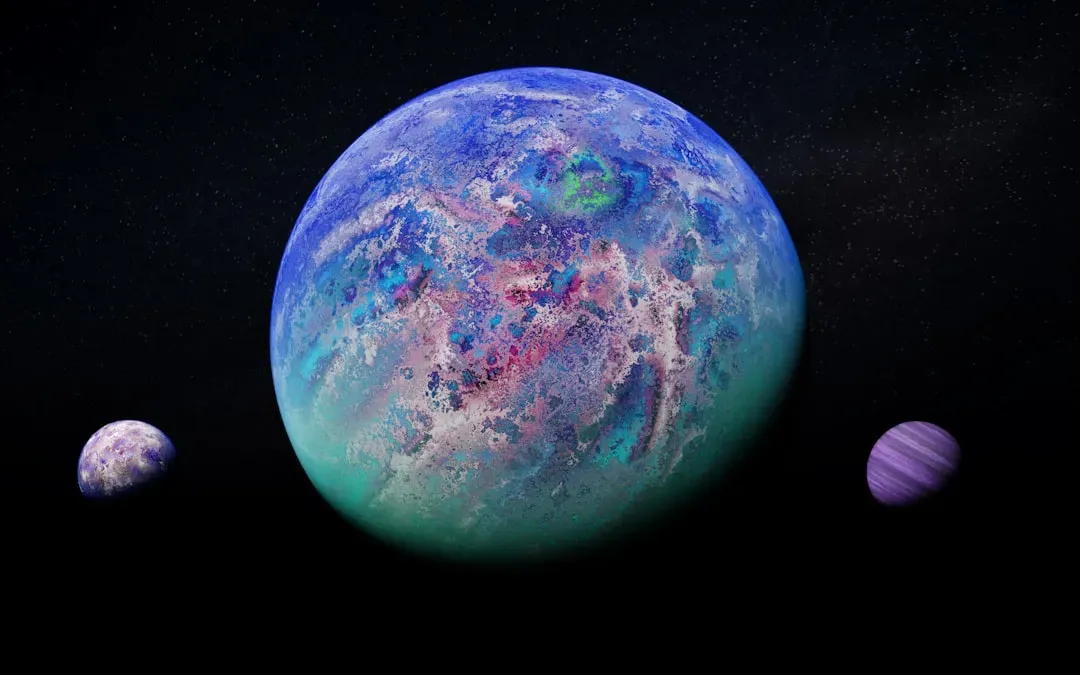
This one sounds like modern exoplanet science, but it’s roughly 2,500 years old. A Greek philosopher argued that our solar system wasn’t unique – and he wasn’t far off.
Anaxagoras, along with fellow pluralist thinkers like Democritus and Epicurus, reasoned that if the universe was made of the same basic materials everywhere, there was no logical reason Earth should be the only inhabited world. He went further, claiming other worlds likely had their own suns and moons – and possibly their own cities and people.
With men also cities are conjoined, and works performed as with us.
Diogenes Laertius, recording the views of Anaxagoras
We now know of thousands of confirmed exoplanets, plenty of them orbiting their own stars exactly as Anaxagoras guessed without a telescope. He had no way to verify any of it. He just had logic – and it happened to point straight at the truth.
If that sounds ahead of its time, wait until you see what the Babylonians were doing with math.
#5 – Eclipses Followed a Predictable Mathematical Pattern
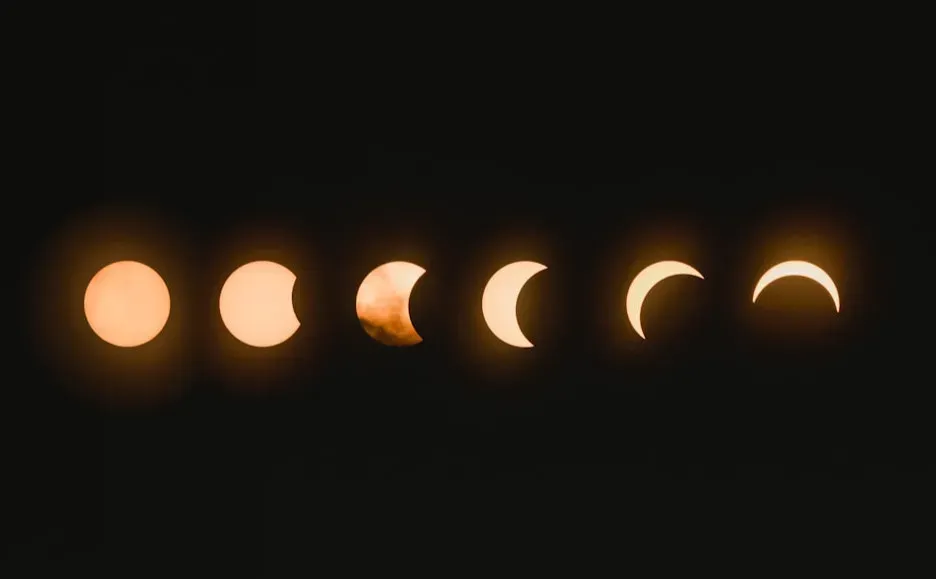
Most ancient societies treated a sudden solar eclipse as a terrifying sign that the gods were furious. The Babylonians secretly cracked the math behind it – and could predict eclipses years ahead of time.
Babylonian astronomers identified the Saros cycle, a roughly 18-year pattern in which similar eclipses repeat, and used it to forecast future eclipse windows with real accuracy. By the 3rd century BCE, their predictions were landing within one to two hours of the actual event – an extraordinary level of precision for a civilization working with nothing but clay tablets and centuries of patient record-keeping.
Fast Facts
- The cycle behind eclipse prediction runs on a 7th century BC Babylonian eclipse cycle of 223 lunar months, known as the Saros Cycle.
- That’s roughly 18 years, 11 days, and 8 hours between similar eclipses – long enough that ordinary sky-watchers never noticed the rhythm.
- Babylonian scribes tracked eclipse dates on clay tablets for generations before the pattern finally clicked.
- Modern eclipse-prediction software still leans on the same basic cycle the Babylonians spotted by hand.
They still believed a disappearing sun signaled divine anger. But underneath that belief sat a working mathematical model that let them know an eclipse was coming before it happened. That’s not superstition. That’s an early spreadsheet.
But eclipses weren’t the only cosmic pattern ordinary people figured out early.
#6 – The Moon Secretly Controlled the Ocean Tides

Sailors and coastal peoples across the ancient world noticed something odd: the ocean rose and fell in rhythm with the moon’s phases. Most people assume science discovered this connection. It didn’t – folk observation got there first, by thousands of years.
Fishing communities around the Mediterranean, along the Chinese coast, and across Polynesia tracked tidal patterns against lunar cycles purely for survival. They built entire calendars and fishing seasons around it, correctly linking the moon’s position in the sky to when the water would rise highest on their particular stretch of coast.
This wasn’t one lucky guess repeated by coincidence – it was the same correct correlation, independently discovered by unrelated cultures thousands of miles apart. Isaac Newton wouldn’t mathematically explain gravitational tidal force until the 1600s. Ordinary people had already been living by the same true pattern for thousands of years before he ever picked up a pen.
And the moon wasn’t the only “obvious” myth that turned out to be real science.
#7 – The Earth Was Round, Not Flat
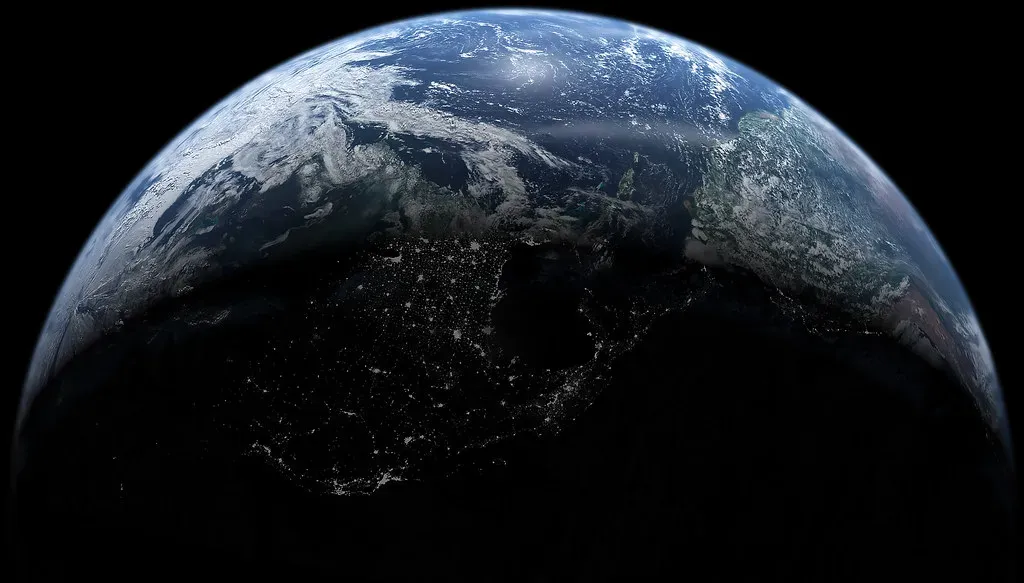
The “everyone believed the Earth was flat” story is one of the most repeated myths in modern pop history. Ancient scholars actually worked out that the Earth was a sphere – using nothing but shadows, geometry, and sharp eyes.
Greek astronomers noticed that ships disappearing over the horizon vanished hull-first, not all at once, a detail that only makes sense if the surface itself is curved. They also noticed that Earth’s shadow on the moon during a lunar eclipse was always perfectly round, no matter the time or angle – something only possible on a spherical planet.
Worth Knowing
- Around 240 BCE, the Greek scholar Eratosthenes compared shadow angles between two cities to measure the whole planet 240 B.C. Eratosthenes then measured the angle of a shadow cast by a stick at noon on the summer solstice in Alexandria.
- To measure the distance between cities accurately, he reportedly relied on bematists, professional surveyors trained to walk with equal length steps.
- His final estimate came out to roughly 250,000 stadia for Earth’s circumference.
- Depending on which ancient unit of measurement historians use to convert his math, his measurement of Earth’s circumference may have varied by 0.5 to 17 percent from the value accepted by modern astronomers, but it was certainly in the right range.
Nobody had to sail around the planet to prove it. Geometry did the job first.
Geometry wasn’t the only tool ancient astronomers weaponized against the unknown.
#8 – Certain Star Risings Correctly Predicted the Seasons
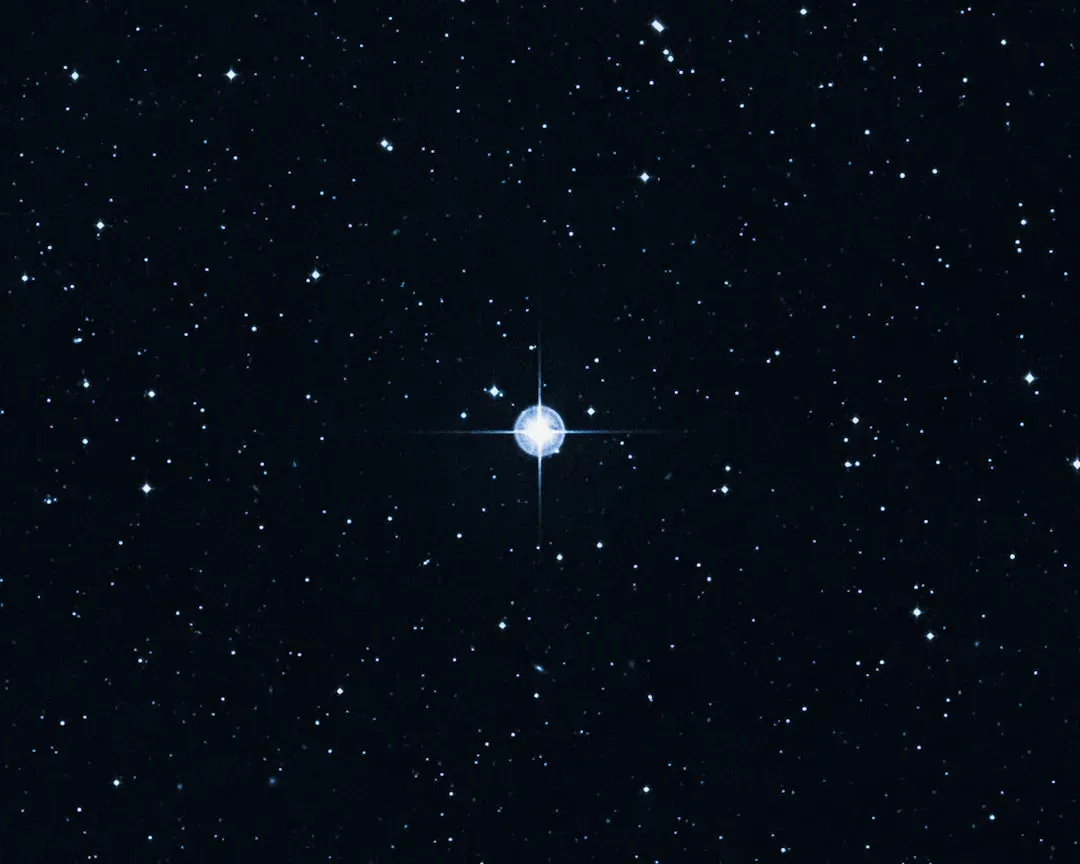
Long before calendars had numbers on them, ancient Egyptians tracked one very specific star to know exactly when their entire agricultural year was about to begin. They weren’t guessing. They were reading the sky like a clock.
The heliacal rising of Sirius – its first appearance in the dawn sky after weeks of being hidden – reliably lined up with the start of the Nile’s annual flood, roughly between 3000 and 2700 BCE. Farmers who tracked that one star knew, with genuine accuracy, exactly when the life-giving floodwaters were about to arrive.
They had no concept of orbital mechanics or why the correlation worked. It didn’t matter. The pattern was real, it was consistent, and it let an entire civilization plan its food supply around a star millions of miles away.
Stars didn’t just predict seasons. Sometimes they predicted the impossible.
#9 – “New Stars” in the Sky Were Actually Exploding Stars
When a sudden bright light appeared where no star had existed before, most ancient viewers assumed it was a supernatural omen. Chinese court astronomers treated it as a real, trackable event instead – and they were right.
Imperial astronomers meticulously logged what they called “guest stars” – sudden new points of light that appeared among the fixed stars and then slowly faded away over weeks or months. Modern astrophysics now recognizes these as novae and supernovae, and the guest star they recorded in 1054 turned out to be the explosion that created the Crab Nebula.
These weren’t vague legends passed down by word of mouth. They were dated, specific records precise enough that modern astronomers still use them today – the Chinese sighting of a guest star in 1181 helped researchers identify its physical remnant only in recent years. Ancient paperwork just helped solve a modern astronomical mystery.
If ancient astronomers could track exploding stars, imagine what they could do with a compass made of nothing but stars.
#10 – The Stars Could Guide Travelers Across Thousands of Miles of Open Ocean

No compass, no GPS, no written maps – and yet entire civilizations crossed thousands of miles of open ocean with startling precision. Most people assume this was luck. It wasn’t.
Polynesian wayfinders navigated using a mental “star compass,” memorizing the exact points on the horizon where dozens of specific stars rose and set throughout the year. Combined with reading ocean swells, wind patterns, and bird behavior, this let them hold a course across open water for weeks without ever losing their bearings.
Why It Stands Out
- In 1976, the voyaging canoe Hōkūle’a sailed roughly 2,400 miles across empty ocean to Tahiti, guided by traditional Micronesian navigator Pius “Mau” Piailug.
- The canoe carried a crew of 15 aboard a 62-foot, double-hull voyaging canoe built to traditional specifications.
- The entire crossing was made with no compass, no GPS, and no instruments at all.
- Piailug came from Satawal, a tiny Micronesian atoll where a navigator from a small island called Satawal, in Micronesia still practiced the ancient craft when almost no one else did.
Modern reconstructions, most famously the voyages of the canoe Hōkūleʻa, proved these techniques genuinely work for long-distance ocean travel without a single modern instrument. It’s a fair, if uncomfortable, comparison: Pacific navigators using pure sky knowledge were arguably more reliable than many 18th-century European sailors armed with early compasses.
Navigation wasn’t the only skill built entirely on watching the sky move.
#11 – The “Wandering Stars” Moved Differently Because They Were Actually Planets

Ancient sky-watchers noticed something strange: while most stars stayed locked in the same fixed patterns night after night, a handful of bright points wandered independently across the sky. They correctly separated these “wanderers” from ordinary stars – and that distinction turned out to be exactly right.
Babylonian astronomers tracked the movements of what we now call Venus and Mercury for years, recording their positions against the fixed background stars with real consistency. They noticed these points didn’t behave like normal stars at all – they drifted along their own paths, sometimes even appearing to move backward for a while.
They had no concept of orbital mechanics or a sun-centered solar system. But they’d already drawn the correct dividing line between “planet” and “star” using nothing but patient, repeated observation – a distinction astronomers still rely on today.
All of these individual discoveries were leading toward one much bigger, much stranger truth.
#12 – The Sky Followed Predictable Mathematical Cycles, Not Divine Whims
This is the belief that ties every other one together, and it might be the most surprising of all. Most people assume ancient sky-gods and omens dominated early astronomy completely – but the actual math tells a very different story.
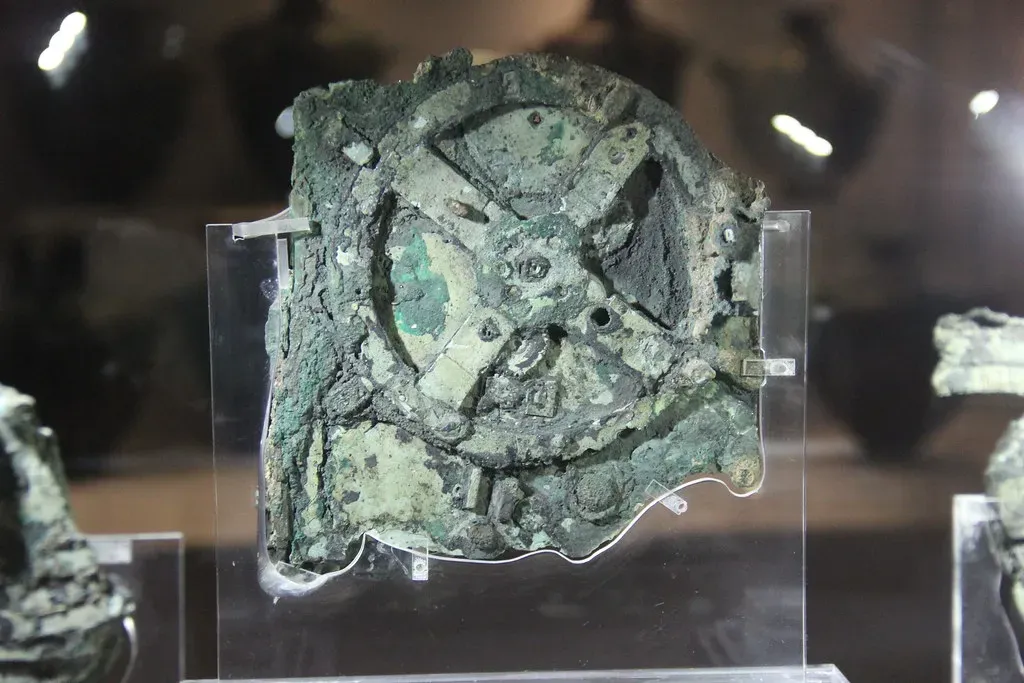
Babylonian astronomers realized that specific solar and lunar eclipses tended to repeat after a fixed interval – the same Saros cycle later named by the astronomer Edmond Halley. That pattern was eventually built into a physical device: the Antikythera mechanism, a bronze geared machine more than two thousand years old, engineered specifically to calculate future eclipses and planetary positions.
At a Glance
- The device was pulled from the sea in a shipwreck just off the tiny island of Antikythera in 1901.
- Researchers now date the mechanism to between 150 and 100 BCE, designed to calculate astronomical positions and predict eclipses.
- Historians consider it the world’s first analog computer, created to accurately calculate the position of the sun, moon, and planets.
- Nothing else of comparable mechanical complexity would appear anywhere on Earth for well over a thousand years afterward.
Eclipses must have terrified people who thought the sky was breaking its own rules. Instead of surrendering to fear, ancient astronomers responded with obsessive record-keeping that eventually produced real predictive science. The sky was never actually chaotic or ruled by whim – it just took a few thousand years of patient watching to prove the universe runs on math.
The Bottom Line
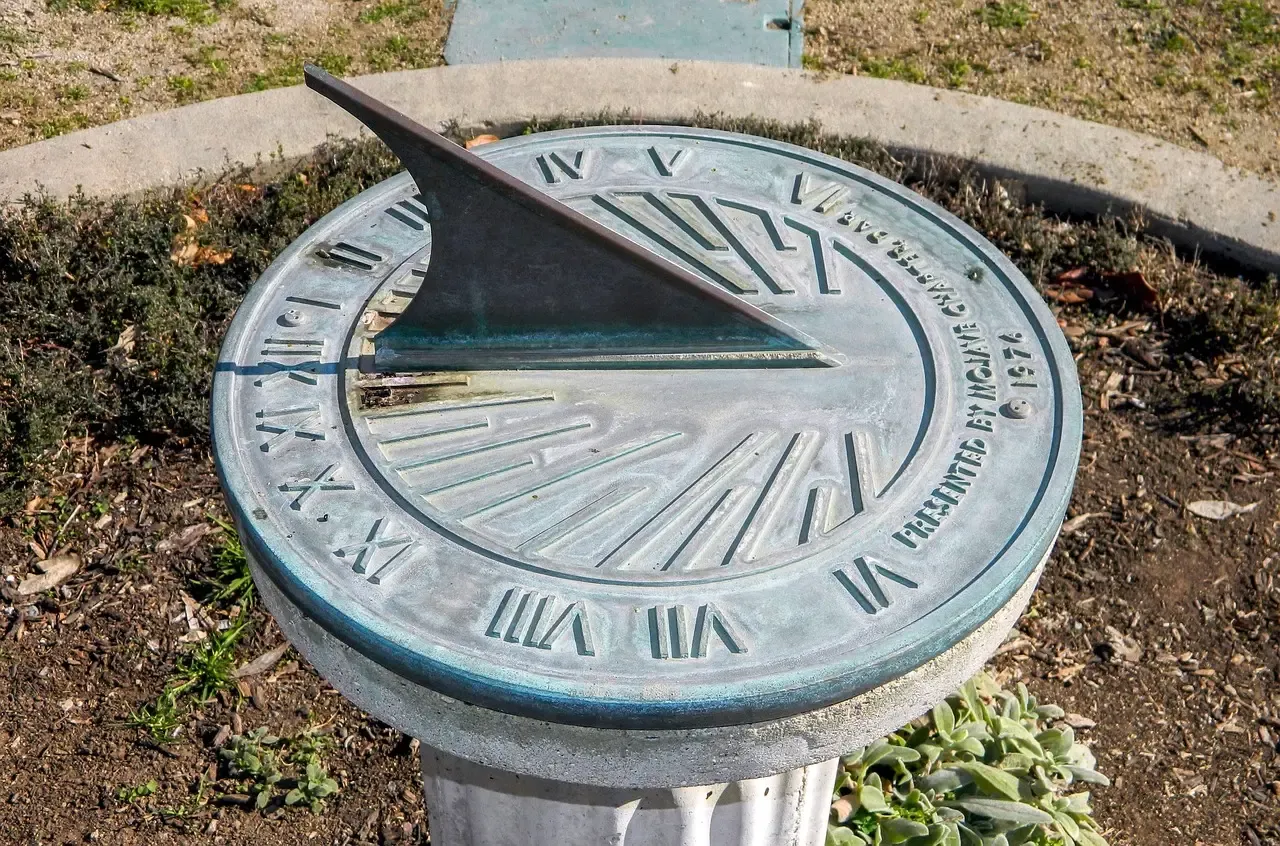
Here’s the uncomfortable truth: ancient humans weren’t the superstitious, sky-fearing simpletons pop culture makes them out to be. Some of them were doing real observational science – using nothing but patience, geometry, and repeated record-keeping – and they were getting genuinely correct answers about tides, eclipses, exploding stars, and the shape of the Earth itself, centuries or millennia before modern instruments could confirm any of it.
The most uncomfortable part isn’t even that they were right. It’s that many of these correct thinkers were mocked, exiled, or imprisoned by their own societies for saying it out loud. Being right about the sky has never once guaranteed being believed – and honestly, that hasn’t changed as much as we’d like to think. Which of these surprised you the most? Drop it in the comments.