
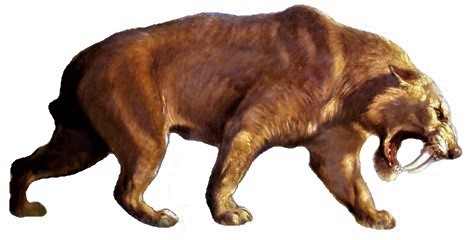
Most people picture the sabre-tooth cat as just “a lion with bigger fangs.” That assumption is almost entirely wrong.
Smilodon wasn’t a faster, stronger version of a modern predator. It was a completely different killing machine, built with mechanics no living cat, wolf, or bear could replicate today. Its jaw, its muscles, even its social life operated on rules that evolution abandoned the moment the Ice Age ended.
Paleontologists who spend their careers studying its bones keep finding the same unsettling thing: by every modern rule of predator design, this animal shouldn’t have worked. And yet it dominated two continents for over a million years. Here’s what the fossil record actually says about how it pulled that off.
#1 – It Could Open Its Jaws Almost Twice as Wide as a Lion
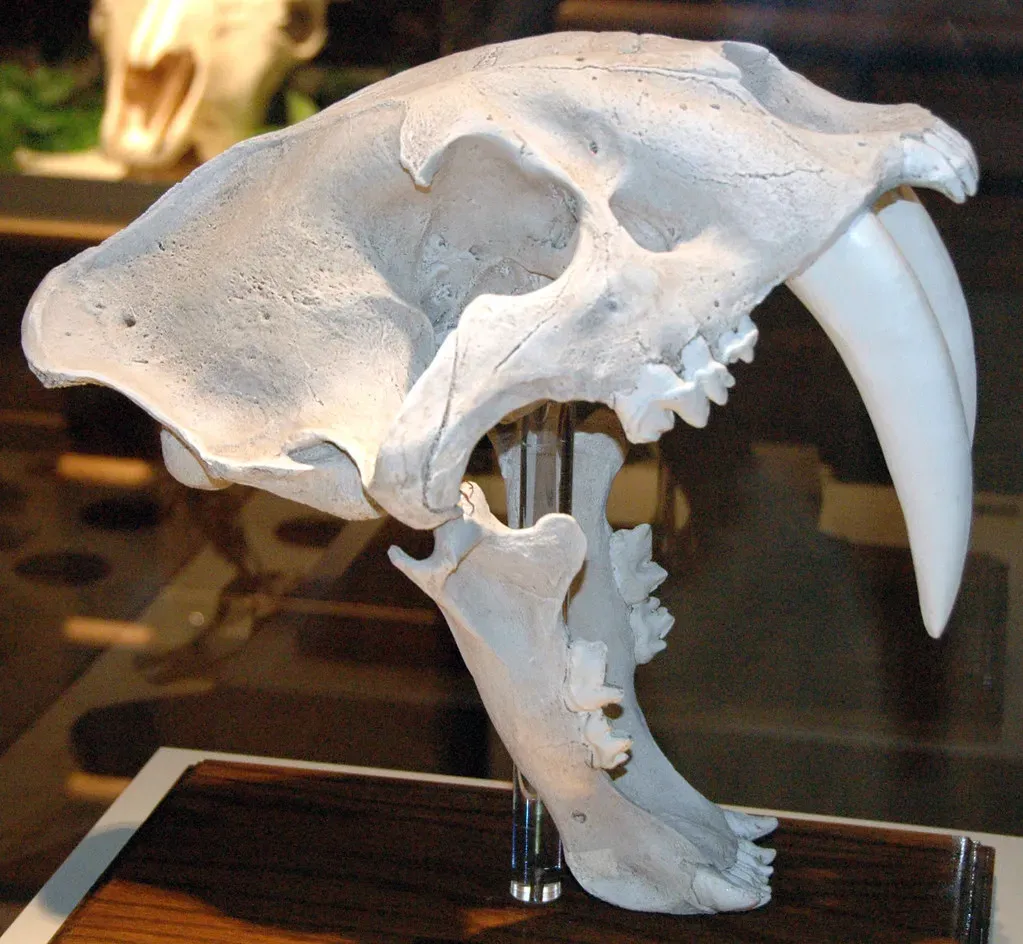
A modern lion has an impressive bite, but its jaw simply cannot open far enough to do what Smilodon did on every single attack. This wasn’t a minor anatomical quirk – it was the entire foundation of its hunting style.
Smilodon’s gape could reach almost 120 degrees. A modern lion tops out at roughly 60 to 65 degrees. That’s not a small edge – it’s the difference between a weapon that works and a weapon that gets in its own way.
That enormous gape wasn’t a party trick. It was a necessary adaptation, the only way Smilodon could get full use of its teeth without being handicapped by them. A lion doesn’t need that range because its canines are short and straight – give a lion Smilodon’s jaw geometry and it would injure itself just trying to close its own mouth.
No predator alive today needs this kind of gape, because no predator alive today carries teeth this long. Without it, Smilodon’s own fangs would have made biting physically impossible. But that’s nothing compared to what we found about #2.
#2 – It Grew the Longest Canine Teeth of Any Cat in History
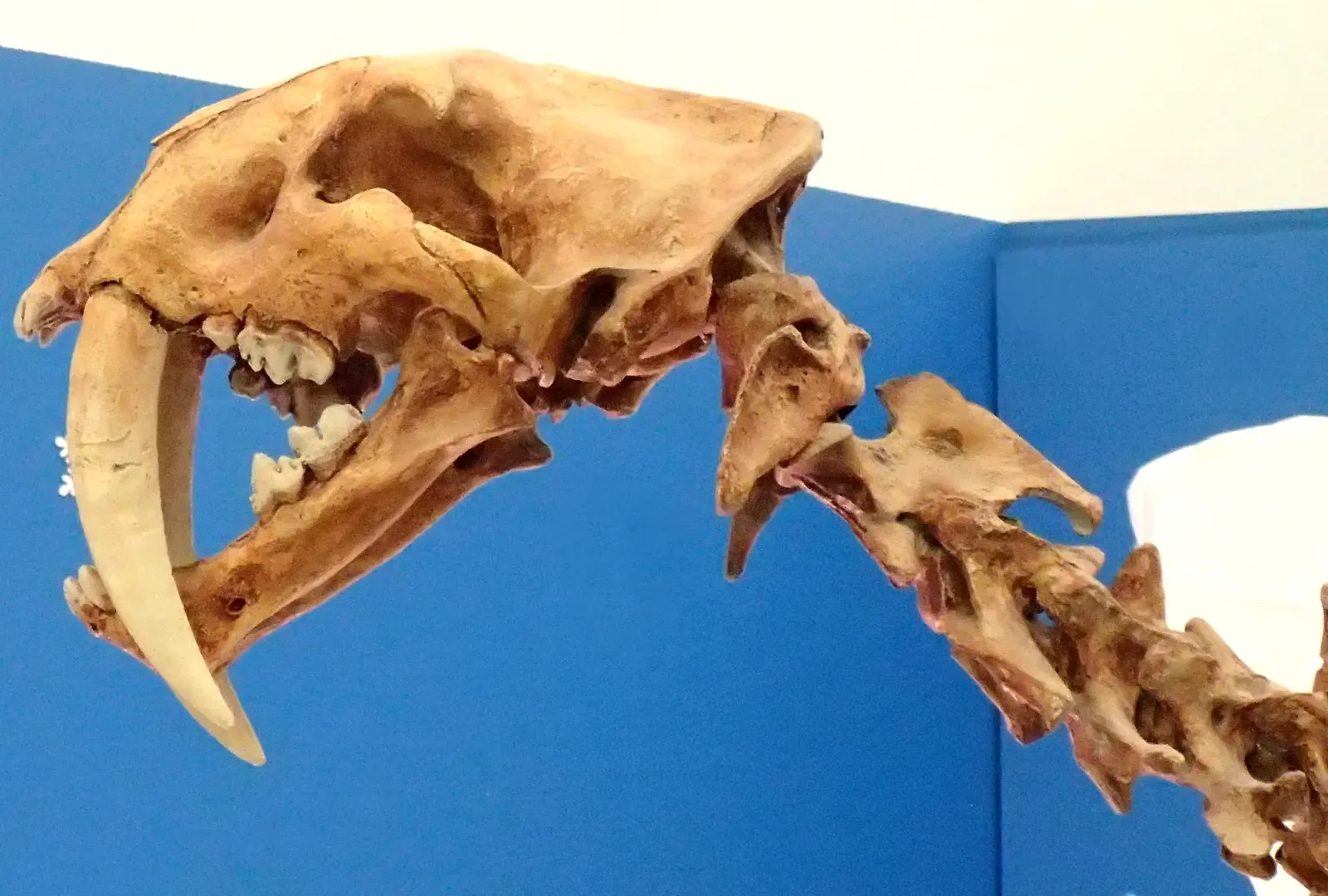
Every big cat alive today has canines. None of them come close to what Smilodon carried in its mouth.
Smilodon is most famous for its long canine teeth, and it grew the longest of any saber-toothed cat – about 28 centimeters (11 inches) in the largest species, S. populator. In some individuals, the teeth were even more extreme.
Those upper canines protruded up to 17 centimeters (6.7 inches) outside the upper jaw. That’s more than half a foot of exposed, blade-like tooth hanging in the open at all times – while the animal rested, slept, or simply walked its territory. There was no sheathing it, no retracting it, no hiding it from prey or rivals.
Fast Facts
- Longest canine on record: about 28 cm (11 inches) in S. populator
- Exposed length outside the jaw: up to 17 cm (6.7 inches)
- Teeth were curved and blade-like, not straight like a modern cat’s
- No retraction or sheathing – the fangs stayed exposed around the clock
No living land predator, from tigers to grizzly bears, carries a weapon that extends that far past its own jawline. Most people assume these teeth were built for crushing bone – they weren’t built for that at all. That fragility is exactly why #3 mattered so much.
#3 – It Killed With a Single Precision Strike, Not a Suffocating Grip
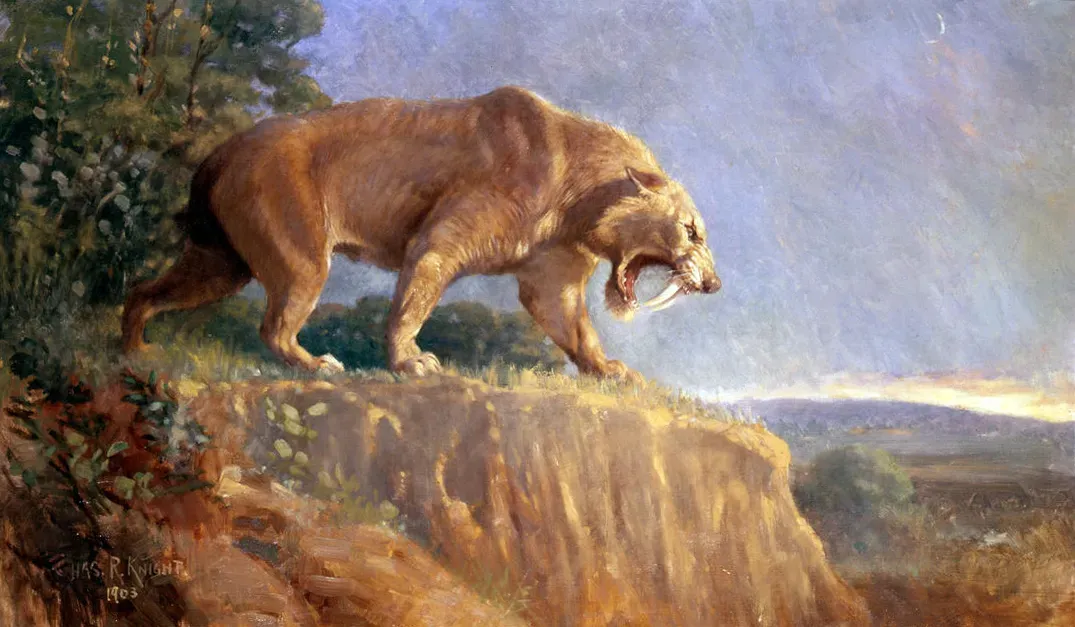
Modern big cats like lions kill by clamping onto the throat and holding on until prey suffocates – sometimes for several agonizing minutes. Smilodon didn’t have that luxury, and it turned the limitation into an advantage.
Research suggests Smilodon actually had a surprisingly weak bite. Its teeth functioned as a precision weapon meant to deliver one final wound to prey that was already subdued – the equivalent of an assassin’s stiletto rather than a swordsman’s blade.
This wasn’t a workaround. It was the entire strategy. A growing consensus holds that Smilodon fatalis made relatively quick kills using directed slashing bites to the throat, rather than the slow suffocating bite typical of lions and other big cats today.
No living predator hunts this way anymore. The fastest kill method on the planet vanished 10,000 years ago. But #4 is where the real engineering shows up.
#4 – It Powered Its Killing Bite From Its Neck, Not Just Its Jaw
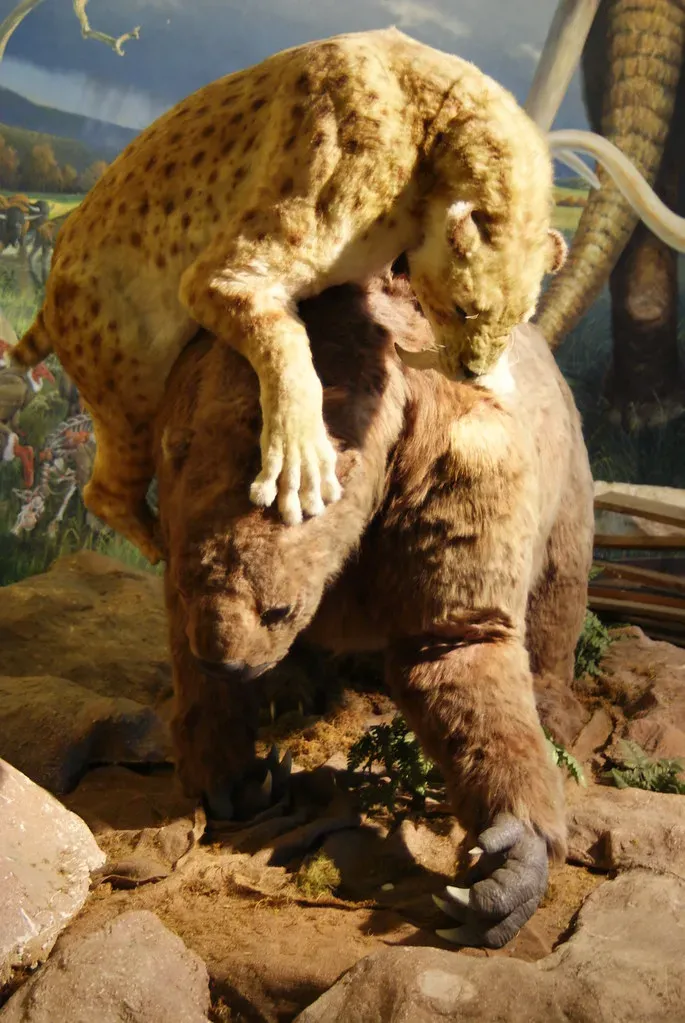
Here’s something almost nobody realizes: Smilodon’s jaw muscles were actually weak. What made the kill possible came from somewhere else entirely.
In this model, the mandible locks against the prey’s neck while a dorsally directed force from the forelimbs rotates the skull forward at the jaw joint, driving the canines in. In plain terms – the cat wasn’t biting down so much as slamming its whole skull forward, using body mechanics no modern cat relies on.
The muscle attachment points on Smilodon’s skull suggest small, unremarkable jaw muscles on their own. But once researchers factored in the power generated from the neck, the bite force estimate jumped to a far more respectable 2,000 newtons.
No living cat needs its neck to finish a kill. That’s a completely different weapon system. Slide #5 explains why its front legs had to compensate.
#5 – It Could Pin Down Prey Using Forelimbs No Modern Cat Can Match
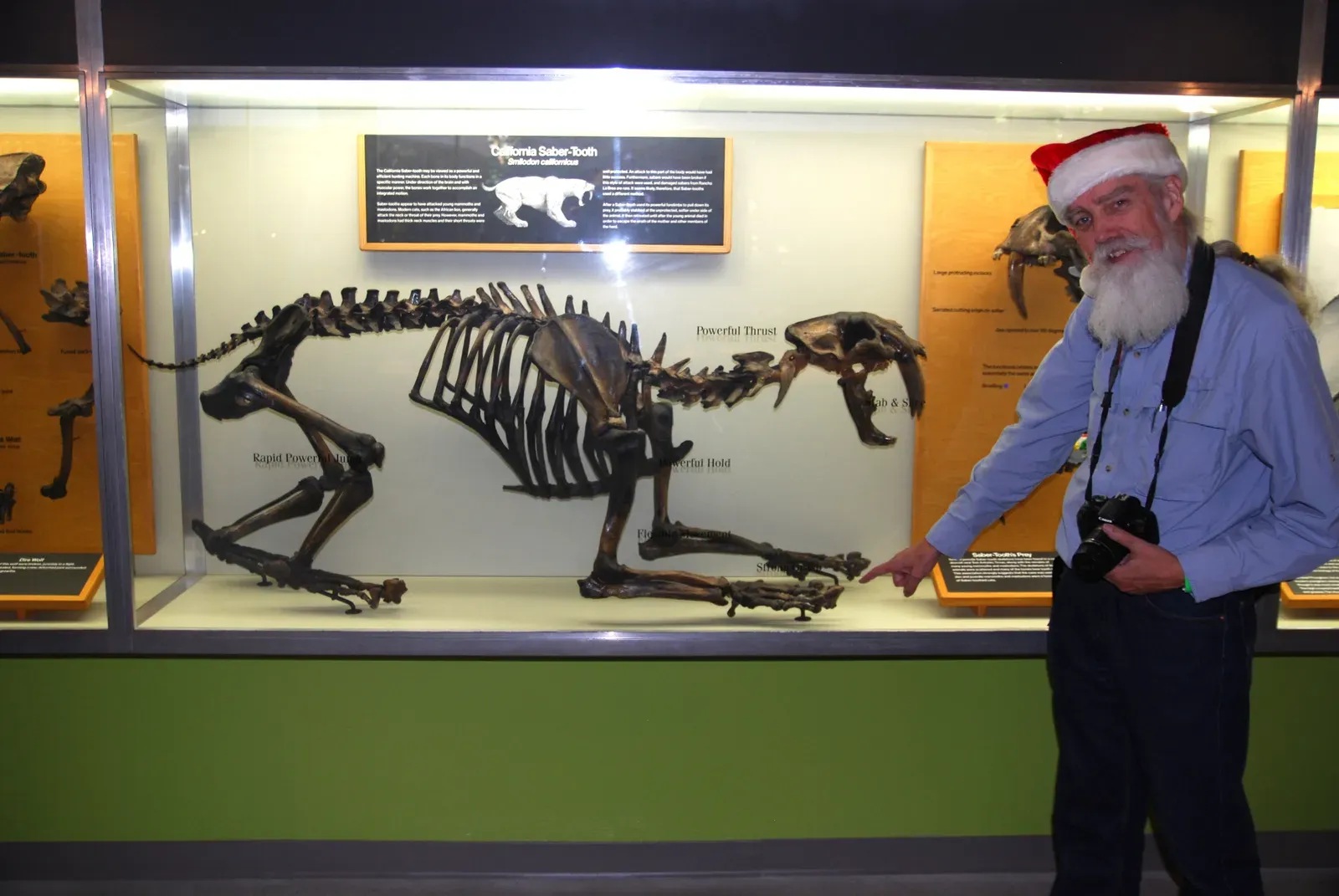
If the bite itself was fragile, something else had to do the dirty work of holding a struggling animal still. That job fell entirely to the front legs.
Smilodon fatalis was an enigmatic predator without a true living analog. Its elongated canines were far more vulnerable to fracture than the teeth of modern felids, which made it essential for the cat to immobilize prey using raw forelimb strength instead of a locked jaw.
This wasn’t guesswork – scientists actually measured it. Based on the cross-sectional properties of its humerus, researchers concluded that Smilodon had a far greater ability to subdue prey with its forelimbs than any living big cat does. The bone density alone tells a story of an animal built to wrestle, not just bite.
No lion, tiger, or jaguar alive has forelimb bones built to withstand that kind of grappling load. But that adaptation only makes sense once you see what Smilodon was actually hunting – which brings us to #6.
#6 – It Regularly Hunted Animals Several Times Its Own Size
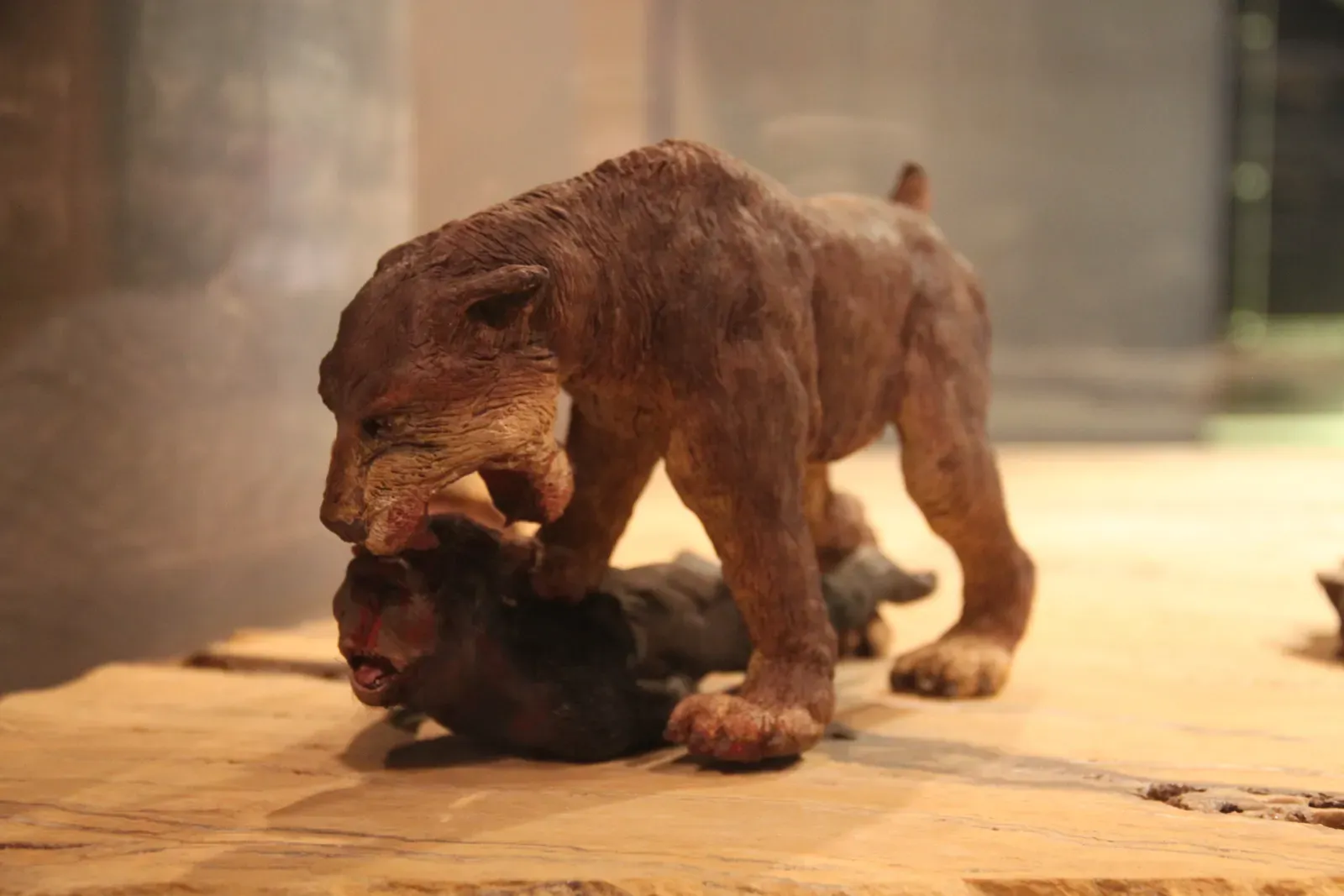
Modern big cats mostly avoid prey that outweighs them by a wide margin. Smilodon didn’t have that option – its ecosystem was full of giants.
This large predatory cat was similar in size to a modern lion but had a far more powerful build. It’s thought to have hunted large, thick-skinned herbivores including bison, camels, and horses.
In South America, the target list got even more extreme. There, Smilodon went after slower-moving giants like Macrauchenia, Toxodon, mammoths, mastodons, and ground sloths that could weigh several tons apiece – animals that would dwarf anything a modern lion would even consider approaching alone.
At a Glance: Smilodon’s Prey List
- North America: bison, camels, wild horses
- South America: Macrauchenia and Toxodon
- Ice Age giants: mammoths, mastodons, ground sloths
- Some targets weighed several tons – far heavier than anything a modern lion pursues
This is a controversial opinion among some paleontologists, but the evidence increasingly suggests Smilodon specialized almost exclusively in prey too large and too dangerous for any living cat to safely approach. That specialization required weapons unlike anything alive today – starting with #7.
#7 – Its Canines Were Serrated Like a Built-In Hunting Knife
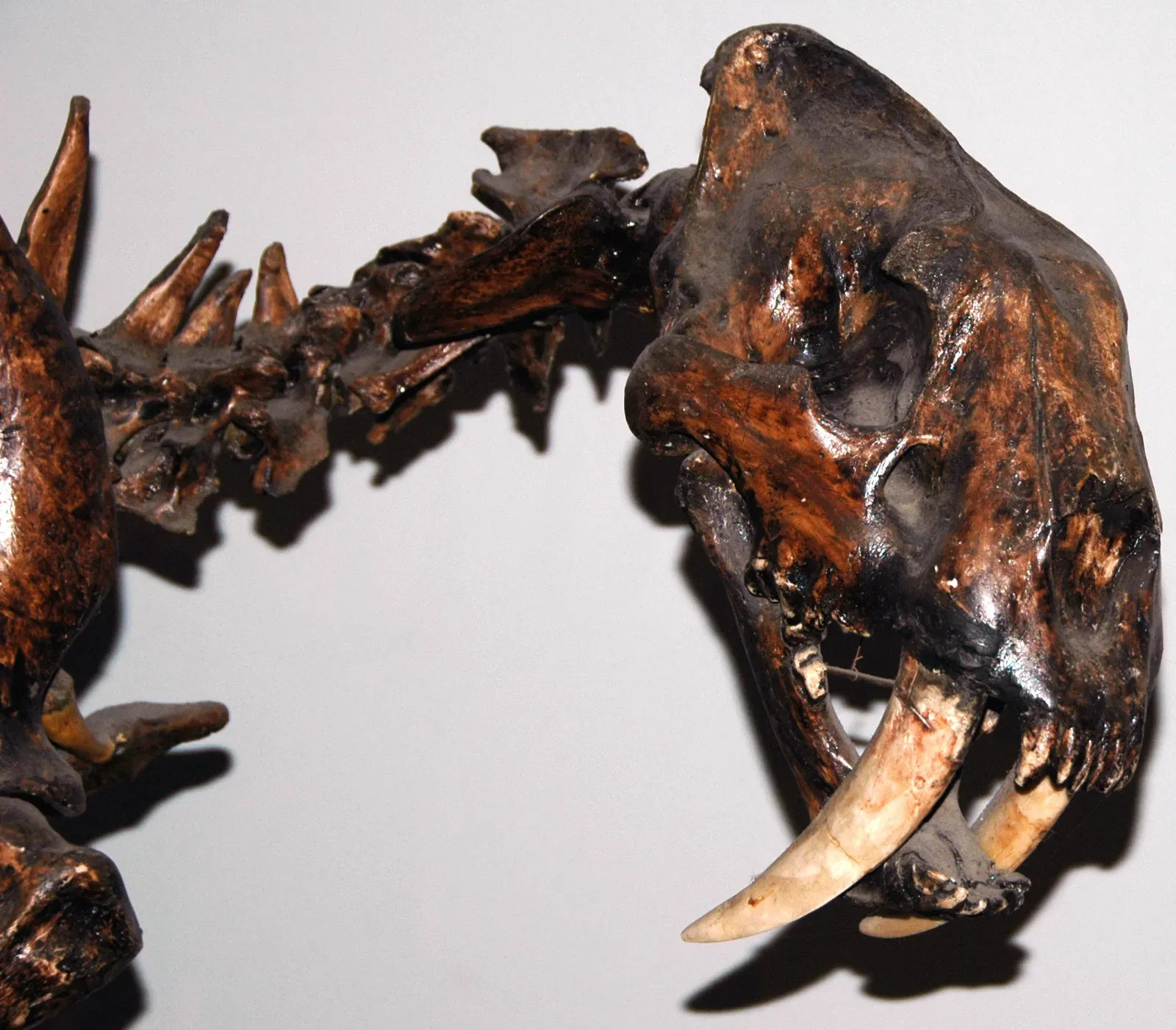
Long teeth alone don’t guarantee a clean kill. Smilodon’s canines carried a secondary feature that turned them into something closer to a bladed weapon than a simple fang.
Among sabertooth cats, Smilodon carried the longest canines of all – up to 28 centimeters (11 inches) along the curve in S. populator – and those teeth bore fine serrations along both the front and rear edges.
That detail is easy to overlook, but it changes everything about how the bite functioned. It wasn’t a puncture wound. It was a cutting motion, designed to slice through soft tissue as the head was pulled through flesh, almost like drawing a knife rather than clamping down.
No modern predator’s teeth are edged this way. Lions, tigers, and wolves rely on conical, crushing teeth. Smilodon’s were closer to a serrated combat knife strapped inside a skull. That kind of precision took years to grow, which is exactly what made #8 so unusual.
#8 – Its Teeth Grew on a Documented, Almost Mechanical Schedule
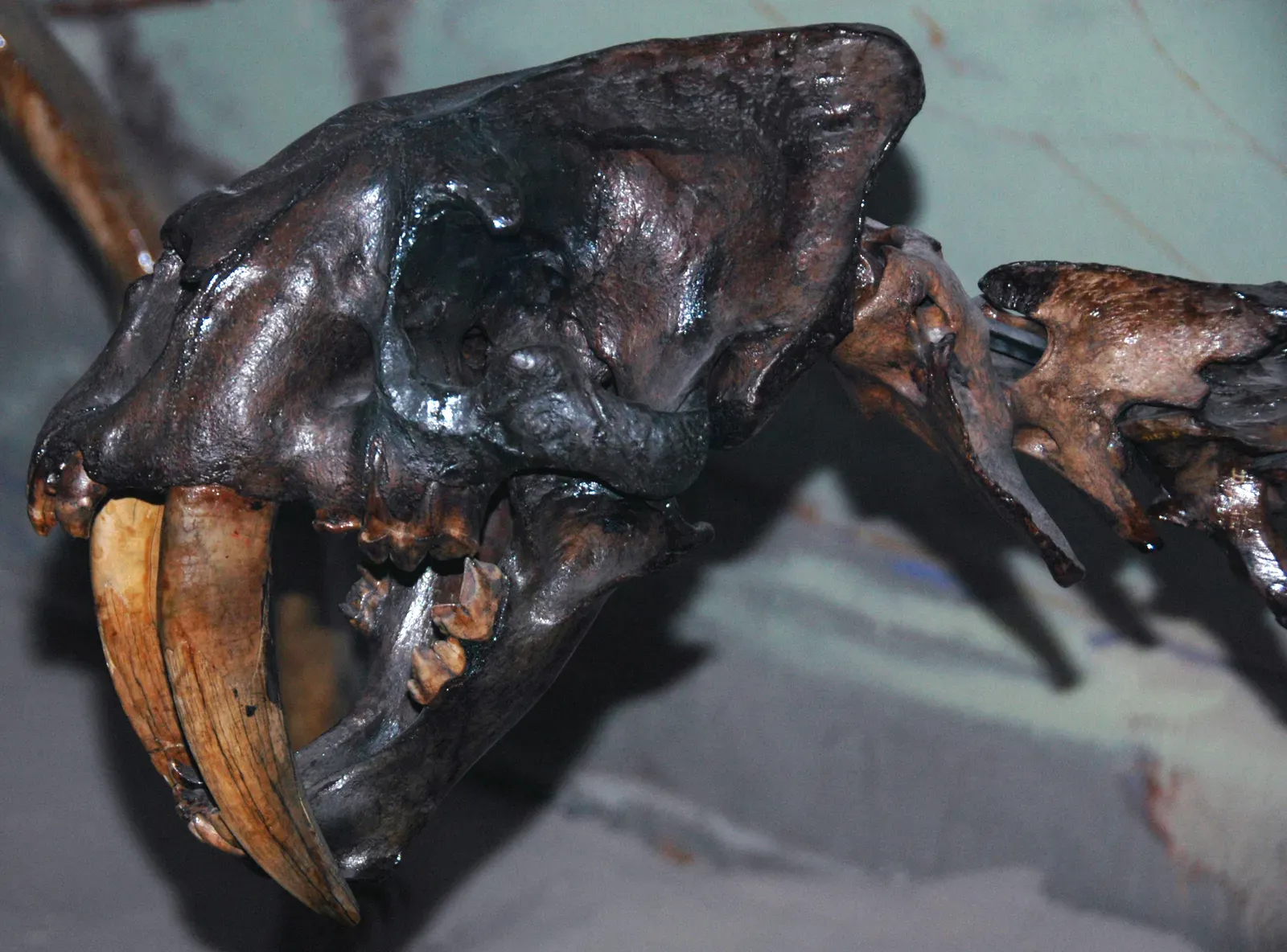
Most predators grow their adult teeth and that’s the end of the story. Smilodon’s canines kept developing on a strict, measurable timeline that scientists have actually tracked in the fossil record.
The teeth of S. fatalis reached full size in about 18 months, growing at a rate of roughly 7 millimeters a month. That’s nearly a third of an inch of new tooth material every single month, for a year and a half straight, until the blade hit its full 11-inch length.
No cat alive today grows a weapon at that pace or to that scale. A young Smilodon spent its entire adolescence walking around with a half-finished version of the very weapon it would depend on for survival.
Most people assume a young Smilodon was born with tiny versions of those famous fangs. In reality, it spent a year and a half building the exact weapon that would define its entire life. That level of specialized investment only makes sense for an animal this heavily built, which leads directly into #9.
#9 – It Packed Far More Muscle Onto Its Frame Than Any Living Cat
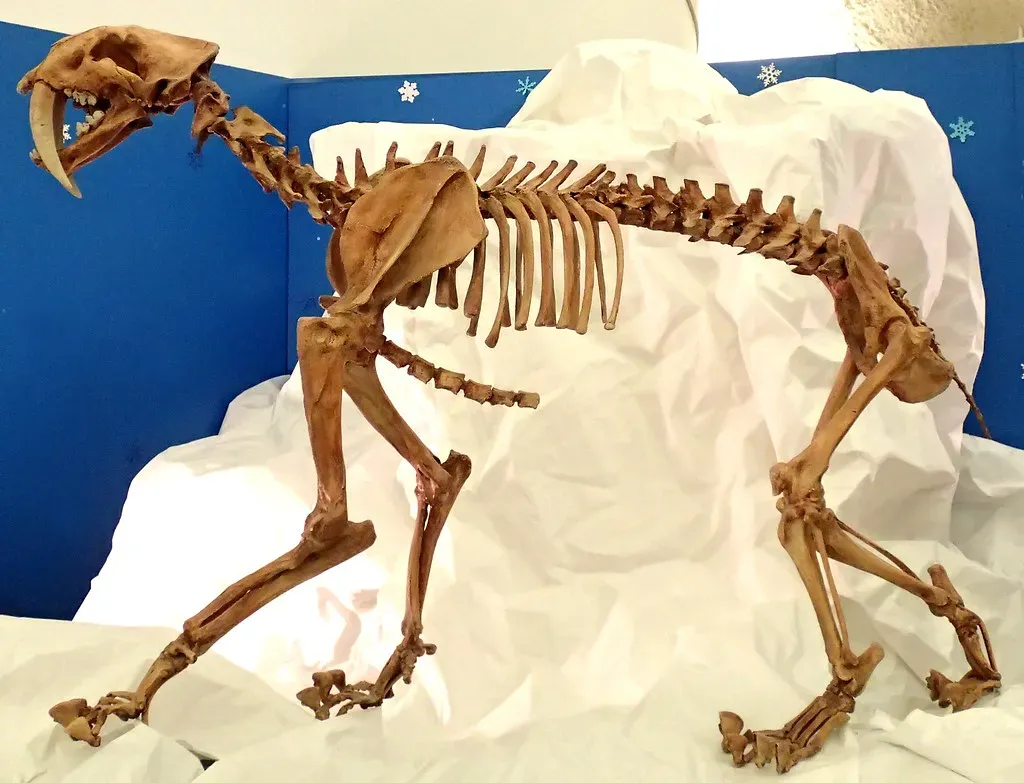
Smilodon wasn’t necessarily longer or taller than a modern lion. But pound for pound, it was in an entirely different weight class.
The largest Smilodon individuals were roughly the size of a male African lion, yet weighed up to 300 kilograms – making them far more heavyset than any big cat alive today.
Independent estimates back this up. Smilodon was comparable in length and height to a Siberian tiger but was generally more robust, stockier, and heavier. The largest species pushed those numbers even further – some researchers estimate S. populator weighed as much as 400 kilograms (880 pounds), making it one of the largest cats to ever exist.
Quick Compare: Size vs. Modern Big Cats
- African lion: roughly 150-250 kg
- Siberian tiger: roughly 180-300 kg
- Smilodon fatalis: up to 300 kg on a lion-sized frame
- Smilodon populator: up to 400 kg (880 lbs)
No living cat carries that much raw bulk on a similarly sized skeleton. That density wasn’t just for show – it fed directly into #10, one of the most misunderstood facts about the species.
#10 – It Could Survive Injuries That Would Kill Any Solitary Hunter
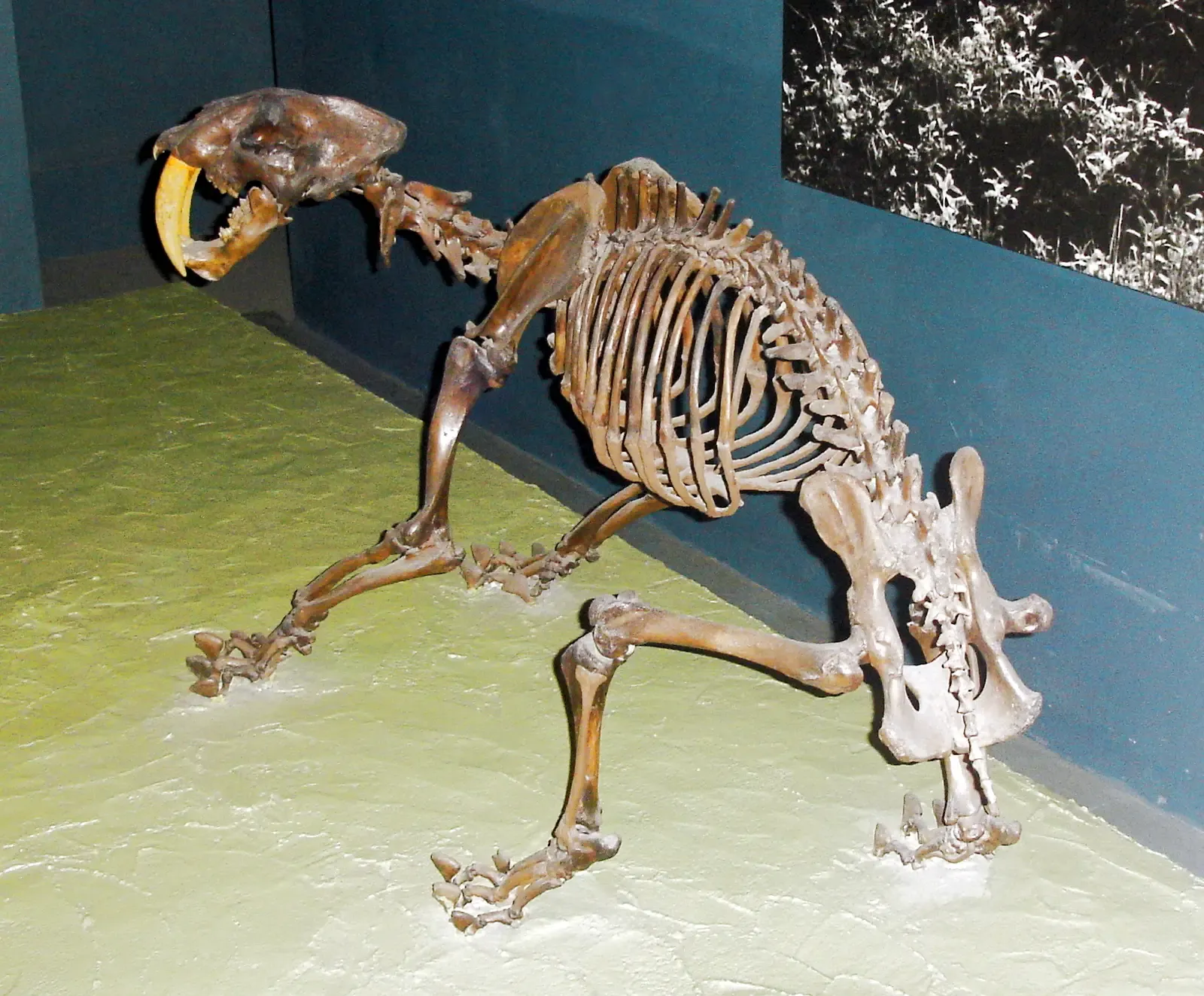
This is where Smilodon gets genuinely strange. Fossil beds have turned up dozens of individuals with catastrophic, life-threatening injuries – injuries that somehow healed.
More than 5,000 Smilodon bones recovered from La Brea show marks of injury or illness: tooth decay, heavily worn arthritic joints, broken legs, dislocated elbows. Some examples are dramatic enough to include crushed chests and spinal injuries, which the animals somehow survived.
These weren’t minor scrapes. Researchers examining the bones concluded the findings are consistent with Smilodon being a group-living animal – one that allowed injured pack members access to food when they couldn’t take down prey on their own.
A solitary predator with a shattered leg simply starves. Smilodon, apparently, didn’t have to. That single detail rewrites everything we assumed about how it lived – and it’s the whole story behind #11.
#11 – It May Have Relied on a Support Network Almost No Big Cat Today Uses
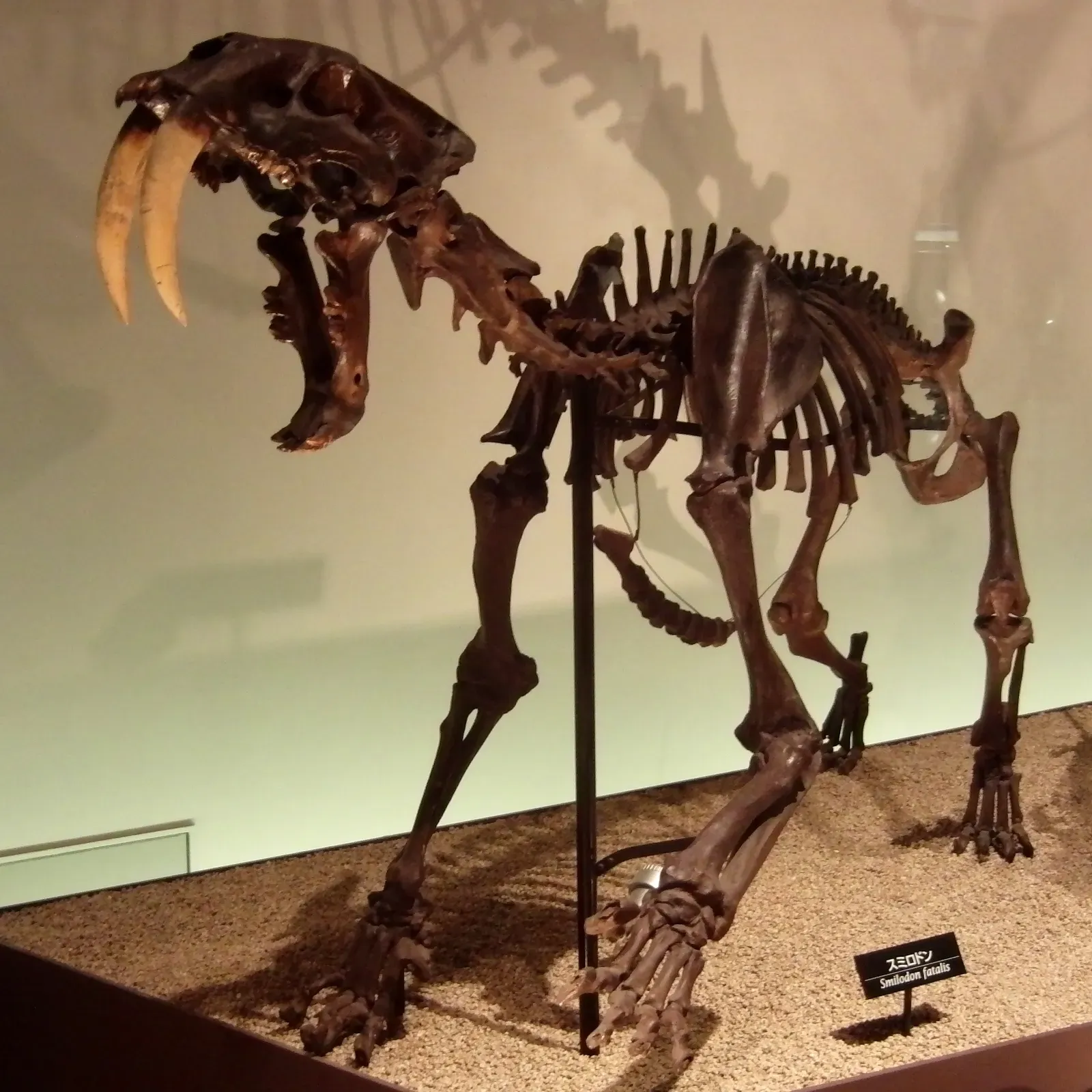
Nearly every large cat species alive today – tigers, jaguars, leopards, cougars – lives and hunts alone. Smilodon’s injury record suggests it broke from that pattern entirely.
The specimens recovered from Rancho La Brea include numerous examples of healed injuries. One individual was found to have been infected following violent trauma, possibly from a fight with another Smilodon, which also dislocated its femur from the hip – and it still survived long enough for the wound to heal.
The scale of the evidence is what makes this so compelling. Researchers have pointed to these partially healed skeletal injuries at Rancho La Brea as direct support for the idea that Smilodon lived and hunted socially, sharing kills the way modern lions occasionally do within a pride.
Worth Knowing
- More than 5,000 recovered La Brea bones show signs of injury or illness
- Documented cases include broken legs, dislocated elbows, and crushed chests
- At least one individual survived a dislocated hip after violent trauma
- Modern solitary big cats rarely recover from injuries this severe without help
The debate isn’t fully settled – some scientists still push back hard on this idea. But the sheer volume of survived trauma at one site is nearly impossible to explain any other way. That contradiction – a “weak” predator surviving where strong solitary ones would fail – sets up the final, most surprising fact of all.
#12 – It Traded Raw Bite Force for a Killing Method No Living Predator Uses

Save the most counterintuitive fact for last: Smilodon’s bite was, by the numbers, embarrassingly weak for an animal its size.
A modern lion bites down with a force of over 3,000 newtons. A 229-kilogram Smilodon managed only about 1,000 newtons – roughly the same bite force as a jaguar a third of its size, despite being one of the biggest cats to ever walk the planet.
Follow-up research confirmed the gap. Computer reconstructions found Smilodon’s bite was only about one-third as strong as a lion’s. The researchers behind those models concluded the cat used its raw strength to bring prey down physically, saving its bite for the very end, once its victims were already restrained and grounded.
This is the fact almost nobody expects: the most feared predator of the Ice Age had a weaker bite than a modern jaguar. It simply didn’t need raw force. It had already replaced it with speed, leverage, and a method no living predator has ever needed to relearn.
The Bottom Line
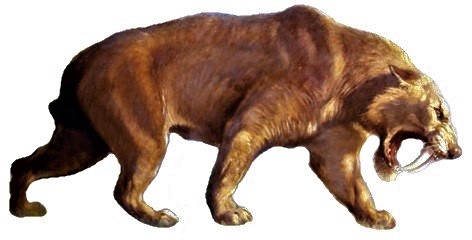
Smilodon wasn’t a bigger, scarier lion. It was a specialist built around a set of trade-offs no modern predator would ever risk.
It swapped bite force for a nearly 120-degree gape. It swapped jaw power for neck-driven leverage. It swapped solitary living for a support system that let injured cats survive against all odds.
Every adaptation on this list only worked because the others existed alongside it – remove one, and the whole system collapses. That specialization made Smilodon a dominant killer for over a million years, but it may have also sealed its fate the moment the giant herbivores it depended on started disappearing.
Which one of these facts surprised you the most? Drop it in the comments.