
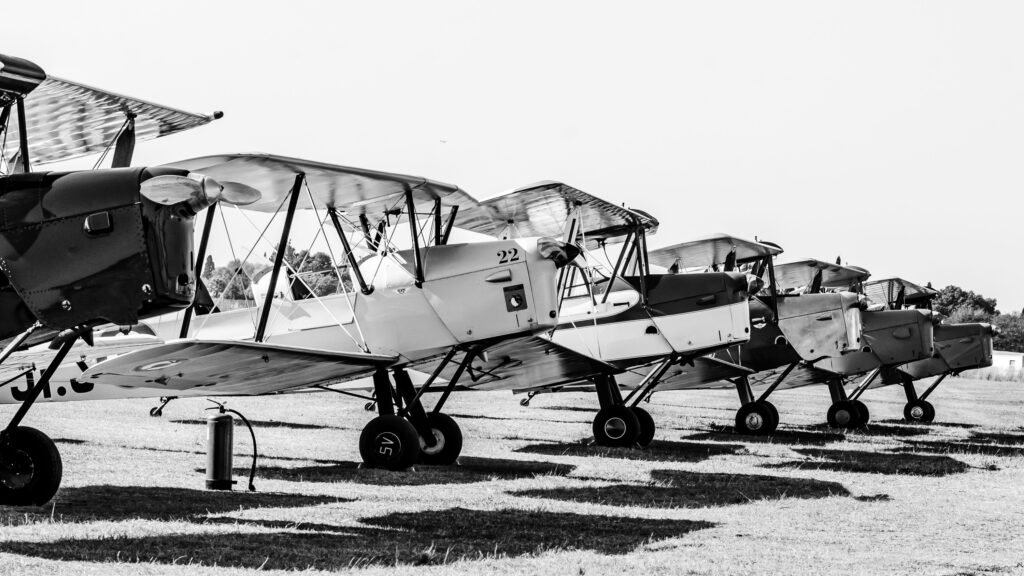
Most people think they know exactly how humans learned to fly – two bicycle mechanics, a windswept beach in North Carolina, twelve triumphant seconds, and the rest is history. That version isn’t wrong, exactly. It’s just been edited for drama by generations of textbook writers who liked a clean story more than a messy one. Dig into old museum archives, Smithsonian correction letters, and the footnotes historians keep for themselves, and the tidy narrative starts falling apart in almost every direction.
Twelve specific “facts” that used to be taught with total confidence have since been softened, quietly footnoted, or dropped outright once someone actually checked the paperwork. Some of the walk-backs are embarrassing for the institutions involved. A few involve outright cover-ups. And at least one might make you rethink everything you assumed about who actually flew first.
#1 – Kitty Hawk Wasn’t the Public Spectacle Textbooks Imply
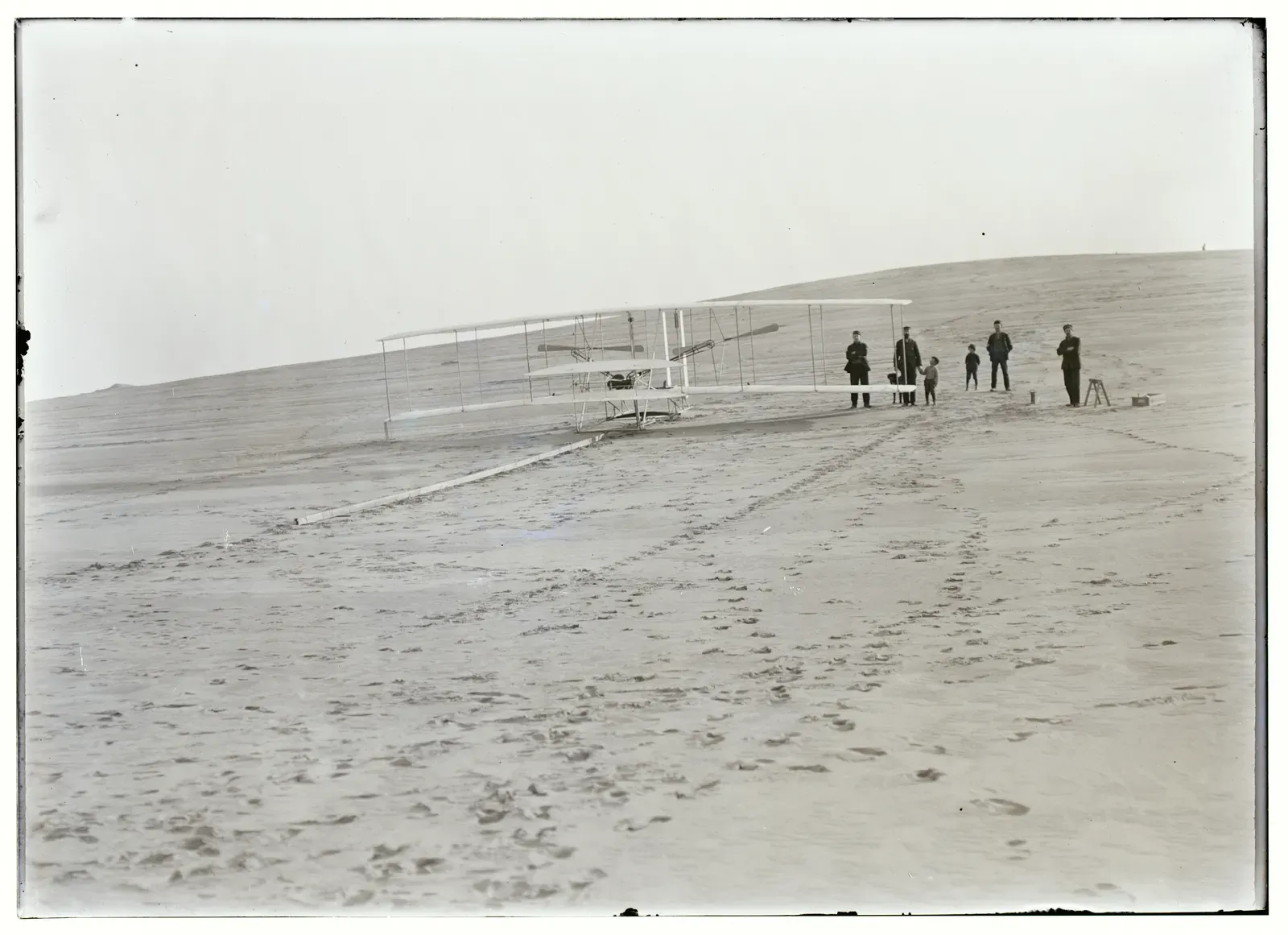
Most classroom illustrations show a crowd watching in awe as the Wright Flyer lifts off the sand, some sunlit, triumphant moment witnessed by history in real time. That image is almost entirely manufactured.
In reality, the December 17, 1903 flight had an audience of five people – mostly local lifesaving station crew who happened to be nearby, plus a teenage boy recruited to help move equipment. There was no press conference, no cheering throng, no headline blaring across the country the next morning.
Most Americans didn’t even hear about the flight for days, and several of the newspapers that eventually ran the story got basic details wrong or buried it on an inside page. The Wrights themselves stayed cautious and secretive, partly out of fear of patent theft, and partly because earlier press coverage of their glider tests had already been wildly exaggerated.
The “world changes forever in front of a crowd” narrative makes a better photo caption than it ever did a fact.
#2 – The “Lone Genius Bicycle Mechanics” Story Skips the Actual Science
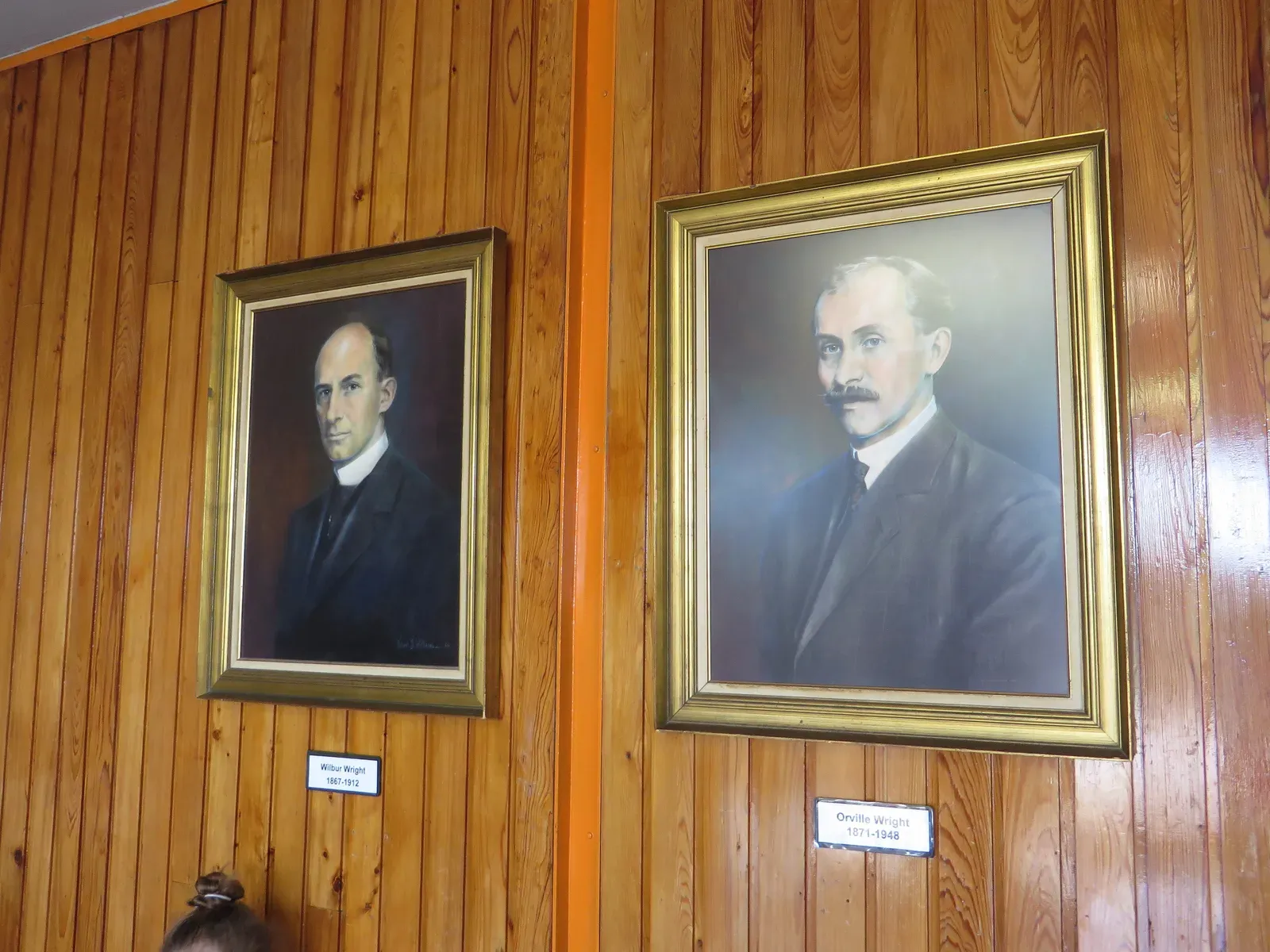
For generations, students learned that two self-taught bike-shop owners simply out-tinkered the trained scientists of their era. It’s a flattering story about raw American ingenuity, but it quietly erases how relentlessly scientific the Wrights actually were.
Before they ever built a full aircraft, Wilbur and Orville constructed a homemade wind tunnel and tested more than 200 wing shapes to correct faulty aerodynamic data that earlier researchers had published. They corresponded extensively with engineer Octave Chanute and studied the glider experiments of Otto Lilienthal, whose fatal 1896 crash shaped their obsession with solving pitch control before anything else.
Fast Facts
- Built a homemade wind tunnel in the back of their bicycle shop before ever building a full aircraft
- Tested more than 200 wing shapes using hand-built lift-and-drag balances
- Found and corrected errors in decades-old aerodynamic tables other researchers had relied on
- Used the corrected numbers to engineer the wings that flew in 1903
They didn’t stumble into flight through lucky garage tinkering. They systematically dismantled the era’s aerodynamic tables and rebuilt them from scratch, testing variable after variable by hand, one failed wing shape at a time.
Modern aviation history courses now emphasize that grinding, data-driven process instead of the folksy “tinkerers get lucky” version, mostly because it’s simply closer to what happened.
#3 – “First in Flight, Full Stop” Now Comes With an Asterisk
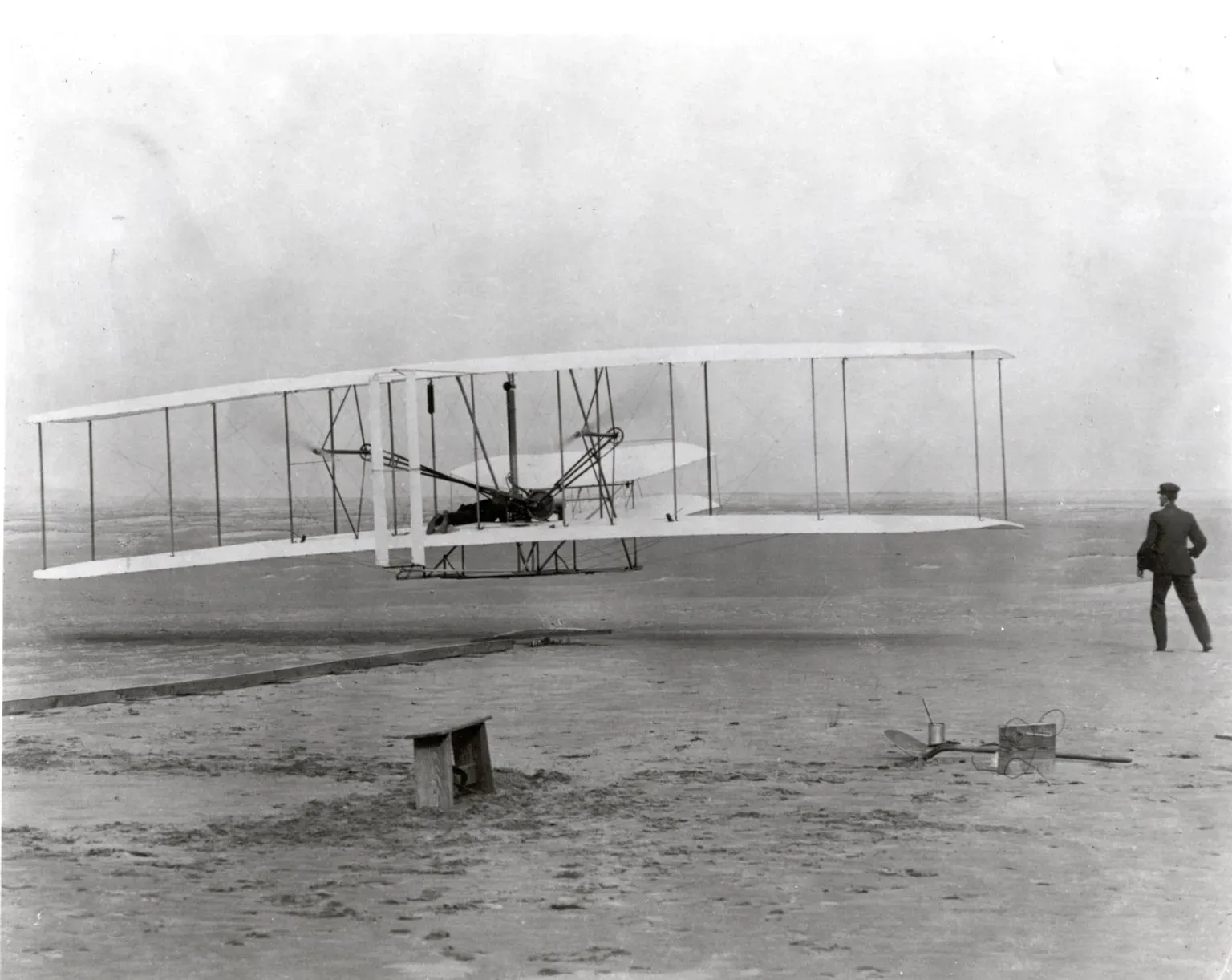
This one used to be non-negotiable in American classrooms. Now it comes with real qualifications in serious aviation history circles.
The Wright brothers were the first to achieve sustained, controlled, powered, heavier-than-air flight with a human pilot aboard, in 1903 – the longest of that day’s four flights covered 852 feet. That much still holds up under scrutiny. But several rival claims have forced historians to soften the absolute language that used to accompany it.
In Brazil, native son Alberto Santos-Dumont is taught in schools as the true inventor of the airplane, based on flights of 60 and 220 meters he made in France in 1906. Then there’s Connecticut’s Gustave Whitehead: in 2013, the Connecticut legislature actually passed a bill naming him the first man to fly, based on a claim he made back in 1901 – one long dogged by shaky documentation and contradictory witness accounts. Jane’s All the World’s Aircraft briefly sided with Whitehead too, before its publisher walked the endorsement back as one editor’s personal opinion rather than an official position. Historian David McCullough rejected the Whitehead claim outright.
The controversy never got fully resolved. It just got quietly demoted from settled fact to open dispute.
#4 – Langley’s “Failed” Aerodrome Was Actually Covered Up
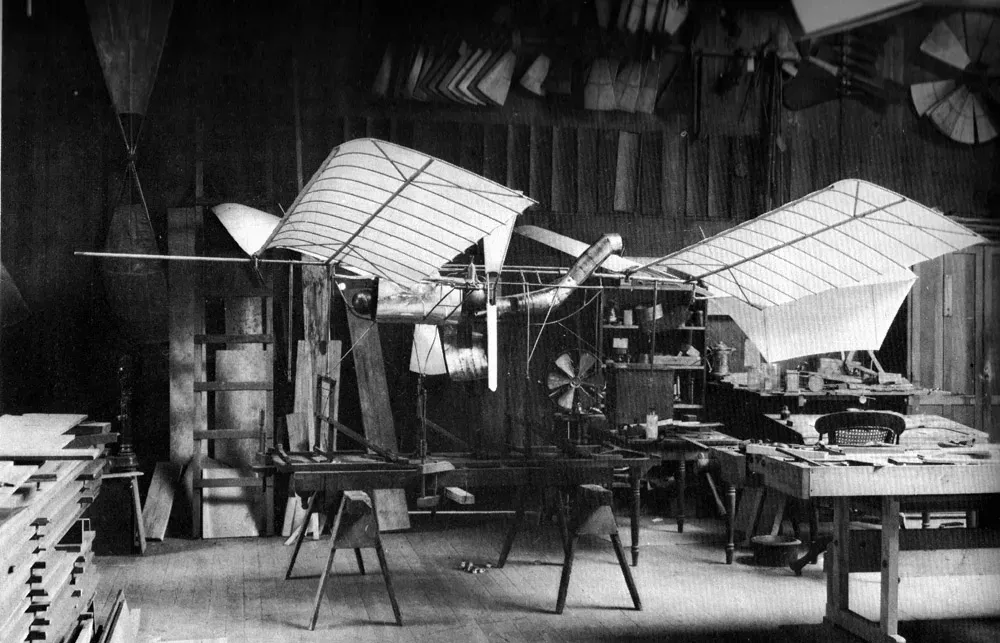
Old exhibits told a tidy story: Samuel Langley tried and embarrassingly failed at powered flight just nine days before the Wrights succeeded, a footnote to the real triumph. The full story involves something closer to an institutional cover-up.
Langley attempted to fly his Aerodrome twice, on October 7 and December 8, 1903, and failed both times, crashing into the Potomac River in front of reporters. Case closed, or so it seemed – until 1914, when the Smithsonian secretly hired Glenn Curtiss, a man locked in a bitter patent war with the Wright brothers, to rebuild and refly the wrecked machine.
Curtiss made significant, undisclosed changes to the airframe, wings, drivetrain, and controls before getting it into the air for a few short hops. Afterward, the Smithsonian displayed the original Langley Aerodrome for decades as the first machine “capable of sustained flight,” conveniently glossing over how much of the flying version wasn’t actually original.
It took until 1942 for the Smithsonian to formally admit the truth. In a written apology, an institution official acknowledged that because of Curtiss’s changes, the 1914 tests never actually proved the Aerodrome, in its real 1903 configuration, was capable of flight at all. That retraction quietly reshaped how museums caption the exhibit today.
#5 – Leonardo da Vinci Didn’t Actually Invent the Helicopter
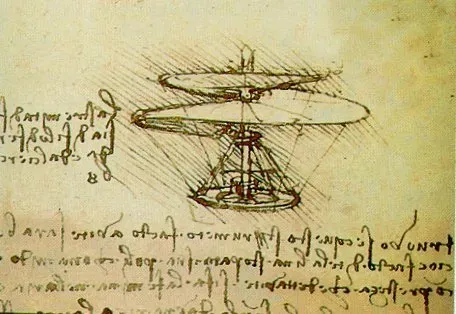
Textbooks love opening flight chapters with da Vinci sketches, implying a direct engineering lineage from his notebooks to the Wright Flyer. That’s a stretch bordering on fiction.
Da Vinci’s ornithopter designs relied on flapping wings powered entirely by human muscle, and modern biomechanical analysis shows a person simply cannot generate enough sustained power-to-weight output to lift themselves off the ground that way. His famous “aerial screw” sketch, often labeled a proto-helicopter, was never built or tested during his lifetime and lacked any counter-torque mechanism – meaning a working version would have spun the pilot in the opposite direction instead of lifting him.
None of da Vinci’s flying concepts were ever built as functional aircraft, and none influenced the engineers who actually solved powered flight four centuries later. Wilbur and Orville Wright never cited him as an inspiration in any of their surviving notes or letters.
Aviation historians now treat the da Vinci connection as a romantic bookend, not an engineering milestone, and newer curricula increasingly skip straight from balloon flight to gliders.
#6 – The “Flight Is Impossible” Scientist Quote May Not Be Real
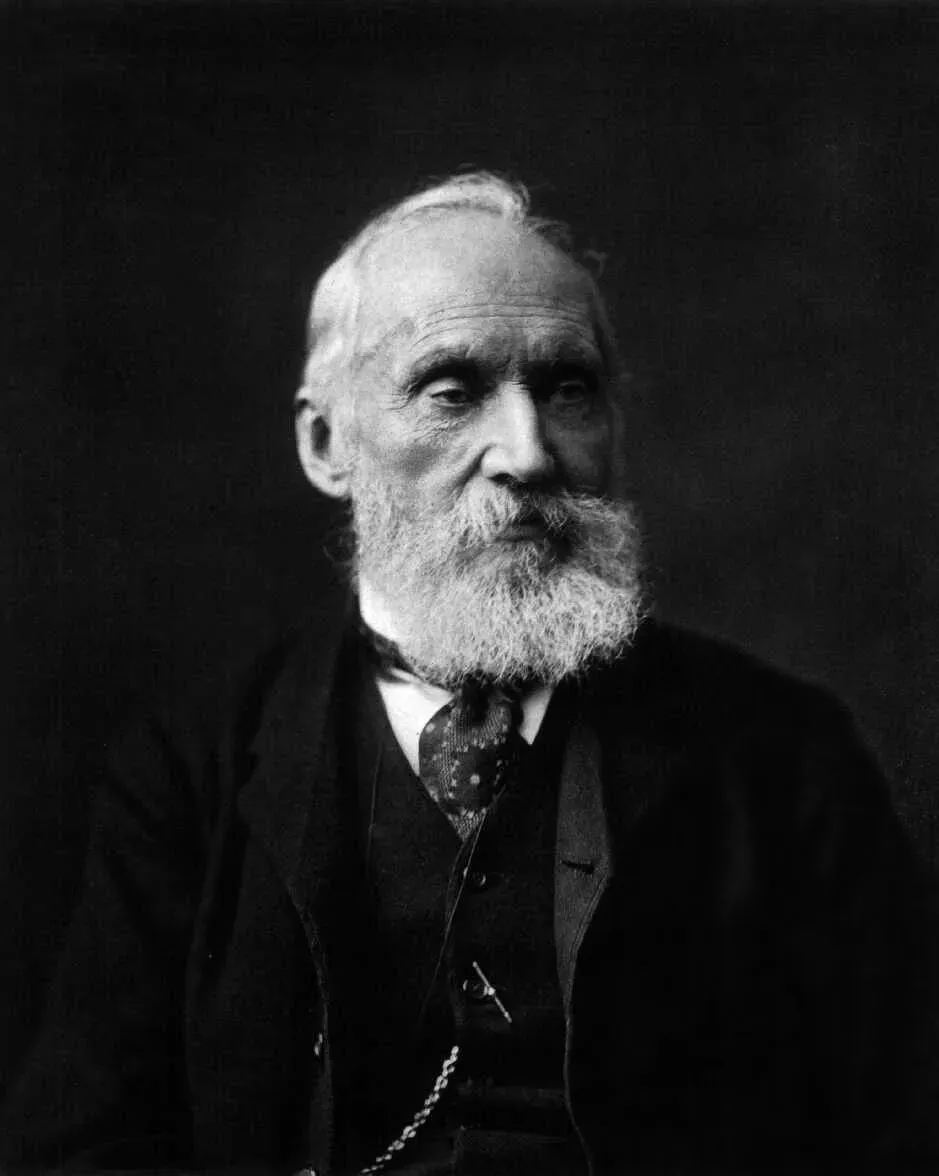
Nearly every old aviation lecture opens with some version of a brilliant scientist declaring heavier-than-air flight impossible, right before the Wrights proved him wrong. The line is almost always attributed to physicist Lord Kelvin.
“Heavier-than-air flying machines are impossible” is widely credited to Lord William Thomson Kelvin, president of the British Royal Society, in 1895. It’s a perfect dramatic setup – a genius humiliated by two bicycle makers. There’s just one problem: careful research flags this exact wording as a likely misquote, with no known authentic source using those words.
Kelvin did express genuine skepticism about aviation in other documented statements, but the crisp, quotable line taught for a century appears to be a later fabrication that got attached to his name because it made a better story.
Historians now treat the “quote” the way they treat most viral internet history: memorable, motivational, and largely unverifiable. Serious curricula have started dropping it or heavily qualifying it.
#7 – “Man Was Not Meant to Fly” Wasn’t the Universal Belief It’s Made Out to Be
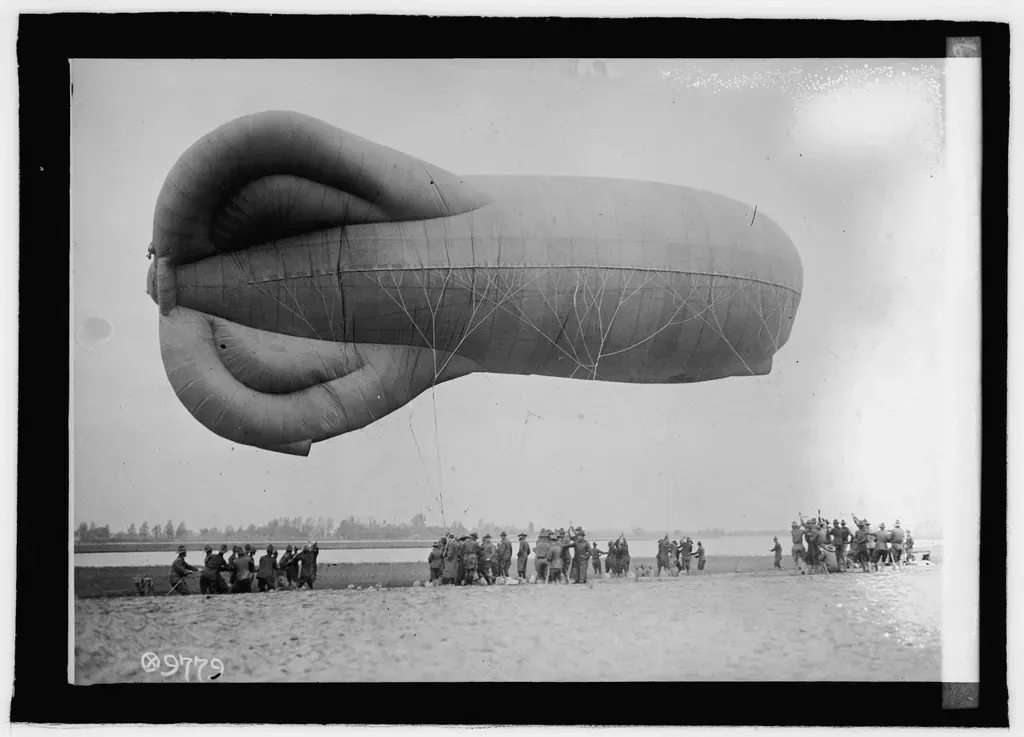
The old narrative insists early aviators battled overwhelming public and religious hostility, framing flight as a taboo humanity had to conquer through sheer defiance. That dramatic framing overstates reality by a wide margin.
By the late 1800s, ballooning was already a popular public entertainment across Europe and America, complete with paid exhibitions, county fair demonstrations, and enthusiastic newspaper coverage of glider experiments. Investors and inventors were racing each other openly, not hiding from social condemnation. Scientific societies debated aerodynamics seriously in published journals rather than dismissing the entire subject as heresy.
Worth Knowing
- Manned hot-air balloon flight had already thrilled crowds since the 1780s
- Balloon ascensions were a regular attraction at American county fairs by the late 1800s
- Aeronautical societies in Europe were publishing serious aerodynamic research decades before 1903
- Glider experiments were routinely covered as legitimate science news, not scandal or heresy
The genuine skepticism that existed was mostly technical and financial, not moral or religious. Serious scientists doubted specific engineering approaches, not the entire concept of human flight as some forbidden frontier.
The “Icarus complex” framing makes for a compelling opening paragraph, but it flattens a period that was actually full of open, public excitement about the possibility of flight.
#8 – Generals Didn’t Immediately Grasp What the Airplane Could Do in War
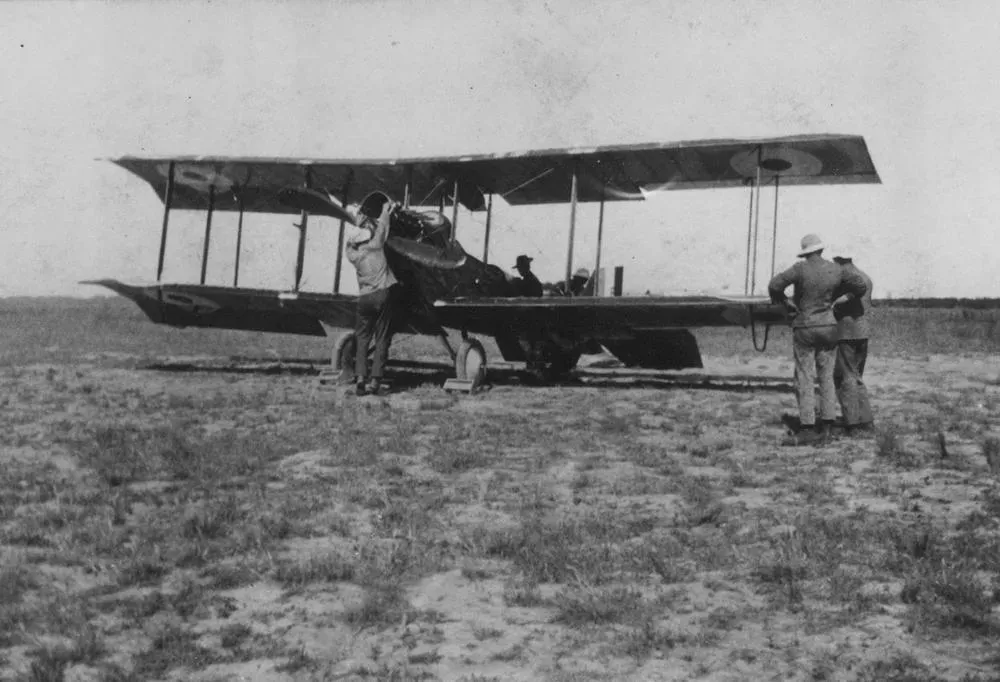
Old war-history lessons often imply that once the airplane existed, generals instantly grasped its battlefield potential and rushed to weaponize it. That’s backward.
When World War I began in 1914, most military commanders on both sides viewed aircraft strictly as reconnaissance tools for spotting enemy troop movements, nothing more. Several senior officers openly dismissed the airplane as a novelty unsuited to serious combat, still favoring cavalry scouts for the same job. Pilots initially carried no weapons at all beyond personal sidearms, and early “dogfights” amounted to men taking potshots at each other with revolvers while flying past.
Only after roughly a year of trench stalemate did commanders start mounting machine guns on planes – essentially by accident, through frontline improvisation rather than top-down strategy. The romanticized “flying ace” mythology that followed also glossed over brutally short life expectancies for rookie pilots, some of whom survived mere weeks in combat.
Modern military history courses now stress this slow, reluctant adoption instead of any instant strategic foresight.
#9 – Charles Lindbergh Wasn’t First to Fly Across the Atlantic
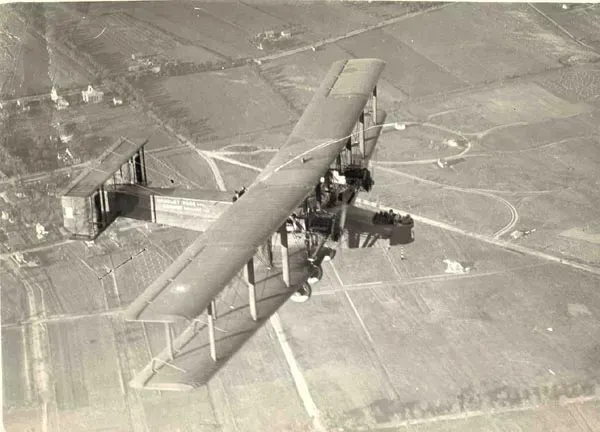
This might be the most persistent mix-up in popular aviation memory. Lindbergh gets credited as the man who “conquered the Atlantic” in 1927, and for decades textbooks let that stand unqualified.
He wasn’t first. British aviators John Alcock and Arthur Brown flew nonstop across the Atlantic in June 1919, nearly eight full years before Lindbergh’s famous solo flight, landing – roughly, and roughly upside-down – in an Irish bog. Their flight was internationally celebrated at the time, earning them knighthoods, yet it faded from American classrooms partly because it wasn’t a solo effort and partly because it lacked Lindbergh’s marketing machine and Hollywood-ready backstory.
Quick Compare
- Alcock & Brown, 1919: Two-man crew, nonstop flight from Newfoundland toward Ireland, ended nose-down in a bog
- Lindbergh, 1927: Solo pilot, nonstop flight from New York to Paris
- Recognition: Alcock and Brown were knighted; Lindbergh became a global celebrity fueled by heavy press coverage
- Classroom legacy: Only one of these two flights is still remembered as “first across the Atlantic”
What Lindbergh actually achieved was the first solo, nonstop transatlantic flight – a genuinely remarkable feat, but a narrower one than “first across the Atlantic.”
Many modern textbooks now carefully insert the word “solo” every single time his name comes up, a quiet correction that changes the whole claim.
#10 – The Hindenburg Disaster Still Isn’t Fully Explained
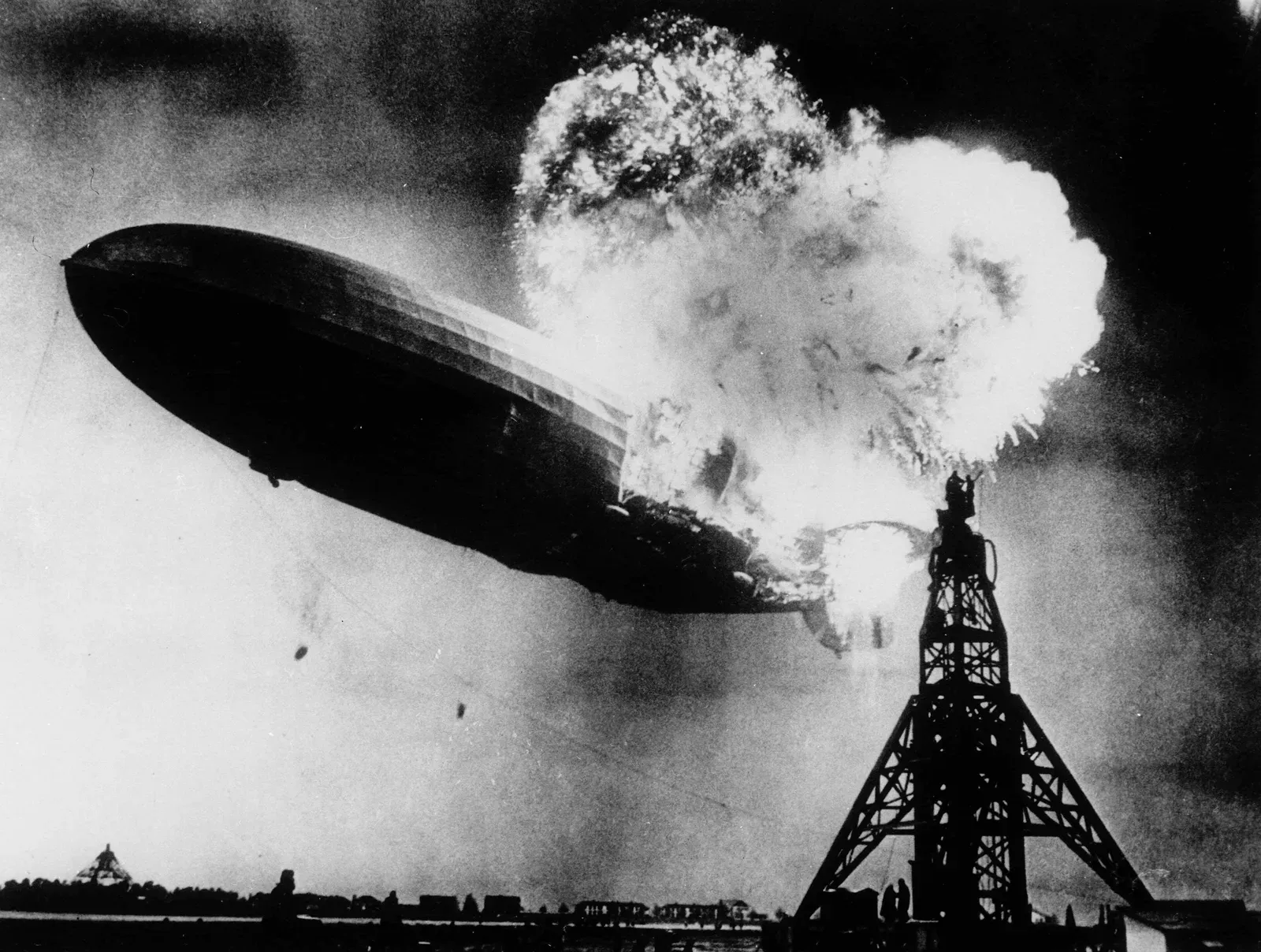
Generations learned a tidy lesson: hydrogen is dangerously flammable, the Hindenburg proved it in spectacular fashion, and that single disaster killed the airship industry overnight. The full story is far messier and still argued over by specialists today.
The reigning hypothesis points to a combination of static electricity that built up as the airship flew, and an unusual “dope” coating used on the canvas of the hydrogen-storage areas – a paint that made the fabric gas-impervious but also appears to have been highly flammable. Retired NASA engineer Addison Bain spent years arguing hydrogen was practically a bystander compared to this incendiary coating, part of a broader case that hydrogen could still be safely used for transportation if handled correctly.
Not everyone buys it. Other analysts counter that the paint theory has effectively been debunked by photographic evidence, scientific analysis, historical research, and even an episode of MythBusters.
Even nearly ninety years later, credentialed experts still can’t fully agree on what actually ignited the fire. What’s no longer taught as settled fact is that hydrogen alone did it, in some simple, obvious way.
#11 – The “Sound Barrier” Was Never a Literal Physical Wall
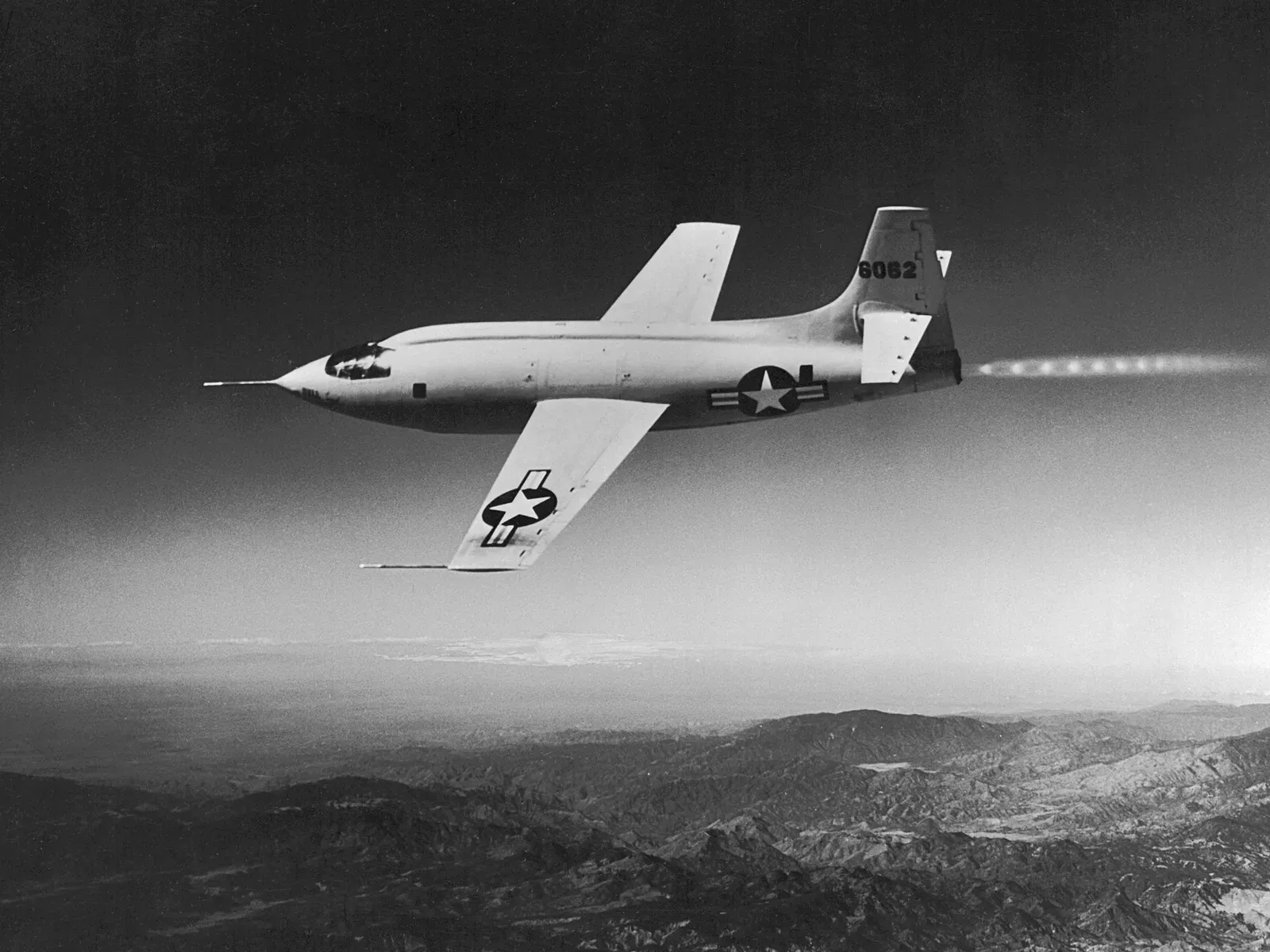
Cold War-era textbooks loved dramatic language: pilots approaching an invisible “barrier” that could rip planes apart, a genuine physical limit nature imposed on machines. It made for great movie dialogue, and it wasn’t quite accurate.
What pilots actually confronted approaching Mach 1 was compressibility – shockwaves forming unevenly across a wing’s surface, causing violent buffeting, sudden loss of control authority, and structural stress that earlier aircraft weren’t engineered to handle. It was a serious, deadly engineering problem, but it was a problem of aircraft design, not an absolute law of physics forbidding supersonic flight.
Chuck Yeager’s 1947 flight in the Bell X-1 didn’t shatter some cosmic ceiling. It proved that with the right wing shape, structural reinforcement, and control surfaces, the compressibility problem was solvable.
Why It Stands Out
- The Bell X-1 was air-launched from a modified bomber rather than taking off from a runway
- Its thin, straight wings were specifically shaped to reduce shockwave buffeting near Mach 1
- Yeager reportedly flew the historic flight with cracked ribs from a riding accident days earlier
- The aircraft carried the nickname “Glamorous Glennis,” after Yeager’s wife
Modern physics and aviation courses now explain the “sound barrier” as shorthand for a specific aerodynamic challenge, quietly retiring the more theatrical framing that once dominated the topic.
#12 – Early Flight Wasn’t a Smooth March of Progress – It Was a Body Count
![#12 - Early Flight Wasn't a Smooth March of Progress - It Was a Body Count (U.S. Navy National Museum of Naval Aviation photo No. 1996.253.632 [1], Public domain)](https://nvmwebsites-budwg5g9avh3epea.z03.azurefd.net/dinoworld/d2eb42da02ee948d67831c22e0699866.webp)
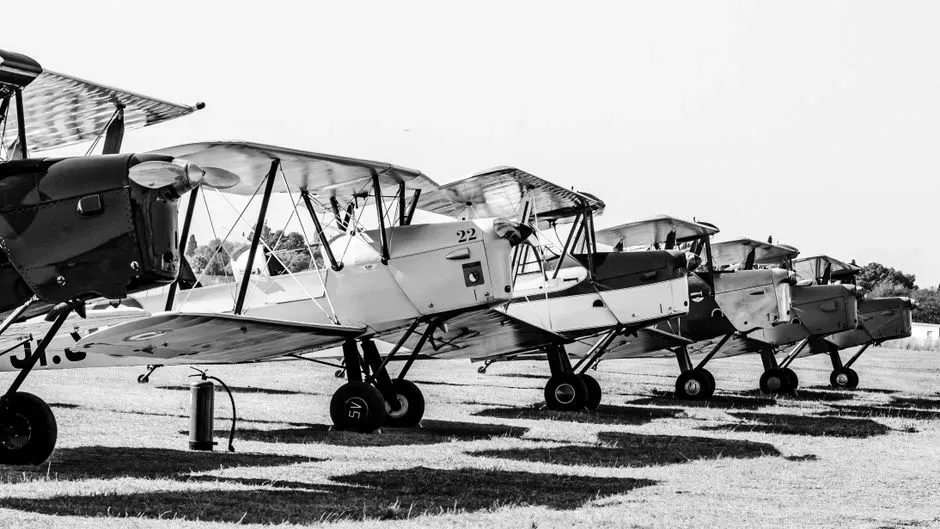
This is the biggest myth of all, and the one that ties every other correction on this list together. Old narratives present early aviation as an unbroken chain of confident breakthroughs, each pioneer building neatly on the last. The actual record is soaked in wreckage and death.
Otto Lilienthal died from injuries after a glider crash. Dozens of lesser-known early aviators died in the 1900s and 1910s testing machines that folded, stalled, or simply fell apart mid-flight – deaths that rarely made it into simplified classroom timelines. Even the celebrated aces of World War I flew aircraft with alarmingly high mechanical failure rates that had nothing to do with enemy fire.
For every “triumphant first” that made the history books, there were dozens of catastrophic failures quietly erased from the story to keep the narrative clean and inspirational.
If we worked on the assumption that what is accepted as true really is true, then there would be little hope for advance.
Orville Wright
Modern aviation historians increasingly push back against the sanitized version, insisting the real lesson of early flight isn’t smooth genius – it’s relentless, costly trial and error. That correction may be the most important one on this entire list.
The Bottom Line
The clean version of early aviation history – a few lone geniuses, one dramatic beach, instant global fame – never quite happened that way. The real record involves cover-ups, misquotes, forgotten rivals, and a body count textbooks rarely mention. Whitehead’s disputed claim, Langley’s secretly rebuilt Aerodrome, Kelvin’s shaky quote, and the Hindenburg’s still-unsettled cause all show how much “settled history” gets quietly revised once someone actually checks the archives.
I’d argue that’s not a knock against the Wright brothers at all – if anything, it makes them more impressive, not less. They didn’t win because history handed them a clean shot at glory. They won because they out-worked, out-tested, and out-thought a field full of legitimate rivals, cover-ups, and bad data. Flight was never a single triumphant moment. It was decades of expensive, dangerous guesswork, and the sanitized textbook version does a disservice to everyone who paid for that progress with broken machines and, far too often, their lives.