
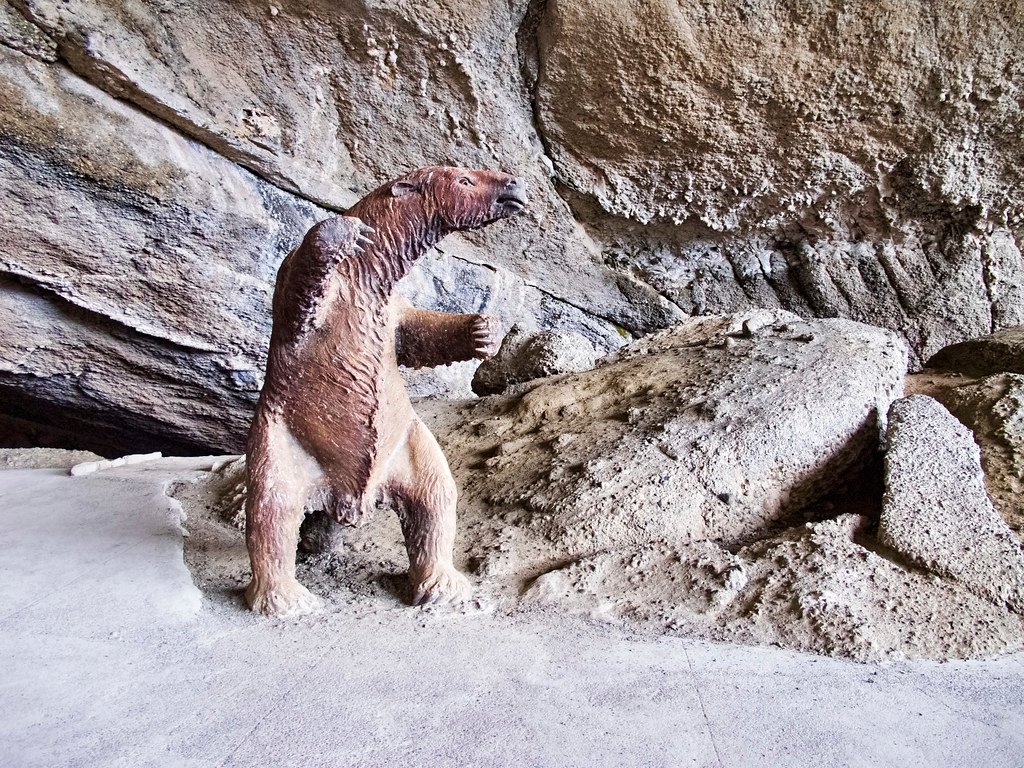
Picture a giant ground sloth and you probably imagine something like a slow, dim-witted “big lazy bear” that shuffled around until it politely went extinct alongside the mammoths. That image is almost entirely wrong.
New fossil analysis, ancient DNA studies, and the discovery of scratch-marked tunnels big enough to drive a car through have forced paleontologists to rewrite this animal’s story from the ground up – quite literally. These creatures swam in the ocean, dug burrows the size of subway tunnels, lived alongside humans for thousands of years longer than anyone assumed, and may not have been the gentle vegetarians the textbooks promised. Here’s what scientists actually believe now.
#1 – There Was Never Just One “Giant Ground Sloth”
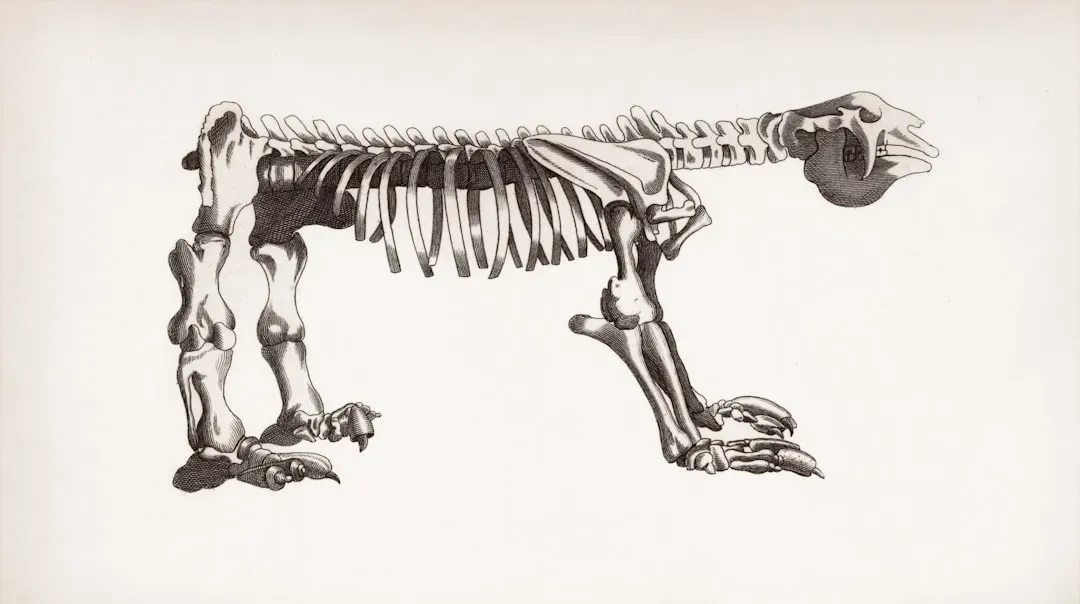
The phrase “giant ground sloth” makes it sound like a single animal, but it was really an entire ecological guild – dozens of species spread across two continents. Researchers have compared ancient DNA with more than 400 fossils pulled from 17 natural history museums, trying to figure out how and why these animals got so enormous in the first place.
Some genera, like the desert-dwelling Shasta ground sloth, stayed what scientists politely call “modestly chunky.” Others, like Megatherium, rivaled elephants in bulk. Scientists now recognize over 100 genera of extinct sloths, ranging from dog-sized tree dwellers all the way up to true giants that could match a bull African elephant pound for pound.
So “giant ground sloth” isn’t really a single species headline – it’s a body plan that evolved independently, more than once, in completely different lineages.
Fast Facts
- Ancient DNA compared against 400+ fossils from 17 natural history museums
- Over 100 genera of extinct sloths identified so far
- Sizes span dog-sized tree dwellers to elephant-scale giants
- Gigantism evolved more than once, in separate lineages
#2 – Some Were Genuinely the Size of Elephants
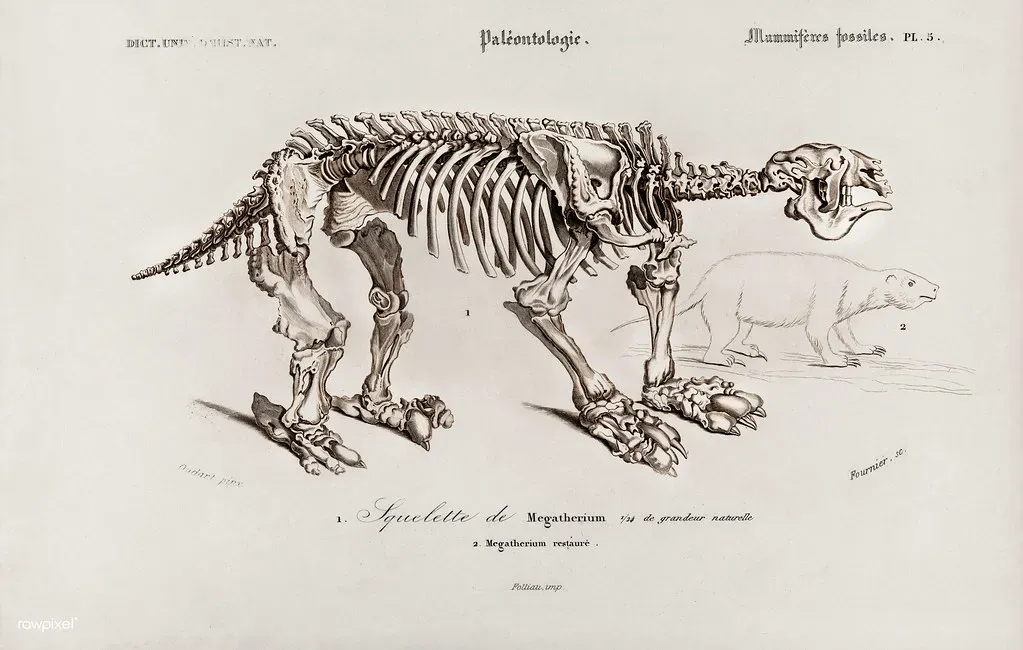
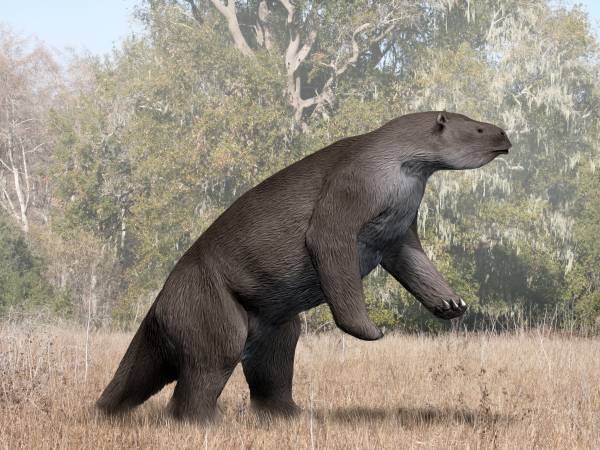
At the top of the size spectrum, Megatherium wasn’t just “large” – it was one of the biggest land mammals to ever walk the earth. Members of this genus grew to roughly the size of an Asian bull elephant and tipped the scales at close to 8,000 pounds.
Florida Museum researcher Rachel Narducci put it in a way that’s hard to forget:
They looked like grizzly bears but five times larger.
Rachel Narducci, Florida Museum
That comparison nails both the bulk and the posture – thick-limbed, low-slung, built for raw power instead of speed. Standing on its hind legs, an adult human wouldn’t even reach a Megatherium‘s knee. That single detail reframes the whole animal: this wasn’t some slow, harmless grazer. It was a multi-ton force capable of reshaping the landscape just by existing in it.
#3 – They Filled the Ecological Role of Giraffes
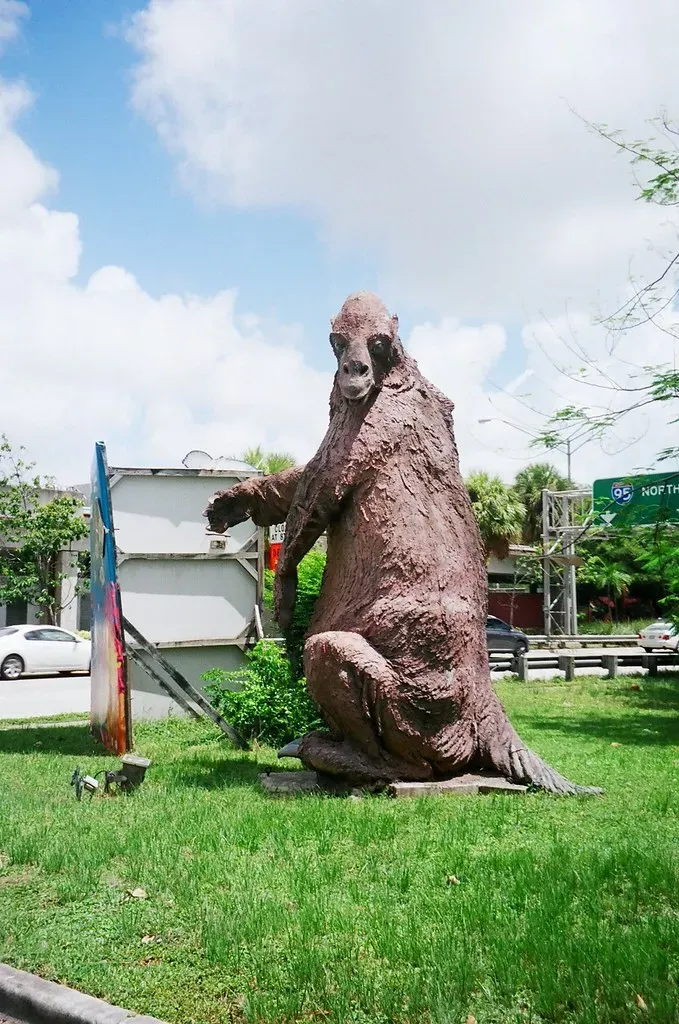
Here’s a detail that surprises even people who think they know their prehistoric megafauna: giant sloths weren’t just big herbivores. They were browsing specialists that functioned like South America’s version of a giraffe. The truly massive Megatherium could rip foliage straight off the treetops using a long, prehensile tongue, acting as an ecological stand-in for an animal that wouldn’t exist on that continent for millions of years.
It’s a strange image to hold in your head – a shaggy, elephant-sized, clawed mammal rearing up onto its hind legs to strip canopy leaves the way a giraffe strips acacia branches. But the mechanics genuinely check out. Most of these extinct sloths were simply too big to climb, so they brought the food down to them instead.
Instead of climbing to reach a meal, giant sloths used raw strength and reach – no agility required.
#4 – Their Massive Size Evolved From Tree-Dwelling Ancestors
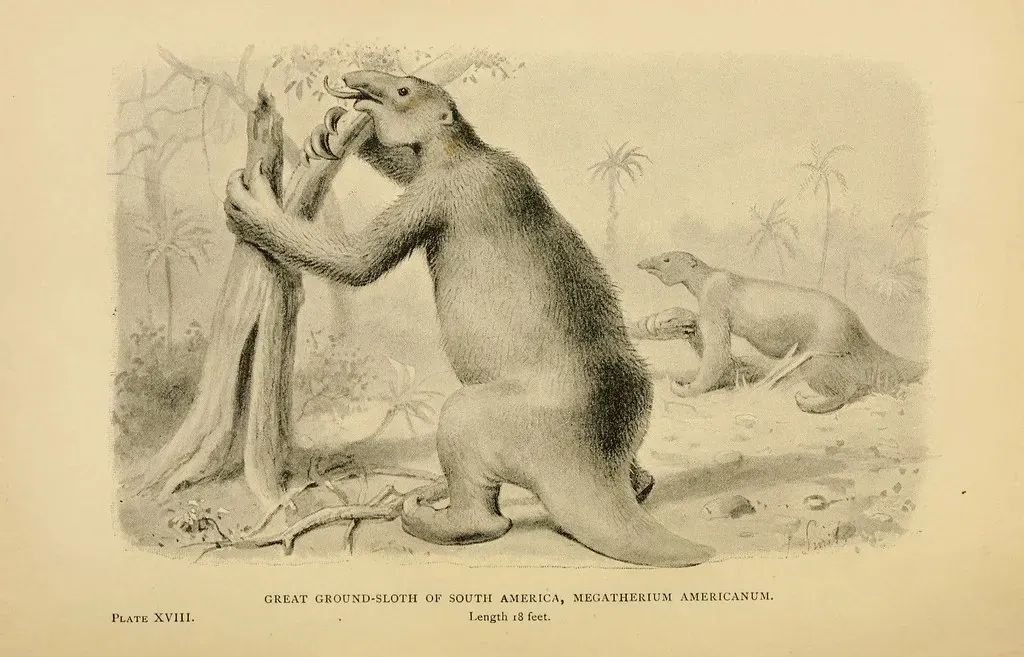
Here’s where the science gets genuinely strange: the biggest ground sloths didn’t start out big. Researchers believe the largest genera, including Megatherium and Mylodon, evolved from tree-adapted ancestors that gradually gave up the canopy entirely and committed to life on the ground.
In other words, giant ground sloths descended from arboreal relatives – much like today’s tree sloths – that abandoned climbing once their body size crossed the point where branches simply couldn’t hold them anymore. Scientists now believe this shift was driven by long-term environmental pressure rather than one single evolutionary leap.
Body size differences among sloth lineages appear to track closely with the habitats they lived in, and by extension, with climate change. A warming trend spanning roughly 750,000 years appears to have opened up the grasslands and savannas that let a slow, ground-based giant thrive without ever needing a branch again.
#5 – Their Claws Weren’t Built for Hunting
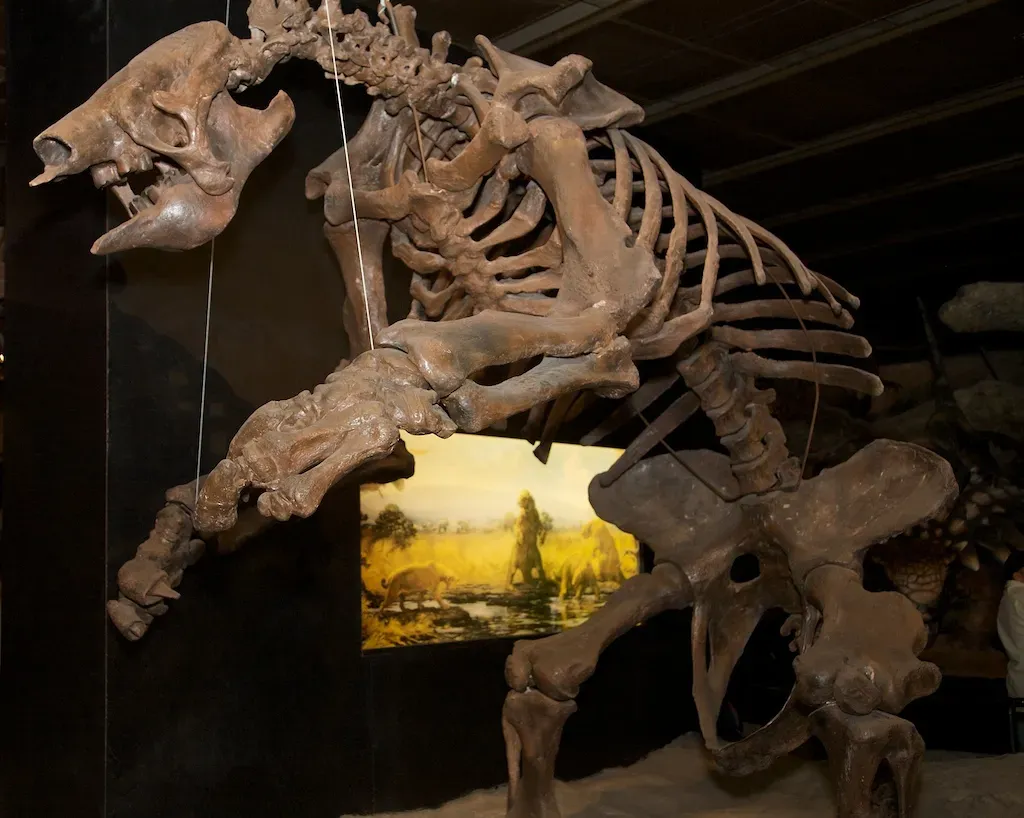
Those enormous curved claws look genuinely terrifying, and for decades that fueled speculation that giant sloths were secret predators. Modern anatomy tells a more nuanced story. The powerful forelimbs carried large, laterally compressed, strongly curved claws built for pulling vegetation and warding off threats – not for stalking prey.
The feeding posture backs this up. By anchoring on a thick, muscular tail and rearing back onto two legs in a tripod stance, a giant sloth could free up both forelimbs to hook entire branches and drag them within reach. It’s an energy-efficient strategy that doesn’t require speed or aggression – just brute strength and balance.
The claws’ real jobs, in other words, were pulling down food and fending off predators, not hunting them.
#6 – Their Diet Might Not Have Been 100% Vegetarian
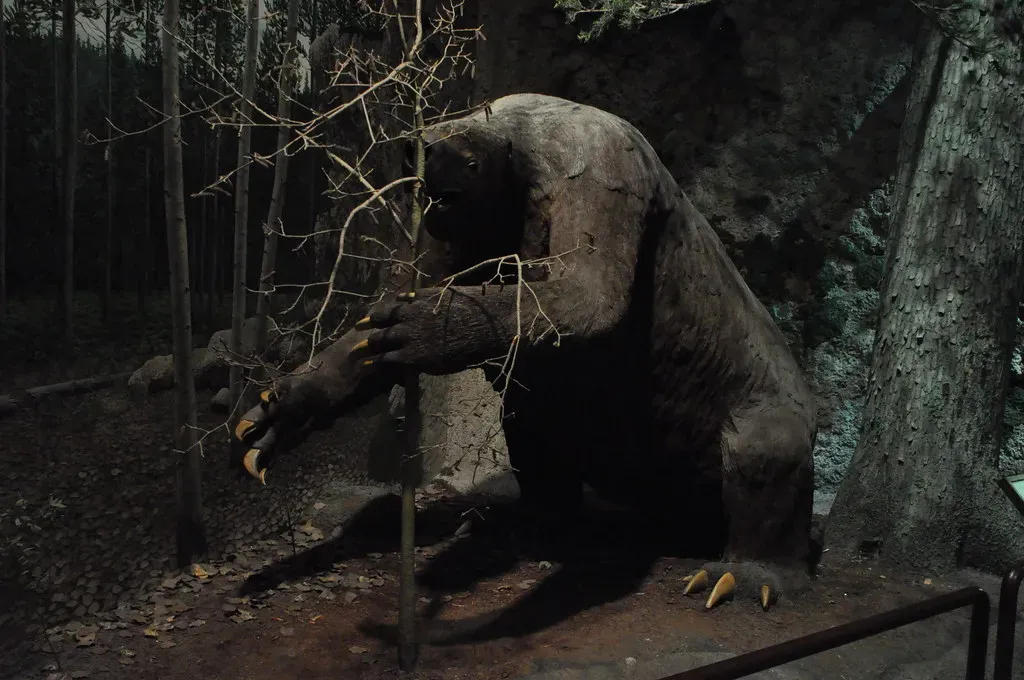
For years, the “gentle giant herbivore” image dominated the popular imagination. Then chemical analysis complicated things. Researchers studying collagen preserved in Megatherium fossil bones concluded that this particular giant sloth stuck to an exclusively vegetarian diet.
That finding settled the debate for one species – but not for the whole group. For decades, sloth diets were genuinely an enigma; those long claws sparked real speculation about whether some species dug up insect colonies or even scavenged carrion. A handful of researchers still argue certain ground sloth species occasionally supplemented plants with animal protein.
Most current evidence leans strongly vegetarian, but the fact that scientists seriously entertained a carnivorous giant sloth shows just how unsettled this question was until fairly recently.
#7 – Their Teeth Reveal They Ate the Toughest Plants Around
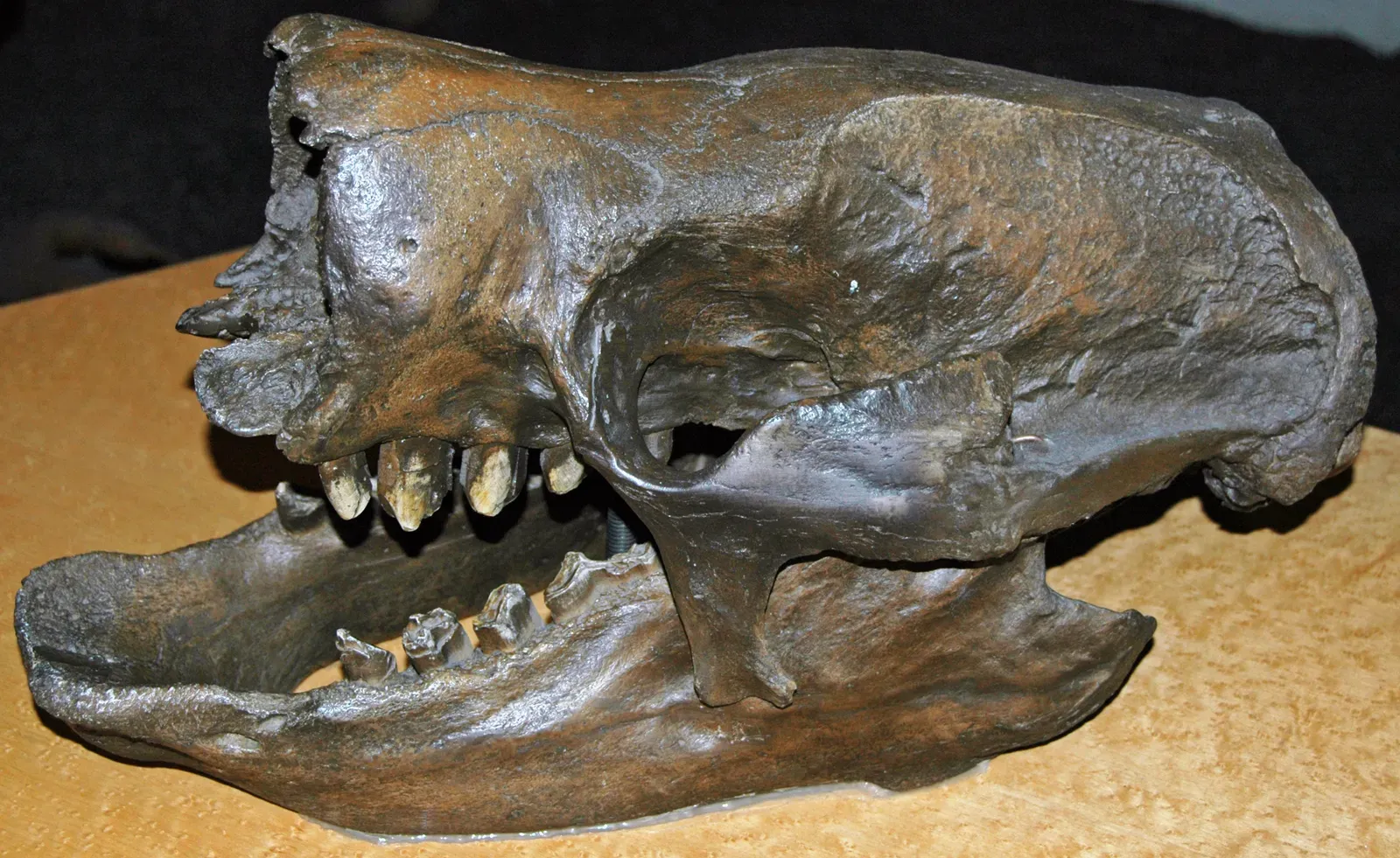
Giant sloths weren’t nibbling soft leaves – their dental anatomy suggests they tackled genuinely tough, fibrous vegetation. Animals the size of a modern elephant were equipped with teeth confined to the sides of the jaw, built for a diet heavy on the leaves of trees and coarse bushes.
Flat, continuously growing teeth allowed for constant grinding against abrasive plant material – shrubs, rough grasses, and woody browse that would wear down ordinary teeth in short order. This dental setup is one of the clearest anatomical fingerprints separating true giant ground sloths from smaller, softer-diet cousins.
Paired with powerful jaw muscles, this gave them access to plant matter that most other Ice Age herbivores simply couldn’t process efficiently – food sources other animals had no choice but to ignore.
#8 – Some Species Excavated Colossal Underground Tunnels
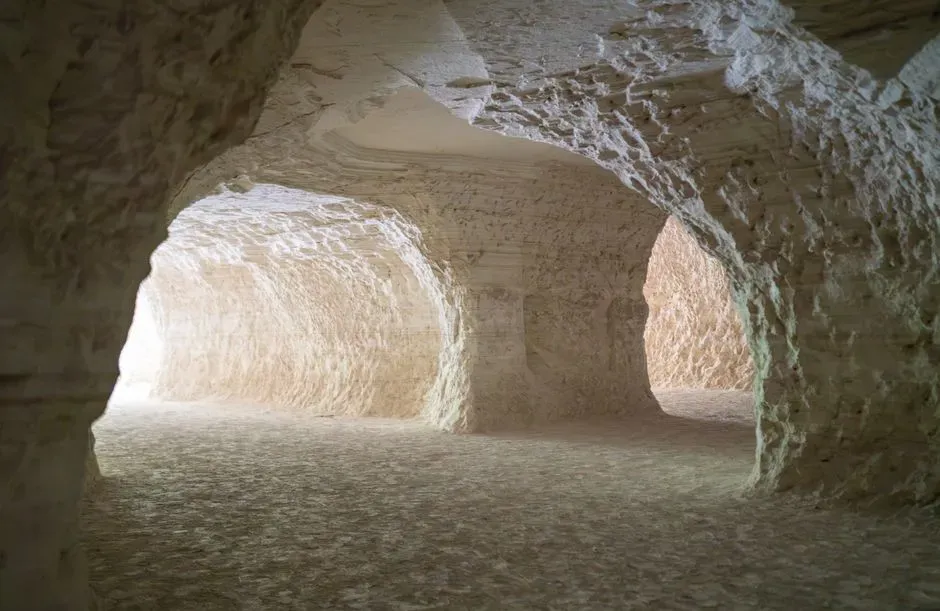
This is one of the strangest recent discoveries in the entire field. Scientists mapping cave-like structures across South America now believe giant sloths were master excavators. One detailed study mapped more than 1,500 giant burrows across southern and southeastern Brazil, with tunnels stretching hundreds of feet, branching into side passages, and etched with long, parallel claw marks along the walls.
These aren’t small dens. The largest tunnels measure at least 6 feet across and roughly as tall, which narrows the list of possible builders down to just two candidates: giant ground sloths and giant armadillos. Some individual tunnel systems run for up to 100 meters and branch off into separate chambers entirely.
No known geological process explains formations like this. As one researcher on the project put it bluntly, there’s no natural process that produces branching, rising-and-falling tunnels with claw marks scratched into the walls – which leaves giant sloths as the leading suspects behind some of the largest animal-made structures ever discovered.
At a Glance
- 1,500+ giant burrows mapped across southern and southeastern Brazil
- Largest tunnels measure at least 6 feet wide and roughly as tall
- Some systems stretch up to 100 meters with branching side chambers
- Walls scored with long, parallel claw marks – not a natural rock feature
#9 – They Likely Dug Burrows for Shelter, Not Hunting
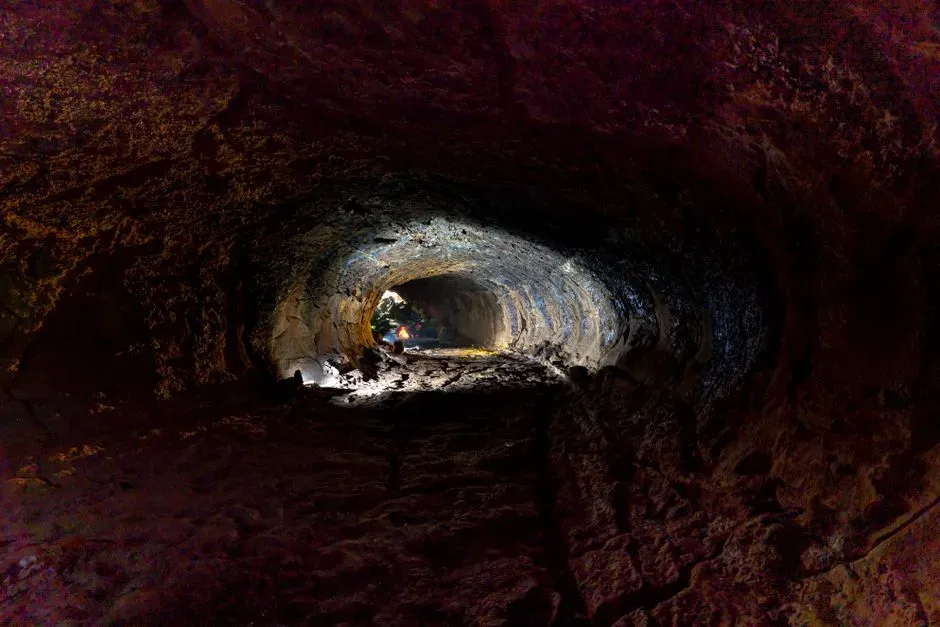
Why would a multi-ton herbivore bother excavating tunnels at all? Researchers believe it comes down to plain survival on open, treeless landscapes. On the flat plains of the Pampas, with no trees or hills to hide behind, digging in may have been the only real defense against predators.
Without forest cover, an animal that size had almost nowhere to hide from apex predators like saber-toothed cats. A burrow solved that problem instantly, offering shelter from both hunters and harsh climate swings.
Argentine sloth burrows that survive to this day still show claw marks along their walls, and the scale of those marks rules out the local armadillos – the marks are simply too large. In at least one case, researchers even found a sloth skeleton entombed inside its own collapsed burrow, which is about as close to direct proof as paleontology gets that these were genuine living quarters, not just feeding sites.
#10 – One Bizarre Lineage Left Land Entirely and Took to the Ocean
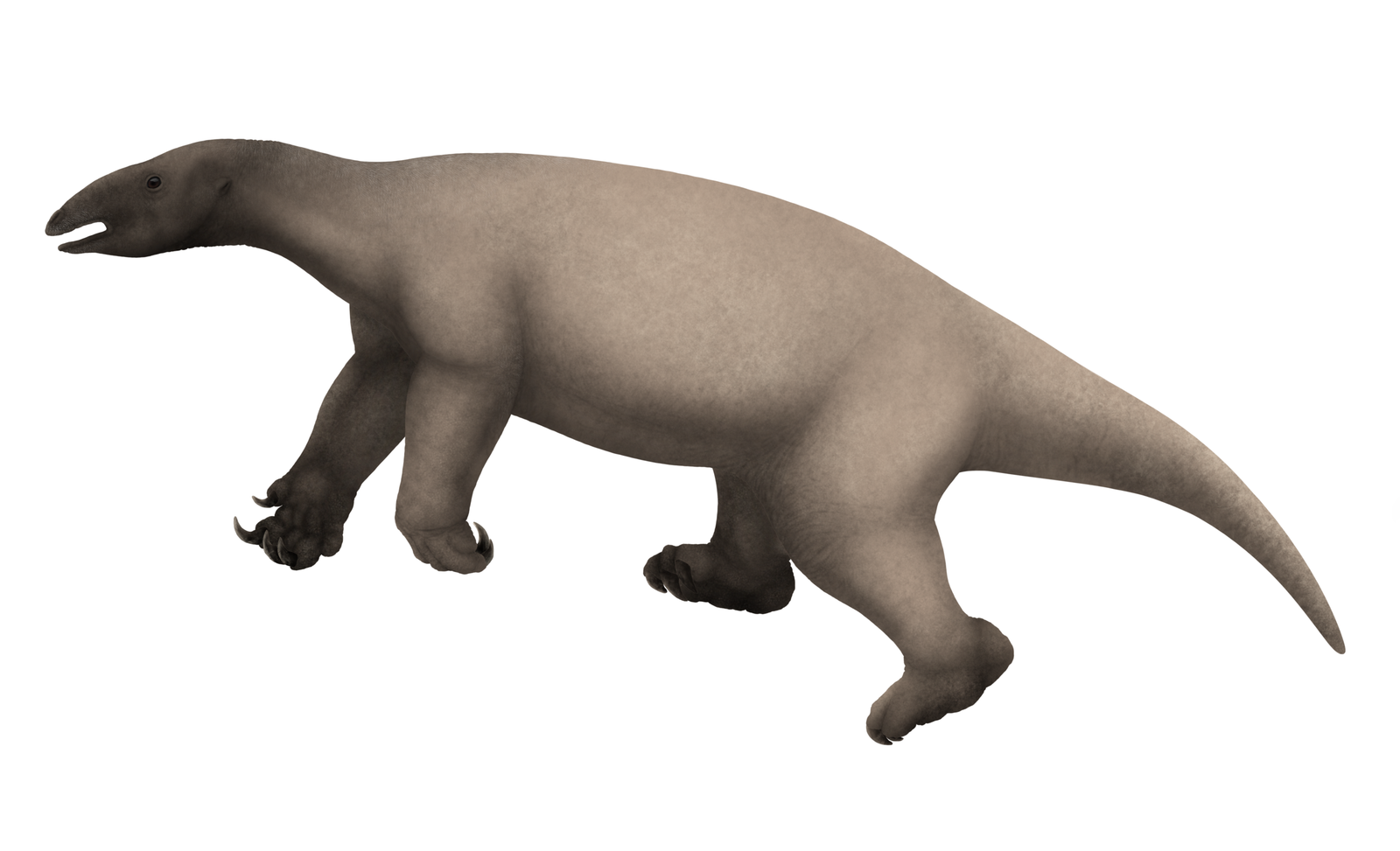
If burrowing sloths sound strange, this next fact sounds almost fictional – except it’s backed by decades of fossil evidence from Peru’s coast. Thalassocnus is an extinct genus of semiaquatic ground sloths that lived along the Pacific coast of South America during the Miocene and Pliocene. Its five species form a chronospecies – a single lineage gradually adapting to marine life step by step – making them the only known aquatic sloths on record.
The anatomical changes are remarkable. Over roughly 4 million years, Thalassocnus developed dense, heavy bones to counteract buoyancy, internal nostrils that migrated deeper into the skull for underwater breathing, and a wider, more elongated snout suited to grazing on aquatic plants.
They weren’t fast swimmers, though. Instead of evolving into a streamlined swimmer, Thalassocnus likely used a method closer to what marine iguanas do today – anchoring itself with heavy bones and huge claws, gripping the seafloor while scooping up soft plants in the surf. Later species pushed even farther offshore, eventually becoming full-time seagrass grazers on the ocean floor.
Why It Stands Out
- The only known aquatic sloth lineage ever documented
- Adapted over roughly 4 million years, generation by generation
- Dense, heavy bones helped counteract natural buoyancy
- Nostrils shifted higher on the skull for easier underwater breathing
- Later species grazed seagrass on the ocean floor full-time
#11 – Humans and Giant Sloths Coexisted for Thousands of Years Longer Than Believed
This finding genuinely upended the old extinction narrative. For decades, the dominant theory was rapid “Pleistocene overkill” – humans show up, megafauna disappears almost overnight. Archaeologist Daniel Odess described the old assumption plainly:
There was this idea that humans arrived and killed everything off very quickly – what’s called ‘Pleistocene overkill.’
Daniel Odess, Archaeologist
New evidence dismantles that timeline completely. Discoveries now suggest humans lived alongside these animals for at least 10,000 years without wiping them out. Some of the strongest proof comes from a rock shelter in Santa Elina, Brazil, where two layers of giant ground sloth bones are buried in the earth – the oldest dating back 27,000 years.
That’s not a brief overlap. It points to humans interacting with megafauna for more than ten thousand years before the giant animals finally disappeared from South America – at least 17,000 years after the humans who modified those Santa Elina bones first arrived.
#12 – Ancient People Carved Tools and Ornaments From Fresh Sloth Bones
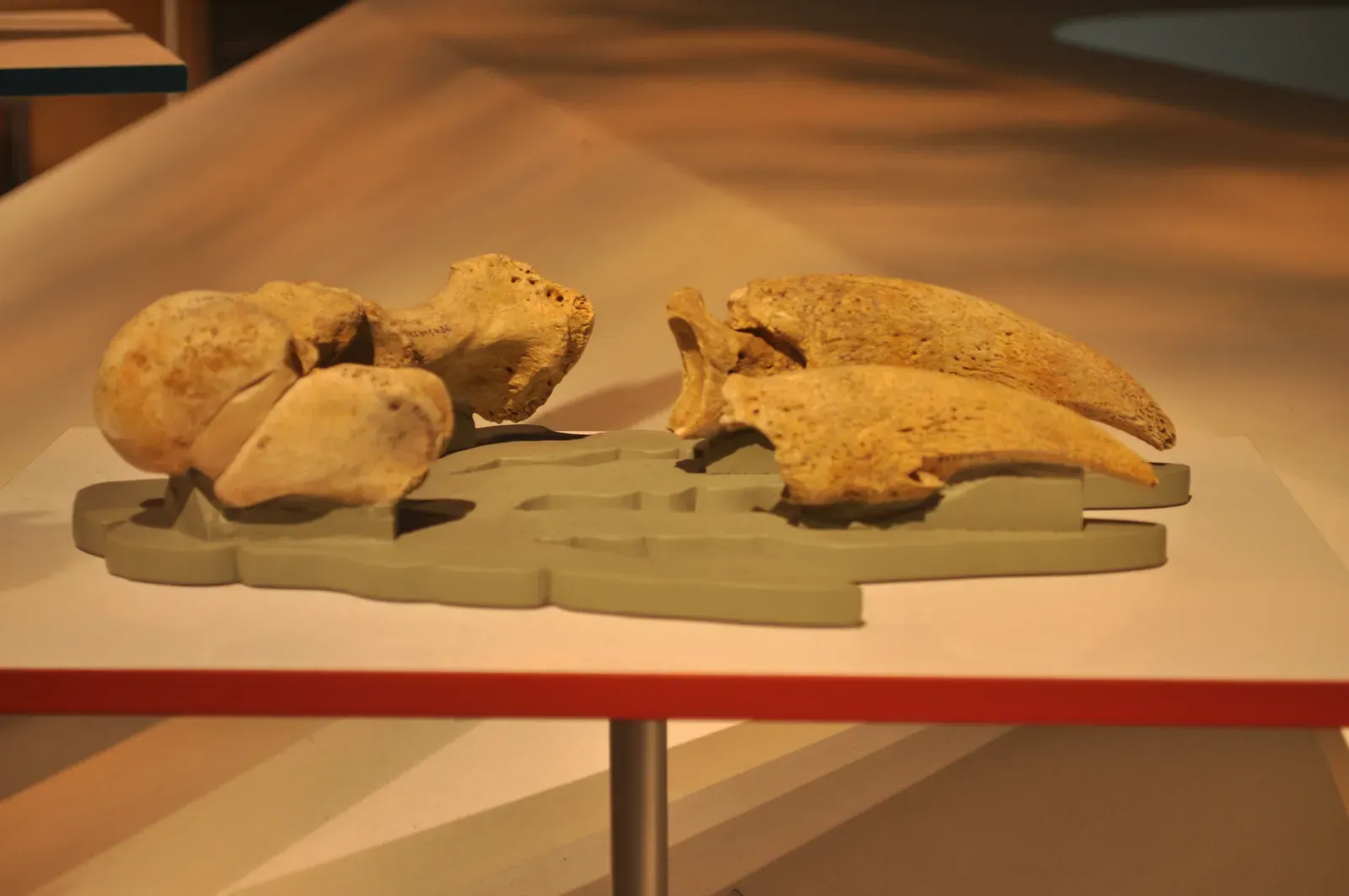
Coexistence wasn’t passive – humans actively worked with sloth remains, and not on old, weathered fossils either. Research strongly suggests ancient people were carving “fresh bones” shortly after the animals died.
The physical evidence is striking. Three bones from the Santa Elina site show drilled holes, shaved sides, and deliberate laceration marks. One especially detailed example involves a tooth shaved into a triangular point, with parallel markings cut into the smoothed surface, radiocarbon dated to just under 14,000 years ago.
Even the animals’ natural armor may have been repurposed. Some sloth species carried bony plates on their backs called osteoderms, similar to armadillo armor, that may have been turned into decorations. Paleontologist Mírian Pacheco described one such artifact firsthand, noting that its surface is surprisingly smooth, the edges appear deliberately polished, and there’s a tiny hole near one edge – almost certainly meant for stringing it as an ornament.
#13 – Extinction Wasn’t Simply Climate Change – Scientists Now Point to Humans
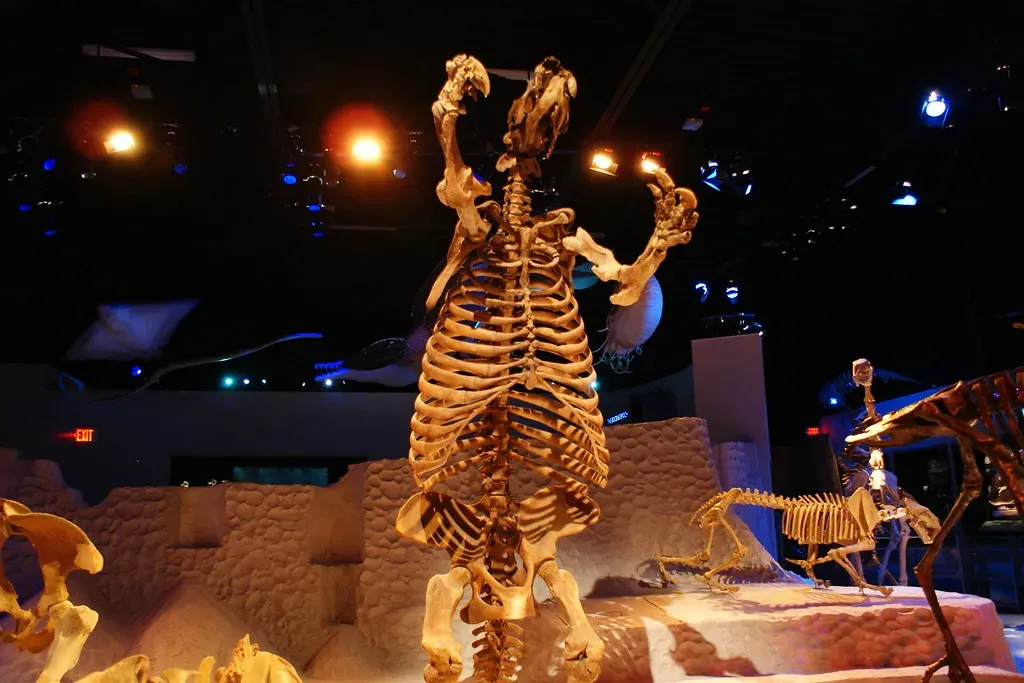
If humans lived alongside giant sloths for millennia without wiping them out immediately, what actually finished them off? A 2025 study in Science offers a pointed answer: “Paleoclimatic changes do not explain the rapid extinction of ground sloths that started approximately 15,000 years ago,” the researchers wrote, adding that “their abrupt demise suggests human-driven factors in the decline and extinction of ground sloths.”
That’s a controversial but increasingly well-supported position, and the timeline backs it up geographically too. Humans arrived in the Caribbean around the same time Egyptians were building the pyramids – and Caribbean tree sloths went extinct not long after.
None of this means climate played zero role; shifting habitats certainly stressed populations. But the emerging scientific consensus is blunter than the old “it was mostly the Ice Age’s fault” story: sustained, low-level human hunting pressure over many generations, not sudden mass slaughter, appears to be the real long-term driver of extinction.
Worth Knowing
- Rapid ground sloth extinction began roughly 15,000 years ago, per a 2025 Science study
- Humans and sloths still overlapped for at least 10,000 years beforehand
- Caribbean tree sloths vanished not long after humans arrived, around the era of Egypt’s pyramid building
- Researchers now favor sustained hunting pressure over sudden mass slaughter
#14 – Some Species Survived Almost Unbelievably Fresh – Fueling Bizarre Legends
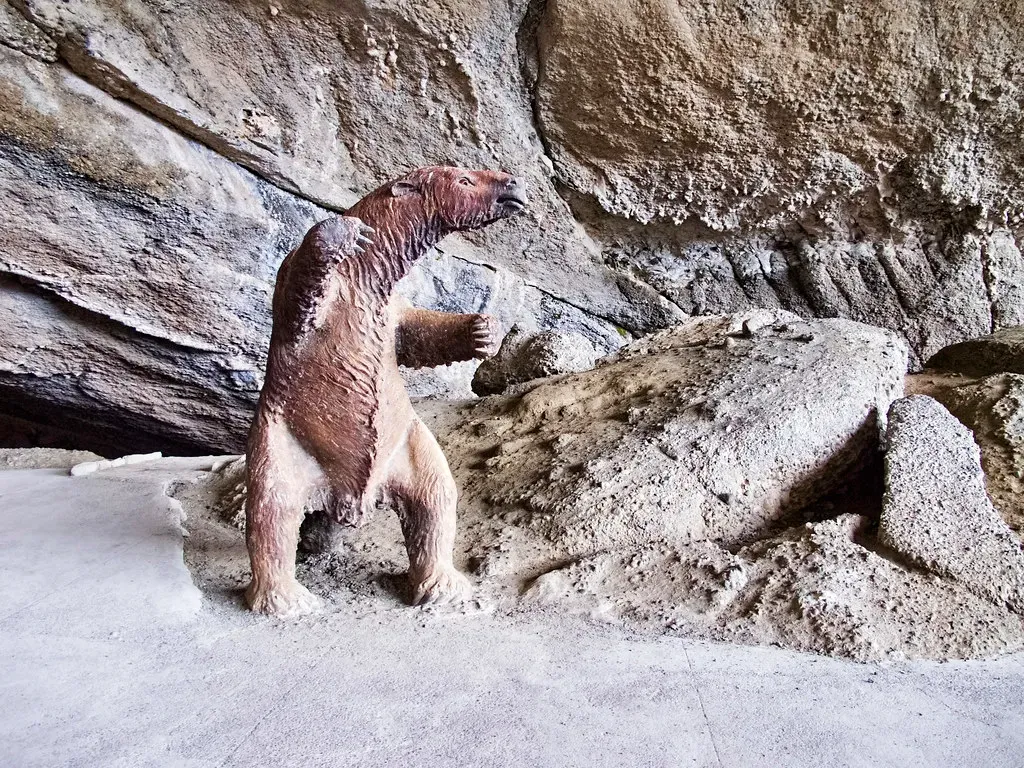
Giant ground sloth remains have occasionally been preserved so well that they blurred the line between paleontology and folklore. Perhaps the strangest example involves a supposed frozen-meat dinner. The Yale Peabody Museum still holds a preserved sample from a famous 1951 Explorers Club meal, labeled – somewhat dubiously – as South American giant ground sloth meat rather than mammoth.
Scientists have scrutinized that claim heavily, and genuinely edible meat from a million-year-old animal is essentially impossible. But the myth points to something real: giant sloth remains, skin, and even dung have survived in remarkably intact condition inside dry caves across South America, particularly Patagonia’s famous Mylodon Cave. Similar remains have turned up in Andean sites like Cuchillo Curá and Cueva del Indio.
That exceptional preservation is exactly why 19th-century explorers briefly speculated giant sloths might still be alive somewhere in remote Patagonia – a myth science has since firmly closed the book on.
#15 – New Giant Sloth Species Are Still Being Identified Today
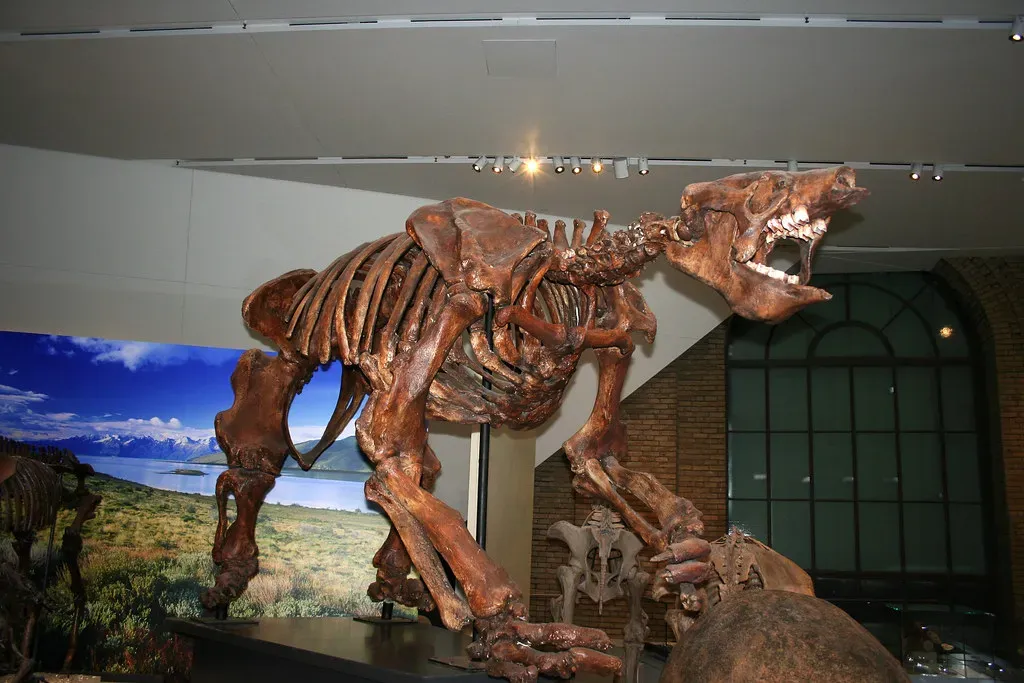
Perhaps the most telling sign of how unsettled this science remains: brand-new giant sloth species and detailed anatomical studies are still being published right now, not decades ago. Recent peer-reviewed work has formally described the anatomy, brain structure, and evolutionary relationships of the Neotropical giant ground sloth Ocnotherium giganteum, from the Late Pleistocene of Brazil.
Fresh fossil finds keep surfacing in unexpected places too – including from amateur discoveries. A group of elementary school students once found a fossil belonging to a Jefferson’s ground sloth, the youngest and largest member of the ground sloth family, and brought it straight to a museum. That specimen was later dated to somewhere between 11,500 and 300,000 years old, spanning much of the Pleistocene Epoch.
Every year, new burrow surveys, isotope studies, and DNA comparisons push the giant sloth story further from the tired “big dumb Ice Age beast” cliché and toward something far stranger and more scientifically rich.
The Bottom Line: Giant ground sloths deserve a serious image overhaul. These weren’t slow-witted evolutionary dead ends waiting around for mammoth-hunting humans to finish them off – they were architects of underground megastructures, at least one lineage went fully aquatic, and their extinction stretches thousands of years longer than the old textbooks ever admitted.
If you ask us, the burrows are still the most underrated fact in this entire story – a herbivore digging tunnels large enough to drive a car through is objectively wilder than anything Hollywood has invented about the Ice Age. And the growing evidence that humans, not climate alone, tipped these giants into extinction should make modern conservation debates feel a lot less abstract and a lot more personal.
What’s the giant sloth fact that surprised you most? Drop it in the comments.