
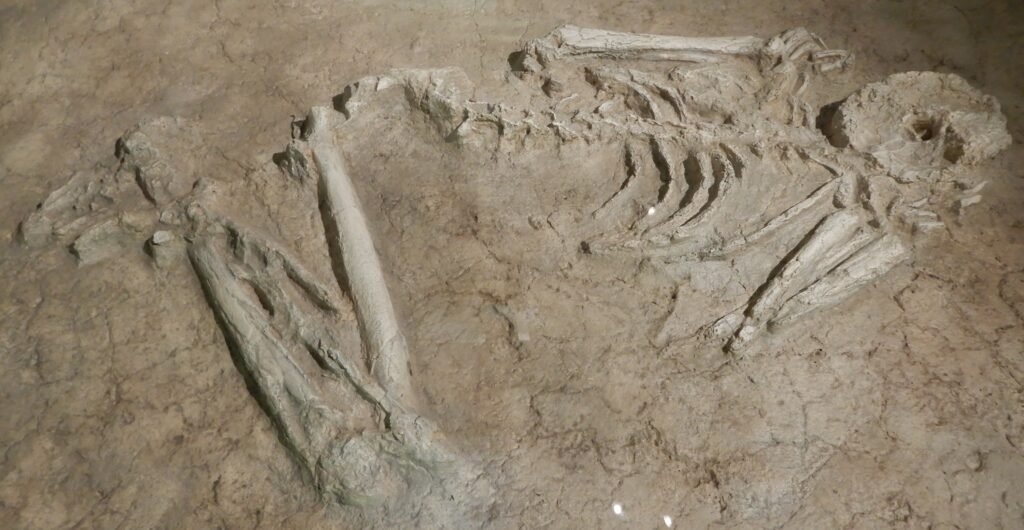
Most people picture early humans as barely-surviving cavemen: hunting, foraging, and just trying to make it to tomorrow. That picture is almost embarrassingly wrong.
Buried in caves, skeletons, and stone tools is a trail of behavior that looks less like survival instinct and more like deliberate, planned mystery. Archaeologists have spent decades trying to explain why ancient people crawled into pitch-black caverns to paint animals no one would ever see, amputated limbs with sharpened stone, and hauled multi-ton rocks deep underground for reasons that still don’t add up. Some of these puzzles have partial theories. Most don’t come close. Here’s what the evidence actually shows – and why scientists are still arguing about it.
#1 – Why They Painted Masterpieces No One Could See

Deep inside caves like Lascaux and Chauvet in France, early humans crawled hundreds of meters into total darkness to paint horses, lions, and bison with startling anatomical precision. This wasn’t decoration for a living space – nobody lived in these chambers. The paintings sit in zones that would have required torches, ladders, and serious physical risk just to reach.
The strangest part is the choice of location. Painters often selected the most difficult, cramped, and dangerous parts of a cave system rather than open, accessible walls near entrances. Some art appears in spaces so tight that only a child or a very small adult could have painted it. Why go through that effort for images almost no one would ever see?
Theories range from shamanic ritual to hunting magic to rites of passage for adolescents. None of them are proven. The consistency of subject matter – powerful, dangerous animals rendered with anatomical accuracy – suggests intention, not idle doodling.
But that’s nothing compared to what we found about #2.
#2 – The Faceless Women Carved Across an Entire Continent

From Spain to Siberia, Ice Age humans carved thousands of small female figurines with exaggerated hips, bellies, and breasts – and almost no faces. These “Venus figurines” span roughly 25,000 years and thousands of miles, yet the basic body template stays eerily consistent.
No one has ever found a workshop, a written explanation, or a clear ritual context that fully explains them. Some were carved from mammoth ivory, others from limestone or fired clay – one of the earliest known uses of ceramic technology, centuries before pottery became common for cooking.
Fast Facts
- Found across a huge range: from Spain to Siberia, spanning roughly 25,000 years
- Materials include mammoth ivory, limestone, and fired clay
- Nearly all share exaggerated hips, bellies, and breasts
- Almost none have detailed faces, despite clear carving skill
Fertility symbol, self-portrait, status object, teaching tool – every explanation is educated guesswork. The lack of facial detail is especially puzzling, since these same cultures were clearly capable of intricate, realistic art. The facelessness looks like a deliberate choice, not a lack of skill.
That mystery is old news next to what happened at #3.
#3 – The Oldest Drawing on Earth Might Just Be Doodling
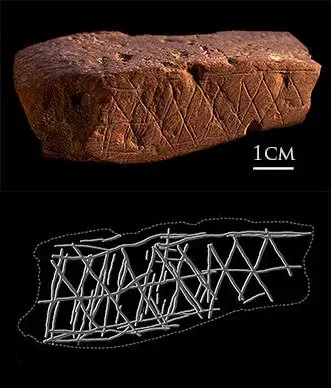
A small flake of ochre found in Blombos Cave, South Africa, carries deliberate cross-hatched lines scratched roughly 73,000 years ago – currently one of the oldest known abstract drawings made by humans. It predates cave paintings in Europe by tens of thousands of years.
The pattern itself is disappointingly simple: a grid of crossing lines, nothing like the animal art that would come later. That simplicity is exactly what makes it puzzling. Was it a message, a counting system, a piece of body paint gone wrong, or genuinely meaningless scribbling?
Blombos Cave has also produced engraved ochre pieces and shell beads dating back around 100,000 years, suggesting symbolic behavior was already well established in early Homo sapiens populations in Africa long before similar behavior shows up in Europe.
Compared to #4, though, this one barely scratches the surface.
#4 – Hand Stencils With Fingers Deliberately Removed
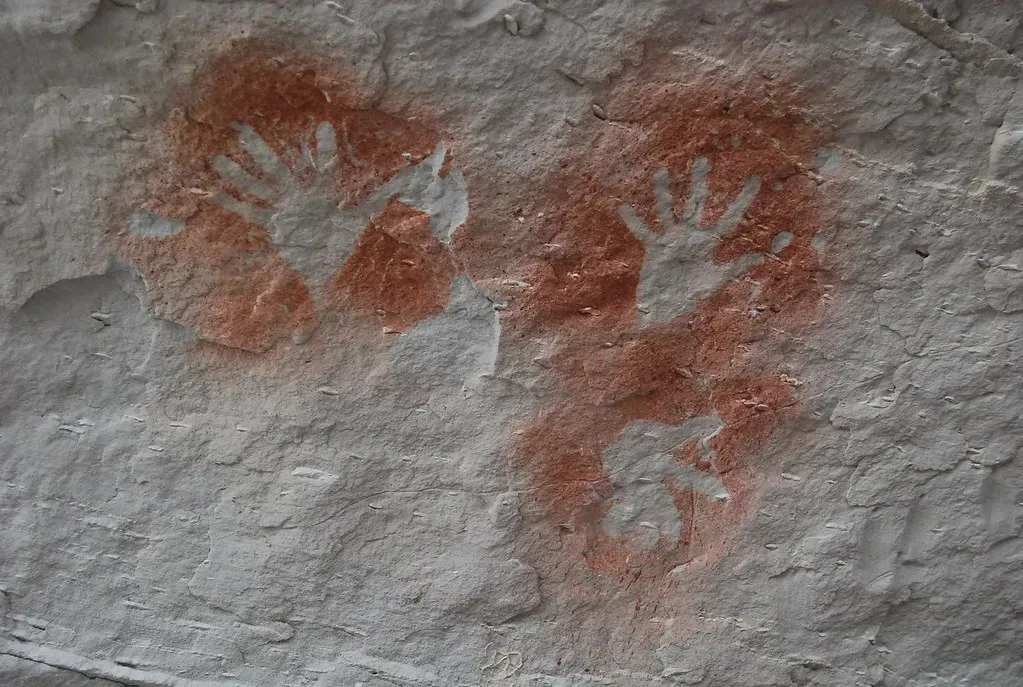
In caves across Sulawesi, Indonesia, researchers have documented ochre hand stencils dating back at least 67,800 years – currently the oldest known rock art on the planet, roughly 1,100 years older than the Neanderthal-linked cave art found in Spain, and far older than anything at Lascaux.
What makes these stencils genuinely bizarre is the fingers. At some point the images were modified to create distinctive narrowed, almost claw-like fingers, and researchers have found similar imagery repeated across multiple sites. Researchers believe the artist deliberately manipulated their hand or the stencil itself to create the effect.
Even stranger, some stencils are simply missing fingers altogether. On the nearby island of Papua, some people express grief when a loved one dies by cutting off a finger, which has led researchers to wonder if the ancient stencils record the same painful ritual. One researcher even suggested the narrowed-finger images may have marked group identity, though that remains speculation.
None of this proves ritual mutilation – accidental injury and artistic style are equally possible explanations. But the repetition of the pattern across sites and centuries makes coincidence a hard sell.
What we found at #5, though, is even harder to dismiss as decoration.
#5 – A Half-Human, Half-Lion Figure Nobody Can Explain
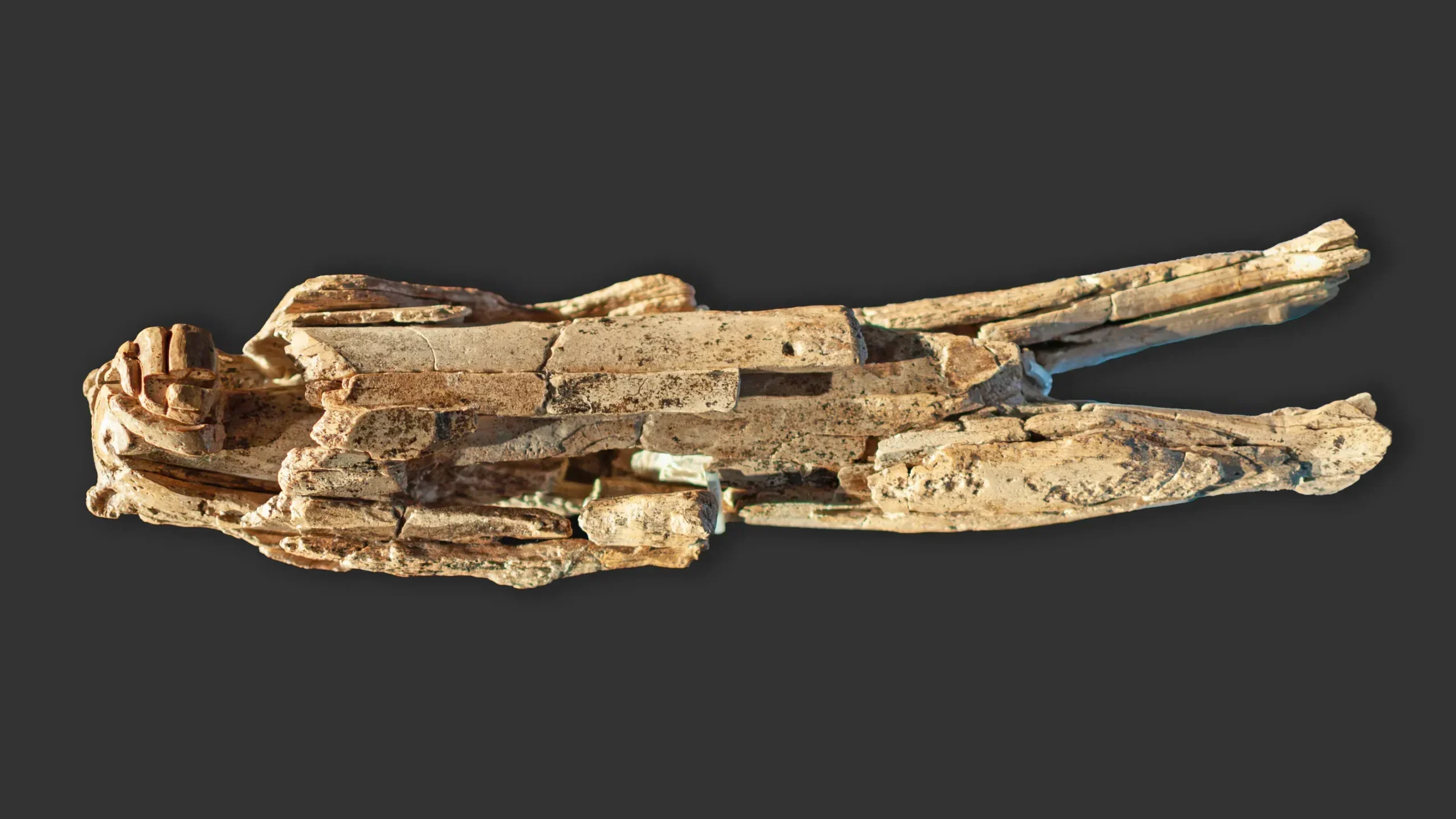
Carved from mammoth ivory around 40,000 years ago and found in a German cave, the “Lion Man” of Hohlenstein-Stadel stands about a foot tall and combines a lion’s head with a humanoid body. It’s widely considered one of the oldest known examples of figurative – and possibly spiritual – art on Earth.
The figure took an estimated 400 hours of carving with stone tools, an extraordinary time investment for a hunter-gatherer society with no surplus food storage and constant survival pressure. Someone valued this object enough to sacrifice hundreds of hours that could have gone toward hunting, toolmaking, or shelter.
Why merge human and animal forms at all? Modern interpretations point to shamanism, totemic belief systems, or an early concept of transformation between species. But the truth is nobody living today can ask the carver what they meant, and no written record exists to translate the symbolism.
That’s a small riddle compared to what happened at Shanidar Cave, at #6.
#6 – The Neanderthal “Flower Burial” That Split the Scientific World

In the 1960s, researchers at Shanidar Cave in Iraq uncovered a Neanderthal skeleton surrounded by clusters of pollen, sparking the now-famous theory that Neanderthals buried their dead with flowers – an act suggesting grief, ritual, and symbolic thought in a species long dismissed as brutish.
The theory was sensational, and it was also immediately controversial. Critics argued burrowing rodents called Persian jirds could have dragged flowering plants into the grave long after burial, contaminating the site with pollen that had nothing to do with human ritual.
Decades later, researchers revisited Shanidar with modern techniques and found renewed evidence supporting deliberate, careful burial practices at the site, even if the flower detail remains debated. What isn’t in dispute anymore is that Neanderthals buried their dead intentionally in multiple locations – a behavior once thought exclusive to modern humans.
Nothing about that compares to what was hiding deeper in a cave in France, at #7.
#7 – Neanderthals Built Stone Rings 336 Meters Underground
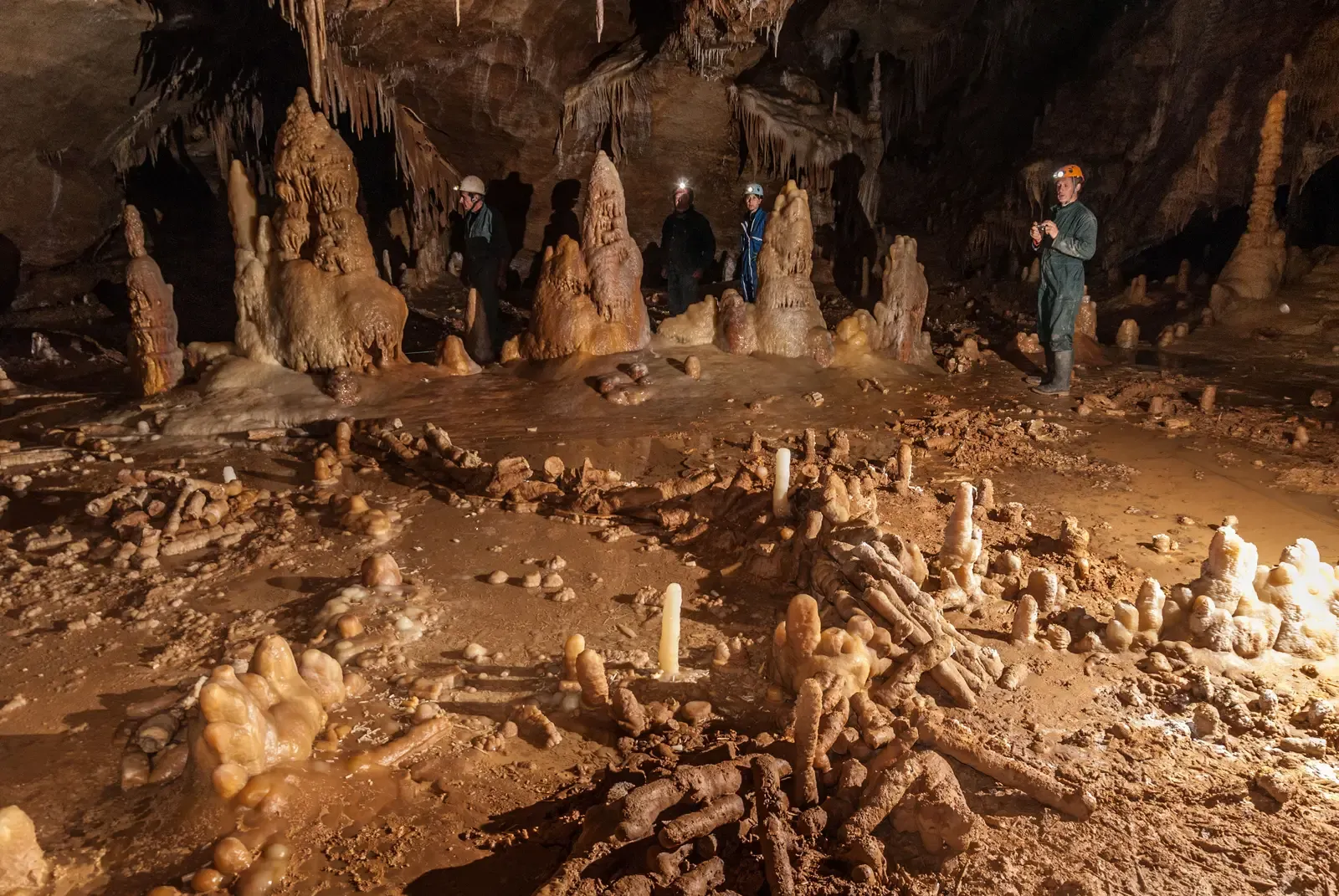
Inside Bruniquel Cave in southwestern France, researchers discovered two large ring-like structures and several smaller piles built entirely from broken stalagmites, located 336 meters from the cave entrance. That’s roughly the length of three football fields, in total darkness, deep underground.
Dating placed the structures at an almost unbelievable age: approximately 176,500 years ago, tens of thousands of years before modern humans arrived in Europe. That means Neanderthals built them alone. Early modern humans wouldn’t reach Europe for another 130,000-plus years.
The construction required serious planning and manpower. Crafting those enormous stone rings – made from more than two tons of stalagmites – meant the cave’s occupants needed a reliable source of light, some kind of social organization, and the ability to conceive of and execute a shared design. Traces of fire were found on and around the structures, but that’s where the certainty ends – the actual function of the rings remains entirely conjectural.
At a Glance
- Location: Bruniquel Cave, southwestern France
- Distance from entrance: 336 meters – about three football fields deep
- Estimated age: roughly 176,500 years old
- Builders: Neanderthals, alone – modern humans arrived over 130,000 years later
- Material used: more than two tons of broken stalagmites
Researchers have floated everything from shelter to ritual to water storage, and most openly admit they’re guessing. Shelter seems unlikely given how far the rings sit from the entrance. Storage and ceremonial use both remain live possibilities. Even the lead researcher on the project has refused to speculate further, insisting the true purpose stays unknown until more work is done at the site.
That’s one of the deepest mysteries in prehistory – but #8 raises an equally strange question about why early humans made tools they never intended to use.
#8 – Stone Axes That Were Too Big to Actually Use
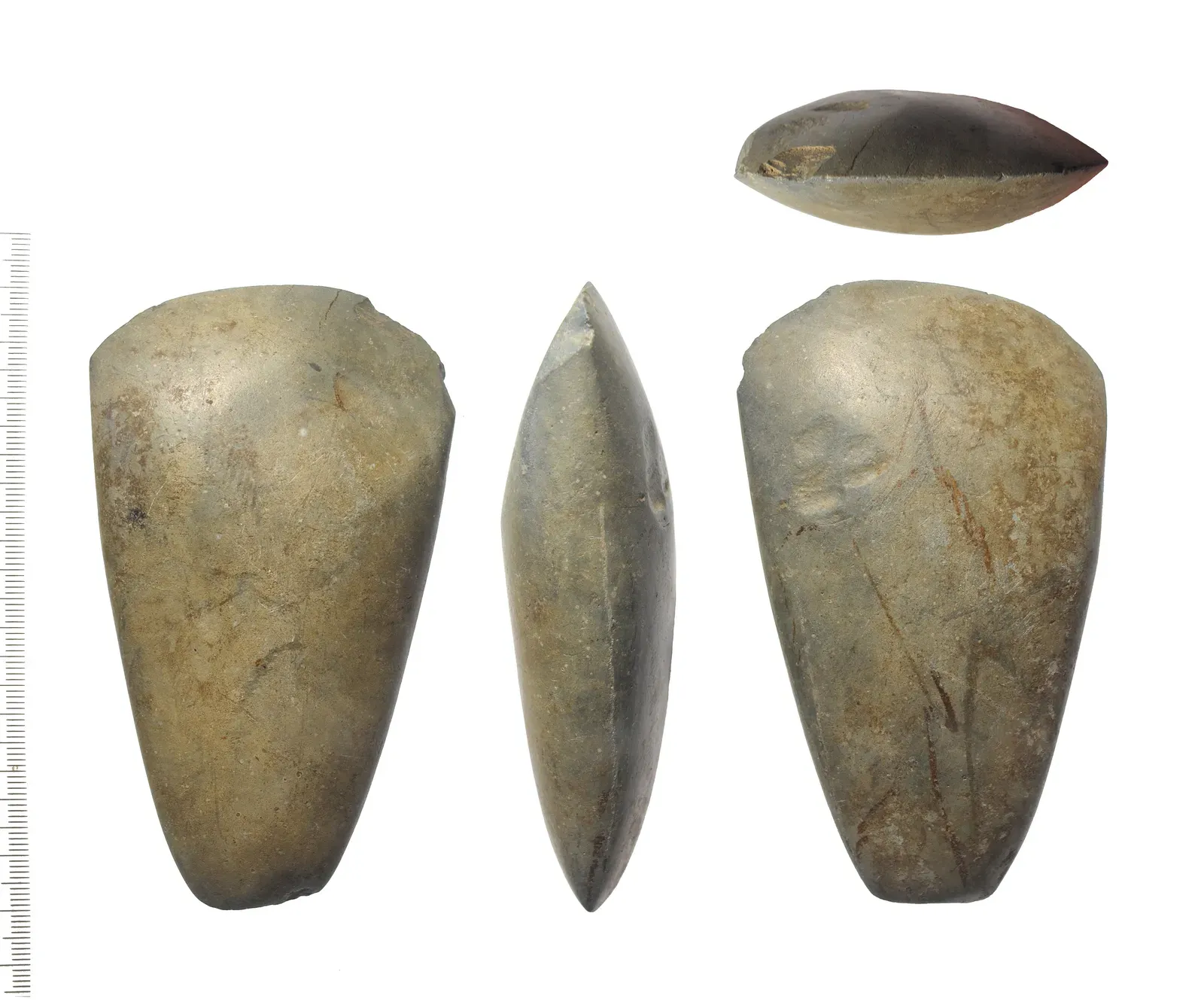
Across parts of prehistoric Europe and Africa, archaeologists have recovered oversized hand axes – some measuring well over a foot long – that show no signs of practical wear. They’re too heavy and unwieldy for butchering meat or cutting wood, the standard jobs of a hand axe.
Many of these giant tools appear to have been made, admired, and then deliberately discarded or buried, never entering everyday use. Some show symmetrical, almost artistic shaping far beyond what functional cutting required, hinting that craftsmanship itself may have carried social value.
One leading theory suggests these oversized axes functioned as displays of skill or status – a prehistoric version of showing off, aimed at potential mates or rival groups. Another theory suggests ritual deposit, where finished tools were offered or buried as part of a ceremony now lost to time.
Either way, it upends the “early humans only made what they needed” assumption. What happened at #9 pushes that timeline back even further.
#9 – Fire Control That’s Older Than Our Own Species

Most timelines place controlled fire use somewhere around 400,000 years ago, but some archaeological sites suggest hominins were managing fire over a million years ago – long before Homo sapiens existed. Burned bone fragments and heat-altered sediment at certain sites hint at habitual, repeated fire use rather than accidental exposure to wildfires.
The problem is proving intent from ash. Wildfires happen naturally and leave behind similar chemical signatures to campfires, making it agonizingly difficult to separate “humans built this fire” from “lightning started this fire and humans happened to be nearby afterward.” Few sites offer the kind of layered, repeated evidence needed to settle the debate.
If early hominins really were controlling fire that far back, it reshapes everything we assume about their cognitive and social capabilities – cooking, warmth, protection from predators, and social gathering around a shared light source, all pushed back hundreds of thousands of years earlier than textbooks currently teach.
Fire is impressive. Crossing open ocean with no metal tools is arguably crazier – that’s #10.
#10 – Humans Crossed Open Ocean Long Before Anyone Thought Possible

Getting to Australia from Southeast Asia required crossing deep-water channels that couldn’t be walked, waded, or crossed by accident on floating debris. Yet humans reached the ancient supercontinent of Sahul – modern Australia, New Guinea, and nearby islands – by roughly 65,000 years ago, a timeline researchers say is backed by strong physical evidence at the discovery site.
That timeline was recently reinforced by rock art evidence in Sulawesi, where a hand stencil left on a cave wall at least 67,800 years ago may reveal how and when ancient humans first reached the lost continent.
Quick Compare
- Sulawesi hand stencils: at least 67,800 years old – oldest known rock art on Earth
- Human arrival in Sahul (Australia/New Guinea): roughly 65,000 years ago
- Neanderthal-linked cave art in Spain: about 1,100 years younger than the Sulawesi stencils
- Physical watercraft from this era: zero surviving examples found
The unsolved part is the “how.” No boats, paddles, or watercraft from that era have ever been found – they were almost certainly made of perishable materials like bamboo or reed that rotted away tens of thousands of years ago. That means humans built seaworthy craft, navigated without instruments, and completed multi-day open-water crossings in groups large enough to establish a viable population, all without leaving a single physical boat behind.
One researcher pointed out how deliberate this migration must have been: it required planning, shared knowledge, and cultural meaning. That’s a polite way of saying we know they did it, we just can’t fully explain how they pulled it off.
Compare that engineering feat to the tiny, delicate object found in a Siberian cave at #11.
#11 – A Sophisticated Bracelet Made by “Primitive” Cousins
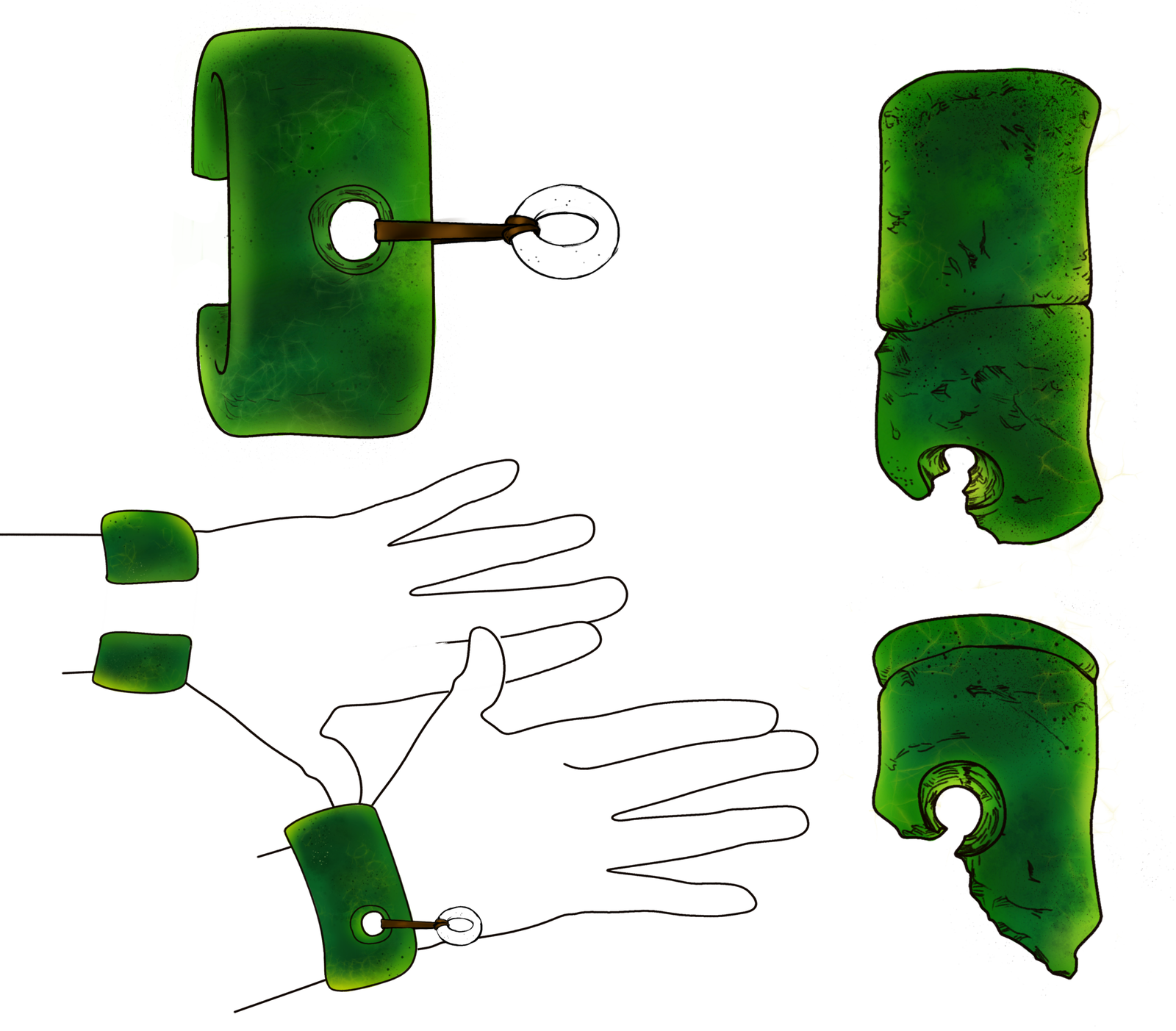
In Denisova Cave, Siberia, researchers uncovered a polished stone bracelet believed to be tens of thousands of years old, crafted with drilling techniques that seemed far too advanced for the era. The bracelet features a neatly drilled hole and a smooth, symmetrical polish that would typically be associated with far later, more “advanced” toolmaking cultures.
The identity of the makers remains genuinely contested. The cave is famous for producing fossil evidence of Denisovans, an extinct hominin lineage distinct from both Neanderthals and modern humans, discovered through DNA rather than distinctive skeletons. Whether Denisovans themselves made the bracelet, or whether modern humans passing through the region left it behind, is still argued over in academic circles.
If Denisovans made it, it forces a complete reassessment of a species we know almost nothing about, since most of what scientists understand about Denisovans comes from a few bone fragments and genetic material, not cultural artifacts. Either way, the object’s precision keeps surprising anyone who assumes technological sophistication only arrived with modern humans.
Sophisticated jewelry is one thing. Surviving actual skull surgery, at #12, is another level entirely.
#12 – Skull Surgery Patients Who Actually Survived
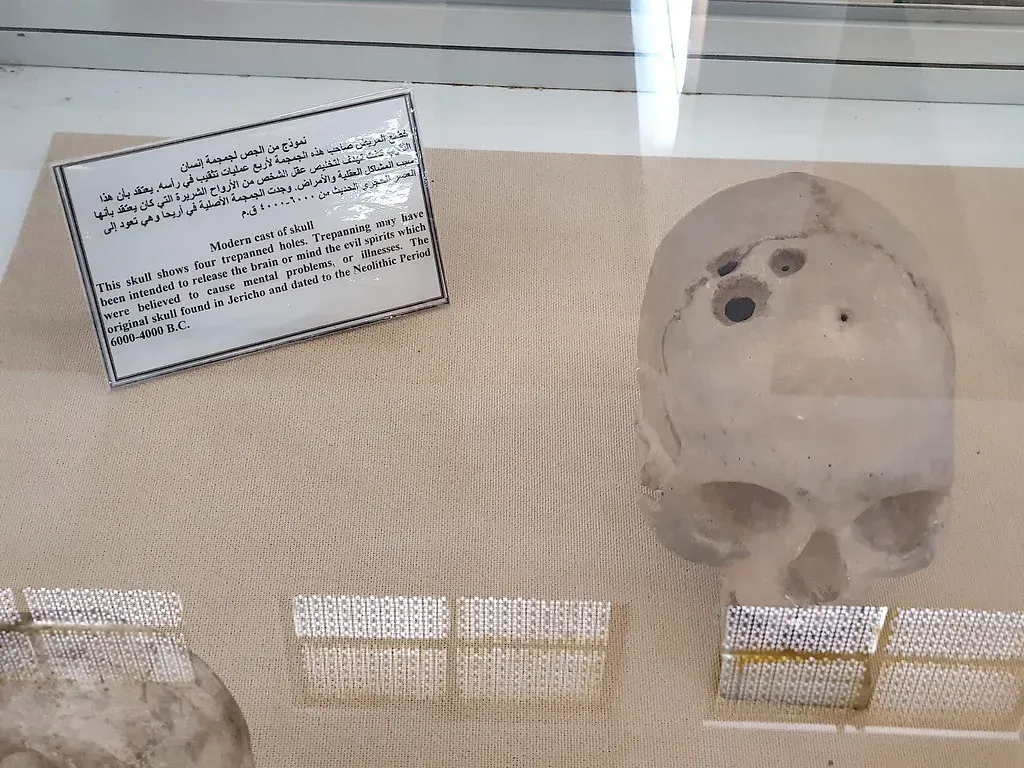
Trepanation – deliberately drilling, scraping, or cutting a hole into the skull – appears in Neolithic burial sites across Europe, with some skulls showing clear bone regrowth around the opening. That regrowth is the smoking gun: it proves the patient survived the procedure, sometimes for years afterward.
No anesthesia, no antibiotics, no understanding of germ theory – and yet survival rates weren’t zero. Estimates from studied skull collections suggest a meaningful percentage of trepanation patients lived long enough for the bone to heal and remodel around the hole, which by modern standards is a startling outcome for unsterilized skull surgery performed with stone tools.
Why perform the surgery at all is the bigger question. Theories include treating head trauma, relieving pressure from swelling, or exorcising perceived evil spirits believed to cause seizures and mental illness. The medical and the spiritual explanations aren’t mutually exclusive – ancient healers may have believed both simultaneously.
Skull surgery is startling. A successful leg amputation, thousands of years earlier, is almost unbelievable – that’s #13.
#13 – A Successful Amputation 31,000 Years Before Modern Medicine
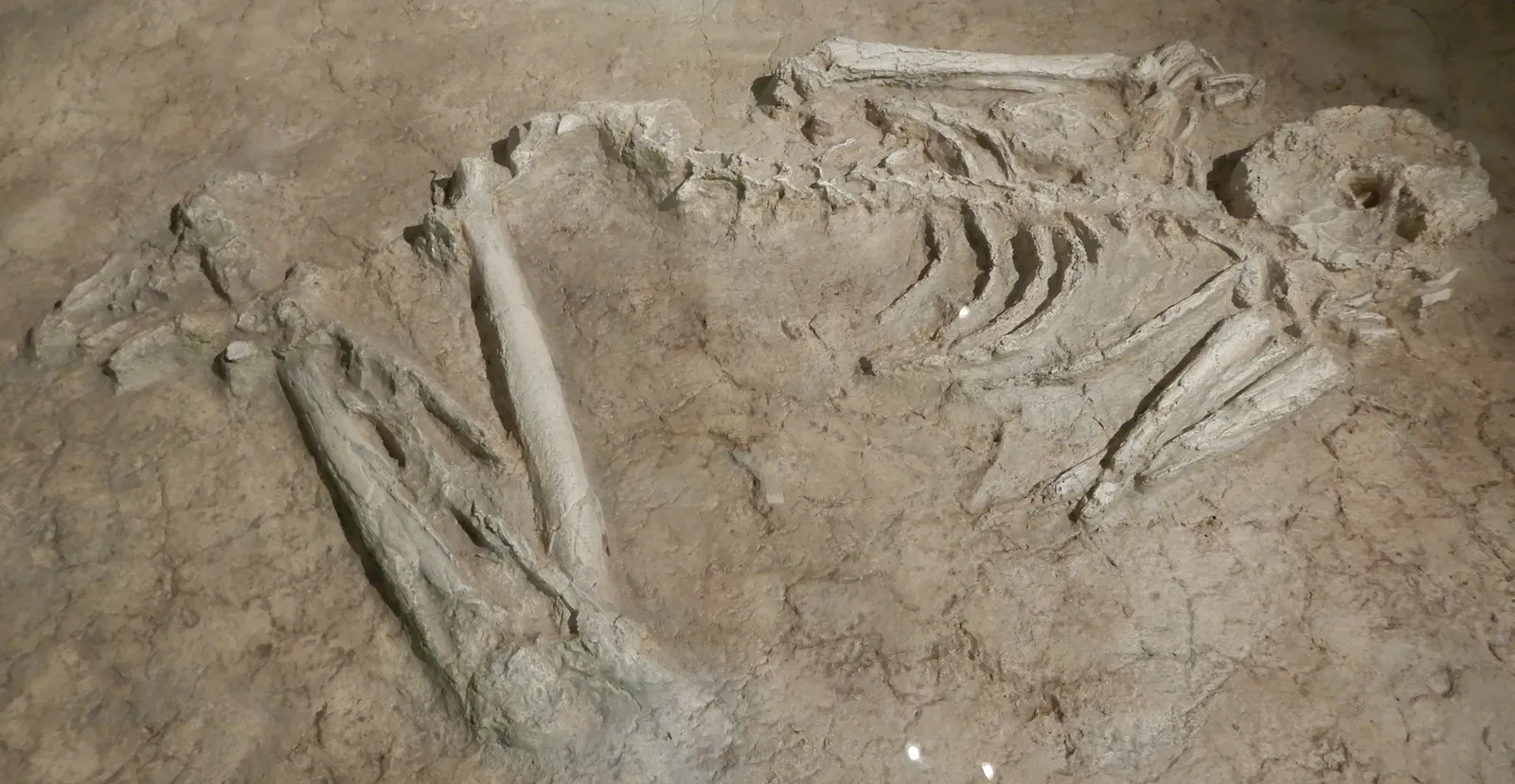
In a limestone cave in Borneo, researchers uncovered the skeleton of a young person whose lower left leg had been surgically amputated as a child, roughly 31,000 years ago – one of the oldest known surgeries on Earth.
This single discovery rewrote medical history overnight. It pre-dates the previous oldest known evidence for amputation surgery by a staggering 24,000 years. Before this find, scientists assumed complex surgery required farming societies with stable populations and accumulated medical knowledge passed down through settled communities.
The person didn’t just survive the operation – they thrived afterward, living another 6 to 9 years post-amputation. That means someone controlled the bleeding, prevented fatal infection, and provided years of hands-on aftercare in a tropical rainforest environment packed with pathogens.
The implications go beyond one skeleton. This unexpectedly early evidence of a successful limb amputation suggests that at least some modern human foraging groups in tropical Asia had developed sophisticated medical knowledge and skills long before the Neolithic farming transition. Researchers also noted the broader social meaning behind it: surviving a childhood amputation and living into adulthood among the rainforest caves of Borneo suggests a high degree of community care.
Most people don’t realize hunter-gatherers are often stereotyped as having short, brutal lives with no capacity for long-term medical care. This single skeleton argues the opposite.
That’s an incredible feat of survival. But #14 is an incredible feat of construction that shouldn’t have been possible at all.
#14 – A Massive Temple Built Before Farming Existed

Göbekli Tepe, in modern-day Turkey, features massive carved limestone pillars – some over 16 feet tall and weighing many tons – arranged in circular enclosures dated to roughly 11,000 years ago. That places construction before the widespread adoption of agriculture, pottery, or even permanent villages in the region.
This timeline breaks the traditional model of civilization entirely. Archaeologists long assumed monumental architecture required farming first, because you need surplus food and settled populations before anyone has time to quarry stone and carve elaborate art. Göbekli Tepe suggests the opposite order: large-scale ritual construction may have come first, potentially motivating the shift toward farming rather than resulting from it.
Worth Knowing
- Estimated age: roughly 11,000 years old
- Pillar size: some stand over 16 feet tall and weigh many tons
- Carvings depict foxes, boars, snakes, birds, and unexplained abstract symbols
- No residential structures or hearths have been found nearby
- Predates farming, pottery, and permanent villages in the region
The pillars themselves are carved with detailed images of foxes, boars, snakes, and birds, along with abstract symbols whose meaning is completely lost. No residential structures, hearths, or clear evidence of permanent habitation have been found nearby, reinforcing the idea that this was purely ceremonial ground, visited periodically by scattered hunter-gatherer groups who somehow coordinated a massive communal building project without a centralized state or written language.
Why they buried sections of the site deliberately, backfilling completed enclosures with rubble, is its own unanswered question. But nothing compares to the debate still raging over #15.
#15 – Did a Small-Brained Species Deliberately Bury Its Dead?
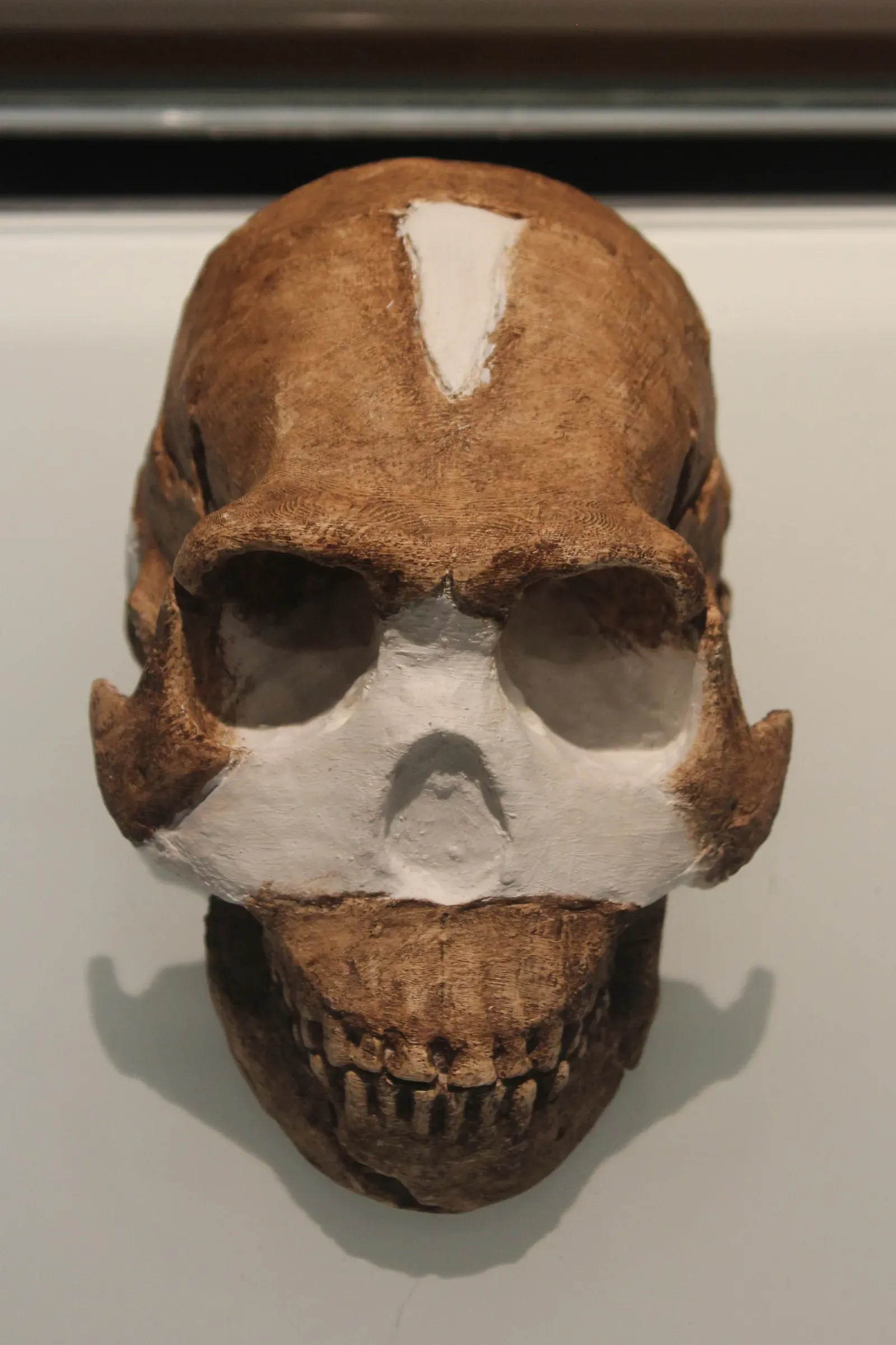
Deep inside South Africa’s Rising Star cave system, researchers have spent years excavating the remains of Homo naledi, a small-brained hominin species that lived between roughly 335,000 and 241,000 years ago. What they claim to have found challenges everything scientists thought they knew about the requirements for complex behavior.
The claim is extraordinary: deliberate burial, possibly the oldest known evidence of intentional burial by any non-human hominin species. The reasoning centers on how the bodies ended up in nearly inaccessible chambers. Hardly any bones of medium or large animals are known from the site, and there’s no evidence the bones were transported there by rushing water. The implication is that H. naledi individuals entered this subterranean cave system deliberately to deposit their dead – and if true, it also implies something almost as wild: they used fire to navigate the darkness, guiding themselves through Rising Star’s treacherous tunnels, chutes, and chambers with nothing but firelight.
But not everyone is convinced, and the pushback has been fierce. A separate team of archaeologists argued the evidence isn’t compelling enough to support deliberate burial or the claimed engravings. Other researchers proposed a far less dramatic explanation: periodic water seepage into the underground caves may have helped move partial or complete H. naledi corpses down sloping cave floors until they came to rest in natural depressions that only look like intentional graves.
Even skeptics admit the door isn’t fully closed. Some researchers say they’re not opposed to the idea that Rising Star witnessed early mortuary behavior involving the intentional disposal of bodies – they just think the latest claims need more evidence before the wider scientific community signs off. If confirmed, it would mean a species with a brain roughly a third the size of ours was capable of ritual, planning, and possibly even fire use – abilities long assumed to require a much bigger brain.
The Bottom Line

Fifteen mysteries, one clear pattern: early humans and their close relatives were never as simple as old textbooks made them sound. Neanderthals built underground stone rings for reasons no one can prove. Modern humans crossed open ocean without leaving behind a single boat. A child in Borneo survived amputation surgery 31,000 years before antibiotics existed. And a small-brained species may have deliberately carried its dead into total darkness.
If there’s an opinion worth stating plainly, it’s this: the “primitive caveman” stereotype has done more damage to public understanding of prehistory than any single misdated fossil. Every one of these findings points toward complex thought, planning, and social cooperation existing far earlier and in far more species than mainstream assumptions once allowed. The real mystery isn’t why ancient humans did these things – it’s why it took modern science so long to take the evidence seriously.
Which of these unsolved mysteries surprised you the most? Drop your take in the comments.