

Most people picture Neanderthals as grunting brutes who barely survived winter, let alone invented anything worth remembering. That image is almost entirely wrong, and the proof has been sitting in museum drawers for years, waiting for someone to actually look at it. Over the last two decades, archaeologists digging through caves in Spain, France, Italy, and Belgium have pulled out objects that shouldn’t exist if Neanderthals were as dim as pop culture insists – glue, jewelry, rope, even boats.
Turns out, our closest extinct relatives were quietly building a toolkit that rivals early Homo sapiens, sometimes beating us to the punch by tens of thousands of years. Some of these finds are so strange that even the researchers who dug them up struggled to believe what they were holding. Here’s what the fossil record actually says, starting with an invention that still stumps modern chemists trying to recreate it.
#1 – The World’s First Superglue

Neanderthals didn’t just use rocks and sticks – they invented adhesive chemistry from scratch, and they did it hundreds of thousands of years before anyone else on the planet.
Archaeological evidence shows that as far back as 200,000 years ago, Neanderthals were using a tar-based adhesive to glue axe heads and spears to their handles. They made this by heating birch bark, a process that sounds simple but is genuinely tricky to replicate even today. Researchers who tried to recreate it using only Stone Age materials found it far harder than expected. They rendered tar from birch bark and used it to glue stone points onto wooden clubs, a process called hafting, to make their weapons far more effective.
Newer research suggests the glue had a second life too. Scientists now report that Neanderthals might have used this same tar as a topical antibiotic. That means one batch of goo could bind a spearhead in the morning and dress a wound by nightfall – and the tool coming up next is arguably even harder to believe.
#2 – Wooden Digging Sticks That Predate Farming by 165,000 Years
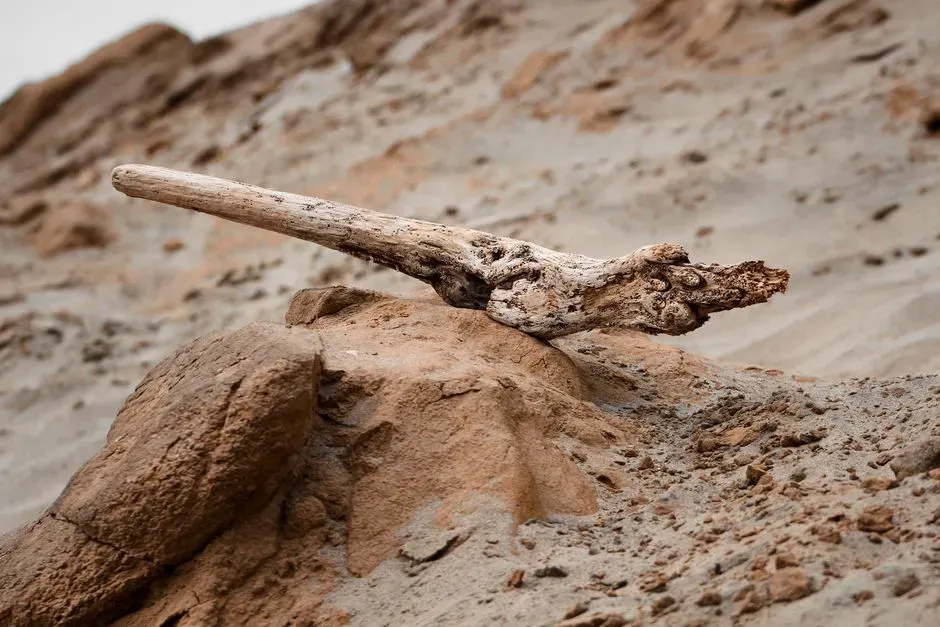
Long before anyone planted a seed, Neanderthals were engineering specialized tools just for pulling food out of the ground.
Modern hunter-gatherers used “digging sticks,” crafted from wood, to search for edible roots and tubers, as well as to hunt – a tradition that stretches back at least 171,000 years, according to a PNAS study. Digging in Italy, scientists uncovered 58 wooden tools, including fragments of digging sticks carved by stone tools, with a rounded, pointed end and some more than 3 feet long, believed to have been made by Neanderthals near Poggetti Vecchi in Tuscany.
Fast Facts
- 58 wooden tools recovered at Poggetti Vecchi, Tuscany
- Some digging sticks measured more than 3 feet long
- Wood was deliberately charred before carving to soften it
- Evidence dates back at least 171,000 years
The wood itself was deliberately burned before carving, which sounds destructive but was actually a shortcut. Researchers say charring the hard wood softened it and helped strip stubborn bark, and when they tried to replicate the sticks without burning the wood first, they simply couldn’t shape it. Even the researchers admit this changes the story: the discovery also suggests “the active presence of women, something that rarely happens in prehistoric sites” – a detail that quietly rewrites who was doing the work.
#3 – A Fire-Starting Kit With Actual Sparks

Everyone assumes Neanderthals only “controlled” fire by babysitting lightning strikes. New evidence says they were striking sparks on purpose.
Researchers announced that the first humans to make and control fire were Neanderthals living in England more than 400,000 years ago, after finding reddened clay and heat-shattered flint hand axes at an archaeological site in Suffolk. That alone would be notable. But the real shocker was the ignition method. The smoking gun was the discovery of tiny flakes of pyrite, a mineral that produces sparks when struck against flint.
That’s not campfire luck – that’s a deliberate fire-starting kit, carried and used with intention. It means Neanderthals weren’t dependent on wildfires or lightning to warm their camps; they could summon flame on command, anywhere they went. That single capability likely reshaped everything else on this list, from cooking to tool-making to surviving brutal glacial winters.
#4 – Twisted Rope, Millennia Before the Wheel

Rope feels almost too modern a word for anything Neanderthal, yet the fiber evidence says otherwise.
Bits of twisted wood fiber attached to a modified stone flake, found in France in 2017, suggest that at least some Neanderthals knew how to make rope, which may have opened the door to fashioning other objects like clothes, bags, nets, and mats. This single find quietly rewrote the assumption that cordage was a modern human invention. Twisting fiber requires understanding tension, structure, and planning multiple steps ahead – not exactly caveman guesswork.
Once you accept that Neanderthals could make rope, a whole chain of other possibilities opens up: snares for trapping small game, slings for carrying infants, and lashings for building shelters. Archaeologist April Nowell has pointed out that there have been many other hints that Neanderthal minds were occupied with things many researchers did not expect. Rope might be the single clearest example of that hidden complexity.
#5 – A Genuine Cold-Weather Clothing Kit
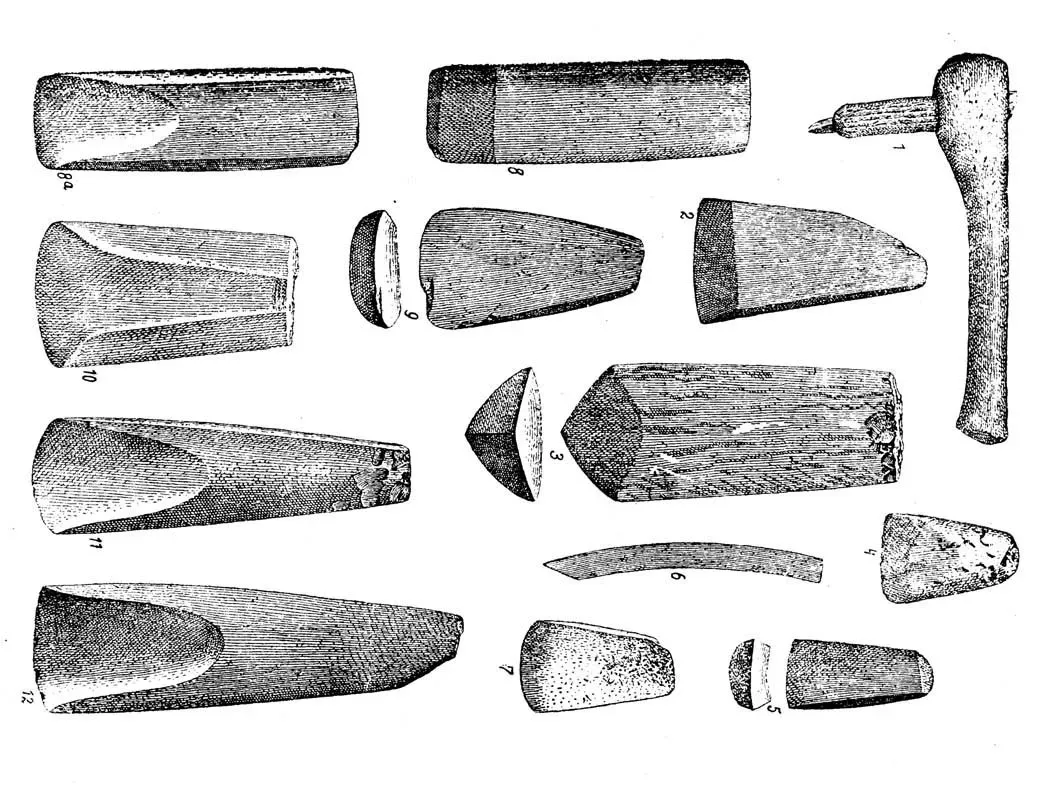
Forget the loincloth stereotype. Neanderthals were tailoring functional cold-weather gear using a dedicated toolset.
Circumstantial evidence of Neanderthal clothing includes a stone tool with residue from hide scraping, pointed bone awls used to punch holes in hides, and a twisted bit of cord, possibly from shoes or fabric. No actual garment has survived 40,000-plus years, but the tools tell the story anyway. Awls punch holes, hides get scraped clean, and cord ties the pieces together. That’s not a hide thrown over the shoulders – that’s construction.
This mattered enormously for survival. Neanderthals lived across Europe, so they had to protect their bodies from frostbite and other cold-related dangers. Some researchers now argue that without fitted, layered clothing, Neanderthals simply could not have survived the coldest stretches of the last Ice Age in northern latitudes – meaning tailoring wasn’t a luxury, it was the difference between life and extinction.
#6 – A Cosmetics Cabinet Made of Red Ochre

This one trips people up every time: Neanderthals appear to have worn makeup.
We now know they were using colorful pigments like red ochre as far back as 200,000 to 250,000 years ago, maybe not just on objects, but also on their own bodies – and they may have sometimes imported the substance from tens of kilometers away. Importing pigment from dozens of kilometers away means this wasn’t an accident – it was a supply chain for personal decoration.
Worth Knowing
- Red ochre use dates back 200,000 to 250,000 years
- Some pigment was carried in from tens of kilometers away
- Ochre is one of archaeology’s clearest markers of symbolic thinking
- Possible uses include body decoration, ritual, and status display
Why does this matter so much to researchers? Because ochre use is one of the oldest markers scientists associate with symbolic thinking – the ability to attach meaning to color and appearance rather than just using materials for pure function. If Neanderthals were sourcing red pigment from distant locations purely to paint themselves or their tools, that points to identity, status, or ritual – concepts we usually reserve exclusively for modern humans.
#7 – Jewelry Older Than Homo Sapiens in Europe
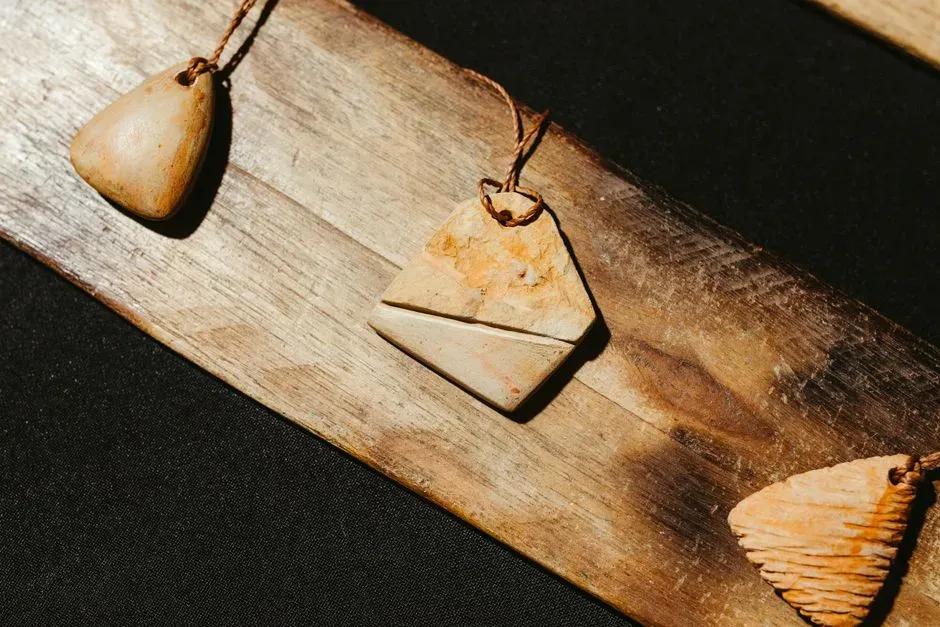
Long before modern humans set foot on the continent, someone in Spain was already threading shells into necklaces.
In caves along the Spanish coast, archaeologists also found 115,000-year-old shell beads – the oldest personal ornaments known in the world. These weren’t randomly discarded shells; they were selected, modified, and likely worn. Excavations have also revealed perforated and sometimes painted shells that were probably strung together and worn.
The timeline is the shocking part. These beads predate the arrival of modern humans in the region entirely, which strips away the old excuse that Neanderthals simply copied human fashion. The wide range of dates all predate Homo sapiens, making it unlikely that an isolated group of precocious Neanderthals were responsible – more likely, it suggests the species as a whole was innately creative. That’s a direct challenge to a century of “Neanderthals were culturally empty” assumptions.
#8 – Cave Paintings Older Than Modern Human Art

If jewelry wasn’t enough of a shock, Neanderthals may have also been the first painters on Earth.
In southeastern Spain, archaeologists discovered more than a dozen paintings dating back more than 65,000 years – before the first modern humans arrived in Europe. The artists, most likely Neanderthals, mixed pigments, made seashell beads, and painted symbols of their lives on the walls of caves. This single discovery flipped the “humans invented art” narrative on its head overnight.
It’s worth sitting with how controversial this claim once was – and honestly, it still triggers heated academic debate. Plenty of researchers spent decades insisting cave art required a cognitive leap unique to Homo sapiens. These discoveries suggest that our reputedly boorish cousins were just as sophisticated as humans. Whether every academic accepts that framing is still up for argument, but the dates themselves aren’t easy to dismiss.
#9 – Deliberate “Hashtag” Engravings, Not Random Scratches

Deep inside a cave in Gibraltar, someone carved a pattern into rock that looks suspiciously intentional – and it wasn’t a human hand that made it.
There is also evidence of engraving – a crosshatched “hashtag” pattern carved into a cave wall in Gibraltar, as well as onto a pebble, a flint flake, and a giant deer’s toe bone. Repeating the same geometric pattern across four completely different surfaces is hard to explain as coincidence. A single scratch could be an accident. The same crosshatch design showing up on stone, bone, and cave wall starts to look like a symbol.
Nobody knows what the pattern meant. It could have marked territory, tracked something numerically, or carried spiritual significance entirely lost to time. What matters is the repetition – Neanderthals weren’t just scratching randomly while bored, they were reproducing a specific mark across materials and locations, which is textbook symbolic behavior by any modern definition.
#10 – A Mysterious Underground Stone Monument
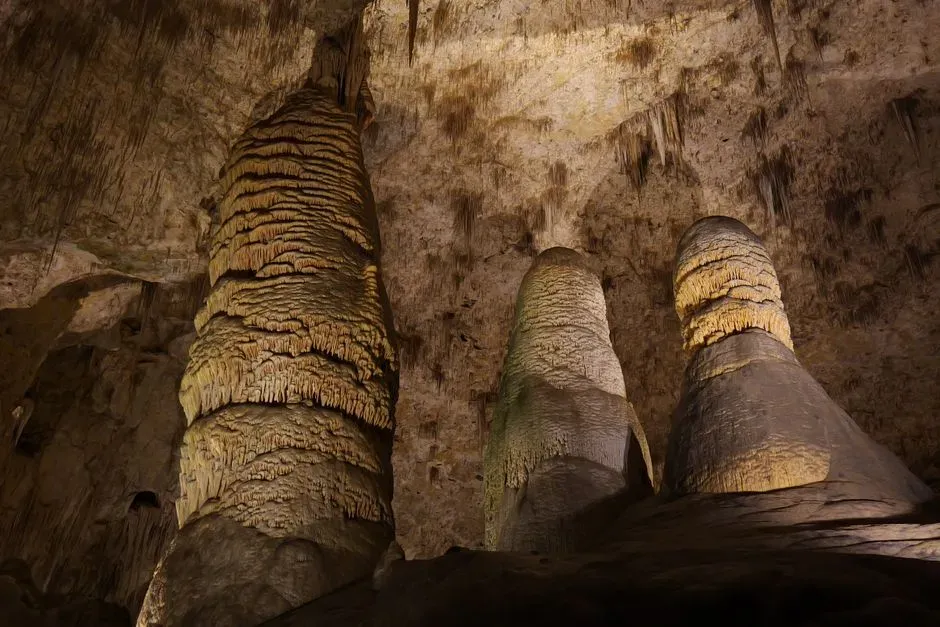
Nearly 1,000 feet inside a pitch-black French cave, Neanderthals built something that still has no explanation.
Hundreds of intentionally broken stalagmites were found there, arranged into two large, ellipsoid structures and several smaller stacks, during a period when – as researchers confirmed in 2016 – only Neanderthals were roaming Europe. Building this required carrying fire deep underground, planning the layout, and physically snapping stone formations to a consistent size.
Why It Stands Out
- Located nearly 1,000 feet inside a pitch-black cave
- Built from hundreds of deliberately broken stalagmites
- Dated to a period when only Neanderthals lived in Europe
- No comparable structure has been found anywhere else
This is Bruniquel Cave, and it remains one of the strangest finds in the entire Paleolithic record. No one knows what these structures were for, but they suggest a tendency toward creativity and perhaps even symbolism, and no other structures of this kind have so far been discovered anywhere else. Some researchers lean toward ritual use; others suspect shelter or a meeting space. Either theory demands more forward planning than Neanderthals are usually given credit for.
#11 – A Working Medicine Cabinet

This is the discovery that made microbiologists sit up straight: Neanderthals appear to have self-medicated with real, effective compounds.
In one Neanderthal’s dental plaque, researchers found traces of poplar, which contains salicylic acid, the active ingredient found in aspirin, along with traces of a mould called penicillium, which helped produce the first antibiotic, penicillin. This individual also had a documented dental abscess and a painful intestinal parasite – meaning the plant and mold weren’t random snacks, they lined up exactly with what he needed to treat himself.
Researchers were careful, but the pattern was hard to ignore: “The use of antibiotics would be very surprising, as this is more than 40,000 years before we developed penicillin.” Separately, other Neanderthal remains at El Sidron showed traces of yarrow and chamomile, and both plants are bitter tasting with little nutritional value but are well known for their medicinal qualities. That’s two independent sites suggesting the same behavior: choosing bitter, non-food plants specifically because they relieve pain.
#12 – Boats, Decades Before Modern Humans Ever Sailed
Save the biggest jaw-dropper for last: Neanderthals may have been sailing the Mediterranean before our own species built a single vessel.
Stone tools matching known Neanderthal toolkits keep turning up on Mediterranean islands that were never connected to the mainland by a land bridge, even during ice ages when sea levels dropped. Lead researcher Alan Simmons put it bluntly.
They had to have had boats of some sort; unlikely they swam. Many of the islands had no land-bridges, thus they must have had the cognitive ability to both build boats and know how to navigate them.
Alan Simmons
At a Glance
- Neanderthal tools found on Mediterranean islands with no land bridge
- Estimated seafaring activity: roughly 100,000 years ago
- That’s about 50,000 years before modern human seafaring began
- No actual boat remains have survived to confirm construction method
The timeline is the part that breaks the brain. This would mean Neanderthals were sailing around the Mediterranean 100,000 years ago, which is 50,000 years earlier than modern humans started seafaring activities. No actual boat has ever been recovered – wood simply doesn’t survive that long – but the presence of unmistakably Neanderthal tools on isolated islands leaves few other explanations standing. If confirmed, this single fact alone should retire the “primitive caveman” label for good.
The Bottom Line
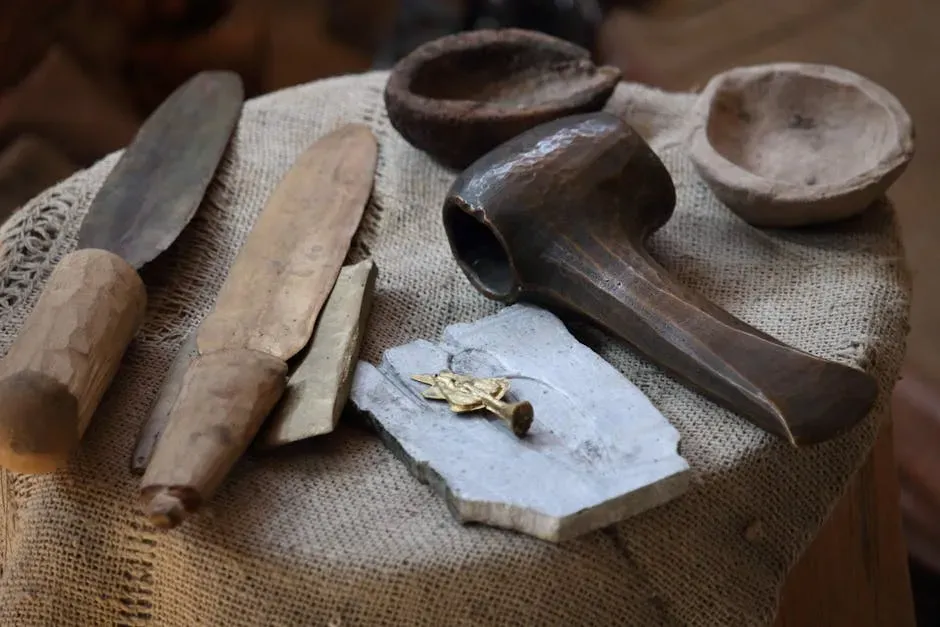
Twelve items, and not one of them fits the tired Neanderthal stereotype. Glue, rope, clothing, jewelry, cave art, monuments, medicine, and possibly boats – this is not the resume of a mentally limited species that modern humans simply outcompeted. Honestly, the more sites researchers excavate, the more it looks like Neanderthals were running parallel innovation tracks to our own ancestors, sometimes years or millennia ahead of them.
We’d argue the “dumb caveman” myth has officially expired – the evidence just hasn’t caught up with pop culture yet. If anything, the real mystery isn’t why Neanderthals disappeared. It’s why it took us this long to notice how much they actually built.