

Every field has a creation story. Often it starts with a single dazzling paper that seems to crack open a new way of seeing the world. Then, sometimes decades later, a quiet bombshell drops: nobody can reliably reproduce that original result. The experiment fails in other labs, the effect shrinks to almost nothing, or the statistics fall apart under modern scrutiny. Suddenly, the “founding study” looks less like bedrock and more like quicksand.
What happens next is rarely simple. Some people dig in and defend the old result at all costs. Others call for a total reset. Most of the field lives in the uncomfortable middle, trying to protect the genuinely valuable insights while being honest about what no longer holds up. That messy, often emotional, process is where science actually lives.
This article walks through what usually happens inside a discipline when a key early study cannot be replicated. It is part detective story, part group therapy, and part slow institutional reform. Along the way, we will look at why replication failures happen, how communities respond, and what “maturing” looks like when your origin myth is suddenly in question.
#1 The Shock: When a Foundational Result Suddenly Looks Fragile

The first wave is almost always disbelief. A founding study, by definition, is the paper everyone cites in the first paragraph of their own work. It is the graph on slides, the story told in textbooks, the example professors lean on when explaining why the field matters. When a serious replication effort reports that they cannot reproduce that result, it feels not just like a technical problem but like an identity crisis.
Inside labs and departments, the questions are immediate and personal. People wonder whether their own careers, grants, and reputations have been built on shaky ground. Some feel outright anger: at the replicators for “attacking” the field, or at the original authors for not being more careful. Others feel a strange sense of relief, especially if they have quietly struggled to get the same effect but were afraid to say so out loud.
There is usually a flurry of informal activity before anything official shows up in journals. Senior scientists send emails to colleagues asking, “Have you seen this? What do you make of it?” Postdocs rerun old analyses, check old scripts, and go back through raw data to see if they missed something. Graduate students suddenly realize that the rock-solid introduction section of their thesis just turned into wet clay.
Emotionally, this stage hurts because it challenges a basic narrative: that science progresses cleanly, accumulating facts. When a founding study stumbles, it forces people to confront a messier truth: science is a human practice, full of cleverness and blind spots, and even our most cherished early results can be wrong, overstated, or incomplete.
#2 The Forensics: Re-Running the Study and Picking Apart the Methods

Once the initial shock fades a bit, the field often moves into forensic mode. Researchers start asking very specific, almost detective-level questions: Did the replication really match the original method? Were the same materials used? Are there hidden conditions the original authors never fully wrote down but took for granted in their own lab?
This phase can be extremely technical but also surprisingly revealing. It is common to discover that what looked like a simple design actually involved dozens of tacit choices: how participants were recruited and screened, subtle features of the lab setup, timing details, or how outliers were handled. Sometimes the original effect depends on a particular population, a specific version of software, or an experimental context that seemed minor at the time but turns out to be crucial.
In practice, the field might organize: special issues in journals devoted to replications, multi-lab collaborations to repeat the experiment across settings, or registered reports where the analysis plan is locked in before data collection. Labs share original code and data if available, or try to reconstruct them from old notebooks and emails. Conferences host panels where critics and defenders go line by line through the study’s design and statistics.
During this forensic stage, it often becomes clear whether the original study is completely broken or merely more limited than people assumed. Common outcomes include:
- The effect appears, but it is much smaller and more fragile than the original paper suggested.
- The effect depends strongly on a hidden moderator (for instance, cultural context, age group, or exact task framing).
- The effect cannot be found at all when modern statistical standards and larger samples are used.
That distinction matters. A total non-replication has different implications than a result that turns out to be narrow, context-specific, or method-sensitive.
#3 The Human Drama: Ego, Status, and the Pain of Being Wrong

We like to imagine scientists as dispassionate truth-seekers, but replication crises make very clear that they are also humans with egos, fears, and social connections. When a founding study fails to replicate, the original authors are put under a spotlight they never asked for. Some respond with openness, others with defensiveness, and their reaction can shape the tone of the whole field’s conversation.
If the original researchers acknowledge limitations, share data, and support new tests, they may soften the blow. Their willingness to say “we might have gotten this partly wrong” models good scientific behavior. But doing that publicly can be emotionally brutal. For many, that study represents their life’s biggest achievement; to revise it feels like tearing up a piece of their own autobiography.
On the other side, replicators can be framed as heroes or as troublemakers, depending on who you ask. Some colleagues quietly cheer them on for exposing weak foundations; others see them as combative or opportunistic, especially if the replication is announced in high-profile ways. There is a thin line between constructive critique and personal attack, and people do not always stay on the right side of it.
The power dynamics are complicated too. Early-career researchers may risk angering senior figures who control jobs, grants, and recommendations. Senior scientists may feel that their authority is under threat. Informal whispers matter: who gets invited to speak, whose students get hired, which labs are suddenly described as “careful” or “sloppy.” All of this shapes how quickly, or whether, a field can honestly grapple with a failed foundational result.
#4 The Statistical Autopsy: P-Hacking, Power, and Questionable Research Practices

When a big study fails to replicate, attention often turns to the statistics and design choices that produced the original result. The field starts asking hard questions: Was the sample size large enough? Were multiple outcomes tested but only the most favorable ones reported? Were flexible analysis decisions made after seeing the data, even unconsciously?
Many non-replicable founding studies share familiar patterns. They might rely on small samples that make it easy to mistake noise for signal. They might use flexible stopping rules, where data collection quietly stops once results look “significant.” They might exclude participants in ways that were not pre-specified, or try multiple statistical models and only publish the one that crosses a p-value threshold. These behaviors do not always rise to deliberate fraud; they are often just what everyone in the field was doing at the time.
In this statistical autopsy phase, you see a lot of re-analyses and simulations. Researchers show that with the same methods and sample sizes, many “significant” results would be expected to vanish on replication. People demonstrate how easy it is to obtain impressive-looking findings using standard but fragile practices. This can feel deeply unsettling because it implies that the problem may not be just one founding study, but a whole ecosystem of norms that made such studies almost inevitable.
Out of this often comes a push for better practices, such as:
- Pre-registration of hypotheses and analysis plans to limit post hoc flexibility.
- Larger, better-powered samples so that true effects can be detected reliably.
- Open data and open code to make verification and critique easier.
- Stronger emphasis on effect sizes and uncertainty rather than binary “significant/not significant” labels.
The core message is uncomfortable but healthy: if a founding study collapsed under modern standards, maybe those standards should become the new default.
#5 The Textbook Rewrite: Updating What Students Are Taught

Founding studies do not just live in journals; they live in classrooms and textbooks. For many students, their first encounter with a field is a simplified story: here is the classic experiment that started it all. When that experiment cannot be replicated, educators have a choice to make. Do they quietly drop it? Add a small disclaimer? Or use the controversy itself as a teaching tool?
In practice, you see all three strategies. Some instructors simply stop teaching the result, replacing it with more robust findings or broader theoretical arguments. Others keep the study but frame it as historically important rather than empirically settled. A growing number lean into the drama, telling students the full story: how the effect was discovered, celebrated, questioned, and ultimately revised.
Rewriting the textbook narrative can be slow because textbooks have long update cycles and authors may be reluctant to overhaul well-known chapters. But over time, the origin story of the field shifts. A study once presented as solid evidence might be recast as a provocative hypothesis that sparked work but did not survive deeper testing. In some cases, entirely new “founding” examples are chosen, ones that align better with current evidence and methodological standards.
For students, this can be both confusing and empowering. It is jarring to learn that something presented as fact a few years ago is now in doubt. At the same time, it offers a more honest picture of science as a living process rather than a finished book of truths. When educators handle it well, the failed replication becomes a vivid lesson in why skepticism and ongoing testing matter.
#6 The Theory Earthquake: What Happens to the Big Ideas Built on Sand
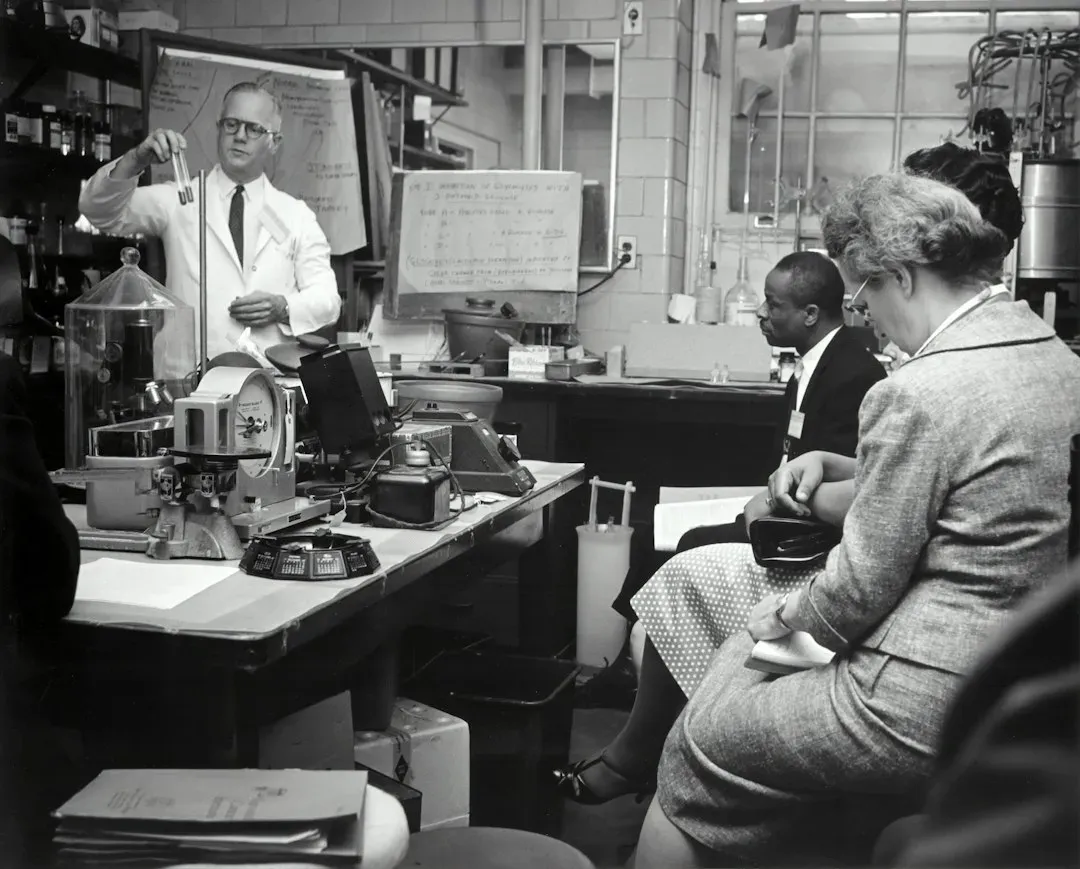
The real test of a failed founding study is not just whether a single result falls, but how much of the surrounding theoretical architecture has to be rebuilt. Sometimes the founding work was one of many independent lines of evidence, so its collapse is painful but not catastrophic. Other times it was the main empirical pillar holding up an ambitious theory, and once that pillar crumbles, the whole structure wobbles.
Fields differ in how dramatically they react. Some theories are deliberately broad and resilient: even if one early experiment fails, other results, mathematical models, or real-world observations still support the core idea. In those cases, the field may quietly downgrade the status of the original study, treat it as an overhyped demonstration, and move on with a slightly slimmed down but intact framework.
In other areas, though, the founding study did most of the heavy lifting. If dozens of later papers mainly extended or rephrased the same basic claim without adding truly independent evidence, a replication failure can trigger what feels like a theoretical earthquake. People start asking whether central constructs are even well defined, whether alternative explanations have been unfairly dismissed, or whether the foundational assumption was simply wrong.
Here, you often see a flurry of new proposals:
- Some researchers argue for modest theory revision, narrowing the conditions under which the original idea is said to apply.
- Others advocate for competing models that had been marginalized but now look more attractive in light of the failed replication.
- A few push for more radical overhauls, suggesting that the field has been chasing the wrong questions entirely.
This can look chaotic from the outside, but it is also a sign of life. Theories that cannot survive contact with new data are not worth keeping, and a painful shake-up can clear space for better, more precise thinking.
#7 The Institutional Turn: Journals, Funders, and Societies Change the Rules
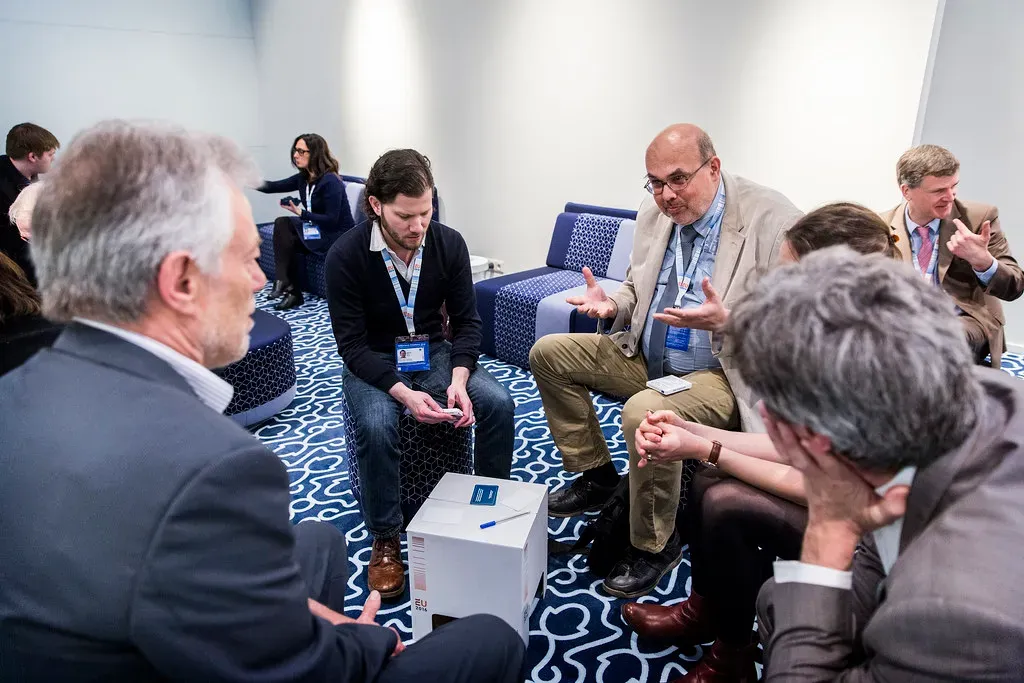
Once a field has wrestled with a non-replicable founding result for long enough, the conversation often shifts from individual studies to system-level incentives. People realize that as long as journals reward flashy, surprising findings and under-reward careful, boring replications, the same problems will keep happening. So the question becomes: how do we change the rules of the game?
Major journals might start to require more rigorous methods, like pre-registration, power analyses, and open materials. Some create dedicated sections for replication work or for “registered reports” where the decision to publish is made before the results are known. This undercuts the bias toward positive findings and helps normalize the idea that null results are scientifically valuable.
Funding agencies can also play a big role. They may introduce calls specifically supporting replication projects or methodological innovation, or ask applicants to demonstrate how their work will be transparent and reproducible. Professional societies might issue guidelines for best practices, host workshops on robust methods, or establish awards for contributions to open and reproducible science rather than just for high citation counts.
At their best, these institutional shifts do not feel punitive but corrective. The goal is not to shame an entire field for having believed an early, flawed result, but to adjust incentives so that future “founding studies” are more likely to withstand independent scrutiny. Over time, when enough of these incentives line up, behaviors that used to be exceptional – like sharing data or pre-registering analyses – start to feel normal.
#8 The Culture Shift: From Heroic One-Offs to Collective, Cumulative Science

Behind all the methods and policies lies culture: the unwritten norms about what counts as impressive, respectable, or worthwhile work. The story of a failed foundational study often marks a turning point in that culture. It can push a field away from celebrating lone “genius” breakthroughs and toward valuing collaborative, cumulative evidence.
One visible sign is how people talk about success. Instead of praising a single paper for discovering a striking effect, communities start talking about bodies of evidence: multiple labs, many replications, meta-analyses, and converging methods. The language shifts from “this study proves” to “this pattern of results suggests.” It is less cinematic, but far closer to how reliable knowledge is actually built.
Another sign is the changing status of those who do careful, unglamorous work. Earlier in their careers, methodologists and replication researchers were sometimes seen as critics on the sidelines. After a big replication failure, they often move closer to the center. Their skills become essential for setting new standards and training the next generation.
Summed up, the cultural shift usually looks something like this:
- Less emphasis on dramatic novelty, more on solid, incremental improvement.
- Less tolerance for opaque methods, more expectation of transparency and sharing.
- Less prestige for single-lab wonders, more for multi-lab, multi-method convergence.
It is not that bold ideas disappear; they just get tested more soberly. Paradoxically, once a field lives through the disappointment of a non-replicable founding study, it may become more confident in the long run, because its ideas are anchored in stronger, more collectively vetted evidence.
#9 The Personal Reckoning: How Individual Scientists Rebuild Trust and Purpose
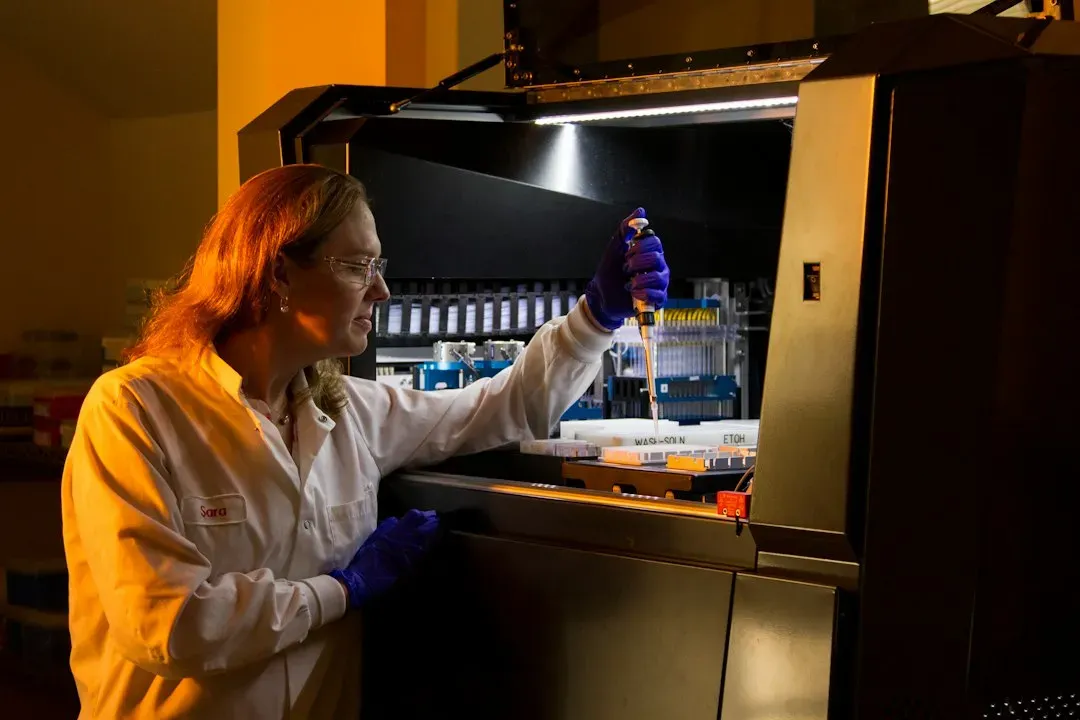
There is also a quieter, more personal side to all of this that does not show up in formal editorials or policy documents. When a founding study collapses, many individual scientists have to confront uncomfortable questions about their own work and values. Have they been too quick to chase exciting effects? Have they contributed to a culture that rewards positive findings over truth?
I have seen researchers go through stages that look a lot like grief. First comes denial or minimization, then anger at critics, then a restless period of self-audit: rereading their own past papers, checking whether they would still stand up under current standards. For some, this sparks a kind of mid-career pivot. They start investing more in robust methods, preregistration, and open materials, even if it means slowing down their publication rate.
There is also a question of trust: both in the literature and in human colleagues. After a high-profile replication failure, it is easy to swing too far into cynicism and start assuming that everything is broken. The more constructive response takes longer to build: a grounded, selective skepticism where you neither worship nor dismiss studies just because they are famous, but look closely at their methods, evidence, and independent replications.
Here, small, everyday practices add up:
- Discussing failed replications openly with students, not as gossip but as case studies.
- Rewarding lab members for catching errors, not just for producing neat results.
- Collaborating more with statisticians, methodologists, and other labs to stress-test ideas.
In a way, the personal reckoning is where a field’s abstract commitments become real. You know a culture has shifted when a young scientist can say “I do not believe that classic study anymore” in front of senior people and be taken seriously rather than punished.
#10 From Crisis to Maturity: Why Non-Replicable Founding Studies Are Not the End
![#10 From Crisis to Maturity: Why Non-Replicable Founding Studies Are Not the End (The History Trust of South Australian, South Australian Government Photo [1] Object record [2], CC0)](https://nvmwebsites-budwg5g9avh3epea.z03.azurefd.net/dinoworld/f63e48e799c183d7f798ffd9ea09214e.webp)
It is tempting to see a non-replicable founding study as a sign that a field is fatally flawed. But if you zoom out, it often looks more like a hard but necessary step toward maturity. Disciplines that never face up to their weak foundations may feel more comfortable in the short term, but they carry hidden fragilities. Fields that look their past in the eye, admit errors, and change course tend to come out more resilient.
From my perspective, the healthiest response is neither despair nor denial but a kind of stubborn optimism. Yes, early studies sometimes overpromise. Yes, whole research programs can be built on effects that turn out to be smaller, narrower, or nonexistent. But the fact that we can discover these problems at all – that replication is happening, that people care enough to dig – is a strength, not a failure.
If you look at the trajectory of many areas that went through a replication shock, a pattern emerges. There is an early era of bold claims and heroic stories, then a painful reckoning when those stories do not all survive, and then a quieter, more grounded phase where theories are sharper, methods are better, and collaboration is more common. The founding myth is replaced by something less romantic but more durable: a culture that expects its own beliefs to be challenged.
So what does a field do ? At its best, it learns. It rewrites syllabi, changes incentives, rebuilds theories, and, most importantly, adjusts its own self-image from “keepers of revealed truths” to “curious, fallible humans trying to get less wrong over time.” That may not fit neatly into a textbook box, but it is a far more honest way to do science. Would you really trust a field that never had to change its mind?