
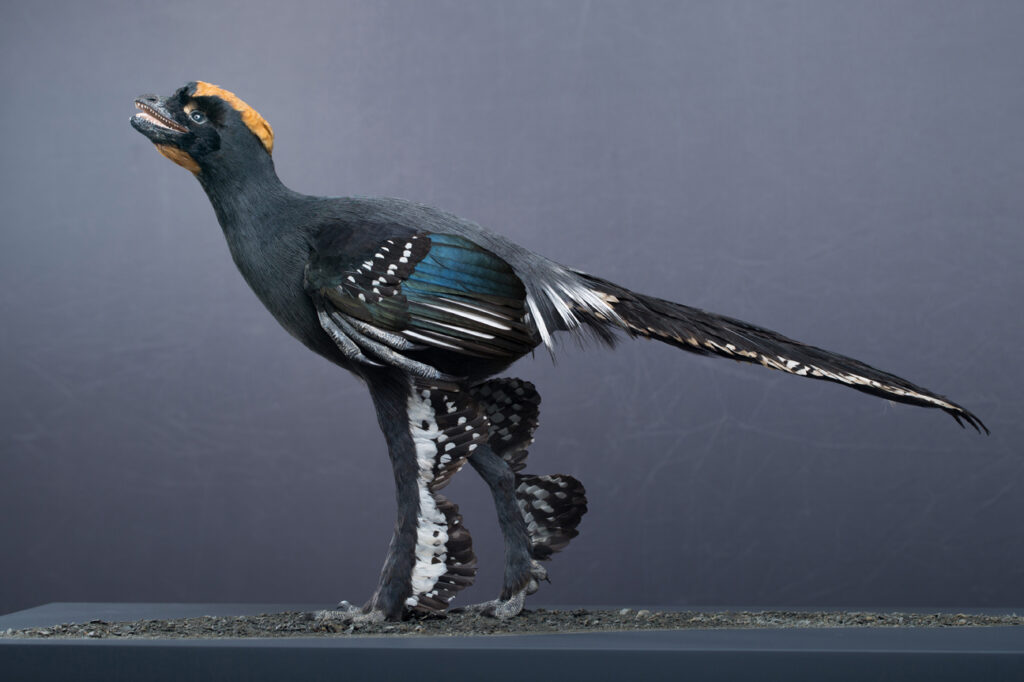
Picture a chicken tucking its head under its wing to sleep, a pigeon curling its toes on a ledge, a peacock fanning iridescent feathers to impress a mate. Now picture a 160-million-year-old dinosaur doing the exact same thing, in the exact same posture, with the exact same purpose – and never once leaving the ground. That’s not a thought experiment. That’s the fossil record.
Most people assume flight came first and everything else about birds followed afterward – the feathers, the fluffy chicks, the courtship dances, the nesting habits. Paleontologists digging through fossil beds in China, Mongolia, and the American West have found something that flips that assumption on its head. Sleeping postures, mating rituals, even the way a parent wraps its arms around a nest full of eggs – all of it was already fully formed in flightless, ground-bound dinosaurs millions of years before anything with feathers ever got off the ground. Here’s what actually happened, in order.
#1 – Running Flat-Out on Two Legs, Long Before Anyone Needed Wings
Before a single dinosaur ever left the ground, an entire lineage of two-legged predators had already perfected life as fast, agile runners. Long legs, hollow bones, a springy, bouncing stride – this was the original body plan, built for chasing and fleeing, not soaring.
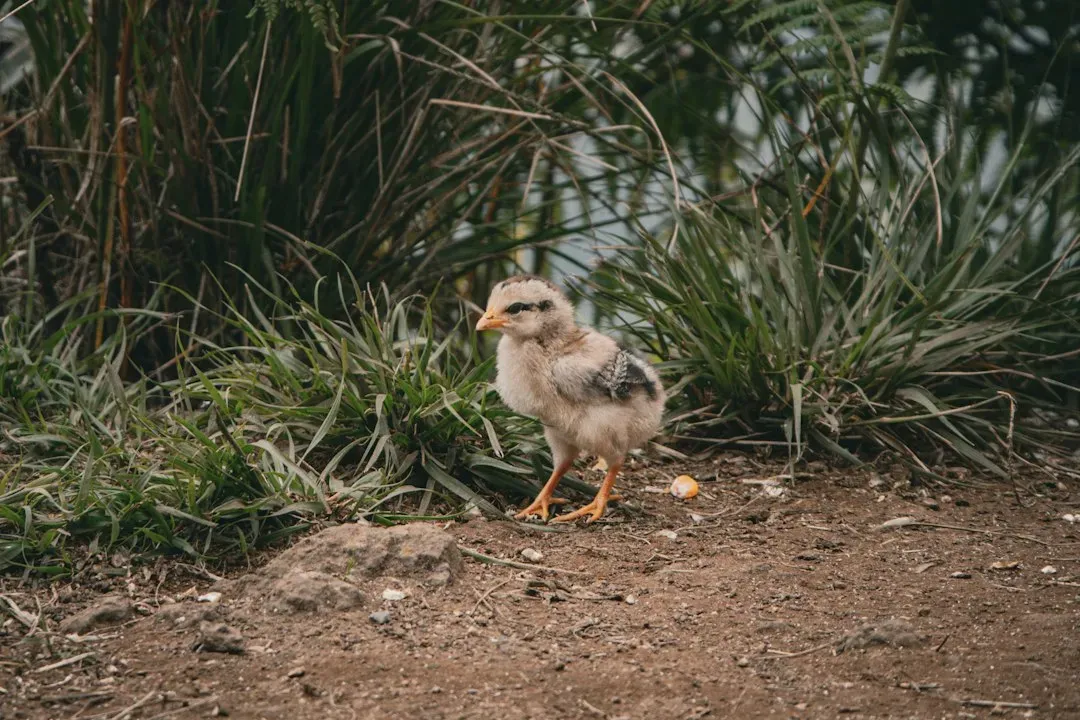
Modern birds still carry that inheritance in their skeletons. And here’s the detail that quietly rewired how scientists talk about flight’s origin: researchers studying young birds today noticed that chicks with tiny, underdeveloped “protowings” still flap-run up steep slopes, using their stubby wings for traction and balance rather than lift, occasionally popping into a brief, clumsy hop.
That’s not a modern quirk. It’s a rerun. Those chicks are unknowingly performing the same ground-based survival trick their ancestors relied on long before wings could carry any weight at all. The running gait, the balance, the sheer leg-driven power – none of it needed wings to exist first.
#2 – Growing a Fuzzy Insulating Coat With No Intention of Ever Flying
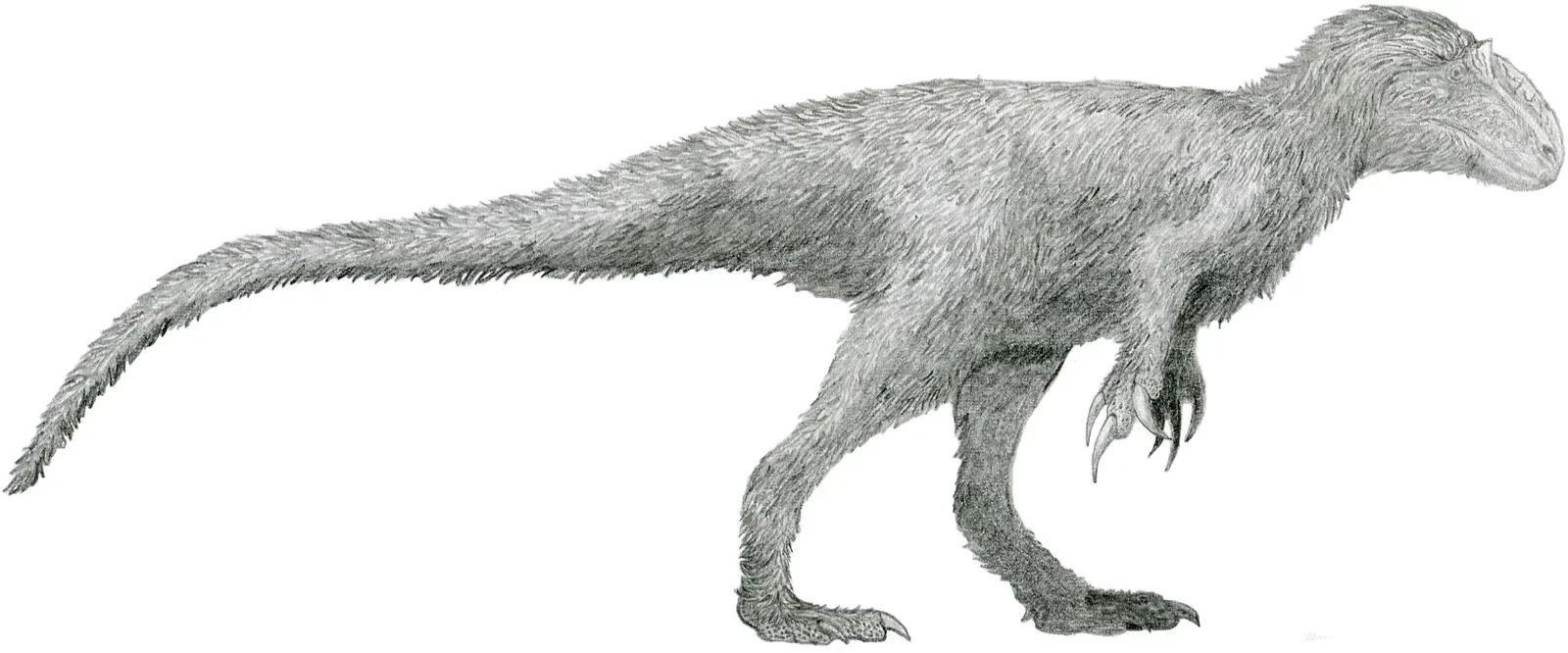
Feathers are the single most iconic bird trait on the planet, and almost nobody realizes they had nothing to do with flying at first. Fossil beds in China turned up small, filament-covered dinosaurs that clearly weren’t built for the air, yet were unmistakably fuzzy from head to tail.
These weren’t sleek, aerodynamic flight feathers. They were closer to fur – simple filaments built to trap body heat, not generate lift. Early feathers functioned in thermal insulation, communication, or water repellency, and did nothing whatsoever for aerodynamics.
At least nine separate Cretaceous dinosaur lineages independently grew featherlike structures, and not one of them could fly. They were staying warm, plain and simple, for possibly millions of years before powered flight ever entered the picture. Some paleontologists now argue “feathers” shouldn’t even be filed under flight adaptations at all, since flight was arguably the last job feathers ever picked up.
Fast Facts
- At least 9 separate Cretaceous lineages independently evolved featherlike coats
- Early feathers were simple filaments, not flight-ready structures
- Documented early functions: insulation, communication, water repellency
- Some scientists argue feathers shouldn’t be classified as “flight adaptations” at all
#3 – Flashing Colorful Feathers to Impress a Mate, Not to Fly
This is the one that catches people off guard the hardest: dinosaurs were showing off in full color long before a single one of them could take off. Paleontologists studying Archaeopteryx and its close relatives found long, elaborate feathers covering the head, body, and legs – far more plumage than flight would ever require.
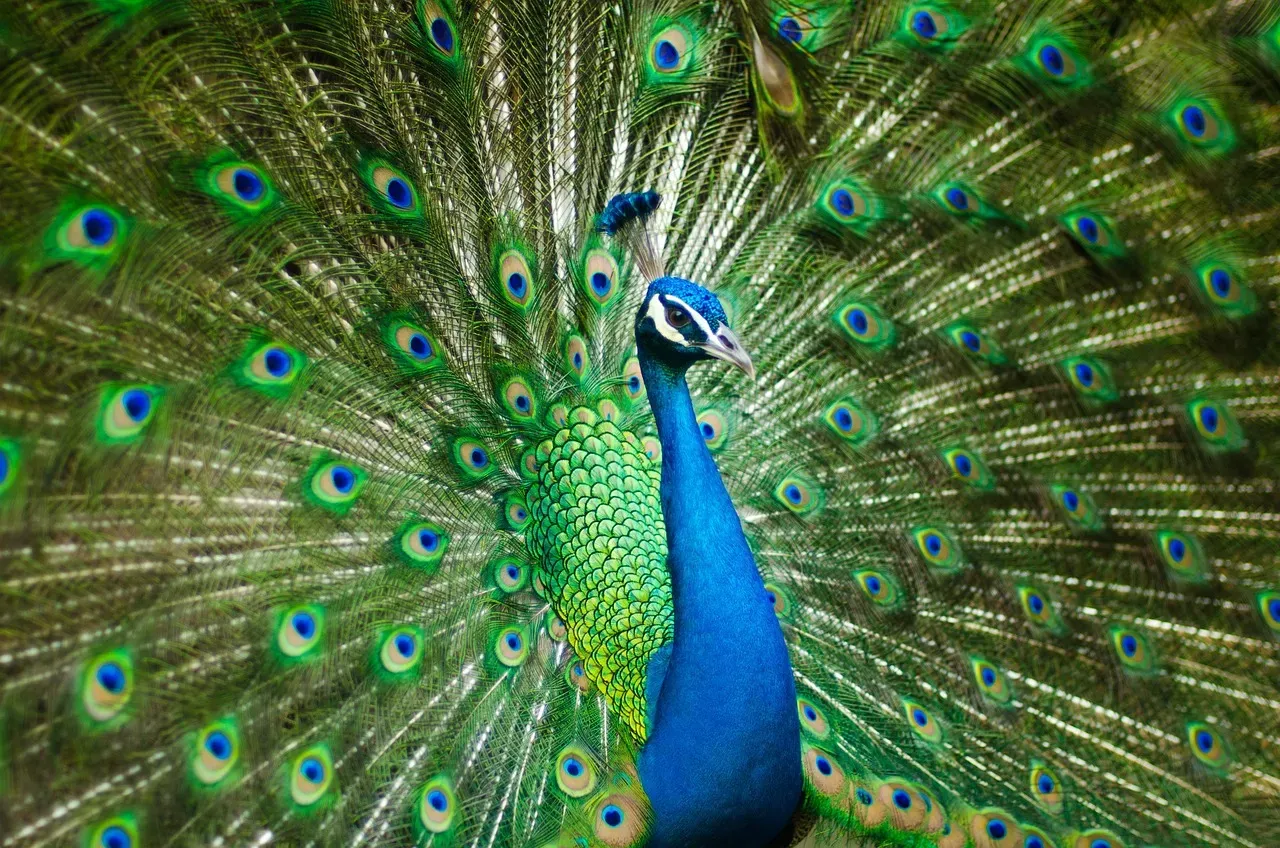
Researchers now believe these pennaceous feathers primarily served as visual display, the same way a peacock’s tail works today, and that this display function evolved in flightless ancestors before Archaeopteryx ever existed.
That’s a direct, unbroken line from a strutting, grounded dinosaur to a strutting peacock in a modern zoo. The mating dance came first. The wings came later, almost as an afterthought bolted onto an already-showy animal. Some researchers now suspect display, not aerodynamics, is the real reason feathers became so elaborate in the first place – a genuinely controversial idea, but one gaining serious traction.
#4 – Wearing Feathers as Camouflage While Never Once Facing an Aerial Predator
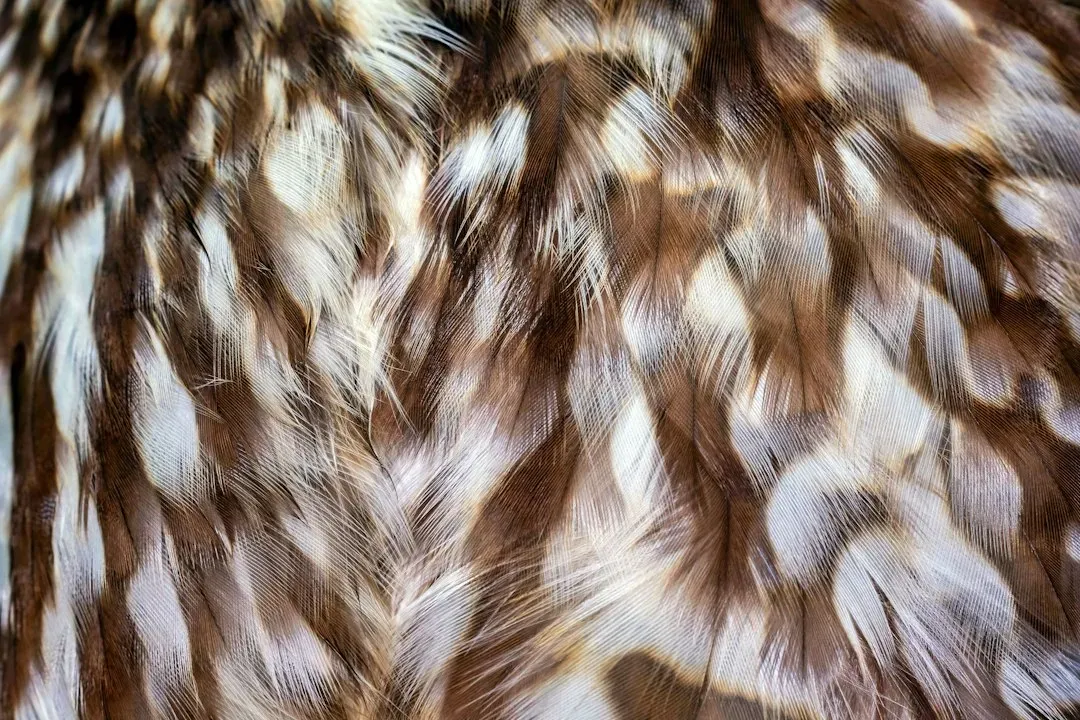
Ground-bound dinosaurs needed to hide from things that could kill them on the ground, and feathers turned out to be perfectly suited for the job. Fossil evidence shows early feathered dinosaurs weren’t just insulated or decorated – their feathers were doing double, triple, even quadruple duty.
Researchers now argue that long feathers likely evolved from simpler insulating ones, and from there could have served countless purposes before any animal ever took to the air: lining a nest, blending into undergrowth, signaling to a rival, trapping heat. As one analysis put it, it’s genuinely difficult to pin feather evolution to any single reason.
That’s a quiet admission that flight was almost incidental to the whole story. Camouflage, nest-lining, warmth, display – feathers were doing all of it on animals that would never once leave the ground. Multiple functions, zero flying required. It’s one of the most underappreciated facts in dinosaur science.
#5 – Folding a Feathered Arm Neatly Against the Body While Simply Walking
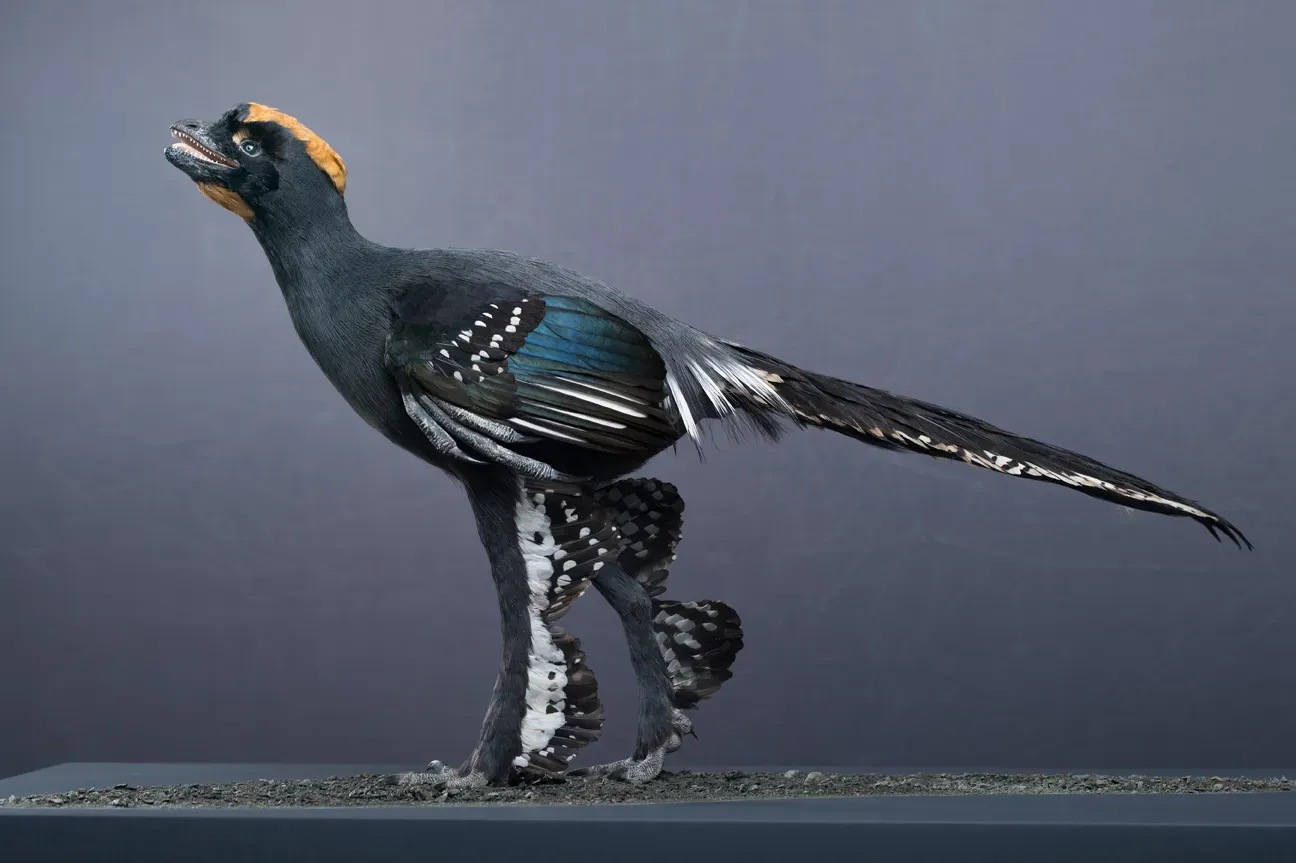
Here’s a detail that sounds small but completely reshapes the flight-origin story: some dinosaurs had wrist bones specifically shaped to fold their arms neatly against their bodies, decades before those same arms could ever generate lift.
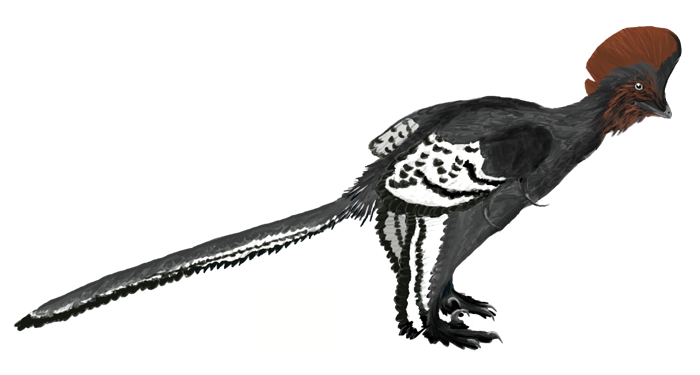
The dinosaur Anchiornis is the star example. Its wrist bone was so distinctly wedge-shaped that it could fold its arms flush to its sides, keeping long arm feathers up off the muddy ground while it walked. Modern birds use that exact same wrist mechanism today, drawing their wings inward during the upstroke of every single flap.
That means the precise folding motion birds rely on mid-flight already existed in an animal that spent its entire life on the ground. Evolutionary biologists call this exaptation – repurposing an old body part for a brand-new job. Nature didn’t design wings from scratch. It borrowed parts that were already busy doing something else entirely.
#6 – Using Proto-Wings to Balance and Brake, Not to Fly
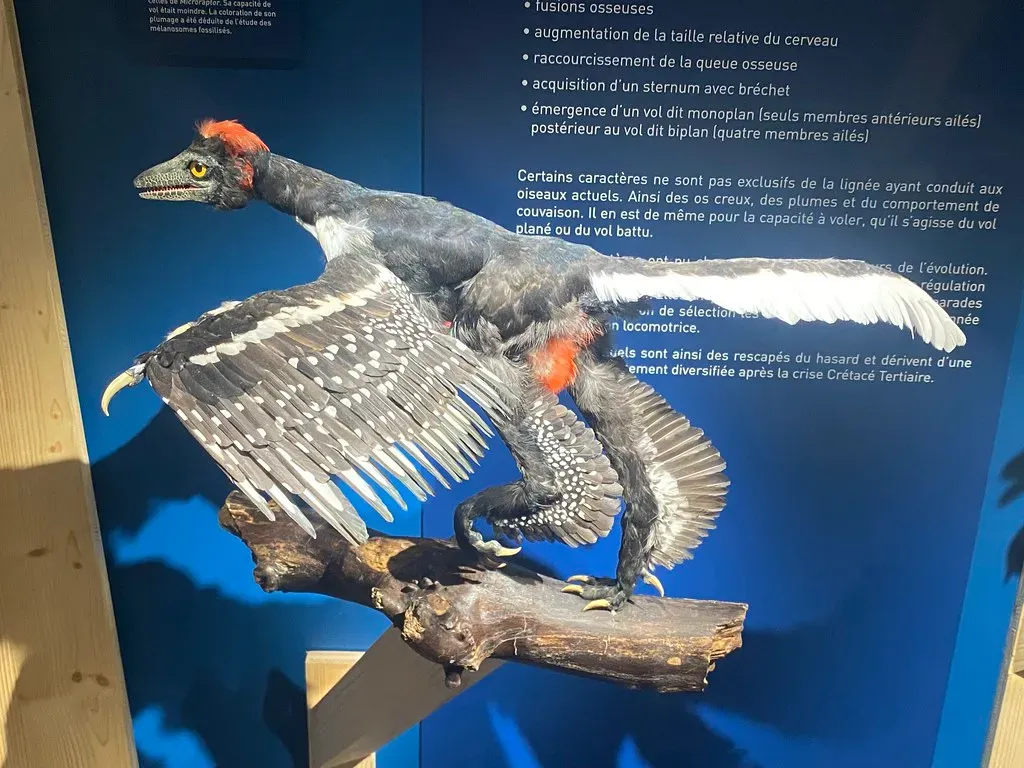
Long before feathered arms could generate lift, they were already doing serious mechanical work – just not in the air. Biomechanics researchers modeling early theropod movement found that flapping wasn’t even close to the first job these limbs performed.
Balancing and braking, not sustained flapping locomotion, likely drove much of the early evolution of the maniraptoran wing and the eventual flight stroke. Picture a sprinting dinosaur using its feathered arms the way a gymnast uses arms on a balance beam – correcting momentum, steadying a turn, controlling a sudden stop, all while both feet stayed firmly planted on solid ground.
It’s a detail that rarely makes it into flashy dinosaur documentaries, but it’s central to how scientists now believe the flight stroke slowly, almost accidentally, assembled itself piece by piece.
#7 – Scratching Out a Ground-Level “Dance Floor” to Win a Mate
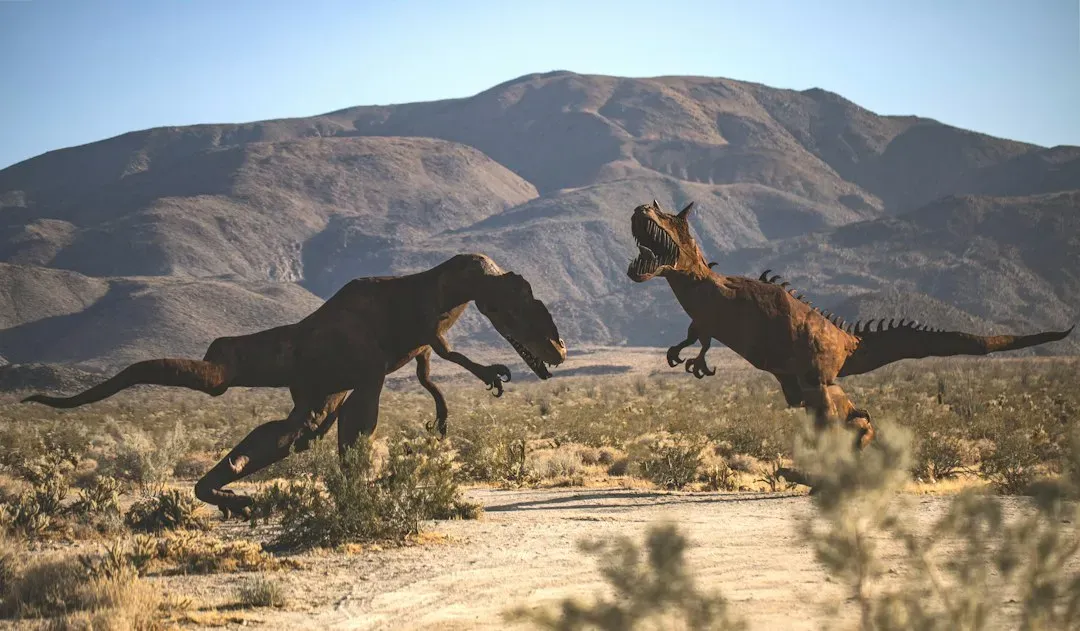
If you assumed lekking – the elaborate group courtship displays some birds still perform today, think sage grouse strutting in a circle – was a purely modern invention, the fossil record says otherwise, and the evidence is enormous, literally.
Massive scrape marks, some up to two meters wide, have been uncovered at Cretaceous sites across Colorado. These aren’t random claw drags. Researchers consider this widespread, repeated scraping behavior compelling evidence of “display arenas,” essentially prehistoric leks, occurring abundantly at multiple sites.
The trace-makers were most likely lekking species, seasonally active at large display grounds, engaging in what looks unmistakably like territorial courtship behavior. Multi-ton predators were scratching out mating stages in open dirt – the dinosaur equivalent of a modern prairie chicken’s strutting display – millions of years before flight existed anywhere on Earth.
Quick Compare
- Cretaceous display arenas: scrape marks up to two meters wide, made by multi-ton predators
- Modern lek species: sage grouse and prairie chickens still stage circular strutting displays on shared ground
- Shared pattern: both are seasonal, repeated, and tied to fixed display sites
- Key difference: the ancient “dancers” outweighed today’s lekking birds by literal tons
#8 – Nesting Shoulder-to-Shoulder in Crowded Colonies

Forget the image of a lone dinosaur guarding a single, isolated nest. Many species appear to have nested in tight-knit groups, clustered near shared display grounds, exactly like colonial birds do today.
Researchers studying those giant Colorado scrape sites noticed something telling: the display arenas most likely sat near nesting colonies, even where the actual nests themselves weren’t preserved. That pairing isn’t a coincidence.
Courtship arenas positioned right beside communal nesting grounds is exactly the pattern seen in modern colonial birds like penguins, gulls, and terns – species that breed in loud, crowded colonies for safety in sheer numbers. Group living, shared breeding turf, and coordinated seasonal timing were already wired into theropod biology long before any of them could simply fly away from danger.
#9 – Wrapping Feathered Arms Protectively Around a Clutch of Eggs
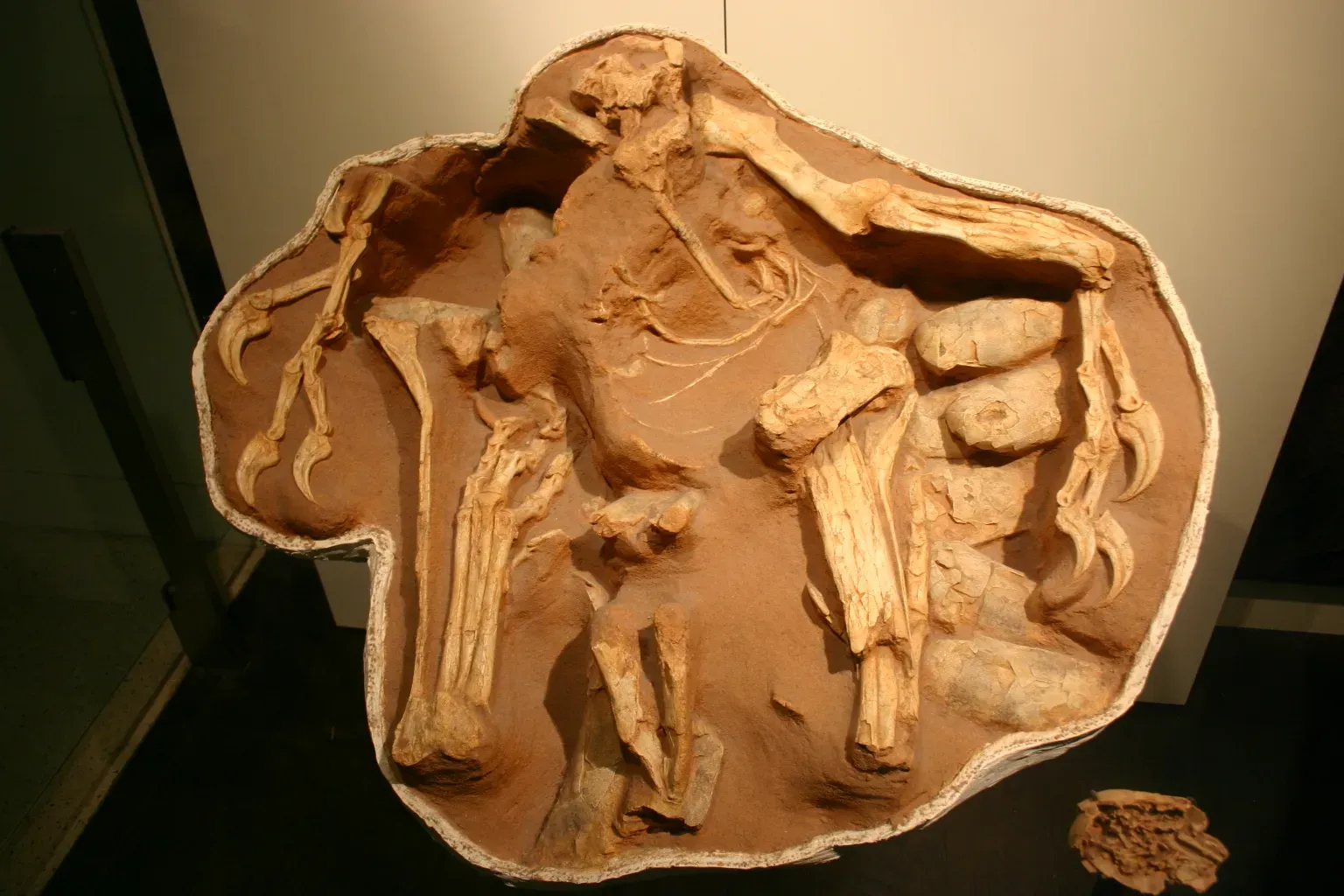
This is where the story stops being clinical and starts feeling genuinely emotional, even for people skeptical of “dinosaurs had feelings” headlines. A stunning fossil of an oviraptorid dinosaur called Citipati was discovered curled directly over a ring of eggs, forearms extended protectively around the entire clutch.
The pose is remarkably deliberate. The large adult skeleton sits at the exact center of an egg ring, arms wrapped around it like a shield. Even more striking: the eggs are widely spaced, and the adult appears to have carefully avoided sitting directly on top of them – likely to keep from crushing the eggs while still insulating them with feathered arms.
A shielding posture, not a crushing one. That’s not reptilian nest-guarding behavior at a distance – that’s the careful, deliberate body language of a parent who clearly understood exactly what was underneath it.
#10 – Sitting Belly-Down on Eggs for Direct Body Heat
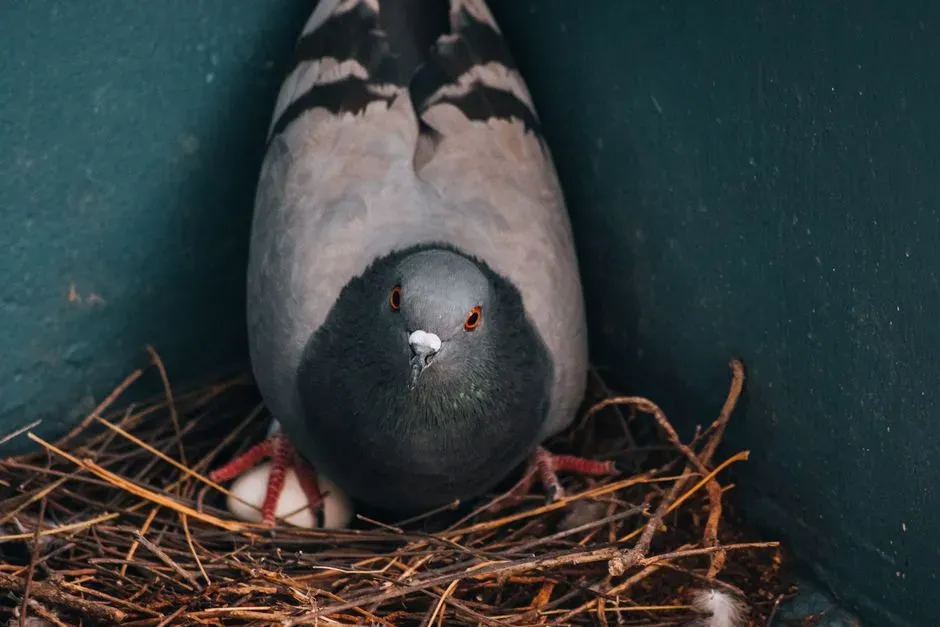
One evolutionary step past Citipati’s careful arm-shielding sits an even more advanced behavior: full-body contact incubation, nearly identical to how a chicken sits on her eggs today. Troodontids – a group positioned closer to true birds on the family tree – arranged their nests differently from oviraptorids.
Their eggs sat closer to the center of the nest, allowing the brooding parent to cover the entire clutch directly with its belly, transferring real body warmth in exactly the way most birds still do. This is contact incubation, full stop, in an animal that never once left the ground.
It’s arguably one of the strongest single pieces of behavioral evidence linking non-avian dinosaurs directly to modern nesting birds – a genuine behavioral bridge, not just a skeletal similarity.
At a Glance
- Oviraptorids (Citipati): eggs spaced wide, arms shield without direct body contact
- Troodontids: eggs centered tightly, allowing full belly-down contact incubation
- Modern birds: rely on that same direct body-heat incubation style
- Takeaway: incubation behavior appears to have evolved in gradual stages across theropod lineages
#11 – Laying Colored, Speckled Eggs Millions of Years Before the First Bird Nest

Ask most people and they’ll assume colorful eggs are a purely avian invention. They’re wrong, and the science behind it is remarkably specific. Researchers examining fossilized eggshells found actual preserved pigment residues locked into the shell structure itself.
Eggshell pigments show up only in theropods and their bird descendants – no other reptile group, living or extinct, has ever been shown to lay colored eggs. That makes it likely eggshell pigmentation evolved exactly once, in a shared ancestor of birds and advanced theropods.
The coloring likely served the same purposes it does now: camouflage against hungry predators, or signaling information to a mate or to offspring. Blue-green, speckled, mottled shells weren’t a bird invention at all. They were already sitting quietly in dinosaur nests.
#12 – Actually Incubating Eggs Instead of Just Guarding Them Like a Crocodile
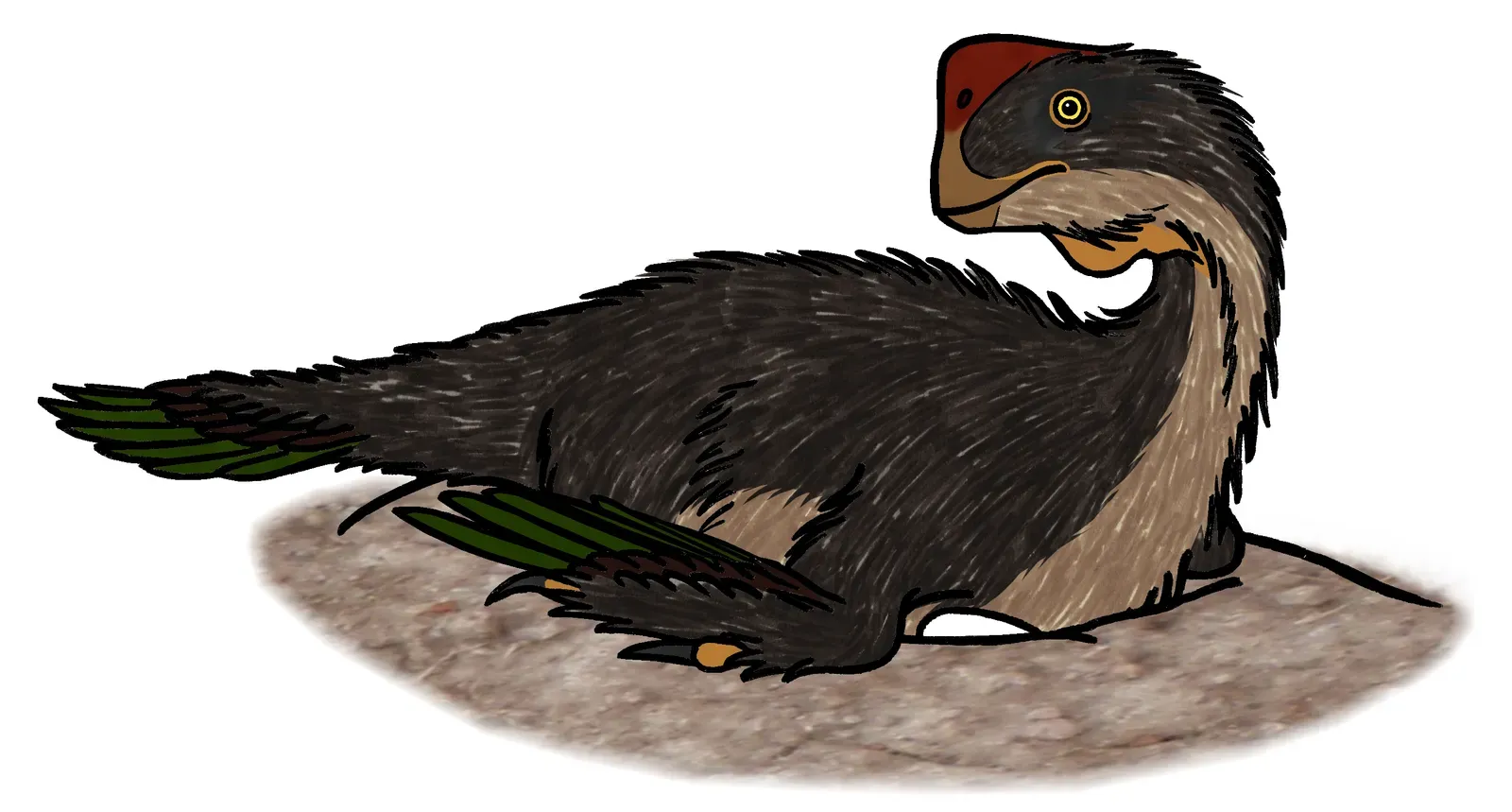
There’s a massive behavioral gap between guarding a nest and incubating one, and for a long time scientists assumed dinosaurs only managed the former, the same way modern crocodiles do. A 2021 discovery in southern China blew that assumption apart.
A 70-million-year-old oviraptorosaur was found sitting directly on a nest of 24 eggs, seven of which were on the verge of hatching, when it died mid-incubation. That’s not guarding behavior. Crocodiles bury eggs and patrol from a distance; this animal was sitting, warming, tending – exactly the way a hen does.
Seven of those eggs still had embryonic material inside them, making this the only fossil on record showing a dinosaur brooding on eggs that were actively developing. Real parental investment, not primitive reptilian guarding, and it predates any flying bird by tens of millions of years.
#13 – Curling Up and Tucking the Head Under an Arm to Sleep
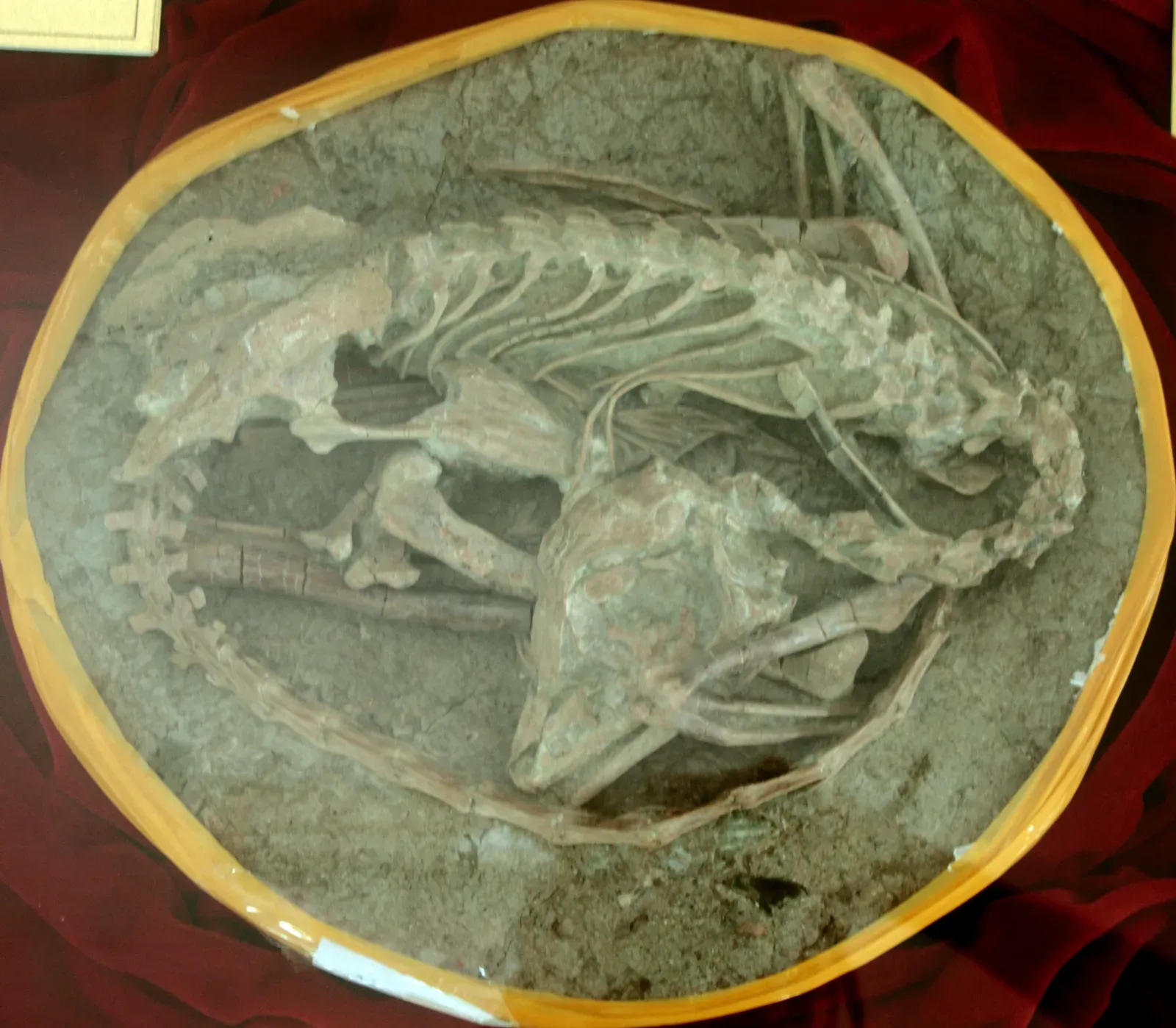
Saved for last because this one genuinely stops people mid-scroll. In 2004, paleontologists described a small, fully feathered dinosaur discovered curled up exactly the way a sleeping duck or pigeon rests today – forelimbs folded neatly bird-style against its body, neck curved so its small head tucked snugly between its elbow and its side.
The animal was even named for the pose. Mei long literally translates to “soundly sleeping dragon.” It wasn’t arranged after death for a photogenic fossil – it was buried instantly, mid-rest, in a sudden fall of volcanic ash, freezing the posture in place forever.
Scientists believe the pose served a real biological purpose beyond simple comfort. Curling up this way helps an animal ball up and conserve heat, and this specific heat-conserving posture supports the idea that at least some non-avian dinosaurs were warm-blooded, just like today’s birds. Later fossil finds from an entirely different group, the alvarezsaurs, showed the identical curled, tucked posture – suggesting this sleeping style ran deep and wide across the bird family tree, long before any of them could fly.
Worth Knowing
- Described in 2004 from a fossil site in China
- Name “Mei long” translates to “soundly sleeping dragon”
- Preserved instantly by a volcanic ash fall, locking in the exact life posture
- The same curled, tucked-head pose later turned up in alvarezsaurs, an unrelated dinosaur group
The Bottom Line
The evidence is genuinely hard to argue with at this point: flight was the last chapter of the bird story, not the first. Insulation, courtship display, camouflage, communal nesting, contact incubation, colored eggs, real parenting, even the exact shape an animal folds into for sleep – all of it existed in flightless, feathered dinosaurs long before wings ever lifted a body off the ground.
Flight didn’t create birds. It was bolted onto a creature that already behaved, in almost every meaningful way, like one. If you strip flight out of the equation entirely, you’re still left with something that struts, nests in colonies, guards its eggs with real tenderness, and curls up to sleep exactly like the sparrow outside your window does tonight. Maybe flight was never the defining bird trait at all – just the flashiest one. Which of these thirteen genuinely surprised you the most? That’s worth arguing about in the comments.