
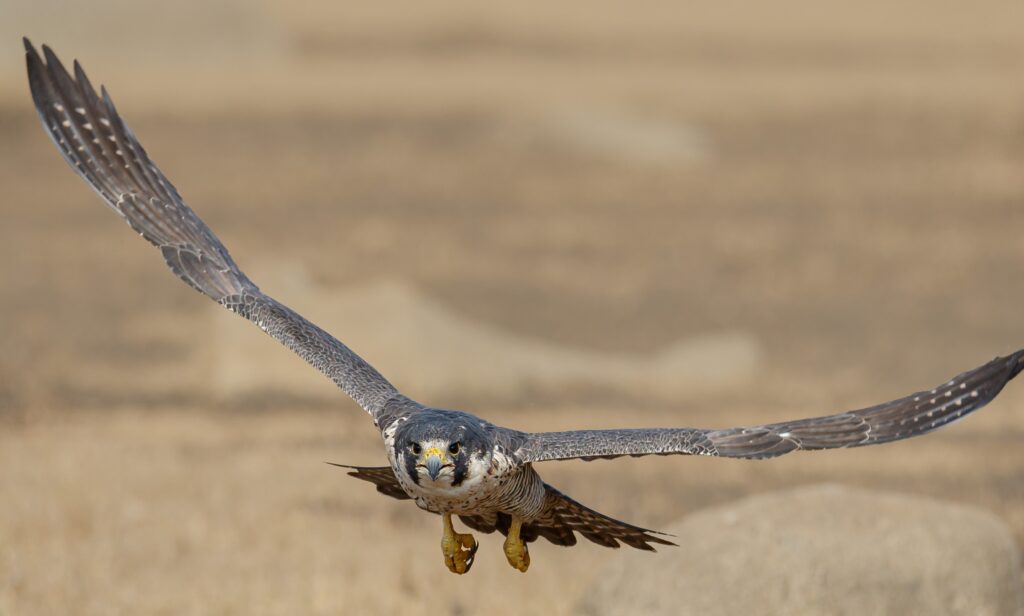
Most people assume a falcon’s dive is just fast flying. It’s not. A peregrine in a hunting stoop is arguably the most violent thing any living creature willingly does to its own body – pulling G-forces that would kill an untrained human, breathing air pressurized enough to collapse a set of lungs, and slamming into prey hard enough to snap bone on impact.
By every rule of physics and biology, this bird shouldn’t survive its own hunting style, let alone repeat it dozens of times a day for years on end. Scientists have spent decades picking apart exactly how a two-pound animal pulls this off without breaking – and the answers involve everything from jet-engine design to tears as thick as syrup. Here are the 12 things a falcon does at full speed that, by all logic, should be tearing it apart.
#1 – It Chases Prey at Nearly 70 MPH Using Muscle Power Alone
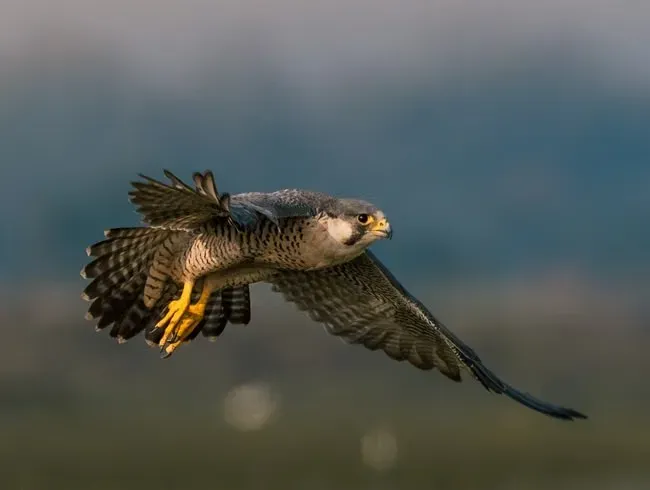
Before a peregrine even thinks about diving, it’s already breaking speed limits in level flight – and doing it entirely with flapping muscle, not gravity assist. In traveling flight, peregrines average 25-34 mph, but when pursuing prey they can push up to 69 mph. That’s a bird sustaining highway speeds using nothing but pectoral muscle contractions.
Here’s the part that doesn’t add up: this kind of sustained muscular output should cause severe lactic acid buildup and near-instant fatigue in a body this small. A falcon’s chest muscles make up a disproportionate share of its total body mass specifically to fuel this kind of sprint, the same way a cheetah is basically built around its hindquarters.
The falcon repeats this chase behavior multiple times a day, every hunting season, for years. There’s no recovery day built into a wild raptor’s schedule – it either eats or it doesn’t. And the sprint is just the warm-up. What happens to its lungs once it commits to the actual dive is even harder to believe.
#2 – It Breathes Air That Should Collapse Its Lungs
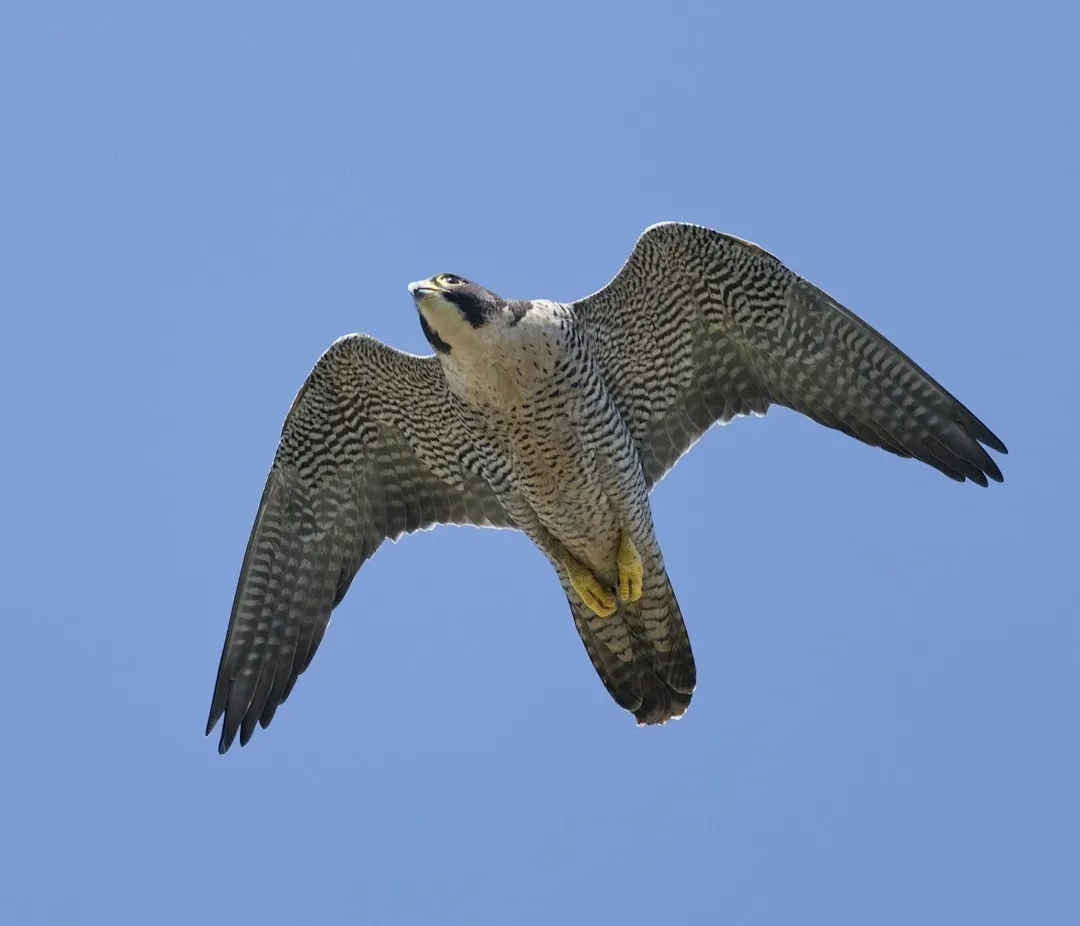
This is the one that keeps aerospace engineers up at night. At dive speeds, air isn’t gently flowing into the falcon’s nostrils anymore – it’s slamming in as a pressurized shockwave. That kind of wind pressure should make breathing nearly impossible and threaten real lung damage, which is why peregrines evolved cone-shaped bones inside their nostrils that deflect the shockwave before it ever reaches soft tissue.
Turns out, this single anatomical trick is so effective that jet engine designers copied it. Externally, peregrines have a small bony structure called a tubercle sitting in each nostril, acting as a baffle that forces incoming air to curve into a spiral instead of ramming straight into delicate lung tissue. That spiral flow is manageable in a way a direct blast of pressurized air never could be.
Fast Facts
- A bony tubercle sits inside each nostril, acting like a built-in baffle
- It forces incoming air into a spiral instead of a straight blast
- Spiral airflow prevents the shockwave from reaching soft lung tissue
- Jet engine designers later borrowed the same cone-shaped principle
Engineers eventually noticed the parallel to a real-world problem of their own. Jets moving at supersonic speeds often choke their own engines when airflow gets blocked at high velocity, so designers added a cone modeled on the falcon’s baffle to solve it. A bird solved a problem before Boeing did. Solving the airflow is one thing – keeping its eyes open through that same violence is a whole separate problem.
#3 – Its Eyes Stay Open in 200+ MPH Wind
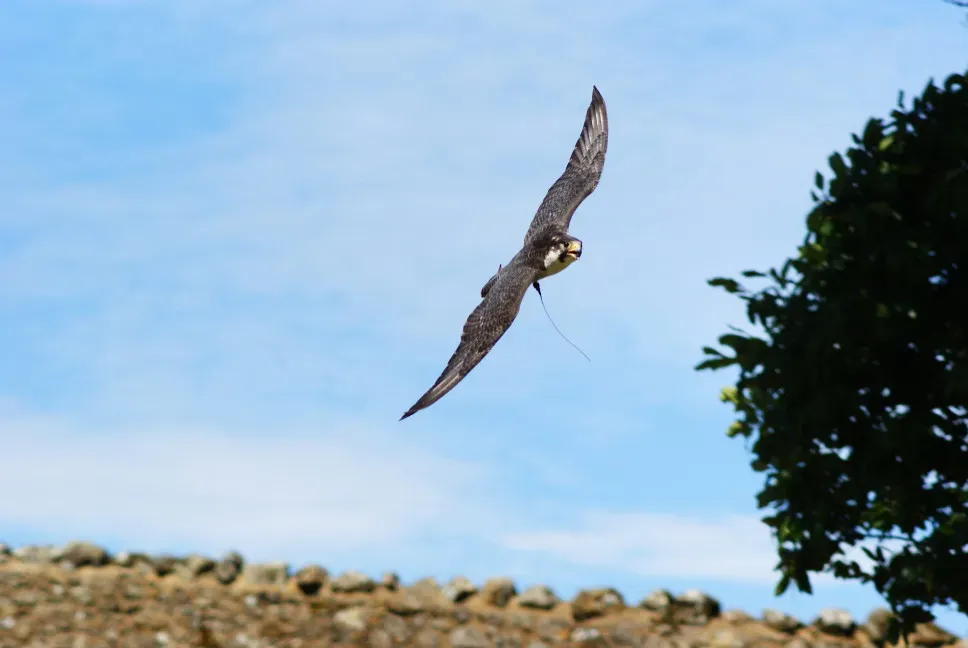
Try opening your eyes out of a car window at 60 mph and see how long you last. Now triple that speed while trying to track a moving target through it. The peregrine’s eyes are protected by a nictitating membrane – a clear third eyelid that sweeps horizontally across the eye, cleaning and moistening it while keeping vision intact through the entire descent.
Weirdly enough, the falcon isn’t even relying on regular tears to survive the dive. Its tears are as thick as maple syrup, a viscosity built specifically to resist the friction and dehydration of high-velocity wind shear. Ordinary tears would evaporate or blow off the eye instantly; this syrupy formula clings to the surface instead.
Most raptors have some form of protective membrane, but few combine it with this kind of viscous tear reinforcement while still maintaining the visual acuity needed to track erratically moving prey. This isn’t passive protection – it’s active engineering happening in real time, mid-fall. Vision is one signature of the dive; the sound of it is a different kind of unsettling.
#4 – Its Feathers Vibrate Loud Enough to Hear From the Ground
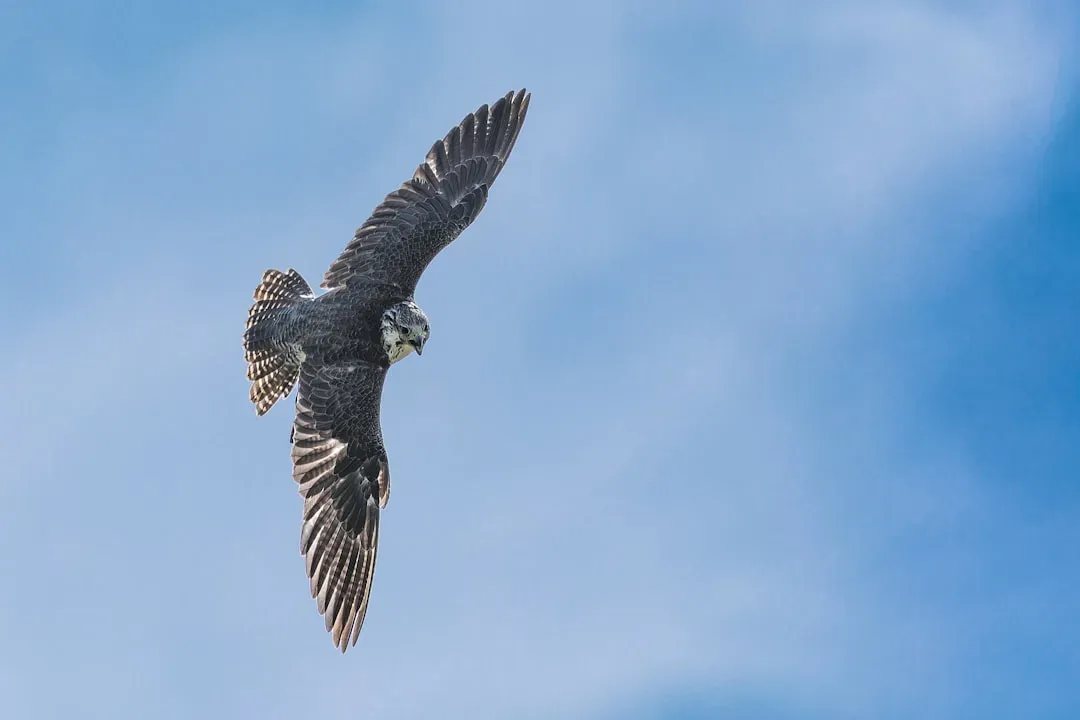
A falcon in a full stoop doesn’t fall silently. Witnesses on the ground have reported hearing the dive before they even spot the bird, describing the sound as feathers vibrating loud enough to resemble tearing a sheet of canvas.
In almost any other flying structure, this exact vibration would be a five-alarm warning sign. On an aircraft wing, high-frequency flutter like that is usually the precursor to fatigue cracking and eventual structural failure. On a falcon, the stiff, compact feather structure absorbs and channels the vibration instead of tearing apart under it.
The sound itself is a byproduct of air moving so fast across individual feather vanes that it creates audible turbulence. Falconers have used that “tearing” sound for centuries as an auditory cue that a bird has fully committed to a stoop, long before radar guns ever existed. Sound is one signature of the dive; shape-shifting mid-fall is another, and far stranger.
#5 – It Reshapes Its Entire Body Mid-Fall Without Losing Control
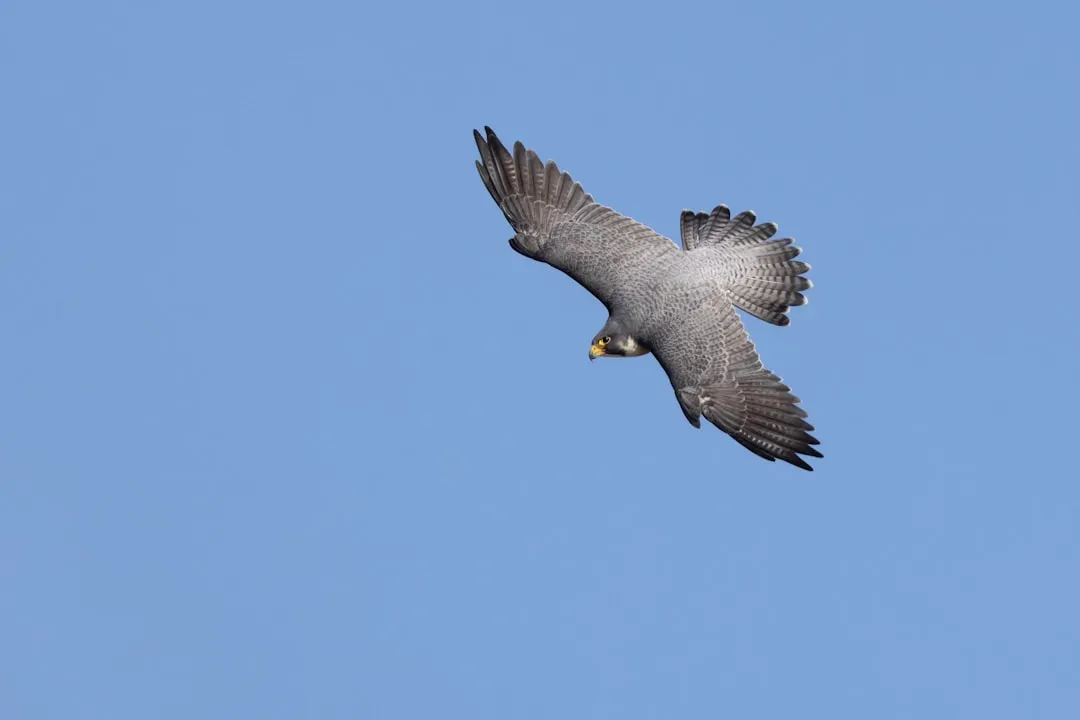
A falcon doesn’t dive in one fixed shape. It actively morphs its silhouette multiple times during a single stoop, adjusting in real time as speed builds – a classic diamond wing shape up to roughly 190 km/h, followed by a tight vertical tuck as speed climbs toward 240 km/h.
Here’s the unsettling part: the bird is essentially redesigning its own aerodynamics on the fly, at speeds where a fraction-of-a-second miscalculation means a fatal tumble. High-resolution imaging of diving peregrines shows feathers popping up in exactly the regions where airflow separation occurs in wind-tunnel models, meaning the bird is actively managing turbulent zones across its own body mid-fall.
This isn’t instinctive twitching. It’s continuous shape adjustment happening faster than human reaction time could ever process. Any commercial aircraft attempting this kind of mid-flight structural reconfiguration would need a full engineering team and hours of wind-tunnel testing. Morphing its body is impressive – but the raw number it hits while doing so is what actually made headlines.
#6 – It Hits a Recorded Top Speed of 242 MPH
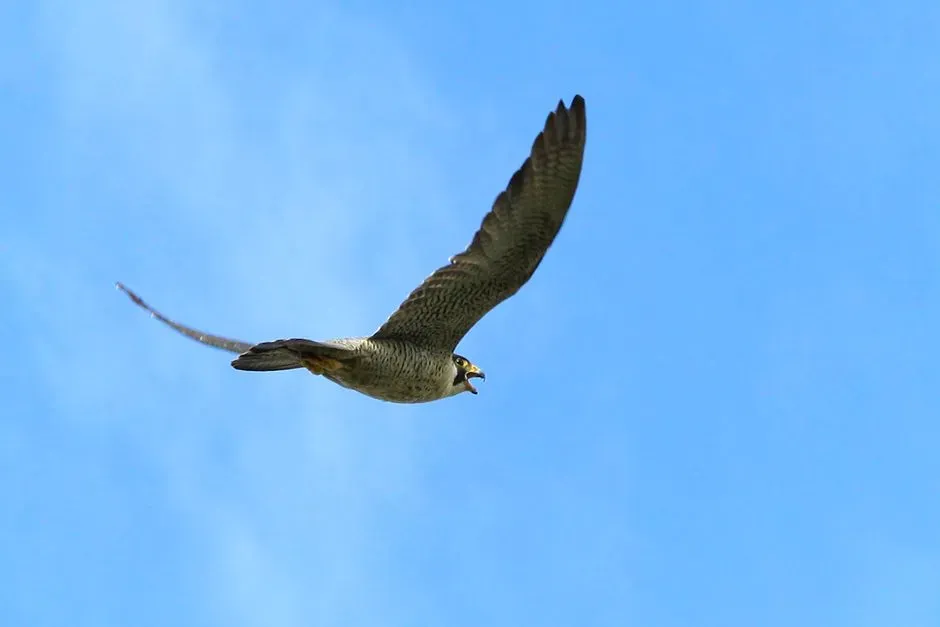
This is the number that put the peregrine falcon in the record books as the fastest animal on the planet – faster than a cheetah, faster than a sailfish, faster than anything else with a pulse. Peregrines routinely exceed 200 mph in a stoop, and one research team clocked their study bird at a staggering 242 miles per hour.
Even Guinness World Records had to double-check this one. The peregrine falcon holds the title of fastest animal on Earth, and Guinness confirmed a 2005 recording of one traveling more than 380 km/h during a stoop – a number that still sounds fictional on paper.
Quick Compare
- Peregrine falcon (stoop): up to 242 mph
- Cheetah (land sprint): roughly 70 mph
- Sailfish (swimming burst): roughly 68 mph
- Pronghorn antelope (sustained run): roughly 55 mph
To put that in perspective: it’s faster than most cars on a highway, faster than a race car navigating a straightaway, and roughly a third of the speed of sound. A creature weighing barely more than a bag of sugar is hitting speeds that would total most vehicles on impact. Speed alone earns the record; what that speed does to the falcon’s body during a turn is the real danger.
#7 – It Pulls G-Forces That Would Kill an Untrained Human
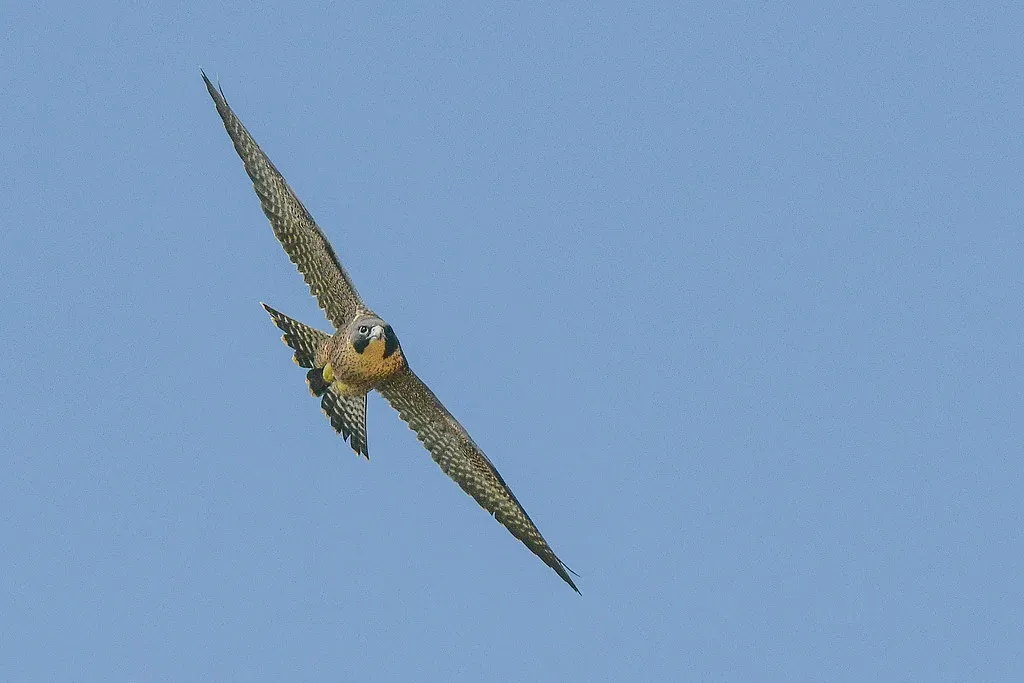
Speed alone isn’t the scary part – it’s what happens when the falcon has to change direction or pull out of that dive. By the end of a stoop, deceleration and turning forces can spike to a brutal 25 G’s.
Here’s how far beyond human tolerance that actually is: fighter pilots without G-suits typically black out around 9G, meaning the falcon is casually pulling more than double that, unassisted, with no pressurized suit and no training regimen. A human pilot in a multi-million-dollar aircraft still can’t safely handle what a wild bird does for a living, on instinct.
At 25Gs, blood should be forced away from the brain, vision should fail, and organs should be crushed against the skeletal cavity. Somehow, none of that happens to the falcon in any lasting way. Surviving the G-force is one battle – turning sharply while under it is an entirely different physics problem.
#8 – It Executes Sharp Aerial Turns Using Self-Generated Vortices
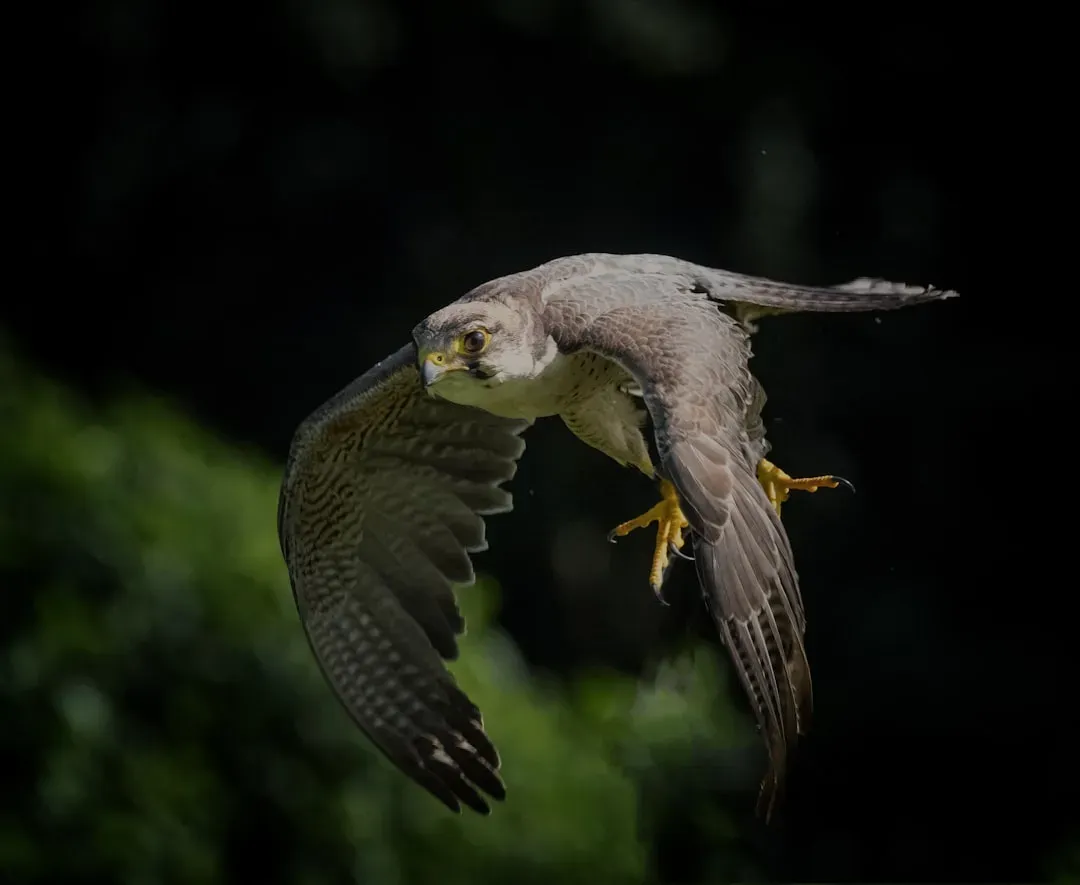
Diving straight down is one thing. Diving, then suddenly banking hard to correct for a moving target while still at extreme speed, is another category of physics entirely – and researchers found the falcon isn’t relying on raw wing strength for this at all.
Secretly, the falcon is generating its own miniature tornado system to stay stable. Its superior maneuverability during a stoop comes from vortex-dominated airflow created by the M-shaped wing configuration it adopts late in the dive. Wind-tunnel testing on life-size models confirmed vortices peeling off the frontal and dorsal regions of the bird, driven by a strong spanwise airflow pattern.
In plain terms: the falcon deliberately creates swirling air pockets around its own wings to boost control at speeds where a normal wing shape would simply stall out. It’s the same principle behind vortex generators on modern fighter jet wings – except the falcon figured it out through evolution, not a supercomputer. Staying stable is only half the job; landing the actual hit is where things turn violent.
#9 – It Strikes Prey at Full Speed With a Blow That Should Break Its Own Body
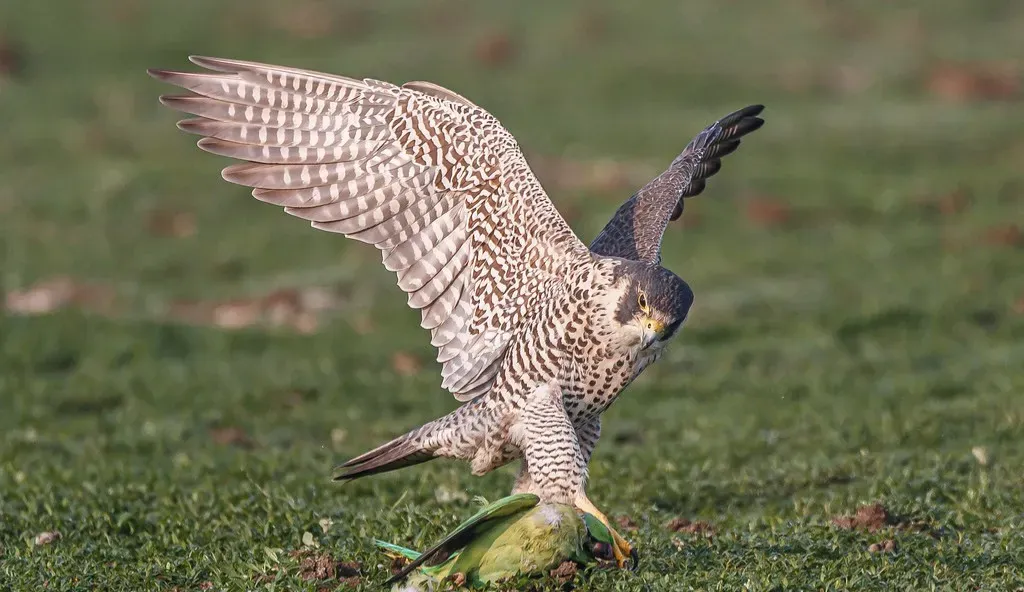
The falcon doesn’t gently grab its prey out of the air. It hits it – hard – with clenched talons at or near full dive speed, and this collision is by far the most violent single moment of the entire hunt.
There’s a very specific, self-preserving reason the falcon avoids full contact grappling. Peregrines aim not to catch prey outright but to knock it out with a direct strike and grab it as it falls; if the target is too heavy, they’ll simply eat it wherever it lands. This strike-and-release tactic keeps the falcon’s own wings and body from tangling with a struggling target while both are moving at combined speeds well over 200 mph.
Worth Knowing
- Falcons rarely try to grab prey outright mid-air – they stun first
- Combined closing speeds during a strike can exceed 200 mph
- Prey too heavy to carry is simply eaten wherever it lands
- This strike-and-release method protects the falcon’s own wings from injury
Think about the physics for a second: two bodies colliding at speed transfer massive force in both directions, not just onto the target. A single miscalculated strike angle could easily mean a broken wing or a dislocated leg for the falcon itself. The impact alone should break bones – here’s what’s quietly holding the skeleton together.
#10 – Its Skeleton Absorbs Shock While Weighing Almost Nothing
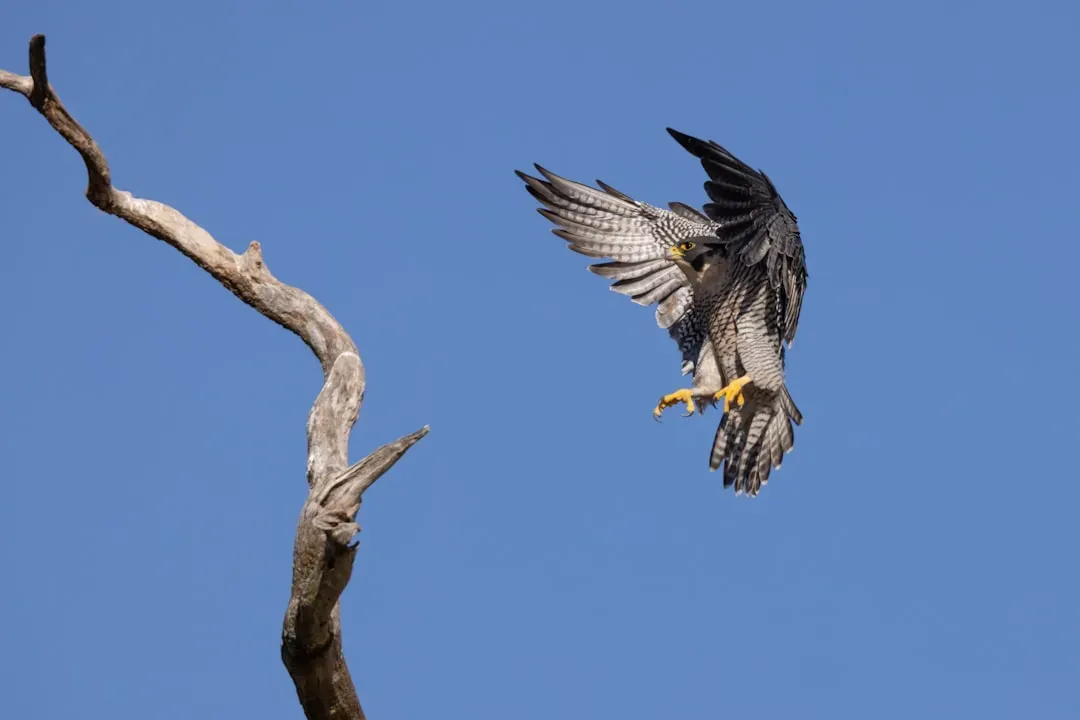
Here’s the part that seems almost contradictory: the same skeleton that survives a 25G pull-out and a violent mid-air strike is astonishingly light. This isn’t a heavily armored animal – it’s the exact opposite.
Turns out, the falcon’s survival trick is being simultaneously fragile-looking and structurally over-engineered. Its skeleton represents only 7-8% of total body weight, roughly 1.5 pounds, yet it’s built from hollow, strut-like bones reinforced against fracture during high-G maneuvers. That’s an aerospace-grade design philosophy showing up in a bird that predates human engineering by millions of years.
Anchoring all of it is a large keel bone running down the center of the chest, giving powerful flight muscles a wide, stable base to attach to instead of concentrating stress on one point. Without it, the violent muscle contractions needed to recover from a stoop would likely tear straight through soft tissue. A tough skeleton means nothing, though, if the engine inside can’t keep up – and that engine is running in the red zone.
#11 – It Burns Fuel at a Rate That Should Trigger Cardiac Failure
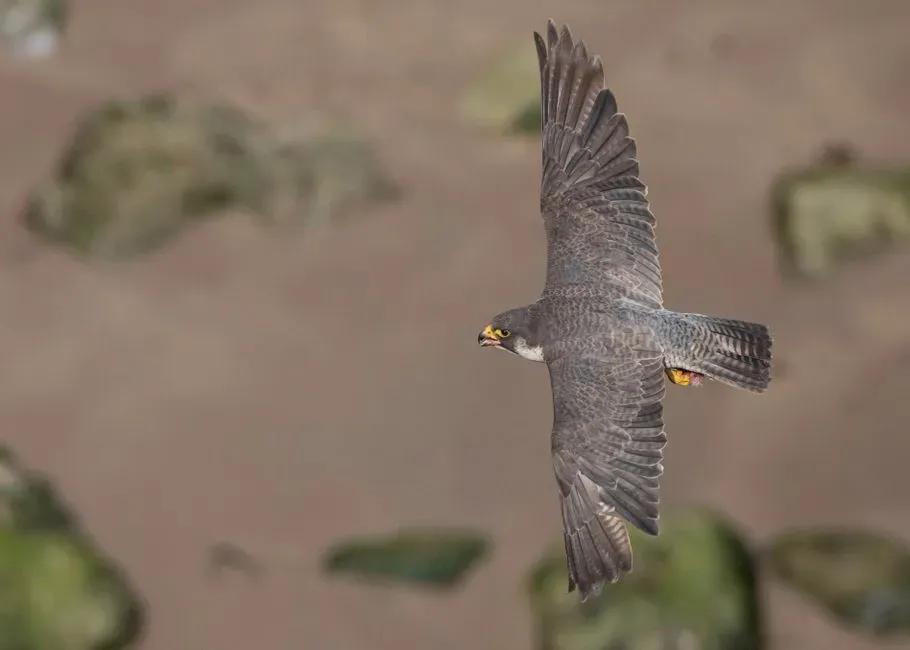
A stoop isn’t a leisurely glide – it’s an all-out metabolic explosion happening in seconds, and the falcon’s internal chemistry has to keep pace with speeds that would spike a human heart rate into dangerous territory almost instantly.
Most people don’t realize the falcon’s muscles are burning fuel at a rate that rivals one of the fastest land predators on Earth. During a dive, muscle tissue consumes ATP at rates comparable to a sprinting cheetah, drawing on both aerobic and anaerobic pathways simultaneously. That’s an enormous metabolic demand for an animal that weighs a fraction of what a cheetah does, meaning the strain per ounce of body mass is arguably even more extreme.
At a Glance
- ATP burn rate during a dive rivals a sprinting cheetah
- Aerobic and anaerobic energy pathways fire at the same time
- Air sacs store extra oxygen reserves for sustained exertion
- Unidirectional airflow helps prevent oxygen debt and blackout
To keep up without simply running out of oxygen mid-dive, the falcon relies on a respiratory system unlike anything found in mammals – unidirectional airflow paired with air sacs that store extra oxygen for sustained exertion. This isn’t a lucky adaptation; it’s a completely different breathing architecture built specifically to prevent the kind of oxygen debt that would otherwise end the dive in a blackout. After all that punishment, you’d expect a long recovery. What actually happens next might be the most unbelievable part of this entire list.
#12 – It Goes Right Back to Hunting Minutes After Nearly Killing Itself
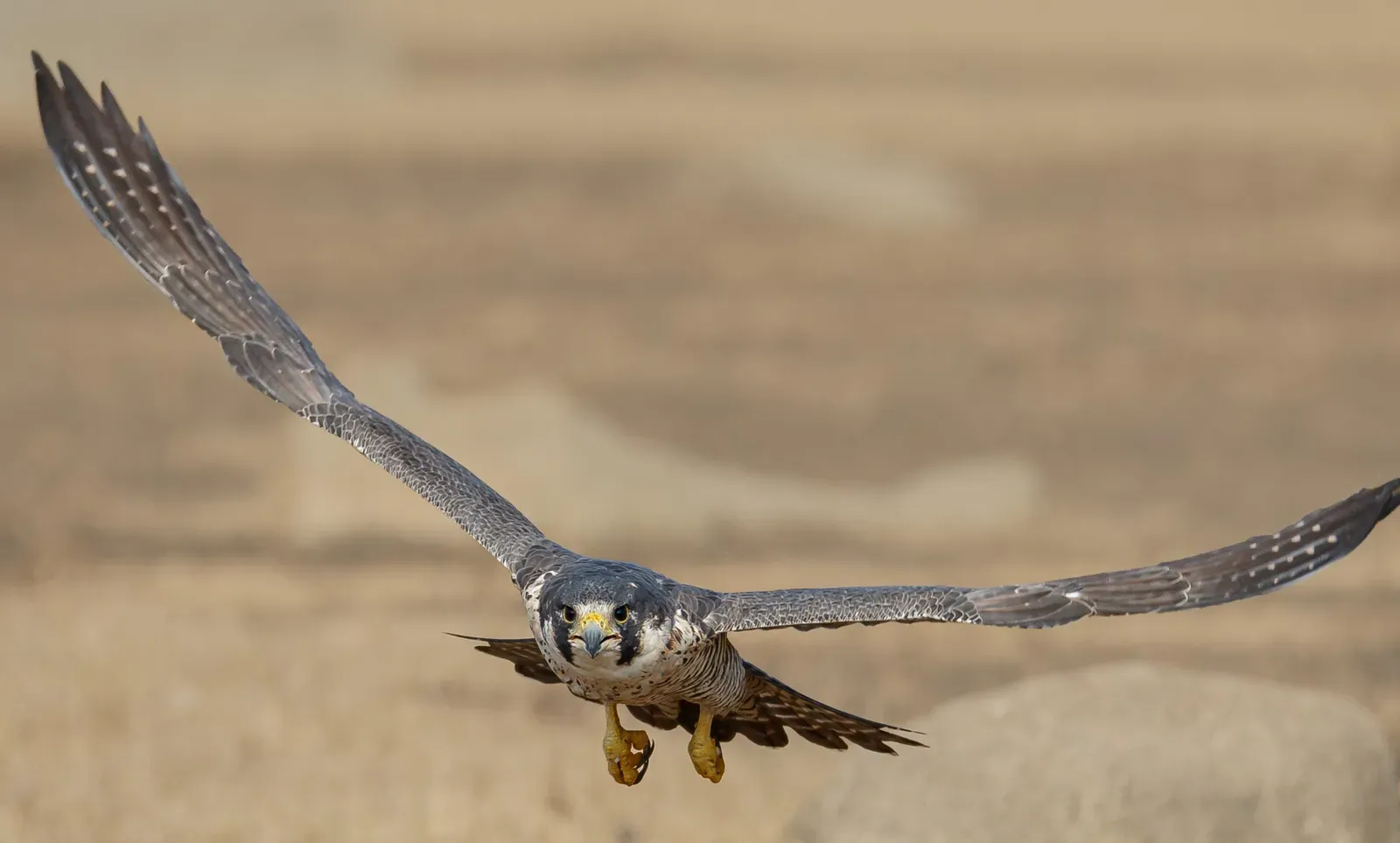
This is the fact that genuinely surprises even people who’ve read every other point on this list. After all of that – the 242 mph descent, the 25 Gs, the mid-air impact, the anaerobic burn – the falcon doesn’t need days to recover. It needs minutes.
Finally, here’s the detail that should honestly be impossible: full recovery happens almost as fast as the dive itself. After a high-speed stoop, a falcon typically needs only 5-10 minutes of rest to normalize heart rate and oxygen levels before it’s ready to hunt again. Compare that to a human athlete after a maximal sprint, who usually needs far longer just to bring their heart rate back to baseline, let alone repeat a life-threatening physical feat.
The reason the peregrine falcon captures our imagination is simple: they are the fastest animal on the planet, but the way they achieve that speed is at least as remarkable as the number itself.
Robert DeCandido, ornithologist
This rapid-reset ability is arguably the most underrated adaptation on this entire list, because it means the falcon isn’t just surviving one violent stoop – it’s biologically built to repeat that violence multiple times a day, every day, for its entire hunting life. While most people assume the dive itself is the impressive part, the real marvel may be a cardiovascular and respiratory system efficient enough to shrug off near-lethal stress in less time than it takes to microwave a meal.
The Bottom Line
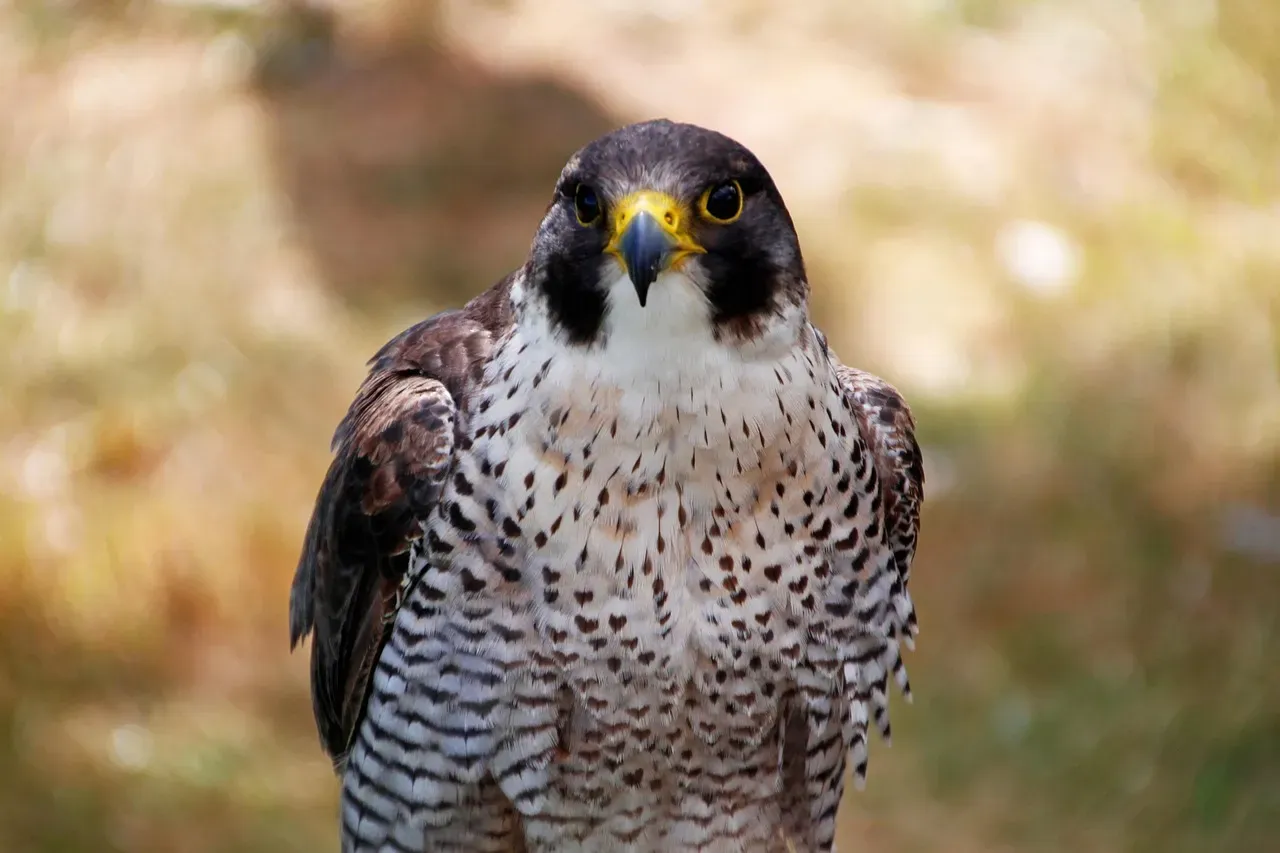
Nothing about a peregrine falcon’s stoop should work. A 242 mph dive, 25 Gs of force, shockwave-level air pressure through its nostrils, and a full-speed mid-air collision would end almost any other animal instantly. Instead, evolution engineered a lightweight skeleton, a jet-inspired breathing system, syrup-thick tear film, and a metabolic engine that resets itself in minutes rather than days.
The peregrine isn’t just fast – it’s a two-pound argument against nearly every rule of physiology we take for granted. And maybe that’s the real takeaway here: nature didn’t just build the fastest animal alive, it built one that should be dead every time it hunts, and simply refuses to be.