
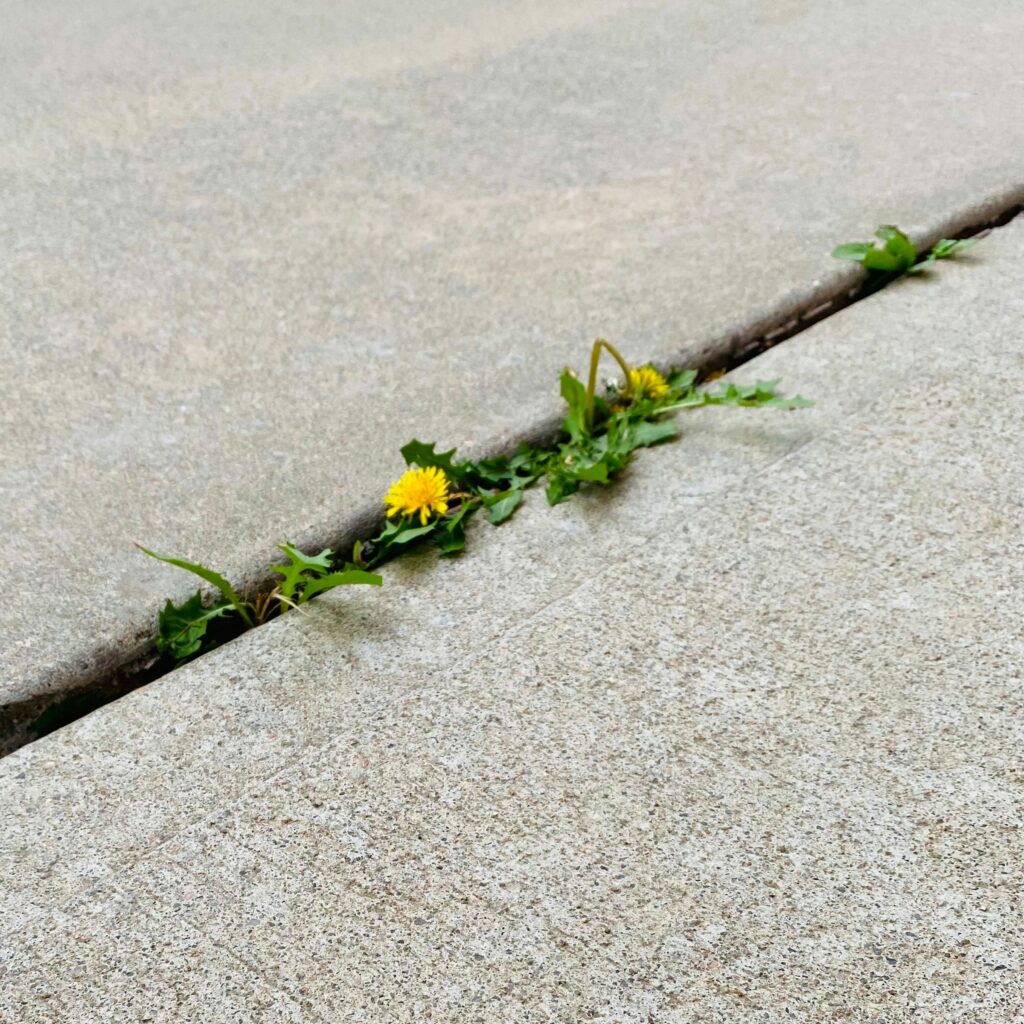
There’s something slightly shocking about life pushing up through dead-looking concrete. You park your car, step out, and there it is: a tiny forest in a crack, a mushroom colony on the sidewalk, a small but determined thistle waving at passing traffic. It feels wrong, almost rebellious, like nature is quietly ignoring every plan humans ever drew on a city map. The wild part? A lot of what you see thriving in those cracks is not just tough; it absolutely should not be there. Some of it is invasive, some structurally damaging, some potentially harmful to people and pets. Yet, ledges full of dust and a few drops of rain are somehow enough for these species to get a foothold and spread. Think of pavement cracks as accidental micro-ecosystems: hotter, drier, and more compacted than most natural soils, but still full of tiny pockets where seeds, spores, and roots can sneak in. The fact that anything survives there is impressive. The fact that the same repeat offenders keep showing up is a story about evolution, pollution, and how cities secretly become wild again. Let’s dive into twelve types of life that are weirdly good at turning your driveway, sidewalk, and parking lot into their personal habitat – despite the fact that, by all logic, they shouldn’t make it there at all. —
#1 Dandelions: The Cheerful Street Survivors
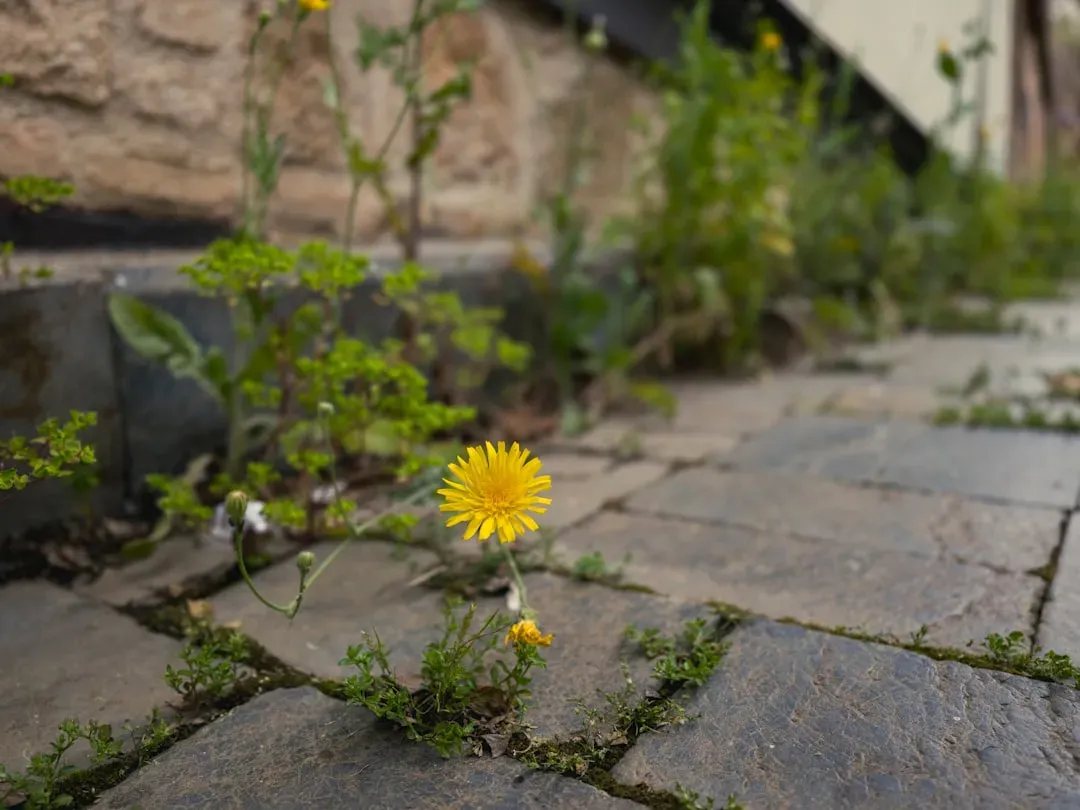
Dandelions look innocent, almost charming, with their sunny flowers and fluffy seed heads. But under a slab of concrete, they are ruthless strategists. Their taproots can plunge deep into compacted soil beneath pavement cracks, anchoring tightly enough that when you try to yank one out by hand, you usually just snap off the top and unintentionally help it regrow.
Those famous seed heads are basically parachutes built for urban chaos. The seeds ride breezes down streets, get trapped in curb edges, and lodge perfectly into the tiniest fractures in asphalt or concrete. A bit of dust and organic debris gathers, rain seeps in, and suddenly the crack becomes a narrow flower bed. The plant’s deep roots then act like tiny wedges, slowly prying the pavement apart over time.
Dandelions also tolerate abuse most plants would not survive: road salt, dog urine, trampling, and bursts of heat from sun-baked pavement. Their leaves sit low against the ground, dodging lawnmower blades and creating a rosette that channels water toward the root. So while people fight them in lawns, dandelions quietly colonize the exact spots we assume are most plant-proof – driveways, sidewalks, and the middle of parking lots.
—
#2 Moss: The Velvet Carpet of Neglected Cracks
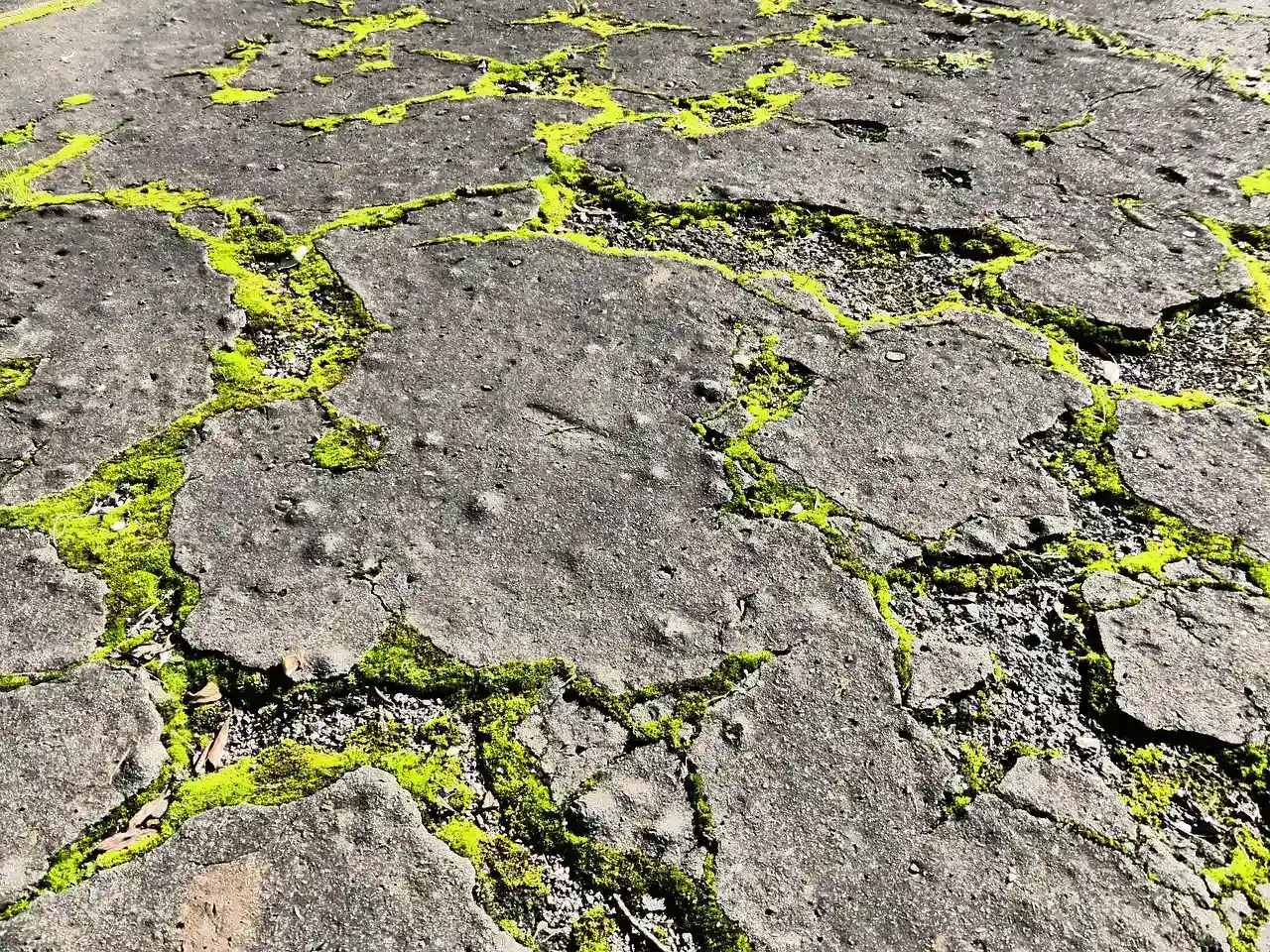
If you have ever noticed a soft, green cushion creeping along a shady sidewalk, you’ve met moss. What makes moss so surprising in pavement cracks is how little it needs. It has no real roots, just tiny structures that anchor it to a surface, so it can grow on bare concrete as long as there is moisture and a bit of fine dust for nutrients.
Moss thrives where other plants fail: damp, shaded, compacted spaces with very thin layers of soil. Pavement cracks near downspouts, low spots where water pools, or shady alleyways are perfect. It absorbs water like a sponge and dries slowly, which is why those mossy patches can stay damp long after the rest of the pavement has dried out completely.
From a human perspective, moss in cracks is sneaky. It can make surfaces slippery when wet and signals that water is lingering where it shouldn’t. That often means the pavement is already breaking down, letting water seep deeper and widen cracks. The irony is that moss does not attack concrete directly, but it thrives on the very conditions that cause asphalt and cement to crumble.
- Appears in damp, shady, low-traffic areas
- Grows on almost no soil, just dust and moisture
- Signals underlying moisture problems in pavement
—
#3 Tree Seedlings: Future Giants in Tiny Gaps
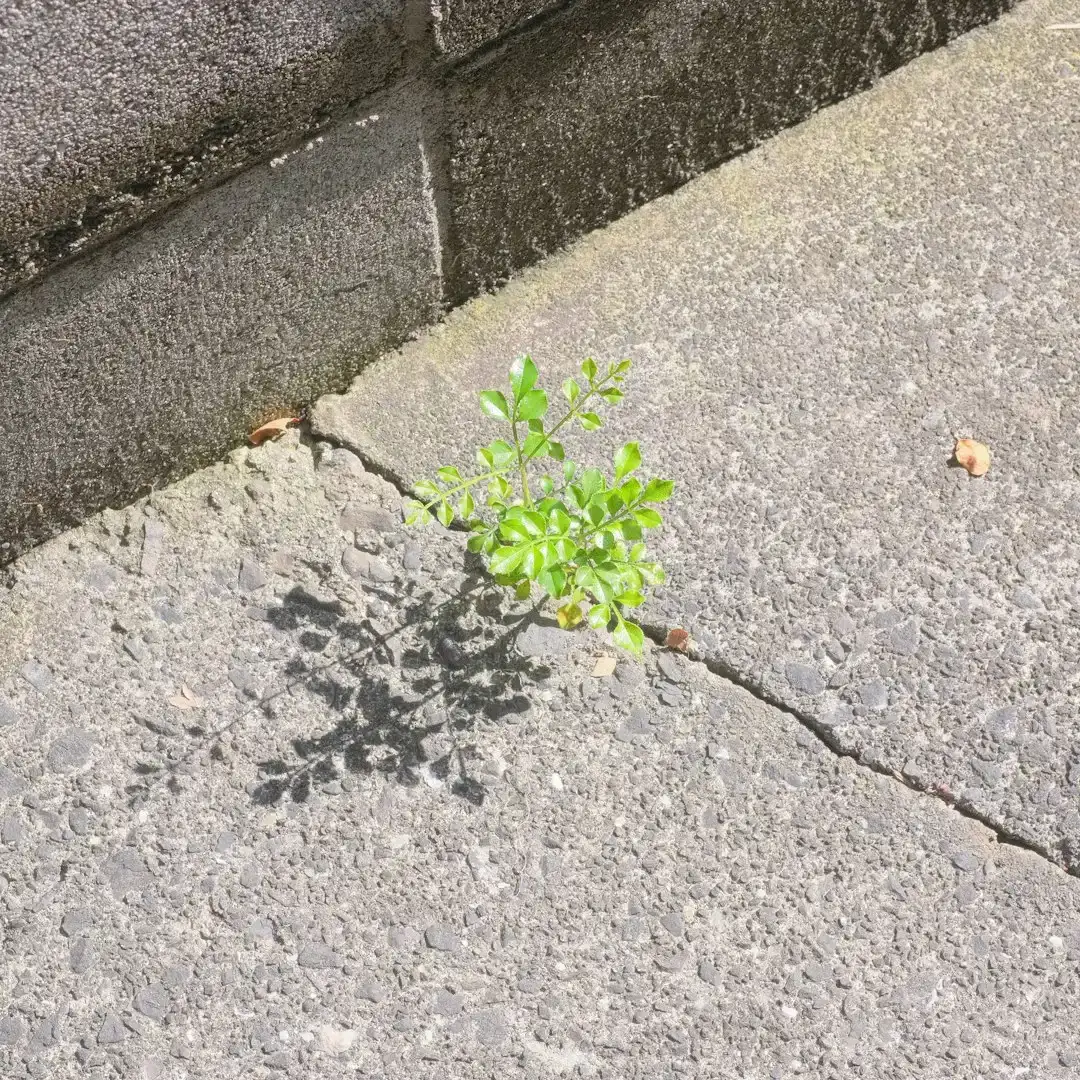
Few sights are as absurd as a baby maple or oak tree defiantly poking out of a hairline crack in a driveway. Trees are supposed to need deep soil, space, and stability, yet their seedlings pop up in the most unforgiving corners of urban pavement. The trick is that their seeds are built for travel and patience – they can sit dormant until just enough moisture and debris gather in a crack to allow germination.
Once a seedling takes hold, the real engineering problem begins. Tree roots naturally seek out moisture lines, and in cities those often run right under sidewalks via small fractures or poorly sealed joints. As the roots thicken, they slowly exert pressure on the concrete from below, lifting slabs and creating trip hazards, uneven steps, and buckled curbs.
Most of these seedlings should not survive more than a season in such hostile nooks, but many do because people ignore them when they are small. Over time, that “cute” little sapling in the crack can become a serious problem. I once watched a neighbor ignore a sapling for years until it was taller than their fence and had literally lifted one corner of the concrete path. Removing it then meant saws, digging, and repair work that would have been completely avoidable.
—
#4 Plantain Weeds: Footpath Specialists
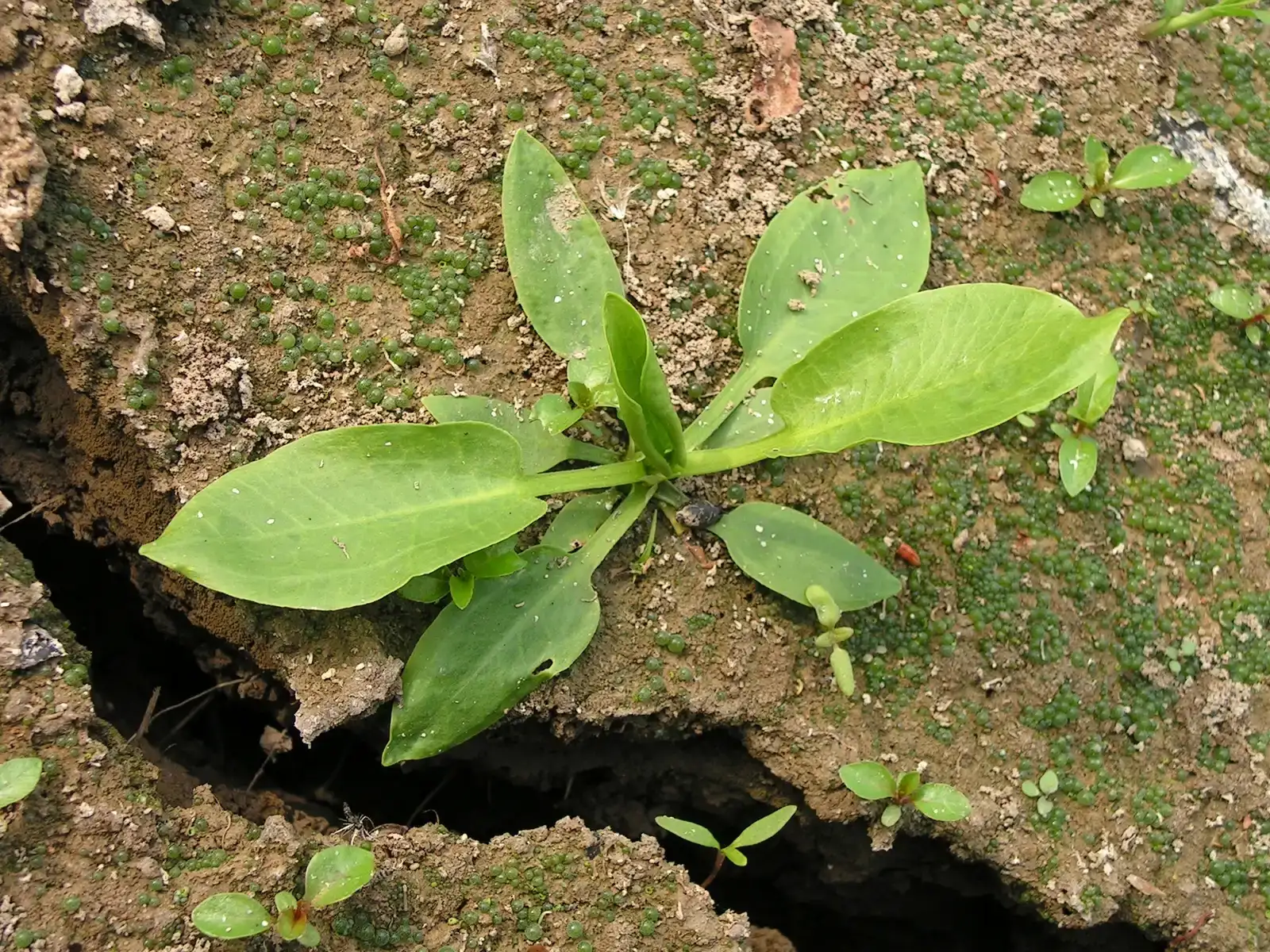
Narrowleaf and broadleaf plantain weeds are the quiet workhorses of disturbed ground. Their natural home is compacted soil, like trails and animal paths, which makes pavement cracks an almost perfect substitute. Their rosette of leaves stays low and wide, hugging the ground so tightly that shoes and tires simply glide over them.
These plants send down surprisingly tough roots that can navigate tightly packed sub-layers beneath pavement. The cracks accumulate dust, bits of organic matter, and sand, and plantain slips its roots through these gaps, extracting just enough nutrition to survive. What really helps them is their ability to tolerate repeated damage; their leaves can be torn, flattened, and chewed, and they still bounce back.
They spread through small, hard seeds that stick to shoes, bike tires, and animal fur. Every time someone walks through a plantain patch and then steps across a parking lot, they are basically hand-delivering seeds right into the gaps. It is almost like the plant has evolved for sidewalks: tough, low, and stubbornly persistent in places where other species cannot handle the stress.
- Prefers compacted, disturbed ground – exactly like pavement edges
- Low rosette growth avoids mowing and crushing
- Hard seeds hitchhike on shoes, boots, and tires
—
#5 Creeping Bermudagrass: The Asphalt Invader

Bermudagrass is notorious on lawns and sports fields, but seeing it snake through the seams of a driveway is another level of persistence. It spreads aggressively through both seeds and underground stems called rhizomes, plus aboveground runners called stolons. Any tiny crack it finds near a lawn or roadside strip becomes a pathway for it to march across the hardscape.
Once established in a crack, Bermudagrass behaves like reinforced wire threading through concrete. Those rhizomes move laterally beneath the surface, exploiting weaknesses and helping the plant survive heat, drought, and mowing. That is why you often see it thriving in the seams between slabs long after the adjacent lawn has browned out from neglect or drought.
It also resists many casual control efforts. Simply tearing out the visible blades barely slows it down, because the rhizomes and stolons remain buried in the gaps. The grass is adapted to hot climates, which makes sun-baked pavement an advantage rather than a threat. The fact that a turf species can use narrow concrete joints as its private highway says a lot about how thoroughly it has adapted to human-made environments.
—
#6 Thistles: Armored Pioneers in Concrete Wastelands
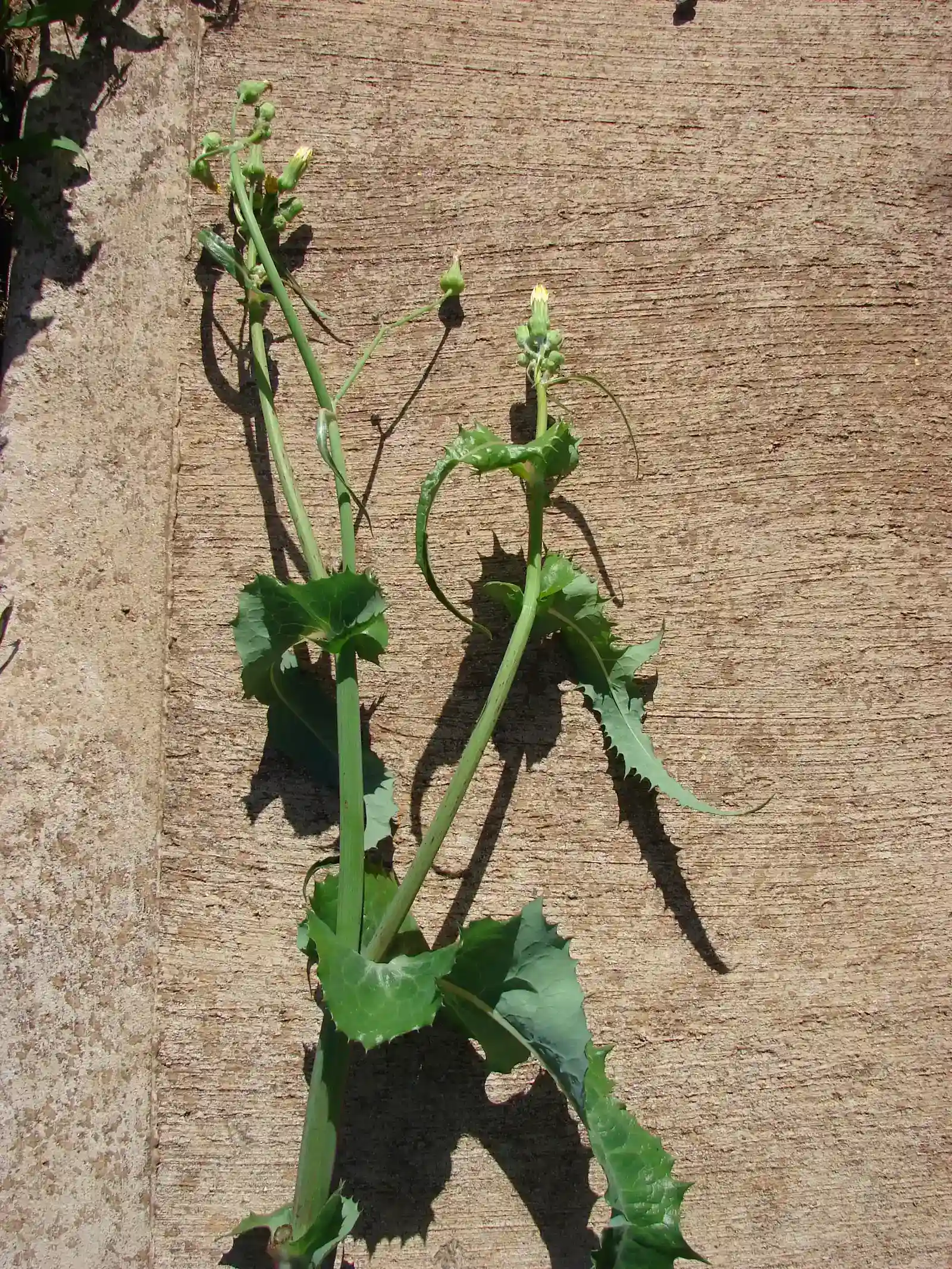
When spiny thistles turn up in pavement cracks, it feels like a dare from nature. These plants come equipped with rigid, sharp leaves that discourage even the most determined gardener. Many thistle species also have deep taproots, which can snuggle right into the subsoil beneath broken or thin pavement, anchoring them so firmly that removal becomes a multi-stage battle.
Thistles excel at colonizing disturbed, abused land – construction sites, roadsides, vacant lots – and pavement edges are simply the next frontier. Their wind-dispersed seeds can travel impressive distances, landing in sidewalk seams, around manhole covers, and in the cracks along guardrails. A bit of grit and organic debris is enough to start a new plant.
They should not survive in such harsh, nutrient-poor spaces, yet they do because they are built for extremes. Thick, waxy leaves reduce water loss in the baking heat radiating off asphalt. Deep roots access cooler, slightly moister soil layers. Before long, that tiny spike you noticed one week has turned into a nasty, thorny monster that kids, pets, and bare ankles all learn to avoid.
- Deep taproots anchor into compacted subsoil
- Wind-borne seeds colonize tiny, scattered cracks
- Spines discourage removal, letting plants mature and spread
—
#7 Chicory and Other Roadside Wildflowers: Beautiful, But Out of Place
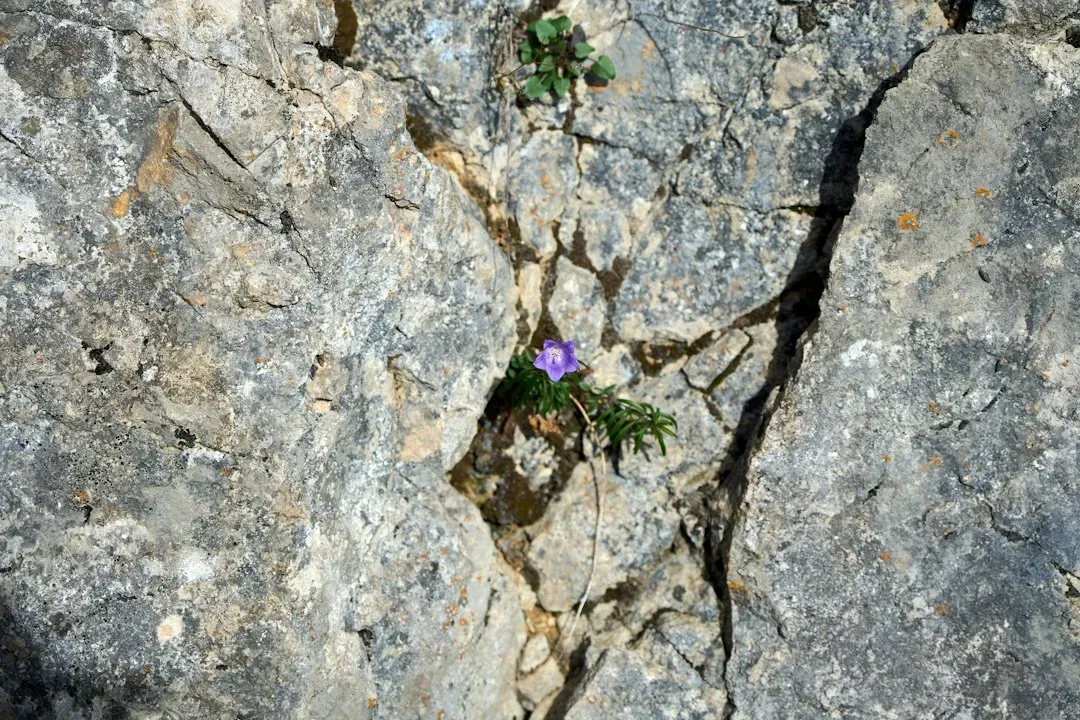
Chicory, with its sky-blue flowers, and other roadside wildflowers look oddly elegant sprouting from a fissure in a median strip or sidewalk. They belong in field margins and open meadows, not squeezed between two slabs of concrete. Yet they show up consistently because they are adapted to gravelly, disturbed soils, which urban pavements accidentally imitate.
These plants typically send down sturdy taproots that tolerate drought and poor nutrition. The cracks catch dust, sand, and bits of organic litter that blow in or wash down with rainfall. Over time, a narrow but sufficient line of “soil” builds up. Chicory and similar species germinate there, leveraging their toughness to outlast the stress of reflected heat and occasional foot traffic.
There is a strange emotional tug when these flowers appear in ugly, hard environments. They make parking lots look almost romantic for a second, but their presence often means that the pavement is deteriorating faster than you think. Every root that pushes into a micro-fracture widens it slightly, trapping more water, ice, and debris, which accelerates the damage over seasons.
—
#8 Prostrate Knotweed: The Sidewalk Doormat
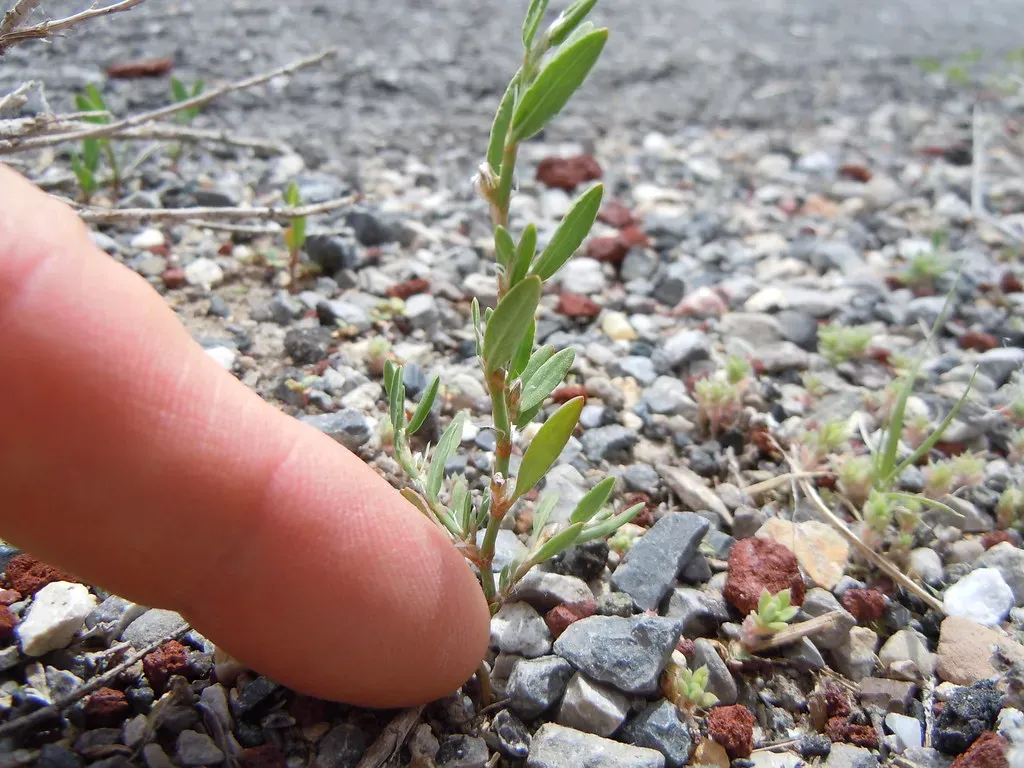
Prostrate knotweed is the flattened, wiry plant that seems to glue itself to walkways and driveway entrances. It practically defines “pavement weed.” Its growth habit is low and spreading, forming braided mats that hug the surface so tightly it looks like the plant is painted on. That shape allows it to dodge shoes, stroller wheels, and bike tires with surprising success.
This plant actually prefers compacted, trampled soil where most species give up. It germinates in late spring or early summer and can handle the heat intensifying over the course of the season. Cracks provide just enough looseness and moisture capture for its fine roots to grab hold and expand outward, linking multiple gaps into a continuous patch.
What makes knotweed such a frustrating survivor is its seed output. A single plant can produce a huge number of tiny seeds that fall right back into the same disturbed area or get moved slightly by rain and sweeping. Those seeds wait for just the right mix of warmth, moisture, and traffic – yes, traffic – to clear away competing plants, leaving the pavement and its cracks essentially reserved for knotweed alone.
- Thrives in compacted, high-traffic areas
- Grows in flat, mat-like form that resists damage
- Produces many seeds that stay close to disturbed ground
—
#9 Poison Ivy and Other Problem Vines: Creeping Where You Least Expect It
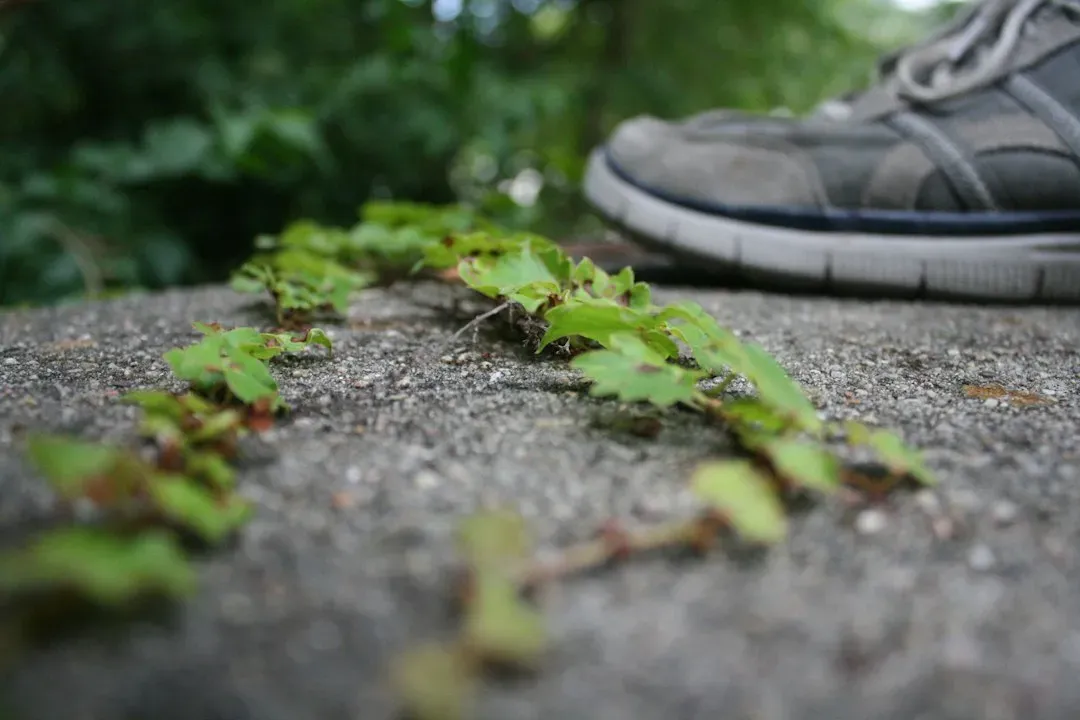
Finding a poison ivy vine or similar climbing species emerging from a crack in a retaining wall or the edge of a path is unsettling, to say the least. Vines are usually associated with forests, fences, or garden trellises, not with narrow lines of broken asphalt. Still, some of the toughest species can root in tiny crevices and then run along edges, railings, or walls looking for more stable footing.
Vines are masters of using structures we build as their scaffolding. When they start in cracks, they quickly reach for vertical surfaces: building sides, utility poles, and fences. Their roots or tendrils can cling to rough concrete and brick, and once anchored, the vine grows vigorously toward sunlight, often bypassing attempts to pull just the visible top growth.
The health risk is obvious with certain species like poison ivy, which can cause serious skin reactions with even light contact. Seeing it slip out of a hairline crack makes clear how little space these plants really need. The real problem is that people often ignore a small piece of vine in a crack, not realizing it may be connected to a much larger root system hidden under slabs, walls, or shrubs nearby.
—
#10 Feral Garden Escapees: Lavender, Poppies, and Random Ornamentals
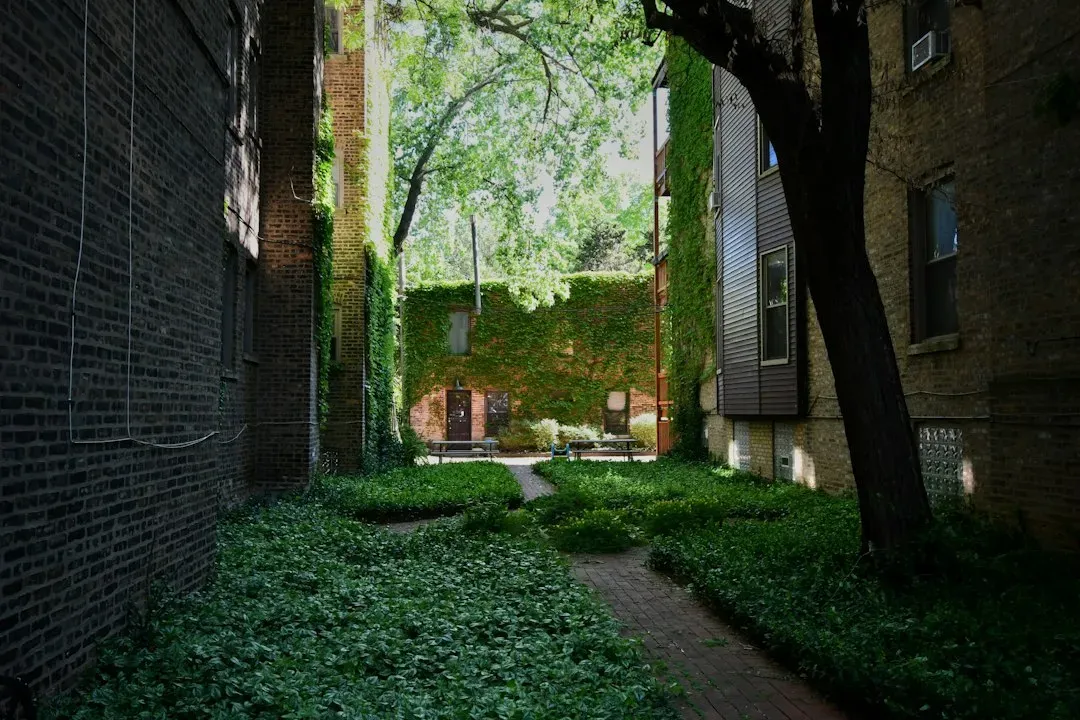
Every so often, you see something almost comical: a little clump of lavender, a lone poppy, or some fancy ornamental grass thriving right at the meeting point of curb and street. These are often “escapees” from nearby gardens, carried by wind, water runoff, or birds. Their seeds end up in drainage edges and pavement seams lined with a thin strip of gritty soil.
Many ornamental species have been bred or selected for toughness, drought tolerance, or long bloom periods. Ironically, those traits make them quite fit for brutal urban microsites. They settle into cracks where conditions mimic poor, rocky mountain soils or Mediterranean slopes, which some of these plants were originally adapted to. So your decorative rock garden and your cracked driveway may be more similar than you think.
At first glance, they look charming – a little designer accent dropped by nature. But there is a catch: some ornamentals can become invasive, and letting them persist in sidewalks and street edges can help them spread beyond your yard. They also contribute to the gradual breakdown of the pavement structure, especially when their roots grow thicker or find their way under slabs and curbs.
- Seeds escape from nearby gardens via wind, water, or birds
- Traits bred for toughness help them thrive in harsh cracks
- Can turn from harmless ornamentals into local escapee problems
—
#11 Fungi and Mushrooms: Decay in the Joints
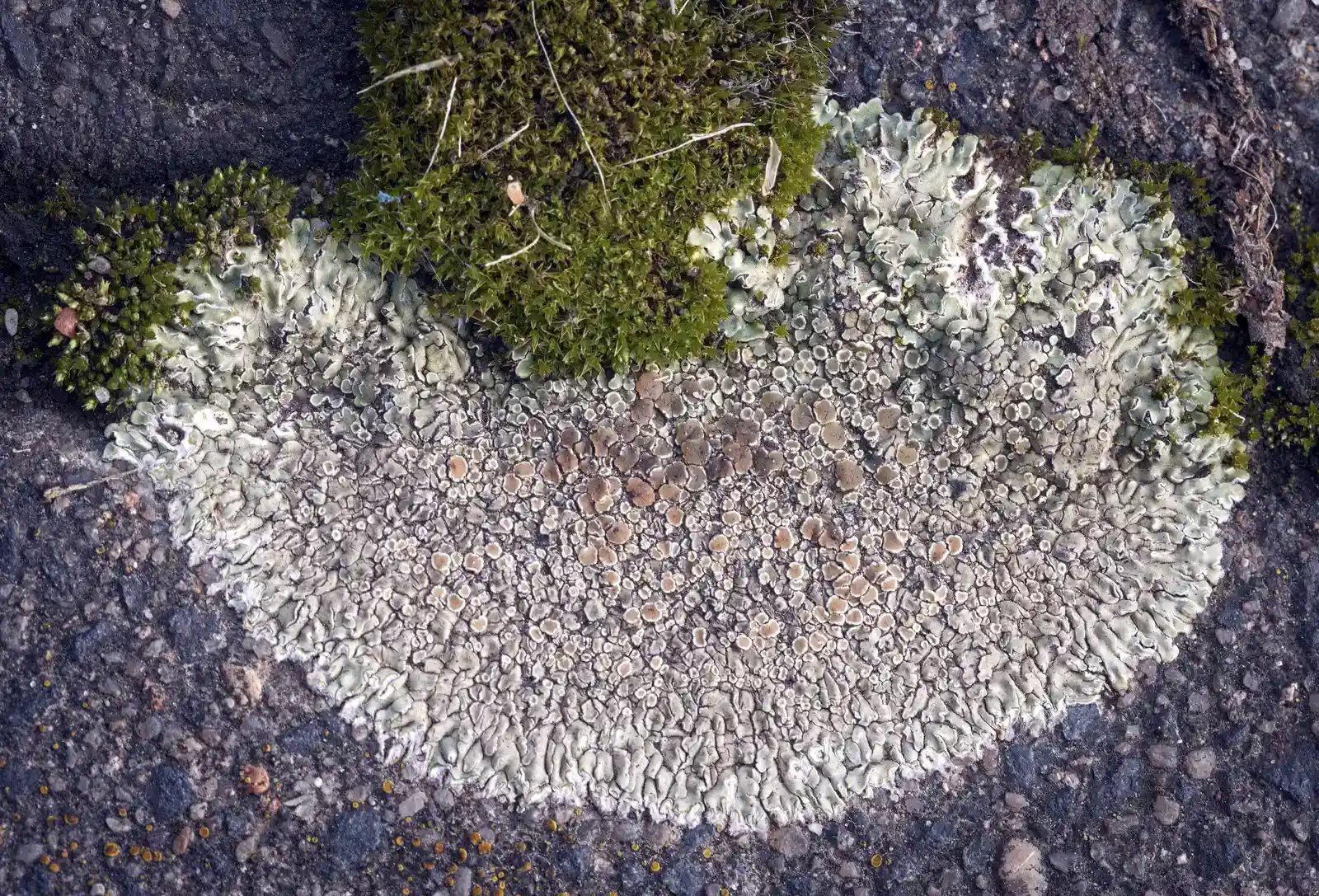
Spotting mushrooms erupting from the line between two paving stones feels almost like a magic trick. Fungi do not need much in the way of traditional soil; they need organic matter to feed on and enough moisture to let their underground network of threads – called mycelium – spread. Under pavement, that organic matter might be rotting tree roots, buried construction debris, or accumulated leaf litter compacted over years.
The pavement crack or joint becomes the only place where the fruiting bodies – the mushrooms you see – can push through to release spores. These fungi might be breaking down old roots from a tree that was removed long ago or feeding on the remnants of wooden forms used when the concrete was poured. It looks impossible from above, but below the surface is often a surprising amount of decaying material.
While mushrooms themselves do not usually damage concrete the way roots do, they indicate moisture and decay beneath the surface. That combination can lead to more structural issues in the long run. From a safety standpoint, some species are toxic to pets and small children if ingested, so those tiny clusters sprouting from a crack can be more than just an odd visual – especially in residential areas.
—
#12 Algae and Slime Films: The Invisible Slip Risk
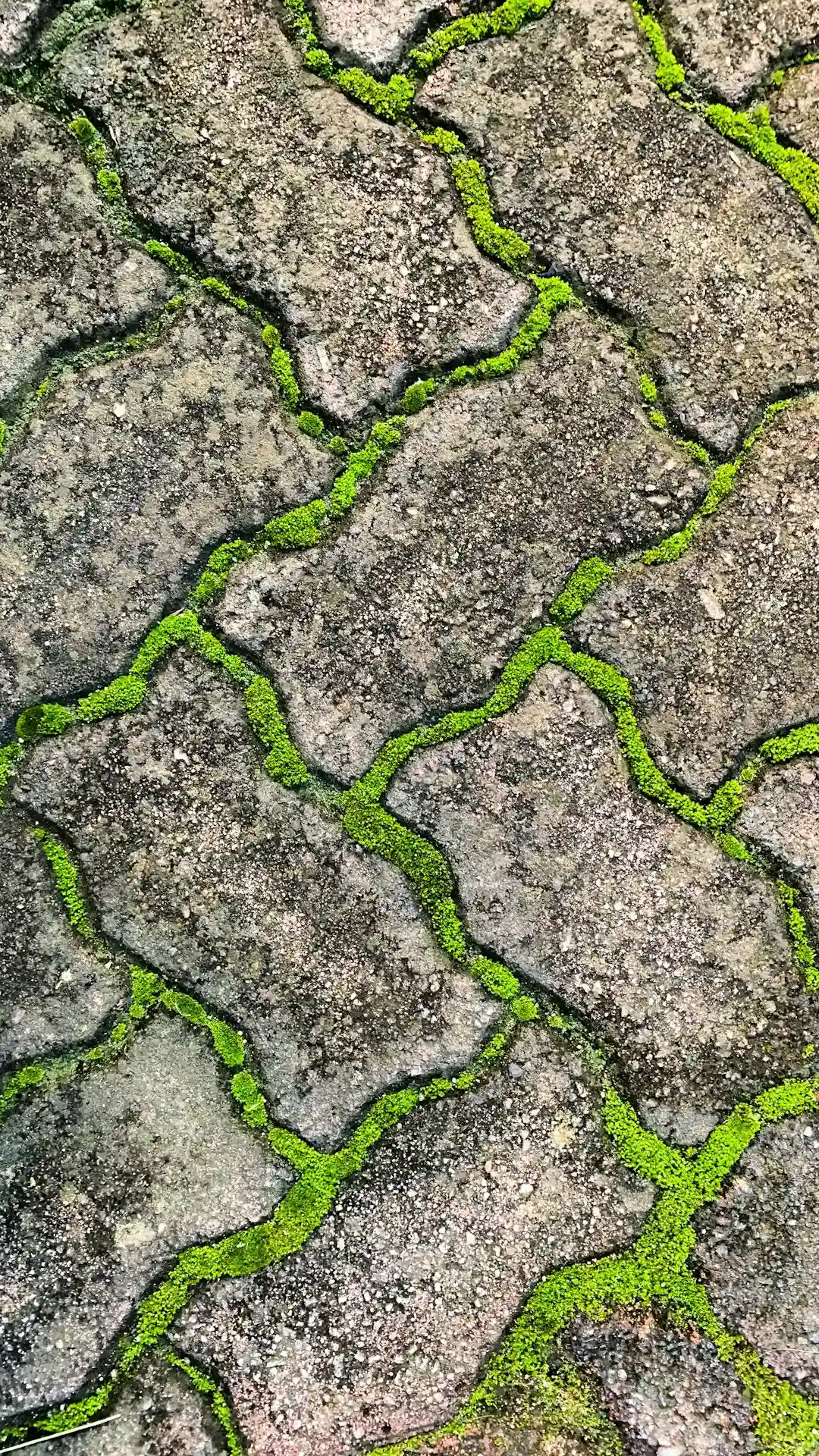
Algae and slimy biofilms are less dramatic than flowers or weeds, but when they spread in pavement cracks, especially near constant damp spots, they can turn paths into hidden hazards. You often notice them only as a dark, greenish-black stain lurking in joints or at the edges of shaded steps. Under the right combination of moisture and shade, their microscopic cells cling to rough concrete surfaces and multiply.
These organisms do not need deep soil at all; they simply take advantage of the thin film of water that can persist in small gaps, especially where drainage is poor. Cracks trap water after rain or irrigation, and if the area is shaded by trees, fences, or buildings, the surface never quite dries. That is the ideal condition for algae and other microbes to form a slick layer.
It’s surprising that something so primitive can thrive where more complex plants can’t, yet the effect is very real: extremely slippery surfaces, even on what looks like solid, safe pavement. These growths also slowly stain and degrade the appearance of concrete. In some cases they can trap additional moisture, supporting moss or weed seedlings later on, turning a simple hairline crack into the starting point of a full-blown micro-ecosystem.
- Thrives in persistently damp, shaded cracks
- Creates slippery, often invisible films on pavement
- Can help other plants and mosses establish later
—
Conclusion: Cracks Are Not Empty – They’re Invitations
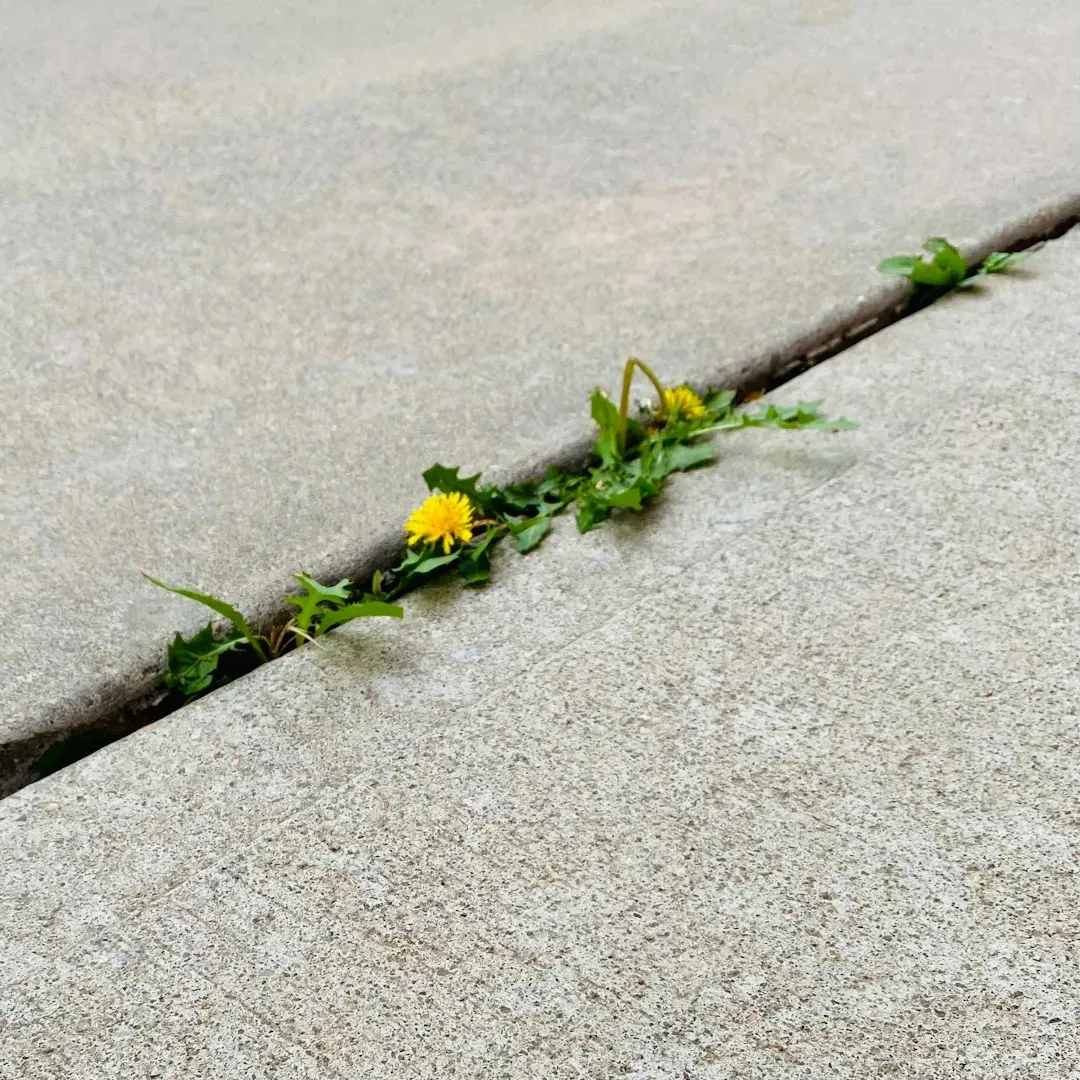
Once you start paying attention, it is almost unsettling how much life is hiding in the smallest fractures of pavement. From dandelions and tree seedlings, to moss, fungi, and slime films, each of these twelve things is making use of a space that, in theory, should be completely inhospitable. They prove that if there is even a hint of soil, moisture, and light, something will move in, set up shop, and slowly push back against the hard surfaces we rely on.
I have to admit, I feel torn about it. On one hand, I respect the grit it takes for a seed to germinate in a two-millimeter crack and then outlast car tires, road salt, and summer heat. On the other hand, I have watched roots quietly wreck sidewalks, trip older relatives, and turn a decent driveway into a patchwork of weeds and crumbling slabs. Admiration and annoyance live side by side every time I see a thistle or a baby tree poking through asphalt.
From a practical point of view, ignoring these tiny pioneers is basically an invitation to bigger problems. Small seedlings and moss patches are early warning signs that water is getting in, soil is collecting, and your paved surfaces are beginning to fail. Clearing debris, sealing cracks, and dealing with problem plants early is less about having a perfect, sterile driveway and more about keeping control over where nature is allowed to chew on your infrastructure.
At a deeper level, though, all this life in the cracks is a reminder that nature treats our cities as just another habitat, not a separate world. Pavement is not a final barrier, just a temporary challenge to overcome. So the next time you see something green or strange sprouting out of concrete, you might ask yourself: is this just an annoying weed, or is it a tiny, stubborn reminder that we are never really in charge for long?