Alaska – Two imposing vertebrae discovered in the 1950s near Dome Creek had long anchored beliefs about woolly mammoth presence in the region. Labeled as mammoth fossils for over seven decades, these specimens recently underwent rigorous scientific scrutiny. Radiocarbon dating, isotopic studies, and DNA testing revealed them to belong to a common minke whale and a North Pacific right whale. The findings correct a persistent misidentification and stir debate over Ice Age narratives and the journey of marine bones to remote inland sites.
A Surprising Case of Fossil Mislabeling
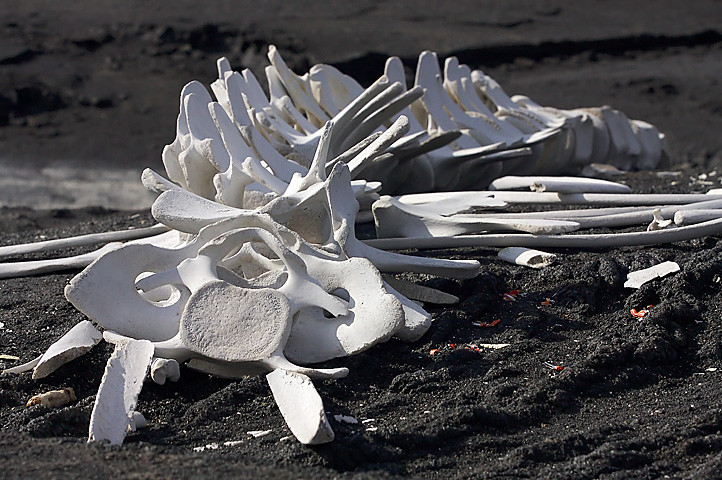
A Surprising Case of Fossil Mislabeling (Image Credits: Flickr)
Researchers stumbled upon the error while revisiting museum collections from mid-20th-century excavations. Collected decades ago amid Alaska’s rugged terrain, the bones initially matched expectations for megafauna remains. Their size and location aligned with known mammoth habitats during the Pleistocene epoch. Paleontologists at the time assigned them to woolly mammoths without the benefit of modern tools.
That assumption persisted unchallenged until recent efforts to catalog and reexamine Alaskan megafauna specimens. The vertebrae, preserved in collections, offered a chance to apply contemporary techniques. This reexamination exposed how early identifications relied heavily on morphology alone. The shift highlights the evolution of paleontological methods over time.
Science Delivers Definitive Answers
Teams employed a trio of advanced methods to unravel the bones’ true origins. Radiocarbon dating placed the specimens within a timeframe consistent with post-Ice Age marine life. Isotopic analysis of the bone composition pointed to an oceanic diet, far removed from terrestrial herbivores like mammoths. DNA extraction and sequencing provided the clincher, matching sequences to known whale species.
These techniques combined to yield irrefutable evidence. The minke whale vertebra traced to a species still swimming today’s oceans, while the North Pacific right whale bone evoked a once-abundant giant now endangered. Such precision marks a departure from visual inspections of the past. The process underscores how interdisciplinary approaches refine historical records.
Shifting Views on Mammoth Decline
The reclassification removes two data points from the mammoth extinction timeline. Woolly mammoths vanished around 4,000 years ago on mainland Alaska, with debates centering on climate shifts and human hunting. These bones, now excluded, tighten the dataset for modeling that extinction. Scientists must adjust models that incorporated the vertebrae as mammoth evidence.
Still, the discovery enriches broader megafauna studies. It prompts reviews of similar specimens across collections. Paleontologists now question other potential mislabels in Ice Age archives. This case exemplifies how corrections accumulate to reshape extinction theories.
The Puzzle of Whales Far from Shore
How did whale vertebrae end up deep inland near Dome Creek? The site’s distance from ancient coastlines raises intriguing possibilities. Post-mortem transport by rivers or glaciers could explain the displacement during melting Ice Age conditions. Human activity in prehistory remains another avenue for exploration, though unproven.
Geological records from Alaska document dramatic sea level changes and glacial movements. These forces likely carried marine remains far from origins. The findings invite further fieldwork to trace similar anomalies. Understanding such pathways deepens knowledge of prehistoric landscapes.
- Radiocarbon dating confirmed ages aligning with whale lifespans.
- Isotopic signatures indicated marine-based diets.
- DNA matched minke and North Pacific right whale profiles.
- Early 1950s collection lacked genetic tools.
- Reanalysis corrects 70 years of labeling.
Key Takeaways
- Modern science overturns long-held fossil assumptions with precision tools.
- Misidentified bones refine mammoth extinction timelines.
- Inland whale remains highlight dynamic Ice Age environments.
This reclassification stands as a testament to science’s self-correcting nature. It not only clarifies Alaska’s fossil record but also sparks curiosity about hidden stories in museum drawers worldwide. As paleontologists continue such reviews, expect more revelations to emerge. What do you think about this twist in prehistoric history? Share your thoughts in the comments.