Amazon Basin – Nations sharing the vast Amazon River system have forged a pioneering agreement to protect the dorado catfish, renowned for the longest freshwater migration on record. This giant species travels roughly 7,400 miles round trip from the river’s Atlantic estuary to Andean headwaters and back, a feat essential to the basin’s ecology and fisheries. The new Regional Action Plan, adopted unanimously last week, targets mounting threats like dams that fragment vital routes.
A Fish That Swims the Length of a Continent
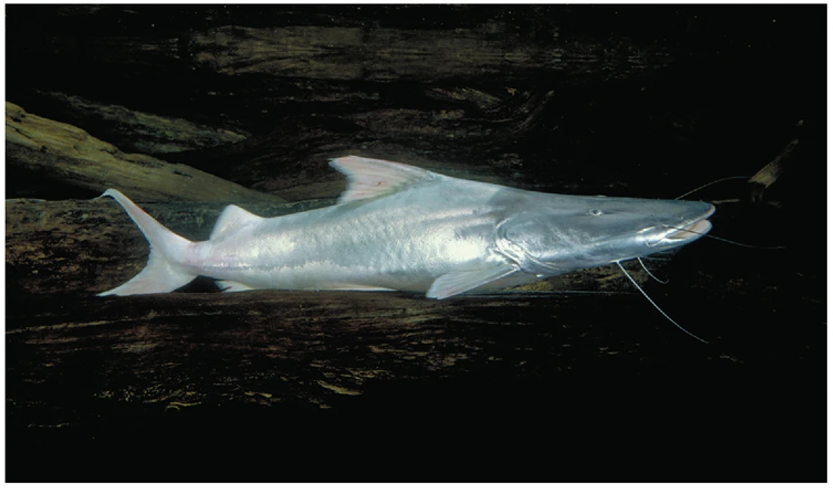
A Fish That Swims the Length of a Continent (Image Credits: Upload.wikimedia.org)
Picture a sleek, silver-gold predator, up to six feet long and weighing 200 pounds, navigating thousands of kilometers through turbulent rivers and floodplains. The dorado catfish, or gilded catfish (Brachyplatystoma rousseauxii), embarks on this odyssey over its 12-to-15-year lifespan. Larvae drift downstream from spawning grounds in the Andes to the nutrient-rich estuary, where juveniles grow for two to three years before adults swim upstream to repeat the cycle.
Scientists confirmed this pattern in 2017 through tagging studies, revealing distances of 8,000 to 12,000 kilometers annually—far surpassing any other freshwater fish. The journey connects ecosystems across six countries, from Peru and Ecuador in the highlands to Brazil near the sea. Such connectivity underpins the Amazon’s biodiversity, with the dorado serving as an apex predator that regulates food webs.
Dams and Declines: The Gathering Storm
Hydropower projects have erected barriers across key rivers, severing migration paths and causing sharp population drops. In Bolivia, dorado numbers plummeted 80 percent over 15 years following dams on Brazilian tributaries. Overfishing adds pressure, as these giants form 93 percent of commercial catches worth $436 million yearly, sustaining 47 million people.
Other dangers include mercury pollution from mining, deforestation altering flood cycles, and climate shifts disrupting cues for spawning. River fragmentation not only traps fish but alters water temperatures and flows critical for larvae survival. Without intervention, this keystone species risks collapse, rippling through aquatic chains and local economies.
- Hydropower dams blocking upstream access to spawning grounds.
- Overfishing depleting adults before reproduction.
- Pollution and habitat loss from mining and land clearance.
- Climate change altering river dynamics and migration triggers.
- Fragmented data hindering coordinated response.
Landmark Approval at CMS COP15
Delegates convened in Campo Grande, Brazil, for the Convention on Migratory Species’ 15th Conference of the Parties from March 23 to 29. Brazil proposed the multi-species plan, gaining unanimous backing from Bolivia, Ecuador, Peru, the European Union, and even non-party Venezuela. It builds on 2024 listings of dorado and relatives like piramutaba in CMS Appendix II.
“This Plan reflects a shared vision among Amazonian countries,” stated Rita Mesquita, Brazil’s Secretary of Biodiversity. Experts hailed it as a milestone, the first CMS cooperative agreement for freshwater fish. Organizations like the Wildlife Conservation Society and Amazon Waters Alliance drove development, integrating science with Indigenous insights.
Three Pillars for Immediate Action
The plan outlines priorities for the next 12 months, emphasizing transboundary collaboration. First, nations will map and protect habitats, advocating free-flowing rivers and fish passages where needed. Second, efforts focus on harmonizing data from tags, genetics, and traditional knowledge to pinpoint corridors.
Third, sustainable fisheries management will promote value chains that benefit communities without overexploitation. Dr. Zeb Hogan, CMS freshwater fish councilor, noted, “This plan moves us from commitments to action.” Implementation involves governments, fishers, Indigenous groups, and NGOs, ensuring equitable outcomes.
Ripples for Biodiversity and Livelihoods
Beyond the dorado, the initiative safeguards seven Goliath catfish species, sentinels of river health. Healthy migrations sustain fisheries vital for food security and culture among 400 Indigenous groups. Globally, 325 migratory freshwater fishes face similar perils, with populations down 81 percent since 1970.
Success here could model solutions for rivers worldwide, proving borders matter little to nature. As Amy Fraenkel, CMS executive secretary, observed, disrupting these paths harms economies and well-being alike.
This unified push offers hope: when rivers flow freely, so do the fish that bind the Amazon. What steps should follow to ensure the dorado’s journey endures? Share your thoughts in the comments.
Key Takeaways
- Unanimous adoption of the Regional Action Plan at CMS COP15 marks a first for Amazon migratory catfish.
- Priorities target river connectivity, knowledge integration, and sustainable fishing within 12 months.
- The dorado’s 7,400-mile migration underscores the need for basin-wide cooperation across six nations.