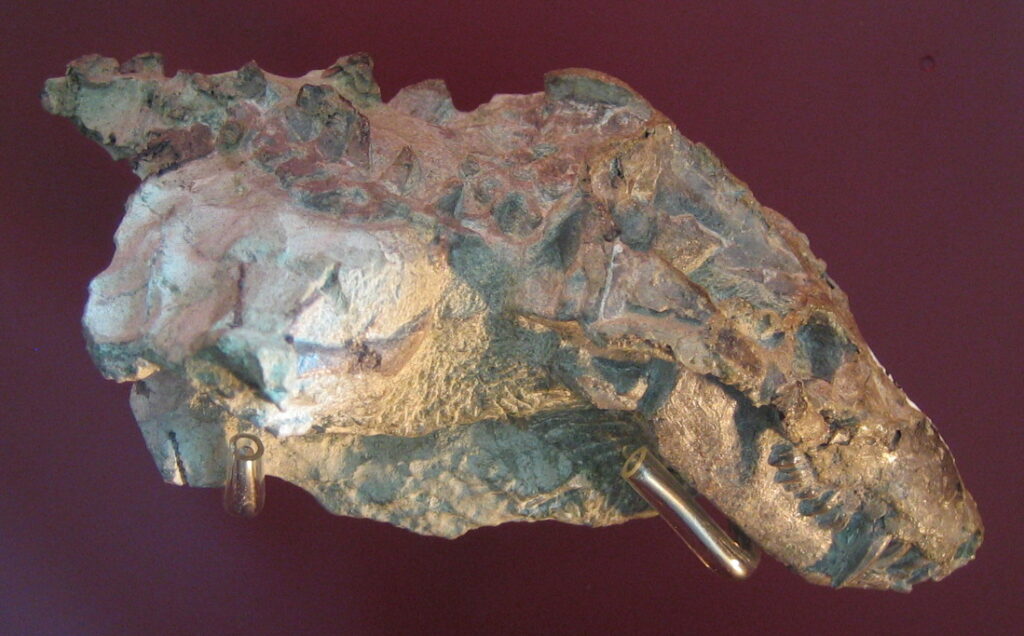
South Africa’s Karoo Basin has preserved remarkable clues to our distant past. Paleontologists recently examined a 250-million-year-old skull of Thrinaxodon liorhinus, an early mammal forerunner from the Early Triassic period. Their analysis revealed that this small creature possessed an effective precursor to the modern eardrum, enabling airborne sound detection long before scientists believed possible. This discovery challenges long-held views on how mammals developed their acute sense of hearing.
Thrinaxodon: A Survivor from the Triassic Dawn
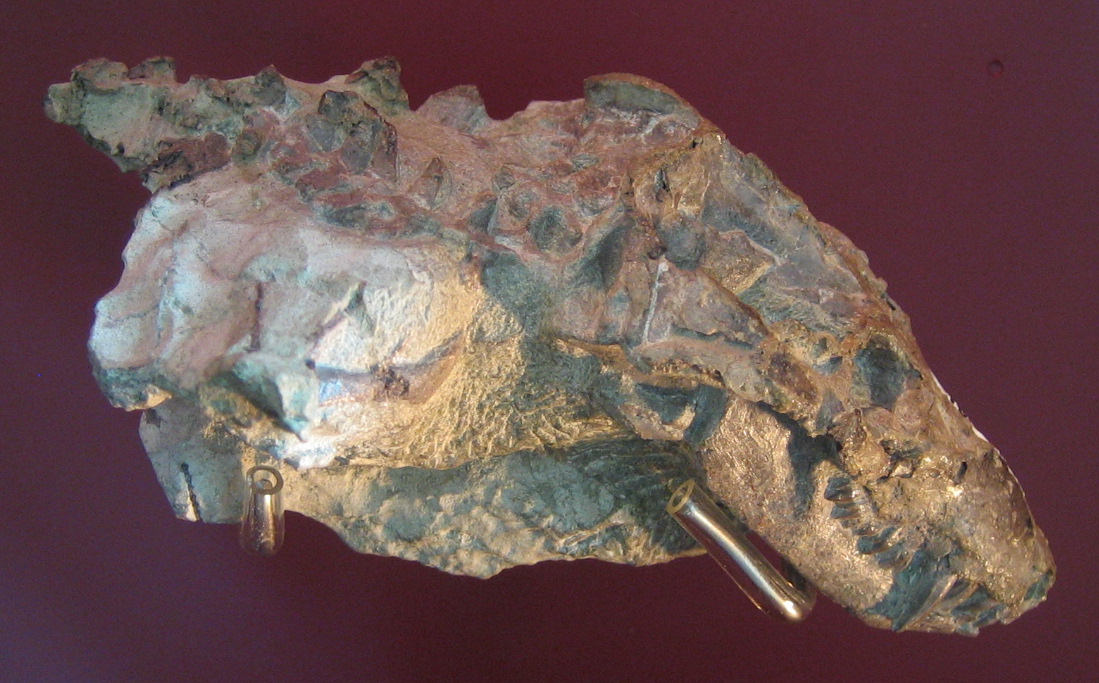
Thrinaxodon: A Survivor from the Triassic Dawn (Image Credits: Upload.wikimedia.org)
Thrinaxodon liorhinus roamed Earth around 250 million years ago, just after the Permian extinction that cleared the way for dinosaurs. This cynodont, a branch of synapsids leading to mammals, measured about the size of a cat or small badger. Fossils show it had specialized teeth for varied diets, an improved palate for better breathing, and signs of a diaphragm that supported higher metabolism – traits hinting at warm-bloodedness and possibly fur.
Life in the Early Triassic proved harsh, with recovering ecosystems dominated by large reptiles. Thrinaxodon likely led a nocturnal existence, navigating dark environments where keen senses offered a survival edge. Its skull, unearthed from South African deposits and now housed at the University of California Berkeley’s Museum of Paleontology, became the focus of this groundbreaking study.
Unraveling the Puzzle of Pre-Mammalian Ears
Mammals today rely on three tiny middle ear bones – the malleus, incus, and stapes – vibrating an eardrum to capture airborne sounds across frequencies. These ossicles evolved from jaw bones in reptilian ancestors. In early cynodonts like Thrinaxodon, the bones remained attached to the jaw, leading researchers to assume hearing occurred mainly through bone conduction: vibrations from the ground traveling via the mandible.
A 1975 hypothesis by anatomist Edgar Allin proposed a membrane stretched across a hooked jaw structure acted as an early eardrum. Yet, without tools to test it, the idea lingered unproven. Prevailing wisdom placed the shift to sensitive, airborne hearing much later, around 200 million years ago in true mammals.
High-Tech Revival of a Fossil Skull
University of Chicago researchers turned to modern engineering for answers. They scanned the Thrinaxodon skull with CT technology to build precise 3D models of its jaw and ear bones. Finite element analysis software, Strand7, simulated sound waves at various pressures and frequencies, incorporating tissue properties from living animals to mimic soft structures like ligaments and an inferred eardrum.
Lead author Alec Wilken, a graduate student, explained the approach: “We took a high concept problem – that is, ‘how do ear bones wiggle in a 250-million-year-old fossil?’ – and tested a simple hypothesis using these sophisticated tools.” Co-author Zhe-Xi Luo added, “Once we have the CT model from the fossil, we can take material properties from extant animals and make it as if our Thrinaxodon came alive.” The simulations animated bone movements, revealing how sound interacted with the anatomy.
Evidence of Advanced Hearing Emerges
The models demonstrated a tympanum nestled in a crook on the jawbone captured airborne sounds far more effectively than bone conduction. Vibrations from this membrane moved the attached ear bones, generating pressure to stimulate auditory nerves across frequencies up to about 1,243 Hz, with peak sensitivity around 1,000 Hz at whisper-to-conversation levels.
Bone conduction barely reached hearing thresholds, confirming the eardrum handled most sound reception. This capability appeared nearly 50 million years earlier than prior estimates, marking Thrinaxodon as a key transitional form.
| Hearing Mode | Efficacy in Thrinaxodon | Frequency Range |
|---|---|---|
| Bone Conduction (Jaw) | Limited; barely meets threshold | Low frequencies mainly |
| Tympanic (Eardrum) | Superior; primary mechanism | 38–1,243 Hz, sensitive at 1,000 Hz |
Reshaping Our Understanding of Mammal Origins
This early auditory upgrade likely aided Thrinaxodon in detecting rustling prey, approaching predators, or mates in the night. As nocturnal hunters amid rising reptilian giants, such senses proved vital. The study, published in PNAS in December 2025, underscores how computational tools now test ancient hypotheses with precision.
Key evolutionary steps in ear development include:
- Reptiles relied on a single stapes bone for ground-borne vibrations.
- Cynodonts like Thrinaxodon added a functional tympanum despite attached ossicles.
- True mammals detached the bones, enhancing high-frequency sensitivity.
- Modern mammals refined this system for broad auditory range.
- Thrinaxodon heard airborne sounds effectively 250 million years ago via a jaw-based eardrum.
- This shifts mammalian hearing origins back 50 million years.
- CT scans and FEA proved a 50-year-old hypothesis correct.
The Thrinaxodon fossil not only echoes the ingenuity of early life but also highlights rapid evolutionary innovations post-extinction. As research revives these ancient voices, it deepens appreciation for the sensory world that shaped mammals. What do you think this says about our shared history? Tell us in the comments.