Everything you thought you knew about dinosaurs might be wrong. Or at least, far more incomplete than you’d ever imagine. We tend to picture them as lumbering, reactive creatures driven by nothing more than appetite and aggression – but the fossil record is quietly, persistently telling a very different story.
The pace of discovery in recent years has been genuinely staggering. Around 1,400 dinosaur species are now known from more than 90 countries, with the rate of discovery accelerating in the last two decades – and 2025 alone saw the identification of 44 new dinosaur species, nearly one per week. What’s emerging from all these bones, tracks, and preserved tissues is a picture of animals with richer, stranger, and more sophisticated lives than most of us ever suspected. Let’s dive in.
The Prehistoric “Dance Floor”: Dinosaurs Had Mating Rituals
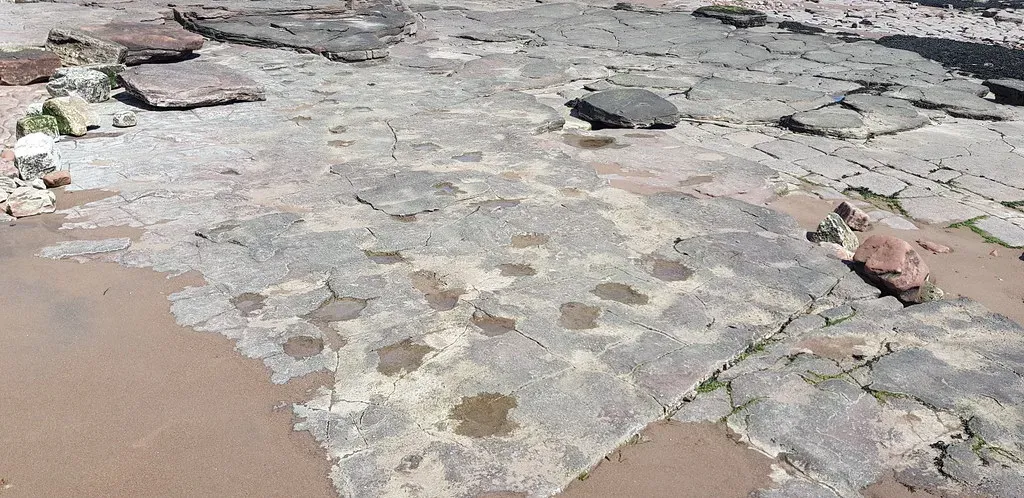
You might not picture a six-meter-long carnivore doing anything resembling a courtship dance, but the fossil evidence begs to differ. High-resolution drone imagery captured by the U.S. Geological Survey in 2019 and 2024 allowed researchers to re-analyze a little-studied area at Dinosaur Ridge in Colorado, where they found a sprawling area covered in dozens of scrape marks, suggesting the entire site may have once been a massive dinosaur lek – essentially a prehistoric mating dance floor.
The tracks identified belong to a type of fossil trace known as Ostendichnus, created by bipedal, non-avian theropod dinosaurs roughly 100 million years ago during the Cretaceous period, with these dinosaurs – likely between 2.5 and 5 meters long – digging into the sand with their claws, dragging and kicking to leave long, trough-like or bowl-shaped marks. Some impressions suggest the dinosaurs turned clockwise as they scraped their claws through the sand, indicating a unique, repetitious dance, and circular indentations show the scrape marks may have later been turned into nests – a behavior commonly seen in some modern birds.
Nanotyrannus Was Real – and It Rewrites Everything We Knew About T. rex
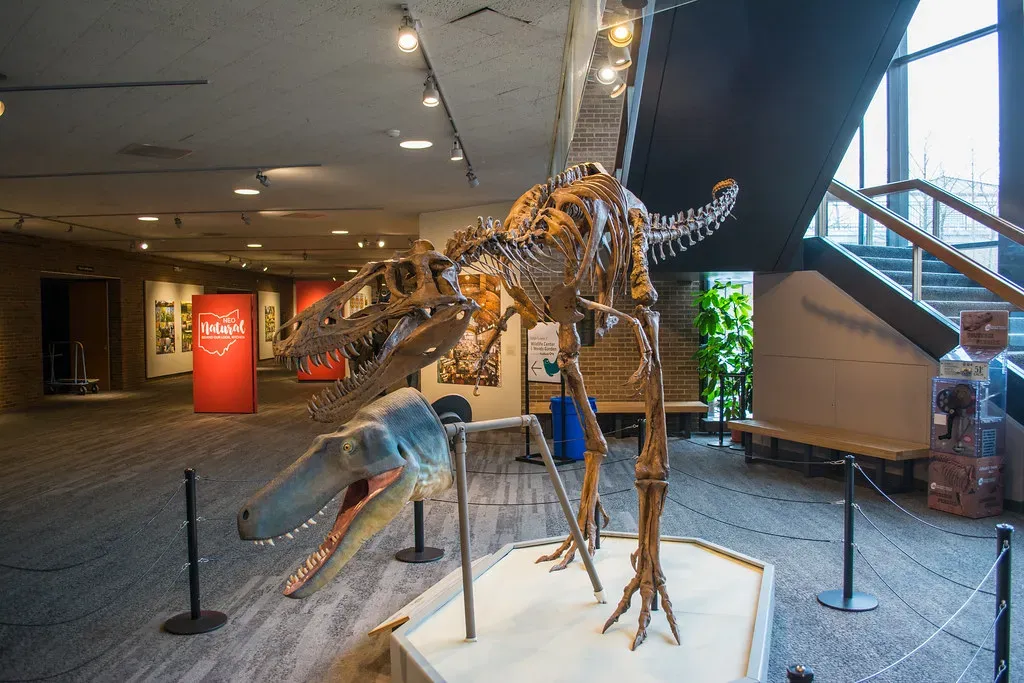
Here’s the thing – for decades, a fierce scientific debate raged over whether Nanotyrannus was truly its own species or simply a juvenile T. rex. That debate is now over. The most complete skeleton ever found of Nanotyrannus lancensis has categorically ended that debate: Nanotyrannus is not a juvenile T. rex – it belongs to a separate genus entirely, and one much more distantly related.
The skeleton’s fusing spinal sutures and growth rings show it was fully grown when it died at approximately 20 years of age, and its anatomy reveals traits that form early in development and don’t change with age – including fewer tail vertebrae, more teeth, larger hands, and different skull nerve and sinus patterns. Together, new studies end a 35-year-long controversy and reveal Nanotyrannus as a slender, agile pursuit predator, built for speed. Honestly, the implications for everything we thought we understood about Cretaceous predator diversity are enormous.
Dinosaurs Were Colorful – Not the Dull Gray Beasts of Old Movies
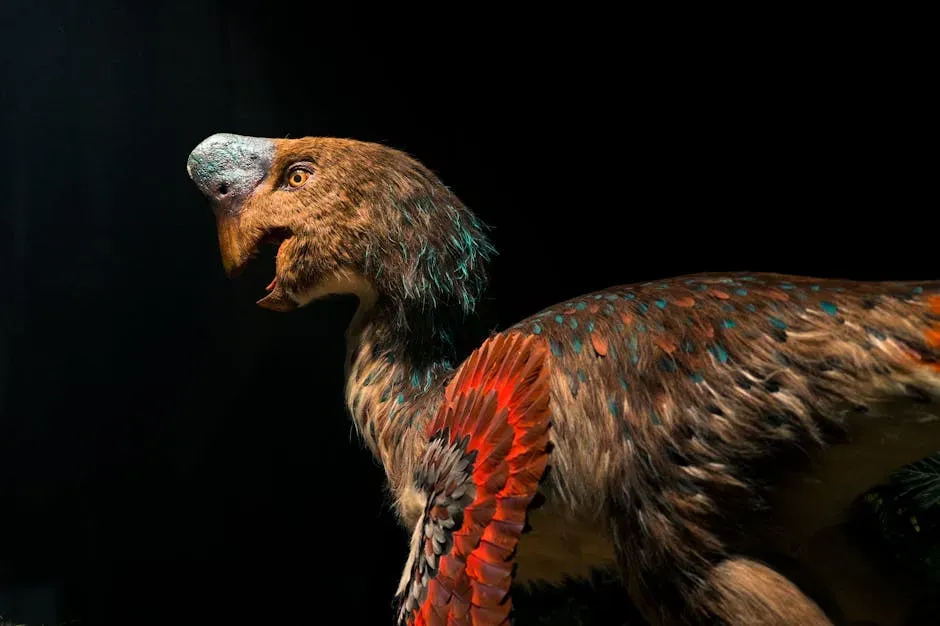
Think of the old museum illustrations: gray, leathery skin, no personality. Science has moved so far beyond that picture it’s almost embarrassing. From the Jurassic rocks of Montana’s Mother’s Day Quarry, paleontologists uncovered fossils of sauropod skin so delicately preserved that they include impressions of pigment-carrying structures called melanosomes, described in December in Royal Society Open Science.
While some dinosaur fossils with melanosomes preserved in their scales or feathers have been reconstructed in color, the researchers detected that even a juvenile Diplodocus would have had conspicuous patterns across its scales – suggesting sauropod dinosaurs were not uniformly gray or brown, but had complex color patterns like other dinosaurs, birds, and reptiles. Paleontologists have also recently pieced together the colors and patterns of some feathered dinosaurs, using electron microscopes to see tiny preserved structures that used to contain the pigments of the animals in life. Think less “concrete wall” and more “tropical bird.” The difference is staggering.
A 125-Million-Year-Old Dinosaur With Hollow Spikes Never Seen Before
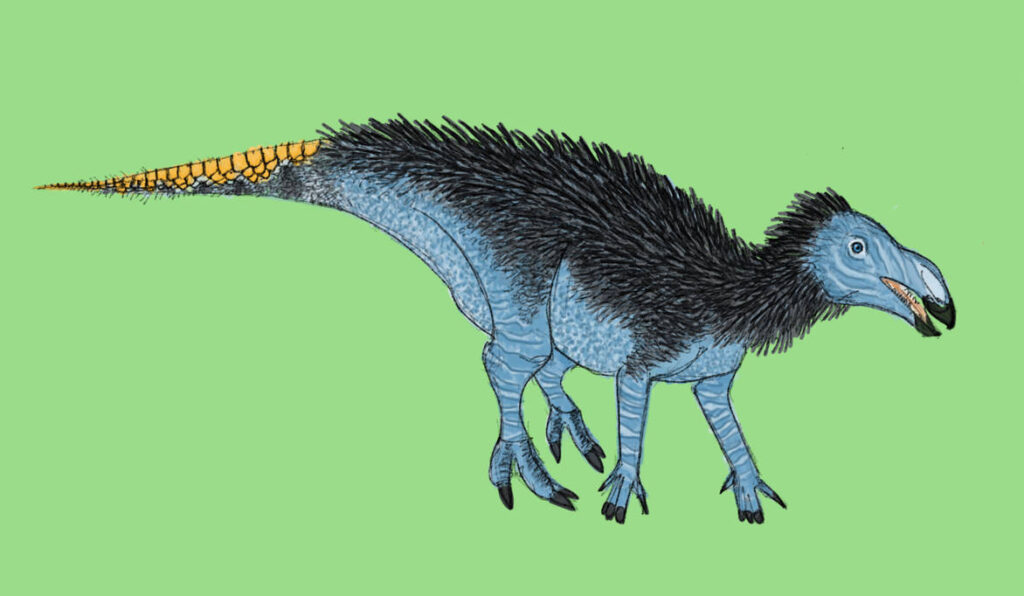
I know it sounds crazy, but researchers in early 2026 unveiled a discovery that nobody saw coming. Scientists in China uncovered an exceptionally preserved juvenile iguanodontian with fossilized skin so detailed that individual cells are still visible – and even more astonishing, the plant-eating dinosaur was covered in hollow, porcupine-like spikes. This species, named Haolong dongi, threw the textbooks wide open.
These spikes, described as cutaneous because they originate in the skin, covered much of the dinosaur’s body – and unlike horns or bony plates, they were not solid extensions of bone. Instead, they were hollow structures, a feature that has never previously been observed in dinosaurs. Defense may not have been their only purpose either – researchers suggest the spikes could have helped regulate body temperature, with structures that increase surface area assisting in releasing or conserving heat, and another possibility being that the spikes had a sensory role, helping the dinosaur detect movement or environmental changes around it.
Fossil Tracks Show Raptors Were Flapping as They Ran
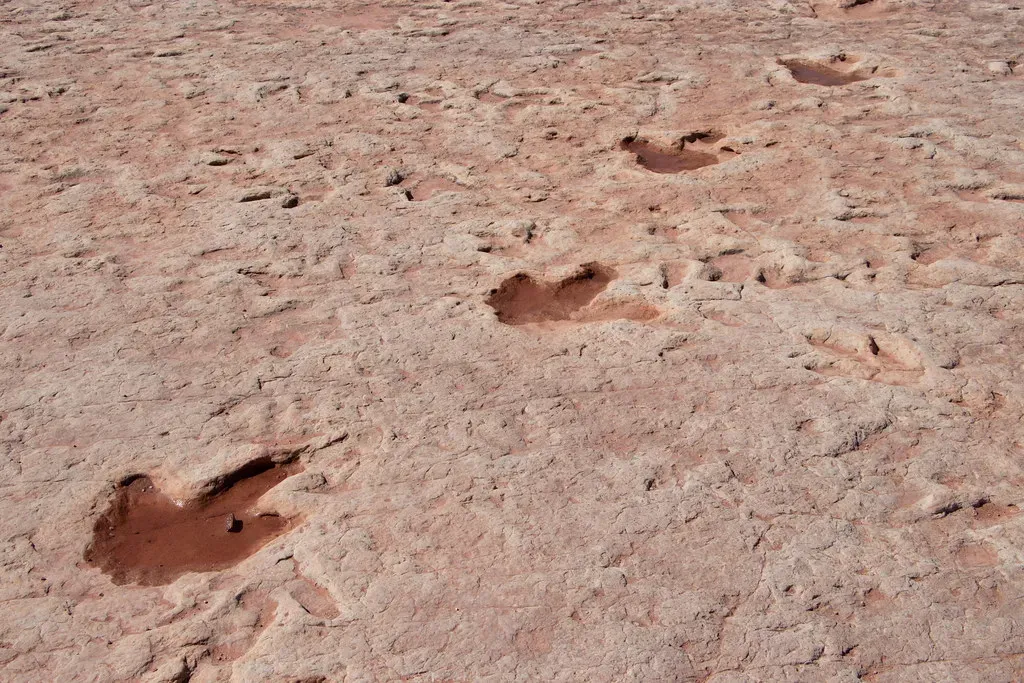
Dinosaur tracks are fossilized behavior – each footstep represents an actual moment in the dinosaur’s life, affected by how it was moving. That sounds simple enough. But a particular trackway described in the Proceedings of the National Academy of Sciences took things in a completely unexpected direction. The Cretaceous trackway was made by a two-toed dinosaur like Microraptor, where the spacing between the tracks indicates the dinosaur was moving at high speed – but it seemed to be moving even faster than expected if it was propelling itself with its legs alone, suggesting the little raptor was likely flapping as it kicked with its feet.
The tracks indicate that flapping wings could be as important to running as long, strong legs. This single find reshapes how we think about the link between wing evolution and locomotion – it’s less a clean jump from “running to flying” and more of a long, blurry in-between. Advanced imaging technology, such as CT scans, allows paleontologists to see the three-dimensional structure of fossils, often without having to remove the matrix, and paleontologists incorporate biomechanics research, applying the principles of both physics and engineering to reconstruct the biological movement of non-avian dinosaurs. Tools like these are revealing behaviors trapped in stone for over a hundred million years.
Dinosaur Parenting Was Surprisingly “Free-Range”
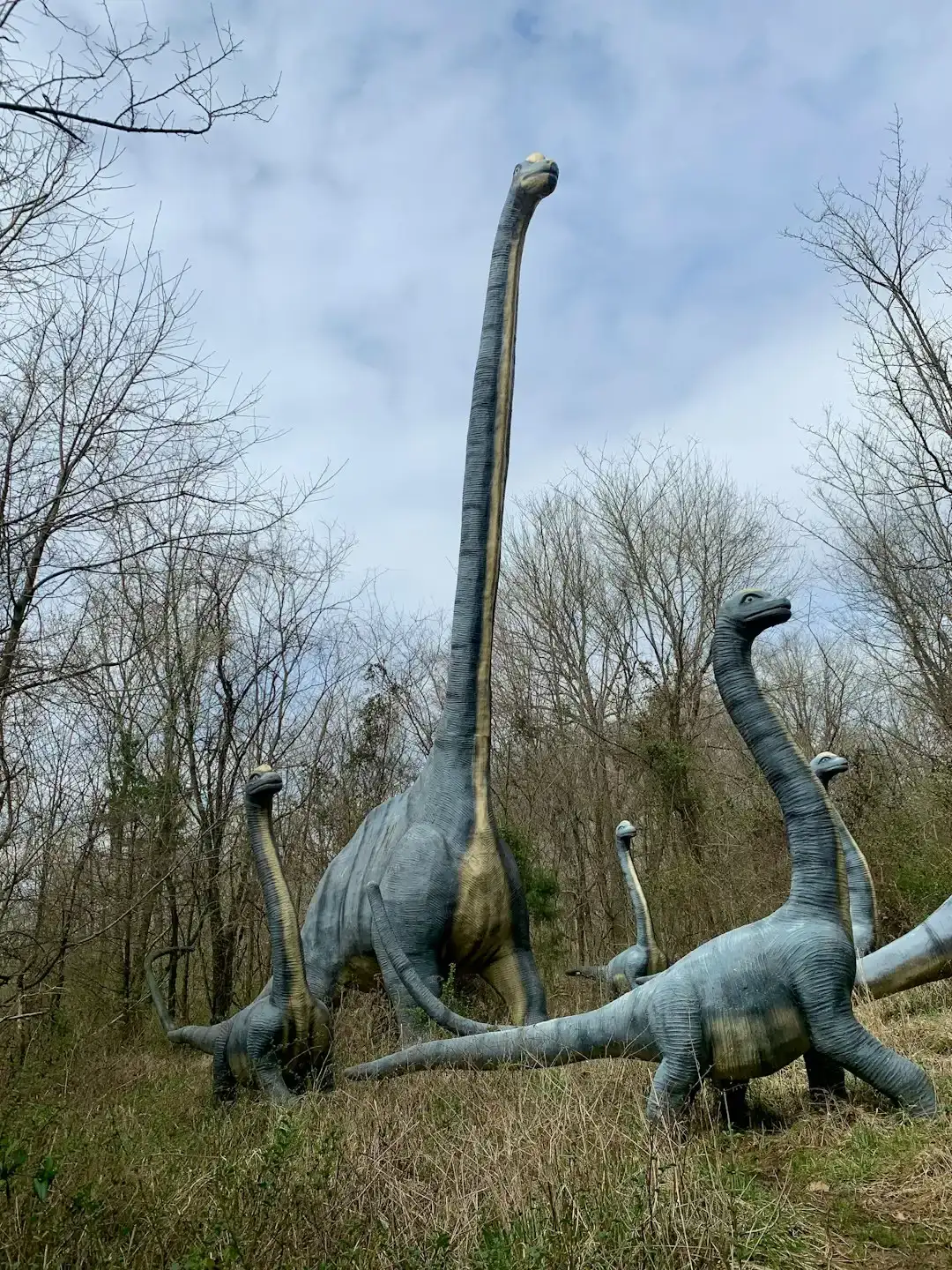
Let’s be real – dinosaur parenting is not what anyone expected it to be. Dinosaurs operated very differently from mammals: while they did provide some parental care, young dinosaurs were relatively independent, and after just a few short months or a year, juvenile dinosaurs left their parents and roamed alone, watching out for each other. Think less devoted lion pride and more… sink-or-swim independence.
Fossil evidence has found pods of skeletons of youngsters all preserved together with no traces of adults nearby, with these juveniles tending to travel together in groups of similarly aged individuals, getting their own food and fending for themselves. Dinosaurs’ free-range parenting style complemented the fact that they hatched eggs, forming relatively large broods in a single attempt – and because multiple offspring were born at once and reproduction occurred more frequently than in mammals, dinosaurs increased the chances of survival for their lineage without expending much effort or resources. It’s an evolutionary strategy as cold and efficient as it is fascinating.
Dinosaurs Were Still Thriving Right Before the Asteroid Hit
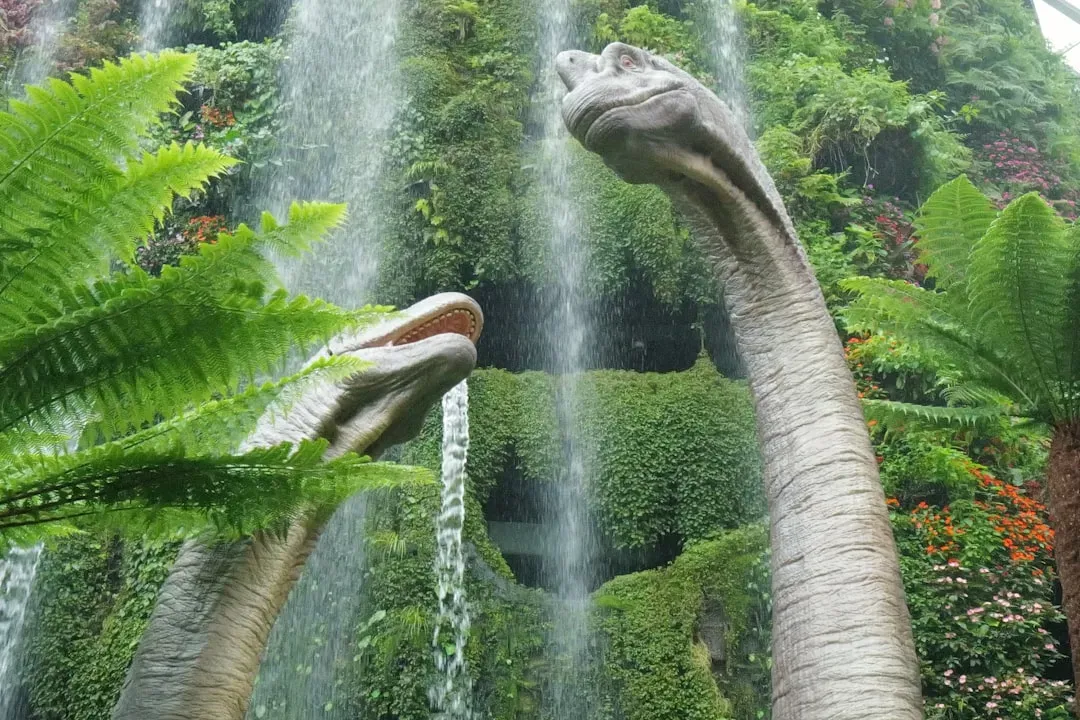
For years, a popular theory circulated that dinosaurs were already in decline before the famous asteroid impact 66 million years ago. It made the extinction feel almost inevitable – like the asteroid just finished what nature had already started. Turns out that narrative is almost certainly wrong. Dinosaurs weren’t dying out before the asteroid hit – they were thriving in vibrant, diverse habitats across North America, and fossil evidence from New Mexico shows that distinct “bioprovinces” of dinosaurs existed until the very end.
For decades, paleontologists had investigated whether non-avian dinosaurs were still going strong at the end of the Cretaceous or already declining before the asteroid strike, and in western North America it had seemed that there were fewer dinosaur species compared to ten million years before the impact – but a growing body of research is demonstrating that the world was still in a roaring age of dinosaurs ahead of the sudden mass extinction. A Science study reported in October found that an array of dinosaurs in New Mexico lived within 400,000 years of the impact, and that community was made up of different species and even different dinosaur groups than equivalent communities found to the north in Montana, Colorado, and other locales. The asteroid didn’t catch a dying world – it interrupted a thriving one.
Conclusion: The Dinosaur Story Is Still Being Written
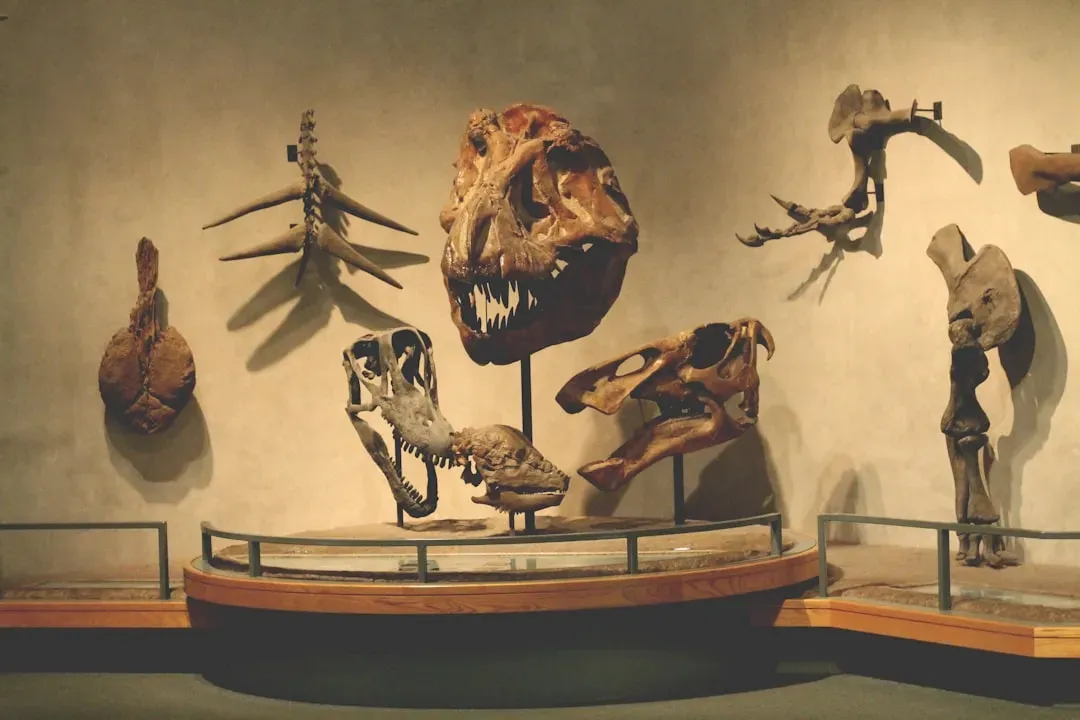
Every few months, a new fossil, a new scan, or a new analytical technique pulls the curtain back a little further on the ancient world these creatures inhabited. New fossils and techniques such as CT scans to get inside skulls and assess dinosaur brains are still being discovered, and with perhaps more dinosaur researchers than ever before, we are continually getting insights and new lines of evidence about things like how and what dinosaurs ate, their underlying physiology, the environments in which they lived, how they moved, and how they changed as they grew.
What emerges from all of this is not a simpler picture – it’s a far more complex and honestly more exciting one. Dancing theropods, speed-flapping raptors, spiky plant-eaters with sensory hollow quills, and thriving ecosystems wiped out in an instant. A golden era in dinosaur science is driving this fascination with dinosaurs. The bones beneath our feet are still talking. We’re just finally getting better at listening.
What surprises you most about what dinosaurs were actually doing millions of years ago? Tell us in the comments – because honestly, the more we learn, the harder it becomes to keep up.