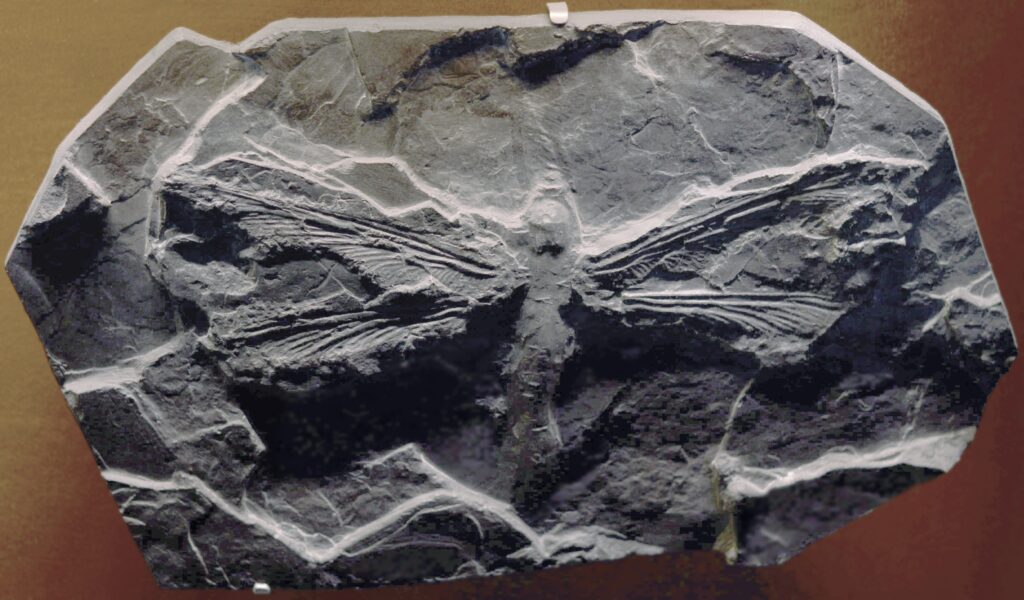
Prehistoric insects once dominated the skies with sizes unimaginable today, including griffenflies like the 300-million-year-old Meganeuropsis permiana. These creatures challenged the limits of what insects could achieve in terms of scale. A fresh examination of their flight muscles now questions the dominant explanation for their gigantism, pointing instead to a more complex story rooted in ecological dynamics.
Griffenflies Soared to Extraordinary Proportions
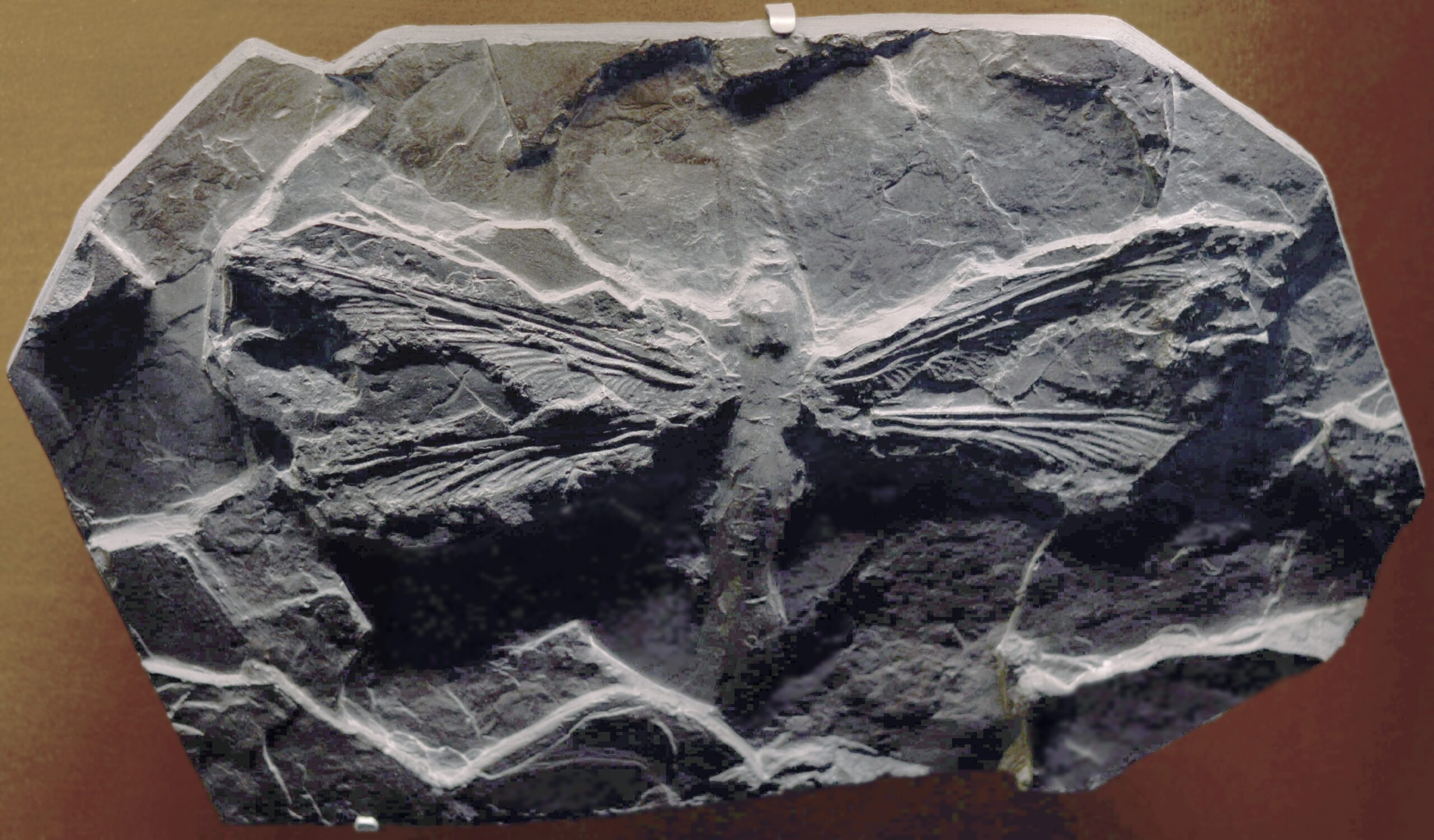
Griffenflies Soared to Extraordinary Proportions (Image Credits: Upload.wikimedia.org)
Envision dragonfly-like insects with wingspans that dwarfed anything seen in modern skies. Griffenflies, ancient relatives of today’s dragonflies, represented the pinnacle of insect size during the Carboniferous period. Researchers have scrutinized fossils of species such as Meganeuropsis permiana, preserved for 300 million years, to uncover clues about their impressive dimensions.
The conventional wisdom held that elevated oxygen levels in the ancient atmosphere permitted such growth. During that era, oxygen concentrations reached levels far higher than today’s 21 percent. Insects rely on a tracheal system to deliver oxygen directly to tissues, and scientists assumed abundant oxygen removed size constraints. Yet recent findings disrupt this narrative.
Flight Muscles Reveal Unexpected Similarities
A detailed analysis of preserved insect flight muscles exposed a key similarity between ancient giants and their contemporary counterparts. Tracheoles – the fine branches of the tracheal system that penetrate muscles – occupied less than 1 percent of the muscle volume in these prehistoric specimens. Modern insects exhibit the same proportion.
This discovery undermines the oxygen limitation hypothesis. If ancient insects maintained tracheal densities akin to today’s, higher oxygen would not have uniquely enabled larger bodies. The study, focused on griffenfly fossils, suggests that oxygen delivery efficiency remained consistent across epochs. Such parity implies other evolutionary pressures shaped their size.
Predation Pressures Reshape the Gigantism Puzzle
With oxygen off the table as the primary driver, attention shifts to ecological factors like predation. Larger predators may have exerted selective pressure, favoring bigger insects capable of evasion or intimidation. In environments teeming with vertebrates, size offered survival advantages.
Scientists propose that the absence or scarcity of certain predators early on allowed unchecked growth. As larger animals emerged, insects adapted by scaling up. This dynamic echoes patterns in other fossil records where body size correlates with predator-prey interactions.
- Tracheal systems showed no expansion in ancient insects despite high oxygen.
- Muscle oxygenation mirrored modern efficiency levels.
- Predator presence likely influenced maximum achievable sizes.
- Fossil evidence highlights griffenflies’ adaptation to Carboniferous ecosystems.
- Size variations across insect groups suggest multifaceted causes.
Broader Lessons from Fossilized Wings
The muscle analysis extends beyond griffenflies to rethink insect evolution broadly. It prompts reevaluation of how environmental gases interact with physiology. Paleontologists now explore hybrid models incorporating predation, competition, and habitat stability.
Future studies may examine additional fossils for tracheal traces, refining these insights. Such work illuminates why insect gigantism peaked and then declined. The findings underscore the interplay between physiology and ecology in shaping ancient life forms.
| Aspect | Ancient Insects | Modern Insects |
|---|---|---|
| Tracheole Volume in Muscles | <1% of muscle volume | <1% of muscle volume |
| Oxygen Delivery | Similar efficiency | Baseline efficiency |
| Size Influence | Predation, ecology | Oxygen-limited scaling |
Key Takeaways
- Ancient griffenfly muscles mirrored modern tracheal proportions, debunking oxygen as the sole gigantism enabler.
- Predation by larger animals emerges as a critical factor in prehistoric insect sizes.
- This shifts focus to ecological pressures in understanding evolutionary scale.
The downfall of the oxygen theory opens doors to richer interpretations of prehistoric ecosystems. Insects’ story reminds us that evolution thrives on unexpected balances. What factors do you believe drove ancient insect sizes? Share your thoughts in the comments.