
Have you ever stopped to wonder why you react to failure the way you do, or why some people seem to have an almost magnetic pull toward fairness and justice? The answers may not lie in your latest personality quiz or a trending self-help book. They may stretch back thousands of years, to the dusty lecture halls of ancient Athens, the river banks of ancient China, and the philosophical schools of Rome.
Long before personality psychology became a science, philosophers were already asking deep questions about human nature. What they uncovered has never really gone away. Honestly, it has just been repackaged. The values you hold, the way you handle stress, the manner in which you treat others – all of it has an echo in the ancient world that is surprisingly hard to ignore. Let’s dive in.
1. Your Drive for Self-Knowledge Mirrors the Socratic Way

If you are someone who is constantly asking yourself hard questions – about your motives, your biases, your blind spots – you are doing something that ancient philosophers considered the very foundation of a meaningful life. Socrates believed in the power of introspection, looking inward to understand oneself, and he famously argued that wisdom comes from questioning one’s own assumptions and engaging in dialogue. That restless need you feel to understand yourself better? That is ancient.
His method of inquiry, known as the Socratic Method, involved asking probing questions to challenge existing beliefs and stimulate critical thinking – one of the earliest forms of psychological exploration. When you interrogate your own thoughts instead of accepting them at face value, you are practicing something remarkably close to what Socrates described. Think of it like being your own most demanding teacher, one who refuses to let you get away with lazy answers about yourself.
2. Your Emotional Resilience Is Rooted in Stoic Thinking
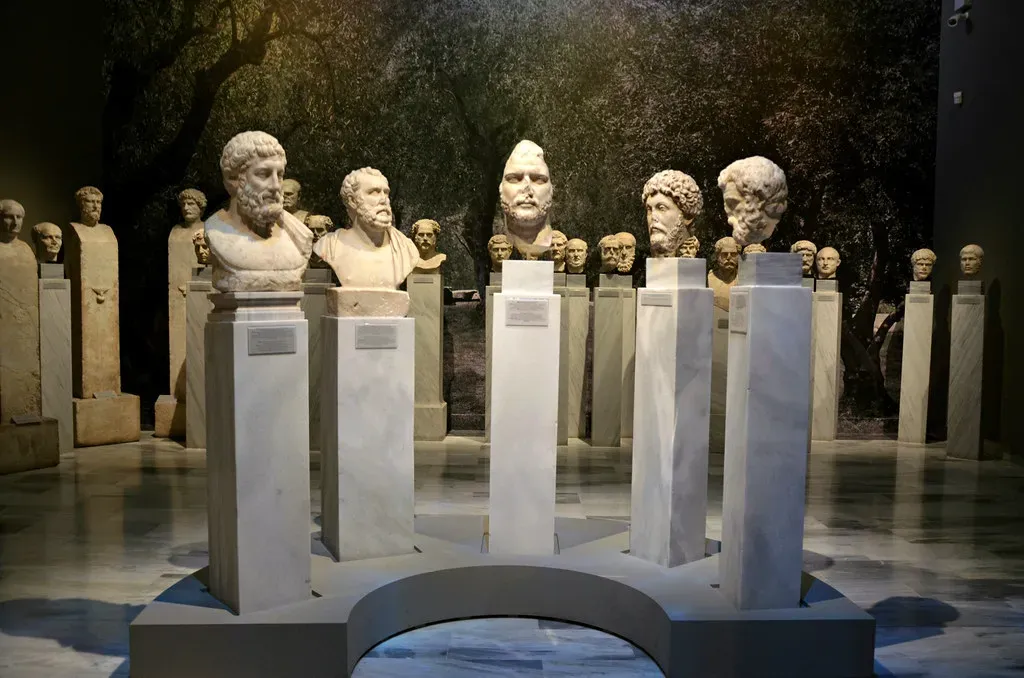
Let’s be real – some people just seem unshakeable. They face setbacks, absorb the blows, and keep moving. That quality has a name in the ancient world: Stoic resilience. Stoicism, a philosophy pioneered by Zeno of Citium and championed by thinkers like Marcus Aurelius, Epictetus, and Seneca, offers timeless strategies for emotional resilience and self-mastery. The Stoics were not cold or emotionless people; they were simply convinced that your inner world was the one thing no external force could ever truly touch.
The Stoics outlined that our own actions, thoughts, and reactions are within our control, and the foundation of Stoic ethics is that good lies in the state of the soul itself, in wisdom and self-control. If you have ever caught yourself thinking “I can’t control what happens, but I can control how I respond,” you have stumbled onto one of the most powerful ideas the ancient world ever produced. Stoicism, especially in the writings of Seneca and Epictetus, encourages emotional regulation, self-command, and resilience – the same attributes valued in low neuroticism and high conscientiousness in modern psychology.
3. Your Sense of Justice Echoes Ancient Virtue Ethics

Do you find yourself feeling personally offended when someone is treated unfairly, even if it has nothing to do with you? That trait is not just a modern moral instinct. Justice, according to the Stoics, means treating others with fairness, integrity, and respect, recognizing our role within the broader human community. This was not considered optional. It was central to what it meant to be a good person at all.
In Stoicism, the four cardinal virtues – practical wisdom, courage, justice, and temperance – are highly interdependent, basically four different aspects of the same underlying virtue. What is striking is that modern psychology has arrived at a strikingly similar conclusion. The VIA Survey is grounded in a well-researched framework that categorizes character strengths under six broad virtues: wisdom, courage, humanity, justice, temperance, and transcendence. Your strong moral compass was mapped out long before psychological surveys existed.
4. Your Intellectual Curiosity Reflects an Ancient Love of Learning

If you are the kind of person who genuinely cannot stop learning, who reads obsessively or asks questions that nobody else in the room seems to care about, you are walking a path ancient philosophers considered the highest calling of the human mind. Aristotle, one of history’s greatest thinkers, was fascinated by what drives human action, and he described the psyche, or soul, as the force behind our thoughts, emotions, and behaviors. For him, the pursuit of knowledge was inseparable from the pursuit of a good character.
Openness involves creativity, imagination, and curiosity – and it is among the most celebrated traits in modern personality research. Strengths under the wisdom category include creativity, curiosity, judgment, love of learning, and perspective. Individuals with pronounced strengths in this domain tend to be open-minded, reflective, and motivated by a hunger for discovery and understanding. Here is the thing: Aristotle would have recognized this immediately. Curiosity, to him, was not a personality quirk. It was a moral virtue.
5. Your Empathy Connects You to Confucian Ideals of Harmony

If you are someone who naturally picks up on how others feel, who adjusts your behavior to avoid causing harm, who prioritizes the group over yourself – Confucian philosophy would consider you remarkably well-developed. The two most crucial virtues in Confucianism are benevolence and righteousness. Benevolence means having compassion for others, all others, since “we are all under Heaven.” Your empathy is not just a soft trait. In this tradition, it is the cornerstone of civilization itself.
The Confucian way to interpersonal harmony starts with self-awareness, self-restraint, and self-cultivation. That path from inner awareness to outer kindness is one that modern psychology confirms over and over again. Agreeableness, as the trait of empathy and cooperation, is highly valued in Confucian ethics. When you choose understanding over judgment in your relationships, you are echoing a school of thought that has shaped entire civilizations across East Asia for well over two thousand years.
6. Your Self-Discipline Points Back to Aristotle’s Doctrine of the Mean

Some people have an almost gravitational pull toward balance – they eat well, they exercise, they do not blow up over minor frustrations, and they keep their promises to themselves. For Aristotle, self-discipline – or enkrateia – was a cornerstone of virtue. The ancient Greeks had a phrase for this: the “golden mean,” the idea that excellence lives between two extremes, never at either pole.
Aristotle’s doctrine of the mean suggests that the path to virtue lies between extremes. Modern research shows that moderation in traits often leads to better psychological outcomes. For example, people who are moderately conscientious tend to be more adaptable than those who are obsessively detail-oriented or completely careless. Think of it like tuning an instrument. Too tight, and the string snaps. Too loose, and there is no music. Your self-discipline is not just a productivity strategy. It is an ancient philosophical ideal made flesh.
7. Your Need for Authentic Connection Mirrors Aristotle’s View of Friendship
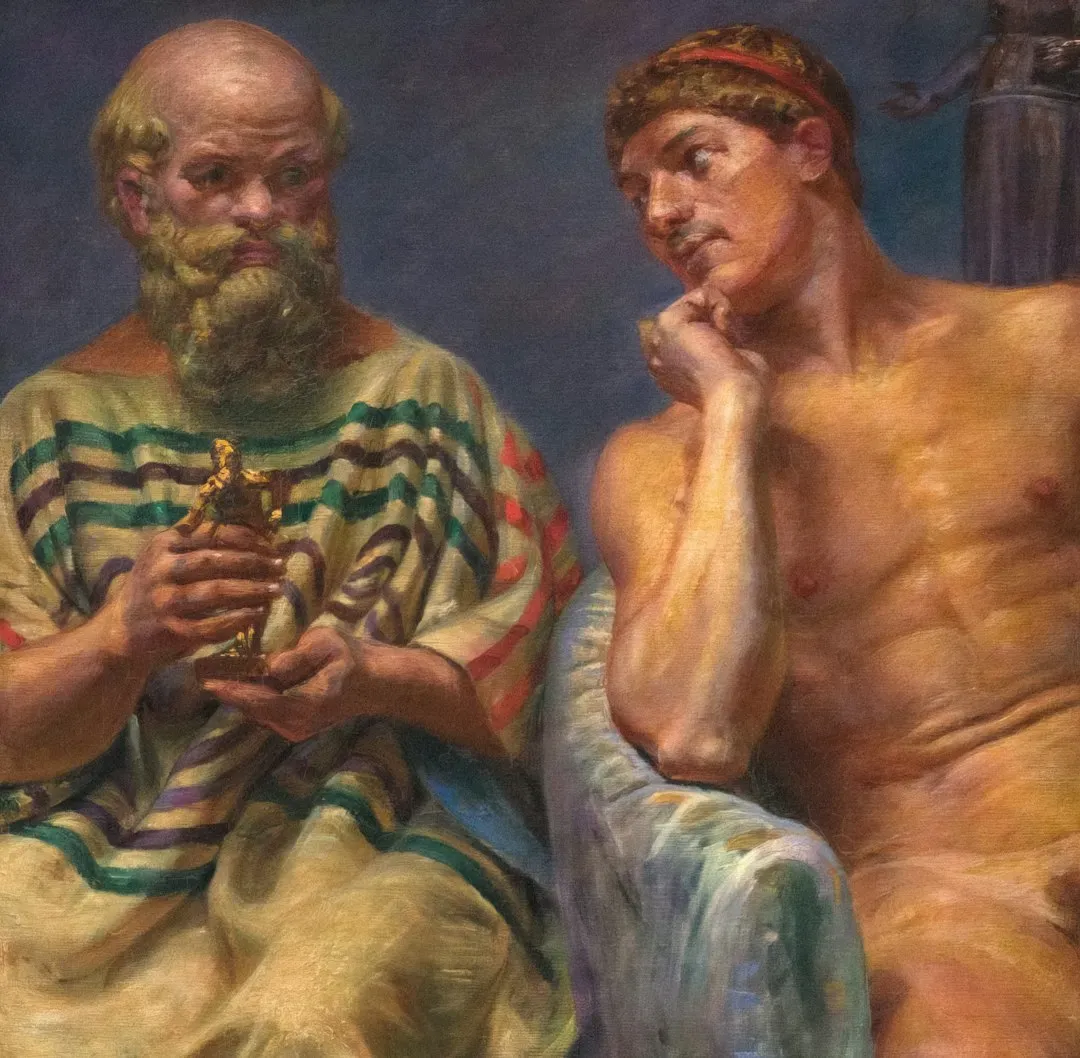
Here is something most people do not realize: the ancient world thought deeply about friendship, and not in a casual way. Aristotle identified it as one of the most essential ingredients of a flourishing life. Extraversion has to do with energy and social interaction, and Aristotle noted that friendship is vital to human flourishing. Confucius also emphasized interpersonal conduct, though he prioritized respectful interaction over self-promotion. This was not small talk. This was philosophy treating human connection as a matter of moral urgency.
If you find yourself craving deep, genuine relationships over surface-level socializing, you are expressing something the ancients understood perfectly well. Nietzsche appreciated intensity and charisma but disdained superficiality. Extraversion, when genuine, builds bridges – but unchecked, it can become performative. Your drive for real connection over polished performance is not just a personality trait. It is an echo of thousands of years of philosophical conviction that authentic relationships are among the few things that truly matter.
8. Your Comfort with Uncertainty Reflects Ancient Wisdom About Acceptance

Some personalities are simply more comfortable with not knowing – with ambiguity, with open questions, with change. It turns out this capacity has deep philosophical roots. Both Stoicism and Confucianism advocate for self-control and continuous self-improvement, as well as for gaining an understanding of one’s place in the grand scheme of things. Furthermore, both philosophies encourage their disciples to accept their reality and not fight against what lies outside of one’s control. The ability to sit with uncertainty without collapsing is not a personality flaw or a sign of indifference. It is wisdom in action.
Wisdom may be defined as a complex human trait with several specific components: social decision making, emotional regulation, prosocial behaviors such as empathy and compassion, self-reflection, acceptance of uncertainty, decisiveness, and spirituality. Modern research confirms what ancient thinkers already knew. Psychologists study wisdom as a cognitive and emotional trait, often linking it to maturity, emotional regulation, and the ability to consider multiple perspectives. Research suggests that wisdom is associated with qualities such as open-mindedness, empathy, and the ability to manage uncertainty. If this sounds like you, the ancients would have called you wise.
9. Your Moral Courage Traces Back to the Stoic and Greek Ideal of Bravery

Moral courage is a specific kind of bravery – not the dramatic kind shown on battlefields, but the quieter, harder kind that speaks up in a meeting, stands by a friend under pressure, or refuses to take the easy dishonest path. Courage is not the elimination of fear, desire, or anxiety; it is acting in the right way despite our fears, desires, and anxieties. It is not just about physical bravery, but also about mental and emotional resilience. The ancient Greeks had no patience for the notion that courage was only physical.
In ancient Greece, courage was about standing up for what is right, even when it is difficult or unpopular, and staying true to our principles in the face of opposition. That version of courage feels urgently relevant in a world that can punish honesty and reward conformity. The cultivation of Stoic wisdom is a daily practice of introspection, continuous learning, and the mindful application of ethical principles. It involves reflecting on one’s actions, engaging in lifelong learning, making decisions based on virtue and reason, cultivating resilience, defining one’s purpose, and practicing discretion. If you have ever chosen the harder, more honest path, you were honoring a tradition stretching back more than two millennia.
10. Your Tendency Toward Continuous Self-Improvement Is Rooted in Both Stoic and Confucian Practice

Some people are never quite finished with themselves, always reading, always reflecting, always looking for the next level of personal growth. I think this is one of the most fascinating personality traits there is – and one of the most ancient. Confucians think that human beings are naturally prosocial, and that we can perfect our virtue with reflection and practice, which is exactly the Stoic position: at our birth nature made us teachable, and gave us reason, not perfect, but capable of being perfected. This is not modern self-help. It is a philosophy with roots older than almost any book most people have read.
Confucianism teaches that human beings are teachable, improvable, and perfectible through personal and communal endeavors, especially including self-cultivation. The Stoics echoed this with relentless daily practice. Mindfulness, a popular tool for reducing stress and fostering presence, mirrors the Stoic emphasis on living in the moment and observing thoughts without judgment. Journaling, a practice advocated by the Stoics for self-reflection and personal growth, has also become a cornerstone of mental health care today. Your journaling habit, your morning routine, your discipline – all of it has ancient precedent in the very wisest minds that ever lived.
11. Your Search for Meaning Connects You to the Ancient Pursuit of Eudaimonia
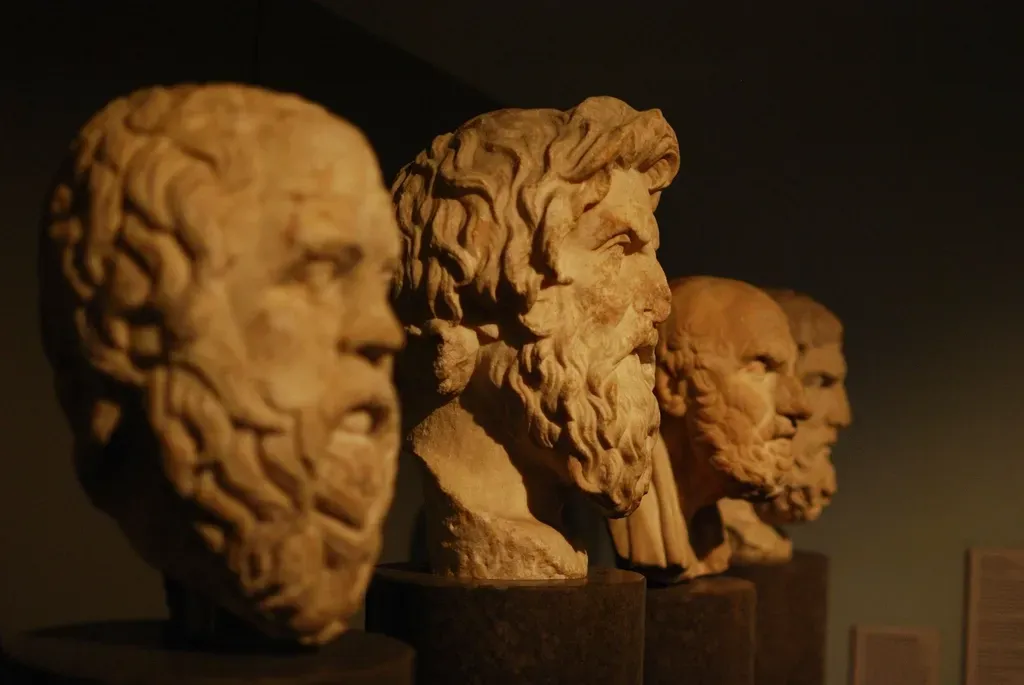
There is a particular kind of person who is never satisfied simply by success or comfort. They need to know their life means something. They want a sense of purpose that goes beyond status or money. Hedonic well-being involves pleasure and happiness in life, while eudaimonic well-being involves adjustment, growth, and the fulfillment of one’s potential. Aristotle’s concept of eudaimonia – often translated as “flourishing” – was specifically about this deeper kind of satisfaction, the one that comes from living in alignment with your best self.
Ancient psychology in general is helpful because each of the unique ancient pictures of the soul represents a philosopher’s genuine attempt to capture and explain what it means to live as a human being with a human mind. Ancient thought thus represents an invaluable insight into the human condition, the benefit of which should not be discarded simply because it may not align with the facts of the matter. The hunger for meaning you carry is not a modern existential crisis. It is the oldest human question of all, and the greatest minds of the ancient world devoted their lives to it. At the heart of both psychology and philosophy lies one truth: Know thyself. Your search for purpose is, quite literally, philosophical.
Conclusion: You Are Older Than You Think

Here is what all of this really means: your personality is not a random accident of genetics and circumstance. From the ancient philosophers to today’s scientists, each generation has added a new layer of understanding to the complex question of what makes us who we are. The curiosity, the resilience, the empathy, the moral courage – these are not traits that modern culture invented. They are threads that run through human civilization from its very beginnings.
Ancient wisdom helps us reflect on how to use our traits ethically, purposefully, and bravely. Whether you are inspired by Aristotle’s pursuit of balance, Confucius’s call for harmony, or any ancient philosopher’s invitation to overcome, one message stands out. The wisest people in human history were, in essence, writing letters to you across time. The question is not whether their wisdom applies to you. It already does. The real question is: which ancient root grows strongest in you?