Antarctica – Researchers have brought renewed attention to evidence of a temperate rainforest that flourished near the South Pole nearly 90 million years ago. Sediment cores pulled from the seabed off West Antarctica preserve roots, pollen, and spores that paint a picture of dense vegetation in a swampy landscape. This mid-Cretaceous ecosystem thrived despite months of polar darkness, highlighting how elevated greenhouse gases once transformed the frozen continent into a habitable haven.
Intact Roots Unlock a Lost World
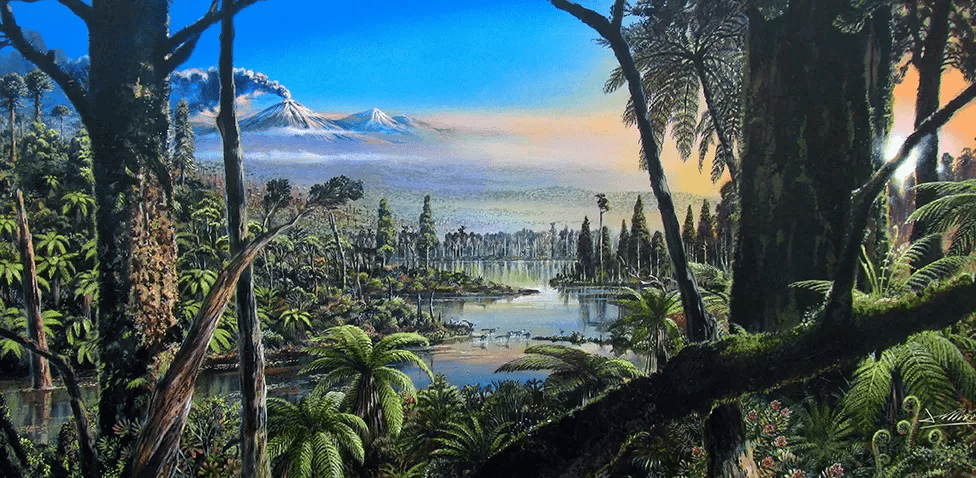
Intact Roots Unlock a Lost World (Image Credits: Facebook)
A network of fossilized roots, preserved in their original positions within a three-meter-thick mudstone layer, forms the centerpiece of this discovery. Scientists encountered this unusual soil-like sediment about 27 to 30 meters below the ocean floor, far from typical marine deposits. The intact structures confirmed the material originated on land, where forests grew before submergence.
Pollen and spores embedded in the cores revealed a diverse plant community dominated by ferns, conifers, and early flowering plants. Species akin to modern New Zealand forests pointed to a lowland temperate rainforest. Even individual cell structures remained visible, offering unprecedented detail on life at a paleolatitude of 82 degrees south.
Conditions That Defied the Cold
Temperatures averaged 12 degrees Celsius annually, with summers reaching 19 to 20 degrees Celsius – conditions more akin to present-day Seattle than the South Pole. Rainfall matched levels in modern Wales, fostering swampy environments teeming with life. High carbon dioxide concentrations, estimated at 1,120 to 1,680 parts per million, drove this warmth during the Turonian-Santonian stages of the Cretaceous.
Climate models showed that such polar forests required not only elevated CO2 but also an ice-free land surface. The absence of glaciers allowed darker vegetation to absorb sunlight, amplifying the heat-trapping effect. Plants adapted to four months of winter darkness, demonstrating remarkable resilience in a high-latitude setting.
Drilling Deep for Ancient Secrets
In 2017, an international team aboard the German icebreaker RV Polarstern used the MARUM-MeBo70 seafloor drill to extract cores from the Amundsen Sea Embayment near Pine Island Glacier. The site on the West Antarctic shelf yielded the southernmost Cretaceous record known. Multi-proxy analyses, including XRF scanning, CT imaging, and biomarker studies, dated the layer to 92-83 million years ago.
Institutions like the Alfred Wegener Institute and Northumbria University led the effort. Paleoecologist Ulrich Salzmann noted, “The numerous plant remains indicate that the coast of West Antarctica was, back then, a dense temperate, swampy forest, similar to the forests found in New Zealand today.” The findings appeared in Nature in 2020, with recent discussions underscoring their relevance.
From Forest to Ice: A Climate Timeline
Pollen types provided clues to the ecosystem’s composition:
- Ferns like Cyathidites australis and Osmundacidites wellmanii formed understory layers.
- Conifers such as Microcachryidites antarcticus and Podocarpidites major dominated the canopy.
- Angiosperms including Proteacidites subpalisadus added diversity among flowering plants.
- Other spores suggested podocarps and proteaceae in a humid, lowland setting.
| Aspect | Ancient Antarctica (90 Ma) | Modern Antarctica |
|---|---|---|
| Temperature (Annual Mean) | 12°C | -50°C (interior) |
| CO₂ Levels | 1,120-1,680 ppm | ~420 ppm |
| Vegetation | Temperate rainforest | Lichens, mosses |
Tectonic drift isolated Antarctica, while declining CO2 cooled the globe. By 34 million years ago, permanent ice sheets formed, their reflectivity accelerating the freeze.
Key Takeaways
- Polar rainforests thrived under super-greenhouse conditions without ice.
- High CO2 alone wasn’t enough; vegetation amplified warming.
- Past shifts warn of rapid ecosystem changes with rising emissions.
This Antarctic rainforest serves as a stark reminder of Earth’s climate volatility. As modern greenhouse gases climb, these fossils urge caution about tipping points in polar regions. What lessons do you draw from this ancient green world? Share in the comments.