Antarctica – Scientists recently unveiled a groundbreaking repository designed to safeguard invaluable ice samples from vanishing glaciers worldwide.
The Dawn of a Global Ice Archive

The Dawn of a Global Ice Archive (Image Credits: Imgs.mongabay.com)
Researchers marked a significant milestone with the opening of the world’s first international storage facility for mountain ice cores at the remote Concordia research station. This initiative, led by the Ice Memory Foundation, addresses the urgent threat posed by climate change to these natural records of Earth’s history. The ceremony, broadcast live, highlighted the facility’s role in preserving atmospheric data for centuries to come.
Built into the Antarctic Plateau’s compacted snow, the vault maintains a constant temperature of around -52°C without any energy input, ensuring long-term stability. Initial samples from Alpine glaciers, including those from Mont Blanc, now rest in this natural freezer. The project underscores a collective effort among European institutions to combat the loss of glacial heritage.
Unveiling the Secrets Encased in Ice
Ice cores serve as frozen chronicles, trapping air bubbles, dust, and chemical traces that reveal past environmental conditions spanning hundreds or thousands of years. These cylinders, extracted through precise drilling, offer insights into ancient climates, volcanic eruptions, and human impacts like pollution. As glaciers retreat, such archives become irreplaceable for understanding ongoing changes.
Each layer within an ice core acts like a page in a diary, recording shifts in temperature, greenhouse gases, and atmospheric composition. Scientists analyze these to reconstruct timelines of global events, from natural cycles to industrial-era alterations. The repository’s establishment prevents the permanent erasure of this data as warming accelerates.
A Desperate Race Against Time
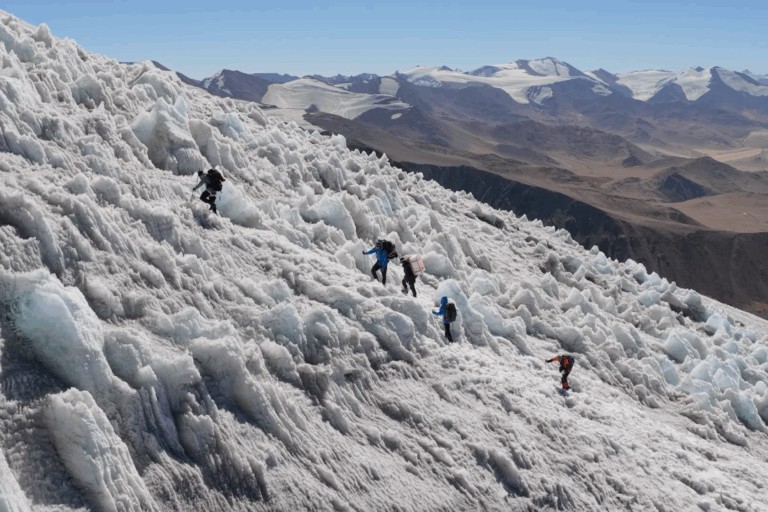
Global glaciers have melted at record speeds in recent decades, driven by rising temperatures that threaten to erase these vital samples forever. Expeditions have intensified to retrieve cores from endangered sites before they dissolve into the sea. The Antarctic sanctuary provides a secure, neutral location far from the warming influences affecting mountain ranges.
Without intervention, future generations would lack direct evidence of how the planet’s atmosphere evolved. The foundation’s work emphasizes the fragility of these resources, with some glaciers already reduced by half their volume since the 20th century. Preservation efforts now focus on high-priority regions, prioritizing those most at risk.
Charting the Path Forward
The Ice Memory Foundation outlined an ambitious plan to sample ice from 20 glaciers over the next two decades, calling for international collaboration. Support from governments, scientists, and funders will drive new drilling missions in vulnerable areas. This global archive not only stores physical samples but also fosters shared research opportunities.
- Conduct targeted expeditions to at-risk glaciers in the Alps, Andes, and Himalayas.
- Develop non-invasive drilling techniques to minimize environmental impact.
- Integrate data from ice cores with satellite observations for comprehensive climate modeling.
- Train emerging scientists in ice core analysis to ensure knowledge continuity.
- Promote public awareness to bolster funding and policy support.
Anne-Catherine Ohlmann, director of the Ice Memory Foundation, stressed the urgency during the inauguration. “We are the last generation who can act,” she said. “It’s a responsibility we all share. Saving these ice archives is not only a scientific responsibility – it is a legacy for humanity.”
Key Takeaways
- The Concordia repository ensures ice cores remain intact for at least 500 years naturally.
- Early deposits include samples revealing pollution trends from the Industrial Revolution onward.
- Collaboration under the Antarctic Treaty guarantees the site’s protection and accessibility for research.
As the planet warms, this Antarctic vault stands as a testament to human foresight in the face of environmental peril. It reminds us that while some losses may be inevitable, proactive steps can secure knowledge for tomorrow’s solutions. What steps can we take to support such vital climate preservation efforts? Share your thoughts in the comments.