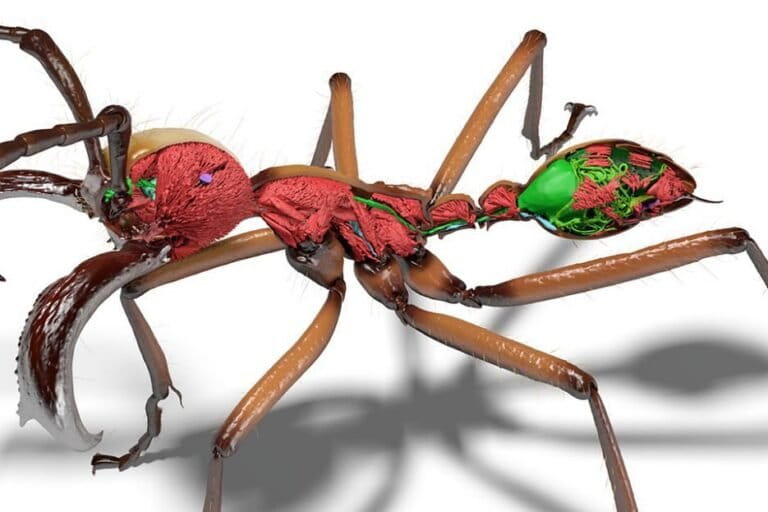
Researchers unveiled a pioneering digital archive that captures nearly 800 ant species in intricate three-dimensional detail, marking a milestone in entomological documentation.
A Monumental Leap in Insect Imaging
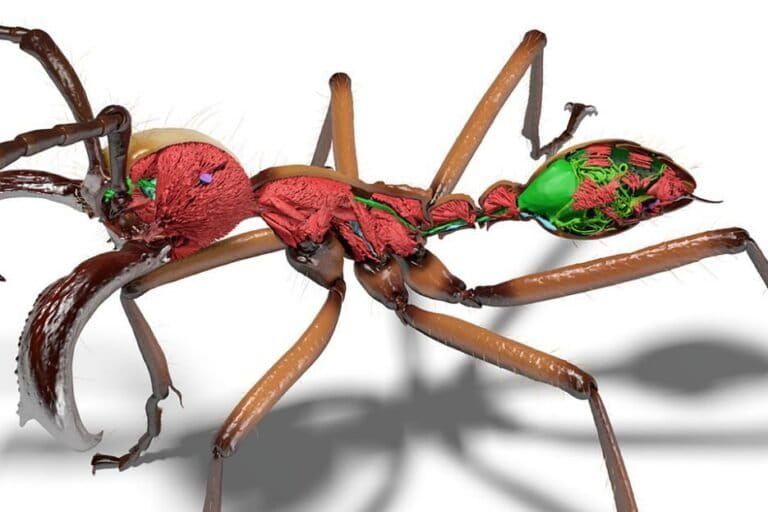
A Monumental Leap in Insect Imaging (Image Credits: Imgs.mongabay.com)
Scientists achieved a breakthrough by compiling the world’s first comprehensive 3D library of ants, encompassing species from 212 genera worldwide. This collection, known as Antscan, relied on robotic automation to scan specimens at unprecedented speed and precision. The project transformed traditional microscopy into a high-throughput process, generating detailed models that reveal both external forms and internal structures.
Traditional methods often limited studies to flat images or physical dissections. Antscan overcame these barriers through innovative engineering. Teams processed hundreds of ants daily, creating a resource that researchers worldwide can access remotely.
Robotics Meets Microtomography
The core technology involved microtomography, a method similar to medical CT scans but adapted for tiny insects. X-rays penetrated ant bodies to produce layered images, which software reconstructed into rotatable 3D models. Robotics handled the repetitive tasks of positioning, scanning, and archiving, ensuring consistency across the vast dataset.
This setup allowed for rapid imaging without compromising resolution. Each scan captured fine details like mandible shapes and organ layouts. The result stands as a digitized vault, preserving specimens virtually for future generations.
Showcasing Ant Diversity Worldwide
Antscan drew from global collections, representing ants from diverse habitats. The library spans 800 species, highlighting morphological variations that define genera. Such breadth enables comparative studies on evolution and adaptation.
Key features include:
- High-resolution external surfaces for identification.
- Internal views of brains, hearts, and glands.
- Interactive models for virtual dissection.
- Standardized scans for cross-species analysis.
- Freely accessible database for global researchers.
Unlocking New Frontiers in Ant Research
The archive facilitates discoveries in taxonomy, ecology, and behavior. Scientists can now examine rare species without handling fragile physical samples. Virtual models support machine learning applications for automated classification.
Institutions contributed specimens, fostering international collaboration. The project’s scalability suggests potential expansion to other insects. Early users reported accelerated workflows in biodiversity assessments.
Key Takeaways
- Antscan digitizes 800 ant species across 212 genera.
- Microtomography provides X-ray-based 3D internals.
- Robotic automation enables rapid, high-volume scanning.
This digital leap redefines how entomologists explore the ant world, offering tools that bridge gaps in knowledge. What possibilities does Antscan open for your field of interest? Share your thoughts in the comments.