Researchers examining a well-preserved Archaeopteryx fossil have uncovered extraordinary features in its skull that highlight the transition from dinosaurs to birds. These structures, visible only under ultraviolet light, point to sophisticated feeding mechanisms designed to meet the intense energy needs of flight. The findings from the so-called Chicago specimen offer fresh evidence of how the earliest known bird evolved to thrive in a new aerial world.
Glowing Clues Emerge During Fossil Preparation
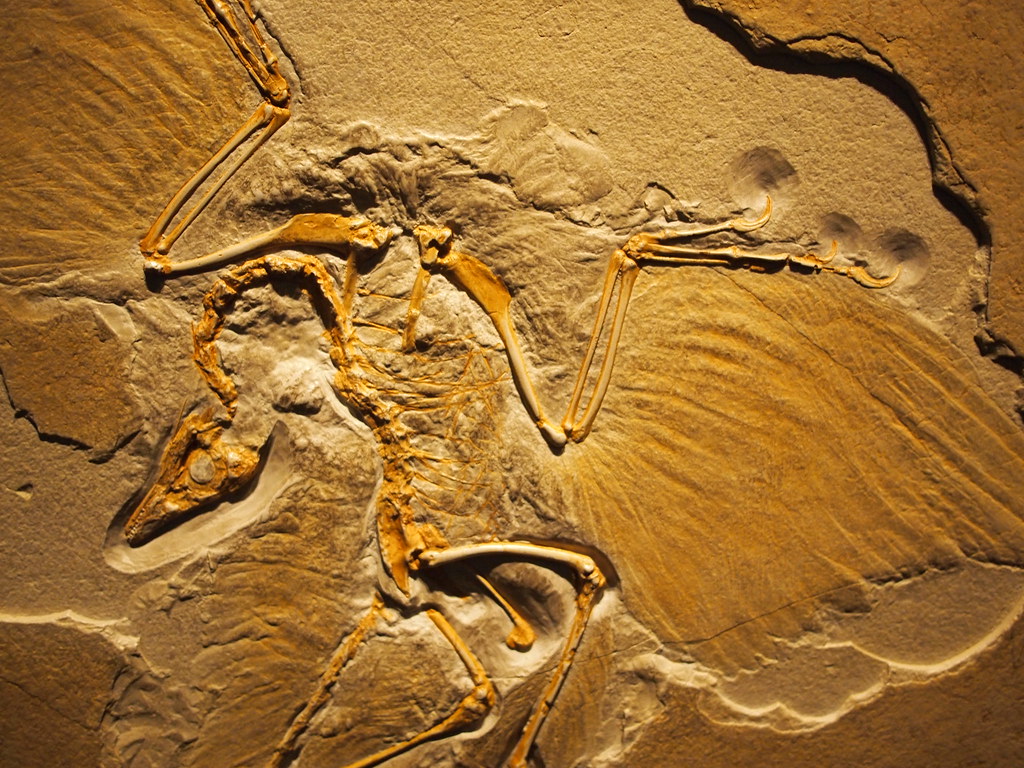
Glowing Clues Emerge During Fossil Preparation (Image Credits: Flickr)
Akiko Shinya, the Field Museum’s chief fossil preparator, spent over a year carefully removing limestone from the Chicago Archaeopteryx slab. This specimen, acquired years earlier and first scientifically described in 2025, came from Late Jurassic deposits in Germany about 150 million years ago. During preparation, ultraviolet light revealed faint glows – tiny dots and traces that hinted at preserved soft tissues.
The team, led by Jingmai O’Connor, an associate curator of fossil reptiles at the Field Museum, consulted bird anatomy references to interpret these anomalies. What appeared as strange markings turned out to be the oldest evidence of specialized mouth features in the fossil record. This breakthrough came as the fossil went on public display in 2024, marking a pivotal moment in understanding Archaeopteryx’s biology.
Fleshy Projections Resemble Tiny Teeth
Among the most striking discoveries were rows of small, cone-shaped structures on the roof of the mouth, identified as oral papillae. These fleshy projections, absent in non-avian dinosaurs, grip prey and direct food toward the throat while blocking the windpipe. O’Connor described them vividly: “Imagine if the flesh on the roof of your mouth just had rows and rows of tiny, fleshy cones – that’s what birds have, and they’re called oral papillae.”
Preserved as glowing traces under UV, these papillae represent the first such structures documented in any fossil. Modern birds rely on them for efficient swallowing, a trait that evidently originated early in avian evolution. The presence in Archaeopteryx underscores a rapid adaptation in oral anatomy as dinosaurs took to the skies.
A Tiny Bone Unlocks Tongue Mobility
Deep within the skull lay a minuscule bone fragment, one of the body’s smallest. This element provided attachment points for muscles, enabling a highly mobile and flexible tongue. O’Connor noted, “This teeny-tiny bone is one of the smallest bones in the body, and it indicates that Archaeopteryx had a highly mobile tongue, like many birds do today.”
Such tongues allow birds to reach into crevices, manipulate food, and position it precisely. Unlike the rigid tongues of most reptiles, this flexibility would have given Archaeopteryx an edge in foraging. CT scans confirmed the bone’s position, linking it directly to avian-style tongue function.
Sensory Openings Suggest a Bill-Tip Organ
Near the snout’s tip, researchers spotted unusual small openings and tunnels, remnants of nerve passages. These structures parallel the bill-tip organ in modern birds, a nerve-rich zone that detects vibrations and hidden prey during probing. The feature enhanced sensory feedback for tasks like rummaging in soil or bark.
Bill-tip organs provide critical tactile information, aiding shorebirds and others in locating food without sight. In Archaeopteryx, this early version likely supported a versatile diet, from insects to small vertebrates. The discovery completes a trio of avian mouth traits not seen in its dinosaur kin.
Efficient Feeding Powered the Skies
Together, these features – oral papillae, mobile tongue, and bill-tip organ – formed an advanced feeding apparatus. They enabled Archaeopteryx to process food swiftly and extract maximum calories, vital for flight’s metabolic costs. O’Connor explained, “These discoveries show this really clear shift in how dinosaurs were feeding when they started flying and had to meet the enormous energetic demands of flight… And the digestive system starts with the mouth.”
The study, published February 2, 2026, in The Innovation, provides new diagnostic tools for classifying fossils as birds. Flight demanded far more energy than terrestrial locomotion, driving these innovations early on. Non-flying theropods lacked them, reinforcing Archaeopteryx’s place as a true bird.
Here are the primary functions of these mouth features in a concise list:
- Oral papillae: Grip and guide food down the throat, preventing aspiration.
- Mobile tongue: Reach, manipulate, and position prey accurately.
- Bill-tip organ: Detect hidden food through sensory nerves.
Key Takeaways
- Archaeopteryx possessed bird-exclusive mouth traits 150 million years ago, the earliest fossil evidence.
- These adaptations supported high-energy flight by optimizing food intake and digestion.
- New criteria now distinguish avian dinosaurs from non-bird relatives.
Archaeopteryx’s mouth reveals how incremental changes fueled one of evolution’s greatest leaps. These findings not only refine our view of the dinosaur-bird boundary but also highlight the ingenuity behind powered flight. What do you think about these ancient adaptations? Tell us in the comments.