Look up from your screen for a moment. If you happen to be near a window, there is a very good chance you can spot a dinosaur right now. Not a fossilized skeleton behind glass. Not a CGI monster on a streaming platform. An actual, living, breathing dinosaur – perched on a fence post, pecking at the ground, or riding a thermal current somewhere overhead. It sounds wild, I know. But science has made this truth undeniable, and once you truly understand it, the world outside your window will never look quite the same.
The story of how prehistoric giants became the sparrows and eagles we see today is one of the most extraordinary narratives in all of natural history. It stretches across hundreds of millions of years, survives a catastrophic asteroid strike, and ends with a plot twist that most people never see coming. So let’s dive in.
The Revolutionary Scientific Consensus You Probably Missed
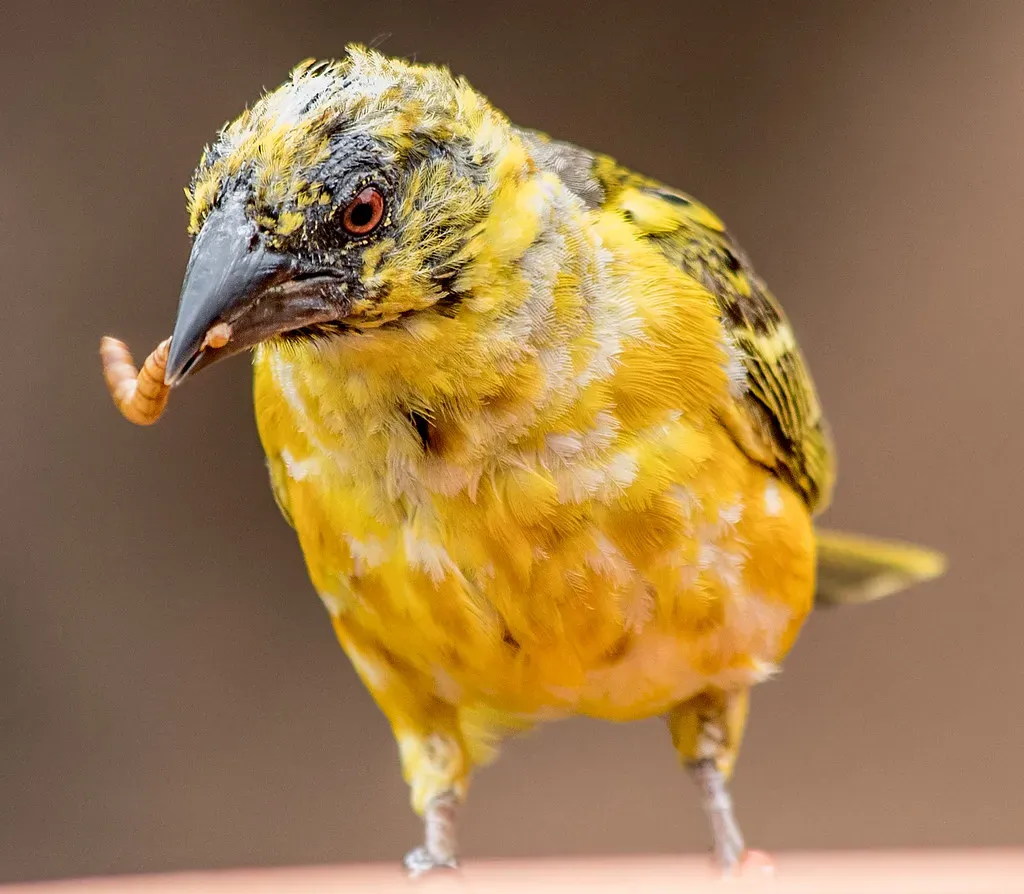
Most of us grew up with a simple story: dinosaurs ruled the Earth, an asteroid hit, and they all died. Clean, simple, final. The problem is that story is only half true. While 200 years of research on dinosaurs has revealed a huge amount about the extinct diversity of the Mesozoic Era, the most important single insight is the revelation that Dinosauria includes all birds, living and extinct. That single fact completely rewrites the ending of the dinosaur story.
The present scientific consensus is that birds are a group of maniraptoran theropod dinosaurs that originated during the Mesozoic era. This isn’t a fringe theory or a bold hypothesis waiting for proof. There is no longer really any doubt that birds are a type of dinosaur. The debate these days is about details. The strong evidence doesn’t just come from fossilised bones and similarities found across the skeleton, but from fossilised soft tissue, especially feathers. That is how settled this science truly is.
Theropods: The Surprisingly Humble Ancestors of Your Backyard Robin
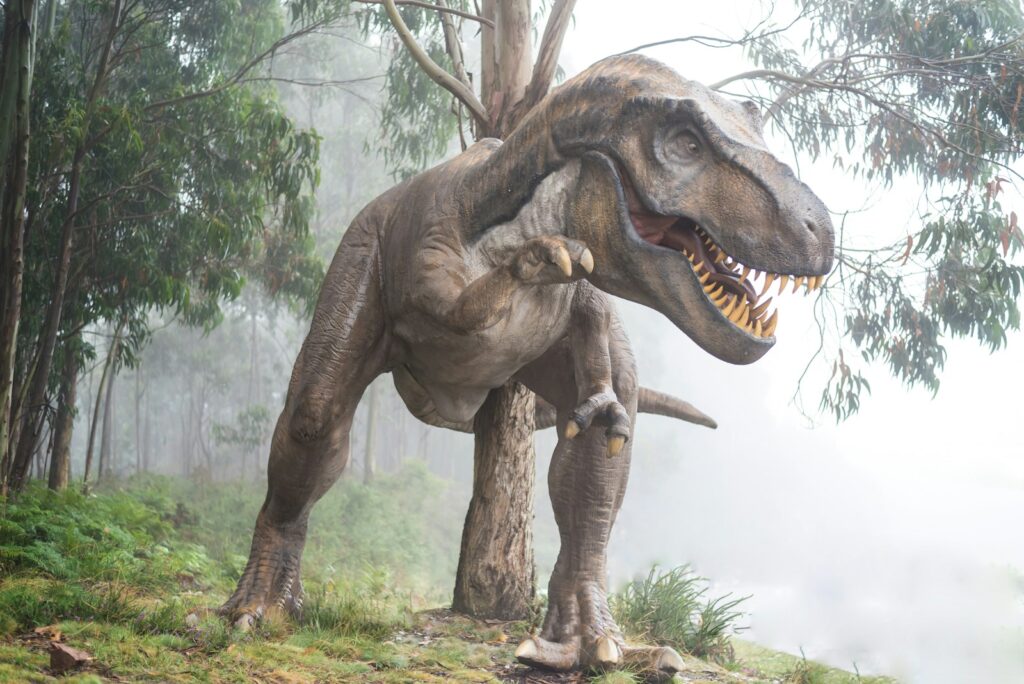
Here is the thing that genuinely surprises most people. Modern birds descended from a group of two-legged dinosaurs known as theropods, whose members include the towering Tyrannosaurus rex and the smaller velociraptors. Yes, the same family tree that produced the most terrifying predator to ever stalk the land also produced the pigeon currently bobbing around outside your local café. Think about that for a second.
Modern birds descended from a group of two-legged dinosaurs known as theropods. The theropods most closely related to avians generally weighed between 100 and 500 pounds, giants compared to most modern birds, and they had large snouts, big teeth, and not much between the ears. So how did we get from hulking, sharp-toothed predators to delicate hummingbirds? The answer lies in one of evolution’s most dramatic makeovers, unfolding across tens of millions of years.
Archaeopteryx: The Fossil That Changed Everything
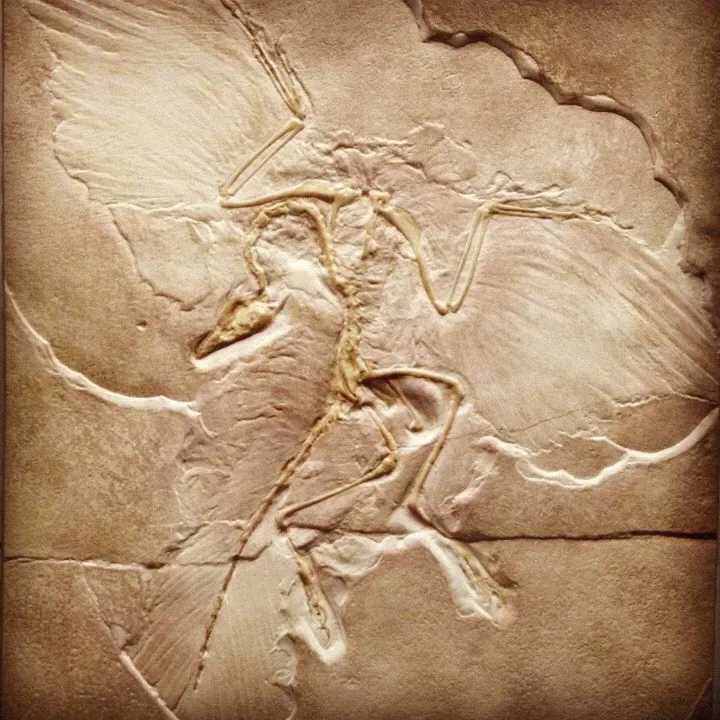
The evolution of birds traces its origins back to small carnivorous dinosaurs known as theropods. The earliest known bird, Archaeopteryx, emerged during the Late Jurassic period, around 150 million years ago, demonstrating both avian and dinosaur characteristics. This transitional species possessed feathers and the ability to fly, yet retained features like a toothed jaw and a long bony tail, linking it to its dinosaur ancestors.
Archaeopteryx is a transitional fossil, with features clearly intermediate between those of non-avian theropod dinosaurs and birds. Discovered just two years after Darwin’s seminal Origin of Species, its discovery spurred the debate between proponents of evolutionary biology and creationism. This early bird is so dinosaur-like that, without a clear impression of feathers in the surrounding rock, at least one specimen was mistaken for Compsognathus. Honestly, that detail alone should make you reconsider everything you thought you knew about the boundary between dinosaurs and birds.
Feathers: A Feature Far Older Than Flight Itself
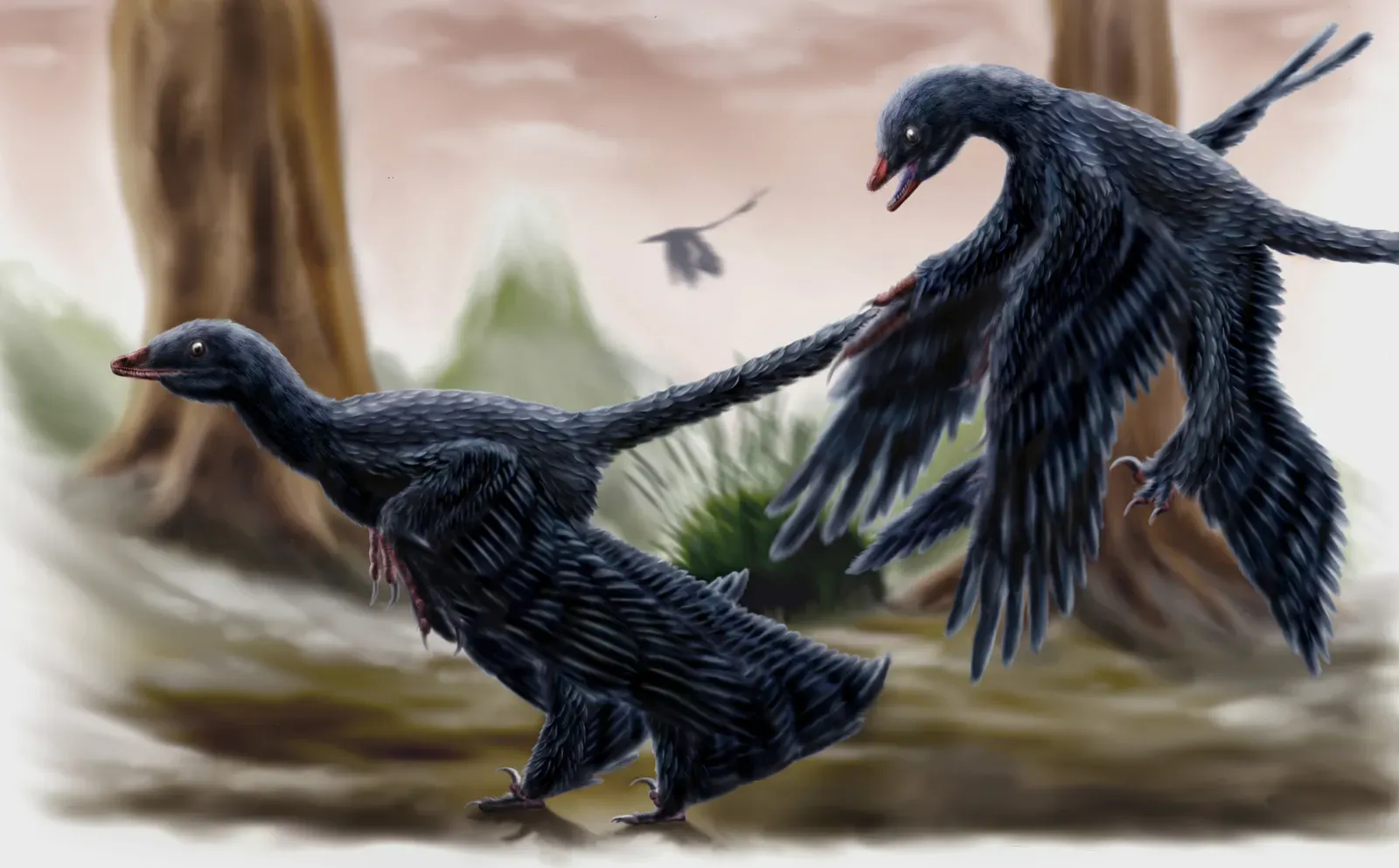
If you thought feathers were invented by birds, you would be wrong. Fascinatingly wrong, actually. Discoveries have shown that bird-specific features like feathers began to emerge long before the evolution of birds, indicating that birds simply adapted a number of pre-existing features to a new use. Feathers were already a dinosaur thing. Birds just made better use of them.
Fossils of more than thirty species of non-avian dinosaur with preserved feathers have been collected. There are even very small dinosaurs, such as Microraptor and Anchiornis, which have long, vaned arm and leg feathers forming wings. The origins of feathers are believed to stem from long scales in reptiles, initially serving various functions before evolving for flight. So the next time you see a bird preening its plumage, remember: that was a dinosaur adaptation long before it helped anyone get airborne.
The Skeleton Tells No Lies: Shared Bones Between Birds and Dinosaurs
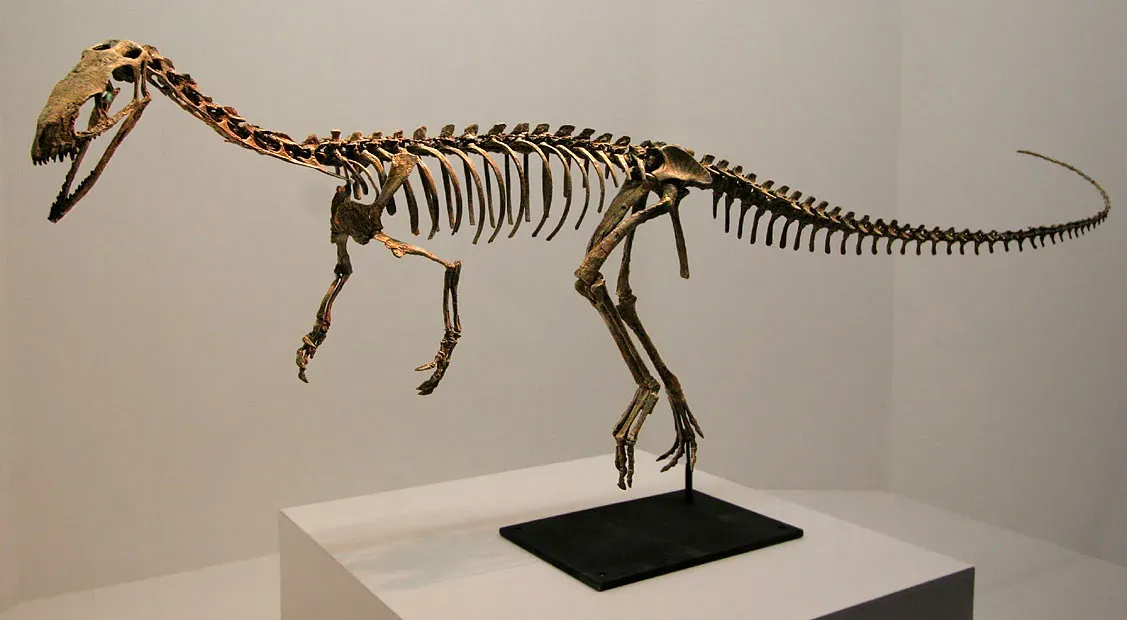
Another line of evidence comes from changes in the digits of the dinosaurs leading to birds. The first theropod dinosaurs had hands with small fifth and fourth digits and a long second digit. In the theropod lineage that would eventually lead to birds, the fifth digit and then the fourth were completely lost. You can actually trace the architecture of a modern bird’s wing bone-by-bone back to a theropod’s grasping hand. It is evolution written in calcium.
Fossil evidence also demonstrates that birds and dinosaurs shared features such as hollow, pneumatized bones, gastroliths in the digestive system, nest-building, and brooding behaviors. The wishbone, which was present in non-bird dinosaurs, became stronger and more elaborate, and the bones of the shoulder girdle evolved to connect to the breastbone, anchoring the flight apparatus of the forelimb. The breastbone itself became larger, and evolved a central keel along the midline of the breast which served to anchor the flight muscles. Every chicken wing you’ve ever seen on your dinner plate is essentially a modified dinosaur forelimb. Try uneating that thought.
Dinosaur Behaviors That Live On in Every Bird You See Today
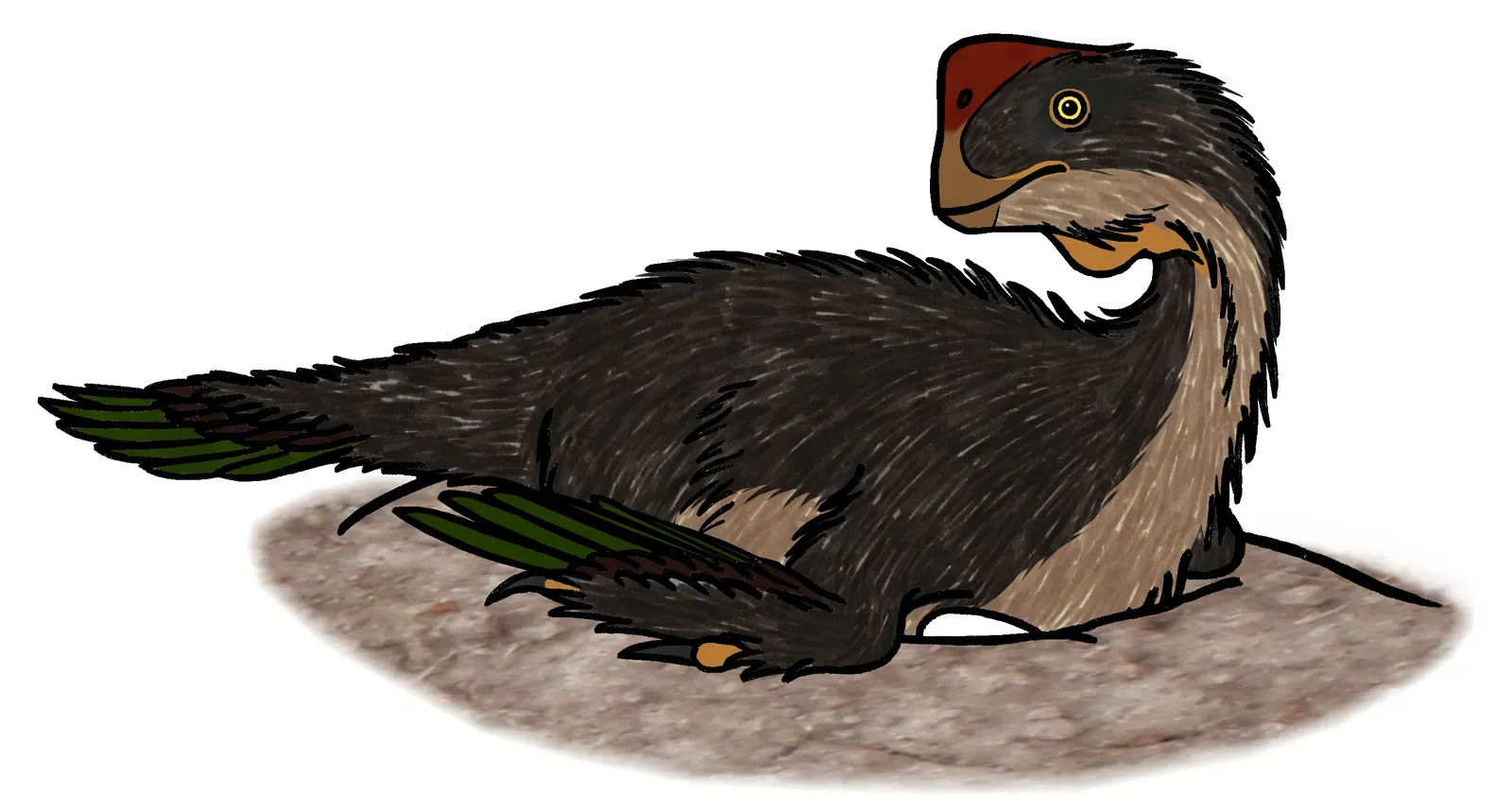
Behavior is trickier to fossilize than bone, but paleontology has still managed to capture some stunning snapshots. There are egg-related features that birds have inherited from dinosaurs like oviraptorosaurs. These include the architecture of eggshell layers, the shape of the egg with one end more pointed, the pigments that cause egg color, and an open nest style. Even a nesting behavior called brooding, where the parent sits on top of the eggs, long-thought to be practiced only by birds, first evolved in these dinosaurs.
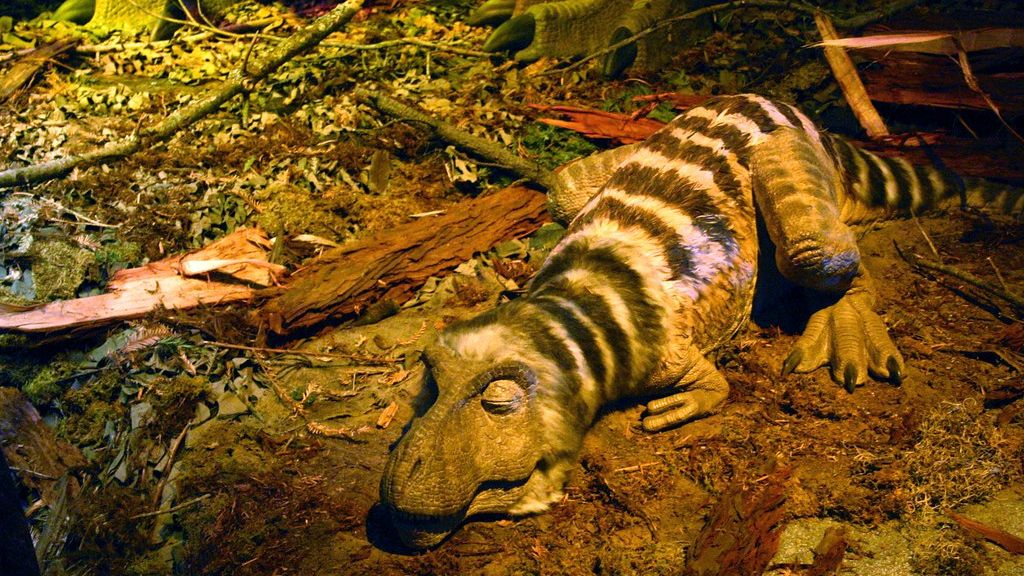
Rare fossils also give us glimpses of the behavior of bird-like dinosaurs, such as Mei long, a small, duck-sized bipedal dinosaur from the Cretaceous era. It was found preserved in volcanic ash falls, a bit like Pompeii, captured curled up in a sleeping position very similar to how a lot of birds roost today. Modern bird behaviors like nesting, territorial defense, and song have roots in dinosaur ancestors. These behaviors were not invented by birds. They were inherited.
How Dinosaurs Shrank and Outsmarted an Apocalypse
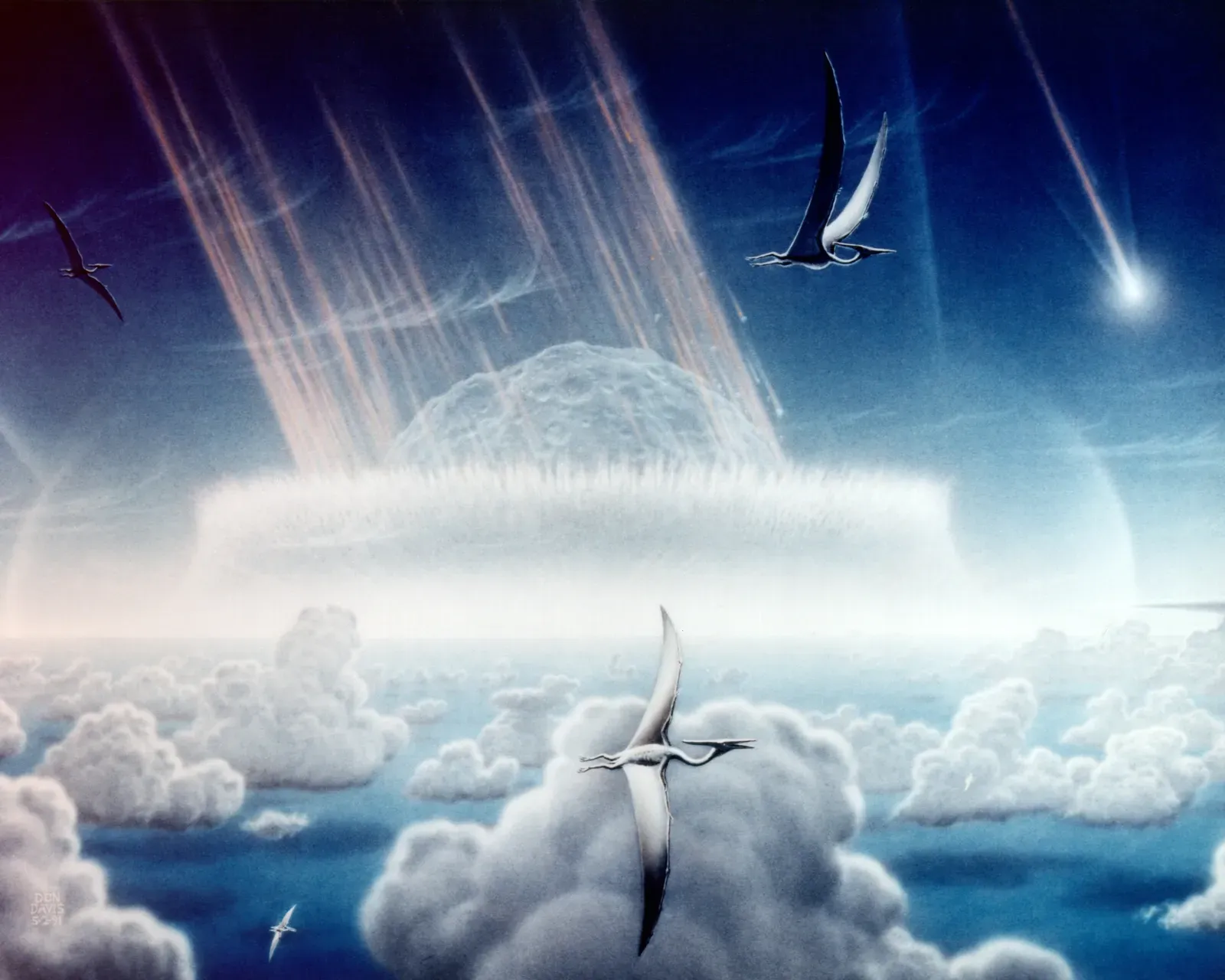
When nearly every dinosaur went extinct 66 million years ago, the only ones that survived were those that had shrunken, that is, the birds. Today, there are roughly ten thousand species of these feathered fliers, making them the most diverse of all the four-limbed animals. A study revealed why this lineage has been so successful: birds started downsizing well before the rest of the dinosaurs disappeared. Think of it like evolution hedging its bets on a smaller, more adaptable body plan.
An asteroid more than 6 miles across struck what is now the Yucatan Peninsula, triggering the fifth mass extinction in the world’s history. Some of the debris thrown into the atmosphere returned to Earth, the friction turning the air into an oven and sparking forest fires as it landed all over the world. Then the intensity of the heat pulse gave way to a prolonged impact winter, the sky blotted out by soot and ash as temperatures fell. All told, more than three quarters of species known from the end of the Cretaceous period didn’t make it. Yet birds survived. Their small size, dietary flexibility, and flight ability gave them an edge that larger dinosaurs simply couldn’t match.
The Brain Revolution: How Bird Intelligence Has Deep Dinosaur Roots
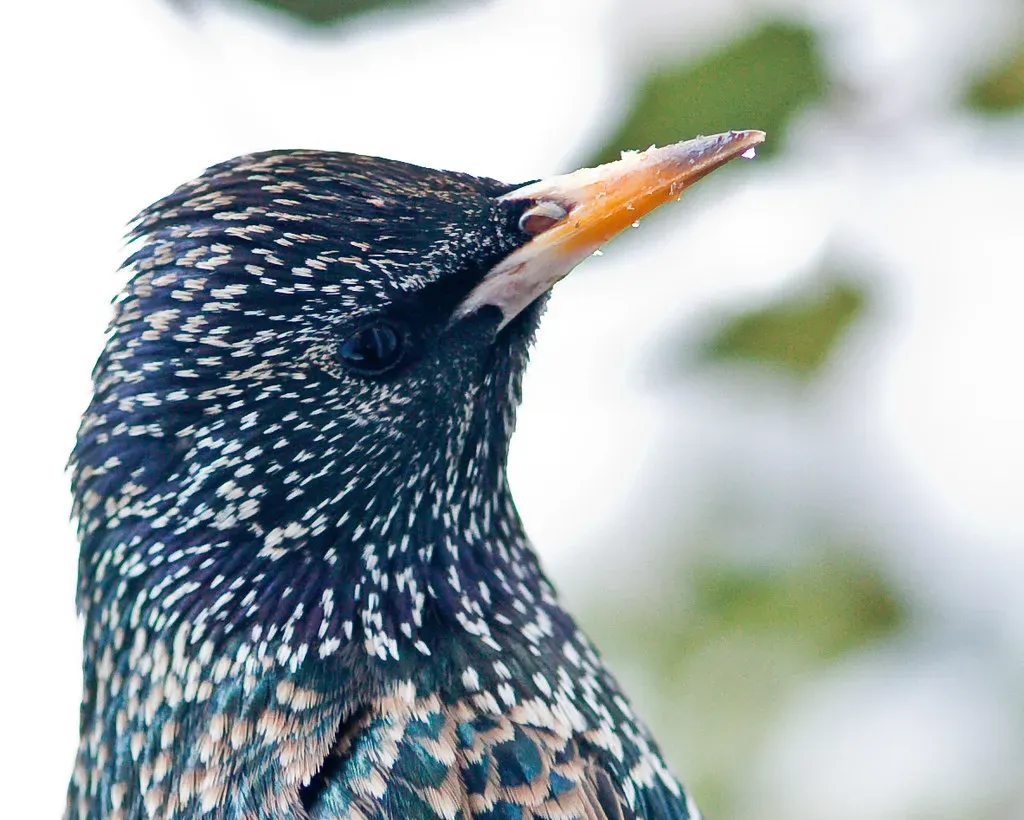
You might think of modern birds like crows and parrots as surprisingly clever animals. But did you know that intelligence was already brewing in the dinosaur lineage long before modern birds arrived? Through the study of endocasts, natural or artificial casts of brain cavities in fossils, scientists have traced the evolution of increased brain size and complexity from early dinosaurs to birds. Theropod dinosaurs show a trend of increasing encephalization as they evolved closer to birds, with features like expanded cerebral hemispheres and cerebellums appearing in more bird-like dinosaurs.
The 80-million-year-old complete skull of a bird is revealing more about the evolution of brain structure from the earliest known bird-like dinosaurs to modern birds. A discovery could help solve one of the most enduring mysteries of vertebrate evolution: how birds developed their unique intelligence. The fossil fills a 70-million-year gap in our understanding of how the brains of birds evolved, between the 150-million-year-old Archaeopteryx, the earliest known bird-like dinosaur, and birds living today. The journey from reptile to rocket-scientist crow is longer, and more fascinating, than anyone realized.
Birds Today: Living Proof That Dinosaurs Never Truly Died
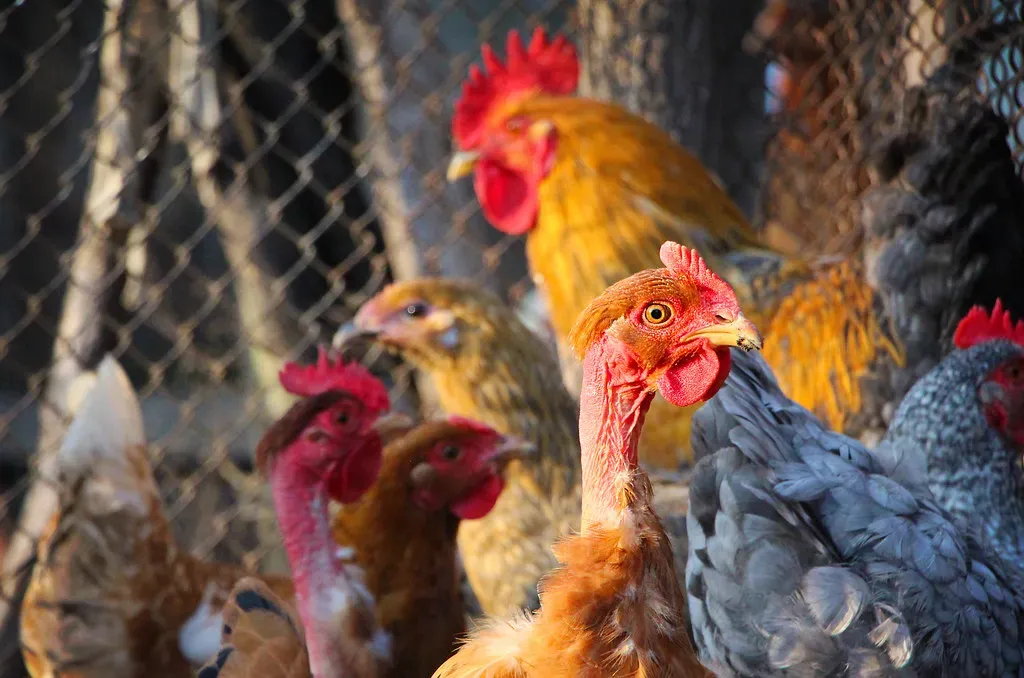
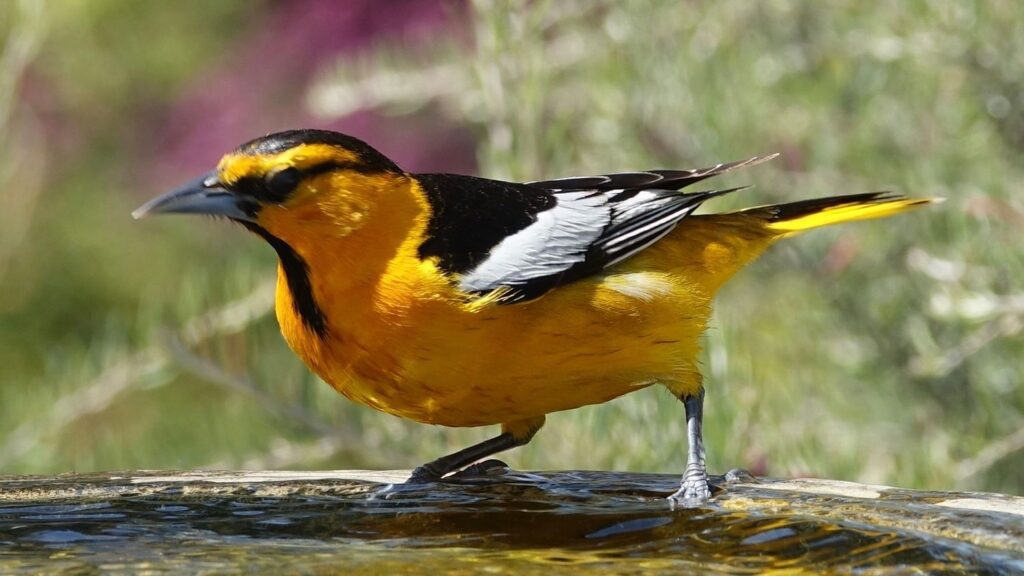
Let’s be real about what this all means. The jays, finches, and hummingbirds that so peacefully frequent your backyard are indeed living dinosaurs, a surviving lineage of vicious predators that ruled the terrestrial ecosystems of the Mesozoic. Every pigeon, every eagle, every penguin diving into the ocean after fish, is carrying the genetic legacy of a lineage that has survived two hundred million years of Earth’s most dramatic changes.
The capacity of dinosaurs to survive multiple extinction events is now well established, and birds now have more species in comparison with any other terrestrial vertebrate. Many of the birds we recognize today emerged quickly after the extinction event 66 million years ago that killed off non-bird dinosaurs. Most modern bird groups were around by about 50 million years ago. That is not a story of extinction. That is a story of transformation, resilience, and one of the greatest survival acts in the history of life on Earth.
Conclusion
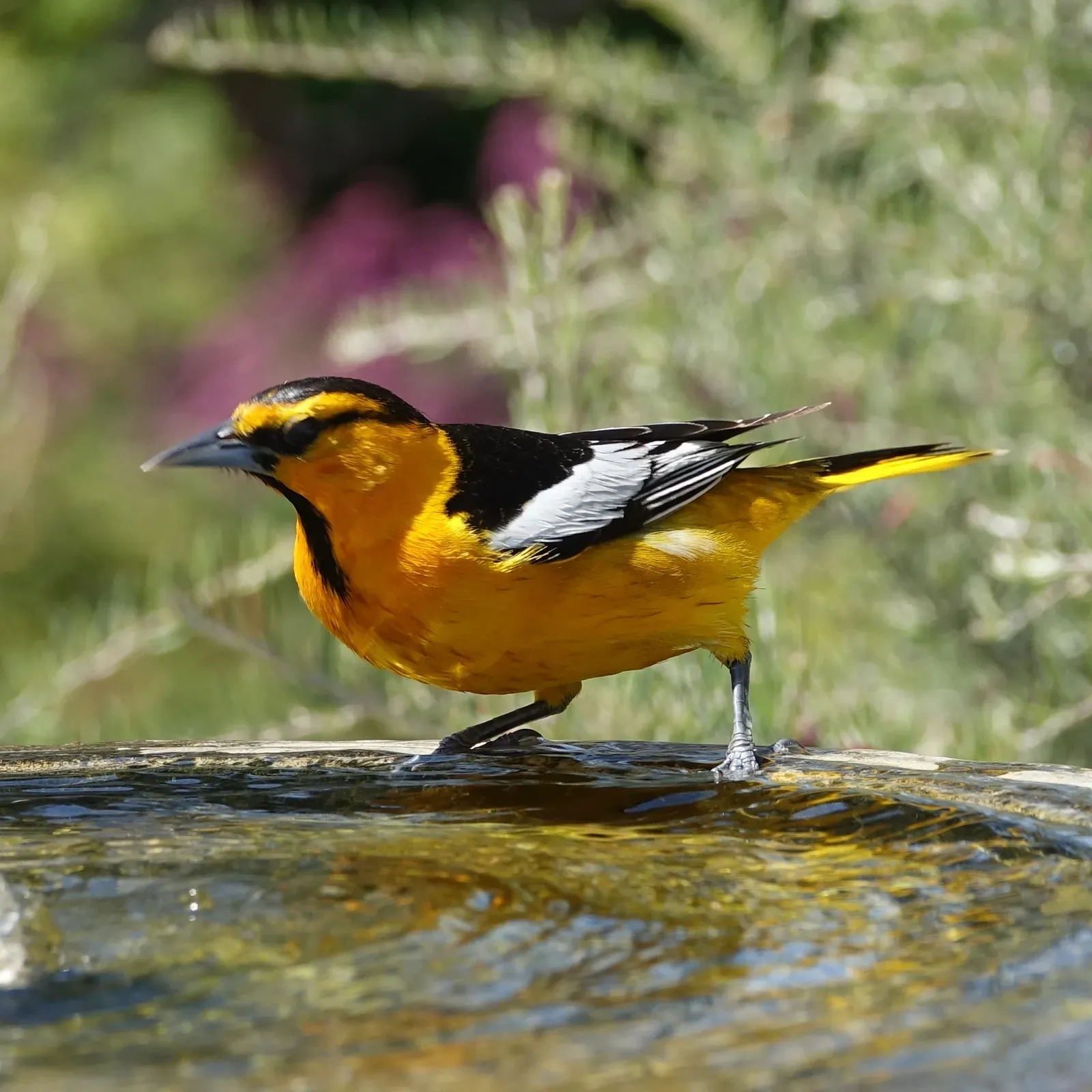
Dinosaurs did not disappear. They adapted, downsized, grew feathers, and took to the skies. The next time you watch a crow solve a puzzle, a heron freeze-frame still over a river, or even a common sparrow build a nest with meticulous care, you are watching the enduring legacy of creatures that once made the ground tremble beneath their feet.
The science is unambiguous: the scientific consensus regarding birds as living dinosaurs is now overwhelming, supported by multiple independent lines of evidence from comparative anatomy, the fossil record, embryology, and molecular biology. In modern biological classification, birds are formally recognized as a group nested within theropod dinosaurs, making them no less dinosaurian than Tyrannosaurus or Velociraptor from a taxonomic perspective. Dinosaurs are not gone. They are watching you from your garden fence right now.
The real question is not whether dinosaurs are still among us. They clearly are. The question worth sitting with is this: now that you know the truth, will you ever look at a bird the same way again?