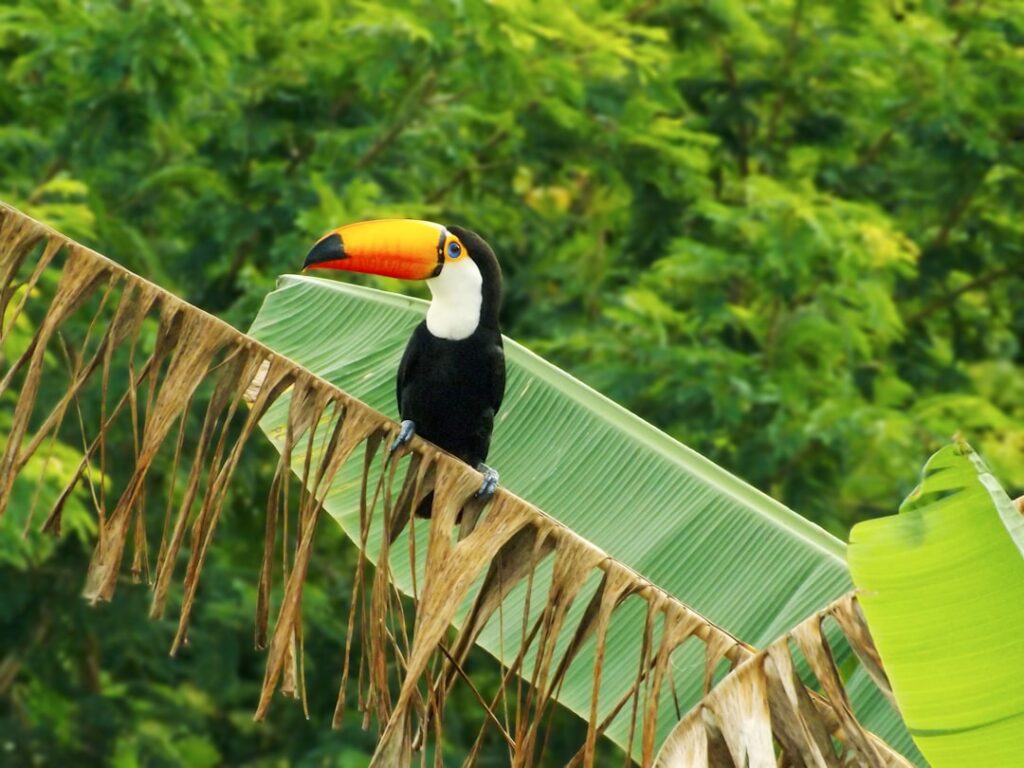
Rio de Janeiro – In the heart of the world’s largest urban forest, ariel toucans have staged a remarkable comeback. Reintroduced over 50 years ago to Tijuca National Park after local extinction in the 1960s, these vibrant birds now play a pivotal role in ecosystem recovery. A recent study highlights their renewed interactions with native plants, particularly those producing seeds vital for forest regeneration.
Pioneering Efforts Bring Toucans Home
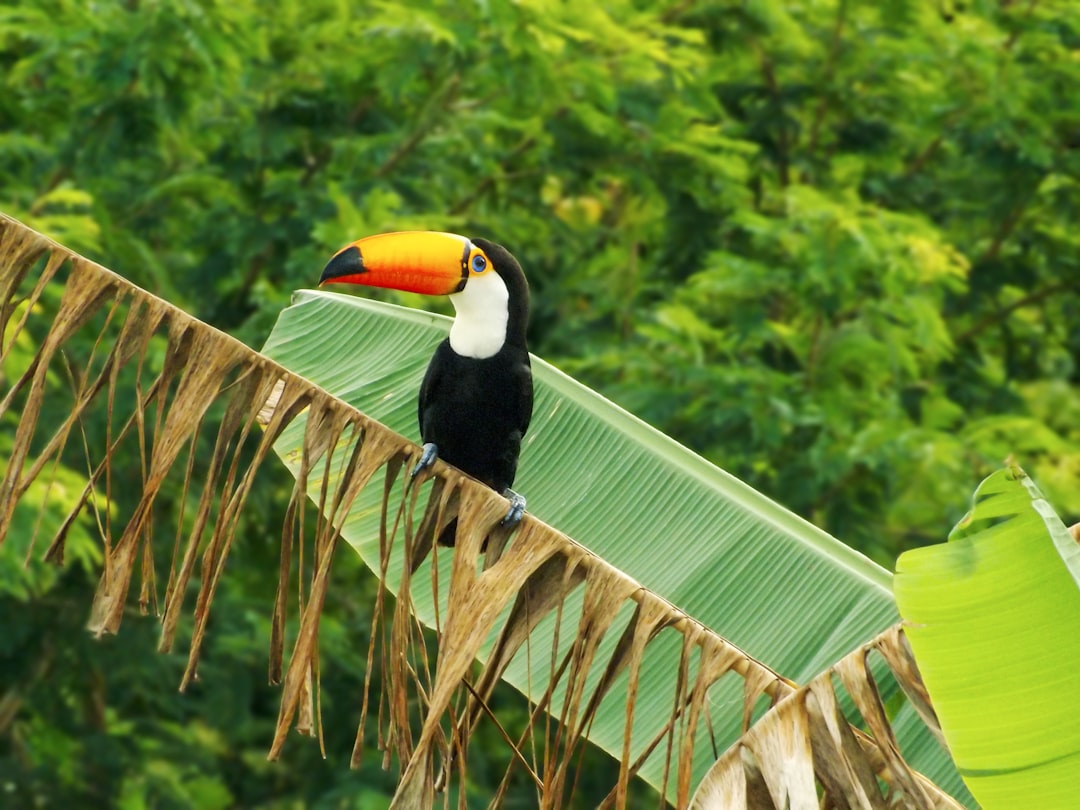
Pioneering Efforts Bring Toucans Home (Image Credits: Unsplash)
In 1970, primatologist Adelmar Coimbra Filho released 46 ariel toucans (Ramphastos ariel) into Tijuca National Park. The initiative aimed to restore fauna in a degraded Atlantic Forest fragment surrounded by one of South America’s largest cities. Habitat loss, fragmentation, and hunting had wiped out the population locally just a decade earlier. For years, the birds received little monitoring, leaving their long-term impact uncertain.
Today, the population thrives, with flocks spotted across the park and nearby green spaces. Researchers credit the park’s restoration history, which began in the 19th century, for creating suitable conditions. This urban oasis spans about 40 square kilometers and supports diverse wildlife amid Rio’s sprawl. The toucans’ persistence demonstrates the potential of early conservation actions.
Study Uncovers Dietary Revival
A team led by urban ecologist Flávia Zagury tracked toucans for a full year, covering more than 20 kilometers daily on foot. They recorded feeding bouts and compared observations to 101 historical plant interactions documented in literature. The birds engaged with 76% of those plants overall. For species with medium and large seeds, recovery reached nearly 90%.
“They are such sociable and intelligent beings,” Zagury observed. “The way they are able to handle fruits: Sometimes it has a hard capsule on the outside, and they hold it with their little feet and open it with their beaks.” Their oversized beaks enable access to resources few other animals can exploit. This functional recovery underscores the reintroduction’s success after 53 years.
Boosting Survival of Threatened Trees
Toucans proved especially vital for endangered species. The jussara palm (Euterpe edulis) emerged as a favorite, consumed more than any other. Nationally classified as endangered, it has lost over half its range due to overharvesting and deforestation. The bicuíba-branca (Virola bicuhyba), another priority, faces similar threats.
“The jussara palm, a species in danger of extinction, was one of its favorites. I think it was the champion, the one it ate the most,” Zagury noted. By ingesting and dispersing these seeds, toucans help regenerate forests depleted of large frugivores. Their role fills a critical gap in defaunated landscapes.
Filling a Unique Ecological Niche
Recent reintroductions of red-rumped agoutis (Dasyprocta leporina) and brown howler monkeys (Alouatta guariba) showed minimal dietary overlap with toucans. This complementarity enhances overall ecosystem function. Toucans specialize in larger seeds over 6 millimeters, where other species fall short.
| Seed Size Category | Diameter | Interaction Recovery |
|---|---|---|
| Small | < 6 mm | 63% |
| Medium | 6-12 mm | 88% |
| Large | > 12 mm | 89% |
The data illustrate toucans’ “functional uniqueness.” Adjacent areas like the Rio de Janeiro Botanical Garden further support the population, offering year-round fruits from 91 plant species and nesting sites.
Lessons for Future Restoration
While promising, gaps persist. Exact dispersal distances and germination rates remain unstudied. “It’s pretty much a blank canvas; there is so much we still don’t know,” Zagury cautioned. Long-term monitoring could reveal more about contributions to reforestation.
Details appear in a study published in Oikos. Tijuca’s story offers hope: patient rewilding can rebuild lost links in urban ecosystems.
Key Takeaways
- Ariel toucans recovered 76% of historical plant interactions 53 years post-reintroduction.
- They excel at dispersing medium and large seeds critical for endangered trees like jussara palm.
- Minimal overlap with other species highlights their irreplaceable niche.
This quiet triumph in Rio reminds us that conservation yields compounding benefits over decades. What role can urban forests play in your city? Tell us in the comments.