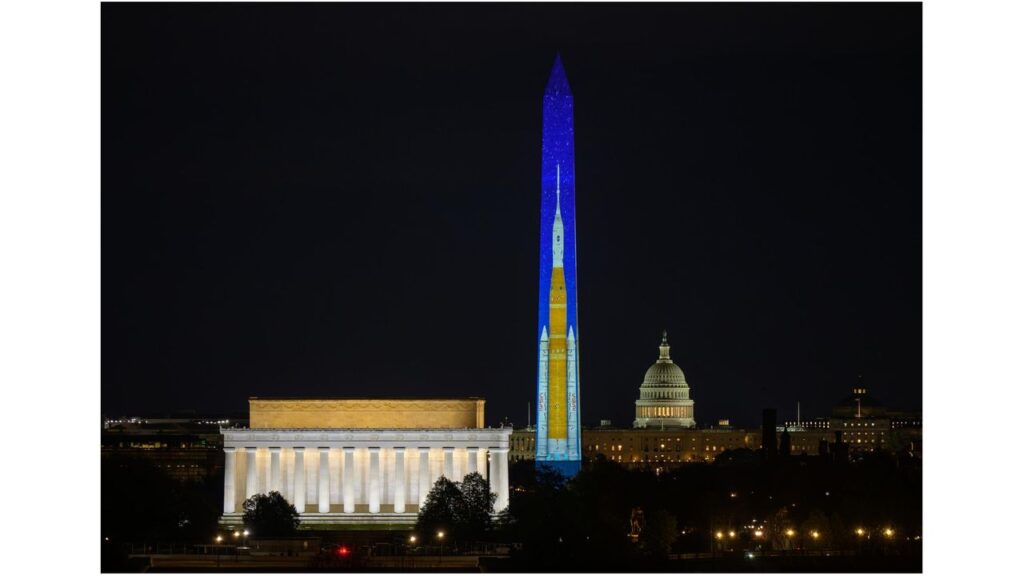
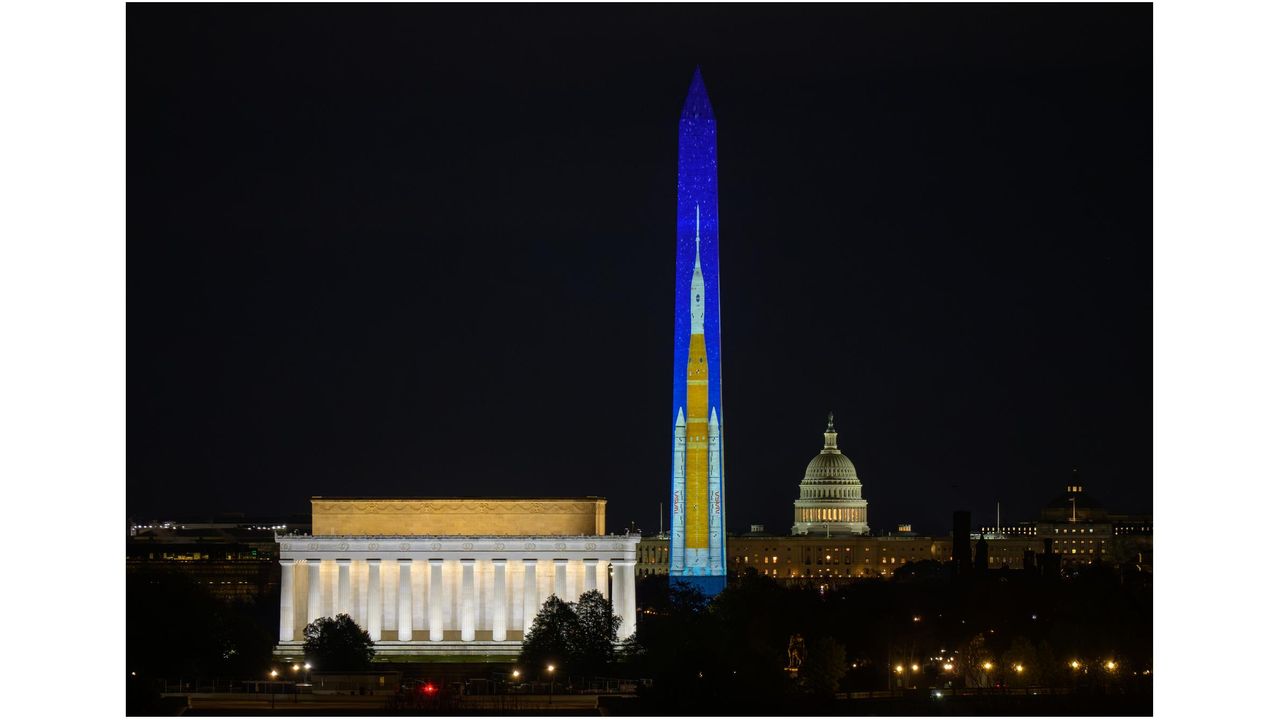
A Symbolic Glow for Space Ambitions (Image Credits: Cdn.mos.cms.futurecdn.net)
Washington, D.C. – The nation’s capital pulsed with anticipation on New Year’s Eve as the Washington Monument transformed into a glowing tribute to NASA’s upcoming Artemis 2 mission.
A Symbolic Glow for Space Ambitions
The event marked a striking fusion of history and future exploration. Organizers projected a massive image of the Space Launch System rocket onto the monument, creating the illusion of a candle-like flame at its tip. This display celebrated not only the Artemis 2 flight but also the 250th anniversary of the Declaration of Independence in 2026. Crowds gathered along the National Mall, their faces lit by the projection’s warm hues, as the structure stood tall against the winter night sky.
The projection ran for several hours, drawing visitors who marveled at the blend of patriotic symbolism and cutting-edge space technology. NASA officials described the event as a way to connect America’s foundational ideals with its bold steps into deep space. The rocket’s depiction emphasized the mission’s role in returning humans to the moon after more than five decades. Spectators reported a sense of unity, with families and space enthusiasts alike sharing in the excitement.
Artemis 2: Reviving Human Lunar Exploration
Artemis 2 represents NASA’s first crewed mission beyond low-Earth orbit since the Apollo era ended in 1972. Four astronauts will orbit the moon aboard the Orion spacecraft, launched by the powerful SLS rocket from Kennedy Space Center in Florida. The crew includes commander Reid Wiseman, pilot Victor Glover, mission specialist Christina Koch, and Canadian Space Agency astronaut Jeremy Hansen. This 10-day journey will test critical systems for future landings, including Artemis 3 planned for 2027.
Preparations have accelerated in recent weeks, with the SLS rocket scheduled to roll out to the launch pad on January 17. Engineers completed final integrations of the core stage and boosters late last year, ensuring the vehicle meets rigorous safety standards. The mission’s success hinges on flawless performance from Orion’s heat shield and life support systems during the lunar flyby. NASA emphasized that Artemis 2 will pave the way for sustained presence on the moon and eventual Mars voyages.
Building Momentum in the Capital
The Washington Monument illumination served as more than a visual spectacle; it highlighted growing public interest in space achievements. Similar events in past years, like the 2019 Apollo 11 anniversary projection, have drawn thousands and fostered national pride. This year’s display aligned with broader initiatives to engage communities in STEM education and exploration goals. Local officials noted increased tourism inquiries following the announcement, boosting the area’s winter economy.
Experts view such public engagements as vital for sustaining support for NASA’s budget, which funds these ambitious programs. The event coincided with ongoing discussions in Congress about space policy amid the semiquincentennial celebrations. Attendees included students from nearby schools, who participated in related workshops on rocketry and astronomy. The projection’s design incorporated subtle animations of the rocket’s ascent, captivating viewers with its dynamic energy.
Key Milestones Ahead
As the launch window opens in early February, teams at Kennedy Space Center conducted dress rehearsals and weather assessments. The Orion capsule arrived at the assembly facility in November 2025, where technicians verified its interfaces with the European Service Module. Ground crews simulated emergency scenarios to prepare for any contingencies during the high-stakes flight.
- Rocket rollout: January 17, 2026, to Launch Complex 39B.
- Final crew simulations: Completing in mid-January at Johnson Space Center.
- Launch target: No earlier than February 6, pending favorable conditions.
- Mission duration: Approximately 10 days, with a lunar orbit at 60 miles altitude.
- Post-mission analysis: Focused on data for Artemis 3 lunar landing preparations.
Key Takeaways
- The Washington Monument event symbolizes the intersection of American history and space innovation.
- Artemis 2 will test technologies essential for NASA’s long-term lunar and Mars goals.
- Public displays like this build excitement and support for future missions.
The Artemis 2 mission stands as a testament to human ingenuity and the enduring quest to explore our cosmic neighborhood. As the rocket prepares to roar skyward, events like the monument’s illumination remind us of the shared dreams that propel such endeavors. What aspects of the Artemis program excite you most? Share your thoughts in the comments below.