A Milestone in Motion (Image Credits: Cdn.mos.cms.futurecdn.net)
Kennedy Space Center, Florida – As the new year unfolds, NASA edges closer to reviving human exploration beyond Earth orbit with the upcoming rollout of its powerful Space Launch System rocket.
A Milestone in Motion
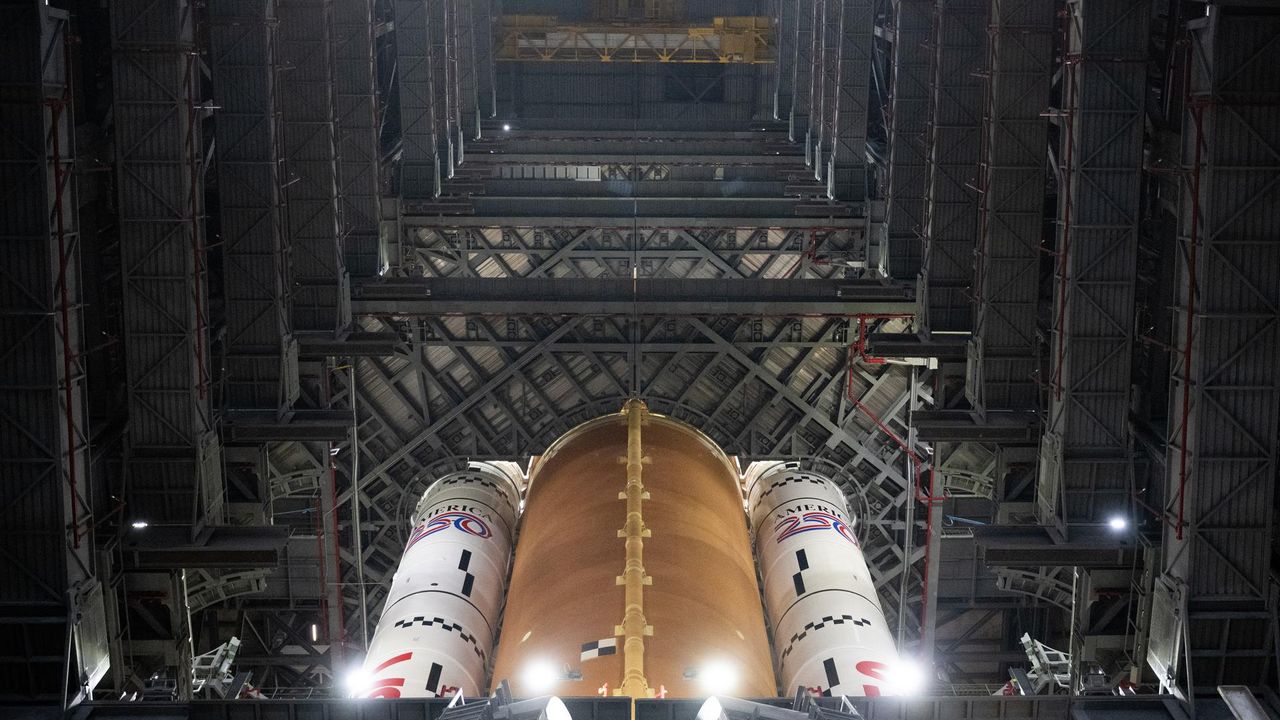
The rollout of the SLS rocket, stacked with the Orion spacecraft, marks a pivotal step toward the Artemis 2 mission. Scheduled for January 17, this event will transport the 322-foot-tall vehicle from its assembly site to Launch Complex 39B, a journey that typically spans about 4 miles and takes around 12 hours. Engineers have conducted extensive checks to ensure all systems function seamlessly during this move. Once at the pad, the rocket will undergo final integrated testing, simulating launch conditions to verify readiness.
This process builds on the successful uncrewed Artemis 1 flight in 2022, which validated the SLS and Orion in deep space. The agency confirmed the timeline recently, signaling confidence in meeting the February launch window. Delays from earlier challenges, such as battery issues and vibration concerns, have been resolved through rigorous problem-solving. Now, teams focus on precision to avoid any setbacks.
Unveiling the Artemis 2 Crew and Goals
Artemis 2 will carry four astronauts on a 10-day journey around the Moon, the first crewed deep-space mission for NASA since Apollo 17 in 1972. Commander Reid Wiseman, pilot Victor Glover, mission specialist Christina Koch, and Canadian Space Agency astronaut Jeremy Hansen form the crew, each bringing expertise from prior spaceflights. Their path will loop around the lunar far side without landing, testing human endurance in the spacecraft’s environment.
Key objectives include validating Orion’s life support, navigation, and reentry systems with humans aboard. The mission will orbit Earth once before heading to the Moon, demonstrating the SLS’s capability to propel heavy payloads into lunar trajectories. Data gathered will inform future Artemis flights, including the first lunar landing with crew. NASA emphasized that this test flight paves the way for sustained presence on and around the Moon.
Technological Marvels Powering the Mission
The SLS rocket stands as the most powerful ever built for human spaceflight, generating over 8.8 million pounds of thrust at liftoff through its four RS-25 engines and twin solid rocket boosters. Orion, perched atop, features advanced heat shields to withstand reentry speeds exceeding 24,000 mph. Ground crews have integrated these components meticulously, addressing past anomalies like unexpected vibrations during tests.
Recent updates highlight progress in fueling systems and avionics, ensuring the stack withstands the rollout’s stresses. The January 17 event will allow public viewing from Kennedy Space Center visitor areas, underscoring the mission’s role in inspiring global interest in space. For more details on preparations, see coverage from Space.com.
Broader Implications for Lunar Return
Artemis 2 forms the cornerstone of NASA’s strategy to return humans to the Moon by the late 2020s, fostering international partnerships and commercial innovation. Success here will enable Artemis 3, targeted for a lunar landing, and eventual Mars missions. The program integrates contributions from agencies like the European Space Agency, which supplies Orion’s service module.
Challenges persist, including budget constraints and technical hurdles, yet the rollout represents a triumph of engineering resilience. Observers note the mission’s timing aligns with heightened public excitement, as seen in social media buzz about the impending launch. This step reaffirms NASA’s commitment to exploring the solar system sustainably.
Key Takeaways
- Artemis 2 rollout on January 17 initiates final preparations for a February 6 launch window.
- The mission tests crewed deep-space travel around the Moon for the first time in over 50 years.
- Outcomes will shape NASA’s long-term goals for lunar bases and Mars exploration.
As NASA rolls toward this lunar milestone, the Artemis 2 mission promises to reignite humanity’s cosmic ambitions and demonstrate the feasibility of living beyond our planet. What excites you most about returning to the Moon? Share your thoughts in the comments.