Bangladesh – Declining catches of familiar seafood have pushed coastal communities toward once-avoided species like sharks and stingrays, sparking concerns over illegal fishing and marine conservation.
Recent Seizure Exposes Alarming Pattern
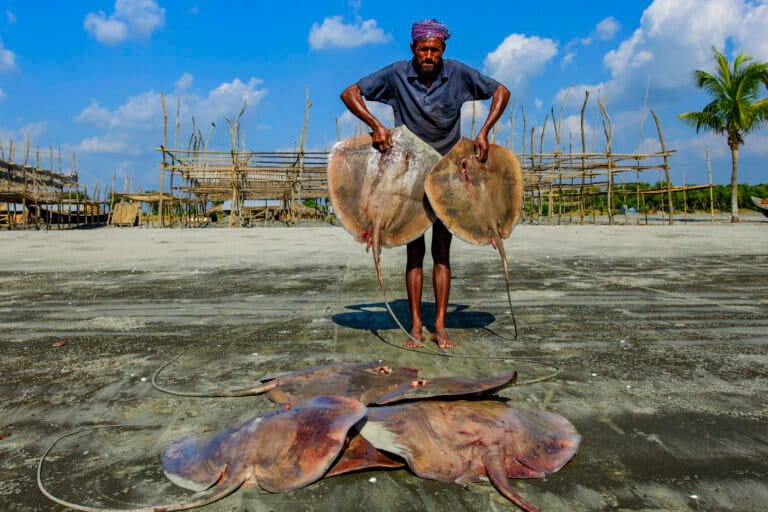
Recent Seizure Exposes Alarming Pattern (Image Credits: Imgs.mongabay.com)
On February 21, officials detained 22 fishers along the Sundarbans mangrove coasts and confiscated 400 kilograms of stingray, one of several reported busts signaling a sharp uptick in such activities.
These protected marine animals, long overlooked by most Bangladeshis except certain coastal Indigenous groups, now appear frequently in local markets. Fishers and traders noted that demand for these “unusual” catches grew noticeably over the past decade. Stingrays, known locally as shapla pata from the Dasyatidae family, dominate the trend due to their prevalence in Bangladesh’s waters, which host 10 shark families and 12 ray families.
Factors Fueling the Unwanted Boom
Overexploitation has slashed traditional fish supplies, leaving fishers with fewer options. More boats compete in the same waters, yet individual hauls have shrunk. Large-bodied stingrays and sharks offer reliable income when smaller species prove elusive.
Rustom Ali Howlader, a 30-year fisher from Noakhali district’s Poragola village, explained that siltation in coastal rivers traps these animals in nets, easing their capture. Mahbubul Alam Yousufi, a veteran trader there, observed, “The demand for such unusual fish was not very common even one decade ago. But the demand curve has changed nowadays.” Lower prices make them accessible to poorer households, while exports of dried skins to China, Thailand, Singapore, and Myanmar, plus shark fins to East Asian markets, sustain the trade.
- Rising fisher numbers strain resources
- Silted estuaries aid accidental catches
- Affordable meat appeals to low-income buyers
- International demand for skins and fins
- Decline in preferred species like hilsa
Legal Protections Fall Short
The Wildlife (Conservation and Security) Act of 2012 bans harvesting, sale, and consumption of sharks and rays, classifying most as vulnerable or endangered. Yet enforcement remains lax, with many violations going unreported. More than half of Bangladesh’s shark and ray species face extinction risks, per Wildlife Conservation Society research.
Md. Anisur Rahman, former director at the Bangladesh Fisheries Research Institute, highlighted gaps: “Weak law enforcement and poor knowledge of the fishermen about conserving the species are the major reasons behind such incidents.” Artisanal gear like gillnets, set bag nets, and longlines snag them at 5 to 40 meters deep in districts including Noakhali, Bhola, Patuakhali, Khulna, and Bagerhat.
Broader Crisis in Marine Fisheries
National marine landings climbed to 629,000 metric tons in 2023-24, up from 165,000 tons four decades earlier, but diversity suffered.
| Period | Marine Catch (metric tons) |
|---|---|
| 1983-84 | 165,000 |
| 2023-24 | 629,000 |
Marine fish species dropped from 475 in 1971 to 394 by 2021, blamed on juvenile harvesting and migration barriers. Officials like Muhammad Tanvir Hossain Chowdhury from the Department of Fisheries call for subsidies and awareness to steer fishers away from protected stocks.
Key Takeaways
- Over half of shark and ray species in Bangladesh are threatened.
- Poverty and weak enforcement drive illegal catches.
- Alternative livelihoods could ease pressure on marine ecosystems.
Stronger monitoring, fisher education, and economic support offer hope to balance livelihoods with biodiversity. As Bangladesh’s waters teeter, timely action could prevent irreversible losses. What steps should authorities prioritize? Share your views in the comments.