Bardiya, Nepal – Tensions boiled over on February 6 when crowds gathered outside the Bardiya District Administration Office, their chants demanding justice after back-to-back leopard attacks claimed two lives the day before. Women from nearby forest-edge villages led the charge, highlighting a grim reality where Nepal’s celebrated tiger recovery collides with everyday survival needs. Labor shortages from male migration have forced more women into risky forest tasks, amplifying encounters with predators in shared landscapes.
Fatal Encounters in Familiar Forests
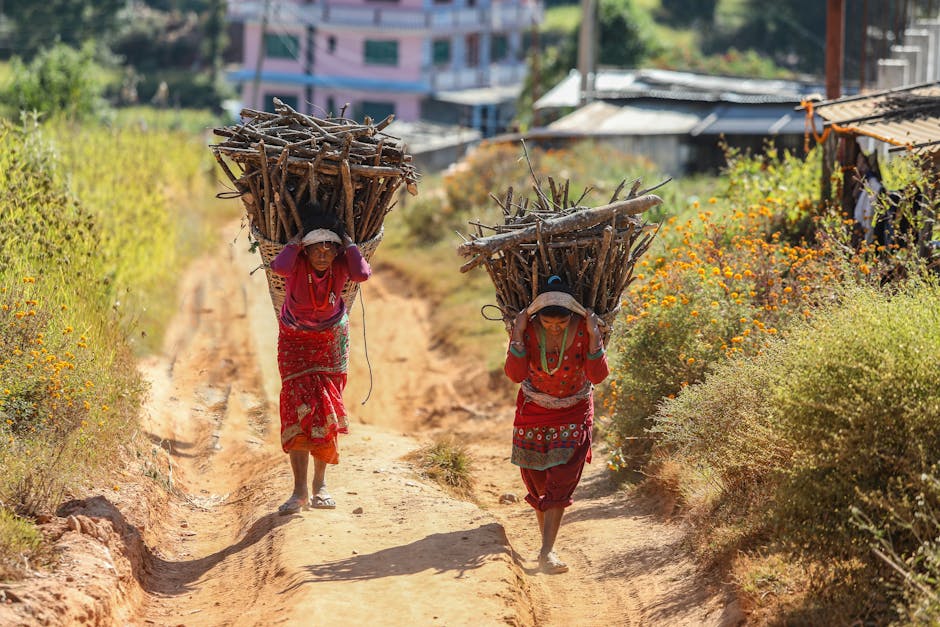
Fatal Encounters in Familiar Forests (Image Credits: Pexels)
Residents traced the unrest to a deadly winter that began in late December 2025. Seventeen-year-old Binita Pariyar ventured into the community forest near Madhuwan settlement to cut grass for livestock, a routine chore that ended in tragedy when a Bengal tiger attacked her. Over the next four weeks, five more fatalities followed, with victims herded livestock, gathered fodder, or tended fields – all outside the national park boundaries.
Division Forest Office records from 2021 to 2025 revealed a stark pattern: most injuries and deaths during grass-cutting involved women. Recent research in the Bardiya-Banke area confirmed that nearly one-third of lethal attacks occurred while herding cattle and another third while cutting grass. Firewood collection and other subsistence activities filled out the rest, underscoring how daily necessities turned lethal.
Migration Shifts the Burden to Women
Nepal’s Terai regions, including Bardiya with its 60,831 residents, have seen men migrate abroad in droves – accounting for 80-90% of departures to jobs in India or the Gulf. This “feminization of agriculture” left women managing households and farms, drawing them repeatedly to forest edges for siru and khar grasses, firewood, and wild vegetables.
These zones overlapped with wildlife corridors like the Khata Corridor, linking Bardiya National Park to India’s Katarniaghat sanctuary. In 2024, 84% of attacks happened within one kilometer of forest boundaries, peaking at dawn and dusk when women entered for work. Bent low with sickles, they became vulnerable to predators mistaking them for prey, conservationists noted.
Protests Demand Action and Protection
The February 6 demonstration pushed for fair compensation, removal of problem leopards, and enhanced safeguards after a man died cutting grass and a woman perished in her field. Protesters from marginalized Dalit and Tharu communities, like Binita’s family, emphasized their reliance on these forests without alternatives.
Hari Gurung, chairman of the Khata Community Forest, observed that deaths disproportionately struck vulnerable households. Survivors like Rupsi Thapa, whose friend Padamkala died grazing livestock, grappled with lasting trauma. “I don’t know if it will ever get better,” Rupsi said, voicing a fear that kept many from returning to the woods.
Balancing Conservation Wins and Human Costs
Nepal’s tiger population reached 355, doubling since 2009 through rigorous protection, yet Bardiya recorded 53 human deaths from wildlife over five years. Rama Mishra of Wild Care Nepal pointed to fragmented landscapes: “Land use around Bardiya hasn’t changed simply because forests have been lost. It has become more fragmented and edge-dominated, where forest patches and human trails overlap.”
Experts urged long-term fixes over culling animals. Hemanta Acharya, a community anti-poaching leader, called for measuring livelihoods alongside tiger numbers: “We have to stop looking at only saving human lives or the lives of the animals, and start looking at the livelihoods of the people affected by conflict.” Solutions included better compensation, early warnings, and alternative resources to reduce forest dependence.
- Reform compensation processes for quicker, fairer payouts.
- Develop community early-warning systems along corridors.
- Boost women’s roles in conservation decision-making, currently under 15%.
- Promote income alternatives like tourism in remote villages.
- Enhance buffer zone access to safer fodder plots.
Key Takeaways
- Women face heightened risks from routine forest work amid male migration.
- 84% of 2024 attacks occurred near forest edges, not deep inside parks.
- Sustainable coexistence demands addressing livelihoods, not just wildlife protection.
Nepal’s conservation triumphs demand a reckoning with the human toll, particularly on women sustaining rural life amid prowling tigers. As villages balance fear and necessity, bolder policies could forge safer paths forward. What do you think about balancing wildlife protection and community safety? Tell us in the comments.