Brazilian Amazon – Delicate chirps echo from within eggshells buried in riverbank nests, signaling young giant South American river turtles to hatch together for greater protection. Females respond with calls that guide the vulnerable hatchlings toward the water, a rare display of parental care among turtles. This intricate vocal network now faces disruption from the intensifying roar of massive barges navigating busy waterways.
Unveiling a Hidden World of Turtle Communication
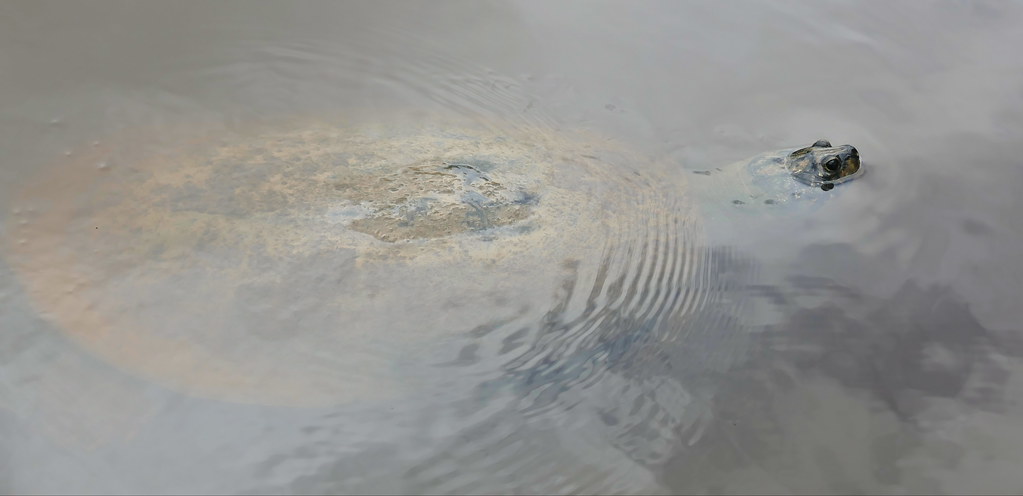
Unveiling a Hidden World of Turtle Communication (Image Credits: Flickr)
Researchers once viewed turtles as silent creatures, but studies on the Rio Trombetas revealed a sophisticated soundscape. Scientists recorded over 270 vocalizations during 220 hours of monitoring between 2009 and 2011. These efforts uncovered six distinct call types, each tied to specific behaviors.
Hatchlings produced sounds even before breaking free from their shells, continuing as they scrambled from nest chambers. These pre-hatch calls likely stimulated synchronized emergence, boosting survival odds against predators. Females answered promptly, their vocalizations possibly directing the young to safety in the river. Sonic transmitters confirmed that hatchlings traveled with adult females for more than two months, highlighting strong group bonds.
The Vocal Toolkit of Podocnemis expansa
The giant South American river turtle, or Podocnemis expansa, deploys a varied acoustic repertoire. Low-frequency rumbles aided contact during river migrations and basking sessions, carrying over longer distances through water. Higher-pitched tones dominated nesting phases, propagating effectively in shallow waters and air.
Females unleashed the most diverse calls as they approached nesting beaches, potentially coordinating site choices and procession formations. Groups of three to 30 turtles exited the water in single file, their chatter synchronizing movements. Dr. Camila Ferrara, lead researcher, noted that these sounds offered unique behavioral insights, though their exact meanings remained elusive.
- Low-frequency calls: Migration and basking for distant communication.
- High-frequency calls: Nesting coordination in air and shallows.
- Pre-hatch chirps: Group hatching stimulation.
- Female responses: Guidance to water post-hatch.
- Nesting procession sounds: Synchronization among adults.
Rising River Traffic Poses Acoustic Peril
Commercial barge traffic has surged along Amazon waterways to transport soy, minerals, and timber, generating relentless low-frequency noise. This rumble overlaps with the turtles’ communication spectrum, masking critical calls between mothers and offspring. Motorized vessels, including ships, boats, and jet skis, already impair sound reception on nesting beaches, potentially stranding hatchlings or fracturing groups.
Mining operations exacerbate the issue through dredging and machinery din, while hydroelectric dams alter water flows and flood nests. Historical overharvesting decimated populations from tens of millions to fragmented remnants, though protected areas show stabilization. Climate-driven floods and droughts further compound risks, with one beach losing 78% of nests in a single season.
| Threat | Impact on Turtles |
|---|---|
| Barge and boat noise | Masks vocal signals, disrupts mother-hatchling bonds |
| Mining dredging | Habitat damage, additional noise pollution |
| Dams | Floods nests, alters river hydrolog |
Efforts to Safeguard the Silent Symphony
Conservation programs across Brazil, Peru, Bolivia, and beyond have released millions of head-started hatchlings. Brazil’s Amazon Chelonian Program monitored over 147,000 females from 2012 to 2014, with populations rebounding in key rivers like the Tapajós and Purus. Community patrols protect beaches, curbing egg poaching.
Researchers advocate for quieter vessels and mining restrictions near nesting sites. Regional observatories aim to track trends and share data. These measures preserved behavioral richness, but expanding traffic demands urgent action.
Key Takeaways
- Turtles rely on precise vocal cues for hatching, guidance, and migration.
- Barge noise directly threatens this acoustic lifeline.
- Protected areas show success, but basin-wide threats persist.
The giant river turtle’s voices underscore the Amazon’s fragile web of life. As barges multiply, preserving quiet waterways becomes essential to their future. What steps should prioritize to protect these ancient communicators? Tell us in the comments.