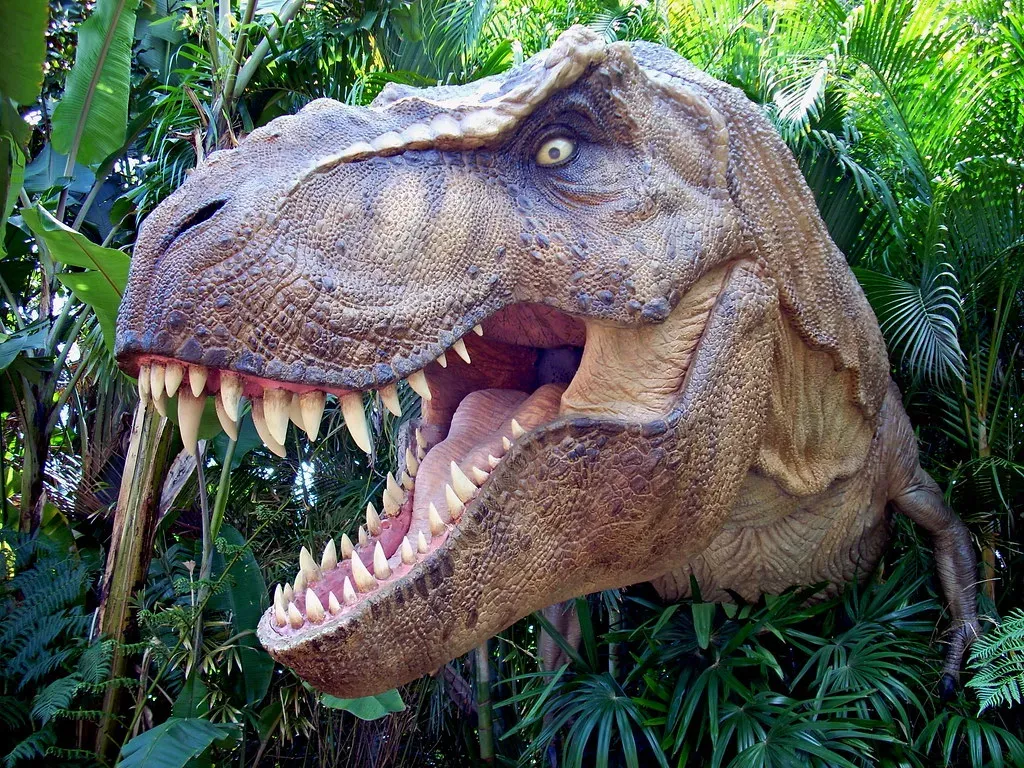
Ask anyone to name a Cretaceous predator, and you’ll almost certainly hear the same answer. Tyrannosaurus rex has dominated our collective imagination for over a century, starring in blockbuster films, toy aisles, and museum centerpieces the world over. It’s a magnificent animal, no question about that. Yet the obsession with T. rex has cast a long shadow over dozens of equally astonishing carnivores that roamed the ancient world at the same time, or even before, the so-called “king” ever set a single enormous foot on the ground.
The Cretaceous period, stretching roughly from 145 to 66 million years ago, was an age of extraordinary diversity. The predators that filled its ecosystems ranged from feathered, turkey-sized hunters to sail-backed giants larger than any land carnivore alive today. You might be surprised, maybe even a little stunned, by just how wild and varied these creatures truly were. Let’s dive in.
A World of Predators: Setting the Cretaceous Stage
The Late Cretaceous period, spanning from about 100 to 66 million years ago, represents one of the most dramatic chapters in Earth’s history. While Tyrannosaurus rex commands the spotlight in popular culture, this ancient world teemed with an incredible diversity of predators. Honestly, the sheer variety of hunting strategies, body plans, and ecological niches on display during this era is something modern ecosystems simply cannot match.
Theropods first appeared during the Carnian age of the Late Triassic period 231.4 million years ago and included the majority of large terrestrial carnivores from the Early Jurassic until the end of the Cretaceous, about 66 million years ago, including the largest terrestrial carnivorous animals ever, such as Tyrannosaurus and Giganotosaurus, though non-avian theropods exhibited considerable size diversity, with some non-avian theropods like scansoriopterygids being no bigger than small birds. That range, from the size of a sparrow to a school bus, is staggering when you actually think about it. Although iconic, T. rex was only one species of many large, meat-eating dinosaurs that dominated various ecosystems at different times over the 130 million years of dinosaur reign. During the Cretaceous period, most species of top predator that evolved in North America and Asia were either carcharodontosaurs or tyrannosaurs. The earlier part of the Cretaceous was ruled by carcharodontosaurs, after which tyrannosaurs replaced them as the top predators until the end of the Cretaceous.
Giganotosaurus: The Southern Giant That Rivaled the King
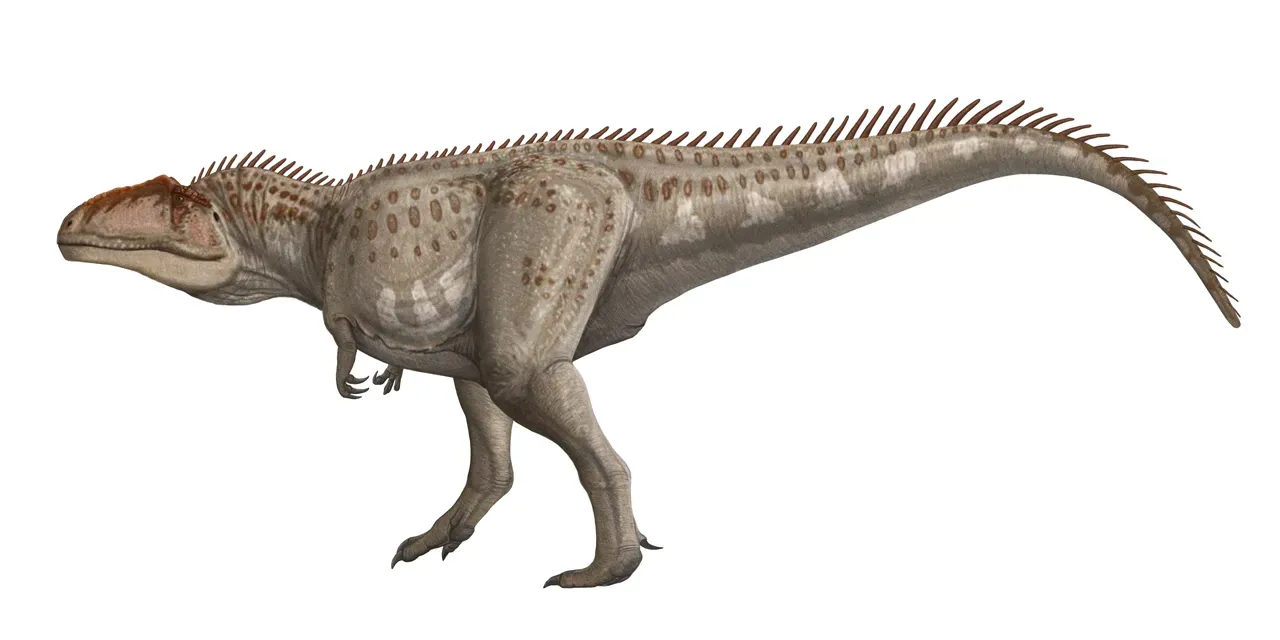
Giganotosaurus is a genus of large theropod dinosaur that lived in what is now Argentina, during the early Cenomanian age of the Late Cretaceous period, approximately 99.6 to 95 million years ago. When you realize this predator was stalking the earth almost 30 million years before T. rex even existed, the timeline of prehistoric dominance suddenly gets a whole lot more interesting. When paleontologists first unearthed Giganotosaurus carolinii in Argentina, they realized they had found something that challenged T. rex’s throne as the ultimate predator. This South American giant stretched up to 43 feet in length and may have outweighed even the largest Tyrannosaurus specimens. Size wasn’t its only advantage, as Giganotosaurus possessed a skull designed for slicing rather than crushing.
Giganotosaurus was probably the apex predator in its ecosystem. It shared its environment with herbivorous dinosaurs such as the titanosaurian sauropod Andesaurus, and the rebbachisaurid sauropods Limaysaurus and Nopcsaspondylus. Think of it like a lion sharing the savannah with elephants, only scaled up to truly absurd proportions. In 1999, paleontologist Reese E. Barrick and geologist William J. Showers found that the bones of Giganotosaurus and Tyrannosaurus had very similar oxygen isotope patterns, with similar heat distribution in the body. These thermoregulatory patterns indicate that these dinosaurs had a metabolism intermediate between that of mammals and reptiles, and were therefore homeothermic, with a stable core body temperature.
Spinosaurus: The Monster That Rewrote the Rules
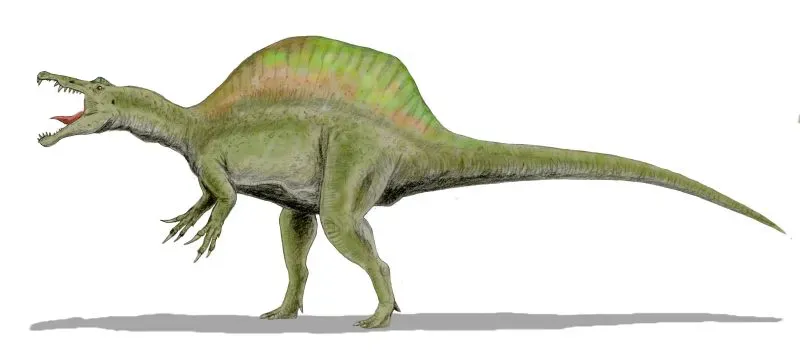
Spinosaurus was the biggest of all the carnivorous dinosaurs, larger than Tyrannosaurus and Giganotosaurus. It lived during part of the Cretaceous period, about 112 million to 97 million years ago, roaming the swamps of North Africa. Let that sink in for a moment. The largest carnivorous dinosaur that ever lived was not a tyrannosaurid. It was not even close to T. rex in terms of lifestyle or hunting behavior, and that is what makes Spinosaurus so extraordinary. During the Cretaceous period, the area that is now North Africa was a lush, riverine environment. The landscape was dominated by vast river systems and mangrove forests that were teeming with a variety of life. The climate was warm and the area was likely subject to seasonal floods. This environment was the perfect habitat for a semi-aquatic creature like Spinosaurus.
Recent fossil evidence shows Spinosaurus was the first dinosaur that was able to swim, and likely spent most of its life in the water, according to a study published in September 2014 in the journal Science. It’s hard to say for sure exactly how aquatic it truly was, since paleontologists still debate the details, but the basic picture is astonishing. As a carnivore, its diet likely consisted primarily of fish. Its elongated, crocodile-like skull and conical teeth were well-adapted for catching and gripping slippery prey. Imagine an animal longer than a city bus, wading through prehistoric rivers and snatching massive fish from the murky depths. That is genuinely one of the wildest images paleontology has ever produced.
Carcharodontosaurus: Africa’s Shark-Toothed Terror
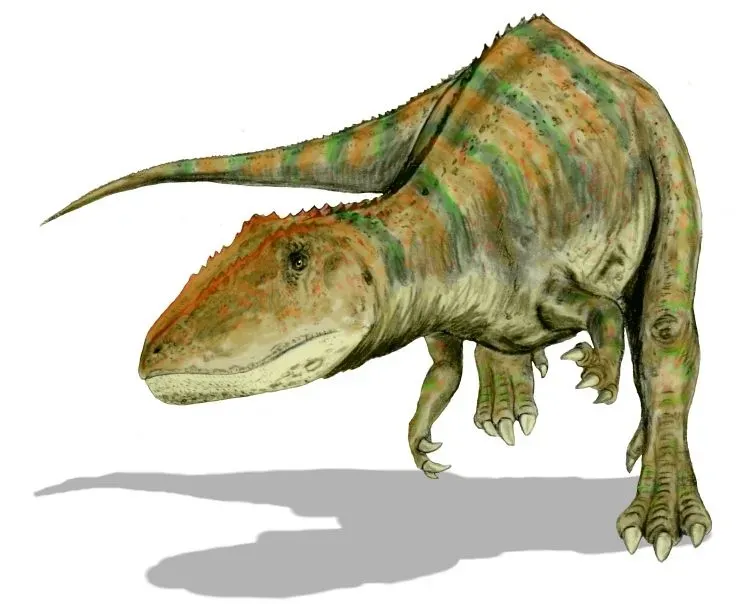
Carcharodontosaurus saharicus was a genus of large theropod that lived in the Late Cretaceous in Africa and grew to be about 39 to 44 feet long, about 11.5 to 13 feet tall at the hips, and about 6.5 to 8 tonnes in weight. It was among the largest theropods, longer than Tyrannosaurus rex but not quite as big as Spinosaurus. Its name literally means “shark-toothed lizard,” and once you see a reconstruction of those enormous, serrated, blade-like teeth, you will understand exactly why. Carcharodontosaurids are characterized by large, ornamented skulls armed with long, fang-like teeth, large body sizes, and reduced forelimbs.
Giant carnivorous dinosaurs such as Tyrannosaurus rex and abelisaurids are characterized by highly reduced forelimbs that stand in contrast to their huge dimensions, massive skulls, and obligate bipedalism. Another group that follows this pattern, yet is still poorly known, is the Carcharodontosauridae, dominant predators that inhabited most continents during the Early Cretaceous and reached their largest sizes in Aptian-Cenomanian times. What makes this group so fascinating is how broadly distributed they were. Researchers found that the presence of carcharodontosaurids in Africa, North America, and South America showed the group had a transcontinental distribution by the Early Cretaceous period. They were, in a very real sense, global rulers of their time.
Carnotaurus: The Horned Bull of Patagonia
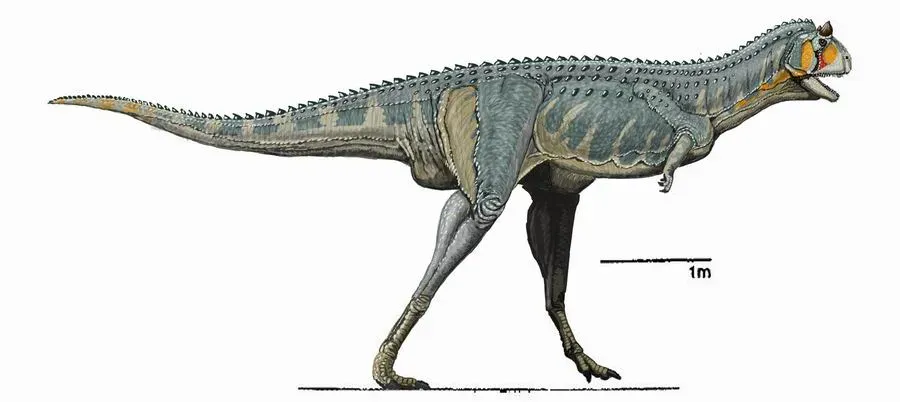
With its short, deep skull and a pair of horns above its eyes, Carnotaurus was a fearsome predator that likely relied on speed and agility to catch its prey. Here’s the thing about Carnotaurus: it looks almost too dramatic to be real. Two stubby horns jutting out above the eyes, arms so tiny they make T. rex’s look functional by comparison, and a build that suggests pure sprinting speed. One popular idea about predators like Carnotaurus is that they used their narrow skulls like hatchets, relying upon the momentum of their head movements to drive their teeth through their prey rather than the bite muscles. The skulls of abelisaurs were also well suited to the job of holding onto prey.
The discovery of Carnotaurus skin impressions provides unprecedented insight into how these predators might have appeared in life. The fossilized skin shows small, pebbly scales arranged in rows, similar to modern crocodiles but adapted for a life of constant motion. This wasn’t a slow, lumbering giant but a precision-engineered pursuit predator that could run down prey across open landscapes. These carnivores thrived through much of the Southern Hemisphere, from Carnotaurus in Argentina and Rugops in Niger to Majungasaurus in Madagascar. While tyrannosaurs were living large in North America and Eurasia, the abelisaurids were among the most widespread and diverse carnivores of the southern continents. That fact alone is enough to make you rethink everything you thought you knew about who really ruled the Cretaceous world.
Velociraptor: Smaller Than You Think, Deadlier Than You Realize
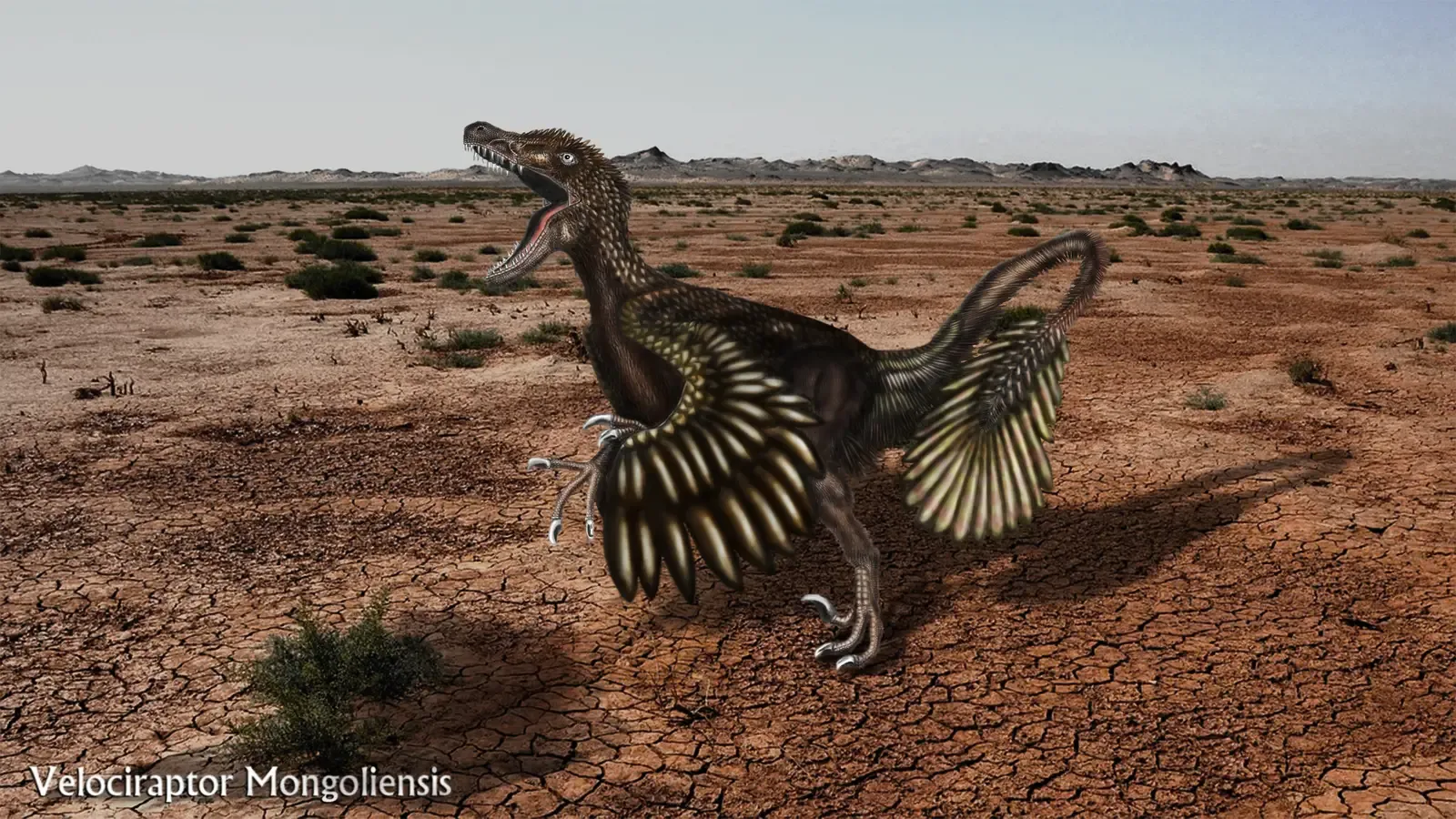
Velociraptor is a genus of small dromaeosaurid dinosaurs that lived in Asia during the Late Cretaceous epoch, about 75 million to 71 million years ago. Let’s be real: the Velociraptor of the Jurassic Park films is basically a myth. The real animal was far more interesting and, in many ways, far stranger. In reality, Velociraptor was roughly the size of a turkey, considerably smaller than the approximately 2-meter-tall and 90-kilogram reptiles seen in the novels and films, which were actually based on members of the related genus Deinonychus.
Velociraptor likely had feathers, a feature that links it to modern birds. The large, sickle-shaped claw on each foot was likely a key tool in its hunting arsenal. The skulls found show evidence of large, forward-facing eyes that hint at its excellent vision. Think of it less as the terrifying person-sized hunter from the movies and more like a feathered, razor-clawed hawk that happened to run on two legs. A famous Velociraptor mongoliensis specimen was found locked in combat with a Protoceratops andrewsi, a type of ornithischian dinosaur. That single fossil tells you more about the intensity and danger of Cretaceous life than almost anything else ever dug out of the ground.
Meraxes Gigas: The Giant Hiding in Plain Sight
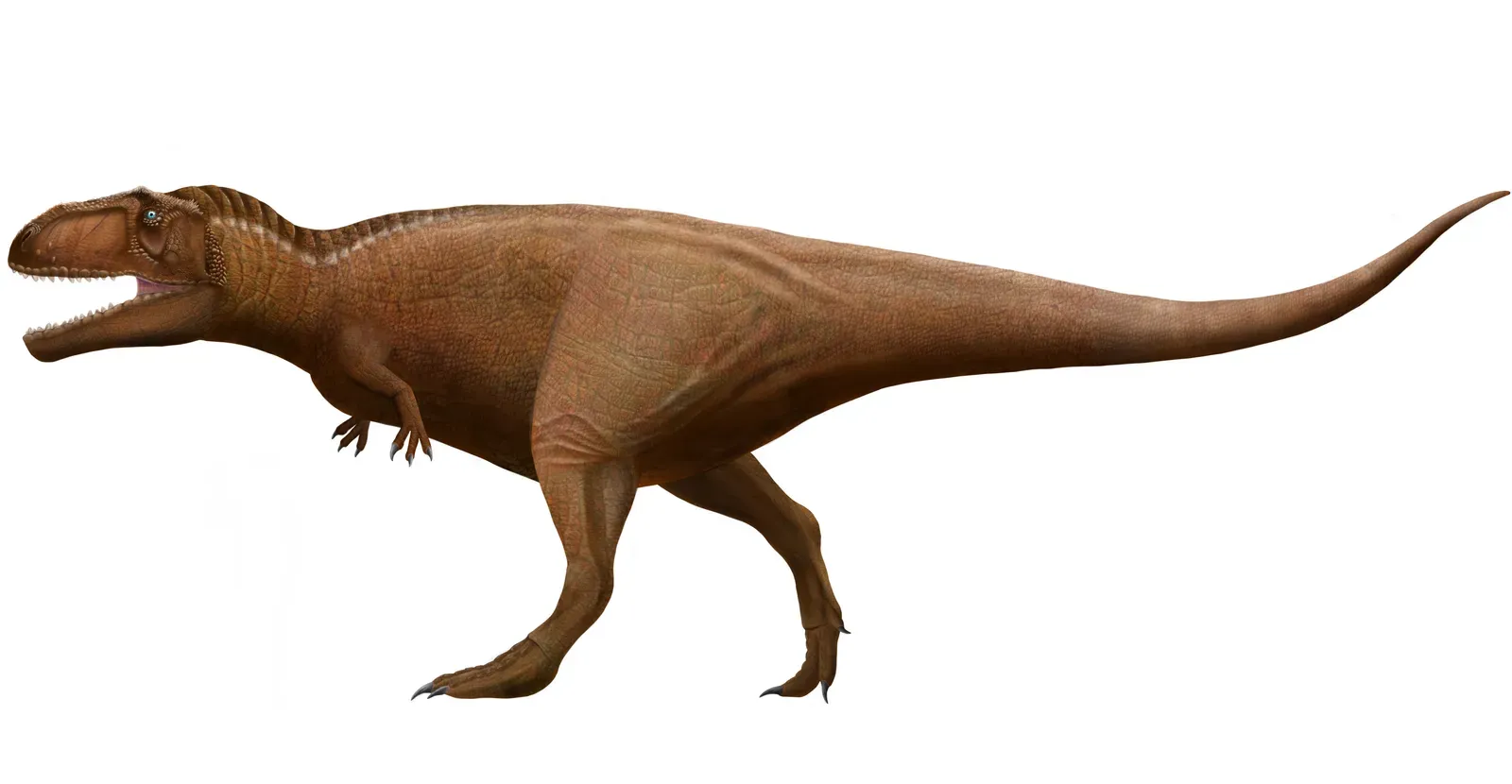
Researchers reported a new carcharodontosaurid, Meraxes gigas, based on a specimen recovered from the Upper Cretaceous Huincul Formation of northern Patagonia, Argentina. Named after a dragon from the fictional world of Game of Thrones, Meraxes gigas is one of the most exciting paleontological discoveries of recent years, and most people outside of the fossil community have barely heard of it. Meraxes preserves novel anatomical information for derived carcharodontosaurids, including an almost complete forelimb that provides evidence for convergent allometric trends in forelimb reduction among three lineages of large-bodied, megapredatory non-avian theropods.
Meraxes adds evidence for a peak in carcharodontosaurid diversity just before their extinction in the Late Cretaceous. With short forelimbs like T. rex, Meraxes documents convergent evolution of this trait among large, predatory theropod lineages. This is one of the most mind-bending concepts in all of paleontology, the idea that completely unrelated dinosaur lineages, separated by thousands of miles and millions of years of evolution, independently arrived at the exact same body plan. Meraxes also provides further evidence that carcharodontosaurids reached peak diversity shortly before their extinction, with high rates of trait evolution in facial ornamentation possibly linked to a social signaling role.
Koleken Inakayali: A Brand-New Face From the Past
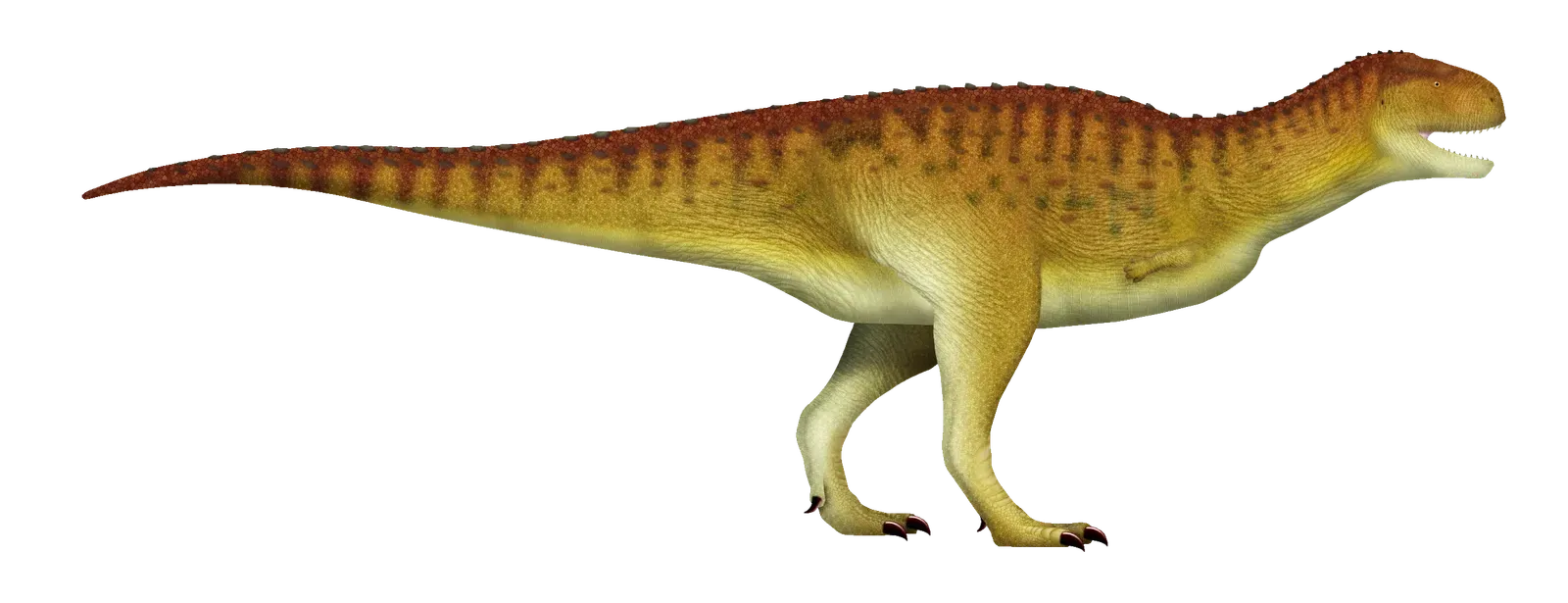
While scouring Argentina’s La Colonia Formation for new dinosaur fossils, paleontologists noticed a single toe bone sticking out of the ancient rock. When they dug in, they found a new dinosaur, a carnivore that roamed prehistoric Patagonia several million years before an asteroid impact brought the Cretaceous to a fiery close. The new dinosaur turned out to be a short-snouted meat-eater known to experts as an abelisaurid. This discovery is a perfect reminder that the Cretaceous still has secrets to give up, even now. Unlike Carnotaurus, Koleken is smaller in size and exhibits a unique set of skull features and anatomical differences, most notably the absence of the massive frontal horns possessed by Carnotaurus.
Researchers found that abelisaurids like Koleken and noasaurids began to rapidly evolve different body plans between the late part of the Jurassic and the early days of the Cretaceous. Evolution doesn’t sit still, even within a single family tree. Researchers analyzing the discovery also analyzed the evolution of abelisaurids and their relatives through time, identifying pulses of accelerated rates of skull evolution in the Early Cretaceous. The work expands what we know about abelisaurids living in this area during the Cretaceous Period and shows that they were more diverse than previously understood. Every bone that comes out of the ground rewrites a little bit of what we thought we knew, and that, honestly, is what makes paleontology so thrilling.
The Big Picture: A World Far Richer Than We Imagined
Carnivorous dinosaurs have been recorded from the Mesozoic of all continents, and even at the highest latitudes of the globe. This specialized group of dinosaurs, the theropods, emerged in the Carnian, at least by approximately 231 million years ago, and diversified and dispersed rapidly across the main continental masses. The sheer geographic reach of Cretaceous carnivores is almost incomprehensible. You name a continent, and some form of large theropod was there, hunting, competing, and evolving in ways unique to its local environment. The fact that such disparate morphotypes are recorded in the Cretaceous of South America alone strongly indicates that an important evolutionary diversification of carnivorous dinosaurs occurred in the southern landmasses.
From Late Jurassic rocks in North America to Cretaceous beds in China and Africa, fossils of meat-eating dinosaurs are abundant. These mostly bipedal predators were key to ancient food webs: they regulated populations of other animals and helped keep ecosystems in balance. That ecological function, the role of the apex predator as the regulator of an entire system, is something we still see today with wolves, lions, and great white sharks. The Cretaceous carnivores were not just killing machines. They were the architects of entire ecosystems. Today, new dinosaurs are being uncovered at a faster rate than ever, about 20 a year. These new discoveries are quickly shedding light on the gap in the fossil record, and enabling scientists to understand the history and role of the dinosaurs during their time on earth.
Conclusion
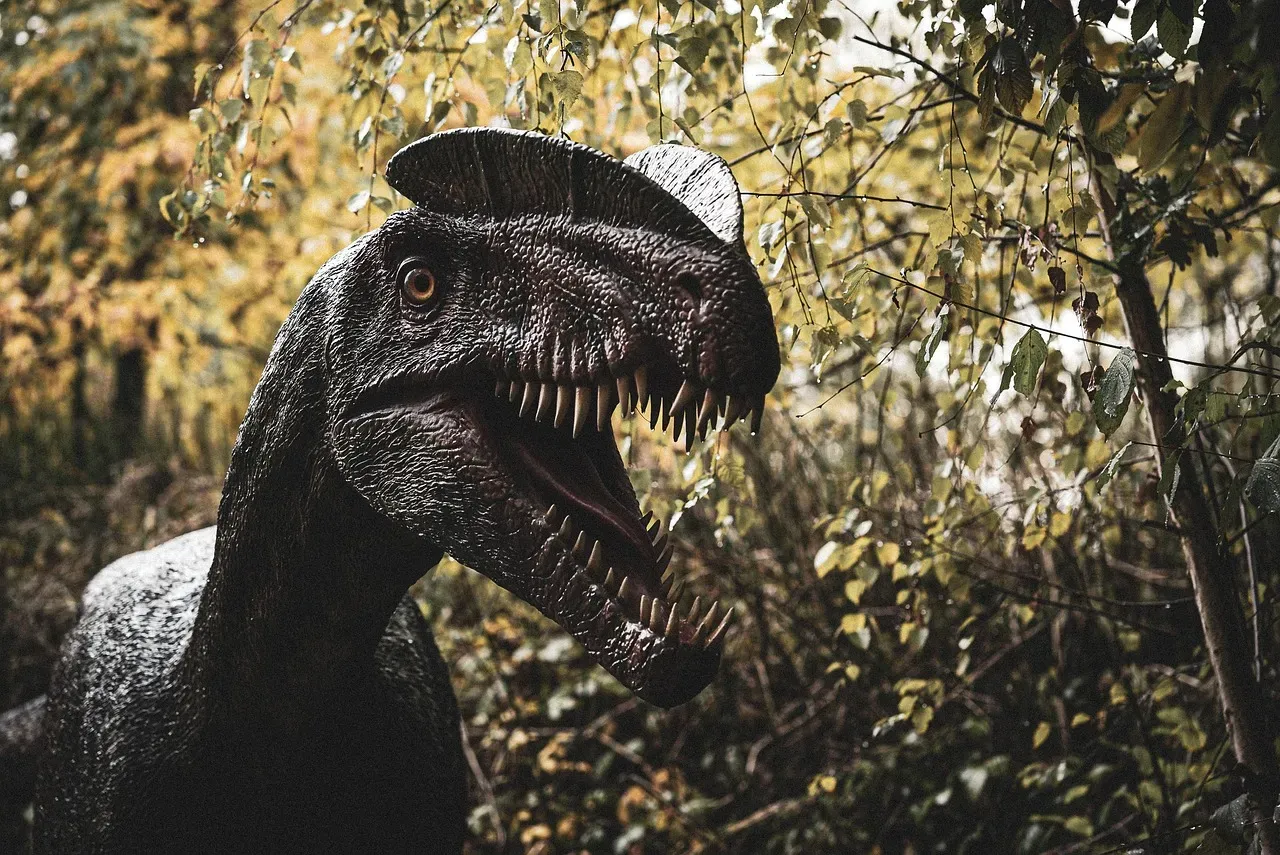
The Cretaceous was not a one-predator show. It was a sprawling, violent, astonishingly diverse theater of hunters that we are only now beginning to fully understand. Spinosaurus waded through rivers in what is now the Sahara. Giganotosaurus stalked titanosaurs across South American plains. Velociraptor, fully feathered and barely bigger than a border collie, pinned prey down with sickle claws in the Mongolian desert. Each one of these animals was as real, as dangerous, and as perfectly engineered for survival as the T. rex that gets all the glory.
Every new fossil that emerges from the earth adds another name, another shape, another strategy to this incredible roster of ancient hunters. The more we dig, the more we discover just how much we’ve been missing. Perhaps the most exciting thought of all is this: somewhere out there, under layers of ancient rock, there are almost certainly Cretaceous carnivores yet to be named and described. What extraordinary predator do you think is still waiting to be found?