Most of us learned the same story in school. A massive asteroid slammed into Earth 66 million years ago, the sky went dark, and the dinosaurs died. Clean. Simple. Case closed. Except science rarely works that neatly, and the more researchers dig into the fossil record, the geological layers, and the ancient chemistry of rocks, the more complex and genuinely fascinating the real story becomes.
What if the asteroid was just the last straw? What if the world the dinosaurs were living in had already become increasingly hostile, stressed from multiple directions at once? The answers, it turns out, are stranger and more surprising than any textbook dared to tell you. Let’s dive in.
The Chicxulub Impact: What You Think You Know May Only Be Half the Story
Transferred from en.wikipedia to Commons by Vojtech.dostal., Public domain)
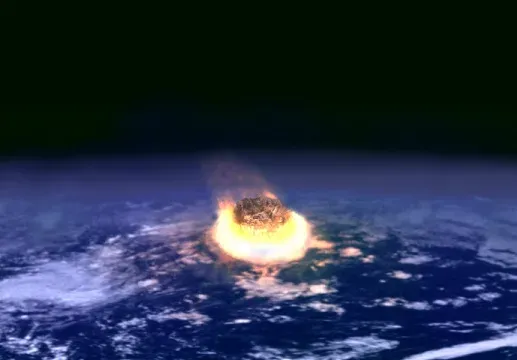
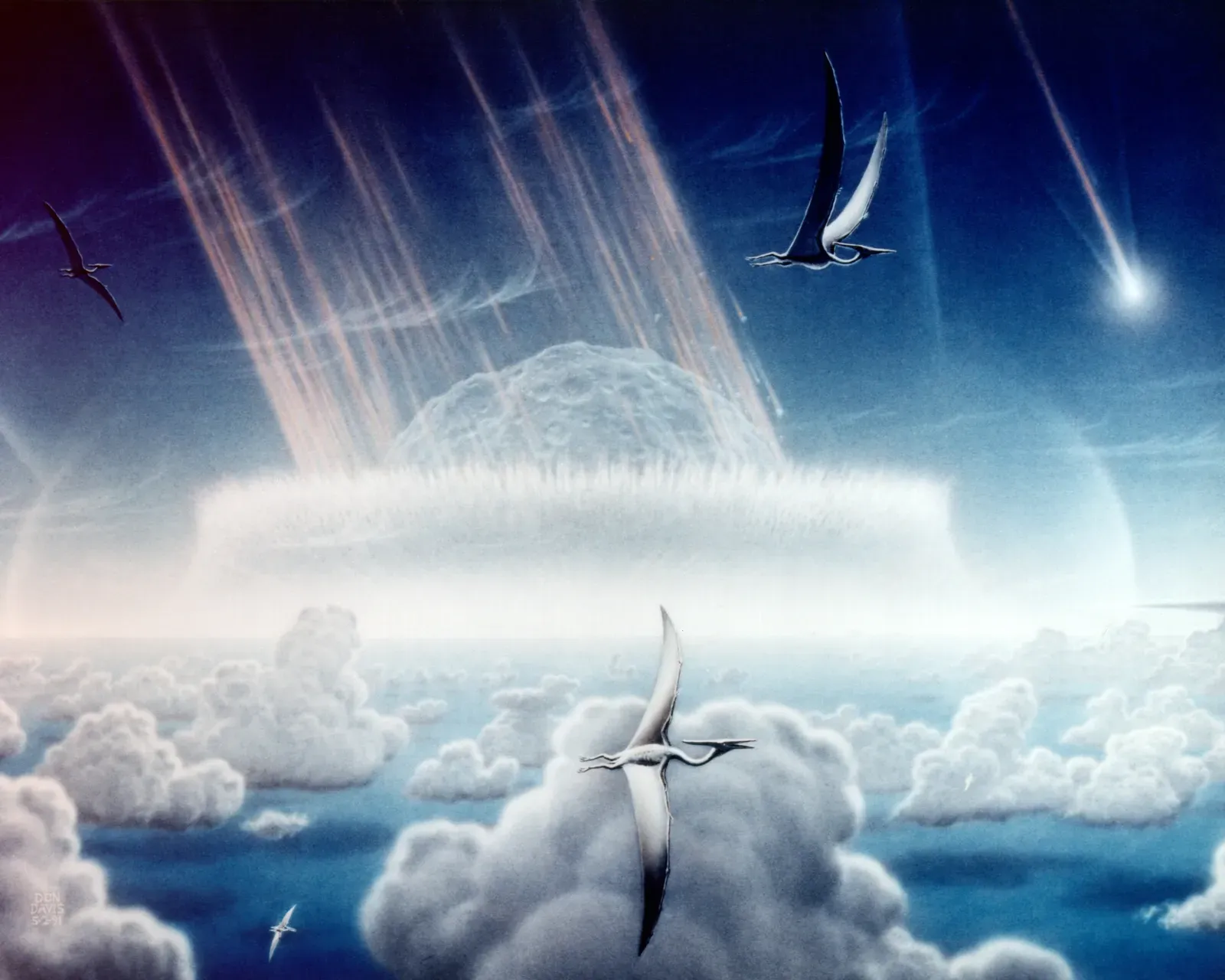
You probably know that a giant asteroid hit the Yucatan Peninsula in Mexico. That part is not in dispute. Approximately 66 million years ago, an asteroid nearly 10 kilometers across hit the Earth near what is now the Yucatan Peninsula, striking at an estimated speed of 20 kilometers per second and producing as much explosive energy as 100 teratons of TNT, roughly 4.5 billion times the explosive power of the Hiroshima atomic bomb. That number is almost impossible to wrap your head around.
Here is the thing though. The impact itself was not really what wiped out three quarters of life on Earth. It was what came after. What really drove the dinosaurs’ doom was what happened afterwards, as the dust and debris from the asteroid went into the atmosphere and blocked out the sun. The Earth went dark and cold for a few years. The asteroid did not kill all the dinosaurs in one go, but triggered a war of attrition that led three out of every four species to die. Think of it less like a bullet and more like a slow, creeping poison.
The Impact Winter and the Collapse of the Food Chain

When the asteroid struck, it did not just leave a crater. The impactor struck carbonate and sulfate-rich sediments, leading to the ejection and global dispersal of large quantities of dust, ash, sulfur, and other aerosols into the atmosphere. These atmospheric contaminants led to prolonged sunlight screening and global cooling, with severe ecological cascade effects. The impact is hypothesized to have precipitated an extremely cold “impact winter” that was beyond the thermophysiological limits of much of the end-Cretaceous biota.
It gets more specific and more disturbing the deeper you look. Based on stratigraphy near the crater, an enormous amount of black carbon was released from the target rock and ejected into the atmosphere, where it circulated the globe within a few hours. This carbon, together with sulfate aerosols and dust, initiated an impact winter and global darkening that curtailed photosynthesis and is widely considered to have caused the K-Pg mass extinction. No sunlight means no plants. No plants means no herbivores. No herbivores means no predators. The entire food chain collapsed like a house of cards.
The Deccan Traps: Earth Was Already Burning Before the Sky Fell
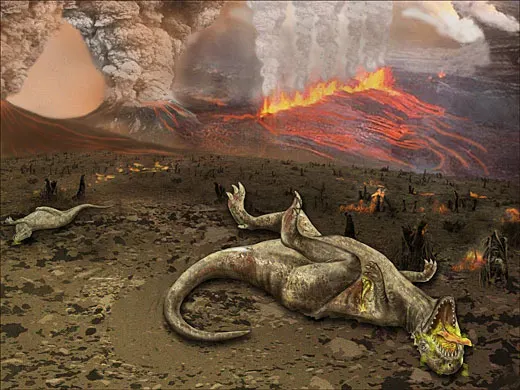
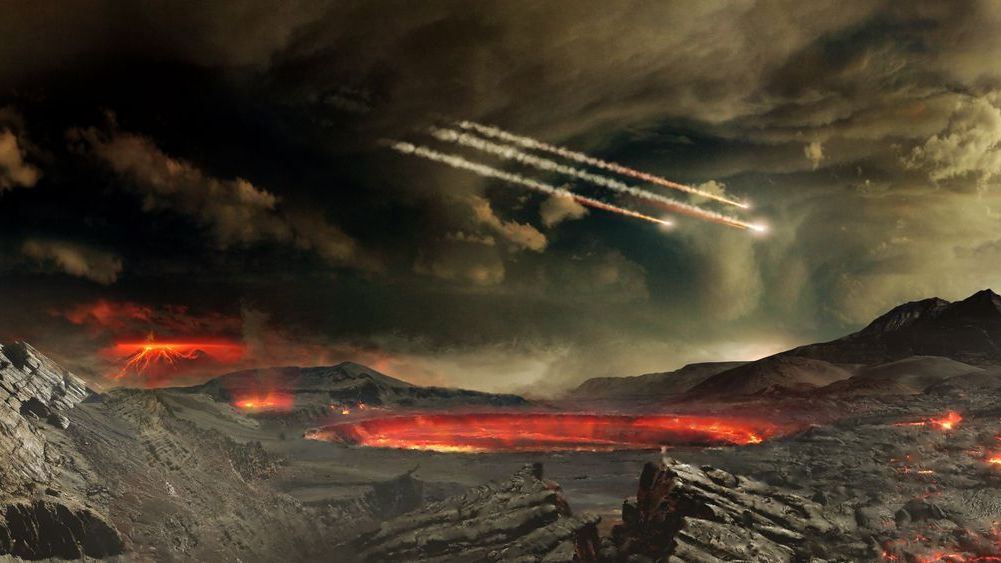
Honestly, this is where the story gets really interesting. At the same time the asteroid was hurtling toward Earth, an almost unimaginable volcanic disaster was already unfolding on the other side of the planet. The asteroid was not the only catastrophe to wallop the planet around this time. Across what is India today, countless volcanic seams opened in the ground, releasing a flood of lava. Over the course of roughly a million years, the greenhouse gases from these eruptions could have raised global temperatures and poisoned the oceans, leaving life in a perilous state before the asteroid impact.
The Deccan Traps are an area of volcanic flood basalts in Western India spanning roughly 1.3 million square kilometers that were created by massive volcanic activity during the same time period in which the Chicxulub impact occurred. To picture this, imagine lava flows covering an area larger than the entire state of Alaska, erupting over and over again across thousands of years. During their nearly 1 million years of eruptions, the Deccan Traps are estimated to have pumped up to 10.4 trillion tons of carbon dioxide and 9.3 trillion tons of sulfur into the atmosphere. That is not a footnote. That is a catastrophe in its own right.
Were Dinosaurs Already in Trouble Before the Asteroid Arrived?
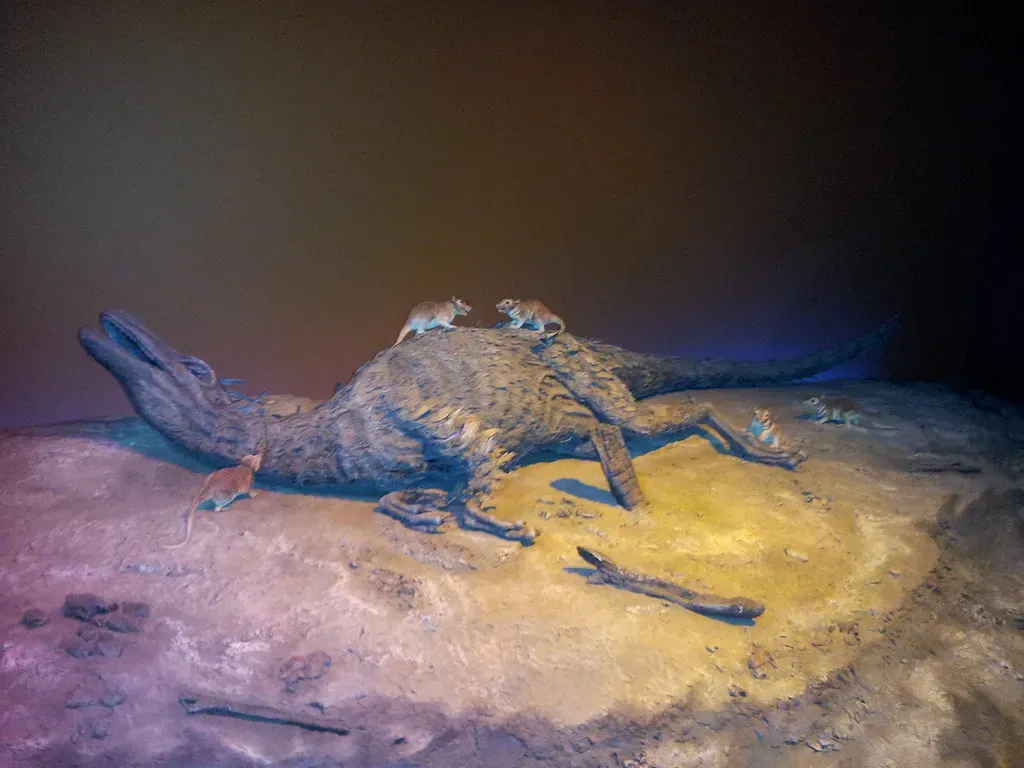
This is the question that has split paleontologists for decades. Some researchers have long argued that dinosaur species were already declining before the impact, quietly fading away as climates shifted and habitats shrank. However, a groundbreaking 2025 study published in the journal Current Biology pushed back hard against that idea. Dinosaurs might not have been on the verge of extinction before an asteroid wiped them out 66 million years ago. New research led by scientists at University College London challenges the idea that dinosaur species gradually declined. Instead of a real drop in biodiversity, the study suggests that gaps in the fossil record might better explain this lack of specimens.
The team studied more than 8,000 dinosaur fossils from North America, focusing on the last 18 million years before the asteroid hit, a window from 84 to 66 million years ago. Their conclusion was striking. They found that during this time, the proportion of land the four dinosaur clades likely occupied remained constant overall, suggesting their potential habitat area remained stable and risk of extinction stayed low. In short, the apparent die-off may have been an illusion caused by fewer rocks surviving to preserve the fossils, not fewer actual dinosaurs.
Where Did the Asteroid Actually Come From?
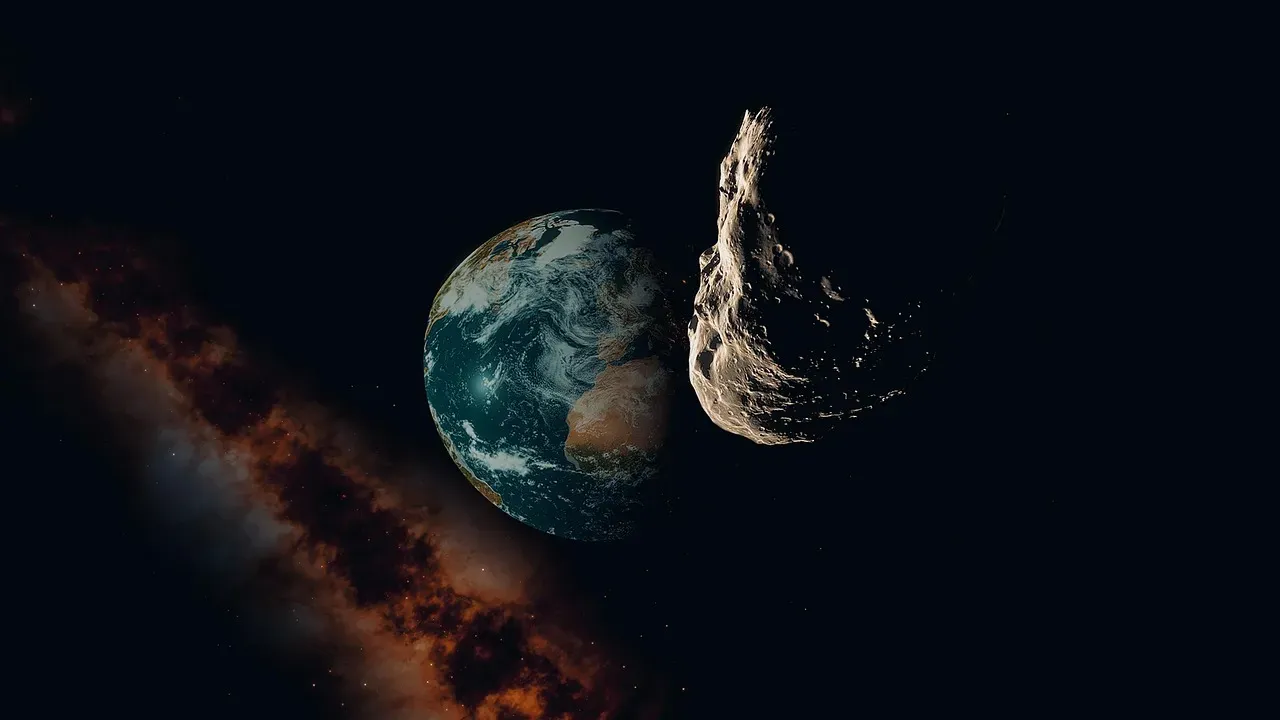
You would think after all these years scientists would have sorted out the asteroid’s origin story. Surprisingly, that was only recently confirmed in detail. A breakthrough study published in the journal Science revealed that the asteroid likely formed beyond Jupiter’s orbit, far out in the cold, dark reaches of the solar system. It had been traveling for an almost incomprehensible amount of time before its fateful collision with Earth.
The boundary layer records the cataclysmic event that triggered the extinction of nearly three quarters of Earth’s species, including the non-avian dinosaurs. By examining the isotopic signature of the element ruthenium, researchers were able to link the asteroid to its origins beyond Jupiter, suggesting that it was a C-type, or carbonaceous, asteroid. The research also put to rest a competing theory. The ruthenium isotopic data revealed that the Chicxulub impactor did not resemble comets that have impacted Earth in the past. Instead, the chemical composition matched that of carbonaceous asteroids, effectively ruling out the comet theory. So no, it was not a comet. It was a wandering rock from the outer solar system that had no business being anywhere near Earth.
The “One-Two Punch” Theory: Science Is Leaning Toward a Combination of Killers
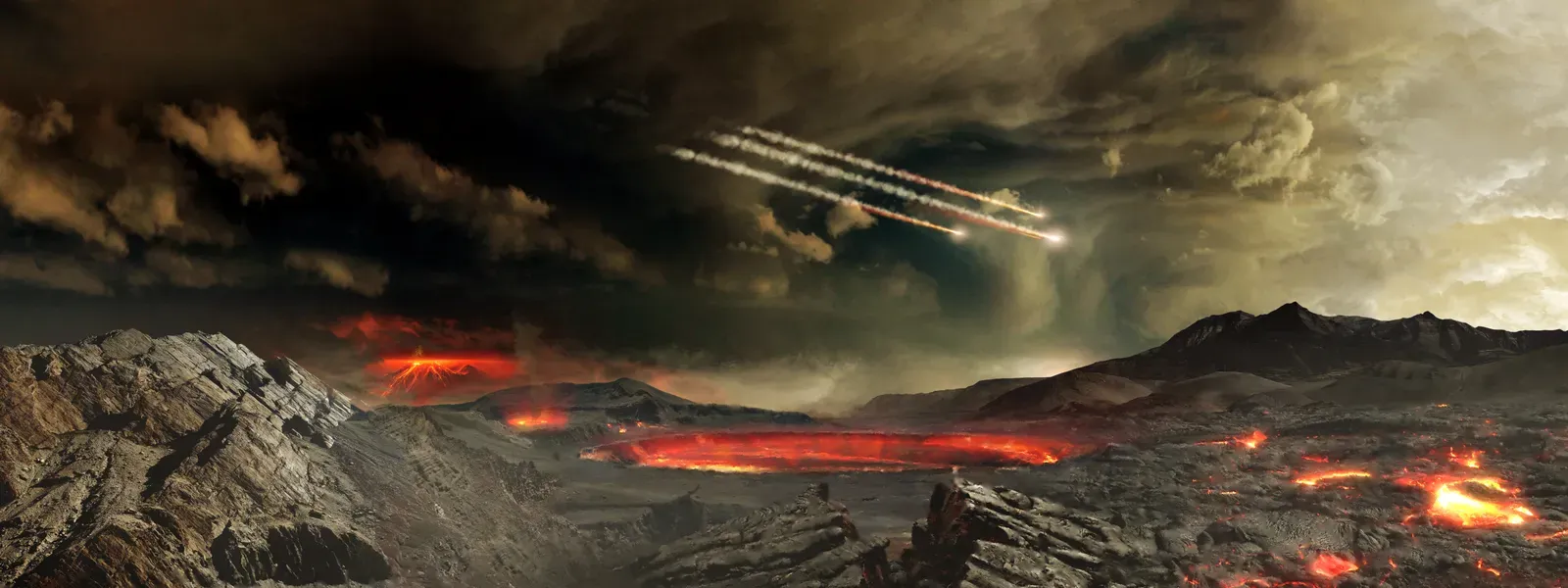
Here is where modern science lands, at least for now. The cleanest and most compelling emerging framework is that the dinosaurs did not die from one cause. They were hit by several forces converging at the worst possible moment. The asteroid may have slammed into a planet already reeling from the massive, extremely violent eruptions of volcanoes in western India’s Deccan Traps, a fossil evidence-supported “one-two punch” unlike anything in Earth’s history. Think of it like a person already weakened by illness who then gets hit by a truck. Either event alone might not have been fatal. Together, they were.
Research using computer modeling took this even further. Researchers created a model powered by 130 interconnected processors that, without human input, reverse-engineered the Cretaceous-Paleogene mass extinction until they reached a scenario that matched the fossil record. The model determined that while a meteorite contributed to the cataclysm, the outpouring of climate-altering gases from the nearly 1-million-year eruptions of volcanoes in western India’s Deccan Traps would have been sufficient to trigger the extinction and clear the way for the ascendance of mammals. It is hard to say for sure which factor carried more weight, and honestly, the debate is far from settled. Debate regarding the cause of the K-Pg extinction has proven to be extremely controversial among researchers, and the resilience of its intensity has earned it the moniker of the “dinosaur wars.”
Conclusion: The More We Learn, the Bigger the Mystery Gets
What is truly remarkable about the dinosaur extinction story is not that we found the answer. It is that the more tools and techniques science brings to bear, the more layers of complexity keep emerging. The asteroid was real. The volcanic catastrophe was real. The climate chaos was real. It is entirely possible that a culmination of ordinary biological changes and some catastrophic events, including increased volcanic activity, took place around the end of the Cretaceous. The asteroid may have been the decisive blow, but it fell on a world already battered and bruised.
There is something almost poetic in that idea. The creatures that ruled the Earth for roughly 170 million years were not simply wiped out by a single bad day in the cosmos. They were brought down by a perfect storm of fire, darkness, poisoned skies, and shifting continents that conspired across thousands of years. If it were not for that asteroid, dinosaurs might still share this planet with mammals, lizards, and their surviving descendants: birds. It was not the final blow to an already dying group but the abrupt end to a thriving and diverse reign. The next time you see a bird outside your window, you are looking at the only survivors of one of the greatest catastrophes in the history of life on Earth. Does that change the way you see them?